
Review | The Judiciary of Democratic Taiwan Should Not Share a Lineage with Martial Law
Last edited: 2026-09-02
I grew up in Taiwan and heard plenty about ongoing miscarriages of justice during the martial law era, including among the elders of my own family. Taiwan, hailed as the "Formosa" (Beautiful Island), has also been burdened with the label of the "Island of Miscarriages of Justice"! After studying abroad for 10 years, I acquired British citizenship in the UK, which is also an island; conversely, apart from the gloomy weather, cases of wrongful imprisonment are rather rare there. In my third year after naturalization, I was drafted to fulfill the obligation of Jury Service. When I reported to the court, I was drawn for a murder case. Feeling quite panicked, I intended to use attending an international academic conference abroad as an excuse to switch to a short-term lay assessor case. Later, I heard a white citizen say, "Regarding current social public safety and the fairness and justice of the judiciary, someone must participate in upholding it, and that person is me." I was moved by this attitude and changed my plan, forgoing the overseas academic conference to stay in London and serve as a lay assessor.
During those nearly two months, I traveled only between home and the courtroom every day, and I was deeply won over by the British jury system. This case was entrusted to us 12 selected members of society, shouldering society's trust to participate in the decision-making process of the court trial. Among our 12 lay assessor members were university professors, bus drivers, and others, all of whom had no conflict of interest whatsoever with the case and were strictly prohibited from having direct contact with the defendant, the prosecution, and the judge throughout the proceedings. We diligently fulfilled our duties to achieve the highest fairness. During the trial, we were provided with exhaustive evidence from both sides. Regardless of their educational background, every member spoke based on evidence. In the end, we were all locked in a small room, engaging in fierce debate from opposing sides, from morning till night, day after day, until differing opinions were integrated to reach a unanimous 12-to-0 verdict, solely to give the defendant an unquestionable, fairest adjudication. This was then handed over to the judge to make the criminal judgment based on statutory provisions. Although it was a cumbersome process, every one of us lay assessors had the right to participate in regulating how strict or lenient public safety should be for the society and time we inhabit, rather than remaining detached and leaving everything to a minority or even a single judge to make the sole ruling.
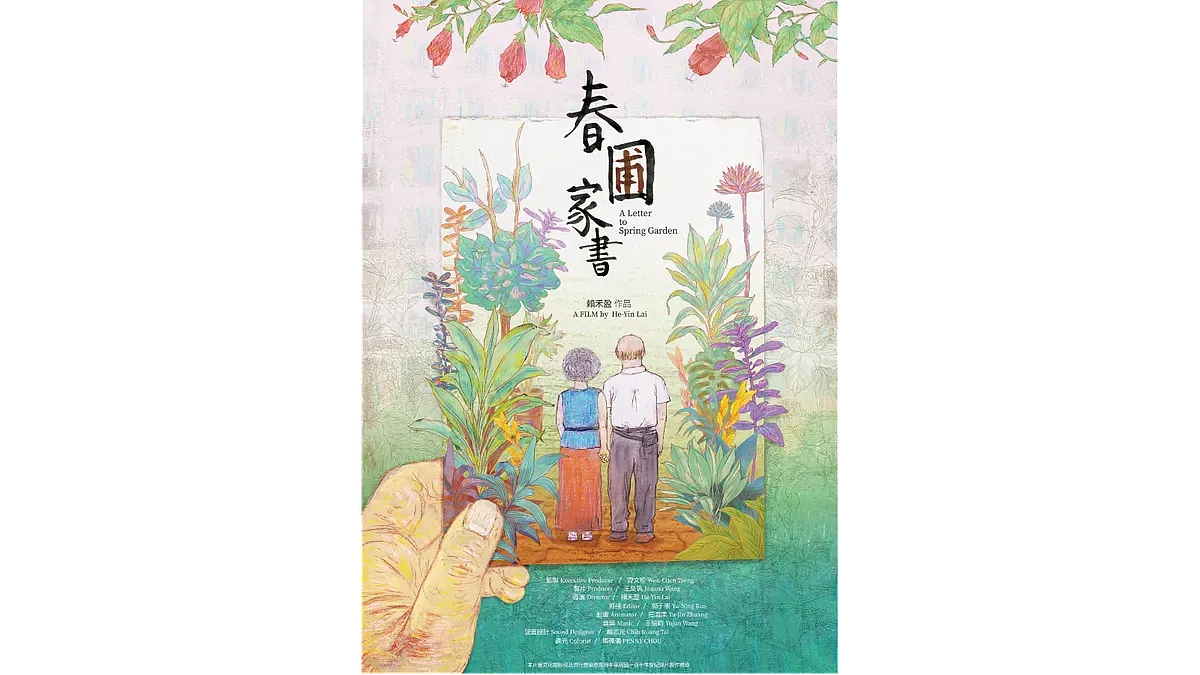
Recently returning to Taiwan, I was invited by the Judicial Reform Foundation on December 13 to attend the premiere and post-screening discussion of "A Letter to Spring Garden." This is a moving and thought-provoking documentary directed and filmed by He-Yin LAI about the miscarriage of justice involving her father, Lai Ting-fu (the following content contains spoilers). Ch'un-p'u symbolizes the home jointly built by Lai Ting-"fu" and his wife, Ch'un-yeh. Lai Ting-fu, the former Director of the Fifth River Management Office of the Water Resources Agency under the Ministry of Economic Affairs, was falsely accused during his tenure as Director of the Taitung Eighth River Management Office of "using the construction of a river access road to establish a motive for sand and gravel operators to send money as bribery." The statements made by Lai's father regarding the second-instance judge's trial adjudication are unforgettable: "You people in managerial positions have quite some nerve; when subordinates sign off on opinions of non-approval, you actually dare to approve them; if it were me, I wouldn't dare do that." What is lamentable is that from the post-war era, the 228 Incident, the White Terror, and the Formosa Incident, Taiwan has witnessed one miscarriage of justice after another, yet even in democratic Taiwan, wrongful imprisonments based on the "presumption of guilt" still frequently occur!
Lai's father said helplessly, "How could I encounter such a judge?... It was handled so perfunctorily, without any further investigation, just holding this single hearing. After I went back, I waited, and when his finalized judgment came out, it turned into a seven-year prison sentence." The mindset of this judge was identical to that of miscarriages of justice during the martial law era: namely, "Better to wrongly arrest a hundred than to let a single one escape." Could it be that the judiciary of Taiwan, having entered the democratic era, still "shares a lineage" with the martial law period?
There was a time when Lai's father was determined to appeal for redress, but Taiwan's judicial system has deep-seated bad habits, with judgments controlled entirely by a single judge. Knowing he was powerless to turn the tide on his own, Lai's father had no choice but to swallow his pride and serve time, barely surviving three and a half years of prison life. Just as he was released on parole and preparing to step out of the shadows of the wrongful conviction, he was confronted head-on by his daughter's camera lens. His daughter,He-Yin LAI, did not give up and stubbornly hoped through her lens to clear her father's name and restore his innocence.
At first, the father was somewhat impatient, speaking directly into his daughter's lens: "I am not going to live out the rest of my life for the sake of rehabilitation. Am I going to spend the rest of my life seeking exoneration? I'm not that stupid! My remaining life is also a life, and this life of mine is not just about this one thing!" However, out of love for his daughter, Lai's father compromised, hoping "to give judicial reform a helping hand"! He also cooperatively allowed himself to be filmed for seven years. Every time he sat in front of the lens, it felt to him "as if he were being imprisoned a second time." Meanwhile, the daughter was also caught in emotional struggles regarding the presentation and handling of the theme, repeatedly editing through nine versions.
In this documentary about the father and daughter, advocating justice for victims mostly took place at the dining table: the daughter would put down her bowls and chopsticks, seemingly unable to swallow her food if "justice is not upheld"; by contrast, the father still believed that "food is the people's heaven"—no matter what topic was discussed, his chopsticks never stopped, as if the injustice of the matter, spanning his 70 years of life experience walking all the way from the White Terror, could only be slowly chewed and silently swallowed by himself. This allows us to see generational differences: the father, shackled by the martial law era, chose forbearance and felt powerless when facing the state apparatus; while the daughter, raised in the democratic era, chose resistance, engaging in social dialogue and directly appealing to public opinion.
As the filming dragged on, the miscarriage of justice remained stagnant; nevertheless, this father and daughter had already grown accustomed to the camera, and rolling the cameras unexpectedly became their time for dialogue. To seek justice for her marginalized father, the daughter took to the streets and participated in social movements. Consequently, due to her different sexual orientation, she also became a despised victim who needed to fight for her own due human rights. This dialogue between father and daughter regarding homosexuals also took place at the dining table: the father once held worldly prejudices against homosexuals, unintentionally saying, "These people are perverts... abnormal, they are all sick." Hearing this, the daughter's "world collapsed," and her tears burst forth! Through this mutual listening, the filmed father and the filming daughter were unexpectedly connected in being wronged and misunderstood. The daughter told her father, "I'm not blaming you; I just want to tell you, Dad, you are not alone."
Regardless of whether exoneration would arrive for the making of this documentary, over the seven years of filming, they each found their own strength: Lai's father had enough, let go of resentment, learned to cherish himself, and affirmed his achievement of dismantling the illegal sand and gravel plant during his tenure; the daughter and her same-sex partner were able to enjoy marriage equality and received blessings from their parents. Going beyond mere exoneration, this film may reach a higher altitude, as demonstrated by the banner held by the director at the end of the film: "No one is an outsider"! Yes, what if one day, due to bad luck, you get tangled up in a lawsuit and encounter a "dinosaur judge" (referring to one living in the Jurassic period, lagging far behind modern affairs) or a "cruel official" (referring to one who is harsh, cruel, and unfair to the people)—can anyone be spared?!
Taiwan's pursuit of judicial fairness and justice has spanned nearly a century: as early as 1927, the Taiwan People's Party established by Chiang Wei-shui and others listed in the sixth item of the "Political Policies" of its party platform: "Demand the improvement of the judicial system and the implementation of the jury system." Now, with the "Citizen Judges Act" coming into effect on January 1, 2023, public participation in trials has been introduced. Through "citizen judge cases," can Taiwan gradually wash away the stigma of being the "Island of Miscarriages of Justice"? Although different from the British jury system, the key to the success of the "Citizen Judges Act" also lies in whether an increasing number of selected citizen judges will determine that "Taiwan's judicial fairness and justice must be participated in and upheld by someone, and that person is me"?
※Thanks to the author and Up Media for granting authorization to reprint. This article was originally published in the commentary section of Up Media on December 23, 2023.
※"A Letter to Spring Garden" will be publicly broadcast on Formosa TV Taiwan台 on January 20, 2024, accompanied by an online dialogue.
This article is an AI-generated translation of the original Chinese text. In the event of any discrepancy, the Chinese version shall prevail.