
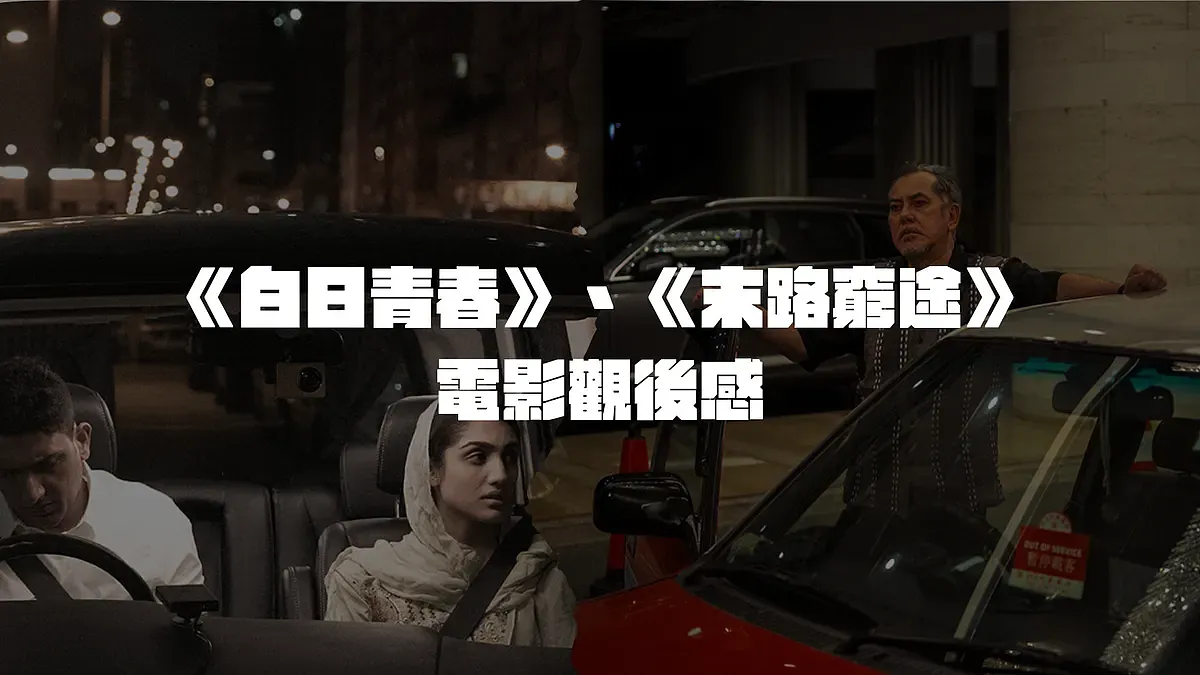
Sidelights | Movie Reviews of The Sunny Side and The Narrow Road
Last edited: 2026-11-04
I've lived in Hong Kong for over a decade, and it's no different from being in prison.
In The Sunny Side, Achbar uses these words to express the tragedy and helplessness of being an outlander.
Born in different generations and leaving their homelands solely in search of a more stable and secure life, they ventured to Hong Kong toward an uncertain future sustained only by hope. Upon arrival, however, they found life falling short of expectations, forcing them to make various compromises with their current hardships. Yet for Hassan, the son born to Achbar in Hong Kong, despite being born there, he could never call Hong Kong home. For these outlanders forced to leave their native soil by war or disaster, what they lose is not merely a physical home, but also emotional attachment and a sense of belonging.
Social Rejection Parallels Life of Unnameable Compromises
In The Sunny Side, Achbar was originally a lawyer from Pakistan, a man of extreme integrity and morality. However, when Ch'en Pai-jih caused a traffic accident through his own rule-breaking, he had his son's colleague pressure Achbar into going to the police station to settle the matter. This act filled him with disgust, yet he was unable to claim his rights through legitimate channels. Perhaps Achbar's eventual death was also the ultimate compromise with the helplessness of life.
Meanwhile Hassan, left without a father's care, joined a smuggling ring composed of refugees, kicking off a turbulent life of constant fleeing and hiding without a moment of peace. The trunk of a moving taxi, highways, and piers—lacking proper housing, these were his only destinations.
In The Narrow Road, a Pakistani immigrant man has nothing left after being released from prison. To win back his wife and child, he searches everywhere for work, but as a minority with low education and a criminal record who faces severe discrimination in Hong Kong, he hits brick walls at every turn in his job hunt. In the end, he is driven to work as an illegal driver to fight for his dignity. This provides a stark contrast with society: many South Asian residents are legal in Hong Kong, yet Hong Kong society refuses to accept them. Such a dilemma-ridden life forces them into compromise.
Just Wanting to Live Like Human Beings
No one wishes to become a refugee, and usually it is not for specific political purposes; most people simply seek the basic human rights to live like human beings. Yet, human rights are spoken of more than they are practiced. Although United Nations human rights conventions explicitly guarantee the rights of all human beings, few countries can clearly implement them. Those refugees who are unseen and unheard are denied the opportunity to be understood. Although refugee stories may other refugees, we should pay closer attention to the emotions and voices behind the stories, because these voices are precisely the opportunity for refugees' demands to be heard.
Those Not of Our Kin Must Have Different Hearts
Society's attitude toward others is often influenced by the values instilled by one's own culture and upbringing. Although the notion that "those not of our kin must have different hearts" sounds ancient and extreme, such psychological dynamics persist at all times. Due to the diversity of ideologies, we habitually construct psychological barriers to isolate ourselves from people of different cultural backgrounds. When seeking to change others, there is actually an underlying mindset of desiring to mold the other person into someone similar to oneself.
To truly understand, empathize with, or even change others who are different from oneself, one must set aside one's own stance, step out of one's own framework, think from the other's perspective, and even immerse oneself in the other's living environment to deeply understand their developmental background and cultural heritage. In real life, however, people are often aware of this concept, but because it requires enormous effort, we tend to choose avoidance, hoping that external systems, organizations, or others can complete this transformation for us.
This article is an AI-generated translation of the original Chinese text. In the event of any discrepancy, the Chinese version shall prevail.