
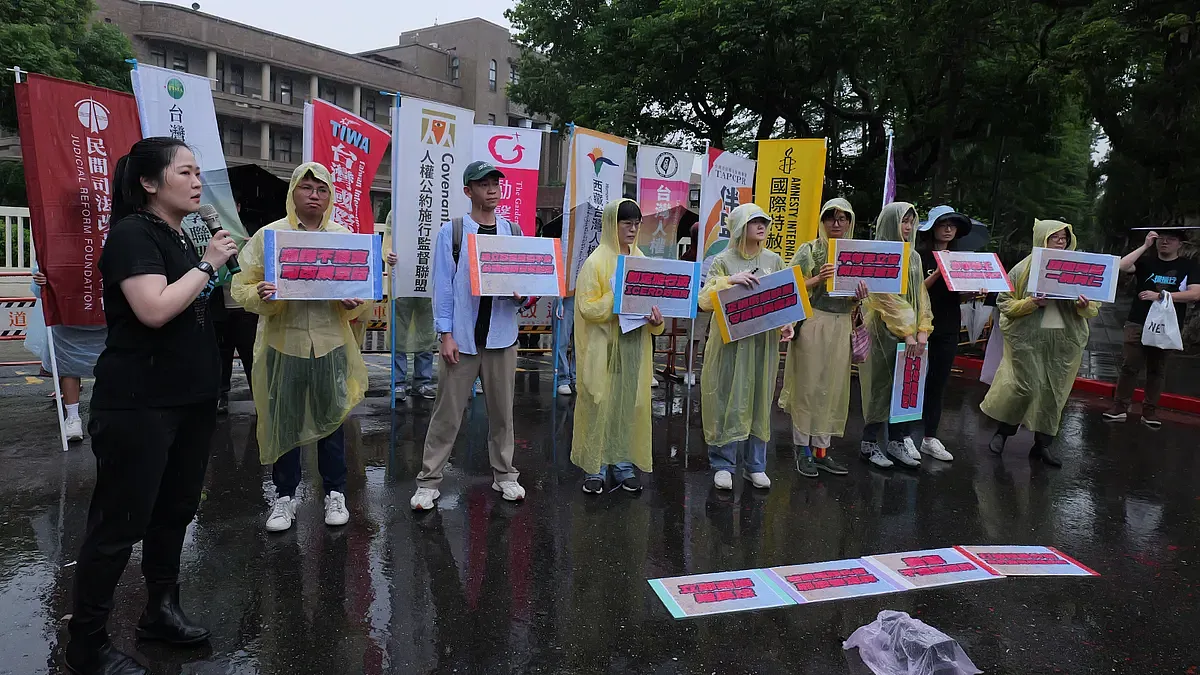
Press Conference | Post-Review Civil Society Press Conference for the 2024 ICERD First National Report International Review
Last edited: 2026-07-27
After more than half a century, the International Convention on the Elimination of All Forms of Racial Discrimination (ICERD)—which has been legally binding on Taiwan since 1971—finally held its first international review of the national report, concluding today (April 26) with the Committee's Concluding Observations. ICERD completed its treaty-making procedures when Taiwan was still a United Nations member, bestowing upon it legal binding force. However, as the Review Committee noted during the review sessions, ICERD is not generally and directly applicable in Taiwan, and Minister without Portfolio Lo Ping-cheng acknowledged that ICERD only began to receive attention in 2020. The Taiwanese government's neglect of ICERD was previously singled out by the Review Committee during the initial review of the two Covenants in 2013, and civil society organizations have continuously communicated and negotiated with the government on implementation measures.
Today, the conclusion of the international review marks not the end, but the beginning of monitoring and tracking the government's implementation of human rights! Over a dozen indigenous groups, migrant worker unions, human rights advocacy groups, and other local and international civil society organizations gathered to hold a post-review civil society press conference, calling on the government not to continuously ignore the impact and threat of racial discrimination, to face the constructive recommendations of the international Review Committee head-on, and to actively implement the spirit of the Convention to promote the protection of human rights!
Akoy Chien Nian-yu, member of the Indigenous Youth Front, stated that during this ICERD review, the Committee members specifically mentioned that indigenous issues heavily overlap with the reviews of various human rights conventions, and that there appears to be no significant progress since 2013. The various historical inequalities currently faced by indigenous people are precisely structural racial discrimination. The Indigenous NGO Working Group participating in this review repeatedly emphasized that we must establish an open platform for dialogue between indigenous peoples and the state, rather than closed-door working groups and committees where participants are selected behind closed doors. Only through open, transparent, and sincere dialogue can we break the deadlock and allow the public sector and civil society forces to jointly advance the rights of indigenous peoples.
Jasmin Ruas, Chairperson of the Taoyuan Domestic Care Workers Union, exposed the government's lies, stating that the Taiwanese government has never encouraged migrant workers to join unions, and that raising wages to NT$20,000 is not a mandatory requirement, leaving some domestic workers with a monthly salary of only NT$17,000. Furthermore, labor conditions are appalling: 24/7 working hours, lack of labor insurance, no privacy, and isolation from the outside world render them vulnerable groups. Private employment agencies commit countless abuses: migrant workers across different industries are unable to freely change jobs, are heavily controlled by agencies, subjected to multilayered exploitation, and even have their documents withheld. Yet, the Taiwanese government acts as if it knows nothing about this, excessively outsourcing governmental obligations to agencies—such as migrant workers going to government agencies to handle affairs, only to be asked right away, "Where is your agency?"—as if the government has no obligation to realize the rights of migrant workers in Taiwan. Police law enforcement further corroborates the existence of serious racial profiling in Taiwan. She reiterated that migrant workers certainly want to be legal, but no one is willing to become workers under a policy that reduces them to modern slaves.
Tseng I-en, Supervisor at the Migrant Services Center of the Garden of Hope Foundation, synthesizing the opinions of four civil society organizations that jointly submitted parallel reports, reiterated that transnational mobile work is fraught with challenges. She urgently called on the government to promptly convene policy meetings on the legal formalization of rights protection for domestic workers, confronting the multiple vulnerabilities and inequalities of domestic workers in terms of race, gender, and the labor environment from the perspectives of human rights practice, equal pay for equal work, and social security, while establishing legal protection mechanisms. In addition, current anti-discrimination regulations are scattered across different laws, creating obstacles to filing complaints. The government should establish an independent discrimination complaint mechanism to receive complaints, launch investigations, and effectively track improvements. Supervisor Tseng also mentioned that government provision of various public services must possess adequate multicultural sensitivity, actively deploying multilingual resources to bridge the information gap, so that cross-border workers can also enjoy public resources in health, justice, and social-cultural sectors of the same quality as nationals.
Lai Yen-jung, Refugee Advocacy Officer at the Taiwan Association for Human Rights (TAHR), noted that in early April, TAHR received cases of two individuals who had applied for asylum with the National Immigration Agency (NIA) and were undergoing review, only to be seized and detained in detention centers by police units, with one detention lasting as long as 10 days—completely slapping down the NIA's claim that asylum seekers would not be detained. Moreover, the NIA does not, as claimed, provide the assistance needed by asylum seekers to extend their legal stay. Currently, more than half of the asylum project cases have been pending review for over six months without obtaining temporary legal status, and some have even been arrested; living support often relies on community relief to get by. Regarding airport deportations, the NIA claims that once an asylum request is made, an investigation will be launched. However, the reality is that because the airport lacks an NIA asylum window, even if the parties concerned raise the risk of persecution upon deportation, there is no way to report it and initiate an investigation procedure, resulting in many people being deported without investigation to countries that may endanger their lives.
Attorney Hsieh Meng-chao, Legal Director of the Taiwan Alliance to Promote Civil Partnership Rights (TAPCPR), focused on the ongoing unequal clauses regarding same-sex marriage in Taiwan, pointing out that current same-sex marriage regulations enforce discriminatory treatment against Chinese partners, prohibiting Taiwanese-Chinese same-sex couples from contracting marriages. This may even constitute discrimination against Chinese homosexuals, as Taiwan does not prohibit Taiwanese-Chinese heterosexual couples from marrying; the government should face up to the right of Taiwanese-Chinese same-sex couples to contract marriages. Furthermore, foreign same-sex couples with legal residency in Taiwan who wish to marry here must first ensure that their home countries recognize same-sex marriage; otherwise, the Taiwan government will "regrettably be unable to process" the application. Countries worldwide that recognize same-sex marriage remain a minority and are particularly scarce in Asia. She reminded the government that discriminatory treatment regarding same-sex marriage should not exist on Taiwanese territory, and anyone with legal residency has the right to legally contract marriage in Taiwan.
Chiu I-ling, Secretary-General of Amnesty International Taiwan, stated: Taiwan lacks a Refugee Act, which violates the basic rights of refugees and asylum seekers and breaches international human rights standards; without a refugee asylum mechanism meeting international standards, it is even harder to safeguard national security. Furthermore, aside from enduring labor conditions inferior to those of nationals, migrant workers in Taiwan are deprived by the Immigration Act of their right to peacefully protest to demand rights and improve labor conditions. Regarding the regulation of discriminatory speech and the incitement of hatred, the government and large social media platforms must adhere to international human rights standards such as the International Covenant on Civil and Political Rights (ICCPR) and the Rabat Plan of Action. Moreover, in the face of intersecting and multiple discrimination, the government should promote a comprehensive equality/anti-discrimination law equipped with independent monitoring and remedy mechanisms. Finally, she called on the government to eliminate nationality and sexual orientation discrimination and allow the marriage registration of Taiwanese and Chinese same-sex couples.
Lin Cheng-ching, Legal Policy Researcher at the Judicial Reform Foundation (JRF), criticized the Judicial Yuan's statement during the review session that "currently the judicial system does not encounter situations where interpretation cannot be provided for indigenous peoples," calling it an arrogant manifestation of Mandarin-centrism. Indigenous languages are already national languages. While the government responded that the Judicial Yuan provides interpretations in 11 languages and the Ministry of Justice in 7, it failed to clarify the calculation methods. Furthermore, it is understood that when official interpreters are insufficient, requests are turned to indigenous language teachers for support. However, judicial proceedings possess specific expressions and procedural logic, and whether such "support" can cope with judicial proceedings remains unknown. From the perspective of foreigners, whether migrant workers or new residents, they similarly face a shortage of judicial interpreters. Not only is there a severe disparity in the number of interpreters for different languages, but an urban-rural gap also exists, and whether interpreters can effectively "identify disputed points" is fraught with challenges. Researcher Lin also reminded that interpreters within the NIA and customs systems are equally important!
Huang Yi-pi, Executive Director of the Covenants Watch, deconstructed the Concluding Observations, pointing out that the International Review Committee (IRC) provided substantiated evidence hoping to persuade the government to restart the gears that have been stalled for half a century to achieve concrete improvements over the next four years. On the legislative front, the enactment of an equality act was raised once again, with recommendations that the government conduct segmented discussions and that legislation be broad-ranging and cover most grounds of discrimination; hate speech should be criminalized through the Criminal Code. In terms of international law, besides ILO Conventions C188 and C189 being repeatedly mentioned, C169 concerning equal employment rights for indigenous and tribal residents was also raised. Regarding migrant workers, the IRC recommended that the government legitimize the residence rights of undocumented migrant workers, grant nationality status to "black-housed babies" (stateless children), and establish the right of migrant workers to fully transfer employers after a certain period of entering Taiwan. Regarding the National Human Rights Commission (NHRC), experts recommended that they prioritize choosing two to three issues to launch national inquiries. Finally, Executive Director Huang reiterated solemn recommendations and demands: the Department of Human Rights and Transitional Justice and the NHRC should cooperate to invite international review members to form an international human rights expert think tank for timely consultation; for major human rights controversies, they should emulate the United Nations by inviting experts with corresponding expertise to Taiwan to conduct investigations; and finally, she reminded the government to demonstrate its commitment to human rights in daily administrative work.
◢ Coordinating Organization
Covenants Watch
◢ Co-organizers
Taiwan International Workers Association (TIWA), Covenants Watch, Taipei Bar Association Human Rights Committee, Taiwan Association for Human Rights, Taiwan Alliance to Promote Civil Partnership Rights, Taiwan Indigenous Youth Public Participation Association, Taiwan Association of Indigenous Peoples, Taiwan International Medical Alliance, Yilan County Gang-Gai Indigenous Sustainable Development Society, Taiwan 10,000 Social Welfare Association, Human Rights Network for Tibet and Taiwan, 1095, Migrant and Immigrant Culture Association, Indigenous Youth Front, Taoyuan Domestic Care Workers Union, Judicial Reform Foundation, Amnesty International Taiwan, Taiwan Creole Language Promotion Association (Preparatory Office), Taiwan Cultural Safety and Mental Health Promotion Association (Preparatory Office), The Garden of Hope Foundation, Hear You Public Health and Legal Consultation Platform
◢ Moderator
Chiang Meng-chen | Office Director, Covenants Watch
◢ Spokesperson Representatives
Akoy Chien Nian-yu | Member, Indigenous Youth Front
Jasmin Ruas | Chairperson, Taoyuan Domestic Care Workers Union
Tseng I-en | Supervisor, Migrant Services Center, The Garden of Hope Foundation
Lai Yen-jung | Refugee Advocacy Officer, Taiwan Association for Human Rights
Hsieh Meng-chao | Legal Director and Attorney, Taiwan Alliance to Promote Civil Partnership Rights
Chiu I-ling | Secretary-General, Amnesty International Taiwan
Lin Cheng-ching | Legal Policy Researcher, Judicial Reform Foundation
Huang Yi-pi | Executive Director, Covenants Watch
◢ Organizations Jointly Submitting Parallel Reports for this Review (in stroke order)
LIMA Taiwan Indigenous Youth Group, Taiwan International Workers Association (TIWA), Covenants Watch, Taiwan Association for Human Rights, Taiwan Association of Social Workers for Indigenous Peoples, Taiwan Association of Indigenous Peoples, Taiwan International Medical Alliance, Taiwan Alliance to End the Death Penalty, Yilan County Gang-Gai Indigenous Sustainable Development Society, Yilan County Fishermen's Union, Taiwan Association for Truth and Reconciliation, Human Rights Network for Tibet and Taiwan, Taiwan Cultural Safety and Mental Health Promotion Association (Preparatory Office), Taiwan Indigenous Long-Term Care Service Rights Promotion Association, Environmental Jurists Association, Indigenous Youth Front, Jesuit Taipei Innovative Social Service Center, Diocese of Hsinchu Vietnam Migrant and Immigrant Office, Judicial Reform Foundation, Taiwan Creole Language Promotion Association (Preparatory Office)
This article is an AI-generated translation of the original Chinese text. In the event of any discrepancy, the Chinese version shall prevail.