
Sidelights|Grand Justices Serving the DPP? Are You Sure?
Last edited: 2026-11-04
The Relationship Between the Constitution and Politics
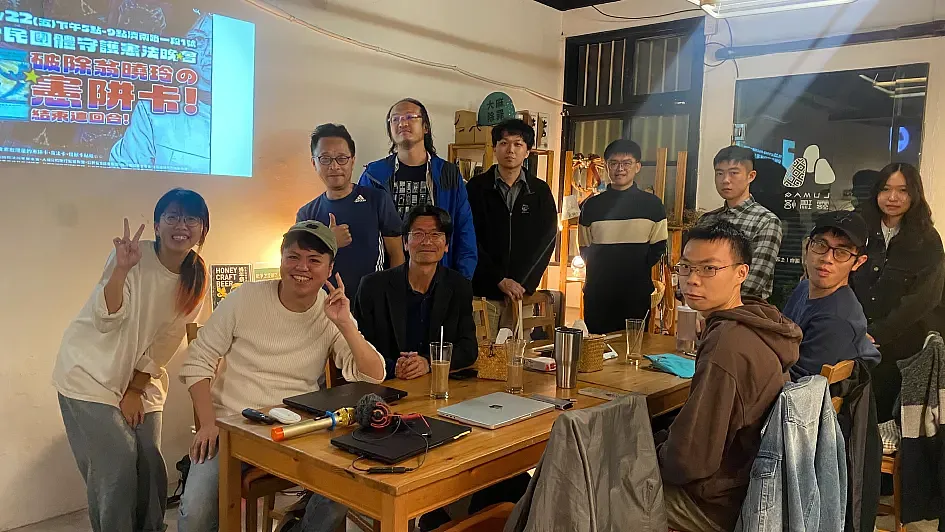
Moderator and Researcher Lin Cheng-ching first briefly reviewed the controversy surrounding the draft amendments to the Constitutional Court Procedure Act to give the audience a preliminary grasp of the issue, such as the raised quorum requirement, which demands at least 10 Grand Justices to participate in constitutional adjudication and at least 10 Grand Justices to concur in order to render a constitutional judgment. Such a draft amendment not only ignores the political reality of current vacancies among the Grand Justices, but is also a politically retributive legislative attempt to paralyze the operation of the Constitutional Court.
Drawing on a quote by American critical legal scholar Duncan Kennedy, Lin Cheng-ching illustrated the relationship between law and politics, which can be applied to understand the interactions between the political branches ranging from the parliamentary reform acts to the draft amendments to the Constitutional Court Procedure Act—namely, how legal disputes in the Legislative Yuan spill over into the Constitutional Court, and how the decisions of the Constitutional Court in turn affect the political decisions of the legislative branch.
“Law is the continuation of politics, utilizing legal means to achieve political ends; but politics is also the continuation of law, similarly employing political means to realize legal purposes.”
The Politics of Grand Justice Nominations
Lin Cheng-ching further introduced the qualifications and selection process of Grand Justices. Looking at the provisions of the Judicial Yuan Organization Act, candidates for Grand Justices primarily come from four categories of qualifications: "judiciary, prosecution, academia, and the bar." Viewing this through the Judges Act and the Code of Ethics for Prosecutors, judges and prosecutors cannot join political parties or engage in political activities. Therefore, institutionally, candidates whose political stances can be clearly discerned are primarily those nominated from academia or the bar. Consequently, controversies surrounding political ideology mainly arise with respect to Grand Justice nominees hailing from academic or legal practice backgrounds.
On the other hand, criticisms labeling nominees as "Lai's choices" or "Green-friendly Grand Justices" must be understood not only through the appointment procedure of "nomination by the President, confirmation by the Legislative Yuan," but also through the framework of the "half-and-half staggered term system." Following the 1997 constitutional amendments, the current Grand Justice nomination procedure began in 2003. The original benevolent intent of the system was to stabilize the composition of the Grand Justices through the retirement and nomination mechanism of groups of seven and eight justices, while coordinating with political party rotations to prevent Grand Justice nominations from being overly monopolized by any single ruling party.
However, during the Ma administration, due to early retirements or resignations of Grand Justices, the Grand Justices nominated by Ma Ying-jeou did not adhere to the succession rules of the old Judicial Yuan Organization Act, thereby breaking the half-and-half staggered term system. As a result, the current nomination cycle for Grand Justices has transformed into a staggered term system of 7, 4, and 4 years. This outcome makes it easier for the power to nominate Grand Justices to become concentrated in the hands of a single president. For instance, looking at the historical experience of absolute governance spanning from the Ma administration to the Tsai administration, the politics of Grand Justice nominations inevitably face criticisms of selecting "Ma's friends" or "Tsai's friends."
Diverse Opinions Beyond Partisan Lines
Lin Cheng-ching further noted that looking at the case on freedom of marriage for same-sex couples (Judicial Yuan Interpretation No. 748), the Grand Justices—regardless of party affiliation—supported same-sex marriage by a majority. However, regarding the case on indigenous hunting rights (Judicial Yuan Interpretation No. 803), the Grand Justices could be said to have discriminated against indigenous peoples across party lines. On the other hand, examining the opinions of the Grand Justices, one can find that Grand Justices of different political backgrounds join one another's opinions. In this sense, the Grand Justices possess diverse opinions and transcend party factions.
The Political Nature of Grand Justices
The second half of the lecture featured a presentation by Associate Professor Hsu Wei-kuo, who focused on the authoritarian party-state era to contrast the current Grand Justices—who are not controlled by political parties—with the Grand Justices of the past who were manipulated by the party-state.
Before his report, Associate Professor Hsu Wei-kuo drew a distinction between the political attitudes and political control of Grand Justices. Regarding political attitudes, Grand Justices hold political stances concerning the degree of human rights protection and the boundaries of the separation of powers, but this does not equate to their being subject to political control. Controversies under the U.S. Constitution over abortion and gun rights, for example, exhibit high degrees of difference in political stance; this merely indicates that Grand Justices hold political perspectives on issues, but it does not mean the Grand Justices are naturally dominated by political parties.
State Control of Party-ized Justice
Associate Professor Hsu Wei-kuo then introduced the party-state's control structure over the public sector during the authoritarian era. For instance, within the Judicial Yuan, there existed a "Party Member Political Cell," demonstrating how the party central committee exercised control over the judicial department. Furthermore, during the judicial officer interview process, candidates were subjected to ideological screening and required to join the party, or underwent courses such as studying presidential instructions during judicial officer training. These all vividly illustrate how past judicial independence was fettered by the party-state system.
Associate Professor Hsu Wei-kuo further synthesized the characteristics of the "party-ized judiciary" of that era through institutional factors, including the individualization/party-ization of military modernity, the unrecallable emergency regime under martial law, the rigorous party-state system (with party organizations universally established in the civil service system, campuses, and other social organizations), intelligence units conducting surveillance (Personnel Second Offices), and restrictions on freedom of speech and the press. These factors enabled the authoritarian regime to sustain itself, thereby shaping the past "party-ized judiciary."
The Grand Justices' "Interpretation in Accordance with Party Will"
Associate Professor Hsu Wei-kuo explained that if the interpretations of contemporary Grand Justices must be rendered in accordance with the Constitution, then certain interpretations made by Grand Justices under the party-state system were instead rendered in accordance with "party will." For example, regarding the case of participating in a rebellious organization under the age of 14 (Judicial Yuan Interpretation No. 129), Professor Hsu cited the meeting minutes of the time to mention the opinions of several Grand Justices, illustrating how the central party will dominated the Grand Justices' interpretive reasoning:
Grand Justice Kuan Ou:
“Mr. Huang Kuang-pu has also repeatedly emphasized that this case is rich in political nature and should be considered from a political attitude, advocating that this Court first write to inquire about the opinions of the central authorities. In my opinion... this seems rather inconvenient, but it appears we might... consult the President of this Court... the President attends various meetings of the central authorities more frequently and should be able to understand where the current policy orientation of the central authorities lies regarding such cases.”
Grand Justice Huang Liang:
“As for political issues, I express no opinion. During my first review meeting, I already stated that regarding political views, I am willing to comply with the opinions of the Central Party Headquarters. Therefore, I agree with Grand Justice Tseng's previous suggestion to invite personnel from the Central Party Headquarters to attend as observers pursuant to Article 12 of the Grand Justices Council Act.”
Grand Justice Wang Chih-tsung:
“Can our Council of Grand Justices provide a forced excuse to exempt them from criminal liability?... We should pay attention to national interests, we should pay attention to government policy decisions, and under no circumstances can there be a record in the interpretation text and reasoning stating that they can be exempted from criminal liability due to being coerced.”
In summary, Associate Professor Hsu Wei-kuo demonstrated through the above examples that Grand Justices are not accused of serving politics merely because they hold political stances; rather, under the party-state system, the will of the Grand Justices was truly controlled and disciplined. In other words, under that system, Grand Justices did not articulate their constitutional reasoning based on their own thoughts and ideas, but instead needed to seek opinions from their superiors at the Central Party Headquarters. Only in this sense can they truly be considered to be serving politics. Conversely, viewed from the perspective of modern democratization, because Taiwan lacks such a party-state structural system, such political control is difficult to form.
Finally, Associate Professor Hsu Wei-kuo concluded: "Democracy is important, because once democracy is dismantled, it will return to that past (authoritarian) era. Therefore, if anyone now attempts to dismantle our democracy and constitutionalism, we should reject it and resist it."
This article is an AI-generated translation of the original Chinese text. In the event of any discrepancy, the Chinese version shall prevail.