
Sidelights | 2025 Taipei International Book Exhibition: From Professor to Prisoner?! Reflections Behind the Wang Lung-ch'ang Case
Last edited: 2026-11-04
From a Legal Layperson to Practical Insights
Before entering law school, I felt that crimes like corruption and bribery were far removed from my life. After studying law, I came to realize that in legal practice, many reviews and bidding processes involving government departments actually implicate the Anti-Corruption Act. Needless to say, ordinary citizens—and the parties involved in this case—never imagined they would become entangled with the Anti-Corruption Act.
The Drastic Transformation from Professor to Defendant
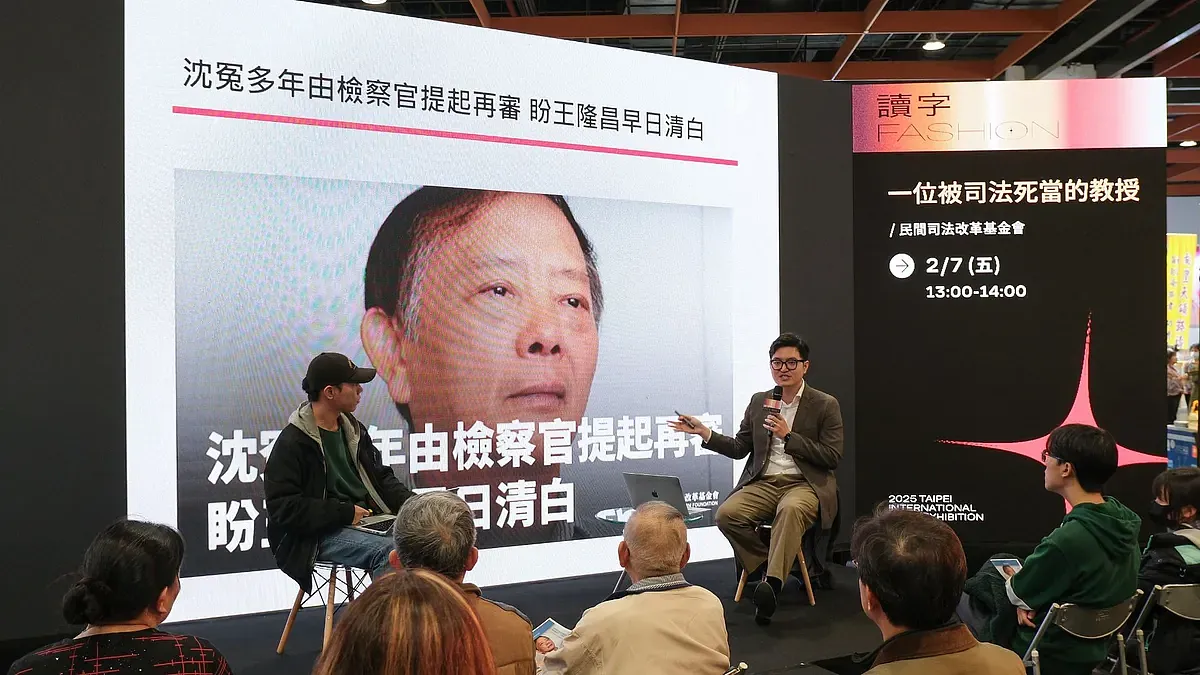
He is Wang Lung-ch'ang, formerly a professor in the Department of Civil Engineering at National Taipei University of Technology, with an impeccable professional reputation and moral standing. Yet, due to a judicial judgment lacking substantive evidence, he fell from the halls of academia into a cold prison cell. Through the presentation by Attorney Lo K'ai (pro bono counsel for the Wang Lung-ch'ang case), we are led to uncover the origins and development of this case. On the day of the lecture, the audience was packed, with many being Professor Wang's former students. Seeing this scene brought a whirlwind of complex emotions to my heart.
Case Origins and Litigation Process
In 2003, Professor Wang Lung-ch'ang was appointed as a review committee member for the Taipei World Trade Center Nangang Exhibition Center construction project, tasked with safeguarding this major national infrastructure project. However, five years later in 2008, prosecutors indicted Ret-Ser Engineering Agency (or Lto) for bribing multiple review committee members prior to winning the bid, and Professor Wang was accused of accepting a bribe of NT$1.2 million. This accusation lacked any concrete physical evidence; the sole evidence came from Huang Wei-an, the special assistant to the chairman of Ret-Ser—whose testimony showed inconsistent statements over time.
Huang Wei-an's testimony repeatedly changed, showing multiple contradictions from the initial time, location, and amount to subsequent specific details. Nevertheless, the court still chose to believe this witness, ultimately sentencing Wang Lung-ch'ang to 7 years and 8 months of imprisonment for the offense of "accepting bribes in connection with non-remunerated duties / breach of duties," along with 5 years of deprivation of civil rights.
The Impact of the Criminal Judgment
A single piece of judicial judgment, like a sudden storm, instantly destroyed this scholar's life. His friends and family were shocked, his students could not believe it, and even those who participated in the case back then felt perplexed. Why could an innocent professor still be sent to prison without any concrete evidence? His family endured endless pain and social reproach; his students lost the guiding light of their future; and colleagues who once stood shoulder-to-shoulder with him could only watch helplessly as he walked into the dark abyss.
In prison, Professor Wang Lung-ch'ang pondered day and night, believing that the law should be just and that the truth would eventually come to light. Yet, the long years swept by like the tide, and prison life severely tested his physical and mental endurance. In 2013, the Control Yuan intervened in the investigation, pointing out numerous doubts in the case and recommending that the Prosecutor-General file an extraordinary appeal. However, the Supreme Court dismissed the request. In 2017, Wang Lung-ch'ang was released on parole, but his mind remained unfree.
He once helplessly stated, "My only fault was believing in the judiciary." How many voices of the wrongfully accused are summed up in these words? He is neither the first person to suffer an unjust trial, nor likely the last. But for him, every day of waiting was torment, and every instance of explaining his innocence to society was an invisible form of torture.
New Evidence and Retrial
However, justice may be delayed, but it should not be absent. In 2024, the Taiwan High Prosecutors Office's Review Committee for Finalized Conviction Cases decided to petition for a retrial for Wang Lung-ch'ang. Multiple pieces of new evidence emerged, proving that the critical details used to accuse him back then did not match the facts. The time he was accused of accepting bribes actually coincided with him teaching classes at the university; the allegation that he modified bidding documents was shown through subsequent evidence to be a fabricated statement, and so on.
The Future of a Rule-of-Law Society
Can the dawn of truth finally arrive in this judicial storm? We do not know. But this case reminds us that anyone's freedom can be stripped away by false testimony, and anyone's innocence can be trampled upon by judicial negligence. "We look forward to the day when law-abiding people are not lonely, those who break the law harbor fear, and everyone can attain the justice they hold in their hearts." This is the aspiration of the Judicial Reform Foundation and the shared call of all those who care about justice.
Wang Lung-ch'ang's story is not merely a cold legal case; it is the tragedy of a family, the helplessness of an educator, and a warning bell that society must deeply reflect upon. His persistence and conviction make us believe that fairness and justice will ultimately recover their rightful weight upon the scales of justice.
This article is an AI-generated translation of the original Chinese text. In the event of any discrepancy, the Chinese version shall prevail.