

Judicial Reformer's Inner Thoughts|Letter by Letter, Connecting the World Inside and Outside the High Walls: They Slipped Through Society's Net Due to Missteps, and I Chose to Catch Every Letter
Last edited: 2026-08-24
Time slips through our fingers, and before I knew it, three years have passed since I joined the JRF.
As the seasons turn and the New Year approaches, my desk remains piled high with letters from prisons across the country. Alongside my regular duties, every day I open countless scattered letters and use my replies to build a connection with "them."
Walking into the office as usual, I looked at the letters placed on my desk. Among the layers of white envelopes were some of different colors. Opening them one by one filled me with both warmth and a sense of helplessness.
These were New Year's cards written to me and my JRF colleagues by the students inside the prison; some students even sent handwritten Spring Festival couplets. Looking at the stroke-by-stroke ink marks, it is hard to imagine they managed to produce such beautiful calligraphy in such a crowded and narrow space.
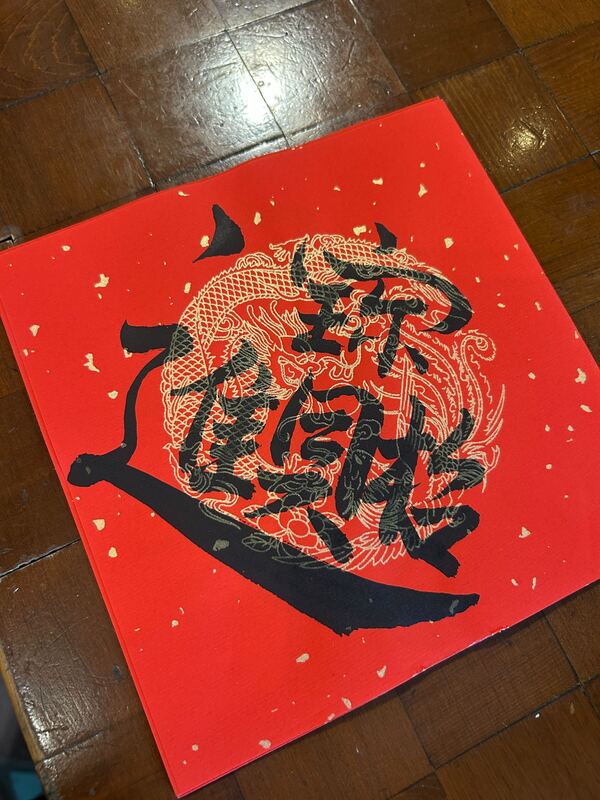
Yet I couldn't help thinking: they clearly have very little money left, and yet they insist on spending it every year on greeting cards just to say thank you to us... Is it really necessary? Sometimes I might even fail to respond to them simply because there are too many letters.
When I wrote to ask them about this, the students replied and resolved my doubts: because inside the high walls, this is the only way they can thank those who once reached out a hand to them.
Sharing this, many people might wonder: "Why does the JRF handle letters from inmates in prison?" Since they dared to commit a crime, being locked up is only natural; it seems reasonable that they have a hard time; so why spend so much effort caring for this group of people?
Since coming to the Foundation, the most common things people say to me are none other than these: "They are just inmates, what human rights do they need?", "When they committed crimes, did they ever think about the people they hurt?", or "If your family member were hurt, would you still view them this way?"
Yet, in truth, before I came to the JRF, I felt the same way. I believed society had no need to waste resources investing in these criminals; they deserved to pay the price, they ought to have a hard time, and they were not qualified to possess so-called human rights.
If that is the case, why am I now running around on the path of crying out for their human rights?
"Everyone can go astray at some point. Most people are simply luckier and do not slip through the net; whereas those unfortunate ones are often let go of very early on. By the time we notice and want to pull people back, it takes much more effort." These words came from a teacher of mine during my university days.
She is also a member of the JRF's Prison Advocacy Committee, having long cared for prison-related issues. I remember that my interaction with her back then was merely a criminal law case study class. After finishing the course and graduating, I thought it unlikely that I would ever cross paths again with the teachers who had instructed me. But the JRF brought us back together—making me marvel at how wondrous fate can be.
The reason her words struck such a deep chord with me is perhaps because I, too, was once someone who "almost slipped through the net." And I happened to be the "lucky" exception she spoke of. But what about them? Can they be as lucky as I was?
I think people inevitably have moments of behavioral deviation, and may even stumble into an abyss and be unable to turn back because of it. No one is born wanting to be a bad person, nor does anyone decide during their upbringing that they ought to walk the path of crime. In the real world, the sunlit earth also harbors unseen shadows—who goes out of their way to catch those people?
So why does the JRF want to understand conditions in prisons? And why discuss so-called "human rights"?
In fact, this issue has never been about criticizing prisons themselves, but about criticizing the entire system. I have always believed this is not merely a problem for individual prison facilities. Prisons are not bottomless pits for containing crime, nor should prisons be made to shoulder the entire society's crime rate. Given how high Taiwan's custodial security needs are, sometimes what needs attention even more is the plight of correctional officers. All of this is closely intertwined with inmates' rehabilitation and reintegration, whether they can successfully return to society, and recidivism rates.
"Is prison meant to make garbage stay garbage forever, or is it meant to give them a chance to turn over a new leaf? After all, so-called bad people will eventually leave prison and return to society." These words came from a letter written by a student, and I could see the helplessness and cries in his words.
Perhaps, from the day one steps inside the high walls until the day one leaves prison, what we truly ought to consider is how to help these people who have already been dropped by society and disconnected from the outside world due to years of isolation. One day, when they step out of prison and see a different asphalt road—a bustling road where everyone holds a smartphone, something they, confined within high walls for years, may have never seen or used—can they, disconnected from society, truly step back onto a sunlit path and never look back?
Many students preparing to apply for parole write to me happily, yet the replies I send back are a series of questions.
"Have you found a place to live? You cannot pass parole without a place to live. Do you have a specialized skill? You cannot survive in this society without a specialized skill. Have you saved any money while in prison? There are many things that cost money once you get out—do you have anyone who can help you?" Words like these seemed like pouring a basin of cold water to extinguish their eagerness to be released. Originally, I expected very few people would reply to my nagging, but to my surprise, most of the students replied to me earnestly, one by one.
Some said they had already found a job and told me not to worry. Some wrote very long letters detailing their own stories. Others asked if they could come visit me at the JRF after their release—and of course, I said yes.
In truth, the JRF primarily handles legal and prison-related issues. Students write to us when they have legal problems, and write when they encounter situations in prison, as if this were an outlet for them to seek an external connection. And that is indeed true: because some inmates inside correctional facilities have no friends and have lost their families, the only thing remaining is perhaps us, striving to respond to them. But in reality, I do not reply just to offer them comfort; rather, through this method, I try to reach out to each and every one of them squatting in the dark corners within those letters, answering their questions and resolving the difficulties they face.
Just imagine—with human rights stripped away inside prison, what do you think these people will do once they are released?
Will they greet the sunshine and return to the right path? Or will they climb over the high walls to take revenge on society?
Three years of time have flown by in a flash. Amidst the busy days at the JRF, I am well aware that my own abilities are not enough to catch every single person in time when their behavior goes off course.
Yet I hope...
After coming to the JRF, I am able to catch every single letter they send.
This article is an AI-generated translation of the original Chinese text. In the event of any discrepancy, the Chinese version shall prevail.