
JRF Newsletter: August 2025
Rule-of-Law Challenges in the Digital Age: Have We Kept Pace?
Last edited: 2026-11-03

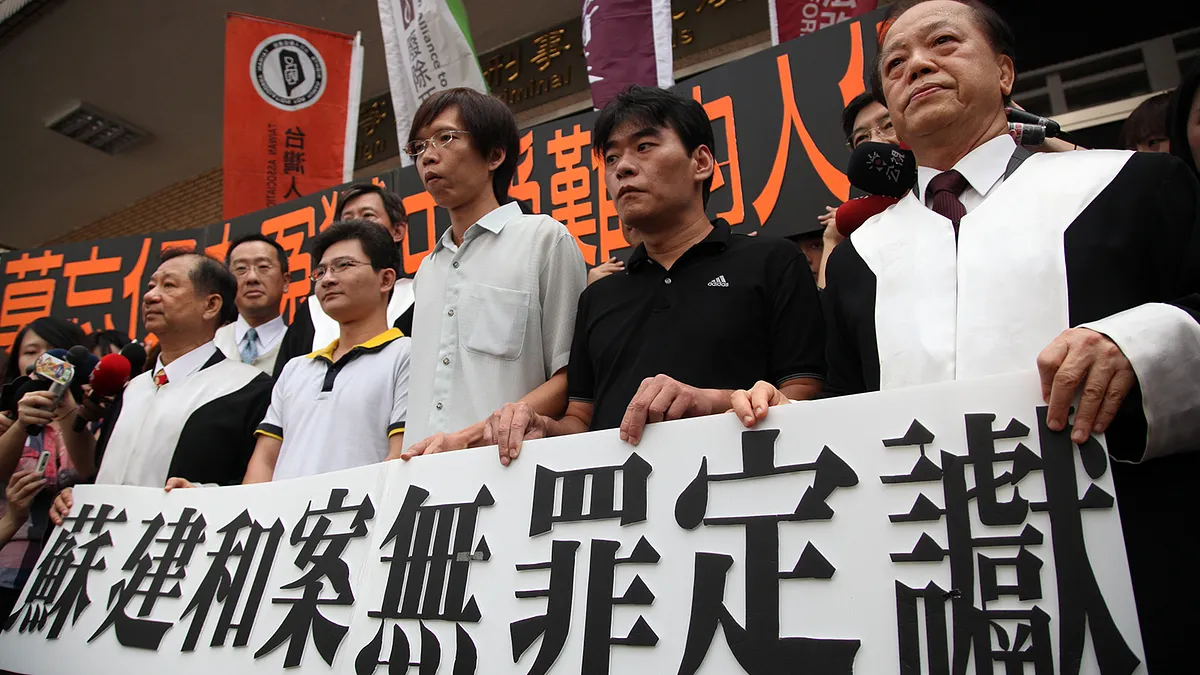
Regarding the compensation case involving Su Chien-Ho, Liu Bing-lang, Chuang Lin-xun, and their families, the Supreme Court announced its ruling on August 21, 2025, via the Judicial Yuan's Principal Judgment Announcement Inquiry System: "The original judgment is set aside, and the case is remanded to the Taiwan High Court."
This marks the second time the Supreme Court has set aside and remanded this case. The volunteer legal team expresses deep regret that the judiciary failed to stem the losses earlier for the miscarriage-of-justice victims Su, Chien-Ho, Liu Bing-lang, Chuang Lin-xun, and their families, whose lives have been heavily impacted by this case. They have issued the following statement:
I. The Su's oCase Is Not Over: How Many 35 Years Does an Ordinary Person Have?
This case is one of Taiwan's most prominent wrongful death penalty cases. In 1991, Su Chien-Ho, Liu Bing-lang, and Chuang Lin-xun were implicated in the murder of the Wu couple in Hsichih Township, Taipei County. Without objective evidence proving their involvement and relying on confessions obtained through torture, the court wrongly convicted the three men in 1995, sentencing each to two death sentences and deprivation of civil rights for life. Fortunately, on May 18, 2000, through the unremitting efforts of the volunteer legal team, the High Court ruled to open a retrial. After the Supreme Court remanded the retrial case to the High Court for retrials three times, the High Court finally delivered its third retrial judgment on August 31, 2012, ruling that Su Chien-Ho and the other two men did not participate in the crime and declaring them not guilty with finality.
From the moment Su Chien-Ho and the other two were accused of the crime—from age 18 to 39—they spent 21 years proving their innocence. Yet today, nearly 35 years later, nearly 13 years after the criminal case was finally declared not guilty, and 5 years after the Supreme Court's first remand, Su Chien-Ho and the other two are still facing a criminal incidental civil compensation lawsuit brought by the victim's family, still having to prove to the judicial system that the three of them are actually the victims of the judiciary.
After the criminal case became final, the civil court successively reviewed the case, with both the first and second-instance courts ruling that Su Chien-Ho, the other two men, and their families bore no liability for damages. On August 26, 2020, the Civil Division of the Supreme Court set aside the High Court's ruling and remanded the case for the first time. The reasoning for the remand—stating that "the original court's conclusion that it was insufficient to establish Su Chien-Ho was not tortured, based on the prosecutor's failure to meet the burden of proof regarding the absence of torture during the criminal proceedings, particularly conflated the burdens of proof of the criminal parties and the civil parties"—severely highlighted the judicial system's inadequate understanding of the state's responsibility to prevent torture.
The reasoning for the current remand is not yet known, but Su Chien-Ho and the others continue to drift within the judicial system.
II. The Principle of Speedy Trial Cannot Be Overlooked: Judicial Delay Equals Secondary Victimization
The Criminal Speedy Trial Act stipulates that if a case has been pending before a first-instance court for more than 8 years without a final judgment, it may infringe upon the defendant's right to a speedy trial. Although civil litigation contains no identical provision, the 13-year delay in the civil litigation of this case has severely infringed upon the rights and interests of the parties involved, amounting to secondary victimization.
The state has a duty to provide "speedy" judicial relief procedures, whether in criminal, civil, or administrative cases. This 35-year judicial ordeal has not only caused immense suffering to the parties involved but has also severely wasted vast judicial resources. Upon receiving the judgment, the volunteer legal team will carefully study the grounds for the remand and continue to fight for Su, Chien-Ho and others, as well as for fairness and justice in Taiwan's judiciary.
III. Face the Harm of Torture and Promptly Pass the Enforcement Act of the Convention against Torture
The reason Su Chien-Ho and the two others became victims of a miscarriage of justice was crucially because the police subjected them to multiple instances of torture in order to obtain a criminal confession. In this regard, the Control Yuan had previously censured the Ministry of Justice and the National Police Agency. In the final judgment acquitting Su Chien-Ho and the others, the court also combined "testimonies of witnesses in the same detention cell," "physical examination results upon entering the detention center," and "records of painkillers dispensed" to conclude that Su Chien-Ho and the others had indeed been tortured, confirming the existence of acts of torture.
The United Nations Convention against Torture and Other Cruel, Inhuman or Degrading Treatment or Punishment (CAT) requires state parties to take effective measures to prevent acts of torture and prohibits the use in judicial proceedings of evidence obtained through torture.
Draft versions of the Enforcement Act of the Convention against Torture, which domesticates the principles of the Convention, were submitted to the Legislative Yuan for review in 2018 and 2020. In May 2022, the Executive Yuan released the "National Human Rights Action Plan," wherein the government once again promised to list the Enforcement Act of the Convention against Torture as a priority bill to be passed as soon as possible.
Furthermore, during the 2024 legislative elections, the JRF raised seven questions regarding judicial reform. Major political parties all responded that eradicating torture and establishing a national preventive mechanism for torture are a consensus between the ruling and opposition parties, and they promised to support the passage of the draft Enforcement Act of the Convention against Torture in the Legislative Yuan upon being elected.
Yet to this day, the draft Enforcement Act of the Convention against Torture remains merely a draft.
The volunteer legal team hereby calls upon the ruling and opposition parties and administrative organs to promptly fulfill their pre-election promises to the people and to human rights, promote the passage of the draft Enforcement Act of the Convention against Torture, grant domestic legal effect to the principles of the Convention, establish systemic mechanisms to prevent torture and repair damages caused by torture, and ensure that Taiwan's judiciary does not repeat the tragedy of the Su, Chien-Ho case.
- Further Reading:
- Further Listening:

Have you ever had this feeling: the moment you "think" about buying something, an advertisement pops up immediately; the moment you talk about travel with a friend, your phone starts pushing flight tickets, suitcases, and travel guide apps? Make no mistake, this is the "data age" in which we live.
Yet all of this is not just about the interaction between you and your phone, but also about the distance between you and the state, the judiciary, and authorities.
Our daily lives have long been digitalized: making medical appointments, shopping online, filing taxes, applying for subsidies, and even police investigations and court judgments—digital technology has deeply intervened in public governance and the judicial system.
This is an exhibition about choice.
You can choose to remain a digital citizen who is silently monitored, predicted by algorithms, and ignored by the judiciary,
or you can choose to start thinking—
how else can the judiciary protect us? Can the system still be repaired?
Freedom is not a given; it needs to be understood, defended, and redefined. Judicial reform in the digital age is no exception.
The Final Room: When Privacy Becomes a Commodity, Whose Hands Are Left with the Choice?
Text | Intern, Taichung Office, JRF
"Fleeing to the Final Room" is the JRF's special digital rule of law exhibition for the second half of the year. Last semester, I was exposed to quite a few discussions regarding AI rule of law and digital human rights, so this theme was not unfamiliar to me. I particularly like the name of this exhibition; it is not meant to make us reject digital data and technology, but rather to remind viewers that data autonomy can actually be guarded. "The Final Room" feels like a sanctuary to temporarily escape the digital torrent and catch one's breath. This is an exhibition about "choice."
Walking into the first exhibition area, four mannequin models are holding a tablet, a phone, a wallet... These seemingly ordinary daily items are actually "building files" for us every day. Visitors can freely pick up items they feel are important or use every day, bring them to the next exhibition area, and see with their own eyes how data transforms from "being used" to "being consumed."......Read More
When Convenience Becomes Shackles: Privacy, Freedom, and Surveillance in the Digital Age
Text | Tien Tzu-An | Intern, Taichung Office, JRF; Department of Psychology and Department of Social Work, Chung Shan Medical University
This time I visited the JRF special exhibition, which primarily focuses on issues such as our personal data, digital technology, and bills. While these issues may seem distant from us, they are in fact closely intertwined with us—ranging from everyday online shopping data to personal identification data or national security, everything is inseparable from technology and the internet. However, information security is a difficult challenge; blurred boundaries or definitions and dense blocks of data consent terms often cause people to glance for a second, scroll straight to the bottom, and click agree, causing people to inadvertently leak their data without realizing it. This exhibition touched upon data trading, IMSI catchers, personal data leaks, digital IDs, and the draft Digital Intermediary Services Act. I have personally been paying attention to data leaks for a while. From my own legal name down to my phone number and ID number, I deliberately keep my real name off the internet to prevent personal information and social media accounts related to me from being easily searched, because it feels like a very exposed thing to do. Yet even so, when encountering data consent terms, I still get lazy and fail to read the details carefully. Information security is truly a difficult task that requires one's own conscious maintenance—let alone when power infiltrates the operations of technology, how can ordinary people guard against it?......Read More

In 2016, in the Wisconsin case State v. Loomis in the United States, the judge used the AI risk assessment tool COMPAS as the basis for sentencing, rating the defendant's risk of recidivism as "high risk" and sentencing him to six years in prison. The defendant questioned the accuracy and bias of the COMPAS system; the Supreme Court accepted the high accuracy of the AI tool, and this case sparked heated discussions on "the legitimacy and risks of AI intervention in judicial decision-making."
As AI technology is gradually applied across various industries and public decision-making, whether AI's estimations, recommendations, and decisions are fairer and less biased than humans warrants in-depth exploration. Perhaps we should question: Are algorithms truly fairer and more neutral than humans? When data itself carries bias, or when algorithms are overly black-boxed, could the judgments or recommendations made by AI simply be another form of reproduced bias?
In this lecture, Tsui Chia-Wei, a member of the JRF Digital Rule of Law Group, will analyze with everyone "Why sentencing and judgments cannot be entirely left to machines?" and further explore "The differences between legal data and general 'big data,'" and how we should view the hidden power structures and human rights risks behind AI. We have also invited Attorney Tsai Meng-Han, Secretary-General of the Changhua Bar Association, to serve as the moderator for this session, digging deep together into the impact of the development and use of artificial intelligence on social contexts and human rights.
When Judgment Is Handed Over to Algorithms: Can the Judiciary Still Be Trusted?
Text | SU Kuan-Jung | Intern, Taichung Office, JRF; Department of Social Work, Tunghai University
This lecture primarily discussed the legitimacy and risks of AI intervention in judicial decision-making, prompting everyone to think about the institutional and ethical challenges that may arise once artificial intelligence enters judicial judgments.
At the beginning of the lecture, the speaker asked everyone to imagine if they were a judge whose desk was piled high with criminal, civil, domestic, and labor litigation case files, with performance evaluations and case completion volumes closely tied together—meaning promotions for the following year would be affected if cases were incomplete. With overwhelming caseloads crushing people for breath, when the speaker further mentioned, "If there were an AI-assisted system capable of organizing case files for judges, comparing precedents, and even generating draft judgments, saving 25% of judgment time, would you use it?", I weighed the pros and cons and found myself unable to reach a conclusion within a short time. While improving efficiency is certainly important, if AI makes mistakes, will due fairness be sacrificed? Later, audience members were also allowed to discuss what they imagined an AI judge to be like. I envision an AI judge as leaning more toward a cold robot capable of absolute rationality and rapid analysis of massive caseloads. While it can handle cases impartially, it also lacks warmth due to its detachment, and lacking human emotion, it is unable to understand or empathize.......Read More
When the Judiciary Meets AI: Training Wheels for Efficiency or Risks to Justice?
Text | Tien Tzu-An | Intern, Taichung Office, JRF; Department of Psychology and Department of Social Work, Chung Shan Medical University
AI or algorithms have long quietly infiltrated our daily lives. Voice assistants on our phones help schedule itineraries, streaming platforms recommend TV shows we want to watch based on algorithms, and even when we mention wanting to buy something in daily conversations, relevant ads begin appearing on our social media platforms and elsewhere. AI acts like an invisible infrastructure, silently changing our lifestyle habits and methods. As we gradually grow accustomed to relying on AI to do homework, organize reports, and even write articles, it is not hard to imagine that introducing AI into the judicial field is merely a matter of time. Yet unlike ordinary entertainment or homework, judicial judgments carry freedom and rights. Once artificial intelligence is allowed to participate, the issue is no longer just about whether it is "convenient," but whether justice can stand firm.......Read More

This lecture was delivered by Tsui Chia-Wei, with the theme of the application of artificial intelligence in the judicial field. The discussion prior to the opening noted that five years ago, it was originally thought that lawyers' work would be difficult for AI to replace; however, with the rapid development and rise of AI in recent years, it has triggered reflections on the application of artificial intelligence in the legal field and how we should define usage norms.
I. Starting from a Generated Image: Good Input Leads to Good Output
The speaker began by using an AI-generated image of himself to illustrate that the operation of artificial intelligence is a process where "input determines output." The clearer and more complete the input data, the closer the generated result will be to correct; conversely, if the input itself is vague or biased, problems will inevitably arise in the output. This point is even more crucial for judicial AI, because any erroneous judgment can directly affect the rights and interests of the parties involved.
The speaker explained that artificial intelligence does not truly "understand" cases. It merely learns connection relationships between words in data through mathematical vectors (algorithms) and then simulates them.
Several key limitations include:
➤ Boundaries of Knowledge: AI's knowledge comes entirely from data fed into it by humans, and contextual information is not automatically incorporated.
➤ Inherited Biases: Because data comes from humans, AI also inherits human biases, discrimination, and cognitive errors.
➤ Comparison of Strengths and Weaknesses: In processing massive, repetitive, and homogeneous data, AI far surpasses humans; but in areas requiring complex situational judgment and life experience, AI falls far short of humans.
II. Help and Problems of Artificial Intelligence Intervention in Judicial Judgments
Entering the main topic, the speaker discussed the daily life of legal professionals: massive caseloads, routine overtime, and the fact that every single judgment must not be treated carelessly. Efficiency affects performance reviews and promotions, and judgments also concern every related family. Under such pressure, AI-assisted judgment systems seem to offer a solution. Taiwan's Judicial Yuan once trained an AI judgment system in anticipation of sharing judges' workloads. The speaker gave an example: if AI could preliminarily adjudicate drug cases and fraud cases (which account for the vast majority of Taiwan's criminal cases), judges might be relieved of burdens and could even have more time on weekends to accompany their families.......Read More

Have you ever imagined what it would be like to discuss artificial intelligence governance under the eaves of a shrine with a thousand-year history? The "2025 AI Governance Summer Course," organized by the Center for Public Policy Studies of Kyoto University, unfolded against precisely this background. Participants from all over the world engaged in four days of intensive classes and discussions within the millennium-old Yasaka Shrine.
Nearly thirty attendees included an AI legal lawyer from Austria, a manager from a telecommunications company in Ghana, a privacy specialist from a major Japanese corporation, a secretary from the Embassy of Canada in Japan, and participants from international NGOs in France. During this four-day intensive course, in-depth discussions revolved around the impacts of artificial intelligence in areas such as democratic elections, industrial policy, lawmaking, and civic participation. Different sessions echoed one another, outlining the opportunities and challenges of the AI era from multiple angles.
▌New Democratic Challenges in Civic Participation and Human-Machine Interaction
The first day of classes consisted of three AI-related forums focusing on how artificial intelligence affects democratic operations and electoral processes, exploring the ethical and legal boundaries of human-robot coexistence, and examining how public departments and private enterprises can collaborate to promote AI governance.
During the first discussion, Professor Nathaniel Persily of Stanford University pointed out that AI possesses both the capacity to promote participation and generate risks, while posing more challenging issues in speed, permeability, and opacity. Taking the 2024 US election as an example, he explained how AI-generated fake news could trigger the "liar's dividend": excessive warnings regarding AI-generated fake news would instead weaken the public's judgment. Hou I-Hsiu, Secretary-General of the Taiwan AI School Foundation, shared civic tech practices such as g0v hackathons and vTaiwan, emphasizing that democratic resilience requires robust infrastructure, long-term value cultivation, and the incorporation of AI into civic education, making learning about AI as fundamental a skill for citizens as learning to swim.......Read More

🔎 Motion Title
Affirmative: Real-name registration on the internet does more good than harm to Taiwanese society
Negative: Real-name registration on the internet does more harm than good to Taiwanese society
🔎 Explanatory Note
With the continuous evolution of digital technology, the internet has shaped an entirely new public space, attracting more and more people to voice their opinions and receive information here. According to We Are Social's "Digital 2025" report, as of early 2025, Taiwan's internet-using population has reached 22.1 million, accounting for 95.3% of the total population, demonstrating extremely high internet penetration that continues to grow steadily. Whether in daily life, commercial activities, or political participation, the influence of the internet is expanding daily, and the problems derived from it are gradually surfacing.
The anonymous nature of the internet, where statements are difficult to trace back to real identities, fills platforms with massive amounts of fake news. In the 2024 fake news perception survey, the proportion of Taiwanese citizens receiving fake news has risen significantly year by year, with as high as 95% of people having received fake news online in 2024. The more people care about an issue, the more room there is for influence and manipulation. Comparing the spread of fake news during the 2020 and 2024 Taiwan presidential elections, the Taiwan FactCheck Center found that multiple fake news routines and narrative frameworks that appeared in 2020 recurred in 2024, such as manipulating war fears, various forms of "skepticism toward the U.S.," and various rumors of election tampering before and after the polls. Fake news not only manipulates public opinion but progressively erodes the public rationality and social trust upon which democracy relies.
For teenagers in the internet generation, the anonymous internet has also become a means of bullying and ostracizing peers. A report on internet bullying experiences among Taiwanese children and youth by the Child Welfare League Foundation found that nearly three-quarters of children and youth feel that internet bullying is severe, and as many as 76% have witnessed or personally experienced victimization online. The same report points out the reasons: the internet possesses two characteristics—"anonymity" and "fast dissemination speed." Therefore, perpetrators believe their identities will certainly not be exposed, and thus send out messages without thinking; however, the internet knows no bounds, spreading from one person to ten, and ten to one hundred, quickly reaching everywhere and causing long-term harm to victims.
Facing such dilemmas, real-name internet registration may become a solution. Internet real-name registration refers to requiring internet users to undergo identity verification and provide personal data such as real names and ID numbers when registering or using internet services, thereby closely linking internet accounts with real identities, making people more cautious before speaking. When fake news or hate speech appears, governments and platforms can quickly trace the source and take legal measures for punishment, thereby safeguarding social order and public safety.
However, opponents worry that internet anonymity was the cornerstone for the past advancement toward freedom of thought and democracy. Although Taiwan is already on the path of democracy, implementing real-name internet registration could create space for the abuse of power. Moreover, even with a democratic system, society is not necessarily free, and the anonymous nature of the internet can provide a protective umbrella for different political views or sensitive issues. Details of private life, controversial political viewpoints, criticism of employers, and so forth—when the entire world can read them, no one is willing to use their real name for discussion. Freedom of speech requires a protected space, and an anonymous internet provides precisely such a platform.
Furthermore, for Taiwanese society, information security is something that needs to be faced with even greater caution. The Minister of Digital Affairs stated in 2024 that, "Due to geopolitical relations, Taiwan frequently suffers from cross-border cyberattacks—about 15,000 times per second, making the frequency of attacks four times that of other countries and making it the most heavily attacked place in the globe." Real-name internet registration collects massive amounts of user personal data, which also means that once databases are subjected to hacker attacks or management negligence, personal privacy and security will face risks. For example, in 2007, South Korea began implementing internet real-name registration, yet four years later, the South Korean portal Nate and the country's largest social website Cyworld were hacked, resulting in the theft of personal data belonging to approximately 35 million users. Once user personal data is leaked, mild consequences include endless telemarketing calls, spam, or text messages, while severe consequences can result in agonizing outcomes such as identity theft and bankruptcy.
Is internet real-name registration a means to protect public interests and safeguard democracy, or will it exert a chilling effect on individuals, thereby reducing the exchange of opinions in the public sphere? Will the requirement of real-name identity for speakers impose excessive restrictions on rights such as privacy and freedom of speech? In particular, as the drafting organization of the "Digital Basic Act," the JRF has paid attention to the connotations of emerging rights in the digital age in recent years and is especially conscious that whether to adopt real-name registration involves not only traditional conflicts of fundamental rights like freedom of speech and privacy, but also how these rights respond to challenges brought by emerging technologies—such as the right to data minimization, the right to access encryption tools, and the differences in the nature and scope of the right to anonymity versus traditional rights. We particularly look forward to a brilliant clash among the debaters on stage within the diverse context of rights. This summer, the CDPA and the JRF once again cooperated to hold the JRF Cup, hoping that the dialogue and reflection of the debaters on stage will add more young voices to the complex field of digital rights!
🔎 Competition Video Records

Text | WU Chia-Jung | Judge for the 2025 JRF Cup Debate Tournament; currently a student at the Interdisciplinary Graduate Institute of Law, National Taiwan University
▌Why Discuss "Internet Real-Name Registration"?
In the internet world, do you speak using your real name or an anonymous account?
Some believe anonymity protects freedom of speech, while others feel that anonymous environments foster bullying, fake news, and crime. This year's JRF Cup Secondary School Debate Tournament motion: "Real-name registration on the internet does more good than harm to Taiwanese society / Real-name registration on the internet does more harm than good to Taiwanese society" aims to discuss the potential pros and cons brought by strengthening the link between internet usage behavior and personal identity.
So-called "internet real-name registration," simply put, means leaving records traceable to a real identity when registering accounts or engaging in specific activities on the internet. Our country already promotes this in limited areas to a certain extent, such as real-name registration for platform advertisements or registering for digital services like shared scooters. But the question is: Should we expand this system to a wider range? Can doing so truly make the internet environment better?
▌What Counts as "Real-Name Registration"?
Before entering the main text, let us patiently unpack the important concepts within the motion:
I. In Fact We Are Already Using Some Form of Real-Name Registration
Many internet platforms today require users to verify via mobile phone number or email in order to register. This type of real-name registration is relatively loose, of low intensity, and gives people room to leave false data. Although it is not as strict as ID card binding or biometric verification mechanisms, it is essentially already a "traceable identity verification mechanism," which is what debaters often call "backend real-name registration." Therefore, discussing "real-name registration" should not simply be thought of as "frontend real-name registration" that forces everyone to post using their real names, but rather placed within a larger framework: if a certain identity verification mechanism allows a user to be traced back to their real identity, it may still count as a form of real-name registration.......Read More

Text | LAI I-Tzu | Judge for the JRF Cup; Secretary of CDPA, Chinese Debate Promotion Association
The author was fortunate to be invited as a judge for this year's JRF Cup debate competition and uses this article to record observations on the motion and the competition conditions. The following discussion will proceed from a judge's perspective, covering two parts: motion design and competition operation.
I. Commentary on the Motion
This competition motion, "Real-name registration on the internet does more harm than good to Taiwanese society," echoes to a considerable extent the commonly seen "Anonymous hate pages do more good than harm / more harm than good to Taiwanese society." The difference is that anonymous hate pages usually discuss the anonymous atmosphere of a single social platform, whereas the scope of "real-name registration" is much broader, covering everything from frontend real-name and backend real-name on platforms like Facebook and Threads, to "frontend anonymous, backend real-name" systems on partially anonymous communities (such as Dcard). Therefore, the discussion of this topic is not directed solely at a single platform, but rather confronts the social effects brought by an entire "real-named internet environment."
When brainstorming the motion originally, the hope was to have students think about the significance of the right to privacy to every individual citizen: if I am a law-abiding "good citizen" who has done nothing shameful, do I not need protection from the right to privacy? Under this original intention, it was decided to set the topic in a policy practice discussion closely tied to every citizen's life while facing risks to privacy security, and thus "internet real-name registration" was selected as the debate motion.......Read More
This article is an AI-generated translation of the original Chinese text. In the event of any discrepancy, the Chinese version shall prevail.
Education