
JRF Newsletter: September 2025
For Those Wronged by the State, Harmed by Their Families, and Silenced by the System: We Have Something to Say
Last edited: 2026-08-24
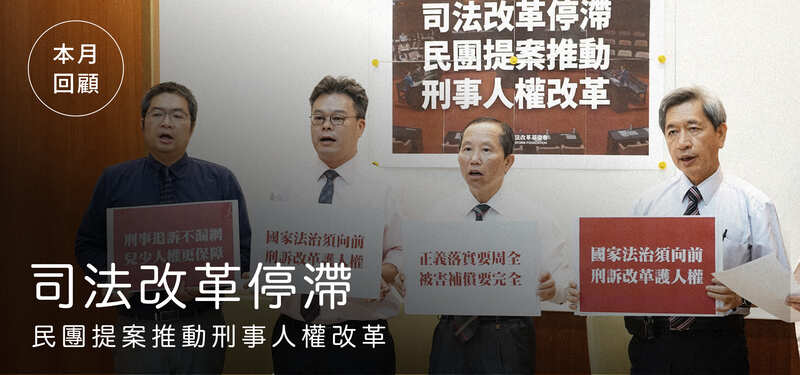
This month marks the opening of the Legislative Yuan's new session, the fourth since President Lai Ching-te took office. Since President Lai assumed office, the Executive Yuan has not proactively proposed bills or plans to advance judicial reform. Regarding the Judicial Yuan, a lack of proactive action has also persisted due to continuous boycotts against the nominee for the new President. Conversely, the "Whistleblower Protection Act" was finally passed this year under the leadership of the opposition parties; although it lacked thorough discussion during the legislative process, the ruling party's arguments that the bill "should be carefully deliberated" and "should not be rushed" appear hollow against the backdrop of this legislation being delayed for over a decade.
Our Foundation believes that the ruling party, holding administrative resources, bears the unshirkable and primary responsibility for advancing judicial reform. Regardless of whether the ruling party holds a majority in the Legislative Yuan, ample room for improvement remains in areas such as alleviating judicial overwork and protecting crime victims. However, over the past year and more in power, we have failed to see the Lai Ching-te government engage in deep reflection or put forth a vision for judicial reform and human rights protection.
Naturally, judicial reform is the responsibility of the government, not the exclusive domain of the ruling party. Therefore, we have compiled the "Criminal Human Rights Bills" focused on by our Foundation in recent years, which encompass directions such as safeguarding defendants' criminal human rights, protecting crime victims, prohibiting torture, reforming criminal forensics, and fully implementing the principle of non-publicity of investigations. We earnestly urge all party caucuses and legislators in the Legislative Yuan to reference civil society proposals and continue advancing judicial reform. We propose the following 6 reform recommendations:
1. Amend the Code of Criminal Procedure to defend criminal justice human rights
2. Extend the statute of limitations for the prosecution of defendants in juvenile sexual offenses
3. Review the limitation period for claiming "Crime Victim Compensation" to rectify past overly stringent errors
4. Implement the principle of non-publicity of investigations and thoroughly investigate and hold accountable those responsible for the leakage of investigative information
5. Pass the Enforcement Act of the Convention against Torture to actively prevent state and police violence
6. Establish a "National Forensic Science Committee" to address deficiencies in forensic science
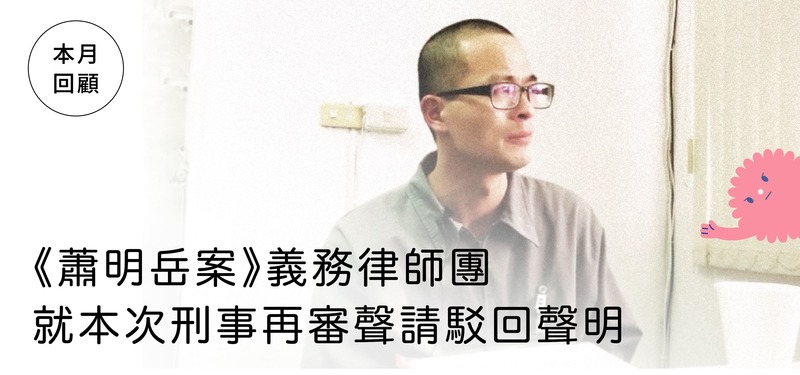
Regarding the case of Hsieh Ming-yueh, who was wrongfully convicted of drug trafficking, the Supreme Court dismissed the interlocutory appeal filed on behalf of Hsieh Ming-yueh by the volunteer legal team on September 4, 2025 (the 114th year of the Republic), via Criminal Ruling 114-Tai-Kang-1453.
The Taiwan Association for Judicial Reform (TAJR) and the volunteer legal team for this case express deep regret over this decision and issue the following statement:
1. Co-defendants have retracted their statements, yet the road to exoneration remains indefinitely distant
Hsieh Ming-yueh, who worked as a real estate agent and had no prior criminal record, was implicated in a transnational drug-trafficking case in 2009 (Year 98 of the ROC). The courts determined that Hsieh Ming-yueh remotely instructed accomplices to travel to Cambodia to negotiate drug deals and subsequently mail heroin back to Taiwan concealed inside books. However, not only was there no direct evidence linking Hsieh Ming-yueh to the crime, but the testimonies of other co-defendants—upon which the court relied to find Hsieh guilty—were successively retracted during subsequent trial proceedings. Even so, Hsieh Ming-yueh was sentenced to life imprisonment in 2013 (Year 102 of the ROC) by the Supreme Court in a self-rendered judgment, and has now been imprisoned for 12 years.
Both the Supreme Court's ruling dismissing the interlocutory appeal and the Taiwan High Court Taichung Branch Court's ruling dismissing the present motion for a retrial (Criminal Ruling 114-Sheng-Tsai-22) concluded that the volunteer legal team failed to present new evidence sufficient to shake the original final judgment. Although co-defendants Sung O-hsien (宋O仙) and Sung O-hua (宋O華) repeatedly retracted their statements after the original judgment became final, testifying that Hsieh Ming-yueh indeed did not participate in the case, the courts during the investigation period for the current retrial motion repeatedly stated that "the original final judgment has already evaluated and weighed the successive testimonies of Sung O-hsien and Sung O-hua," without summoning Sung O-hsien and Sung O-hua to court to testify and clarify the facts. The volunteer legal team expresses deep regret over this.
2. Relief for wrongful convictions remains fraught with difficulty; we urge the swift implementation of the Judicial Reform National Consultative Conference resolution to establish a "Wrongful Conviction Relief Committee"
Although Taiwan's criminal retrial system was amended and relaxed in 2015 (Year 104 of the ROC)—stipulating that the existence of "new facts or new evidence" is not limited to those that existed or were established before the final judgment and were missed in prior investigations and evaluations, and introducing the "comprehensive judgment theory" to avoid miscarriages of justice—according to the Judicial Yuan's statistical annual reports, between 2015 and 2023, the proportion of retrials successfully initiated remains under 2%. Ineffective relief for wrongful convictions has long been a persistent bottleneck that Taiwan's judiciary urgently needs to overcome.
Resolution No. 5-4 of the 2017 Judicial Reform National Consultative Conference resolved: "Establish an independently functioning 'Criminal Final Case Review Mechanism' (such as the independent mechanisms in the United Kingdom and Norway, i.e., the criminal cases review commission system), dedicated to investigating final guilty verdicts and applying for or prompting the initiation of retrials for the innocent." Based on this, TAJR also proposed a civil society draft of the "Four Laws for Redressing Wrongful Convictions," looking forward to incorporating the "Wrongful Conviction Relief Committee" system into Taiwan's judiciary by amending the Control Act, the Organic Act of the Committees of the Control Yuan, the Court Organization Act, and the Code of Criminal Procedure.
Although the Ministry of Justice enacted the "Directions for Prosecutorial Offices Handling the Review of Final Guilty Verdicts" in 2017 and established the "Final Guilty Verdict Review Committee" to discover the truth and prevent wrongful convictions, this mechanism lacks a statutory basis, and its investigative methods are restricted to reviewing old case files without the power to initiate compulsory investigations. In practice, because review committee members receive only attendance fees without sufficient administrative support resources, it is difficult for them to thoroughly examine complex case files and evidence, often forcing them to rely heavily on the opinions of the handling prosecutors. Furthermore, with no statutory time limits required for the procedures, the initiation of relief is sluggish and random, rendering its efficacy extremely limited. Taking the Hsieh Ming-yueh case as an example, even though the case lacks direct evidence of guilt and key co-defendants have retracted their statements, such significant doubts have still failed to secure relief through this mechanism.
The volunteer legal team also calls upon the authorities here: the vindication of a wrongful conviction is justice delayed, and if the state fails to deliver even delayed justice, it will betray the public's trust in the judiciary. Relevant authorities must squarely face the damage inflicted upon the fair and impartial image of the judiciary by Hsieh Ming-yueh's prolonged unjust imprisonment, swiftly implement the resolution of the Judicial Reform National Consultative Conference, establish a "Wrongful Conviction Relief Committee," and prevent more "Hsieh Ming-yuehs" from emerging.
The volunteer legal team will also continue to study subsequent retrials and extraordinary relief matters for this case, persisting in the fight for Hsieh Ming-yueh's innocence.
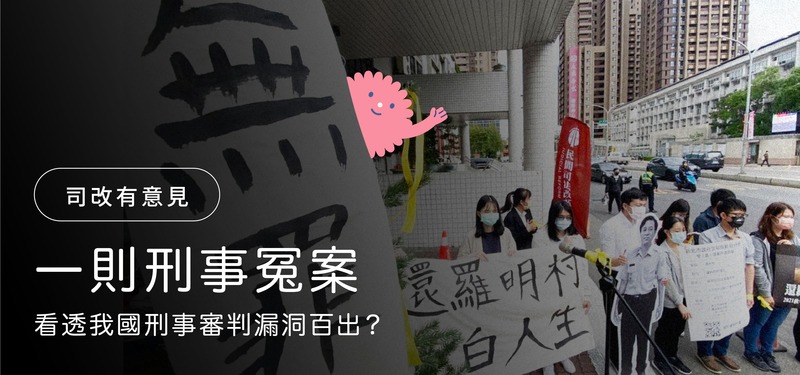
◎ Lin Shih-hsun | Volunteer Lawyer for the Lo Ming-tsun Case, Standing Executive Committee Member of TAJR
◎ Liao Wei-cheng | Associate Researcher at the Judicial Reform Foundation
The seismograph of the constitution / The applied constitution / The implementation act of the constitution / The Magna Carta of the state governed by the rule of law...
The statements above appear on the back cover of scholars' textbooks on the "Code of Criminal Procedure," meaning that the "Code of Criminal Procedure," as the procedural law used by the state to prosecute crimes, is most capable of directly testing whether a state's constitutional human rights protections are truly implemented. And if one asks how our country's "implementation status" is, the author believes perhaps the "Lo Ming-tsun Case" can serve as one of the representative testing cases.
1. Brief overview of the "Lo Ming-tsun Case"
Lo Ming-tsun was originally a police officer who once served as the head of the Criminal Investigation Division of the Taipei County Sanchong Precinct. Following two shootings that occurred successively in Shulin, New Taipei City, in 1997, he participated in the investigative proceedings for both cases. Unexpectedly, after the two shootings (hereinafter referred to as the "previous case" and the "subsequent case") were finalized by court convictions, Lo Ming-tsun was found to have accepted a bribe of NT$500,000 in the previous case, and to have agreed to accept a bribe of NT$500,000 and orchestrated the finding of a scapegoat for the real perpetrator in the subsequent case, thus constituting the offenses of accepting bribes in breach of official duties and agreeing to accept bribes in breach of official duties, respectively.
2. What issues in our criminal procedures are highlighted by the "Lo Ming-tsun Case"?
Nevertheless, the Lo Ming-tsun Case contains numerous aspects in its trial that warrant discussion (such as the court's reluctance to credit Lo Ming-tsun's alibi, inconsistencies in monetary amounts across witness testimonies, verbal intimidation employed by interrogating personnel, etc.). However, since the purpose of this article is to explore problems on the systemic side of criminal law, this piece will focus on discussing systemic flaws.

◎ Lin Che-chen | Volunteer Lawyer for the Gender Judicial Reform Special Group of TAJR
◎ Patty Teng | Assistant Legislative Researcher at TAJR
Constitutional Court Judgment No. 4 of 2023 (Year 112), the "Irretrievable Breakdown Divorce Case," delivered in March 2023, relaxed the restrictions on the sole-fault spouse applying for a judicial divorce and mandated that legislative amendments be completed within two years. In other words, the amendments that should have been completed by March of this year were only introduced as a draft by the Executive Yuan in February of this year, and have yet to enter substantive deliberations in the Legislative Yuan, while most legislators' draft bills have also stalled or remained at the first reading stage.
What should accompanying measures for "Irretrievable Breakdown Divorce" include?
Taiwan sees approximately 2,500 judicial divorce cases each year. With amendments yet to be finalized, current family court judges can only adjudicate based on the intent of the Constitutional Court judgment, applying it directly in individual cases. For example, the court of first instance (Taiwan Taipei District Court Judgment 111-Hun-305) dismissed the parties' divorce, reasoning that the defendant had expressed a willingness to maintain the marriage, and if the two could rationally communicate and resolve their differences, the possibility of pursuing a happy and fulfilling marital life still existed; thus, the plaintiff's assertion that there were major grounds making the marriage difficult to maintain was unfounded.
However, the second-instance court (Taiwan High Court Judgment 112-Chia-Shang-151) cited Constitutional Court Judgment No. 4 of 2023, holding that the parties had no consensus on life planning, children's education arrangements, and other aspects of married life, and that their deadlock meant the harmonious marital relationship the legislature intended to preserve had already been lost, leaving no practical necessity to forcibly maintain it, ultimately granting the divorce.
As another example, in Supreme Court Civil Judgment 111-Tai-Shang-1366, the case was remanded to the Supreme Court to investigate the parties' fault, and the remand retrial court (Taiwan High Court Taichung Branch Court Judgment 111-Chia-Shang-Geng-Yi-4) also directly invoked the intent of Constitutional Court Judgment No. 4 of 2023, ruling that when the plaintiff is not the sole party responsible for the major breakdown of the marriage, and the emotional foundation of the couple's marital life has fractured and is objectively incapable of recovery, major grounds making it difficult to maintain the marriage can be established, thereby granting the divorce.
However, allowing the judiciary to independently apply judgment intents in this manner leaves the divorce legal framework devoid of comprehensive accompanying measures. During this legislative amendment window, there is only "freedom of divorce," while vulnerable parties, after being divorced against their will, are effectively plunged into even more vulnerable living predicaments.
The Grand Justices emphasized in the judgment that systems such as the distribution of surplus marital property, alimony ratios, and damages should be concurrently reviewed to truly protect vulnerable spouses and children; yet currently, all of these are conspicuously absent.
◎ Sung I-hsin | Standing Executive Committee Member of TAJR, Lawyer at Legal Aid Foundation Taipei Branch
◎ Lin Cheng-ching | Assistant Legislative Researcher at TAJR
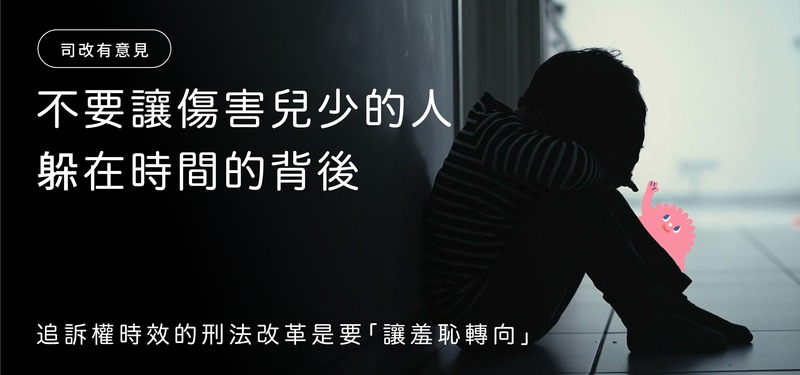
Taiwan's #MeToo movement opened its prelude in May 2023 following the voice raised by a political worker. Its impact expanded from the political sphere to touch upon other fields such as media, arts and culture, film and television, the judiciary, sports, and campuses, and even catalyzed legal reforms in sexual harassment legislation. For instance, in July of the same year, the Legislative Yuan during its recess held intensive discussions and rapid legislative amendments across a two-week provisional session, completing amendments to the Gender Equity Education Act, the Act in Gender Equality in Employment, and the Sexual Harassment Prevention Act, respectively.
While fast-tracking legislation in response to the political crisis triggered by the #MeToo movement superficially resolved systemic defects previously existing in the three gender-related acts, it also overlooked other problems extending from the #MeToo movement. For example, #MeToo claimants faced judicial harassment by respondents via "Retaliatory Defamation Suits," forcing them into silence; or minor survivors were unable to file complaints against perpetrators due to the statute of limitations provisions under Article 80 of the current Criminal Code, thereby losing the opportunity to seek judicial justice.
These issues are, in our view, inescapable judicial reforms in the post-#MeToo era. Coincidentally, in August of this year, the Ministry of Justice announced a draft amendment to the statute of limitations under the Criminal Code, hoping to resolve the judicial dilemma faced by minor survivors. Simultaneously, civil society organizations also submitted civil society versions of amendment opinions regarding the draft's contents, providing more comprehensive legislative guidelines for the Ministry of Justice and the Legislative Yuan to safeguard the judicial rights of minor survivors.
This article is an AI-generated translation of the original Chinese text. In the event of any discrepancy, the Chinese version shall prevail.