

JRF Newsletter: November 2025
35 Years of Wandering the Courts: How Can the Su Case Find Its Way Back to the Dawn?
Last edited: 2026-08-24
Regarding the claims for damages filed by Su Chien-ho, Liu Bing-lang, Chuang Lin-xun, and their families, the Supreme Court revoked the civil judgment of the remanded first instance on August 21, 2025, and remanded the case back to the Taiwan High Court. This marks the second time the Supreme Court has revoked and remanded this case. The judiciary failed to promptly mitigate the damage to the lives of the wrongful conviction victims—Su Chien-ho, Liu Bing-lang, Chuang Lin-xun, and their families—whose lives have been profoundly disrupted by the miscarriage of justice in this case, marking the 35th year of their lives wandering through the courts.
In response, the "Su Chien-ho Case Rescue Task Force," jointly formed by the Judicial Reform Foundation, Taiwan Association for Human Rights, Homemakers Education Foundation, Covenants Watch, Taiwan Alliance to End the Death Penalty, Amnesty International Taiwan, and the Taiwan Association for Innocence, has officially restarted its volunteer group and issued a statement.
On November 28, exactly 25 years after the 2000 event "Walking Toward the Dawn, Fixed-Point Circling," the Su Case Rescue Task Force gathered once again at the Chi-Nan Presbyterian Church to hold the joint press conference titled [35 Years of Wandering the Courts: How Can the Su Case Find Its Way Back to the Dawn?], inviting the public to pay attention to and participate in the actions surrounding the Su case.
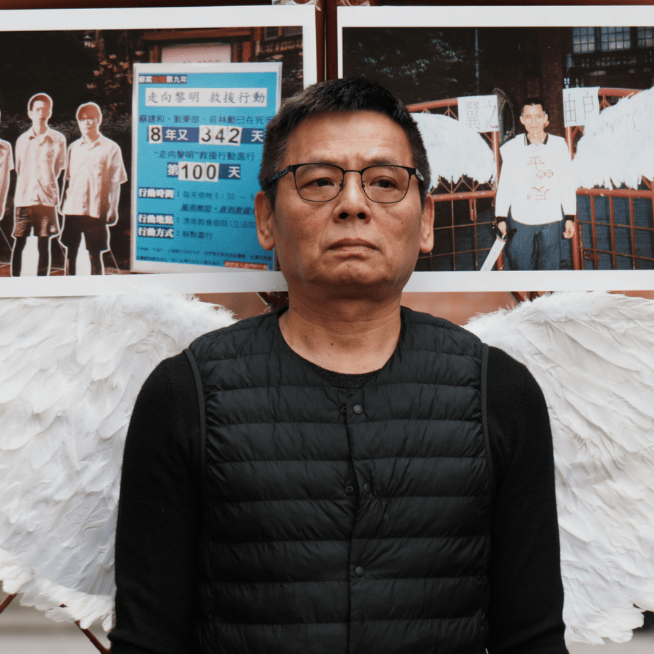
Hsu Tzu-chiang/Spokesperson Representative of JRF, Wrongful Conviction Exoneratee
Standing here today evokes deep emotions. Twenty-five years ago, at this very same location, a support event for the Su case was held, and my family brought my case here to seek help. Twenty-five years later, at the exact same location today, we are holding a support event for the Su case once again... Three young men were under twenty years old then, and now they are in their fifties, yet they are still not left alone. Because of judicial errors, these three men and their families have been deeply trapped in the judicial system with no way out. I can deeply empathize with this feeling.
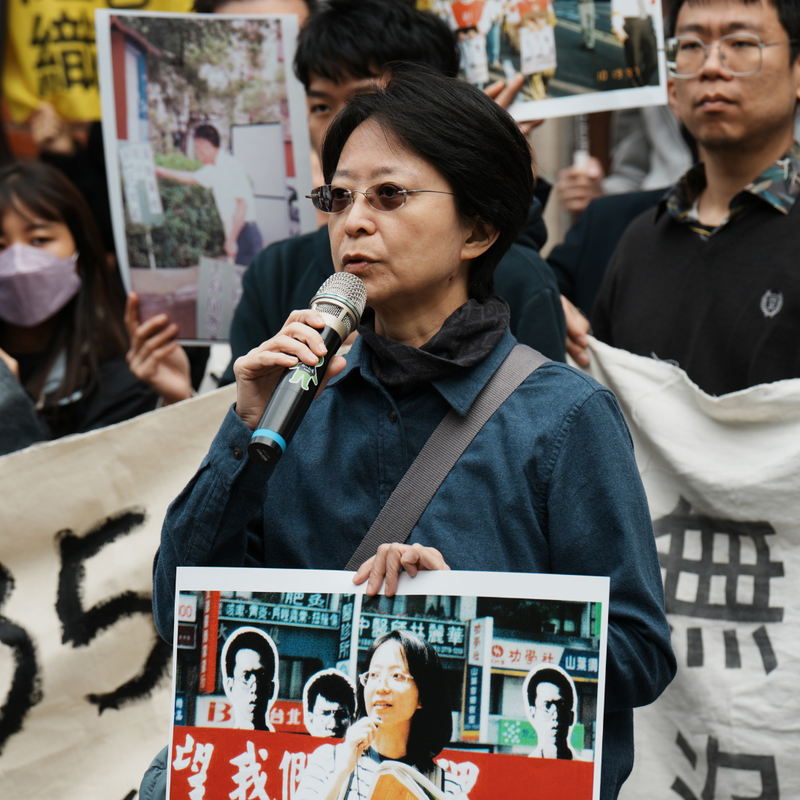
Chang Chuan-fen/Chairperson of the Board of Directors, Taiwan Alliance to End the Death Penalty
When I learned that the Su Chien-ho case was still struggling in the civil courts, I felt extremely angry. I feel that the courts' performance over the past twenty-odd years can be described in only one word: callous. Even though the criminal courts have cleared their names, we can still clearly see a severe lack of comprehensive reflection by the entire judicial system on criminal wrongful convictions.
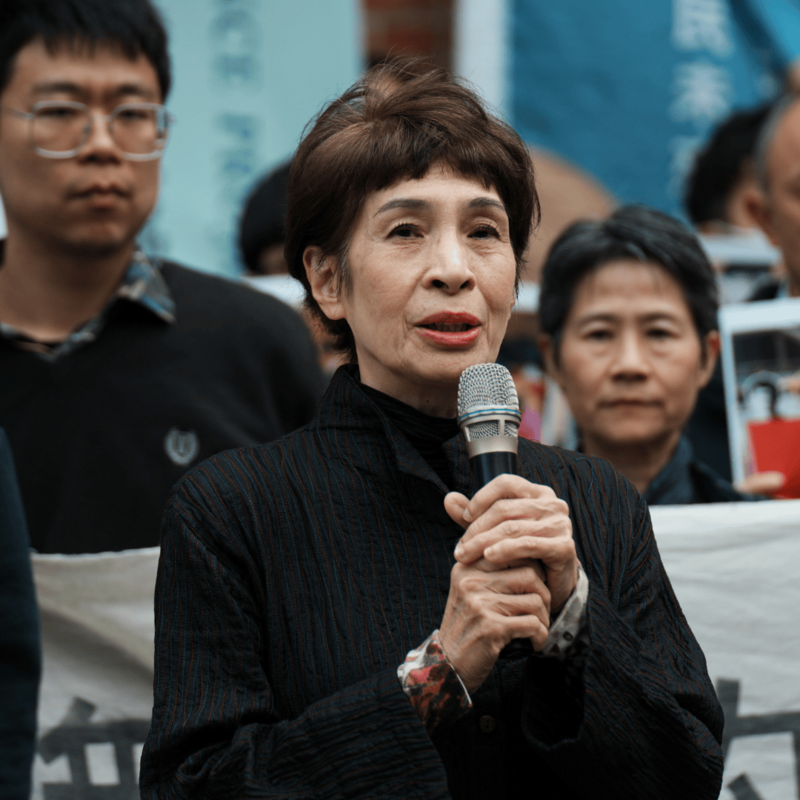
Feng Hsien-hsien/Director of the Documentary *Spring Rain 424*
For a wrongful conviction case that has already been awarded state compensation, the civil courts can actually remand it for a second retrial. I want to ask those dinosaur judges at the Supreme Court: what qualifications do you have to hold sinecures, waste our judicial resources, squander our tax money, and sit in the Supreme Court acting frivolously?...... When they say that being acquitted does not mean they did not do it, what they are thinking in their hearts is, "I simply believe they are guilty." Yet they cannot produce any evidence, but they have the power, so they remand the case based on unfounded suspicion. This is truly appalling to the extreme!
In 2025, JRF officially enters its 30th anniversary. We curated a special exhibition titled "Becoming an Ordinary Person" and simultaneously held ten series of lectures, looking back at the history of Taiwan's judicial reform from various perspectives. While these issues may seem scattered, together they constitute the face of judicial reform over the past 30 years, highlighting the efforts, setbacks, and persistence of everyone along the path of reform.
Following the conclusion of the special exhibition, we have compiled the sidelights of all the lectures, hoping to bring everyone back to those scenes. Through the speakers' sharing and the sparks of dialogue, we hope to once again review our achievements and contemplate unfinished work together. We invite you to continue your dialogue with us in the future and walk side by side on the path of reform.
07/12 "Courts Were Established by the XX Party"? Why Should Young People Know the History of Authoritarian Party-State Judiciary?
Today, the passing rate for the judicial officers' examination is less than 5%, making it one of the most notoriously difficult national exams in Taiwan. But did you know that in the past, even law students who passed the judicial officers' examination might not have been able to become judges simply because they did not join the Kuomintang (KMT)? Or even worse, without passing the special judicial examination, you could still wield a judge's gavel and handle cases in court simply based on your political identity as a "KMT member"?
07/13 Is Being a Lawyer Dangerous in China? Why Should Taiwanese Lawyers Care About Chinese Human Rights Lawyers?
Ten years ago, the "709 crackdown on Chinese human rights lawyers," a mass arrest of rights-defending lawyers and citizens that shocked the world, began in the early hours of July 9, 2015. Chinese public security and state security personnel suddenly launched arrests against lawyer Wang Yu from Beijing Fengrui Law Firm, her husband Bao Longjun, and their son Bao Zhuoxuan (Bao Mengmeng). A total of 316 rights-defending lawyers, law firm staff, human rights defenders, and their family members in China were summoned, subjected to forced interviews, restricted from leaving the country, placed under residential surveillance, criminally detained, or subjected to enforced disappearance and arrest. Among them, 36 individuals remained in detention or under enforced disappearance.
07/19 Did JRF Make a Mistake? Is Non-Disclosure of Investigation Working Against ___?
"What the public wants to know" and "what the public ought to know" are two different things. For high-profile cases, allowing the outside world to grasp information at the very first moment may actually hinder the investigation or affect the fairness of subsequent trials.
Cases monitored by JRF in the past include the Love and Bloodshed Project, the Mama Mouth Murder Case, among others. We have continuously accepted public "appeals" regarding individual cases where police, prosecutors, and investigators violated the principle of non-disclosure of investigation, formed a working group to watch television news daily, compiled situations where "investigative authorities" were suspected of violating non-disclosure of investigation, and regularly reported them to official authorities. Until the new implementation of the *Directions on the Non-Disclosure of Investigation* in 2019, JRF has frequently been criticized by the media for allegedly opposing the people's right to know.
07/26 The Will to Execute Spanning Thirty Years — Discussing the Regulations on the Execution of the Death Penalty
The emergence of the *Regulations on the Execution of the Death Penalty* was brought about by the 1999 "Chou Hsun-shan Incident." Had it not been for the strict restrictions imposed by the *Regulations on the Execution_ of the Death Penalty* over the past thirty years—requiring the suspension of execution whenever an application for a retrial, constitutional litigation, or extraordinary appeal is filed—exonerated death row wrongful conviction victims like Hsu Tzu-chiang, Hsieh Chih-hung, and Cheng Hsing-tse would never have lived to see their exoneration.
The Democratic Progressive Party (DPP) government announced the draft of the *Regulations on the Execution of the Death Penalty* on March 24, 2025, significantly relaxing the restrictions on executing the death penalty. These regulations were officially promulgated yesterday evening (April 16) and are set to take effect hastily this Friday (April 18). Under these regulations, during the process where the concerned party seeks relief and the retrial court or Constitutional Court is deliberating, as long as no ruling to suspend execution is issued, the Ministry of Justice can execute death row inmates by firing squad.
07/27 Explaining Difficult Things Clearly and Conveying Important Matters — How to Make Social Issues More Relatable?
Many social issues are closely intertwined with the law. During the communication process, esoteric legal language and abstract institutional problems always make people feel distant, and "explaining clearly" has never been an easy task. Especially when major social cases occur, online discussions often prioritize emotions over rationality. How can we create an articulation in such an atmosphere that fosters empathetic understanding without sacrificing accuracy? The challenge of translation stems not only from language, but even more from mutual imagination and understanding.
08/02 Seeing the Imbalanced Scales Through a Single Identification — Screening of the Documentary *The Identification*
Wrongful convictions are not merely legal issues; they deeply impact the lives and emotions of the individuals involved and everyone around them, reflecting the complex human nature and social structures behind institutions. Through *The Identification*, we hope that viewers can see the connection and responsibility between institutions and themselves through the judicial victimization experiences of others, and reflect on how "freedom" and "justice" ought to be safeguarded and realized in our society.
08/03 Between the Authorities and the People — The Past, Present, and Future of Legal Aid and Judicial Reform
In the past, many low-income households and socially disadvantaged individuals fell into the quagmire of vast legal systems without knowing how to seek remedies simply because they lacked the financial means to hire lawyers. Under the Legal Aid Act, the state acquired institutional tools to assist the people.
Before we knew it, the Legal Aid Act had already passed its 20th anniversary. From the tense relationship with the Judicial Yuan authorities in its early formative period to gradually playing an important communicative role between the authorities and civil society in judicial reform affairs, it has continuously assisted vulnerable individuals in navigating legal difficulties amidst a rapidly changing society.
Is contemporary legal aid walking the path expected by the people at the inception of the legislation? And how does it seek a balance among various roles in such a realistic environment?
08/09 Drug-Using Youth Forum: Perspectives from Policy and Practice
What should you do when students share their stories involving drugs with you? What are the legal regulations? How can students be assisted? Are there any boundaries? Common questions? Or prerequisite knowledge? This lecture will explore issues related to drug-using youth from the perspectives of juvenile justice, drug policy, and counseling practice, equipping listeners with the ability to further explore these issues.
08/10 Are Taiwan's Laws Han Chinese Laws? — The Path of Indigenous Judicial Reform
In 2005, the *Indigenous Peoples Basic Act* was regarded as epoch-making legislation, legally giving official recognition for the first time to indigenous peoples' rights to self-governance, land, and culture. Twenty years later, tribes have wide asphalt roads, language revitalization programs are blossoming, and traditional intellectual creations have acquired exclusive right protections; however, core land and resource rights remain trapped within statutory provisions.
From Fenglin's Shuiyuan Tribe to Hsinchu's Smangus, from the democratic legitimacy of the Constitution to the cultural defense in administrative litigation, two speakers reviewed the achievements and setbacks of this journey, while directly pointing to the gap in Taiwanese society's understanding of indigenous peoples. With lands not yet returned and self-governance difficult to execute, the path forward is still being paved between dialogue and action.
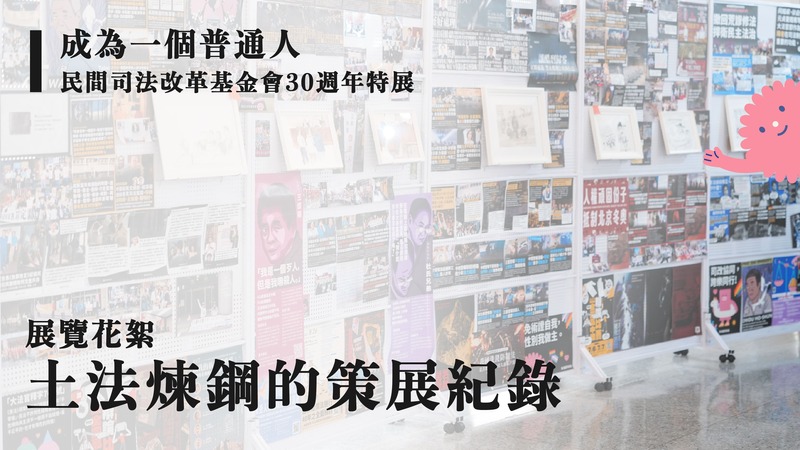
In this 30th-anniversary special exhibition, we specifically documented the curation process—from brainstorming, gathering materials, organizing history, and producing exhibits, to the gradual shaping of the exhibition space.
How should a group of people "passing the baton" along the path of judicial reform attempt to comprehend the weight of 30 years? And how can judicial reform be transformed into a story that can be seen and understood? Welcome to take a look at our bootstrapping curation records!
▼ Exhibition Behind-the-Scenes | Bootstrapping Curation Records [Becoming an Ordinary Person | JRF 30th Anniversary Special Exhibition]
This article is an AI-generated translation of the original Chinese text. In the event of any discrepancy, the Chinese version shall prevail.