
JRF Newsletter: February 2026
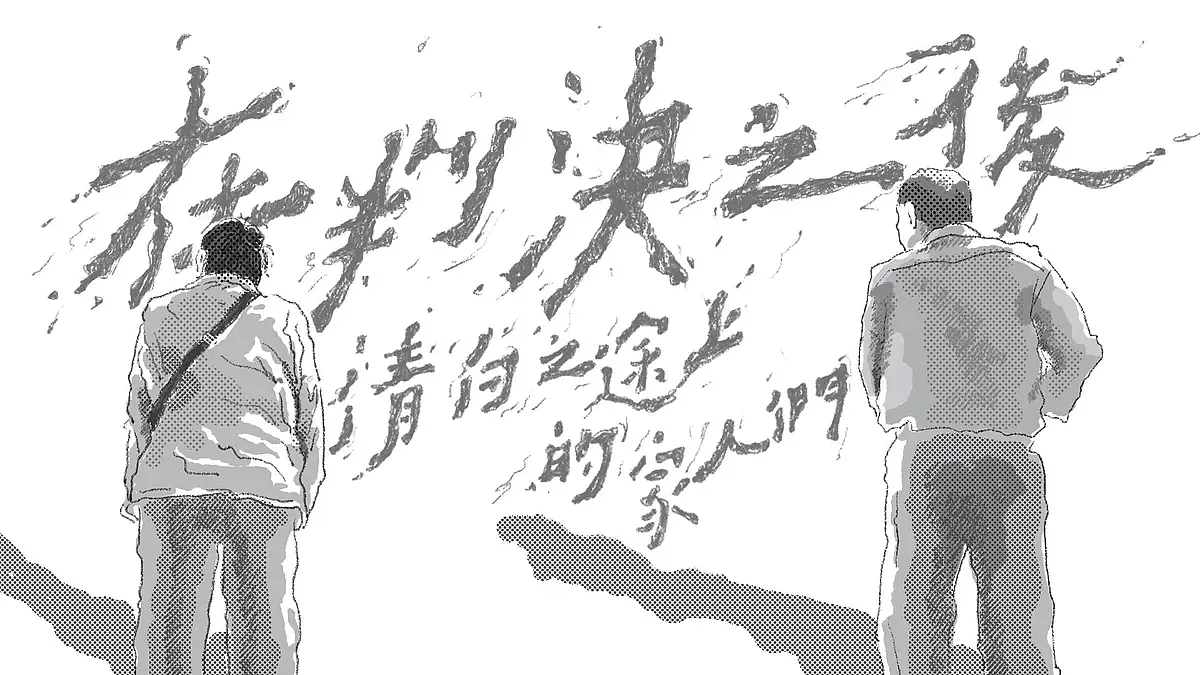
After the Verdict: Families on the Path to Innocence
Last edited: 2026-08-26
As spring begins, we bring you the first e-newsletter special of the Year of the Horse.
This special edition continues the core theme of "After the Verdict," which follows last year's edition that garnered the most attention from readers: "Who Lives in the Shadow of Extreme Punishments for Drug Offenses?" In this issue, however, we shift our focus back to the starting point and core challenge of judicial reform: wrongful convictions.
Our past e-newsletters have actually featured quite a few narratives themed "After the Verdict." Whether it was the edition "Those Who Waited in Vain for Vindication, and the Songs That Still Echo"—which interviewed four victims of wrongful convictions born in the 1950s to hear how they experienced wrongful convictions and fought for their innocence during Taiwan's authoritarian transition—or the edition "Memories of Zhunan After the Chiou Ho-shun Case," which outlined the difficulties in the process of a case's exoneration through interviews with Zhunan fellow townsmen, police officers, and young people of the next generation—these narratives mostly relied on first-person quotes combined with third-person reporting and documentation.
For this issue of the e-newsletter, we also adopt an interview format, but in terms of perspective, we repeatedly pondered: How can we make the narrative of wrongful convictions go beyond just that?
In the book Tracks: The Fukuchiyama Line Derailment and the Struggle to Change JR West, Asano Yasakazu, writing as a bereaved family member, uses his close-up perspective to depict in painstaking detail how, following the accident, JR West's massive corporate body went through bureaucratic practices such as chaos, passing the buck, and shielding one another, ultimately prompting institutional change. There is a passage in the book where Asano mentions—
"I believe that to restore the diversity and richness of humanity in this society, we must have perspectives that are close to the victims (first-person standpoint) and society's vulnerable (also a first-person standpoint), as well as their families (second-person standpoint). That is to say, the attitude of thinking, 'If this were my own parents, partner, or child.' Of course, we must also not lose the objective and social perspectives sought from the standpoint of experts and organizations (third-person standpoint). This approach of maintaining an objective perspective while seeking to stay close to victims and their families is what I call the 'two-and-a-half-person perspective.'"
We attempted to envision that readers of the JRF e-newsletter, in addition to having the spirit of getting to the bottom of the ins and outs of wrongful convictions, may also wish to understand the realizations and resilience of those living "after the verdict" within their situation (person-in-situation).
However, over the past two years, we have felt that under political and social polarization, finding a way of communication where people with different life experiences can mutually understand and empathize has become doubly difficult. In the age of AI, media and legal popularization platforms have successively abandoned long-form articles. We were not without our doubts: how much power of empathy can our written portrayals of these experiences really bring?
Although the JRF is frequently accused of being "an organization that only cares about defendants," in recent years we have actually participated in and facilitated the amendment of the Crime Victim Rights Protection Act. We deeply feel that a major key to facilitating this legislative amendment lies in "the appearance and narrative of crime victims' families." Authentic voices make it easier for the public to understand that many things "after the verdict" ultimately fall short, and that the system must therefore be changed.
Therefore, in terms of writing, the narratives included in the e-newsletter are indeed more complex in perspective than the wrongful conviction introductions on the JRF official website. They sometimes switch between the first, second, third, or even two-and-a-half-person perspective. In addition to our translated text, we also pair it with visual narratives to present the families' voices directly. We hope that those who read these composite texts can feel a warmth that does not sacrifice objectivity yet remains close to human nature.
Finally, we also want to introduce a clever design feature. Judicial reform has spanned thirty years, and many efforts and struggles "after the verdict" have never stopped. The long road to exoneration is dim and discouraging; this e-newsletter was originally in black and white, but a single click transitions it to color photos. Many people think their "attention" is insignificant. Through this simple design, we want to tell everyone: even a small action can bring positive power.
We invite everyone to click the images to enter the articles, walk a stretch of the struggles of the Chiou and Lo families together, and ensure that the innocent and their families are not alone.

Because sometimes when a lawsuit cannot make any further progress, he must certainly feel very uncomfortable inside, and his own children all know it, they can see it too... For a period of time, he really wanted to give up on life.
I told him, you have to remember you have a father and mother, you still have a son; if you give up like that, what will we do out here?

Until his dying breath, Father Lo still kept Lo Ming-tsun on his mind. Elder Brother Lo said, "When Father was passing away, he held my hand and said Ah-tsun hasn't come back yet, Ah-tsun hasn't come back yet..."

Text by Mido / Design and Advocacy Specialist, Judicial Reform Foundation
This year marks my seventh year working at the JRF, and this period of time has been the most vital source of nourishment in my life since I became involved in civic movements. In particular, deeply participating in the rescue operation for the Chiou Ho-shun case allowed me to accumulate a lot of practical experience during the advocacy process, and deeply realize the weight behind promoting issues.
Thinking back to when I first started explaining Ah-shun's case at exhibition booths, those case details were really just words on paper to me. Although I read a lot of materials, I always felt a barrier in my heart and could not concretely imagine what actually happened back then.
Later I realized that the hardest and most important part of doing issue advocacy is "context," and this kind of context cannot be made up for simply by reading online articles. It requires spending time with lawyers, rescue partners, family members, and even co-defendants, feeling the social atmosphere of that year from their tones of voice and the emotions that were not written into the judgments. This emotional understanding and connection is the key to giving us the opportunity to make issues resonate with the public, allowing everyone to generate a tiny bit of curiosity amidst their busy lives. People coexisting in the same society, even with disparate backgrounds, surely share certain common feelings deep within their hearts.

Text by Yeh Wen-chi / Volunteer for the Su Chien-ho Case
While waiting to enter the book exhibition, it suddenly started to rain, a feeling as if a person's life turned upside down in an instant without any warning...
And you have no idea when that storm in life will stop?
This is the story of wrongful convictions concerning Hsu Tzu-chiang and Su Chien-ho. Two people who were originally strangers to one another were both imprisoned for cases they never participated in, extending "helping" hands to each other amidst "wrongful" imprisonment. At the book exhibition site, we listened to the two wrongfully convicted schoolmates talk personally about their years of wrongful imprisonment and how they restarted their lives after wrongful incarceration. We hope this can awaken the public's concern for Taiwan's judiciary, allowing the Su case to march toward dawn once again after a long darkness.

ext by Chao Pei-an / Intern, Judicial Reform Foundation
On February 5th, the JRF visited the Taipei International Book Exhibition.
Facing the turmoil within the Judicial Yuan over the past year or so, we hope to share with all citizens who love reading: Why is the Constitutional Court unable to hold hearings? What exactly are the pros and cons arguments among the Grand Justices debating about? What is the legitimacy of judgments rendered by the Constitutional Court? What would happen to us if we did not have a Constitutional Court? Why do we say that the situation encountered by the Constitutional Court throughout the past year is a severe constitutional crisis?
This article is an AI-generated translation of the original Chinese text. In the event of any discrepancy, the Chinese version shall prevail.