

JRF Newsletter: March 2026
I Thought... You Would Click on This Letter...
Last edited: 2026-08-26
"To me, this is not an emotional experience; it is a legal game."
——Suzie Miller, Prima Facie
Prima Facie, a legal term, means "evidence established at first glance." But in sexual violence under power structures, how much trauma can be translated into visible evidence?
The #MeToo movement has allowed survivors to speak out, yet it has also activated an unstoppable legal conveyor belt—whistleblowers are often forced into judicial battles due to retaliatory defamation counter-suits, and the pursuit of justice is transformed into a scorched-earth war over memory, interpretation, and the burden of proof.
This exhibition is divided into two spaces. In the first half, the artist collaborated with the Judicial Reform Foundation to conduct in-depth interviews with lawyers handling sexual violence cases and set up an interactive chatbot—visitors can converse directly with lawyers in this space, entering those difficult scenes of seeking a balance between traumatic confessions and the burden of proof.
The second half is designed as a feminist combat space, allowing the exhibition to step outside the language of law: here, subjective feelings are permitted to exist. Visitors can take martial arts classes together, explore their own boundaries, and share experiences of bodily injustice, seeking another language of expression and resistance outside the law.
"I thought that as long as trauma was translated into a legal cost, the pain would end." This exhibition attempts to simultaneously accommodate multiple realities—judicial, somatic, and those realities in between that can neither be accepted by the court nor forgotten by the body.
▚ Artist: Lee Tzu-tung
Lee Tzu-tung is an artist and curator whose works blend anthropological fieldwork, political activism, and economic critique. Lee is also a survivor of sexual harassment, a whistleblower in the #MeToo movement, and was counter-sued for defamation for speaking out, ultimately receiving a non-prosecution disposition. During this process, Lee collaborated with the JRF to submit a petition to the Prosecutor Evaluation Commission of the Ministry of Justice, urging a review of prosecutors' gender awareness and calling for the judicial system to strengthen its understanding of Strategic Lawsuits Against Public Participation (SLAPP). This time, Lee chooses to peer into the frontline of sexual violence cases through the perspective of lawyers, understanding how we use existing legal rules to accommodate the complex human nature that spills beyond boundaries.
▙ PRIMA FACIE ——
|Exhibition Period|March 25, 2026 (Wed.) to January 16, 2027 (Sat.)
|Hours|Tuesday to Friday 13:30-20:00; Saturday 11:00-17:00
|Closed|Sunday and Monday; National holidays and other details
|Location|JRF Taichung Office (10F-2, No. 4-33, Sec. 1, Shuangshio Rd., East Dist., Taichung City)
▜ By ✦Appointment Only✦
Please make an appointment two days before your planned visit. Walk-ins will not be accepted without an appointment. Click the link below for more details.
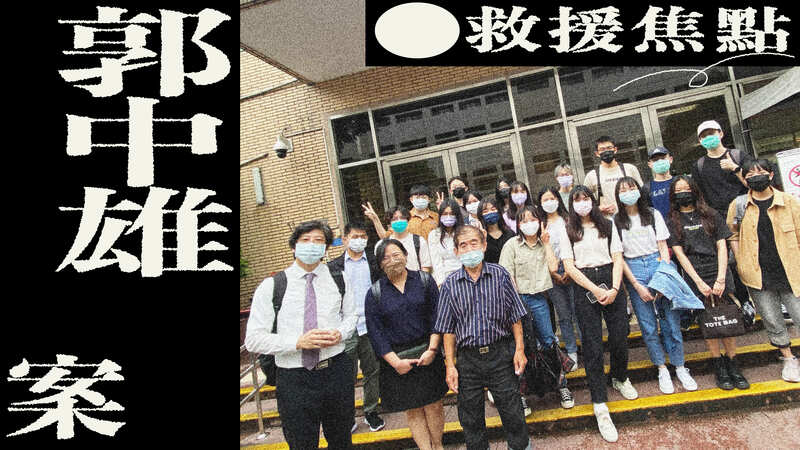
A case that everyone thought had been exonerated has led to three important insights regarding retrials. This month, we received the Constitutional Court's ruling dismissing the Kuo Chung-hsiung case, and we have compiled his path to legal remedy.
Learn About the Kuo Chung-hsiu Case
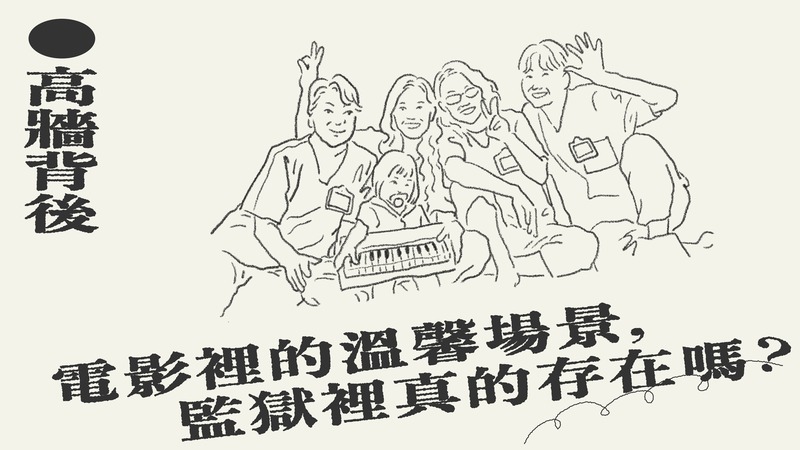
By Chen Guan-zhen / Legal Specialist, Judicial Reform Foundation
Has anyone ever watched the documentary The Sun Ladies Choir?
Every month, the JRF receives nearly two hundred letters from correctional institutions. Through these letters, as well as through released parties and related practitioners, we understand the current conditions inside Taiwan's correctional institutions. Behind the box-office movie that almost everyone watches with tears in their eyes, what gaps exist compared to the correctional facilities we actually encounter in our work?
▌The Prison Act Has Regulations Regarding "Sending in Items"!
When the camera lens takes us inside the women's prison, mothers and children gather around to sing "Happy Birthday" and hold a "pretty" cake.
But in reality inside prison, does such an exquisite cake really exist?
Actually, before the amendment of the Regulations Governing Delivery of Money, Food, and Necessities by Outside Parties to Prisoners and Defendants in September 2025, there was some leeway for pastries to be "sent in." For instance, old-fashioned cakes without cream or frosting could sometimes meet the regulations.
The problem, however, is—can that cake really be delivered intact into the hands of ordinary inmates (residents)?
The answer is no.
For security inspection purposes, cakes are almost always cut open, crushed, and searched through before being brought in. What is finally received is often just a box of scattered, broken cake chunks. Inspection is certainly necessary, but it also makes the act of "celebrating a birthday" somewhat unspeakably disappointing.
Therefore, following the 2025 legal amendments, "pastries" were simply deleted from the provisions. One of the reasons for the amendment was that such foods struggle to maintain their appearance and nutritional/eating value during the inspection process.
Originally, cakes sent by family and friends were meant to let inmates inside properly celebrate a birthday even while in prison. But when the cake becomes shattered, does that sentiment shatter along with it?
After the amendment, if inmates want to buy a cake to celebrate their birthday, they can only purchase cakes made within the prison through the prison cooperative. Naturally, they won't be as exquisite and pretty as those from the outside, given the limited resources within the prison.
Yet, whether there is a cake or not, do they really have the mood to celebrate?
I once heard a short story.
A prison supervisor walked into the workshop carrying a cake and said loudly, "I brought a cake! Is anyone having a birthday today? Let's celebrate for you!"
Prison staff are actually the ones who best perceive the emotions of the inmates. Because of this, such an seemingly casual little gesture instead became a faint yet warm light within the high walls.
Is the same situation also true in women's prisons?
Looking back at the description earlier, it seems to differ somewhat from the scenes in the movie—could those scenes of gathering to sing "Happy Birthday" and holding cakes really be just fictional imaginations?
Not necessarily.
With this question in mind, I asked a moral guidance volunteer who has long served in a women's prison. She told me that practices do indeed vary across prisons, but in the women's prison where she serves, the residents truly have cakes.
She said that an eight-inch cake is prepared there every month to celebrate birthdays for the residents. And these cakes do not come from the prison cooperative, but are specially ordered from outside—cakes that are quite exquisite in appearance.
Where, then, does the funding to purchase these cakes come from?
In our familiar understanding, correctional institution resources are always limited, and such regular monthly birthday celebration activities actually rely on project donations from corporations or civil organizations. It is precisely because of this outside support that the children can still have a proper birthday within the prison walls—with cake, candles, and a moment to make a wish and blow out the candles.
In those moments, the time may be short, but for them, that day remains "the day they were born."
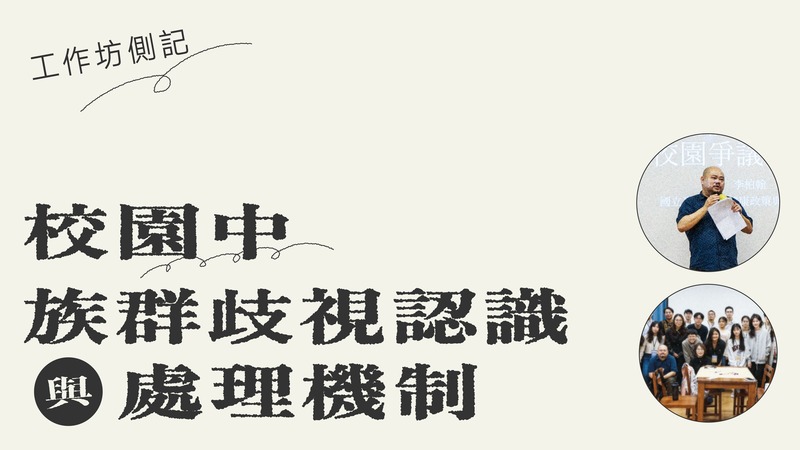
By Emily Chan / New York Pro Bono Attorney
Po-Han Lee: "Understanding Discrimination: Taking Campus Controversies as an Example"
Professor Po-Han Lee pointed out that campus is where everyone spends the most time during the first half of their lives. It is not only a place to learn academic knowledge, but also a critical space for exploring self-identity and undergoing socialization. Universities are expected to be rational, objective arenas for knowledge production, and often use "meritocracy" as a standard of measurement. However, the professor reminded us that if we only look at final outputs while ignoring the disparities in family capital, social connections, and historical backgrounds behind each student, this superficial fairness actually masks structural inequalities.
By Su Qiu-ci and Chang Zhi-qi / New York Pro Bono Attorneys
Chang Wen-chen: "Equality and Non-Discrimination"
Professor Chang Wen-chen departed from the provisions of the Constitution of the Republic of China (Taiwan) and the contents of the two human rights covenants—the International Covenant on Civil and Political Rights (ICCPR) and the International Covenant on Economic, Social and Cultural Rights (ICESCR)—to explore how equality and non-discrimination guaranteed by law can be implemented across different categories. For instance, the types explicitly listed in Article 7 of the Constitution of the Republic of China (Taiwan) as protected under equality are limited to five categories: "gender, religion, race, class, and political party." In contrast, the two covenants adopted about twenty years later cover categories such as "race, color, sex, language, religion, political or other opinion, national or social origin, property, birth or other status," demonstrating that with the evolution of times, categorizations have become more meticulous, and the scope deemed by society to be protected by the right to equality/principle of equality has also become broader.
By Su Qiu-ci and Chang Zhi-qi / New York Pro Bono Attorneys
Equal Protection Measures on U.S. University Campuses: An Introduction to Stanford University and Columbia University
Taking Stanford University in California, USA as an example, its relevant regulations explicitly list categories such as "race, color, religious creed, national origin, ancestry, physical or mental disability, reproductive health decision-making, medical condition, genetic information, marital status, sex, age, sexual orientation, social sex, gender identity, gender expression, military service/military status, veteran status, and any other legally protected characteristic" as protected characteristics. Personnel are prohibited from discriminating based on the aforementioned characteristics, which also demonstrates the meticulous categorization and expanded protection in modern campus anti-discrimination measures. In handling grievance cases related to discrimination, Stanford University has established specialized agencies to centrally manage them and applies different procedures according to different types of protected characteristics. In cases of racial discrimination and hate incidents on campus, if a student is investigated and found to have engaged in discriminatory behavior, depending on the severity of the circumstances, they may face disciplinary actions such as campus bans, cancellation of scholarships, suspension, or expulsion.
This article is an AI-generated translation of the original Chinese text. In the event of any discrepancy, the Chinese version shall prevail.