
Press Release | "Appointing a Rejected Nominee as Acting Prosecutor-General Raises Serious Concerns Regarding Legality and Democratic Constitutionalism—JRF Calls on President Lai to Revoke the Appointment"—Statement by the Judicial Reform Foundation on President Lai's Appointment of Hsu Hsi-hsiang as Acting Prosecutor-General
Last edited: 2026-08-26
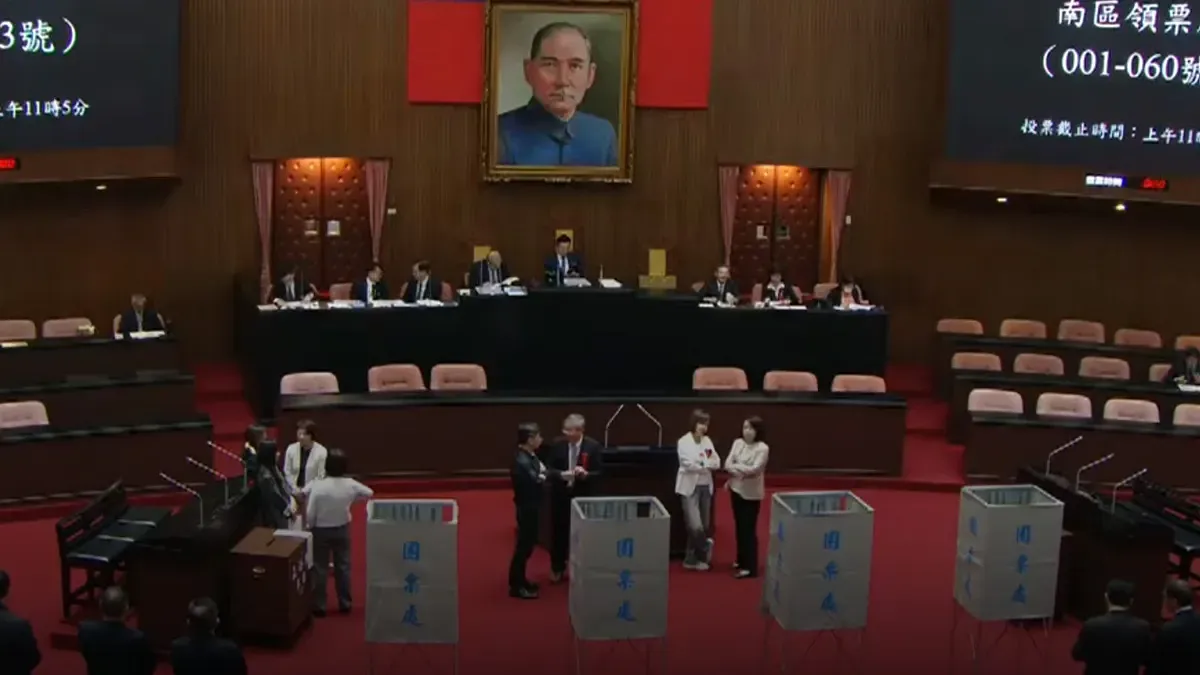
As Prosecutor-General Hsing Tai-chao's term expired on May 7 of this year, President Lai Ching-te nominated Supreme Prosecutors Office Chief Prosecutor Hsu Hsi-hsiang for the position on March 13. On May 5, the Legislative Yuan voted down the nomination. Subsequently, regarding the vacancy, the President nevertheless designated Prosecutor Hsu Hsi-hsiang as the "Acting Prosecutor-General." According to reports, the Ministry of Justice officially received the Presidential Office's appointment directive for the acting position on May 7. In response, the Foundation issues the following statement:
1. Appointing a rejected nominee as Acting Prosecutor-General is tantamount to circumventing the power of personnel consent in disguise.
2. Using the "acting system" as a tool for political confrontation will undermine public trust in the prosecution.
3. The President's designation of an acting official lacks legal basis and raises serious legality concerns, necessitating institutional review.
4. Appointing someone just rejected by the parliament as Acting Prosecutor-General lacks democratic legitimacy and risks setting a bad constitutional precedent.
Based on the above reasons, the Foundation calls on President Lai to revoke the appointment and urges relevant authorities to promote legal amendments to remedy this institutional loophole.
1. Appointing a rejected nominee as Acting Prosecutor-General is tantamount to circumventing the power of personnel consent in disguise
According to Article 66, Paragraph 2 of the Court Organization Act: "The Prosecutor-General of the Supreme Prosecutors Office shall be nominated by the President with the consent of the Legislative Yuan for a term of four years, and shall not be reappointed." Furthermore, according to Paragraph 4 of the same Article: "Should the office of the Prosecutor-General of the Supreme Prosecutors Office become vacant due to any cause or should the incumbent be unable to discharge their duties, the President shall re-submit a candidate within three months for appointment with the consent of the Legislative Yuan, and their term shall be recalculated as four years, with no reappointment."
The Foundation considers that the President's designation of a candidate rejected by the Legislative Yuan to serve as Acting Prosecutor-General subverts the system of "parliamentary consent." From the perspective of the parliament, this weaponizes the "acting system" as a tool for political confrontation, effectively forcing the parliament to submit. Moreover, if the President refrains from nominating a new candidate indefinitely in the future, it will cause substantial damage to the system.
2. Using the "acting system" as a tool for political confrontation will undermine public trust in the prosecution
The Prosecutor-General undergoes the procedure of "presidential nomination and legislative consent," which embodies checks and balances under democratic politics and prevents any single branch from monopolizing personnel appointments. Among these provisions, the prohibition on consecutive terms highlights vital values such as "political neutrality" and "prosecutorial independence."
If the President bypasses parliamentary review through "designating an acting official," it is equivalent to opening a "backdoor" in the constitutional system, allowing the President to unilaterally determine the leader of the prosecutorial system—even when this candidate has been explicitly rejected by the parliament. This raises the question: with so many senior prosecutors across Taiwan, is the President truly unable to find a suitable candidate to act as Prosecutor-General? Why provoke intense controversy by specifically appointing the rejected candidate? Forcing a candidate explicitly rejected by the representative body of public opinion to serve in an acting capacity burdens them with the negative label of a "political plant."
We understand that amid high distrust between the ruling party and the parliament, President Lai harbors deep skepticism and criticism toward the procedure and outcome of the parliament's exercise of its personnel consent power. Therefore, appointing a rejected nominee as Acting Prosecutor-General may serve as a political counterattack and gesture. However, under no circumstances should this come at the expense of undermining public trust in the prosecution and disrupting the parliamentary personnel consent system.
3. The President's "designation of an Acting Prosecutor-General" lacks legal basis and raises serious legality concerns, necessitating institutional review
Regarding the aforementioned controversy, the Deputy Minister of Justice stated during parliamentary interpellation that the action was based on Article 11 of the Regulations for the Affairs of the Supreme Prosecutors Office. However, the wording of this article only provides that when the Prosecutor-General personally is unable to execute their duties for any reason, they shall designate someone to act on their behalf. As for how to designate an acting official when the Prosecutor-General's term expires, or whether the President may make such a designation, current laws contain no explicit provisions. The legality of the Ministry of Justice's aforementioned interpretation is open to debate.
Prior to this controversy, there were indeed precedents where Chen Tsung-ming resigned after being impeached by the Control Yuan, and President Ma Ying-jeou designated Tseng Yung-fu as Acting Prosecutor-General; subsequently, after Huang Shih-ming resigned following a guilty verdict in the court of first instance, President Ma Ying-jeou again designated Lin Xiede as Acting Prosecutor-General. Nonetheless, these precedents lacked statutory authorization, and whether they are appropriate to invoke remains legally questionable.
Occupying the highest position in the national prosecutorial system, societal expectations for the Prosecutor-General extend beyond merely "handling cases in accordance with the law" to demanding the ability to resist pressures from all sides and maintain prosecutorial neutrality. Given the importance of the office of the Prosecutor-General, the exercise of its powers and functions should not be stalled. Therefore, this legislative omission must be remedied by explicitly prescribing an appropriate acting system in statute. In past constitutional practice, the reason the President designated the acting official may stem from the fact that the Prosecutor-General is a specially appointed official whose personnel orders can only be issued by the President. Nevertheless, the acting arrangement for such an important position should still be explicitly stipulated by law. For instance, Article 7, Paragraph 5 of the Judicial Yuan Organization Act stipulates: "Should the President and Vice President of the Judicial Yuan be vacant at the same time, the President shall designate one of the Grand Justices to act as the President of the Judicial Yuan; the acting period shall last until the day the President nominates a successor President and Vice President, who are consented to by the Legislative Yuan and appointed by the President." Compared to this provision, it is clear that there are no similarly explicit regulations regarding candidates for "Acting Prosecutor-General," leading to high-level legality controversies. In this regard, the Foundation believes that institutional reviews concerning the functions of the Prosecutor-General and the imperfect nomination procedures should be addressed comprehensively.
4. Appointing someone just rejected by the parliament as Acting Prosecutor-General lacks democratic legitimacy and risks setting a bad constitutional precedent
In the past, when presidents designated acting prosecutors-general, these instances involved temporary vacancies due to the resignation of the Prosecutor-General, rather than designating a candidate already rejected by the Legislative Yuan. The two cannot be equated, nor is there any room for analogical application. In fact, the situation where a prosecutor-general personnel bill failed to pass and resulted in a vacancy because the President and the parliamentary majority belong to different political parties should be a first in our nation's constitutional history. How to handle this properly must be approached with utmost caution!
If the President is to designate a person to act as Prosecutor-General under current conditions where the system is imperfect and lacks explicit statutory authorization, extraordinary caution is required. However, President Lai has done the exact opposite by appointing a prosecutor just rejected by the parliament to act, risking the creation of a bad precedent that deliberately circumvents the parliamentary personnel consent power, raising severe concerns over a lack of democratic legitimacy. The Foundation deeply disapproves of this and, in order to safeguard democratic constitutionalism, is compelled to voice its opposition.
Due to these high-level concerns regarding legitimacy and legality, we solemnly call on President Lai to revoke his decision and withdraw the appointment of Hsu Hsi-hsiang as Acting Prosecutor-General, so as to avoid causing lasting damage to the credibility of the prosecutorial system and constitutional democracy due to temporary political disputes. Meanwhile, we also urge relevant authorities to promote legal amendments to correct this major legal loophole, hoping to take this opportunity to further strengthen the rule of law and prevent future constitutional controversies.
Press Contact
Lyu Jheng-yan, Attorney-at-Law, Deputy Executive Director, Judicial Reform Foundation
Phone: 02-2523-1178#37
Email: elvin@jrf.org.tw
This article is an AI-generated translation of the original Chinese text. In the event of any discrepancy, the Chinese version shall prevail.