
The Path of an Ordinary Person—An Exclusive Interview with Attorney Huang Jui-ming
Last edited: 2026-08-26
Judicial Reform Foundation

30TH ANNIVERSARY PROFILE
Attorney Huang Jui-ming
Former Chairperson
Chairperson: February 2007–February 2010
"Living in a relatively free and democratic country is what has allowed us to fight together."
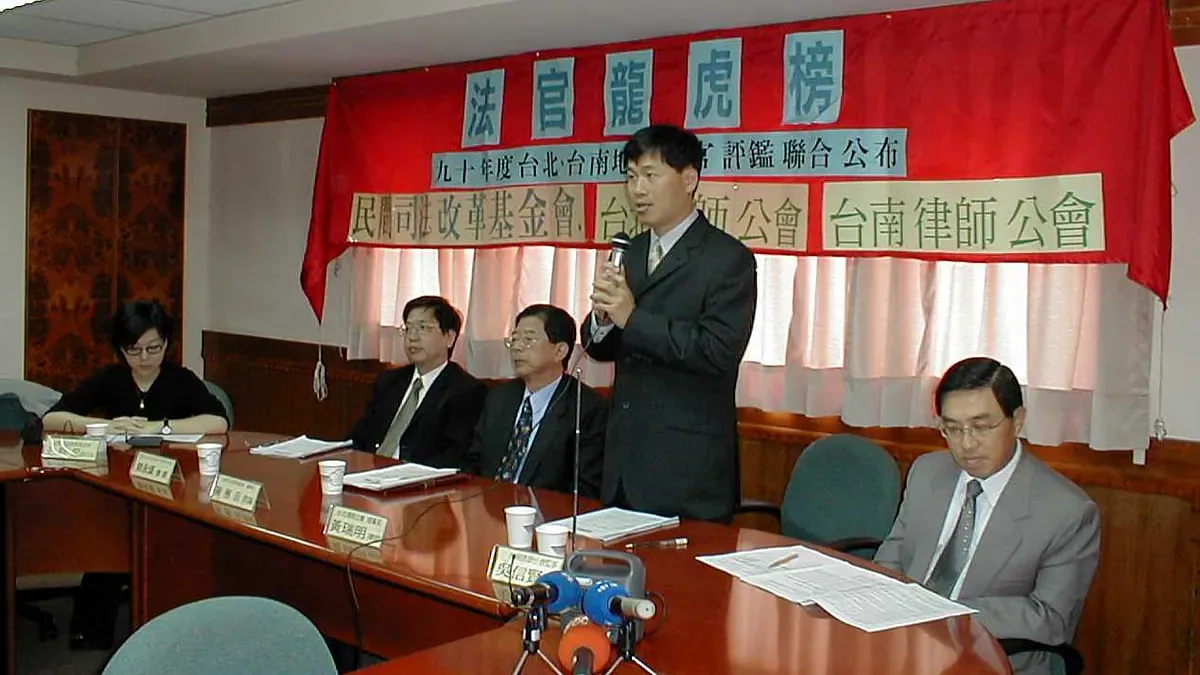
In 1995, attorneys Lin Min-sheng, Chen Chuan-yueh, and Lin Yung-sung founded JRF. Although Attorney Huang Jui-ming, a close friend of these attorneys, did not join as a cadre at the very beginning, he already began interacting with JRF. With Attorney Huang becoming the Chairperson of the Taipei Bar Association in 2003, his ties with JRF grew even more frequent through mutual cooperation and assistance on issues and activities between the two organizations.
It was not until 2007, when Attorney Chen Chuan-yueh decided to step down after serving as Chairperson for seven years and invited Attorney Huang to take over, that Attorney Huang's responsibilities and level of participation in JRF deepened accordingly.
Judicial Reform Milestone (I): The Alliance for Promoting the Three Major Judicial Reform Acts
Since its establishment, JRF has continuously and vigorously advocated for the legislation and amendment of the Three Major Judicial Reform Acts: the Legal Aid Act, the Judges Act, and the Judicial Yuan Organization Act. In late 2003, JRF, together with other civic groups, established the Alliance for Promoting the Three Major Judicial Reform Acts, with sociologist Professor Chiu Hei-yuan serving as the convener and Attorney Huang Jui-ming as the deputy convener.
Attorney Huang's journey in participating in JRF has paralleled the promotion and evolution of these three acts: the Legal Aid Act passed in 2003, the Judges Act in 2011, and amendments to the Judicial Yuan Organization Act in 2021. Among these, Attorney Huang specifically addressed the reform of the highest judicial organs: whether the Judicial Yuan should be converted into a court-like body, and whether it should be merged with the Supreme Court.
On October 5, 2001, the Grand Justices emphasized in Interpretation No. 530 that the exercise of judicial administrative supervisory power must not interfere with judicial independence. Furthermore, the Grand Justices pointed out that the Judicial Yuan Organization Act, the Court Organization Act, the Administrative Court Organization Act, and the Organic Act of the Committee on the Discipline of Public Functionaries should be reviewed and amended within two years from the date of the announcement of this interpretation to comply with the constitutional system.
Recalling the stance at that time, Attorney Huang stated that the main hope was to reduce administrative and political interference through the transformation of the Judicial Yuan into a court. However, to this day, the Judicial Yuan remains the Judicial Yuan, and the Supreme Court remains the Supreme Court; the transformation of the Judicial Yuan and the reform of the Supreme Court have yet to be completed. Attorney Huang believes that this issue still requires ongoing exploration by everyone.
Judicial Reform Milestone (II): "If the Rights of Attorneys Are Unprotected, Criminal Human Rights Will Collapse"
Reflecting on the major judicial reform milestones during his term, Attorney Huang also mentioned the protection of attorneys' rights. When attorneys visit detained defendants in detention centers, the detention centers might monitor them, assign prosecutor's investigators to watch the entire meeting, or even record the details of the attorney-client meeting, thereby interfering with the attorney's access to their client.
In response to this situation, JRF submitted statements and demands to the Ministry of Justice, hoping to safeguard attorneys' rights so that Taiwan's criminal judicial human rights could be protected.
Coincidentally, Attorney Huang laughed, later when he served as a Grand Justice, several cases concerning the protection of attorneys' rights happened to be handled by him. These included issues such as whether law firms could be searched, attorneys' right to interlocutory appeal, and whether attorneys could take notes during investigations.
Attorney Huang noted that because of his past experience at JRF, he possessed a higher degree of sensitivity when handling these aforementioned cases, allowing him to approach the issues by drawing upon past experiences and perspectives, and consequently render interpretations or rulings.
Judicial Reform Milestone (III): The Attorney Disciplinary System
The reform of the legal profession system is another issue worthy of attention that Attorney Huang discussed with us.
Attorney Huang stated that currently, lawyer ethics committees are established under various bar associations, and a disciplinary committee is also provided for in the Attorney Regulation Act. However, current regulations for attorneys merely set the threshold of not breaking the law; a high tolerance remains for excessive commercial activities by lawyers or the adoption of over-litigation tactics. Attorney Huang believes that JRF and the bar associations should contemplate and investigate attorney ethics and the scope of discipline, and propose a higher and more appropriate standard.
Self-Care for JRF
Faced with a massive workload and reform issues, Attorney Huang also discussed the topic of self-care during the interview.
Attorney Huang noted that JRF is an organization operated through fundraising, which requires extreme frugality in spending. On the other hand, JRF has many full-time colleagues whose living needs also require care. Therefore, balancing financial responsibility toward donors while allowing full-time staff to maintain a quality of life is a remarkably difficult task for a civic organization.
During his tenure as Chairperson, Attorney Huang observed that colleagues experienced immense mental stress. Moreover, as a protest- and advocacy-oriented organization, the atmosphere in the JRF office tended to be tense and serious. Consequently, he hoped to provide colleagues with stress-relief activities and channels to soothe their minds and bodies and promote physical health.
Thus, during his term, Attorney Huang promoted the "Climbing Yushan" activity, inviting everyone to climb Yushan together. Compared to typical Yushan climbing activities which might cost around NTD 10,000, participating in JRF's Yushan activity cost NTD 20,000, with NTD 10,000 of that donated to JRF. On one hand, this promoted a healthy lifestyle, and on the other hand, it raised funds. Looking back, quite a few people actually donated NTD 20,000 to climb Yushan, and Attorney Huang led everyone to the summit, turning stress relief into a shared action and conviction.
When discussing stress relief, besides mountain climbing, Attorney Huang also shared his long-standing habit of running. He mentioned that he has been running since he began practicing law and has successively participated in road racing events. After becoming a Grand Justice, because his commuting and working hours became fixed and his life more regulated, he even attempted to challenge a full marathon. In 2019, at the age of 64, Attorney Huang successfully challenged the Taipei Marathon. He set a goal to challenge it again the following year at age 65, and also encouraged JRF colleagues to exercise more and maintain physical and mental health amidst their heavy workloads.
Conclusion: JRF is an Important Asset for Taiwan; We Must Continue Working Hard to Maintain Its Momentum!
As JRF approaches its 30th anniversary and Taiwan finds itself in the storm of legislative overreach, Attorney Huang believes that Taiwan must re-examine the pros and cons of its systems at this moment. JRF can step outside the role of political parties and make greater efforts; for example, JRF's Legal Ethics Committee recently translated and published a book on political party law. Attorney Huang believes that Taiwan has never properly studied the concept of "political parties." We have political parties, party operations, and two-party alternation, but what a political party is, how it operates, its financial status, the rights and obligations among party members, and the relationship between political parties and other parties or the state—these issues have yet to be properly discussed. The country is moving toward democracy and the rule of law, but its foundations have not been securely anchored.
Looking back at the years spent together with JRF, Attorney Huang believes that the reason JRF has been able to endure to this day is precisely because we live in a relatively free and democratic country, which gives us the opportunity to gather like-minded people, raise funds externally, and fight together for our ideals.
Attorney Huang emotionally noted that his time with JRF has been a deeply cherished period in his life. JRF is a vital asset for Taiwan, and he hopes that in the future, everyone will continue to work hard to sustain JRF's momentum, allowing it to move forward actively and healthily.
Continue Reading Stories of Other Predecessors
Back to Interview Overview View Judicial Reform Milestones
Last Edited: 2026-05-16 | Special Issue on Personal Interviews for JRF's 30th Anniversary
This article is an AI-generated translation of the original Chinese text. In the event of any discrepancy, the Chinese version shall prevail.