
Press Release | Safeguarding Freedom of Speech and Indigenous Culture, Rejecting Improper Police Stop-and-Searches in Hualien—Civil Groups Call on the National Police Agency to Launch an Investigation!
Last edited: 2026-07-27
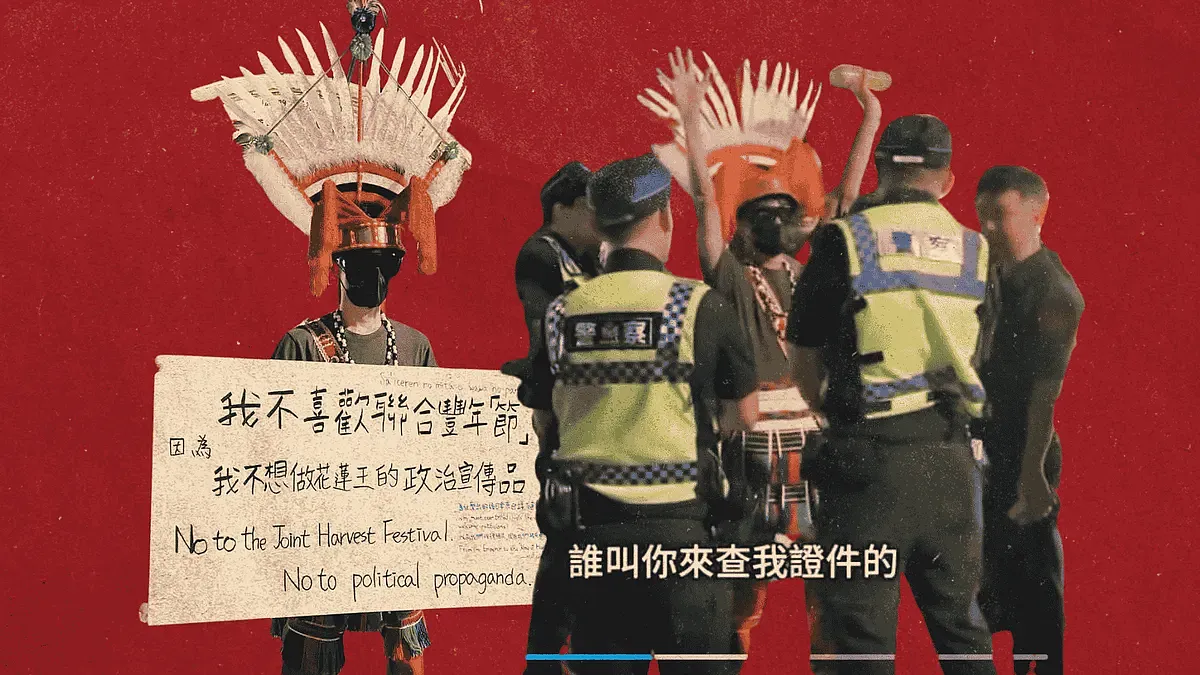
Recently (July 18) during the 2026 Pacific Austronesian Joint Harvest Festival in Hualien County, a man wearing traditional Amis attire and holding a sign to express political views was stopped, searched, and escorted to the forward command post by police after concluding his peaceful protest and preparing to leave. The police subsequently stated that the stop-and-search was conducted to protect public safety after receiving public reports that the man was carrying a knife and moving quickly toward the crowd. However, the individual stated that he was intercepted as he was leaving after the protest ended, and that he had raised both hands upon being stopped to indicate he posed no danger.
Regarding this incident, we believe it involves significant issues such as citizens' freedom of speech, the exercise of police powers, and indigenous cultural rights, and the police's law enforcement measures cannot be justified solely by the four words "carrying a knife." In response, the Judicial Reform Foundation, the Taiwan Police Association, the Covenants Watch, and the Taiwan Association for Human Rights jointly issued two statements as follows:
1. Do not decontextualize indigenous culture and identity symbols; carrying a traditional knife should not become the focus that obscures "selective law enforcement".
2. The grounds and process of law enforcement are fraught with doubts; the National Police Agency should investigate whether "selective law enforcement" targeting political speech existed.
1. Do not decontextualize indigenous culture and identity symbols; carrying a traditional knife should not become the focus that obscures "selective law enforcement".
Indigenous cultural rights are protected by the Constitution and the law, and state organs must even more so understand and respect the cultural contexts of indigenous peoples when enforcing the law. For the Amis people, during important cultural events such as harvest festivals, tribal members wearing traditional attire and carrying traditional knives is not an uncommon phenomenon. For some tribes, complete traditional attire and a carried knife are not merely clothing or accessories, but important symbols for identifying cultural identity and tribal standing, representing their status and weight as young-to-middle-aged members respected by the tribe, possessing the identity and significance to participate in and express opinions on tribal public affairs. In addition to stating that the knife was part of his traditional attire, the individual who was stopped also shared with us that the knife was obtained as an honor during his coming-of-age ceremony and personally bestowed by the tribal chief, symbolizing supreme glory to him. Therefore, wearing complete traditional attire and a traditional knife at important cultural occasions such as harvest festivals while openly expressing political opinions like "I do not like the Joint Harvest 'Festival' because I do not like being political propaganda for the King of Hualien" is precisely part of participating in public affairs through his cultural identity. Traditional knives should not be stripped of their cultural context and simplified into "dangerous weapons" under general public security scenarios.
Moreover, after the man in this case finished his peaceful protest with a placard and was preparing to leave the scene, the police intercepted and stopped him only as he was leaving. The man questioned the police on the legal basis for the stop and took the initiative to raise both hands, even stating that the police could take the knife away. Judging from these facts, what truly deserves questioning in this case is not "whether there was a knife" on the man, but rather why the police specifically chose to intercept him when his peaceful protest had ended and he was preparing to leave? Why did the police only belatedly state that the reason was because he carried a knife after the individual repeatedly inquired? Was the stop truly conducted in response to public reports? Why did the Chief of the Hualien County Police Bureau publicly claim in subsequent interviews that the man "immediately carried a knife and rushed toward the crowd," a statement clearly inconsistent with objective facts?
Traditional knives are inherently common in indigenous cultural activities, yet the police specifically used the knife as the ground for interception and subsequent disposition in this case. They should all the more explain what their law enforcement standards are, and whether lawful and reasonable measures were adopted in the past toward tribal members similarly dressed in traditional attire and carrying traditional knives.
We believe that singling out the "knife" for discussion in this case makes it easy for society to overlook the true core of the matter. The issue of the knife should not become a tool to divert attention, let alone cover up why the police chose to selectively suppress specific protesters and the expression of specific political speech through police power after a peaceful protest concluded.
2. The grounds and process of law enforcement are fraught with doubts; the National Police Agency should investigate whether "selective law enforcement" targeting political speech existed.
We are not arguing that indigenous peoples carrying traditional knives are naturally exempt from police identity verification. However, when enforcing the law, police should incorporate the indigenous cultural context into their judgment, understanding the identity, cultural, and public participation significance that traditional attire and knives hold for tribal members, rather than equating them with dangerous weapons in general public security scenarios merely because they outwardly feature a blade. Respecting indigenous cultural rights does not mean demanding that police abandon performing their duties according to law; rather, it requires police to possess cultural sensitivity during law enforcement and judge the necessity and means of law enforcement based on the specific circumstances of each case.
What truly deserves examination in this case is whether the police had concrete and reasonable grounds for law enforcement, and why they chose to intervene when the man had finished his peaceful protest and was preparing to leave? When the police intercepted the man, they did not immediately state the reason for the stop-and-search; instead, they first conducted a stop of questionable legality, and only after the man repeatedly questioned them did they state that the reason for the stop was the "knife." Regarding this law enforcement procedure, criticisms of "shooting the arrow first and painting the target later" have already arisen across various sectors. Ultimately, was the enforcement decision related to the man's protest actions? If the man had held a sign supporting the county government's events, would he not have been stopped? If the danger claimed by the police primarily stemmed from the knife itself, they should explain why there remained a necessity to further exercise police powers after the man indicated his willingness to let the police take the knife away; if there were other reasons that truly prompted police intervention, an exhaustive explanation should all the more be provided to the public.
It is worth noting that the state's handling of indigenous traditional knives is not merely a binary choice between "prohibiting carrying" and "completely ignoring." On August 1, 2016, then-President Tsai Ing-wen formally apologized to indigenous peoples on behalf of the government. On that day, the Office of the President, serving as the nation's highest-level security site, had also requested participating tribal members in advance not to carry traditional knives; such arrangements at the time sparked criticisms from indigenous figures such as Mayaw Biho over whether the state truly respected indigenous cultures. Ultimately, even in occasions involving the head of state and high-security measures, it should still be premised on balancing public safety with respect for indigenous culture while adopting necessary security measures, rather than directly treating traditional knives as dangerous factors that must be excluded through compulsory police power. This also demonstrates that even at the highest level of state security, security maintenance and cultural respect can coexist; all the more so in this case, which took place during an important indigenous cultural event, where police power was used to intervene against a tribal member who was peacefully protesting and preparing to leave the scene, making it even more necessary to explain its concrete necessity and legal basis for enforcement.
We urge the National Police Agency of the Ministry of the Interior to intervene and investigate, rather than merely leaving it to local police agencies to issue their own explanations. In particular, controversies surrounding front-line personnel enforcement often stem from problematic decisions and directives. Furthermore, after the incident occurred, reports indicated that the Hualien County Police Bureau allegedly "established chat groups to instruct police officers to steer public opinion on the internet." In response, we urge the National Police Agency to thoroughly review on-site footage, duty command records, and related enforcement data, clarify the legal basis and decision-making process for the interception and subsequent disposition in this case, investigate whether there were circumstances of differential treatment due to citizens' political expression, and finally make the investigation results public.
Finally, we also wish to remind the general public that the controversy in this case is by no means "that anyone can carry knives when protesting on the streets in the future," nor does it argue that anyone may arbitrarily carry dangerous knives on the grounds of protest. Citizens' freedom of speech and right to peaceful protest must still be exercised under legal norms; and police taking necessary measures according to law against concrete public security risks also possesses its legitimacy. However, the police's current responses emphasizing the legitimacy of their enforcement through statements such as "carrying a knife" and "moving quickly toward the crowd" easily guide public discussion to overlook the concrete context of the incident, conflate the significance of cultural and identity symbols with public endangerment, and lead to the overgeneralization that "protest actions can all involve carrying knives," thereby obscuring the true issue of this case.
What truly needs to be discussed in this case is whether state organs can adopt security measures that comply with the principle of proportionality and necessity while respecting indigenous cultural rights regarding traditional knives imbued with an indigenous cultural context; and why, under the concrete circumstances of this case, the police chose to conduct the stop-and-search and subsequent disposition when the peaceful protest had ended and the man was preparing to leave. This concrete individual case cannot be simplified into the question of "whether knife-carrying protests are universally lawful," nor can it be used to obscure the true controversy of whether selective law enforcement existed in this case.
Statement Organizations
Judicial Reform Foundation
Taiwan Police Association
Covenants Watch
Taiwan Association for Human Rights
Press Contacts
Lü Cheng-yen, Attorney-at-Law, Deputy CEO, Judicial Reform Foundation
Telephone: 02-2523-1178#37
Email: elvin@jrf.org.tw
This article is an AI-generated translation of the original Chinese text. In the event of any discrepancy, the Chinese version shall prevail.