
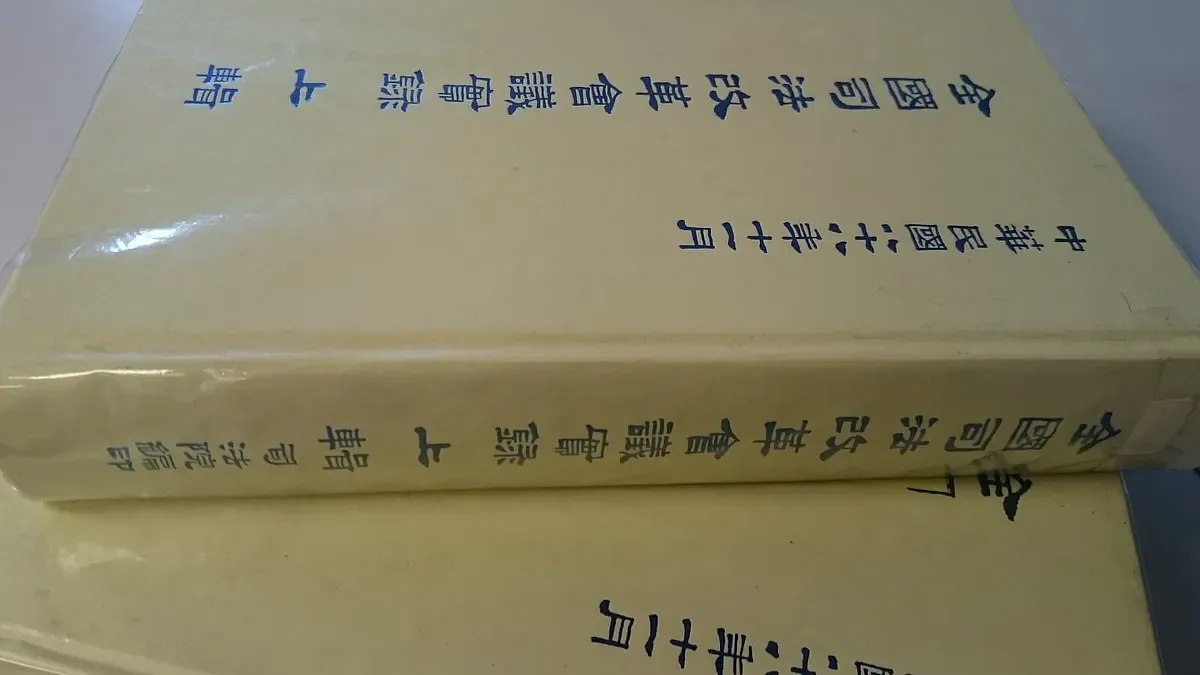
1999 National Judicial Reform Conference Agenda and Conclusions
Last edited: 2026-11-03
Table of Contents
Items marked with this symbol are proposals without a consensus.Group 1
1-1 The Role and Status of the Judicial Yuan
- Proposal 1: The Role and Status of the Judicial Yuan
- Proposal 2: Whether Judgments May Include Dissenting Opinions
1-2 Realizing the Protection of the People's Right to Sue
1-2-1 Establishing a Concrete System for the Right to Counsel as a Fundamental Human Right of Criminal Defendants
- Proposal 1: Strengthening the Function of Defense Counsel
- Proposal 2: Comprehensively Reviewing the Public Defender System
1-2-2 Strengthening Legal Aid
1-3 Studying and Adopting a System for Public Participation in Judicial Trials
- Proposal 1: Public Participation in Judicial Trials
- Proposal 2: Public Supervision of Prosecutors in the Exercise of Their Powers
- Proposal 3: Whether Parties Should Be Allowed to Jointly Choose Judges in Civil Cases
1-4 Reform of the Civil Litigation System
- Proposal 1: Promoting Centralized Proceedings in Civil Cases, Strengthening the Fact-Finding Function of the Court of First Instance, and Making the Court of First Instance the Center of Fact-Finding Trials
- Proposal 2: Adopting a Post-Trial Review or Strictly Limited De Novo Review for the Court of Second Instance, and Adopting a Strict Law Review and Leave-to-Appeal System for the Court of Third Instance
Group 2
2-1 Reform of the Criminal Litigation System
2-1-1 Exploring the Enhancement of the Adversarial System and Its Accompanying Measures
- Proposal 1: Studying and Adopting the System of Non-Transfer of Indictment Dossiers and Evidence
- Proposal 2: Adopting the Count (So-in) System
- Proposal 3: Establishing the Leading Role of Parties in Investigating Evidence and the Complementary Nature of Court-Initiated Evidence Investigation
- Proposal 4: Establishing the Substantive Burden of Proof for Prosecutors
- Proposal 5: Accompanying Measures Required for Adopting the Adversarial System
- Proposal 1: Rigorous Rules of Evidence
- Proposal 2: Implementing and Strengthening Cross-Examination Requirements
- Proposal 3: Restricting the Timing of Interrogating Defendants and Investigating Defendant Confessions
- Proposal 4: Differentiating Fact-Finding from Sentencing Procedures
- Proposal 5: Except for Summary Proceedings, the Court of First Instance Shall Adopt a Collegial System
- Proposal 6: Amending the Private Prosecution System to Establish a Litigation Framework Where Public Prosecution is Primary and Private Prosecution is Secondary
- Proposal 7: Studying and Adopting "Post-Review Trials" for the Court of Second Instance
- Proposal 8: Studying and Adopting Strict Law Review or a Leave-to-Appeal System for the Court of Third Instance
- Proposal 9: Moderately Amending the Extraordinary Appeal System
- Proposal 10: Prohibiting Requests for Retrial to the Detriment of the Convicted Person
2-2 Restructuring Criminal Courtroom Seating
2-3 Strengthening the Prosecutor System and Enhancing Crime Investigation and Prevention Capabilities
- Proposal 1: Increasing Prosecutor Staffing and Supporting Personnel, Balancing Judicial and Prosecutorial Resources, and Reducing Prosecutors' Investigatory Workloads to Enable Them to Bear Major Responsibilities Under the New System
- Proposal 2: Whether Judicial Review by Courts Should Determine Coercive Measures During Investigations
- Proposal 3: Repositioning the Relationship Between Prosecutors and Police, Adjusting the Division of Labor Between Prosecutors' Public Prosecution and Investigation Tasks, and Establishing a Police-Prosecutor Cooperation Model with Prosecutors Leading Investigations
- Proposal 4: Enhancing Scientific Investigation Capabilities of Prosecutors, Police, and Investigation Agencies
Group 3
3-1 Personnel Reform for Judges
- Proposal 1: Qualifications and Appointment of Judges
- Proposal 2: Whether the Judges and Prosecutors Training Institute Should Be Subordinate to the Judicial Yuan
- Proposal 3: Examining the Civil Servant Status of Judges and Their Remuneration System
- Proposal 4: How to Strengthen Judicial Autonomy
- Proposal 5: Requirements for Judicial Specialization
3-2 Personnel Reform for Prosecutors
- Proposal 1: Statutorily Defining the Judicial Status of Prosecutors and Establishing Their Identity as Representatives of the Public Interest to Perform Tasks Entrusted by the Organic Act of Courts
- Proposal 2: Enacting the Prosecutor (Office) Act and Statutorily Guaranteeing the Status of Prosecutors
- Proposal 3: Reviewing Current Legal Examination, Training, and Cultivation Processes and Strengthening Continuing Legal Education to Enhance Legal Professionals' Quality and Protect People's Rights and Interests
- Proposal 4: Reviewing the Organization and Personnel Allocation of the Prosecutorial System to Effectively Utilize Prosecutorial Human Resources and Ensure External Independence of the Prosecutorial System
- Proposal 5: Institutionalization and Transparency of the Principle of Prosecutorial Unity
- Proposal 6: Whether to Abolish the Hierarchy of High Prosecutors' Offices
- Proposal 7: Establishing Summary Branches of District Prosecutors' Offices
3-3 Examining Evaluation, Supervision, and Elimination of Judges and Prosecutors
- Proposal 1: Establishing a Judicial Evaluation System
- Proposal 2: Establishing a Prosecutorial Evaluation System
- Proposal 3: Establishing Job Supervision for Judges
- Proposal 4: Establishing an Elimination System for Judges
- Proposal 5: Statutorily Establishing an Elimination System for Prosecutors
3-4 Reform of the Attorney System
- Proposal 1: Establishing an Attorney Evaluation System
- Proposal 2: Soundifying the Attorney Disciplinary System
- Proposal 3: Strengthening Attorney Self-Governance
- Proposal 4: Abolishing Restrictions on Attorney Registration Districts
3-5 Ad-Hoc Proposal on "Realizing Judicial Independence — Anti-Privilege, Anti-Corruption, Anti-Black Gold, Anti-Interference"
3-6 Ad-Hoc Proposal on "Judicial Training and Educational Environment — Organization of Law Schools"
Group 1
1-1 Role and Status of the Judicial Yuan
1-1-1 Proposal 1: Role and Status of the Judicial Yuan
Proposers: Judicial Yuan, Civil Organizations, Supreme Court Academic Research Association
Background Description
1. The issue of the Judicial Yuan's role and status is a fundamental institutional question within judicial reform. Article 77 of the Constitution stipulates: "The Judicial Yuan shall be the highest judicial organ of the State and shall have charge of civil, criminal, and administrative litigation cases and disciplinary action against public functionaries." Article 78 stipulates: "The Judicial Yuan shall interpret the Constitution and shall have the power to unify the interpretation of laws and orders." However, under the current system, aside from Grand Justices who are appointed to interpret the Constitution and unify the interpretation of laws and orders, the Judicial Yuan does not directly handle civil, criminal, or administrative trials, nor disciplinary actions against public functionaries. Instead, it manages judicial administrative affairs, which easily leads to the misconception that the Judicial Yuan is purely a judicial administrative agency. Consequently, two problems arise: (1) The current system does not fully conform to the original intent of the Constitution; (2) It creates an impression that judicial administration overrides adjudication, undermining public trust in judicial independence.
2. To clarify the meaning of Article 77 of the Constitution and dispel external doubts about judicial administration overriding adjudication, the Judicial Yuan proactively proposed studying this issue. Since October 1994, the First Subcommittee of the former Judicial Yuan Judicial Reform Committee deliberated on this matter, outlining three reform proposals: (1) Establishing a Constitutional Court, Civil Division, Criminal Division, Administrative Adjudication Division, and Public Functionary Disciplinary Division within the Judicial Yuan, thereby transforming the Judicial Yuan into the highest trial organ; (2) Adopting a dual-track system where Grand Justices form a Constitutional Court dedicated exclusively to constitutional interpretation and hearing constitutional dispute cases, while the Supreme Court and Administrative Court are either merged into a single supreme court (emulating the South Korean model) or maintain a multi-track judicial system (emulating European models like Germany and Austria); (3) Emulating the judicial systems of countries like the US and Japan, where a number of Grand Justices form the highest trial organ, with jurisdiction extending not only to constitutional interpretation and uniform interpretation of laws and orders, but also to civil, criminal, and administrative trials and public functionary discipline. However, when the committee concluded, no concrete conclusion was reached. Therefore, the "Judicial Yuan Status Research Committee" was established to continue discussions. Following deliberation by this research committee, a "Current System Improvement Proposal" was suggested, based on the following basic principles:
- The Judicial Yuan is retained, and the Council of Grand Justices is converted into a Constitutional Court to exercise the power of constitutional interpretation.
- The Supreme Court, Administrative Court, and Commission on the Disciplinary Sanctions of Public Functionaries all maintain the current system, exercising final trial powers over civil and criminal litigation, administrative litigation, and public functionary discipline, respectively.
- The Judicial Yuan continues to exercise judicial administrative power, but the focus of judicial administrative operations should be adjusted: trial supervision and legal issue research operations should be completely handed over to the trial system's self-governance, while the Judicial Yuan strengthens its functions in judicial protection, research and development, and administrative supervision.
- The decision-making organization of the Judicial Yuan should be adjusted, making the standing Judicial Yuan Conference the primary decision-making organ.
3. Although the aforementioned "Current System Improvement Proposal" attempts to minimize the judicial administrative image of the Judicial Yuan, it cannot eliminate the two concerns mentioned in paragraph 1 above. Therefore, in the concrete judicial reform measures proposed this year, this issue has been resubmitted for deliberation, aiming toward transforming the Judicial Yuan into a trial organ, to be discussed at the National Judicial Reform Conference in hopes of reaching a concrete and feasible plan.
Concrete Proposals
Proposal A (Unitary Multi-Track)
- Various divisions are established within the Judicial Yuan to exercise the power of constitutional interpretation and trial powers.
- Grand Justices form a Constitutional Court to exercise the power of constitutional interpretation, the power to dissolve unconstitutional political parties, and the power to discipline political appointees (regarding political appointee discipline, the civil organizations' version considers that political appointees are not subject to disciplinary action).
- Civil Litigation, Criminal Litigation, and Administrative Litigation Divisions are established within the Judicial Yuan to exercise trial powers over civil, criminal, and administrative litigation respectively (incorporating the current public functionary disciplinary affairs function), and are responsible for unifying legal interpretations.
Proposal B (Pluralistic Multi-Track)
- The Judicial Yuan is retained.
- The Council of Grand Justices is converted into a Constitutional Court, exercising the power of constitutional interpretation, the power to dissolve unconstitutional political parties, and the power to discipline political appointees (regarding political appointee discipline, the civil organizations' version considers that political appointees are not subject to disciplinary action).
- The Supreme Court and Administrative Court maintain the current system, exercising trial powers over civil and criminal litigation, and administrative litigation respectively (regarding the current public functionary disciplinary affairs function, a Public Functionary Disciplinary Division is established within the Administrative Court for trials).
Proposal C (Pluralistic Multi-Track)
- The Judicial Yuan is retained, composed of Grand Justices, responsible for interpreting the Constitution and trying cases involving unconstitutional political parties.
- The Supreme Court, Administrative Court, and Commission on the Disciplinary Sanctions of Public Functionaries all maintain the current system, exercising final trial powers over civil and criminal litigation, administrative litigation, and public functionary discipline, respectively.
Proposal D (Unitary Single-Track)
The Judicial Yuan shall have 13 to 15 Grand Justices, who shall have charge of civil, criminal, and administrative litigation trials, public functionary discipline, constitutional interpretation, and the power to dissolve unconstitutional political parties.
Proposal E (Dual-Track Dual-System)
- The Judicial Yuan is reorganized into a Constitutional Court and a Supreme Court.
- The Constitutional Court exercises the power of constitutional interpretation and the trial of cases involving unconstitutional political parties.
- The Supreme Court exercises the trial of civil, criminal, and administrative litigation and the discipline of public functionaries.
Subgroup Meeting Conclusions
After negotiation by the Conclusion Integration Group, a consensus still could not be formed. Therefore, regarding "adopting the revised Proposal A as the short-term goal and Proposal D as the ultimate goal" and the originally listed Proposal B, the names and numbers of supporters are listed as follows: (A total of 34 voting representatives present)
Adopting revised Proposal A as the short-term goal and Proposal D as the ultimate goal:
Revised Proposal A (Unitary Multi-Track)
- Various divisions are established within the Judicial Yuan to exercise the power of constitutional interpretation and trial powers.
- Grand Justices form a Constitutional Court to exercise the power of constitutional interpretation, the power to dissolve unconstitutional political parties, and the power to discipline political appointees.
- Civil Litigation, Criminal Litigation, and Administrative Litigation Divisions are established within the Judicial Yuan to exercise trial powers over civil, criminal, and administrative litigation respectively (incorporating the current public functionary disciplinary affairs function); if legal interpretations diverge among these divisions, a joint court of these divisions shall be convened to unify their legal interpretations, with the President of the Judicial Yuan serving as the chairperson.
Proposal D (Unitary Single-Track)
The Judicial Yuan shall have 13 to 15 Grand Justices, who shall have charge of civil, criminal, and administrative litigation trials, public functionary discipline, constitutional interpretation, and the power to dissolve unconstitutional political parties.
30 supporters:
Yu Mei-nu, Chiang Hui-min, Chiang Peng-chien, Wu Chih-ching, Wu Mao-hsiung, Wu Ch'i-pin, Li Nien-tsu, Li Chin-ch'eng, Li Chen-shan, Li Hung-hsi, Lin Ta-yang, Shao Liang-cheng, Chiang Chih-chun, Chuang Chun-shan, Chuang Kun-shan, Hsu Chih-hsiung, Chang Tso-chin, Ch'en Hui-hsin, P'eng Feng-chih, Huang Cheng-yen, Huang Wu-tz'u, Huang Jui-hua, Huang Chao-sung, Yang Jen-shou, Yang Lung-shun, Liao Hung-ming, Chung Yao-t'ang, Chien T'aro, Chien Hsi-ko, Wu Yun-tung
Proposal B (Pluralistic Multi-Track)
- The Judicial Yuan is retained.
- The Council of Grand Justices is converted into a Constitutional Court, exercising the power of constitutional interpretation, the power to dissolve unconstitutional political parties, and the power to discipline political appointees (regarding political appointee discipline, the civil organizations' version considers that political appointees are not subject to disciplinary action).
- The Supreme Court and Administrative Court maintain the current system, exercising trial powers over civil and criminal litigation, and administrative litigation respectively (regarding the current public functionary disciplinary affairs function, a Public Functionary Disciplinary Division is established within the Administrative Court for trials).
4 supporters: Hsu Tsung-li, Ch'en Ch'ing-hsiu, Su Yung-ch'in, Chiang Yi-hsiung
Plenary Meeting Conclusions
After negotiation by the Conclusion Integration Group, a consensus was reached: "Adopting revised Proposal A as the short-term goal and Proposal D as injunctive ultimate goal." Submitted to the plenary meeting, it formed the plenary meeting conclusion with the consent of over two-thirds of the attending representatives.
1-1-2 Proposal 2: Allocation and Attribution of Judicial Administrative Power
Proposers: Judicial Yuan, Civil Organizations
Background Description
Article 77 of the Constitution stipulates: "The Judicial Yuan shall be the highest judicial organ of the State and shall have charge of civil, criminal, and administrative litigation cases and disciplinary action against public functionaries." Article 78 stipulates: "The Judicial Yuan shall interpret the Constitution and shall have the power to unify the interpretation of laws and orders." However, under the current system, aside from Grand Justices who are appointed to interpret the Constitution and unify the interpretation of laws and orders, the Judicial Yuan does not directly handle civil, criminal, or administrative trials, nor disciplinary actions against public functionaries. Instead, it manages judicial administrative affairs, which easily leads to the misconception that the Judicial Yuan is purely a judicial administrative agency. Consequently, two problems arise: (1) The current system does not fully conform to the original intent of the Constitution; (2) It creates an impression that judicial administration overrides adjudication, undermining public trust in judicial independence. To dispel external doubts about judicial administration overriding adjudication, the Judicial Yuan proactively proposed studying this issue. Since October 1994, the First Subcommittee of the former Judicial Yuan Judicial Reform Committee deliberated on this matter, outlining three reform proposals: (1) Establishing a Constitutional Court, Civil Division, Criminal Division, Administrative Adjudication Division, and Public Functionary Disciplinary Division within the Judicial Yuan, thereby transforming the Judicial Yuan into the highest trial organ; (2) Adopting a dual-track system where Grand Justices form a Constitutional Court dedicated exclusively to constitutional interpretation and hearing constitutional dispute cases, while the Supreme Court and Administrative Court are either merged into a single supreme court (emulating the South Korean model) or maintain a multi-track judicial system (emulating European models like Germany and Austria); (3) Emulating the judicial systems of countries like the US and Japan, where a number of Grand Justices form the highest trial organ, with jurisdiction extending not only to constitutional interpretation and uniform interpretation of laws and orders, but also to civil, criminal, and administrative trials and public functionary discipline. However, when the committee concluded, no concrete conclusion was reached. Therefore, the "Judicial Yuan Status Research Committee" was established to continue discussions. Following deliberation by this research committee, a "Current System Improvement Proposal" was suggested, the basic principle of which remains that the Judicial Yuan retains judicial administrative power, but the focus of judicial administrative operations should be adjusted: trial supervision and legal issue research operations should be handed over to the trial system's self-governance, while the Judicial Yuan strengthens its functions in judicial protection, research and development, and administrative supervision. Although this current system improvement proposal has diluted the judicial administrative color, it cannot eliminate the aforementioned two concerns. Therefore, discussions are raised again regarding the attribution of judicial administrative power.
Concrete Proposals
Proposal A (Maintaining the status quo, and amending the Constitution to add the Judicial Yuan's power to enact trial rules)
- The Judicial Yuan is the highest judicial organ of the State. In addition to exercising interpretation and trial powers, it also manages judicial administrative business. The effectiveness of judicial administration is the responsibility of the President of the Judicial Yuan to the people. The Judicial Yuan Conference shall be positioned as an advisory organ to the President, widely incorporating talents from all walks of life, expanding judicial participation, benefiting the formation and promotion of judicial policies, modernizing the content of judicial administration, and coordinated by the Secretary-General under the orders of the President to oversee all departments and offices, thereby ensuring that the exercise of judicial administrative power is commensurate with responsibilities.
- Diluting the judicial administrative color of the Judicial Yuan, adjusting judicial administrative operations, and completely handing over trial supervision and legal issue research operations to the trial system's self-governance; the Judicial Yuan shall strengthen its functions in judicial protection, research and development, and administrative supervision.
- Amending the Constitution to add the Judicial Yuan's power to enact trial rules. To smoothly promote various trial operations, rules concerning how trial powers are exercised must be complete and adaptable to the needs of the times, and should be enacted by the highest judicial organ to avoid delays caused by legislative procedures that would affect the smooth exercise of court judicial powers.
Proposal B
- Judicial administrative power shall be exercised by the Judicial Yuan or (when the Judicial Yuan's status adopts a dual-track dual-system or pluralistic multi-track system) separately by various courts of final instance.
- The Judicial Yuan shall establish a judicial conference as an advisory organ to the President of the Judicial Yuan, widely incorporating talents from all walks of life to benefit the formation and promotion of judicial policies.
- Trial supervision and legal issue research operations shall be completely handed over to the trial system's self-governance, while the Judicial Yuan or various courts of final instance shall strengthen their functions in judicial protection, research and development, and administrative supervision.
- The Judicial Yuan or (when the Judicial Yuan's status adopts a dual-track dual-system or pluralistic multi-track system) various courts of final instance shall establish a personnel review committee to deliberate on judicial personnel administrative matters.
- Amending the Constitution to add that the Judicial Yuan or (when the Judicial Yuan's status adopts a dual-track dual-system or pluralistic multi-track system) various courts of final instance have the power to enact trial rules. To smoothly promote various trial operations, rules concerning how trial powers are exercised must be complete and adaptable to the needs of the times, and should be enacted by the highest judicial organ to avoid delays caused by legislative procedures that would affect the smooth exercise of court judicial powers.
- The judicial conference and judicial personnel review committee shall include a number of representatives elected by the R.O.C. Bar Association.
Subgroup Meeting Conclusions
- The composition of Constitutional Court judges shall in principle maintain the current method of selecting Grand Justices.
- Prior to the establishment of various divisions according to Proposal 1, under the current system, the Supreme Court may add assistant judges but shall no longer increase the quota of judges, and its quota should be gradually reduced with the establishment of the pyramid-shaped litigation system.
- The Judicial Yuan shall establish a judicial conference as an advisory organ to the President of the Judicial Yuan, widely incorporating talents from all walks of life to benefit the formation and promotion of judicial policies.
- The Judicial Yuan shall establish a personnel review committee to deliberate on judicial personnel administrative matters.
Plenary Meeting Conclusions
The subgroup conclusions were passed without objection and became the plenary meeting conclusions.
1-2 Realizing the Protection of the People's Right to Sue
(A) Establishing a Concrete System for the Right to Counsel as a Fundamental Human Right of Criminal Defendants
1-2-1-1 Proposal 1: Strengthening the Function of Defense Counsel
Proposers: Judicial Yuan, Ministry of Justice, Civil Organizations, Supreme Court Academic Research Association
Background Description
To balance the criminal litigation system's requirements of discovering the truth and protecting human rights, the right to rely on counsel should be a fundamental human right for criminal defendants. Especially if the adversarial system is adopted in the future, facing prosecutors armed with coercive powers in courtroom attacks and defenses, the question "Who will protect the defendant?" cannot be ignored. Based on the perspectives of equality of arms and party equality, ensuring defendants the opportunity to receive assistance from defense counsel, enriching the public defender system, and strengthening the function of defense counsel naturally constitute important subjects.
According to current provisions of the Code of Criminal Procedure, mandatory defense is required only for serious crimes above a certain statutory penalty. Defendants who commit lighter crimes but lack financial resources cannot request mandatory defense. Moreover, mandatory defense cases are limited to the appointment of defense counsel for the defendant during trial, leaving criminal suspects still lacking effective protection during investigations. Theoretically, however, aside from mandatory defense cases, a mandatory assistance defense system should also be established for indigent defendants to enable them to mount an adequate defense, and mandatory defense should even extend to the investigative stage.
In addition, according to current provisions of the Code of Criminal Procedure, counsel may be appointed during the investigative stage, but counsel may only be present when prosecutors, judicial police officers, or judicial police interrogate defendants or criminal suspects. When prosecutors and police conduct searches, seizures, or inspections, counsel cannot be present; even if present, counsel cannot express opinions, leaving human rights protection inadequate. Furthermore, defense counsel has no coercive powers; if prosecutors and police fail to actively preserve evidence favorable to criminal suspects, the suspects' future defense capabilities will be seriously impaired. Therefore, strengthening the function of defense counsel during investigations to prevent defendants from becoming mere objects of investigation will help enforce human rights protection; active intervention by defense counsel during investigations, preserving evidence both favorable and unfavorable to defendants, will help prompt prosecutors and police to enhance scientific investigation capabilities, thoroughly and meticulously collect evidence, and facilitate the discovery of the truth.
Concrete Proposals
1. Strengthening the function of defense counsel during investigations (Proposed by Civil Organizations and Supreme Court Academic Research Association)
- Amend the Code of Criminal Procedure to explicitly stipulate that defense counsel may be present and express opinions when prosecutors and police conduct searches, seizures, and inspections.
- Amend the Code of Criminal Procedure to add an evidence preservation procedure, allowing criminal suspects, defendants, or defense counsel who believe that evidence will be destroyed or difficult to use if not preserved during investigations to apply to the court for evidence preservation.
- Amend the Code of Criminal Procedure to explicitly stipulate that mandatory defense cases extend to the investigative stage.
2. Establishing a system allowing indigent defendants to request mandatory defense (or state-appointed defense) (Judicial Yuan, Ministry of Justice, Civil Organizations, Supreme Court Academic Research Association)
- Applicable only to cases during trial. (Proposed by Judicial Yuan and Ministry of Justice)
- Including cases during both trial and investigation. (Proposed by Civil Organizations and Supreme Court Academic Research Association)
To this end, judicial police officers, prosecutors, and judges, when first interrogating a criminal suspect or defendant, must not only inform the examinee of the right to retain defense counsel, but also inform them that if they lack financial resources, they may request the court or a court-designated organization (such as a foundation handling legal aid or a bar association) to designate a lawyer for mandatory defense.
Legislative Examples: United Kingdom, United States, Japan
Implementation Steps and Schedule
Promptly amend laws to implement this. If in the short term, due to national financial burdens or difficulties in matching defense systems, it is difficult to comprehensively adopt a mandatory defense system during investigations, then at the very least, legislation should be promptly amended to apply it first to certain specific serious crimes. For example, mandatory defense cases under Paragraph 1, Article 31 of the Code of Criminal Procedure where criminal suspects lack financial resources to retain defense counsel during investigations may request the court or a designated legal aid foundation or bar association to appoint a mandatory defense lawyer for their defense during the detention review interrogation.
Subgroup Meeting Conclusions
Establishing a system allowing indigent defendants to request mandatory defense
- The R.O.C. Bar Association should quickly establish a roster system for lawyers providing mandatory defense, explicitly stipulating that all lawyers registered within their court's jurisdiction have the duty to serve on rotation as mandatory defense counsel in criminal cases, providing at least their initial representation free of charge.
- The Judicial Yuan should budget and promote the establishment of a legal aid foundation or association with corporate status prior to fiscal year 2002.
When the above mandatory defense system is established, the following measures should be adopted:
- Gradually abolish the public defender system.
- The Judicial Yuan should amend the Code of Criminal Procedure to introduce a mandatory defense or state-appointed defense system, enabling indigent defendants or criminal suspects to request mandatory defense during trials and initial interrogations by judicial police officers and prosecutors.
- Regarding strengthening the function of defense counsel during investigations:
Subgroup Meeting
After negotiation by the Conclusion Integration Group, a consensus still could not be formed, so Proposal A and Proposal B concrete proposals were listed, with names and numbers of supporters listed as follows: (A total of 34 voting representatives present)
Proposal A:
- Amend the Code of Criminal Procedure to explicitly stipulate that defense counsel may be present and express opinions when prosecutors and police conduct searches, seizures, and inspections.
- Amend the Code of Criminal Procedure to add an evidence preservation procedure, allowing criminal suspects, defendants, or defense counsel who believe that evidence will be destroyed or difficult to use if not preserved during investigations to apply to the court for evidence preservation.
- Amend the Code of Criminal Procedure to explicitly stipulate that mandatory defense cases extend to the investigative stage.
30 supporters: Yu Mei-nu, Chiang Peng-chien, Wu Chih-ching, Wu Mao-hsiung, Wu Ch'i-pin, Li Nien-tsu, Li Chen-shan, Li Hung-hsi, Lin Ta-yang, Chiang Chih-chun, Chuang Kun-shan, Hsu Chih-hsiung, Hsu Tsung-li, Chang Tso-chin, Ch'en Ch'ing-hsiu, Ch'en Hui-hsin, P'eng Feng-chih, Huang Cheng-yen, Huang Wu-tz'u, Huang Jui-hua, Huang Chao-sung, Yang Jen-shou, Yang Lung-shun, Liao Hung-ming, Chung Yao-t'ang, Chien T'aro, Chien Hsi-ko, Su Yung-ch'in, Wu Yun-tung, Chiang Yi-hsiung
Proposal B:
Do not support Proposal A.
4 supporters: Chiang Hui-min, Li Chin-ch'eng, Shao Liang-cheng, Chuang Chun-shan
Plenary Meeting
After negotiation by the Conclusion Integration Group, a consensus could not be reached.
Voting Results
86 supporters of Proposal A:
Yu Mei-nu, Chiang Peng-chien, Wu Chih-ching, Wu Ch'i-pin, Li Nien-tsu, Li Chen-shan, Li Hung-hsi, Chiang Chih-chun, Chuang Kun-shan, Hsu Chih-hsiung, Hsu Tsung-li, Chang Tso-chin, Ch'en Ch'ing-hsiu, Ch'en Hui-hsin, P'eng Feng-chih, Huang Cheng-yen, Huang Wu-tz'u, Huang Jui-hua, Huang Chao-sung, Yang Jen-shou, Yang Lung-shun, Liao Hung-ming, Tsai Ming-hsien, Chung Yao-t'ang, Chien Hsi-ko, Su Yung-ch'in, Ku Chia-chun, Ch'ih Ch'i-ming, Chiang Chun-nan, Li Hsiang-chu, Lin Ming-te, Lin I-shan, Lin Huang-yi, Lin Ch'in-kang, Lin Hui-huang (Trial), Chou Tsun-lai, Chi Chun-chien, Tuan Chung-min, Fan Kuang-ch'ün, Kao Chih-shang, Kao Yu-jen, Ch'ang Chao-lun, Ch'en Yuan-chen, Ch'en Ming-yi, Ch'en Yun-ts'ai, Ch'en Ch'uan-yueh, Ch'en Hsien-yu, Huang Hsu-t'ien, Huang Hsiu-chen, Huang Min-hsiung, Huang Chao-yi, Tseng Yu-t'ien, Yang Ssu-ch'in, Ku Li-hsiung, Wang Ru-hsuan, Wang Chin-ts'un, Chu Wu-hsien, Lü T'ai-lang, Lin Tzu-yi, Lin Kuo-hsien, Lin Chin-fang, Chou Chan-chun, Wei Tuan, Fan Hsun-lü, Chuang Shuo-han, Hsu Ching-fu, Chang Sheng-hsing, Chang Shih-hsing, Chang Fu-mei, Ch'en Yu-lung, Ch'en Chin-lung, Huang Wen-luan, Huang Li, Huang Tsung-le, Huang Kuo-chung, Huang Chiao-fan, Huang Jung-tsun, Liao Yi-nan, Liu Hsing-yi, Liu Jui-tsun, Hsiao Hsin-huang, Hsieh Ch'i-ta, Wei Chien-feng, Wei Tsao-ping, Wu Yun-tung, Chiang Yi-hsiung
23 supporters of Proposal B:
Jiang Hui-min, Wu Mao-hsiung, Li Chin-ch'eng, Lin Ta-yang, Shao Liang-cheng, Chuang Chun-shan, Ting Yuan-chin, Wang Kuang-yu, Li T'ai-cheng, Lin Hui-huang (Prosecution), Ch'en Yu-chen, Yu Ch'ien-tz'u, Tsai Ch'iu-ming, Tsai Pi-yu, Hsieh Wen-ting, Chu K'un-mao, Chu Nan, Wu Ying-chao, Lin Yung-yi, Yueh Fang-ju, Tseng Yung-fu, Lu Jen-fa, Yen Ta-ho
Others (3): Ch'en Chien-min, P'eng Shao-chin, Wu Feng-shan
Chairperson's Report
Negotiation by the four Vice-Chairpersons failed to reach a consensus because:
Minister of Justice Yeh Chin-feng opposed; Vice President of the Judicial Yuan Cheng Chung-mo, Professor Chiu Lien-gong, and Chairman Ch'en supported.
1-2-1-2 Proposal 2: Comprehensively Reviewing the Public Defender System
Proposers: Civil Organizations, Supreme Court Academic Research Association
Background Description
The public defender system has been implemented for years. However, lacking pressure from competition and elimination, public defenders have shown poor performance. Cases abound where public defenders are unfamiliar with the case details and merely make a perfunctory appearance on the trial date, rendering the public defender system a mere formality. There is a genuine necessity to thoroughly review the public defender system.
Concrete Proposals
Abolish the public defender system. Mandatory defense cases and cases providing mandatory defense assistance for indigent defendants may utilize the human resources of local bar associations, with courts appointing lawyers to serve as defense counsel, and relevant public defender budgets should be reallocated as necessary funding. During the transition period, unqualified public defenders should be strictly evaluated and actively eliminated.
Subgroup Meeting Conclusions
Abolish the public defender system.
Plenary Meeting Conclusions
The subgroup conclusions were passed without objection and became the plenary meeting conclusions.
(B) Strengthening Legal Aid
1-2-2-1 Proposal 1: Strengthening Legal Aid
Proposers: Judicial Yuan, Ministry of Justice, Civil Organizations
Background Description
Although our litigation system has not adopted mandatory legal representation by attorneys, without representation by professionally competent persons, the attack and defense capabilities of both parties are likely to differ vastly, reducing the principle of equality of arms to empty rhetoric. Although the Code of Civil Procedure contains provisions for litigation relief, it only temporarily exempts parties from paying litigation costs and fails to provide necessary active assistance to indigent persons. Furthermore, to avoid wasting judicial resources, a pyramid-shaped litigation structure is a consensus among all sectors. However, if appeals are blindly restricted without balancing the attack and defense capabilities of both parties, it may deprive people of their right to sue and further undermine public trust in the judiciary. Therefore, establishing a comprehensive legal aid system is an urgent priority.
Concrete Proposals
1. Establishing a foundation to handle legal aid matters (Proposed by the Judicial Yuan)
Emulating the systems of Japan and the United Kingdom, establish a Legal Aid Foundation or have the state designate a foundation to accept state budget subsidies and donations from all sectors to handle legal aid matters for indigent persons. The actual operation of legal aid shall be centered around bar associations, integrating the resources of local bar associations.
2. Statutorily mandating that lawyers allocate a certain number of hours each year to legal aid work (Proposed by the Judicial Yuan and Civil Organizations)
Amend the Attorney Regulation Act to explicitly stipulate that the R.O.C. Bar Association shall announce the number of hours lawyers must dedicate to legal aid each year. If a lawyer fails to meet the basic hourly requirement for public interest legal aid service without justifiable reason, the deficiency shall be converted into a public interest monetary contribution to be remitted to the legal aid fund established by their local bar association.
3. Establishing a system allowing indigent victims or complainants to request litigation aid (Proposed by the Ministry of Justice)
Properly plan and establish a litigation aid system for victims or complainants to protect their rights and interests:
- The state shall budget funds to provide litigation relief to indigent persons.
- Establish a dedicated agency commissioned by the state to handle litigation aid matters.
Subgroup Meeting Conclusions
The Ministry of Justice should promptly establish a research committee to "enact a Basic Act on Legal Aid" or a "Legal Aid Act" and complete relevant legislation (covering legal aid for dispute resolution in civil, criminal, and administrative litigation aspects).
Plenary Meeting Conclusions
The subgroup conclusions were passed without objection and became the plenary meeting conclusions.
1-3 Studying and Adopting a System for Public Participation in Judicial Trials
1-3-1 Proposal 1: Public Participation in Judicial Trials
Proposers: Ministry of Justice, Civil Organizations
Background Description
To prevent professional judges' trials from being overly bound by statutory provisions and lacking sufficient understanding of society's legal sentiments and values, a citizen participation system should be introduced for specialized and specific types of cases to enhance public trust in the judiciary.
Concrete Proposals
Introducing a citizen participation system (Proposed by Ministry of Justice and Civil Organizations)
Legislation shall explicitly stipulate:
- The citizen participation system shall be implemented in juvenile cases, domestic relations cases, labor cases, intellectual property cases, medical dispute cases, and major criminal cases.
- The qualifications, selection, training, appointment, duties, obligations, and recusal of citizen participants shall be prescribed by law.
- During the exercise of their duties, citizen participants shall be equivalent to judges and enjoy certain protections.
- When attending trials, citizen participants shall sit alongside robed professional judges in the judge's seats. The presiding judge shall be a professional judge who directs the proceedings; if citizen participants encounter doubts or confusion, they may request a suspension of proceedings to withdraw to the deliberation room to exchange views with other participating judges. Citizen participants shall have an equal voting right with professional judges on both fact-finding and sentencing severity.
- Because citizen participants are not professional judges and do not enjoy life tenure, introducing the citizen participation system may involve constitutional controversies. If necessary, constitutional amendments should be pursued.
Legislative Examples
Countries adopting citizen participation systems: Germany, Austria, etc.
Subgroup Meeting Conclusions
To respond to the diversification of social values, enhance judges' non-legal professional knowledge, and elevate public confidence in judicial judgments, plans should be made on how to legislate experimental, selective adoption of an expert participation system to handle specific types of cases (such as juvenile, domestic relations, labor, intellectual property, medical dispute, administrative dispute, and major criminal cases). Regarding domestic relations cases, a Domestic Relations Trial Act should be enacted promptly, and studies should be conducted to establish a Domestic Relations Court or Labor Court, or to transform such courts into specialized courts.
Plenary Meeting Conclusions
The subgroup conclusions were passed without objection and became the plenary meeting conclusions.
1-3-2 Proposal 2: Public Supervision of Prosecutors in the Exercise of Their Powers
Proposers: Civil Organizations
[Note: For Supreme Court-related proposals, see Issue 2-1, (A), Proposal 5-(4)]
Background Description
Prosecutors serve as representatives of the public interest of the state and initiators of the power of prosecution. Whether the exercise of their powers can gain public trust is of paramount importance, especially if a suspension of prosecution system is adopted in criminal litigation or prosecutors' discretionary power over whether to prosecute is expanded. Therefore, there is a genuine need to supervise prosecutors in the exercise of their powers.
Concrete Proposals
Stipulate in the Prosecutor (Office) Act, referencing Japan's Prosecution Inquest Committee system and the United States' grand jury system, the establishment of Prosecution Inquest Committees. Committee members shall be drawn by lot from citizens within the jurisdiction of the local prosecutors' office on a case-by-case basis, enabling the public to participate in supervising potential abuses of prosecutorial power in decisions not to prosecute or suspensions of prosecution.
Subgroup Meeting Conclusions
After negotiation by the Conclusion Integration Group, a consensus still could not be formed. Therefore, Proposal A and Proposal B concrete proposals were listed, with names and numbers of supporters listed as follows: (A total of 34 voting representatives present)
Proposal A:
Referencing Japan's Prosecution Inquest Committee system and the United States' grand jury system, enact provisions within relevant laws to establish a Prosecution Inquest Committee system, enabling the public to participate in supervising potential abuses of power by prosecutors.
29 supporters: Yu Mei-nu, Chiang Peng-chien, Wu Chih-ching, Wu Mao-hsiung, Wu Ch'i-pin, Li Nien-tsu, Li Chen-shan, Li Hung-hsi, Lin Ta-yang, Chiang Chih-chun, Chuang Kun-shan, Hsu Chih-hsiung, Hsu Tsung-li, Chang Tso-chin, Ch'en Ch'ing-hsiu, Ch'en Hui-hsin, P'eng Feng-chih, Huang Cheng-yen, Huang Wu-tz'u, Huang Jui-hua, Huang Chao-sung, Yang Jen-shou, Yang Lung-shun, Liao Hung-ming, Chung Yao-t'ang, Chien T'aro, Chien Hsi-ko, Wu Yun-tung, Chiang Yi-hsiung.
Proposal B:
Do not support establishing Prosecution Inquest Committees.
5 supporters: Chiang Hui-min, Li Chin-ch'eng, Shao Liang-cheng, Chuang Chun-shan, Su Yung-ch'in.
Plenary Meeting
After negotiation by the Conclusion Integration Group, a consensus could not be reached.
Voting Results
83 supporters of Proposal A:
Yu Mei-nu, Chiang Peng-chien, Wu Chih-ching, Wu Mao-hsiung, Wu Ch'i-pin, Li Nien-tsu, Li Chen-shan, Li Hung-hsi, Lin Ta-yang, Chiang Chih-chun, Chuang Kun-shan, Hsu Chih-hsiung, Hsu Tsung-li, Chang Tso-chin, Ch'en Ch'ing-hsiu, Ch'en Hui-hsin, P'eng Feng-chih, Huang Cheng-yen, Huang Wu-tz'u, Huang Jui-hua, Huang Chao-sung, Yang Jen-shou, Yang Lung-shun, Liao Hung-ming, Tsai Ming-hsien, Chung Yao-t'ang, Chien Hsi-ko, Ku Chia-chun, Ch'ih Ch'i-ming, Li Hsiang-chu, Lin Ming-te, Lin I-shan, Lin Huang-yi, Lin Ch'in-kang, Lin Hui-huang (Trial), Chou Tsun-lai, Chi Chun-chien, Tuan Chung-min, Fan Kuang-ch'ün, Kao Chih-shang, Kao Yu-jen, Ch'en Yuan-chen, Ch'en Ming-yi, Ch'en Yun-ts'ai, Ch'en Ch'uan-yueh, Ch'en Hsien-yu, Huang Hsu-t'ien, Huang Hsiu-chen, Huang Min-hsiung, Huang Chao-yi, P'eng Shao-chin, Yang Ssu-ch'in, Ku Li-hsiung, Wang Ru-hsuan, Wang Chin-ts'un, Chu Wu-hsien, Lü T'ai-lang, Wu Feng-shan, Lin Tzu-yi, Lin Kuo-hsien, Lin Chin-fang, Chou Chan-chun, Wei Tuan, Fan Hsun-lü, Chuang Shuo-han, Hsu Ching-fu, Chang Sheng-hsing, Chang Shih-hsing, Chang Fu-mei, Ch'en Yu-lung, Huang Wen-luan, Huang Li, Huang Tsung-le, Huang Kuo-chung, Huang Chiao-fan, Huang Jung-tsun, Liao Yi-nan, Liu Hsing-yi, Liu Jui-tsun, Hsiao Hsin-huang, Wei Tsao-ping, Wu Yun-tung, Chiang Yi-hsiung
26 supporters of Proposal B:
Jiang Hui-min, Li Chin-ch'eng, Shao Liang-cheng, Chuang Chun-shan, Su Yung-ch'in, Ting Yuan-chin, Wang Kuang-yu, Chiang Chun-nan, Li T'ai-cheng, Lin Hui-huang (Prosecution), Ch'ang Chao-lun, Ch'en Yu-chen, Yu Ch'ien-tz'u, Tsai Ch'iu-ming, Tsai Pi-yu, Hsieh Wen-ting, Chu K'un-mao, Chu Nan, Wu Ying-chao, Lin Yung-yi, Ch'en Yu-lung, Yueh Fang-ju, Tseng Yung-fu, Lu Jen-fa, Yen Ta-ho, Wei Chien-feng
Other 2: Ch'en Chien-min, Tseng Yu-t'ien
Chairperson's Report
Negotiation by the four Vice-Chairpersons failed to reach a consensus because:
Minister of Justice Yeh Chin-feng opposed; Vice President of the Judicial Yuan Cheng Chung-mo, Professor Chiu Lien-gong, and Chairman Ch'en supported.
1-3-3 Proposal 3: Whether Parties Should Be Allowed to Jointly Choose Judges in Civil Cases
Proposers: Judicial Yuan, Civil Organizations
Background Description
If the quality of judicial judgments is not trusted, the high appeal rate will lead to a waste of litigation resources. The greatest advantage of the arbitration system is that parties can choose their own arbitrators, establishing a most fundamental basis of trust between the adjudicator and the adjudicated, thus making it more humanized. Whether the civil litigation system can selectively adopt the advantages of the arbitration system to allow people to jointly choose judges—including jointly selecting professional judges to form the court hearing the case—would serve to express trust in the judgment and evaluate judges. In addition, under certain conditions, whether people should also be allowed to jointly select non-professional judges to form the court hearing the case, enabling them to try specific types of cases. This system would absorb the spirit and advantages of the single-track legal profession system and the citizen participation system while upholding the parties' right to procedural choice. Once judges are jointly chosen, the parties' confidence in the judgment should increase; therefore, there should be only one fact-finding trial, with leapfrog appeals to the court of third instance permitted only under certain conditions. This system absorbs the advantages of the arbitration system, but since the selected judges try cases in accordance with civil litigation procedures and judgments have res judicata effect, it still differs from the arbitration system.
Concrete Proposals
Proposal A: People may jointly choose judges in civil cases (Proposed by Civil Organizations)
Legislation shall explicitly stipulate:
- Within a certain scope, people may jointly select professional judges to form the court hearing the case.
- Under certain conditions, people may jointly select non-professional judges to form the court hearing the case, enabling them to try specific types of cases.
- Such cases have only one fact-finding trial, and only leapfrog appeals to the third instance are permitted.
Proposal B: People may not jointly choose judges (Proposed by the Judicial Yuan)
1. There is already an established arbitration system allowing disputing parties to choose trusted arbitrators before or after a dispute arises to resolve conflicts, achieving rapid, economical, and specialized processing effects. Moreover, there are no restrictions on the qualifications of arbitrators; any third party trusted by both parties may serve as an arbitrator, and their arbitral award has the same effect as a court's final judgment. This is already sufficient to meet the parties' need to resolve disputes by mutual agreement, without destroying the existing system or arbitralizing mandatory civil litigation procedures for dispute resolution.
2. Destroying the random case-assignment mechanism and affecting the public's fair and equal use of judicial resources:
- The current court case-assignment operations adopt a computerized random assignment method, evenly distributing accepted cases among all judges through an objective and fair channel. Its fairness and objectivity have long been trusted by the public and judges. If the civil litigation system allows people to jointly choose judges, it will destroy the current random assignment mechanism and easily breed opportunistic mentalities.
- Current case-assignment operations give judges equal opportunities to hear various types of cases. Through computer assignment, the number of cases accepted by each judge is comparable, making workloads relatively balanced. If people are allowed to jointly choose judges, a phenomenon may occur where specific types, simpler, or exceptionally complex cases are concentrated and tried by a certain judge, easily resulting in uneven workloads, and even causing delays in trial handling for that judge, which in turn harms the parties' rights and interests.
- For the general litigating public, each party should have the right to fair and equal use of judicial resources. Current case-assignment operations distribute all civil cases among judges in the most objective, reasonable, and fair manner. If civil litigation adopts a method where parties may jointly choose judges, parties who fail to reach an agreement may find their litigation restricted to being assigned to unchosen judges, virtually depriving parties who failed to reach an agreement of their right to fair and equal use of judicial resources.
3. Regarding the portion where people may jointly choose non-professional judges, Articles 80 and 81 of our Constitution stipulate that judges shall independently try cases according to law and that judges' tenure is guaranteed, which are restricted exclusively to full-time judges. Adopting non-professional judges to participate in trial work visibly violates constitutional provisions.
Subgroup Meeting Conclusions
It is recommended that the Judicial Yuan undertake research into the feasibility of allowing parties in civil cases to jointly choose judges to hear their litigated disputes.
Plenary Meeting Conclusions
The subgroup conclusions were passed without objection and became the plenary meeting conclusions.
1-4 Reform of the Civil Litigation System
Strengthening the Fact-Finding Function of the Court of First Instance, Making the Court of First Instance the Center of Fact-Finding Trials, Adopting Post-Trial Review or Strictly Limited De Novo Review for the Court of Second Instance, and Adopting a Strict Law Review and Leave-to-Appeal System for the Court of Third Instance
1-4-1 Proposal 1: Promoting Centralized Proceedings in Civil Cases, Strengthening the Fact-Finding Function of the Court of First Instance, and Making the Court of First Instance the Center of Fact-Finding Trials
Proposers: Judicial Yuan, Civil Organizations
Background Description
In practice, the trial procedure of civil litigation in our country has long adopted the concurrent hearing principle, allowing multiple cases to proceed simultaneously without waiting. However, due to the increasing number of civil cases and increasingly complex case facts, judges hearing multiple cases simultaneously tend to have blurred memories of case facts. In addition, parties often submit written briefs only on the oral argument date, preventing judges from conducting in-depth investigations into cases on the hearing date and forcing repeated postponements. This not only causes procedural waste but also wastes much labor, time, and expense for the parties. Furthermore, due to the prolonged intervals between hearing dates for each case, judges cannot acquire complete mental conviction simultaneously, leading them to rely excessively on transcript contents for adjudication, which hollows out the principles of direct trial and oral trial. In particular, the second instance of civil litigation adopts a de novo review system and follows the principle of submitting allegations at any time, resulting in the hollowing out of the first instance and the bloating of the second instance. To improve the shortcomings of this trial method and ensure the prompt and expeditious progress of litigation proceedings, a centralized civil trial system should be promoted to strengthen the fact-finding function of the first instance and make it the center of fact-finding trials.
Concrete Proposals
- In coordination with the needs of centralized civil case proceedings, amend relevant provisions of the Code of Civil Procedure; the draft amendments have already been submitted to the Legislative Yuan for deliberation.
- Strengthen pre-service and in-service training for judges to enhance their abilities in organizing disputed issues, concentrating evidence investigation, and finding facts.
- Strengthen pre-service and in-service training for attorneys to enhance their abilities in gathering evidence and organizing disputed issues.
Legislative Examples: Germany, Japan.
Accompanying Measures
- Improvement of the judge training system.
- Improvement of the attorney qualification examination and training system.
- Adoption of mandatory legal representation by attorneys.
- Establishment of a legal aid system.
Implementation Steps and Schedule
- Implementation steps: amending laws, formulating relevant operational regulations, strengthening training for judges and attorneys, and establishing a legal aid system.
- Schedule: Conducted on a regular basis.
Subgroup Meeting Conclusions
To achieve the goal of promoting centralized proceedings and strengthen judges' knowledge and ability to organize disputed issues, the following measures should be adopted:
- Regarding provisions in the draft amendments to the Code of Civil Procedure currently under deliberation in the Legislative Yuan that align with the above goals, the Judicial Yuan should endeavor to urge their prompt passage.
- Regarding summary and small-claims litigation procedures, the Judicial Yuan should strictly supervise and enforce provisions aimed at helping citizens realize their rights swiftly.
- Pre-service and in-service continuing education for judges and attorneys regarding fact-finding and centralized trials should be strengthened. The R.O.C. Bar Association should also plan concrete measures to urge lawyers nationwide to cooperate with the above educational measures.
- Judge transfers should be made without violating the spirit of direct trials to avoid causing litigation delays.
5. Law departments and graduate institutes of universities are requested to offer courses on enhancing fact-finding education, balancing theory and practice, to cultivate qualified successors to the legal profession.
6. To improve the phenomenon of declining judgment quality caused by the youth of judges, a feasible system should be established allowing candidate judges to participate in and gain experience within collegial trial panels.
Plenary Meeting Conclusions
The subgroup conclusions were passed without objection and became the plenary meeting conclusions.
1-4-2 Proposal 2: Adopting a Post-Trial Review or Strictly Limited De Novo Review for the Court of Second Instance, and Adopting a Strict Law Review and Leave-to-Appeal System for the Court of Third Instance
Proposers: Judicial Yuan
Background Description
The current Code of Civil Procedure adopts a de novo review system for the second instance and follows the principle of submitting allegations at any time. Consequently, parties often present attack and defense methods only in the second instance, shifting the focus of proceedings and causing procedural delays. Furthermore, current law limits appeals to the third instance based on the amount in controversy, preventing limited judicial resources from being allocated rationally. To improve the shortcomings of this system, the Judicial Yuan's draft amendment to the Code of Civil Procedure changes the second instance to a strictly limited de novo review system and selectively adopts a discretionary appeal system and mandatory attorney representation for the third instance, hoping thereby to give full play to the functions proper to each appellate level and make the litigation system sound.
Concrete Proposals
- Amend relevant provisions of the Code of Civil Procedure; the draft amendments have already been submitted to the Legislative Yuan for deliberation.
- Strengthen pre-service and in-service training for judges to enhance their abilities in organizing disputed issues, concentrating evidence investigation, and finding facts.
- Strengthen pre-service and in-service training for attorneys to enhance their abilities in gathering evidence and organizing disputed issues.
- Once the quality of first-instance judges improves and the quality of judgments rises, further study the adoption of a post-trial review system for the second instance, and a strict law review and leave-to-appeal system for the third instance.
Accompanying Measures
- Improvement of the judge training system.
- Improvement of the attorney qualification examination and training system.
- Adoption of mandatory legal representation by attorneys.
- Establishment of a legal aid system.
Implementation Steps and Schedule
- Implementation steps: amending laws, formulating relevant operational regulations, strengthening training for judges and attorneys, and establishing a legal aid system.
- Schedule: Conducted on a regular basis.
Subgroup Meeting Conclusions
Only after the quality of first-instance judges improves and the quality of judgments rises should further study be conducted on adopting a post-trial review system for the second instance, and a strict law review and discretionary appeal system (leave-to-appeal or appeal-acceptance system) for the third instance.
Plenary Meeting Conclusions
The subgroup conclusions were passed without objection and became the plenary meeting conclusions.
1-4-3 Proposal 3: Except for Small-Claims and Summary Litigation Procedures, the Court of First Instance Shall Adopt a Collegial System
Proposers: Civil Organizations
Background Description
The pyramid-shaped litigation structure relies heavily on improving the trial quality of the first instance as a major prerequisite. Particularly since the first instance is closest to the time point when facts occurred, if the first instance fails to exhaust investigative and defensive efforts, the higher instance often lacks evidence due to the passage of time, making the truth difficult to ascertain. Moreover, if the trial quality of the first instance cannot be enhanced, converting the second instance into post-trial review and adopting a leave-to-appeal system for the third instance will merely restrict the people's right to sue without any justification or feasibility. However, current first-instance judges are mostly young judges lacking seniority and experience, often making judgment quality difficult to trust. To strengthen the trial function of the first instance, except for summary cases, the first instance should adopt a collegial system and implement it effectively, ensuring that first-instance public trials truly become the center of fact-finding.
Concrete Proposals
In coordination with the pyramidization of the litigation structure, the Code of Civil Procedure shall explicitly stipulate that, except for small-claims and summary litigation procedures, first-instance trials shall adopt a collegial system.
Subgroup Meeting Conclusions
1. Starting from the 39th class of graduates from the Judges and Prosecutors Training Institute, candidate judges shall not independently try cases within one year; starting from the 40th class of graduates, they shall not independently try cases within three years.
2. The Judicial Yuan should formulate concrete plans within one year to encourage senior judges of the second and third instances to willingly transfer to first-instance judges.
Plenary Meeting Conclusions
The subgroup conclusions were passed without objection and became the plenary meeting conclusions.
1-5 Realization of the Collegial Panel System
Background Description
Currently, although the second instance of civil and criminal litigation adopts a collegial system, civil preparatory proceedings and criminal investigation proceedings are both conducted by the assigned judge investigating evidence. This has already failed to implement the spirit of direct and oral trials; the presiding judge and accompanying judges fail to thoroughly understand the case details, causing the trial proceedings on the oral argument date to become a mere formality, deliberation functions to be weak, and the purpose of the collegial system to ensure careful consideration unachieved. Therefore, legislation should explicitly mandate that deliberation records be made public after trials, and discussions should be held on whether judgments may include dissenting opinions.
1-5-1 Proposal 1: Deliberation Records May Be Reviewed After Trial
Proposers: Civil Organizations
Concrete Proposals
Amend the civil and criminal codes of procedure to explicitly stipulate that for cases tried by a collegial panel, a copy of the case dossier and evidence materials shall be provided to each judge participating in the trial, and deliberation records may be reviewed after the trial.
Subgroup Meeting Conclusions
The Judicial Yuan should study and revise relevant legal provisions so that litigants may review deliberation records in accordance with the law, while also studying the scope and feasibility of allowing interested parties to review deliberation records.
Plenary Meeting Conclusions
The subgroup conclusions were passed without objection and became the plenary meeting conclusions.
1-5-2 Proposal 2: Whether Judgments May Include Dissenting Opinions
Proposers: Judicial Yuan, Civil Organizations
Concrete Proposals
Proposal A: Judgments may include dissenting opinions (Proposed by Civil Organizations)
Amend the civil and criminal codes of procedure to explicitly stipulate that judgments may include dissenting opinions, to prompt judges on collegial panels to deliberate thoroughly and ensure responsibilities are commensurate with authority.
Proposal B: Judgments shall not include dissenting opinions (Proposed by the Judicial Yuan)
Judgments shall not include dissenting opinions, out of concern that it may impair judicial prestige and increase litigation sources.
Subgroup Meeting Conclusions
Judgments of the Supreme Court may include dissenting opinions.
Plenary Meeting Conclusions
The subgroup conclusions were passed without objection and became the plenary meeting conclusions.
Group 2
2-1 Reform of the Criminal Litigation System
(A) Exploring the Enhancement of the Adversarial System and Its Accompanying Measures
Topic Description
The current Code of Criminal Procedure takes the inquisitorial system as its basic framework, vesting judges with the power to investigate evidence, and the entire progress of litigation proceedings, including courtroom activities, is controlled by judges. Since its enactment and implementation, this system has operated for over sixty years. During this period, due to the evolution of social trends and the renewal of criminal concepts, although the spirit of the adversarial system has been selectively adopted through amendments directed toward strengthening prosecutors' burden of proof and ensuring the right of parties and defense counsel to be present to achieve party equality, it still has not broken away from the framework of the inquisitorial system. Years of practical operation have revealed that the tripartite relationship among the court, prosecutor, and defendant is severely imbalanced and ought to be restructured.
2-1-1-1 Proposal 1: Studying and Adopting the System of Non-Transfer of Indictment Dossiers and Evidence
Proposers: Ministry of Justice, Civil Organizations, Supreme Court Academic Research Association
Background Description
For a long time, in criminal trials in our country, because indictment procedures adopted the transfer of dossiers and evidence together, the court inherited the prosecutor's mental conviction and continued actively discovering the truth. Under the mindset of prosecutors expecting judges to help discover the truth, shortcomings such as reckless indictments by prosecutors and neglect in appearing in court to execute public prosecution may occur. In situations where prosecutors as plaintiffs mostly fail to appear in court to execute public prosecution, judges who have formed pre-existing biases against defendants replace the absent prosecutor in pursuing defendant crimes. Criminal trials have been reduced to a showdown between the judge as adjudicator and the defendant as one party, with trials devolving into paper reviews that ignore defendants' defense rights. Trial practice has become increasingly inquisitorial, judicialized, and bureaucratic, becoming an extension of investigation.
Under heavy trial workloads, as a result of the vicious cycle of the above problems, criminal trials in our country have seriously deviated from the fair trial ideals required by the Constitution and Code of Criminal Procedure, and public credibility in criminal justice is low. Therefore, how to rebuild fair trials while adopting relevant accompanying measures to effectively solve the burden of handling criminal trial cases is the only path to criminal litigation reform. The key to reform lies in how to prevent adjudicators from contacting dossiers and evidence in advance, eliminating pre-judgment, "strictly maintaining their role as an objective third party, and presiding over public trial courts with a blank mental conviction, in order to comply with the ideal of a fair court and implement the principle of the presumption of innocence.
Concrete Proposals
Proposal A: Adopting the system of non-transfer of indictment dossiers and evidence (Proposed by Supreme Court Academic Research Association)
Indictment procedures shall adopt the principle of pre-judgment exclusion, with indictment dossiers and evidence not transferred together, while simultaneously prohibiting superfluous descriptions, in order to eliminate judges' pre-judgments, conform to the ideal of a fair court, and implement the principle of the presumption of innocence. Because preventing adjudicators from unilaterally inheriting the persecutor's mental conviction helps make respective powers and responsibilities clear and thoroughgoing under the adversarial system; and because evidence is held by the parties and does not exist in the court, the scope, procedures, and methods of investigating evidence on the trial date are led by the parties, helping to implement oral and centralized trials centered on the first-instance public trial:
- Non-transfer of indictment dossiers and evidence: Amend Paragraph 3 of Article 264 of the Code of Criminal Procedure to stipulate that upon indictment, dossiers and physical evidence shall not be sent to the court together.
- Prohibition of superfluous descriptions: Amend Paragraph 2 of Article 264 of the Code of Criminal Procedure to stipulate that the description of criminal facts in the indictment shall specify dates, times, places, and methods as much as possible to clearly indicate specific facts constituting the crime, and shall not cite contents of documents or other objects that may cause the court to form pre-judgments.
- Legislative Examples: United States, Japan
- Accompanying Measures
- Alleviating the burden of prosecutors and judges in handling cases.
- Strengthening defense functions.
- Strengthening prosecutors' ability to appear in court and execute public prosecution, and training all three legal professions in familiarity with rules of evidence and courtroom techniques such as cross-examination.
-
Implementation Steps and Schedule: Promptly pass legislation and implement it after a buffering period of one and a half years.
Proposal B: Adopting a system combining the transfer of indictment dossiers and evidence to the court with a citizen participation system (Proposed by Ministry of Justice)
Continue to adopt the current system of transferring indictment dossiers and evidence to the court together, while concurrently adopting a citizen participation system. As long as citizen participants do not contact evidence prior to the trial date, the purpose of pre-judgment exclusion can be achieved; judges contacting dossiers and evidence in advance does not affect the fairness of fact-finding. At the same time, for evidence presented or advocated by defendants or defense counsel, the court also has a duty to notify prosecutors during preparatory proceedings and prior to the trial date to facilitate prosecutorial preparation for argument.
- Legislative Examples: Germany
- Accompanying Measures: Adoption of a citizen participation system
Subgroup Meeting
After negotiation by the Conclusion Integration Group, a consensus still could not be formed. Therefore, the listed concrete proposals of Proposal A and Proposal B list the names and numbers of supporters as follows: (A total of 36 voting representatives present)
Proposal A: Adopting the system of non-transfer of indictment dossiers and evidence
25 supporters: Ku Chia-chun, Ch'ih Ch'i-ming, Chiang Chun-nan, Li Hsiang-chu, Lin Ming-te, Lin Ch'in-kang, Lin Hui-huang (Trial), Chou Tsun-lai, Chi Chun-chien, Tuan Chung-min, Fan Kuang-ch'ün, Kao Chih-shang, Kao Yu-jen, Chuang Sheng-jung, Ch'en Ming-yi, Ch'en Yun-ts'ai, Ch'en Ch'uan-yueh, Ch'en Hsien-yu, Huang Hsu-t'ien, Huang Hsiu-chen, Huang Min-hsiung, Huang Chao-yi, Tseng Yu-t'ien, Yang Ssu-ch'in, Ku Li-hsiung
Proposal B: Adopting a system combining the transfer of indictment dossiers and evidence to the court with a citizen participation system
7 supporters: Li T'ai-cheng, Lin Hui-huang (Prosecution), Ch'en Yu-chen, Yu Ch'ien-tz'u, Tsai Ch'iu-ming, Tsai Pi-yu, Hsieh Wen-ting
Others (including abstentions) 4: Ch'ang Chao-lun, Ch'en Yuan-chen, Lin Huang-yi, P'eng Shao-chin
Absent or represented by proxy 3: Ting Yuan-chin, Wang Kuang-yu, Ch'en Chien-min
Plenary Meeting
After negotiation by the Conclusion Integration Group, a consensus could not be reached.
Voting Results
89 supporters of Proposal A:
Li Yuan-tseh, Yu Mei-nu, Chiang Sung-ho, Chiang Peng-chien, Wu Chih-ching, Wu Mao-hsiung, Wu Ch'i-pin, Li Nien-tsu, Li Chen-shan, Li Hung-hsi, Lin Ta-yang, Chiang Chih-chun, Chuang Kun-shan, Hsu Chih-hsiung, Hsu Tsung-li, Chang Tso-chin, Ch'en Ch'ing-hsiu, Ch'en Hui-hsin, P'eng Feng-chih, Huang Cheng-yen, Huang Wu-tz'u, Huang Jui-hua, Huang Chao-sung, Yang Kuo-shu, Yang Lung-shun, Liao Hung-ming, Tsai Ming-hsien, Chung Yao-t'ang, Chien Hsi-ko, Ting Yuan-chin, Ku Chia-chun, Ch'ih Ch'i-ming, Chiang Chun-nan, Li Hsiang-chu, Lin Ming-te, Lin I-shan, Lin Huang-yi, Lin Ch'in-kang, Lin Hui-huang (Trial), Chou Tsun-lai, Chi Chun-chien, Tuan Chung-min, Fan Kuang-ch'ün, Kao Chih-shang, Kao Yu-jen, Chuang Sheng-jung, Ch'en Yuan-chen, Ch'en Ming-yi, Ch'en Yun-ts'ai, Ch'en Ch'uan-yueh, Ch'en Hsien-yu, Huang Hsu-t'ien, Huang Hsiu-chen, Huang Min-hsiung, Huang Chao-yi, Tseng Yu-t'ien, Yang Ssu-ch'in, Ku Li-hsiung, Wang Ru-hsuan, Wang Chin-ts'un, Chu Wu-hsien, Lü T'ai-lang, Li Jia-qing, Lin Tzu-yi, Lin Kuo-hsien, Lin Chin-fang, Chou Chan-chun, Wei Tuan, Fan Hsun-lü, Chuang Shuo-han, Hsu Ching-fu, Chang Sheng-hsing, Chang Shih-hsing, Chang Fu-mei, Ch'en Chin-lung, Huang Wen-luan, Huang Li, Huang Tsung-le, Huang Kuo-chung, Huang Chiao-fan, Huang Jung-tsun, Liao Yi-nan, Liu Hsing-yi, Liu Jui-tsun, Hsiao Hsin-huang, Wei Chien-feng, Wei Tsao-ping, Wu Yun-tung, Chiang Yi-hsiung
22 supporters of Proposal B:
Jiang Hui-ming, Li Chin-ch'eng, Shao Liang-cheng, Chuang Chun-shan, Hsieh Wen-ting, Su Yung-ch'in, Wang Kuang-yu, Li T'ai-cheng, Lin Hui-huang (Prosecution), Ch'en Yu-chen, Yu Ch'ien-tz'u, Tsai Ch'iu-ming, Tsai Pi-yu, Chu K'un-mao, Chu Nan, Wu Ying-chao, Lin Yung-yi, Yueh Fang-ju, Tseng Yung-fu, Ou Yu-cheng, Lu Jen-fa, Yen Ta-ho
Other 2: P'eng Shao-chin, Ch'ang Chao-lun
Chairperson's Report
Negotiation by the four Vice-Chairpersons failed to reach a consensus because:
Minister of Justice Yeh Chin-feng supported Proposal B.
Vice President of the Judicial Yuan Cheng Chung-mo, Professor Chiu Lien-gong, and Chairman Ch'en supported Proposal A.
2-1-1-2 Proposal 2: Adopting the Count (So-in) System
Proposers: Supreme Court Academic Research Association
Background Description
In current practical operations in our country, because (1) the object of trial is the fact charged which possesses potential expansibility; (2) whether an indivisible relationship exists is determined based on the court's trial results, within the scope of identity of the facts charged, the court may define the object of trial based on its mental conviction; (3) the mental conviction formed by the court is basically the result of court-initiated investigations, and is mostly formed through paper review rather than through cross-examination activities of witnesses by parties in the public trial court, under such circumstances, the object of the defendant's defense is not the opposing party prosecutor's attack, but the adjudicator itself who defines the object of trial based on subjective mental conviction. This does not conform to the ideal of a fair court, often subjecting defendants to the risk of surprise judgments without their defense rights being fully protected.
Therefore, to uphold the ideal of a fair court and implement the spirit of the adversarial system, laws should be amended to stipulate that the object of trial is limited to specific and particular facts constituting a crime indicated in the indictment, setting the scope of the action based on specific facts pointed out by the prosecutor as plaintiff. Unless the prosecutor adds, changes, or withdraws facts or applicable statutory provisions within the scope of identity of the public prosecution facts, the court may not directly change legal provisions and render a judgment, thereby upholding the principle of no trial without a complaint (ne eat judex ultra petita), effectively avoiding surprise judgments, and protecting defendants' defense rights. Conversely, if within the scope of identity of the facts charged, after the prosecutor undergoes the procedure of adding or changing actions or applicable statutory provisions, the court may still render a judgment based on its mental conviction of discovering the truth; thus, substantive justice will not be impaired.
Concrete Proposals
- Description in the indictment: Amend Paragraph 2 of Article 264 of the Code of Criminal Procedure to stipulate that the description of criminal facts in the indictment shall specify dates, times, places, and methods as much as possible to clearly indicate specific facts constituting a crime.
- Amend Articles 267 and 300 of the Code of Criminal Procedure to stipulate that the object of trial is the specific and particular facts constituting a crime explicitly indicated in the indictment, and the effect of the indictment does not possess relationships of indivisibility of public prosecution or indivisibility of trial. Without the prosecutor adding or changing the action or applicable statutory provisions, the court may not make a determination of facts different from those stated in the indictment or change legal provisions.
- Amend Article 300 of the Code of Criminal Procedure to stipulate that when facts determined by the court are inconsistent with descriptions in the indictment, if within the scope of identity of the facts charged, the prosecutor may add, change, or withdraw the action or applicable statutory provisions in writing to the court hearing the case.
Legislative Examples: United States, Japan
Accompanying Measures
- Alleviating the burden of prosecutors and judges in handling cases.
- Strengthening defense functions and legal aid measures.
- Strengthening prosecutors' ability to appear in court and execute public prosecution, and training all three legal professions in familiarity with rules of evidence and courtroom techniques such as cross-examination.
- Studying the scope of single acts constituting multiple offenses (criterium of a single crime).
Implementation Steps and Schedule
Promptly pass legislation and implement it after a buffering period of one and a half years.
Subgroup Meeting
After negotiation by the Conclusion Integration Group, a consensus still could not be formed. Therefore, this concrete proposal lists the names and numbers of supporters as follows: (A total of 36 representatives present)
23 supporters:
Ku Chia-chun, Ch'ih Ch'i-ming, Chiang Chun-nan, Li Hsiang-chu, Lin Ming-te, Chou Tsun-lai, Chi Chun-chien, Tuan Chung-min, Fan Kuang-ch'ün, Kao Chih-shang, Kao Yu-jen, Chuang Sheng-jung, Ch'ang Chao-lun, Ch'en Ming-yi, Ch'en Yun-ts'ai, Ch'en Ch'uan-yueh, Ch'en Hsien-yu, Huang Hsu-t'ien, Huang Hsiu-chen, Huang Min-hsiung, Huang Chao-yi, Tseng Yu-t'ien, Ku Li-hsiung
12 non-supporters:
Li T'ai-cheng, Lin Ch'in-kang, Lin Hui-huang (Trial), Lin Hui-huang (Prosecution), Ch'en Yuan-chen, Ch'en Yu-chen, P'eng Shao-chin, Yu Ch'ien-tz'u, Yang Ssu-ch'in, Tsai Ch'iu-ming, Tsai Pi-yu, Hsieh Wen-ting
1 abstention: Lin Yi
Persons absent or represented by proxy (3): Ting Yuan-chin, Wang Kuang-yu, Ch'en Chien-min
Plenary Session
Following discussions by the Conclusion Consolidation Group, no consensus could be reached.
Voting Results
In favor (79):
Li Yuan-tseh, Yu Mei-nu, Chiang Sung-ho, Chiang Peng-chien, Wu Ch'i-pin, Li Nien-tzu, Li Chen-shan, Li Hung-hsi, Lin Ta-yang, Chiang Chih-chun, Chuang K'un-shan, Hsu Chih-hsiung, Hsu Tsung-li, Chang Tso-chiin, Ch'en Hui-hsin, P'eng Feng-chih, Huang Cheng-yen, Huang Wu-tzu, Huang Jui-hua, Huang Chao-sung, Yang Jen-shou, Yang Lung-shun, Liao Hung-ming, Tsai Ming-hsien, Chung Yao-t'ang, Chien Hsi-chieh, Ting Yuan-chin, Ku Chia-chun, Ch'ih Ch'i-ming, Chiang Chun-man, Li Hsiang-chu, Lin Ming-te, Lin I-shan, Lin Huang-i, Lin Hui-huang (Judicial), Chou Ts'un-lai, Chi Chun-chien, Tuan Chung-min, Fan Kuang-chün, Kao Chih-shang, Chuang Sheng-jung, Chang Chao-lun, Ch'en Ming-i, Ch'en Yun-ts'ai, Ch'en Ch'uan-yueh, Ch'en Hsien-yu, Huang Hsu-t'ien, Huang Hsiu-chen, Huang Min-hsiung, Huang Chao-i, Tseng Yu-t'ien, Ku Li-hsiung, Wang Ju-hsuan, Wang Chin-tsun, Lu T'ai-lang, Li Chia-ch'ing, Lin Tzu-i, Lin Kuo-hsien, Lin Chin-fang, Chou Chan-ch'un, Wei Tuan, Fan Hsun-lu, Chuang Shuo-han, Hsu Ching-fu, Chang Sheng-hsing, Chang Shih-hsing, Chang Fu-mei, Ch'en Chin-lung, Huang Wen-luan, Huang Li, Huang Tsung-le, Huang Kuo-chung, Huang Chiao-fan, Liao I-nan, Liu Jui-tsun, Ou Yu-ch'eng, Hsiao Hsin-huang, Wei Tsao-ping, Chiang I-hsiung
Opposed (31):
Jiang Hui-min, Wu Chih-ching, Li Chin-cheng, Shao Liang-cheng, Chuang Chun-shan, Ch'en Ching-hsiu, Yang Kuo-shu, Su Yung-ch'in, Wang Kuang-yu, Li T'ai-cheng, Lin Ch'in-kang, Lin Hui-huang (Prosecutorial), Ch'en Yuan-chen, Ch'en Yu-chen, P'eng Shao-chin, Yu Ch'ien-t'zu, Yang Szu-ch'in, Tsai Ch'iu-ming, Tsai Pi-yu, Hsieh Wen-ting, Chu Kun-mao, Chu Nan, Wu Ying-chiao, Lin Yung-i, Yueh Fang-ju, Tseng Yung-fu, Liu Hsing-yi, Lu Jen-fa, Yen Ta-ho, Ch'en Ch'ien-feng, Wu Yun-tung
Chair's Report
Following consultations among the four Vice Chairs, the reasons for failing to reach a consensus were as follows:
Minister Yeh Chin-feng voted in favor of Alternative B.
Vice President Cheng Chung-mo, Professor Chiu Lien-k'ung, and Chairperson Ch'en Chang voted in favor of Alternative A.
2-1-1-3 Proposal III: Establishing the Parties' Primacy in Investigating Evidence and the Supplementary Character of the Court's Ex Officio Investigation of Evidence
Proposers: Judicial Yuan, Civil Organizations, Supreme Court Academic Research Association
Background Explanation
In our judicial adjudication practice, judges harboring preconceived biases have long replaced prosecutors who fail to appear in court to prosecute defendants' crimes, with trials heavily focused on documentary review while neglecting the defendant's right of defense, thereby degenerating into an inquisitorial system and deviating from the ideal of a fair trial. Consequently, ensuring that the parties—especially defendants—participate in the evidence investigation procedure and are granted opportunities to exercise their right of defense is a crucial issue. To uphold fair trials and comply with the requirements of due process encompassing the presumption of innocence, courts should, in principle, not investigate evidence ex officio. The scope and conduct of evidence investigation on trial dates should be entrusted to the parties, while the court stands as an objective third party to adjudicate. Having the parties lead the investigation of evidence on trial dates—especially through cross-examination of witnesses as the focal point of evidence investigation—is truly a sharp tool for discovering the truth, no less effective than the court's ex officio investigation, and avoids the malpractice of judges forming mental impressions outside trial through documentary review. This meets the requirements of a trial-centered, oral, and centralized trial at the first instance. Furthermore, through rigorous rules of evidence (such as the hearsay rule, relevance rule, and the rule excluding illegally obtained evidence), evidence irrelevant to the fact to be proved or evidence likely to cause judicial misjudgment should technically be prevented from being arbitrarily presented in court, which would otherwise cause confusion of issues, litigation delays, or misjudgments. Meanwhile, through the court's case management and the parties' prior preparation, technical problems of litigation delay caused by party-led evidence investigation can also be avoided. In principle, our country will not adopt a completely formal adversarial system in the future; if the court deems that there is evidence sufficient to affect the outcome of the judgment and it is necessary for discovering the truth, it may also supplementarily and subsequently investigate evidence ex officio to make up for the parties' insufficiency in discovering the truth, thus without impairing substantive justice.
Concrete Proposal
Amend Article 163 of the Code of Criminal Procedure to stipulate that the scope and manner of evidence investigation on trial dates shall be determined and conducted by the parties or defense counsel. After the parties, defense counsel, agents, or assistants have finished proving their asserted matters, if the facts are not yet clear and the court deems that there is evidence sufficient to affect the outcome of the judgment, it may investigate evidence ex officio out of necessity to discover the truth. (Proposed by the Judicial Yuan, Civil Organizations, and Supreme Court Academic Research Association)
Legislative Examples: United States, Japan
Complementary Measures
- Alleviate the workload of prosecutors and judges in handling cases.
- Strengthen the defense function.
- Enhance prosecutors' ability to appear in court to execute public prosecution, and provide training for the legal profession (judges, prosecutors, and lawyers) in evidence rules and courtroom techniques such as cross-examination.
Implementation Steps and Schedule
Pass the legislative amendments as soon as possible, and enter into force after a buffer period of one year and a half.
Group Meetings
After consultations by the Conclusion Consolidation Group, a consensus still could not be formed. The names and numbers of supporters for the listed Alternative A and Alternative B concrete proposals are as follows: (A total of 37 voting representatives were present; same hereinafter)
Alternative A:
Amend Article 163 of the Code of Criminal Procedure to stipulate that the scope and manner of evidence investigation on trial dates shall be determined and conducted by the parties or defense counsel. After the parties, defense counsel, agents, or assistants have finished proving their asserted matters, if the facts are not yet clear, and the court deems that there is evidence sufficient to affect the outcome of the judgment and that its investigation is feasible, it may investigate evidence ex officio.
Supporters (27):
Ku Chia-chun, Ch'ih Ch'i-ming, Chiang Chun-man, Li Hsiang-chu, Lin Ming-te, Lin Huang-i, Lin Ch'in-kang, Lin Hui-huang (Judicial), Chou Ts'un-lai, Chi Chun-chien, Tuan Chung-min, Fan Kuang-chün, Kao Chih-shang, Kao Yu-jen, Chuang Sheng-jung, Ch'en Yuan-chen, Ch'en Ming-i, Ch'en Yun-ts'ai, Ch'en Ch'uan-yueh, Ch'en Hsien-yu, Huang Hsu-t'ien, Huang Hsiu-chen, Huang Min-hsiung, Huang Chao-i, Tseng Yu-t'ien, Yang Szu-ch'in, Ku Li-hsiung
Alternative B:
For the necessity of discovering the truth, the court may investigate evidence ex officio, but shall investigate it if any of the following circumstances exist:
- Evidence or evidence methods already applied for investigation or submitted by the prosecutor, defendant, defense counsel, agent, or assistant. However, this shall not apply where the law provides otherwise.
- Although no application for investigation has been made, evidentiary data or evidence methods that already exist in the case file or are known to the court and have an obvious impact on the determination of the criminal facts.
- For evidentiary data not existing in the case file, although no application for investigation has been made, such evidence has a significant impact on the defendant's interests and its investigation is feasible.
Supporters (9):
Wang Kuang-yu, Li T'ai-cheng, Lin Hui-huang (Prosecutorial), Chang Chao-lun, Ch'en Yu-chen, Yu Ch'ien-t'zu, Tsai Ch'iu-ming, Tsai Pi-yu, Hsieh Wen-ting
Other (1): P'eng Shao-chin
Absent or represented by proxy (2): Ting Yuan-chin, Ch'en Chien-min
Plenary Session
Following consultations by the Conclusion Consolidation Group, no consensus could be reached.
Voting Results
Supporters of Alternative A (85):
Li Yuan-tseh, Yu Mei-nu, Chiang Sung-ho, Chiang Peng-chien, Wu Chih-ching, Wu Ch'i-pin, Li Nien-tzu, Li Chen-shan, Li Hung-hsi, Lin Ta-yang, Chiang Chih-chun, Chuang K'un-shan, Hsu Chih-hsiung, Hsu Tsung-li, Chang Tso-chiin, Ch'en Ching-hsiu, Ch'en Hui-hsin, P'eng Feng-chih, Huang Wu-tzu, Huang Jui-hua, Huang Chao-sung, Yang Jen-shou, Yang Kuo-shu, Yang Lung-shun, Liao Hung-ming, Tsai Ming-hsien, Chung Yao-t'ang, Chien Hsi-chieh, Ting Yuan-chin, Ku Chia-chun, Ch'ih Ch'i-ming, Chiang Chun-man, Li Hsiang-chu, Lin Ming-te, Lin I-shan, Lin Huang-i, Lin Ch'in-kang, Lin Hui-huang (Judicial), Chou Ts'un-lai, Chi Chun-chien, Tuan Chung-min, Fan Kuang-chün, Kao Chih-shang, Kao Yu-jen, Chuang Sheng-jung, Ch'en Yuan-chen, Ch'en Ming-i, Ch'en Yun-ts'ai, Ch'en Ch'uan-yueh, Ch'en Hsien-yu, Huang Hsu-t'ien, Huang Hsiu-chen, Huang Min-hsiung, Huang Chao-i, P'eng Shao-chin, Yang Szu-ch'in, Ku Li-hsiung, Wang Ju-hsuan, Wang Chin-tsun, Chu Wu-hsien, Lu T'ai-lang, Li Chia-ch'ing, Lin Tzu-i, Lin Chin-fang, Chou Chan-ch'un, Wei Tuan, Fan Hsun-lu, Chuang Shuo-han, Chang Sheng-hsing, Chang Shih-hsing, Chang Fu-mei, Ch'en Chin-lung, Huang Wen-luan, Huang Li, Huang Tsung-le, Huang Kuo-chung, Huang Chiao-fan, Huang Jung-tsun, Liao I-nan, Liu Jui-tsun, Ou Yu-ch'eng, Hsiao Hsin-huang, Wei Tsao-ping, Wei Chao-ping, Wu Yun-tung.
Supporters of Alternative B (26):
Jiang Hui-min, Li Chin-cheng, Shao Liang-cheng, Chuang Chun-shan, Huang Cheng-yen, Su Yung-ch'in, Wang Kuang-yu, Li T'ai-cheng, Lin Hui-huang (Prosecutorial), Chang Chao-lun, Ch'en Yu-chen, Yu Ch'ien-t'zu, Tsai Ch'iu-ming, Tsai Pi-yu, Hsieh Wen-ting, Chu Kun-mao, Chu Nan, Wu Ying-chiao, Lin Yung-i, Lin Kuo-hsien, Yueh Fang-ju, Tseng Yung-fu, Liu Hsing-yi, Lu Jen-fa, Yen Ta-ho, Chiang I-hsiung.
Other (1): Hsu Ching-fu
Chair's Report
Following consultations among the four Vice Chairs, the reasons for failing to reach a consensus were as follows:
Minister Yeh Chin-feng voted in favor of Alternative B.
Vice President Cheng Chung-mo, Professor Chiu Lien-k'ung, and Chairperson Ch'en Chang voted in favor of Alternative A.
2-1-1-4 Proposal IV: Establishing the Prosecutor's Substantive Burden of Proof
Proposers: Judicial Yuan, Ministry of Justice, Civil Organizations, Supreme Court Academic Research Association
Background Explanation
Based on the legal principle of the "presumption of innocence" in criminal proceedings, a defendant certainly does not bear the burden of proving their own innocence. A prosecutor is a party to criminal proceedings, functioning similarly to a plaintiff, representing the State in prosecuting crimes. Because prosecutors possess considerable professional competence and official authority, alongside the profound implication of properly protecting the legitimate rights and interests of victims, they must present positive and concrete evidence sufficient to prove the defendant's guilt in order to prompt prosecutors to exercise caution in indicting. Although Article 161 of the current Code of Criminal Procedure clearly stipulates that the prosecutor bears the burden of proof regarding the defendant's criminal facts, Article 163 further stipulates that the court, out of necessity to discover the truth, "shall" investigate evidence ex officio. Thus, how to harmonize the prosecutor's burden of proof and the court's ex officio investigation duty—specifically, what the effect of a prosecutor failing to discharge their burden of proof should be—remains subject to academic debate. In practice, under current trial practice, the aforementioned provisions requiring the prosecutor to bear the burden of proof have long become mere formalities. Therefore, this issue should be explicitly stipulated to put controversies to rest. Moreover, to thoroughly implement fair trials and conform to the spirit of adversarial proceedings, it should be recognized that the primacy of evidence investigation rests with the parties, and the court generally has no duty to investigate evidence ex officio; the prosecutor's burden of proof should accordingly be strengthened and clearly stipulated.
In addition, whether a private prosecutor (complainant in private prosecution) should bear the burden of proof based on the position of a plaintiff party in private prosecution proceedings has always been controversial in the interpretation of the current Code of Criminal Procedure. To accommodate future reforms of the litigation system, this issue should also be explicitly stipulated. Theoretically, private prosecution possesses even more adversarial characteristics than public prosecution, and in conjunction with adopting the mandatory lawyer representation system for private prosecution, stipulating that the private prosecutor who acts as the plaintiff bears the burden of proof should not actually pose insurmountable difficulties in the conduct of litigation proceedings. Therefore, to ensure consistency in the prosecution styles of criminal offenses between public and private prosecution proceedings, prevent abusive private prosecutions, and alleviate the court's burden of investigating evidence ex officio, it should be expressly stipulated that the private prosecutor acting as the plaintiff bears the burden of proof.
Concrete Proposals
Alternative A: Strengthening the Prosecutor's Burden of Proof (Proposed by the Judicial Yuan)
- Addition of the presumption of innocence principle:
A defendant shall be presumed innocent until proven guilty by a judgment, and the prosecutor must fully sustain the burden of proof to overturn the defendant's presumption of innocence. - Strengthening the prosecutor's burden of proof:
The prosecutor must present positive and concrete evidence sufficient to prove the defendant's guilt; otherwise, if their burden of proof is not fulfilled, the court may issue a ruling ordering them to supplement the proof. If the prosecutor fails to supplement the evidence within the time limit, the court shall directly render a judgment of dismissal. Furthermore, if the prosecutor cites the defendant's confession as evidence for indictment, and the defendant argues that the confession was obtained by investigators through improper methods, the prosecutor must bear the burden of proof regarding this dispute, and the court shall first investigate and ascertain this dispute.
- Legislative Examples: Universal Declaration of Human Rights, Germany
- Implementation Steps and Schedule: Some provisions concerning the chapter on evidence in the Code of Criminal Procedure have already been drafted and can be submitted to the Executive Yuan for consultation. Once approved, they will be jointly submitted to the Legislative Yuan for deliberation.
Alternative B: Establishing the Substantive Burden of Proof for Prosecutors and Private Prosecutors (Proposed by Civil Organizations and Supreme Court Academic Research Association)
When the prosecutor, standing in the position of the plaintiff, is unable to prove the defendant's guilty at the end of the evidence investigation proceedings, the court may directly render a judgment of acquittal. The adverse burden of substantive defeat rests upon the prosecutor, who shall bear the burden of proof. This responsibility is reflected in the litigation proceedings: the prosecutor bears the duty to submit evidence and apply for investigation, which helps prompt prosecutors and investigative agencies to take the rules of evidence seriously:
- Amend Article 161 of the Code of Criminal Procedure to stipulate that the defendant does not bear the burden of proving innocence; prosecutors and private prosecutors bear the burden of proof regarding the defendant's criminal facts, in order to comply with the legal principle of the "presumption of innocence" in criminal proceedings, while simultaneously aligning with the aforesaid amendment to Article 163 which provides that the court has no duty to investigate evidence ex officio. With clear division of powers and responsibilities, this is better able to thoroughly implement the adversarial spirit.
- While Alternative A's proposal to strengthen the prosecutor's burden of proof while relieving the court of the duty to investigate evidence ex officio can partially manifest the adversarial spirit and maintain the court's fair trial, the provision allowing the court—when the proof methods pointed out by the prosecutor are insufficient to deem the defendant to have significant criminal suspicion—to set a time limit for the prosecutor to supplement, and to render a judgment of dismissal upon failure to supplement within the time limit, is actually similar in nature to the intermediate proceedings in the German Code of Criminal Procedure. The court possesses the authority to review and reject indictments to balance improper indictments by prosecutors, which remains distinct from the substantive burden of proof where the prosecutor bears the risk of defeat under the adversarial system (i.e., when the prosecutor fails to prove the defendant's guilt to the degree of conviction, the court shall directly render a judgment of acquittal). In particular, if the prosecutor is permitted to appeal against the court's judgment of dismissal, it will create a trial within a trial, resulting in protracted litigation and antagonism between the prosecutor and the court; conversely, if the prosecutor is not allowed to voice objection, the prosecutor might subsequently reinstitute prosecution on the ground of discovering new facts or new evidence, which not only exposes the defendant to the risk of double jeopardy but also fails to help alleviate the court's case-handling burden. Furthermore, merely changing "shall" (應) to "may" (得) in the current Article 161 of the Code of Criminal Procedure without endowing the prosecutor with a substantive burden of proof means that when the case file and evidence submitted by the prosecutor are sufficient to deem that the defendant has significant criminal suspicion but still fall short of the conviction of guilt, the court can neither reject the indictment nor—if the prosecutor is negligent in presenting evidence—can it truly be said that the court still should not investigate evidence ex officio. If it is further asserted that the court also has no duty to investigate evidence ex officio, it will inevitably lead to ambiguous attribution of responsibility and blurred division of powers and responsibilities regarding the duty to investigate evidence to discover the truth. This neither affords the advantage under the inquisitorial system where the prosecutor can prompt the court to investigate evidence ex officio to discover the truth, nor can it exert the advantages of the adversarial system where the prosecutor delineates the trial subject and bears the burden of proof to prosecute crimes.
- Legislative Examples: United States, Japan
- Complementary Measures:
- Alleviate the workload of prosecutors and judges in handling cases.
- Strengthen the defense function.
- Enhance prosecutors' ability to appear in court to execute public prosecution, and provide training for the legal profession in evidence rules and courtroom techniques such as cross-examination.
- Change private prosecution to adopt a mandatory lawyer representation system [refer to Issue 2-1, Item (2), Proposal VI].
- Implementation Steps and Schedule: Pass the legislative amendments as soon as possible, and enter into force after a buffer period of one year and a half.
Alternative C: Strengthening the Prosecutor's Burden of Proof Should Go Hand in Hand with the Judge's Ex Officio Investigation Principle (Proposed by the Ministry of Justice)
In the sequence of investigating evidence, the prosecutor has the duty to introduce evidence first, and the court still bears the duty to supplement the investigation of evidence ex officio. However, the occurrence of the judge's ex officio investigation duty remains subordinate and supplementary in nature (amending Articles 161 and 163 of the Code of Criminal Procedure), with discovering the truth as its sole objective.
- Legislative Example: Germany
Group Meetings
I. Part forming consensus after consultations by the Conclusion Consolidation Group: Strengthening the prosecutor's burden of proof, and adding the principle of presumption of innocence.
Plenary Session
Passed without objection, becoming the resolution of the Plenary Session.
II. Part where a consensus still could not be formed after consultations by the Conclusion Consolidation Group: The names and numbers of supporters for the listed Alternative A and Alternative B concrete proposals are as follows:
Alternative A: When the prosecutor, standing in the position of the plaintiff, is unable to prove the defendant's guilt at the end of the evidence investigation proceedings, the court may directly render a judgment of acquittal. The adverse burden of substantive defeat rests upon the prosecutor, who shall bear the burden of proof. This responsibility is reflected in the litigation proceedings: the prosecutor bears the duty to submit evidence and apply for investigation. This helps prompt prosecutors and investigative agencies to take the rules of evidence seriously. Therefore, Article 161 of the Code of Criminal Procedure should be amended to stipulate the legal principle that the defendant does not bear the burden of proving innocence, while simultaneously aligning with the aforesaid amendment to Article 163 providing that the court has no duty to investigate evidence ex officio. With clear division of powers and responsibilities, this is better able to thoroughly implement the adversarial spirit.
Supporters (28):
Ku Chia-chun, Ch'ih Ch'i-ming, Chiang Chun-man, Li Hsiang-chu, Lin Ming-te, Lin Huang-i, Lin Ch'in-kang, Lin Hui-huang (Judicial), Chou Ts'un-lai, Chi Chun-chien, Tuan Chung-min, Fan Kuang-chün, Kao Chih-shang, Kao Yu-jen, Chuang Sheng-jung, Chang Chao-lun, Ch'en Yuan-chen, Ch'en Ming-i, Ch'en Yun-ts'ai, Ch'en Ch'uan-yueh, Ch'en Hsien-yu, Huang Hsu-t'ien, Huang Hsiu-chen, Huang Min-hsiung, Huang Chao-i, Tseng Yu-t'ien, Yang Szu-ch'in, Ku Li-hsiung
Alternative B: Do not adopt provisions similar to the intermediate proceedings in the German Code of Criminal Procedure; if the court deems that it is unable to prove the defendant's guilt at the end of the evidence investigation proceedings, it may directly render a judgment of acquittal.
Supporters (9):
Wang Kuang-yu, Li T'ai-cheng, Lin Hui-huang (Prosecutorial), Chang Chao-lun, Ch'en Yu-chen, Yu Ch'ien-t'zu, Tsai Ch'iu-ming, Tsai Pi-yu, Hsieh Wen-ting
Other (1): P'eng Shao-chin
Absent or represented by proxy (2): Ting Yuan-chin, Ch'en Chien-min
Plenary Session
Following consultations by the Conclusion Consolidation Group, no consensus could be reached.
Voting Results
Supporters of Alternative A (88):
Li Yuan-tseh, Yu Mei-nu, Chiang Sung-ho, Chiang Peng-chien, Wu Chih-ching, Wu Ch'i-pin, Li Nien-tzu, Li Chen-shan, Li Hung-hsi, Lin Ta-yang, Chiang Chih-chun, Chuang K'un-shan, Hsu Chih-hsiung, Hsu Tsung-li, Chang Tso-chiin, Ch'en Ching-hsiu, Ch'en Hui-hsin, P'eng Feng-chih, Huang Cheng-yen, Huang Wu-tzu, Huang Jui-hua, Huang Chao-sung, Yang Jen-shou, Yang Kuo-shu, Yang Lung-shun, Liao Hung-ming, Tsai Ming-hsien, Chung Yao-t'ang, Chien Hsi-chieh, Ting Yuan-chin, Ku Chia-chun, Ch'ih Ch'i-ming, Li Hsiang-chu, Lin Ming-te, Lin I-shan, Lin Huang-i, Lin Ch'in-kang, Lin Hui-huang (Judicial), Chou Ts'un-lai, Chi Chun-chien, Tuan Chung-min, Fan Kuang-chün, Kao Chih-shang, Kao Yu-jen, Chuang Sheng-jung, Chang Chao-lun, Ch'en Yuan-chen, Ch'en Ming-i, Ch'en Yun-ts'ai, Ch'en Ch'uan-yueh, Ch'en Hsien-yu, Huang Hsu-t'ien, Huang Hsiu-chen, Huang Min-hsiung, Huang Chao-i, Tseng Yu-t'ien, Ku Li-hsiung, Yang Szu-ch'in, Wang Ju-hsuan, Wang Chin-tsun, Chu Wu-hsien, Lu T'ai-lang, Li Chia-ch'ing, Lin Tzu-i, Lin Kuo-hsien, Lin Chin-fang, Chou Chan-ch'un, Wei Tuan, Fan Hsun-lu, Chuang Shuo-han, Hsu Ching-fu, Chang Sheng-hsing, Chang Shih-hsing, Chang Fu-mei, Ch'en Chin-lung, Huang Wen-luan, Huang Tsung-le, Huang Kuo-chung, Huang Chiao-fan, Huang Jung-tsun, Liao I-nan, Liu Jui-tsun, Ou Yu-ch'eng, Hsiao Hsin-huang, Wei Tsao-ping, Wei Chao-ping, Wu Yun-tung, Chiang I-hsiung.
Supporters of Alternative B (21):
Jiang Hui-min, Li Chin-cheng, Shao Liang-cheng, Chuang Chun-shan, Wang Kuang-yu, Li T'ai-cheng, Lin Hui-huang (Prosecutorial), Ch'en Yu-chen, Yu Ch'ien-t'zu, Tsai Ch'iu-ming, Tsai Pi-yu, Hsieh Wen-ting, Chu Kun-mao, Chu Nan, Wu Ying-chiao, Lin Yung-i, Yueh Fang-ju, Tseng Yung-fu, Liu Hsing-yi, Lu Jen-fa, Yen Ta-ho.
Other (1): P'eng Shao-chin
Chair's Report
Following consultations among the four Vice Chairs, the reasons for failing to reach a consensus were as follows:
Minister Yeh Chin-feng voted in favor of Alternative B.
Vice President Cheng Chung-mo, Professor Chiu Lien-k'ung, and Chairperson Ch'en Chang voted in favor of Alternative A.
2-1-1-5 Proposal V: Complementary Measures Required for Adopting the Adversarial System
Proposers: Judicial Yuan, Ministry of Justice, Civil Organizations, Supreme Court Academic Research Association, Member Ch'en Jui-jen
- Promoting substantive equality between parties (strengthening the defense function);
- Alleviating the burden of handling cases;
- Promoting a centralized criminal trial system;
- Strengthening the mechanism for checking and balancing prosecutors' non-prosecution decisions;
- Improving prosecutors' human and material resources;
Explanations are as follows:
2-1-1-5-(1) Proposal V-1: Promoting Substantive Equality Between Parties (Strengthening the Defense Function)
Proposers: Judicial Yuan, Ministry of Justice, Supreme Court Academic Research Association
Note: For related proposals, see Issue 1-2-1
Background Explanation
After adopting the adversarial system in the future, within the court activities where parties attack and defend, the question of "who will protect the defendant?" when facing the prosecution by a prosecutor equipped with compulsory disposition powers cannot be ignored. Based on the perspectives of party equality and equality of arms, ensuring the defendant's opportunity to receive assistance from defense counsel, enriching the public defender system, and strengthening the defense function are undoubtedly crucial issues.
Concrete Proposal I: Implementing the State-Appointed Defense Counsel System (Proposed by the Judicial Yuan)
Because defendants' legal literacy, defense skills, and evidence-gathering abilities cannot compare to those of prosecutors, for defendants who lack financial resources to retain defense counsel, defense shall be provided by a state-appointed defense counsel. State-appointed defense counsel shall, in principle, be practicing lawyers who register with various courts according to their willingness, and the courts shall appoint them from the registration roster upon encountering cases. Their remuneration shall be covered by budgets allocated by various courts. Consequently, when facing the prosecutor's attacks, defendants can have adequate defensive capabilities to achieve the ideal of "equality of arms."
Group Meetings: Following consultations by the Conclusion Consolidation Group, a consensus was reached on this concrete proposal.
Plenary Session: Passed without objection, becoming the resolution of the Plenary Session.
Concrete Proposal II: Establishing a Public Defender System During Investigation (Proposed by the Supreme Court Academic Research Association)
Amend the law to grant criminal suspects the right to request the State to designate a public defender for assistance during the investigation stage.
Legislative Examples: United Kingdom, United States
Complementary Measure: Reform the current status where public defenders act as designated defense counsel
Implementation Steps and Schedule
Amend the law and implement as soon as possible. If, in the short term, due to problems such as national financial burdens or difficulties in coordinating the defense system, it is difficult to amend the law to adopt the public defender system during investigation, then at the very least, at the present stage, the law should be amended as soon as possible to apply first to certain specific felony cases. For example, for mandatory defense cases under Article 31, Paragraph 1 of the Code of Criminal Procedure, where a criminal suspect lacks financial resources to independently retain defense counsel during investigation, they may request the court to appoint a public defender to assist in their defense at the detention interrogation.
Group Meetings
After consultations by the Conclusion Consolidation Group, a consensus still could not be formed. The names and numbers of supporters for this concrete proposal are listed as follows:
Supporters (28):
Ku Chia-chun, Ch'ih Ch'i-ming, Chiang Chun-man, Li Hsiang-chu, Lin Ming-te, Lin Huang-i, Lin Ch'in-kang, Lin Hui-huang (Judicial), Chou Ts'un-lai, Chi Chun-chien, Tuan Chung-min, Fan Kuang-chün, Kao Chih-shang, Kao Yu-jen, Chuang Sheng-jung, Chang Chao-lun, Ch'en Yuan-chen, Ch'en Ming-i, Ch'en Yun-ts'ai, Ch'en Ch'uan-yueh, Ch'en Hsien-yu, Huang Hsu-t'ien, Huang Hsiu-chen, Huang Min-hsiung, Huang Chao-i, Tseng Yu-t'ien, Yang Szu-ch'in, Ku Li-hsiung
Opponents (9):
Wang Kuang-yu, Li T'ai-cheng, Lin Hui-huang (Prosecutorial), Ch'en Yu-chen, P'eng Shao-chin, Yu Ch'ien-t'zu, Tsai Ch'iu-ming, Tsai Pi-yu, Hsieh Wen-ting
Absent or represented by proxy (2): Ting Yuan-chin, Ch'en Chien-min
Plenary Session: Following consultations by the Conclusion Consolidation Group, no consensus could be reached.
Voting Results
Supporters (85):
Li Yuan-tseh, Yu Mei-nu, Chiang Sung-ho, Chiang Peng-chien, Wu Chih-ching, Wu Ch'i-pin, Li Nien-tzu, Li Chen-shan, Lin Ta-yang, Chiang Chih-chun, Chuang K'un-shan, Hsu Chih-hsiung, Hsu Tsung-li, Chang Tso-chiin, Ch'en Ching-hsiu, Ch'en Hui-hsin, P'eng Feng-chih, Huang Cheng-yen, Huang Wu-tzu, Huang Jui-hua, Huang肇松, Yang Jen-shou, Yang Kuo-shu, Yang Lung-shun, Liao Hung-ming, Tsai Ming-hsien, Chung Yao-t'ang, Chien Hsi-chieh, Ting Yuan-chin, Ku Chia-chun, Ch'ih Ch'i-ming, Li Hsiang-chu, Lin Ming-te, Lin I-shan, Lin Huang-i, Lin Ch'in-kang, Lin Hui-huang (Judicial), Chou Ts'un-lai, Chi Chun-chien, Tuan Chung-min, Fan Kuang-chün, Kao Chih-shang, Chuang Sheng-jung, Chang Chao-lun, Ch'en Yuan-chen, Ch'en Ming-i, Ch'en Yun-ts'ai, Ch'en Ch'uan-yueh, Ch'en Hsien-yu, Huang Hsu-t'ien, Huang Hsiu-chen, Huang Min-hsiung, Huang Chao-i, Tseng Yu-t'ien, Yang Szu-ch'in, Ku Li-hsiung, Wang Ju-hsuan, Wang Chin-tsun, Lu T'ai-lang, Li Chia-ch'ing, Lin Tzu-i, Lin Kuo-hsien, Lin Chin-fang, Chou Chan-ch'un, Wei Tuan, Fan Hsun-lu, Chuang Shuo-han, Hsu Ching-fu, Chang Sheng-hsing, Chang Shih-hsing, Chang Fu-mei, Ch'en Chin-lung, Huang Wen-luan, Huang Li, Huang Tsung-le, Huang Kuo-chung, Huang Chiao-fan, Huang Jung-tsun, Liao I-nan, Liu Jui-tsun, Ou Yu-ch'eng, Hsiao Hsin-huang, Wei Tsao-ping, Wei Chao-ping, Chiang I-hsiung
Opponents (24):
Jiang Hui-min, Li Chin-cheng, Shao Liang-cheng, Chuang Chun-shan, Su Yung-ch'in, Wang Kuang-yu, Li T'ai-cheng, Lin Hui-huang (Prosecutorial), Ch'en Yu-chen, P'eng Shao-chin, Yu Ch'ien-t'zu, Tsai Ch'iu-ming, Tsai Pi-yu, Hsieh Wen-ting, Chu Kun-mao, Chu Nan, Wu Ying-chiao, Lin Yung-i, Yueh Fang-ju, Tseng Yung-fu, Liu Hsing-yi, Lu Jen-fa, Yen Ta-ho, Wu Yun-tung
Chair's Report
Following consultations among the four Vice Chairs, the reasons for failing to reach a consensus were as follows:
Minister Yeh Chin-feng opposed.
Vice President Cheng Chung-mo, Professor Chiu Lien-k'ung, and Chairperson Ch'en Chang voted in favor.
Concrete Proposal III: Strengthening the Defense Function During Trial
Alternative A (Proposed by the Ministry of Justice)
For criminal cases during trial, aside from mandatory defense cases, for impoverished defendants lacking financial resources, the court shall also designate a public defender or a lawyer to act as defense counsel upon request or ex officio (state-subsidized national defense counsel).
Alternative B (Proposed by the Supreme Court Academic Research Association)
Expand the human resources of public defenders or abolish current public defenders, integrate legal aid from lawyer associations, have lawyers serve as designated defense counsel, and have the State pay a certain remuneration, so that those lacking financial resources to independently retain defense counsel during trial can fully enjoy the opportunity to receive assistance in defense from a court-designated defense counsel.
Legislative Example: Japan
Complementary Measure: Reform the current status where public defenders act as designated defense counsel
Implementation Steps and Schedule: Amend the law and implement as soon as possible
Group Meetings
After consultations by the Conclusion Consolidation Group, a consensus was formed on the listed Alternatives A and B, adopting Alternative A.
For criminal cases during trial, aside from mandatory defense cases, for impoverished defendants lacking financial resources, the court shall also designate a public defender or a lawyer to act as defense counsel upon request or ex officio (state-subsidized national defense counsel).
Plenary Session: Passed without objection, becoming the resolution of the Plenary Session
Concrete Proposal IV: Evidence Preservation and Disclosure (Proposed by the Supreme Court Academic Research Association)
- Add provisions on evidence preservation, granting criminal suspects and defendants the right to request the court to promptly preserve evidence favorable to themselves, in order to elevate their litigation status.
- Add provisions on evidence disclosure. Because the indictment procedure does not adopt the simultaneous transmittal of case files and evidence (dossier transfer), before the first trial date, both case files and physical evidence remain in the hands of the prosecutor. Therefore, to protect defendants and defense counsel in preparing their defense and to thoroughly implement fair trials, a "discovery/evidence disclosure" system should be established, stipulating that upon request by the defendant or defense counsel, the prosecutor shall provide case files and physical evidence for inspection, copying, or photographing. Furthermore, if the evidence proposed by the prosecutor for investigation on the trial date is a witness, the witness's name and residence/office shall be notified in advance; if it is physical evidence or a document, an opportunity for inspection shall be provided.
Legislative Examples: United States, Japan
Complementary Measures: Establish the public defender system during investigation, and strengthen the defense function during trial.
Implementation Steps and Schedule: Amend the law and implement as soon as possible
Group Meetings
After consultations by the Conclusion Consolidation Group, a consensus still could not be formed. The names and numbers of supporters for this concrete proposal are listed as follows:
Supporters (29):
Ku Chia-chun, Ch'ih Ch'i-ming, Chiang Chun-man, Li Hsiang-chu, Lin Ming-te, Lin Huang-i, Lin Ch'in-kang, Lin Hui-huang (Judicial), Chou Ts'un-lai, Chi Chun-chien, Tuan Chung-min, Fan Kuang-chün, Kao Chih-shang, Kao Yu-jen, Chuang Sheng-jung, Chang Chao-lun, Ch'en Yuan-chen, Ch'en Ming-i, Ch'en Yun-ts'ai, Ch'en Ch'uan-yueh, Ch'en Hsien-yu, Huang Hsu-t'ien, Huang Hsiu-chen, Huang Min-hsiung, Huang Chao-i, Tseng Yu-t'ien, P'eng Shao-chin, Yang Szu-ch'in, Ku Li-hsiung
Opponents (8):
Wang Kuang-yu, Li T'ai-cheng, Lin Hui-huang (Prosecutorial), Ch'en Yu-chen, Yu Ch'ien-t'zu, Tsai Ch'iu-ming, Tsai Pi-yu, Hsieh Wen-ting
Absent or represented by proxy (2): Ting Yuan-chin, Ch'en Chien-min
Plenary Session: Following consultations by the Conclusion Consolidation Group, no consensus could be reached.
Voting Results
Supporters (90):
Li Yuan-tseh, Yu Mei-nu, Chiang Sung-ho, Chiang Peng-chien, Wu Chih-ching, Wu Ch'i-pin, Li Nien-tzu, Li Chen-shan, Li Hung-hsi, Lin Ta-yang, Chiang Chih-chun, Chuang K'un-shan, Hsu Chih-hsiung, Hsu Tsung-li, Chang Tso-chiin, Ch'en Ching-hsiu, Ch'en Hui-hsin, P'eng Feng-chih, Huang Cheng-yen, Huang Wu-tzu, Huang Jui-hua, Huang Chao-sung, Yang Jen-shou, Yang Kuo-shu, Yang Lung-shun, Liao Hung-ming, Tsai Ming-hsien, Chung Yao-t'ang, Chien Hsi-chieh, Ting Yuan-chin, Ku Chia-chun, Ch'ih Ch'i-ming, Li Hsiang-chu, Lin Ming-te, Lin I-shan, Lin Huang-i, Lin Ch'in-kang, Lin Hui-huang (Judicial), Chou Ts'un-lai, Chi Chun-chien, Tuan Chung-min, Fan Kuang-chün, Kao Chih-shang, Chuang Sheng-jung, Chang Chao-lun, Ch'en Yuan-chen, Ch'en Ming-i, Ch'en Yun-ts'ai, Ch'en Ch'uan-yueh, Ch'en Hsien-yu, Huang Hsu-t'ien, Huang Hsiu-chen, Huang Min-hsiung, Huang Chao-i, Tseng Yu-t'ien, P'eng Shao-chin, Yang Szu-ch'in, Ku Li-hsiung, Wang Ju-hsuan, Wang Chin-tsun, Chu Wu-hsien, Lu T'ai-lang, Li Chia-ch'ing, Lin Tzu-i, Lin Kuo-hsien, Lin Chin-fang, Chou Chan-ch'un, Wei Tuan, Fan Hsun-lu, Chuang Shuo-han, Hsu Ching-fu, Chang Sheng-hsing, Chang Shih-hsing, Chang Fu-mei, Ch'en Chin-lung, Huang Wen-luan, Huang Li, Huang Tsung-le, Huang Kuo-chung, Huang Chiao-fan, Huang Jung-tsun, Liao I-nan, Liu Hsing-yi, Liu Jui-tsun, Ou Yu-ch'eng, Hsiao Hsin-huang, Wei Tsao-ping, Wei Chao-ping, Wu Yun-tung, Chiang I-hsiung
Opponents (21):
Jiang Hui-min, Li Chin-cheng, Shao Liang-cheng, Chuang Chun-shan, Su Yung-ch'in, Wang Kuang-yu, Li T'ai-cheng, Lin Hui-huang (Prosecutorial), Ch'en Yu-chen, Yu Ch'ien-t'zu, Tsai Ch'iu-ming, Tsai Pi-yu, Hsieh Wen-ting, Chu Kun-mao, Chu Nan, Wu Ying-chiao, Lin Yung-i, Yueh Fang-ju, Tseng Yung-fu, Lu Jen-fa, Yen Ta-ho
Chair's Report
Following consultations among the four Vice Chairs, the reasons for failing to reach a consensus were as follows:
Minister Yeh Chin-feng opposed.
Vice President Cheng Chung-mo, Professor Chiu Lien-k'ung, and Chairperson Ch'en Chang voted in favor.
2-1-1-5-(2) Proposal V-2: Alleviating the Burden of Handling Cases
Proposers: Judicial Yuan, Ministry of Justice, Civil Organizations, Supreme Court Academic Research Association, Member Ch'en Jui-jen
Background Explanation
In criminal proceedings, varying litigation procedures or simplifying the investigation of evidence according to whether a case is minor or serious, and whether the defendant disputes the indicted facts, can on the one hand alleviate the court's burden of trying cases to achieve procedural economy; on the other hand, it can enable defendants to exit criminal proceedings and return to society as early as possible in line with the criminal policy of special prevention. Therefore, the so-called non-prosecution of minor offenses, speedy trial for clear cases, and cautious adjudication of doubtful cases are strategies to strike a balance between the ideals and operations of criminal procedure. Regarding doubtful cases, to ensure careful trial and thorough implementation of the fair trial system centered on party-led proceedings at the first instance, conversely, for minor and undisputed cases, it is even more necessary to vigorously implement complementary measures that alleviate the court's trial burden and the prosecutor's burden of appearing in court.
In addition, if the criminal procedure system is to adopt strengthened adversarial characteristics in the future, it will substantially increase the prosecutor's workload while prolonging the time spent by courts in trying cases, resulting in litigation delays. Therefore, if current problems regarding the excessive volume of criminal cases and prosecutors' manpower cannot be resolved first, the good intentions of future legal reforms will be rendered unrealizable.
Concrete Proposal I: Adopting the Deferred Prosecution System (Expanding Prosecutorial Discretionary Power)
Alternative A (Proposed by the Judicial Yuan)
Adopt the deferred prosecution system, granting prosecutors discretionary power in prosecution. That is, prosecutors shall consider related matters such as the criminal suspect themselves (e.g., personality, character, habits, etc.), the severity and circumstances of the crime (e.g., severity of statutory penalties, motive of the crime, presence of planning, brutality of criminal patterns, impact on society, etc.), and post-crime conditions (e.g., remorse afterwards, compensation to victims, whether victims have forgiven, etc.). Based on criminal policy and justice considerations, prosecutors shall discretionally consider on a case-by-case basis whether exempting criminal suspects from criminal punishment is more likely to facilitate their reintegration into society, and whether this can simultaneously ensure the maintenance of social order, thereby deciding whether to discretionally grant non-prosecution ex officio or attach appropriate protective dispositions.
- Legislative Example: Japan
- Complementary Measures: Establish a Prosecution Review Committee, and coordinate with the system of committal to trial, in order to supervise, check, and remedy improper non-prosecution decisions by prosecutors.
- Implementation Steps and Schedule: This concerns the reform of the criminal procedure system and requires the cooperation of prosecutorial agencies. If discussed and passed by this Association, legal amendment matters will proceed, with the draft amendment expected to be completed by December 31, 2001, and then jointly submitted with the Executive Yuan to the Legislative Yuan for deliberation.
Alternative B (Proposed by the Ministry of Justice)
Substantially adjust the prosecutor's discretionary power in prosecution (referencing and amending/improving Japan's deferred prosecution system) so that prosecutors can exercise the function of screening indicted cases at the investigation stage; and research and adopt the principle of mandatory conciliation prior to investigation for certain property litigation and professional dispute cases, enabling crime victims to obtain property compensation or other appropriate resolutions before indictment, thereby thoroughly reducing the source of litigation.
Alternative C (Proposed by the Supreme Court Academic Research Association)
Actively and appropriately utilize the prosecutor's discretionary non-prosecution disposition. Aside from current minor offense dispositions, the scope of the prosecutor's prosecutorial discretion may be expanded, and deferred prosecution may be adopted, placing defendants under probationary supervision for a certain period and necessary dispositions with their consent.
- Legislative Examples: United States, Japan
- Complementary Measures:
- Aside from the existing application for re-appeal system, a mechanism to check and balance prosecutors' non-prosecution dispositions should be additionally established [refer to Proposal V-(4)].
- Explore the positioning of police-prosecutor relations, enhance investigative efficiency, and appropriately alleviate prosecutors' case-handling burdens.
- Implementation Steps and Schedule: Pass the legislative amendments as soon as possible, and enter into force after a buffer period of one year and a half.
Group Meetings
After consultations by the Conclusion Consolidation Group, a consensus still could not be formed. The names and numbers of supporters for the three listed alternatives, A, B, and C, are as follows:
Alternative A: 7 supporters
Lin Huang-i, Kao Yu-jen, Chuang Sheng-jung, Chang Chao-lun, Ch'en Ming-i, Ch'en Hsien-yu, Yang Szu-ch'in
Alternative B: 9 supporters
Wang Kuang-yu, Li T'ai-cheng, Lin Hui-huang (Prosecutorial), Ch'en Yu-chen, P'eng Shao-chin, Yu Ch'ien-t'zu, Tsai Ch'iu-ming, Tsai Pi-yu, Hsieh Wen-ting
Alternative C: 19 supporters
Ku Chia-chun, Ch'ih Ch'i-ming, Chiang Chun-man, Lin Ch'in-kang, Lin Hui-huang (Judicial), Chou Ts'un-lai, Chi Chun-chien, Tuan Chung-min, Fan Kuang-chün, Kao Chih-shang, Ch'en Yuan-chen, Ch'en Yun-ts'ai, Ch'en Ch'uan-yueh, Huang Hsu-t'ien, Huang Hsiu-chen, Huang Min-hsiung, Huang Chao-i, Tseng Yu-t'ien, Ku Li-hsiung
Others (2) (voted for all three alternatives): Li Hsiang-chu, Lin Ming-te
Absent or represented by proxy (2): Ting Yuan-chin, Ch'en Chien-min
Plenary Session: Following consultations by the Conclusion Consolidation Group, consensus was reached as follows: Agree to adopt the deferred prosecution system, but there should be a mechanism to check and balance prosecutors' non-prosecution decisions.
Concrete Proposal II: Expanding the Application of Summary Procedures
Alternative A: Establish Summary Trial Procedures, Adopt Summary Judgments, and Amend Relevant Provisions on Summary Procedures (Proposed by the Judicial Yuan and Supreme Court Academic Research Association)
- Adopt summary trial procedures for speedy trials of clear cases. That is, for cases prosecuted under ordinary trial procedures, if the defendant pleads guilty (undisputed cases) after the prosecutor states the gist of the indictment at the first trial date, and if the case files and evidence submitted to the court show that the facts are clear, judgment and sentencing may be rendered directly. However, when necessary, the court may still investigate evidence in an appropriate manner to prevent substitution (taking the fall for someone else), and shall not be restricted by the hearsay rule or similar rules.
- Emulating Japanese legal practice, in criminal summary procedures, in cases where judgment is pronounced in court and the defendant does not appeal, the court clerk may be instructed to record the main text of the judgment, the gist of the criminal facts, and the applied penal provisions at the end of the trial pronouncement record to replace a written judgment. However, before the judgment becomes final and binding, if the defendant requests the court to issue a written judgment, the court shall still prepare a summary judgment document.
- Amend minor offense cases subject to summary sentencing procedures, stipulating that for all offenses listed in Article 376 of the Code of Criminal Procedure, if the first-instance court deems the crime sufficiently established based on the defendant's confession during investigation or other existing evidence, upon the prosecutor's application, it may bypass ordinary trial procedures and have the summary court directly issue an order sentencing the defendant to a fine below a certain limit. When necessary, it may also pronounce probation, confiscation, or other necessary dispositions.
- Legislative Examples: Japan, United States
- Complementary Measures:
- Aside from the existing application for re-appeal system, a mechanism to check and balance prosecutors' non-prosecution decisions should be additionally established [refer to Proposal V-4].
- Explore the positioning of police-prosecutor relations, enhance investigative efficiency, and appropriately alleviate prosecutors' case-handling burdens.
- Implementation Steps and Schedule: Intended to coordinate with Issue 2-1, Item (1). If discussed and passed by this Association, legal amendment matters will proceed, with the draft amendment expected to be completed by December 31, 2001, and then jointly submitted with the Executive Yuan to the Legislative Yuan for deliberation.
Alternative B: Expanding the Application of Criminal Summary Procedures (Proposed by the Ministry of Justice)
Expand the application of criminal summary procedures to reduce the quantity of cases prosecuted and submitted to public trial; and research filtering out certain undisputed and minor cases from those prosecuted by prosecutors to apply summary judgment procedures without requiring prosecutors to appear in court throughout the entire public prosecution process.
Alternative C: Selectively Adopting Plea Bargaining and Sentence-Seeking Systems (Proposed by Civil Organizations)
Explicitly stipulate in the Code of Criminal Procedure that for cases below a certain penalty, if a defendant confesses during investigation, they may express to the prosecutor their willingness to accept a sentence within a certain range. After agreement by the prosecutor, it shall be recorded in the minutes, and the prosecutor shall make a specific sentence request to the court based on the defendant's expression. When rendering a judgment, the court shall be bound by the prosecutor's specific sentence request, except where the court deems that the criminal facts obviously do not match the crime name sought by the prosecutor, or deems that a judgment of acquittal, dismissal of prosecution, non-acceptance, or lack of jurisdiction should be rendered, or deems that the prosecutor's sentence request is manifestly inappropriate.
Group Meetings: Following consultations by the Conclusion Consolidation Group, a consensus was reached on all three listed alternatives, A, B, and C.
Plenary Session: Passed without objection, becoming the resolution of the Plenary Session.
Concrete Proposal III: Researching and Adopting Criminal Policies of Decriminalization and Deinstitutionalization (Diversion Systems) to Alleviate the Overall Burden on Criminal Justice and Effectively Utilize Limited Criminal Justice Resources (Proposed by the Ministry of Justice)
Group Meetings: Following consultations by the Conclusion Consolidation Group, a consensus was reached on this concrete proposal.
Plenary Session: Passed without objection, becoming the resolution of the Plenary Session.
Concrete Proposal IV: Establishing New Methods for Prosecutors to Conclude Cases (Proposed by Member Ch'en Jui-jen)
- Feasibility of the deferred prosecution system and plea bargaining system
- Feasibility of transferring flagrante delicto suspects to judges after arrest (feasibility of pronouncing sentence in court on the first day when defendants plead guilty)
- How to prevent prosecutors from falling into the quagmire of non-prosecution dispositions?
- Writing disposition documents only upon re-appeal?
- Abolishing the final and binding effect of non-prosecution dispositions?
- Review of the current re-appeal system (High Prosecutors Office changing its attitude on its own? Amending laws to strictly limit conditions for remanding for reinvestigation? Adopting Germany's compulsory prosecution procedure, allowing courts to be the final decision-makers on non-prosecution cases? Should branch prosecutors' offices be flattened after court appearance cases decrease and review powers over re-appeals are surrendered?)
Group Meetings: Following consultations by the Conclusion Consolidation Group, it was decided that this proposal would not be processed.
2-1-1-5-(3) Proposal V-3: Promoting a Centralized Criminal Trial System
Proposers: Judicial Yuan, Ministry of Justice
Background Explanation
Current criminal trials do not adopt centralized trials, making it impossible for prosecutors to appear in court continuously, thereby making the execution of public prosecution difficult. At the same time, because trial dates are spaced too far apart, judges suffer from interrupted mental impressions, leading them to overly rely on the contents of the trial record for adjudication, which violates the spirits of direct trial and oral trial. Therefore, adopting a centralized trial system will not only make the time spent by prosecutors appearing in court more economical, but will also enable judges to make prompt and accurate judgments under the freshest mental impressions, while alleviating the burden of litigation participants traveling back and forth to court, thereby enhancing the quality and efficiency of criminal trials.
Concrete Proposal
Promote centralized trials, allowing litigation proceedings to proceed intensively and uninterruptedly.
Complementary Measures
Coordination of the defense system
Implementation Steps and Schedule
- If discussed and passed by this Association, legal amendment matters will proceed, with the draft amendment expected to be completed by December 31, 2000, and then submitted to the Executive Yuan to be jointly forwarded to the Legislative Yuan for deliberation (Proposed by the Judicial Yuan).
- Initially select certain categories of cases to implement centralized trials, and then gradually expand to comprehensive centralized trials depending on case loads and the manpower status of courts and prosecutors (Proposed by the Ministry of Justice).
Group Meetings
Following consultations by the Conclusion Consolidation Group, after textual revisions, a consensus was reached on this concrete proposal. The text revisions are as follows:
Complementary Measures
Coordination of the defense system, strengthening the legal consequences of witnesses failing to appear in court
Implementation Steps and Schedule
- If discussed and passed by this Association, legal amendment matters will proceed and be submitted to the Executive Yuan to be jointly forwarded to the Legislative Yuan for deliberation.
- Same as above.
Plenary Session
Passed without objection, becoming the resolution of the Plenary Session.
2-1-1-5-(4) Proposal V-4: Strengthening Mechanisms to Check and Balance Prosecutors' Non-Prosecution Decisions
Proposers: Supreme Court Academic Research Association
Note: For related proposals by civil organizations, see Issue 1-3-2
Background Explanation
Based on the perspective of preventing prosecutors from abusing their powers, regarding checks and balances on non-prosecution dispositions, the current application for re-appeal system should be improved. In addition, it is also necessary to properly exercise the principle of unity of the prosecution service through the democratization of prosecution, so that the unity of the prosecution service truly becomes a norm to prevent prosecutors from abusing power, rather than an excuse for superiors to improperly interfere in prosecutorial affairs. Furthermore, the effect of checking and balancing prosecutors' abusive non-prosecution decisions through the internal unity of the prosecution service and application for re-appeal systems within prosecutorial agencies is limited after all. External check and balance mechanisms should be considered; based on the spirit of citizen participation in the judiciary, Japan's Prosecution Review Committee system should be introduced to exert external checking functions.
Concrete Proposal
- Strengthen and appropriately exercise the unity of the prosecution service, and expand the current application for re-appeal system to exert internal check and balance mechanisms: for instance, expanding the scope of persons entitled to file a re-appeal to include the informant/accuser.
- Introduce Japan's Prosecution Review Committee system, endowing the resolutions of the Prosecution Review Committee with legally binding effect.
Legislative Example: Japan
Complementary Measures
Enact relevant regulations for the Prosecution Review Committee, granting citizens opportunities to participate in the judiciary.
Implementation Steps and Schedule
Enact the Prosecution Review Committee Act, and enter into force after a buffer period of one year and a half.
Group Meetings
After consultations by the Conclusion Consolidation Group, a consensus still could not be formed. The names and numbers of supporters for this concrete proposal are listed as follows:
Supporters (29):
Ku Chia-chun, Ch'ih Ch'i-ming, Chiang Chun-man, Li Hsiang-chu, Lin Ming-te, Lin Huang-i, Lin Ch'in-kang, Lin Hui-huang (Judicial), Chou Ts'un-lai, Chi Chun-chien, Tuan Chung-min, Fan Kuang-chün, Kao Chih-shang, Kao Yu-jen, Chuang Sheng-jung, Chang Chao-lun, Ch'en Yuan-chen, Ch'en Ming-i, Ch'en Yun-ts'ai, Ch'en Ch'uan-yueh, Ch'en Hsien-yu, Huang Hsu-t'ien, Huang Hsiu-chen, Huang Min-hsiung, Huang Chao-i, Tseng Yu-t'ien, P'eng Shao-chin, Yang Szu-ch'in, Ku Li-hsiung
Opponents (8):
Wang Kuang-yu, Li T'ai-cheng, Lin Hui-huang (Prosecutorial), Ch'en Yu-chen, Yu Ch'ien-t'zu, Tsai Ch'iu-ming, Tsai Pi-yu, Hsieh Wen-ting
Absent or represented by proxy (2): Ting Yuan-chin, Ch'en Chien-min
Plenary Session
Following consultations by the Conclusion Consolidation Group, no consensus could be reached.
Voting Results
Supporters (90):
Li Yuan-tseh, Yu Mei-nu, Chiang Sung-ho, Chiang Peng-chien, Wu Chih-ching, Wu Ch'i-pin, Li Nien-tzu, Li Chen-shan, Li Hung-hsi, Lin Ta-yang, Chiang Chih-chun, Chuang K'un-shan, Hsu Chih-hsiung, Hsu Tsung-li, Chang Tso-chiin, Ch'en Ching-hsiu, Ch'en Hui-hsin, P'eng Feng-chih, Huang Cheng-yen, Huang Wu-tzu, Huang Jui-hua, Huang Chao-sung, Yang Jen-shou, Yang Lung-shun, Liao Hung-ming, Tsai Ming-hsien, Chung Yao-t'ang, Chien Hsi-chieh, Ting Yuan-chin, Ku Chia-chun, Ch'ih Ch'i-ming, Chiang Chun-man, Li Hsiang-chu, Lin Ming-te, Lin I-shan, Lin Huang-i, Lin Ch'in-kang, Lin Hui-huang (Judicial), Chou Ts'un-lai, Chi Chun-chien, Tuan Chung-min, Fan Kuang-chün, Kao Chih-shang, Chuang Sheng-jung, Chang Chao-lun, Ch'en Yuan-chen, Ch'en Ming-i, Ch'en Yun-ts'ai, Ch'en Ch'uan-yueh, Ch'en Hsien-yu, Huang Hsu-t'ien, Huang Hsiu-chen, Huang Min-hsiung, Huang Chao-i, Tseng Yu-t'ien, P'eng Shao-chin, Yang Szu-ch'in, Ku Li-hsiung, Wang Ju-hsuan, Wang Chin-tsun, Chu Wu-hsien, Lu T'ai-lang, Li Chia-ch'ing, Lin Tzu-i, Lin Kuo-hsien, Lin Chin-fang, Chou Chan-ch'un, Wei Tuan, Fan Hsun-lu, Chuang Shuo, Hsu Ching-fu, Chang Sheng-hsing, Chang Shih-hsing, Chang Fu-mei, Ch'en Chin-lung, Huang Wen-luan, Huang Li, Huang Tsung-le, Huang Kuo-chung, Huang Chiao-fan, Huang Jung-tsun, Liao I-nan, Liu Hsing-yi, Liu Jui-tsun, Ou Yu-ch'eng, Hsiao Hsin-huang, Wei Tsao-ping, Wei Chao-ping, Wu Yun-tung, Chiang I-hsiung
Opponents (21):
Jiang Hui-min, Li Chin-cheng, Shao Liang-cheng, Chuang Chun-shan, Su Yung-ch'in, Wang Kuang-yu, Li T'ai-cheng, Lin Hui-huang (Prosecutorial), Ch'en Yu-chen, Yu Ch'ien-t'zu, Tsai Ch'iu-ming, Tsai Pi-yu, Hsieh Wen-ting, Chu Kun-mao, Chu Nan, Wu Ying-chiao, Lin Yung-i, Yueh Fang-ju, Tseng Yung-fu, Lu Jen-fa, Yen Ta-ho
Invalid Ballots: 1 (unsigned)
Chair's Report
Following consultations among the four Vice Chairs, the reasons for failing to reach a consensus were as follows:
Minister Yeh Chin-feng opposed.
Vice President Cheng Chung-mo, Professor Chiu Lien-k'ung, and Chairperson Ch'en Chang voted in favor.
2-1-1-5-(5) Proposal V-5: Improvement of Prosecutors' Human and Material Resources
Proposers: Ministry of Justice, Member Ch'en Jui-jen
[For concrete details, see Issue 2-3-1]
Group meeting and plenary session conclusions are the same as Issue 2-3-1
(2) Strengthening the Fact-Finding Function of the First Instance, Making the First Instance the Fact-Finding Trial Center, Adopting Post-Trial Review (Review on Appeal) for the Second Instance, and Adopting Strict Review on Points of Law Together with a Leave-to-Appeal System for the Third Instance
Issue Explanation
Since the first instance is closest in time to the occurrence of the case, investigation of evidence is most straightforward compared to other trial tiers. However, under the current operation of our judicial practice, judges act almost like relay runners taking over from prosecutors, while prosecutors fail to fully shoulder the burden of proof. Because the current system adopts a two-tier fact-finding structure, and the second instance adopts a de novo review (trial de novo) system, the first instance is undervalued, and cases frequently cycle back and forth through the second and third instances. Second-instance judges suffer immensely, and the tier structure of the entire litigation system presents an unreasonable cylindrical phenomenon. All of these stem from the weak functioning of the first-instance fact-finding court, which naturally warrants review. Under our current criminal procedure system, which adopts a two-tier fact-finding structure and a trial de novo system in the second instance, the second instance conducts a completely duplicate investigation regarding facts ascertained by the first instance that are subject to appeal, leading to massive appeals and repetitive procedures. In reality, evidence is no longer fresh by the time of this reinvestigation, making it even harder to prevent destruction or collusion, which not only hinders the discovery of truth and increases the workload of second-instance courts, but also violates the principle of procedural economy, renders the first instance a waste of judicial resources, and risks slighting first-instance judgments, thereby impairing public trust in the judiciary as a whole. Therefore, the second-instance trial de novo system currently implemented also warrants research and revision.
Furthermore, looking at the current status of judicial practice, cases where people appeal to the third instance dissatisfied with second-instance judgments account for approximately 50% of cases appealable to the third instance, resulting in an extremely heavy caseload for the Supreme Court. Moreover, because the current system employs a trial de novo review in the second instance, the results of the second instance's repeated factual investigations frequently afford defendants opportunities to destroy, fabricate, or alter evidence, and to collude with accomplices or witnesses. The Supreme Court is thus compelled to remand cases back to the second instance, causing cases to oscillate indefinitely between the second and third instances. Judicial justice cannot be promptly vindicated, undermining public trust in the judiciary. Consequently, the design of the current third-instance system also warrants review and improvement.
Under litigation design principled upon the adversarial system, making the first instance a robust fact-finding court and shifting the second instance to post-trial review will avoid the aforementioned current practical dilemmas, safeguard the litigation rights and interests of parties, alleviate judges' case-handling burdens, improve the quality of adjudication, bring fair justice to realization earlier, and thereby uphold judicial prestige. In coordination with transforming the first instance into a robust fact-finding court and the second instance into a post-trial review court, changing the third instance to a strict review on points of law will rationally allocate limited judicial resources, redistribute the tasks of each trial tier, and unleash the functions of each trial tier, enabling the Supreme Court to conduct in-depth research on legal issues.
In short, system design will move toward strengthening the fact-finding function, making the first instance a robust fact-finding court, the second instance a post-trial review court, and establishing the third instance as a strict review on points of law, thereby building an ideal pyramid-shaped litigation system.
2-1-2-1 Proposal I: Rigorous Rules of Evidence
Proposers: Judicial Yuan, Civil Organizations, Supreme Court Academic Research Association
Background Explanation
In trial practice, the application of the immediacy principle in Article 159 of the Code of Criminal Procedure has been limited to emphasizing the judge's direct trial, while discounting the principle of direct evidence. Investigative case files are extensively used in court, and judicial trials heavily rely on documentary review centering on defendants' confession records, ignoring requests by defendants and defense counsel to investigate evidence and failing to grant opportunities to cross-examine witnesses or debate the probative force of evidence. Furthermore, whether Article 159 is a provision of the direct trial principle or the hearsay rule has long been debated in academia. To put controversies to rest and truly safeguard parties' right to cross-examination, it is necessary to shift the direct trial principle—which emphasizes the judge's direct relationship with evidence—toward the hearsay rule, which emphasizes the relationship between parties and evidence.
In addition, based on the theoretical foundations of safeguarding defendants' human rights through due process and upholding judicial integrity, as well as policy reasons for deterring illegal investigations by investigative agencies, illegally collected and obtained evidence should, in principle, be excluded. This is a rule long established in countries such as the US and Japan; in Germany, based on the perspective of respecting human dignity and fair justice, the theory of evidence prohibition also applies. Paragraph 1 of Article 156 of our Code of Criminal Procedure, which provides for the exclusion of involuntary confessions, fundamentally stems from the same concept. However, whether other evidence obtained in violation of statutory procedures should be excluded lacks explicit provisions, causing courts to fail to exercise active judicial review over the lawfulness of investigative agencies' evidence-gathering procedures. Nevertheless, as seen in Judicial Yuan Interpretations Nos. 384, 396, and 418, safeguarding human rights, fair courts, due process, and judicial integrity are the basic spirits of criminal proceedings proclaimed by our Constitution. Consequently, tolerating illegally obtained evidence as the basis for finding guilt violates the aforementioned basic constitutional spirits. It is therefore necessary to explicitly stipulate the exclusionary rule for illegally obtained evidence in the Code of Criminal Procedure.
Moreover, based on the reform spirit principled upon the adversarial system, to reverse the excessively inquisitorial phenomenon in past judicial practice regarding evidence investigation procedures, parties' rights to request evidence investigation must also be explicitly protected. In addition, the prosecutor's burden of proof should be explicitly stipulated, requiring them to present positive and concrete evidence to prove the defendant's guilt, in order to prompt them to indict with caution and faithfully perform their duties of executing public prosecution.
Concrete Proposals
Alternative A: Adoption of the Exclusion of Hearsay Evidence
Alternative A: Explicitly Stipulating the Issue of Probative Force of Statements Made Outside Trial (Proposed by the Judicial Yuan)
Since our Code of Criminal Procedure adopts the principles of direct trial and oral trial, and safeguards the defendant's right of cross-examination, oral or written statements made by persons other than the defendant (such as witnesses, victims, etc.) outside the court trial shall, in ordinary procedures, not be permitted to be adopted as evidence in principle. However, if such statements are made during police or prosecutorial investigations (or inquiries), are recorded documents with credibility, and documentary evidence satisfying conditions of necessity, reliability, and guaranteed trustworthiness, then based on practical reasonableness and the convenience and needs of practical operations, their probative force may be exceptionally recognized. Furthermore, according to the spirit of the adversarial system, whether statements made outside trial may be adopted as evidence should theoretically be subject to party disposition. However, based on the public and ethical nature inherent in criminal procedure proceedings, if the court deems that although both parties consent to adopt statements made outside trial as evidence, it would actually lead to a lack of appropriateness, the court may still exercise discretion not to adopt them as evidence, in order to reconcile theoretical consistency with practical needs.
- Implementation Steps and Schedule: Some provisions concerning the chapter on evidence in the Code of Criminal Procedure have already been drafted and can be submitted to the Executive Yuan for consultation. Once approved, they will be jointly submitted to the Legislative Yuan for deliberation.
Alternative B: Amending Article 159 of the Code of Criminal Procedure to Explicitly Stipulate Types of Hearsay Evidence and Their Exceptions (Proposed by Civil Organizations and Supreme Court Academic Research Association)
Explicitly stipulate that (1) statements containing as their content statements made by others outside trial, and (2) written materials or records substituting for statements at trial dates, constitute hearsay evidence and shall not be used as evidence except where provided by law. Also explicitly and concretely provide for exceptions to hearsay: because hearsay evidence cannot be examined for the honesty of observation, memory, and expression, nor for the narrative process, through swearing, cross-examination, and observing the declarant's demeanor at the trial date to ascertain its truth or falsity, it should be excluded in principle. However, certain hearsay evidence, even without undergoing the aforesaid investigation and examination at trial dates, is made under trustworthy circumstances ("guarantee of trustworthiness"), or the original declarant faces obvious difficulties or inability to appear in court to testify, and there is a necessity to use the content of the original statement ("necessity of evidence"), should exceptionally be permitted as evidence. Doing so not only helps centralized trials and oral debate methods of evidence investigation on trial dates, but also better ensures parties' rights to cross-examine witnesses' or expert witnesses' statements.
- Legislative Examples: United States, Germany, Japan
- Complementary Measures: Explicitly stipulate hearsay exceptions, strengthen first-instance judges' rules of evidence and case management abilities, and assign senior judges to preside over first-instance trials.
- Implementation Steps and Schedule: Implement promptly after legal amendment
Group Meetings
After consultations by the Conclusion Consolidation Group, a consensus was formed on Alternatives A and B, adopting Alternative B; with textual revisions as follows: Amend Article 159 of the Code of Criminal Procedure to explicitly stipulate that (1) statements containing as their content statements made by others outside trial, (2) written materials or records substituting for statements at trial dates, constitute hearsay evidence and shall not be used as evidence except where provided by law, and explicitly and concretely provide for exceptions to hearsay.
Plenary Session: Passed without objection, becoming the resolution of the Plenary Session.
Concrete Proposal II: Exclusion of Illegally Obtained Evidence
Alternative A: Explicitly Stipulating Standards for Accepting or Rejecting Illegal Evidence (Proposed by the Judicial Yuan)
To protect human rights while balancing social security and the public interest of crime prevention, aside from explicitly stipulating that confessions and testimonial evidence obtained in violation of statutory grounds for obstacles and prohibitions on nighttime questioning, as well as testimony and expert opinions obtained without statutory swearing when swearing is required, shall not serve as evidence, whether other testimonial and non-testimonial evidence obtained in violation of statutory procedures may be adopted as evidence shall be weighed by balancing human rights protection and public interest maintenance as standards for acceptance or rejection, in order to accommodate requirements of both procedural justice and substantive justice.
- Implementation Steps and Schedule: Some provisions concerning the chapter on evidence in the Code of Criminal Procedure have already been drafted and can be submitted to the Executive Yuan for consultation. Once approved, they will be jointly submitted to the Legislative Yuan for deliberation.
Alternative B: Explicitly Stipulating the Exclusionary Rule for Illegal Evidence (Proposed by Civil Organizations and Supreme Court Academic Research Association)
Evidence obtained in violation of statutory procedures shall be excluded if the court deems that permitting it to serve as the basis for finding facts is detrimental to fair justice, in order to protect defendants' human rights, uphold judicial purity, and deter illegal investigations by investigative agencies.
- Legislative Examples: United States, Germany, Japan
- Complementary Measures: Strengthen first-instance judges' rules of evidence and case management abilities, and assign senior judges to preside over first-instance trials.
- Implementation Steps and Schedule: Implement promptly after legal amendment
Group Meetings
After consultations by the Conclusion Consolidation Group, a consensus was formed on Alternatives A and B, with textual revisions as follows: Adopt the relative exclusionary rule for illegal evidence; for non-testimonial evidence that has important relevance to the fact to be proved but was not obtained in accordance with statutory procedures, whether it has probative force shall be weighed by the court balancing human rights protection and public interest maintenance as standards for acceptance or rejection, in order to accommodate requirements of both procedural justice and substantive justice.
Plenary Session: Passed without objection, becoming the resolution of the Plenary Session.
Concrete Proposal III: Respecting Parties' Right to Evidence Investigation (Proposed by the Judicial Yuan)
[Detailed in Issue 2-1-3]
Group meeting and plenary session conclusions are both the same as Issue 2-1, Item (1), Proposal III (2-1-1-3)
Concrete Proposal IV: Establishing the Prosecutor's Burden of Proof (Proposed by the Judicial Yuan, Civil Organizations, Supreme Court Academic Research Association)
Alternative A: Strengthening the Prosecutor's Burden of Proof (Proposed by the Judicial Yuan)
- Addition of the principle of presumption of innocence
- Strengthening the prosecutor's burden of proof
[Detailed in Issue 2-1, Item (1), Proposal IV]
Alternative B: Establishing the Prosecutor's Substantive Burden of Proof (Proposed by Civil Organizations and Supreme Court Academic Research Association)
[Detailed in Issue 2-1, Item (1), Proposal IV]
Group meeting and plenary session conclusions are both the same as Issue 2-1, Item (1), Proposal IV
Concrete Proposal V: Explicitly Stipulating the Issue of Proving the Voluntariness of Confessions (Proposed by the Judicial Yuan and Supreme Court Academic Research Association)
- Explicitly stipulating the prosecutor's burden of proof regarding involuntary confessions (Judicial Yuan, Supreme Court Academic Research Association)
During trial, when a defendant disputes the voluntariness of a confession, the prosecutor shall bear the burden of proof regarding the existence of voluntariness, which can prompt the interrogation process to become justified and transparent. - Explicitly stipulating that courts shall first investigate disputes over the voluntariness of confessions (Judicial Yuan)
If the prosecutor cites the defendant's confession as evidence for indictment, and the defendant argues that the confession was obtained by investigators through improper methods, the prosecutor must bear the burden of proof regarding this dispute, and the court shall first investigate and ascertain this dispute.
Legislative Examples: United States, Germany, Japan
Complementary Measures: Strengthen first-instance judges' rules of evidence and case management abilities, and assign senior judges to preside over first-instance trials.
Implementation Steps and Schedule: Implement promptly after legal amendment
Group Meetings: Following consultations by the Conclusion Consolidation Group, a consensus was reached on this concrete proposal
Plenary Session: Passed without objection, becoming the resolution of the Plenary Session.
Concrete Proposal VI: Establishing New Rules of Evidence (Proposed by Member Ch'en Jui-jen)
- List a comparison checklist of principles and exceptions for the exclusionary rule of evidence
- Review the probative force of hearsay evidence (especially hearsay evidence in warrant application procedures and first trial sessions)
- Whether time limits should be imposed on submitting certain types of evidence (such as "alibis" or "mental state defenses")
Group Meetings: Following consultations by the Conclusion Consolidation Group, it was decided that this proposal would not be processed.
2-1-2-2 Proposal II: Implementing and Strengthening Cross-Examination Requirements
Proposers: Judicial Yuan, Civil Organizations, Supreme Court Academic Research Association
Background Explanation
Under the systems of dossier transfer and the principle of official conduct, because courts form fixed mental impressions prior to trial dates, and due to judges' inquisitorial mindset and case-handling burdens, they place less emphasis on oral statements made by parties or participants on trial dates. Consequently, the cross-examination provisions in Paragraph 2 of Article 166 of the current Code of Criminal Procedure largely remain formalistic in application. In the future, if dossier transfer is prohibited, because the presiding judge is not very familiar with the case, practical difficulties would arise if the investigation of witnesses and expert witnesses were directly initiated by the presiding judge from the very beginning. In particular, to implement the adversarial system and safeguard parties' rights to cross-examination, it is necessary to explicitly regulate the methods for investigating witnesses and expert witnesses.
Concrete Proposals
Alternative A: Strengthening the Design of the Cross-Examination System (Proposed by the Judicial Yuan)
Add provisions requiring the presiding judge to inform parties of their right to exercise cross-examination and to exercise cross-examination on behalf of defendants who have not retained defense counsel.
- Legislative Example: Japan
- Implementation Steps and Schedule: Some provisions concerning the chapter on evidence in the Code of Criminal Procedure have already been drafted and can be submitted to the Executive Yuan for consultation. Once approved, they will be jointly submitted to the Legislative Yuan for deliberation.
Alternative B: Establishing Cross-Examination by Parties at Trial Dates as the Core of Oral Trials and Evidence Investigation (Proposed by the Supreme Court Academic Research Association)
Amend Article 163 of the Code of Criminal Procedure to stipulate that the investigation of witnesses and expert witnesses shall first consist of direct examination by the party or defense counsel who applied to summon them, followed by cross-examination by the opposing party or defense counsel, and then redirect examination by the applying party or defense counsel. However, for witnesses summoned ex officio by the court, after questioning by the presiding judge or assigned judge, parties or defense counsel may conduct cross-examination, followed by redirect examination by the opposing party or defense counsel. Parties' cross-examination helps present the truth in court, conforms more closely to the principles of adversarial proceedings and oral debate, and strengthens the fact-finding function of the first instance.
Legislative Examples: United States, Japan
Complementary Measures
- Because the hearsay rule and cross-examination system are adopted, cross-examination becomes an important method for investigating witnesses or expert witnesses on trial dates and constitutes a primary courtroom technique. To enable the cross-examination system to operate smoothly, training in courtroom techniques for the legal profession is indispensable.
- The defense function should be strengthened to safeguard defendants' defensive rights and interests, avoiding placing defendants in a position unequal to prosecutors when exercising cross-examination.
Implementation Steps and Schedule: Implement promptly after legal amendment
Group Meetings: Following consultations by the Conclusion Consolidation Group, a consensus was reached on both Alternative A and Alternative B concrete proposals, adopting both concurrently.
Plenary Session: Passed without objection, becoming the resolution of the Plenary Session.
2-1-2-3 Proposal III: Limiting the Timing of Questioning Defendants and Investigating Defendant Confessions
Proposers: Judicial Yuan, Civil Organizations, Supreme Court Academic Research Association
Background Explanation
If courts contact evidence unfavorable to defendants—especially confession records—prior to trial, they may form preconceived guilty biases against defendants. Moreover, traditionally, because primary statements are deemed weighty, once a defendant has confessed during investigation, even if they raise torture defenses during trial, such defenses are often deemed by courts as mere excuses lacking credibility and unworthy of belief. Excessive reliance on confessions results in investigative agencies utilizing interrogation to obtain criminal suspects' confessions as the core of investigation, while also risking torture and misjudgments. Therefore, while prohibiting dossier transfer, to correct the excessive reliance on confessions in trial practice and prevent judges from forming adverse biases against defendants right at the start of evidence investigation, thereby ensuring fair trials, it is necessary to further stipulate that the investigation of confession records or the questioning of defendants should be placed at the very end of evidence investigation procedures.
Concrete Proposal (Proposed by the Judicial Yuan, Civil Organizations, Supreme Court Academic Research Association)
Explicitly stipulate that the questioning of defendants and investigation of confession records shall be placed at the end of evidence investigation procedures, in order to prevent judges from forming preconceived biases against defendants at the start of evidence investigation. This helps correct the tendency in investigation and trial practices to overly rely on confessions, which not only conceptually aligns better with the presumption of innocence principle, but also practically compels investigative agencies to change traditional investigation methods of finding objects through people.
Legislative Examples: Japan, United States
Implementation Steps and Schedule: Implement promptly after legal amendment
Group Meetings
Following consultations by the Conclusion Consolidation Group, consensus was reached; with textual revisions as follows: Explicitly stipulate that "except for summary trial cases," the questioning of defendants and investigation of confession records shall be placed at the end of evidence investigation procedures, in order to prevent judges from forming preconceived biases against defendants at the start of evidence investigation, helping correct the tendency in investigation and trial practices to overly rely on confessions.
Plenary Session
Passed without objection, becoming the resolution of the Plenary Session.
2-1-2-4 Proposal IV: Separating Fact-Finding and Sentencing Procedures
Proposers: Supreme Court Academic Research Association
Background Explanation
Because our country does not adopt juries, both finding criminal facts and sentencing are conducted by the same judge. Consequently, sentencing data unrelated to criminal facts naturally affects the judge's mental impression in finding facts. To uphold fair courts, as trial proceedings become adversarial, sentencing data unrelated to criminal facts must not be investigated prior to evidence concerning criminal facts.
Concrete Proposal
Explicitly stipulate that sentencing data unrelated to finding criminal facts shall not be investigated prior to evidence of criminal facts, so that the court's fact-finding based on mental impressions is more rigorous and free from improper influences of situational facts.
Legislative Example: United States
Implementation Steps and Schedule: Implement promptly after legal amendment
Group Meetings
Following consultations by the Conclusion Consolidation Group, a consensus was reached; with textual revisions as follows: Sentencing data unrelated to finding criminal facts shall not be investigated prior to evidence of criminal facts, and debate procedures for fact-finding and sentencing shall be separated.
Plenary Session
Passed without objection, becoming the resolution of the Plenary Session.
2-1-2-5 Proposal V: Except for Summary Cases, the First Instance Shall Adopt a Collegiate Bench System
Proposers: Civil Organizations
Background Explanation
The pyramidization of the litigation structure takes enhancing the trial quality of the first instance as an important prerequisite. If the trial quality of the first instance cannot be improved, then systems such as transforming the second instance into post-trial review and adopting a leave-to-appeal system in the third instance will merely restrict citizens' rights of access to court without any justification or feasibility. However, current first-instance judges are mostly young judges lacking seniority and experience, often making adjudication quality difficult to trust. To strengthen the trial function of the first instance, except for summary cases, the first instance should adopt a collegiate bench system, implement the collegiate bench system, and make first-instance public trials truly become the center of fact-finding.
Concrete Proposal
In coordination with the pyramidization of the litigation structure, explicitly stipulate in the Code of Criminal Procedure that except for summary cases, first-instance trials shall adopt a collegiate bench system.
Group Meetings
Following consultations by the Conclusion Consolidation Group, a consensus was reached on this concrete proposal.
For All Plenary Sessions:
Passed without objection, becoming the resolution of the Plenary Session.
2-1-2-6 Proposal VI: Amending the Private Prosecution System to Establish a Litigation Framework Where Public Prosecution Predominates and Private Prosecution is Auxiliary
Proposers: Supreme Court Academic Research Association
Background Explanation
The private prosecution system has long suffered from ineffective functioning and has even been abused for the purpose of achieving civil indemnification through criminal means. Theoretically, litigation acts performed by legally specialized lawyers in private prosecution proceedings—comparable to the execution and maintenance of public prosecution performed by prosecutors on trial dates in public prosecution proceedings—are more conducive to the progress of litigation proceedings. To ensure consistency in prosecution styles between public and private prosecution proceedings, prevent abusive private prosecutions, and align with the adversarial nature of private prosecution proceedings with the first instance as the center of fact-finding, appropriate revisions should be made to the private prosecution system.
Concrete Proposals
- Private prosecution shall adopt mandatory lawyer representation, and adopt a paid litigation fee system.
- Mutually apply provisions of public prosecution procedures to enhance the adversarial system.
Complementary Measures
Ensure that impoverished victims also have the opportunity to receive free lawyer assistance, in coordination with applying provisions of public prosecution procedures mutatis mutandis to enhance the adversarial system.
Implementation Steps and Schedule: Implement promptly after legal amendment
Group Meetings
Following consultations by the Conclusion Consolidation Group, a consensus was reached on this concrete proposal; with textual revisions as follows: Private prosecution shall adopt mandatory lawyer representation, and research the feasibility of a paid litigation (including complaint) fee system; text of complementary measure revised to: Ensure that impoverished victims have the opportunity to receive free lawyer assistance.
Plenary Session
Passed without objection, becoming the resolution of the Plenary Session
2-1-2-7 Proposal VII: The Second Instance Researches and Adopts "Post-Trial Review"
Proposers: Judicial Yuan, Civil Organizations, Supreme Court Academic Research Association
Background Explanation
Under circumstances where first-instance trials degenerate into documentary reviews, abuses of discretionary mental impressions run rampant, and parties' litigation rights and interests are inadequately protected, the rate of parties appealing against first-instance judgments is extremely high. Under a de novo review structure, the second instance suffers from the same problems as ordinary first-instance trial procedures. Furthermore, investigating evidence and finding facts become increasingly difficult and obscure due to the passage of time. When parties remain dissatisfied and request appeals, the Supreme Court cannot escape the nightmare of handling heavy caseloads. Because second-instance investigations or trials are incomplete, the proportion of remandals for retrial is extremely high, making second-instance appeals the core of criminal trials. This is amply demonstrated by the fact that the vast majority of reasons for appealing to the third instance and remanding for retrial consist of Article 379, Subparagraph 10 of the Code of Criminal Procedure (evidence that should have been investigated on trial dates was not investigated) and Subparagraph 14 (judgments failing to state reasons or stating contradictory reasons).
In the future, if the adversarial system is strengthened and concrete reform measures making the first instance the center of fact-finding trial are implemented through law amendments, first-instance trials will come closest to the truth between the parties. Parties will thus be more convinced of judgment results, and appeal cases can be expected to decrease. Meanwhile, because criminal trials take the first instance as the center of fact-finding, to avoid protracted litigation, repeated trial of issues, and to alleviate the appeal court's trial burden, it is necessary to amend the law to explicitly stipulate that grounds for appealing to the second instance are limited to the original judgment violating laws, making errors in finding facts, or improper sentencing, and the second instance should be shifted to post-trial review.
Concrete Proposal
Limit grounds for second-instance appeal, the scope of evidence investigation, the scope of trial, and judgment methods (Proposed by the Judicial Yuan and Supreme Court Academic Research Association)
Legislative Precedent: Japan
Supporting Schemes
Implement the party-presentation principle centered on the first instance and strengthen the function of factual review.
Implementation Steps and Schedule
First implement the party-presentation principle centered on the first instance, strengthen the function of factual review, and then implement in coordination with legal amendments.
Subgroup Meetings
After negotiation by the Conclusion Integration Group, consensus still could not be formed. Therefore, the names and numbers of supporters for the two specific proposals, Proposal A and Proposal B, are listed separately as follows:
Proposal A: Adopt the system of non-transfer of case files and evidence in the first instance, thoroughly implement the party-presentation principle, and make the first instance a robust factual review. After changing the second instance to appellate review, its specific content shall refer to the specific proposal of this proposal.
27 supporters:
Ku Chia-chun, Chih Ch'i-ming, Chiang Chun-man, Li Hsiang-chu, Lin Ming-te, Lin Huang-yi, Lin Ch'in-kang, Lin Hui-huang (Judicial), Chou Tsun-lai, Chi Chun-ch'an, Tuan Chung-min, Fan Kuang-ch'ün, Kao Chih-shang, Kao Yü-jen, Chuang Sheng-jung, Ch'en Yüan-chen, Ch'en Ming-yi, Ch'en Yün-ts'ai, Ch'en Ch'uan-yüeh, Ch'en Hsien-yü, Huang Hsü-t'ien, Huang Hsiu-chen, Huang Min-hsiung, Huang Chao-yi, Tseng Yu-t'ien, Yang Ssu-ch'in, Ku Li-hsiung
Proposal B: The first instance must first be implemented as a robust factual review, and after its factual review function is brought into play, the second instance shall adopt appellate review to restrict the grounds for appeal to the second instance, the scope of evidence investigation, the scope of trial, and the method of judgment.
10 supporters:
Wang Kuang-yü, Li T'ai-cheng, Lin Hui-huang (Prosecutorial), Chang Chao-lun, Ch'en Yü-chen, P'eng Shao-chin, Yu Ch'ien-tz'u, Ts'ai Ch'iu-ming, Ts'ai Pi-yü, Hsieh Wen-ting
2 persons absent or represented by proxies: Ting Yüan-chin, Ch'en Chien-min
Plenary Meeting
After negotiation by the Conclusion Integration Group, no consensus could be reached.
Voting Results
76 supporters of Proposal A:
Li Yüan-che, Yu Mei-nu, Chiang Sung-ho, Chiang P'eng-chien, Wu Ch'i-pin, Li Nien-tsu, Li Chen-shan, Li Hung-hsi, Lin Ta-yang, Chuang K'un-shan, Hsü Chih-hsiung, Hsü Tsung-li, P'eng Feng-chih, Huang Cheng-yen, Ku Chia-chun, Chih Ch'i-ming, Li Hsiang-chu, Lin Ming-te, Lin Huang-yi, Lin Ch'in-kang, Lin Hui-huang (Judicial), Chou Tsun-lai, Chi Chun-ch'an, Tuan Chung-min, Fan Kuang-ch'ün, Kao Chih-shang, Chuang Sheng-jung, Ch'en Yüan-chen, Ch'en Ming-yi, Ch'en Hsien-yü., Huang Hsü-t'ien, Huang Chao-yi, Tseng Yu-t'ien, Yang Ssu-ch'in, Ku Li-hsiung, Wang Ju-hsuan, Wang Chin-ts'un, Lü T'aro-lang, Li Chia-ch'ing, Lin Tzu-yi, Lin Kuo-hsien, Fan Hsün-lü, Lin Tzu-yi, Lin Chin-fang, Chou Chan-ch'un, Wei Tuan, Chuang Shuo-han, Chang Sheng-hsing, Chang Shih-hsing, Chang Fu-mei, Ch'en Chin-lung, Huang Wen-luan, Huang Li, Huang Tsung-le, Huang Jung-ts'un, Liao I-nan, Liu Jui-ts'un, Ou Yü-ch'eng, Yang Kuo-shu, Ts'ai Ming-hsien, Lin I-shan, Chien Hsi-chieh, Wu Yün-tung, Wei Ch'ien-feng, Yang Lung-shun, Liao Hung-ming, Chung Yao-t'ang, Huang Hsiu-chen, Ch'en Ch'uan-yüeh, Huang Min-hsiung, Ch'en Yün-ts'ai, Huang Chao-sung, Huang Jui-hua, Huang Wu-tz'u, Yang Jen-shou, Huang Chiao-fan, Hsiao Hsin-huang
33 supporters of Proposal B:
Jiang Hui-min, Li Chin-ch'eng, Shao Liang-cheng, Chiang Chih-chün, Chuang Ch'un-shan, Chang Tso-chin, Ch'en Ch'ing-hsiu, Ch'en Hui-hsin, Su Yung-ch'in, Ting Yüan-chin, Wang Kuang-yü, Li T'ai-cheng, Lin Hui-huang (Prosecutorial), Chang Chao-lun, Ch'en Yü-chen, P'eng Shao-chin, Yu Ch'ien-tz'u, Ts'ai Ch'iu-ming, Ts'ai Pi-yü, Hsieh Wen-ting, Chu Wu-hsien, Chu Nan, Wu Ying-chao, Yüeh Fang-ju, Tseng Yung-fu, Liu Hsing-yi, Lu Jen-fa, Yen Ta-ho, Chiang I-hsiung, Chu K'un-mao, Huang Kuo-chung, Lin Yung-yi, Wei Tsao-ping
1 other person: Hsü Ch'ing-fu
Chairperson's Report
As negotiated by the four vice-chairpersons, the reasons for failing to reach a consensus are:
Minister of Justice Yeh Chin-feng supports Proposal B.
Vice President of the Judicial Yuan Ch'eng Chung-mo, Professor Chiu Lien-gong, and Chairman Ch'en support Proposal A.
2-1-2-8 Proposal 8: The Third Instance Shall Consider Adopting a Strict Review of Law or Concurrently Adopting a Leave to Appeal System
Proposers: Judicial Yuan, Supreme Court Academic Research Association
Background Description
Since the aforementioned second-instance appeal has changed to adopt the appellate review principle, with the High Court and its branch courts correcting the errors of the original judgment violating laws and regulations through appellate review to promote the justification and rationalization of criminal litigation procedures, while supplementing the discovery of substantive truth to seek specific relief for individual cases through restricted retrial. Under this premise, relatively speaking, the third-instance appeal should be positioned with the unification of legal interpretation as its main purpose, correcting situations where the original judgment seriously violates laws and regulations. Therefore, it should be limited to important matters concerning legal interpretation (adopting a strict review of law). Only in this way can the pyramid structure of the three-tier and three-instance system be achieved, rationalizing the appeal system and receiving the effect of vertical division of labor.
Specific Proposal
Through the restriction of the grounds for appeal and the scope of trial in the third instance, adopt a strict review of law or concurrently adopt a leave to appeal system (proposed by the Judicial Yuan and the Supreme Court Academic Research Association)
- Grounds for appeal to the third instance:
- Litigation procedures violate the Constitution or interpretations of the Constitution by the Grand Justices ("unconstitutional application" circumstances).
- Violation of interpretation precedents of the Judicial Yuan or other legal interpretations by the Grand Justices not concerning constitutional interpretation.
- Violation of precedents of the Supreme Court.
- Other circumstances where the original judgment violates laws and regulations affecting the outcome of the judgment, and not revoking it would obviously violate justice.
- Trial of appeal to the third instance: First, regarding the scope of investigation, the investigation by the third-instance court shall be limited to the matters included in the intent of the appeal, but whether there are matters constituting the aforementioned grounds for appeal may also be investigated ex officio. In order to conduct the investigation within the aforementioned scope, facts may also be investigated when necessary, and due to the adoption of strict subsequent review, there is no obligation to investigate new facts or new evidence. The method of investigation adopts the principle of written review; the defendant has no right to appear and need not be summoned. However, when deemed necessary, in addition to ordering the prosecutor and defense counsel to conduct arguments, documents or physical evidence may be handed over to litigation participants for inspection and identification, and an opportunity for debate shall be given to display them in court.
Legislative Precedent: Japan
Supporting Schemes
First implement the party-presentation principle centered on the first instance, strengthen the function of factual review, and change the second-instance appeal to appellate review.
Implementation Steps and Schedule
First implement the party-presentation principle centered on the first instance, strengthen the function of factual review, change the second-instance appeal to appellate review, and then implement in coordination with legal amendments.
Subgroup Meetings
After negotiation by the Conclusion Integration Group, consensus still could not be formed. Therefore, the names and numbers of supporters for the two specific proposals, Proposal A and Proposal B, are listed separately as follows:
Proposal A: Adopt the system of non-transfer of case files and evidence in the first instance, thoroughly implement the party-presentation principle, and make the first instance a robust factual review. After changing the second instance to appellate review, the third instance shall adopt a strict review of law or consider adopting a leave to appeal system.
27 supporters:
Ku Chia-chun, Chih Ch'i-ming, Chiang Chun-man, Li Hsiang-chu, Lin Ming-te, Lin Huang-yi, Lin Ch'in-kang, Lin Hui-huang (Judicial), Chou Tsun-lai, Chi Chun-ch'an, Tuan Chung-min, Fan Kuang-ch'ün, Kao Chih-shang, Kao Yü-jen, Chuang Sheng-jung, Ch'en Yüan-chen, Ch'en Ming-yi, Ch'en Yün-ts'ai, Ch'en Ch'uan-yüeh, Ch'en Hsien-yü, Huang Hsü-t'ien, Huang Hsiu-chen, Huang Min-hsiung, Huang Chao-yi, Tseng Yu-t'ien, Yang Ssu-ch'in, Ku Li-hsiung
Proposal B: The first instance must first be implemented as a robust factual review, and after bringing into play the function of factual review and changing the second instance to appellate review, the third instance shall adopt a strict review of law or consider adopting a leave to appeal system.
10 supporters:
Wang Kuang-yü, Li T'ai-cheng, Lin Hui-huang (Prosecutorial), Chang Chao-lun, Ch'en Yü-chen, P'eng Shao-chin, Yu Ch'ien-tz'u, Ts'ai Ch'iu-ming, Ts'ai Pi-yü, Hsieh Wen-ting
2 persons absent or represented by proxies: Ting Yüan-chin, Ch'en Chien-min
Plenary Meeting
After negotiation by the Conclusion Integration Group, no consensus could be reached.
Voting Results
78 supporters of Proposal A:
Li Yüan-che, Yu Mei-nu, Chiang Sung-ho, Chiang P'eng-chien, Wu Chih-ch'ing, Wu Ch'i-pin, Li Nien-tsu, Li Chen-shan, Li Hung-hsi, Lin Ta-yang, Chuang K'un-shan, Hsü Chih-hsiung, Hsü Tsung-li, P'eng Feng-chih, Huang Cheng-yen, Huang Wu-tz'u, Huang Jui-hua, Huang Chao-sung, Yang Jen-shou, Yang Kuo-shu, Yang Lung-shun, Liao Hung-ming, Ts'ai Ming-hsien, Chung Yao-t'ang, Chien Hsi-chieh, Ting Yüan-chin, Ku Chia-chun, Chih Ch'i-ming, Li Hsiang-chu, Lin Ming-te, Lin I-shan, Lin Huang-yi, Lin Ch'in-kang, Lin Hui-huang (Judicial), Chou Tsun-lai, Chi Chun-ch'an, Tuan Chung-min, Fan Kuang-ch'ün, Kao Chih-shang, Chuang Sheng-jung, Ch'en Yüan-chen, Ch'en Ming-yi, Ch'en Yün-ts'ai, Ch'en Ch'uan-yüeh, Ch'en Hsien-yü, Huang Hsü-t'ien, Huang Hsiu-chen, Huang Min-hsiung, Huang Chao-yi, Tseng Yu-t'ien, Yang Ssu-ch'in, Ku Li-hsiung, Wang Ju-hsuan, Wang Chin-ts'un, Lü T'aro-lang, Li Chia-ch'ing, Lin Tzu-yi, Lin Kuo-hsien, Lin Chin-fang, Chou Chan-ch'un, Wei Tuan, Fan Hsün-lü, Chuang Shuo-han, Hsü Ch'ing-fu, Chang Sheng-hsing, Chang Shih-hsing, Chang Fu-mei, Ch'en Chin-lung, Huang Wen-luan, Huang Li, Huang Tsung-le, Huang Kuo-chung, Huang Chiao-fan, Huang Jung-ts'un, Liao I-nan, Liu Jui-ts'un, Ou Yü-ch'eng, Hsiao Hsin-huang, Wei Ch'ien-feng
32 supporters of Proposal B:
Jiang Hui-min, Wu Chih-ch'ing, Li Chin-ch'eng, Shao Liang-cheng, Chiang Chih-chün, Chuang Ch'un-shan, Chang Tso-chin, Ch'en Ch'ing-hsiu, Ch'en Hui-hsin, Su Yung-ch'in, Wang Kuang-yü, Li T'ai-cheng, Lin Hui-huang (Prosecutorial), Chang Chao-lun, Ch'en Yü-chen, P'eng Shao-chin, Yu Ch'ien-tz'u, Ts'ai Ch'iu-ming, Ts'ai Pi-yü, Hsieh Wen-ting, Chu K'un-mao, Chu Wu-hsien, Chu Nan, Wu Ying-chao, Lin Yung-yi, Yüeh Fang-ju, Tseng Yung-fu, Liu Hsing-yi, Lu Jen-fa, Yen Ta-ho, Wei Tsao-ping, Chiang I-hsiung
1 other person: Hsü Ch'ing-fu
1 person who did not check a proposal: Wu Yün-tung
Chairperson's Report
As negotiated by the four vice-chairpersons, the reasons for failing to reach a consensus are:
Minister of Justice Yeh Chin-feng supports Proposal B.
Vice President of the Judicial Yuan Ch'eng Chung-mo, Professor Chiu Lien-gong, and Chairman Ch'en support Proposal A.
2-1-2-9 Proposal 9: Moderately Amend the Extraordinary Appeal System
Proposers: Supreme Court Academic Research Association
Background Description
An extraordinary appeal is an extraordinary relief procedure against a final judgment that violates laws and regulations, with the purpose of unifying the application of law. The applicant is limited to the Prosecutor-General, and the effect of the judgment does not extend to the defendant (it only has theoretical effect). Although under the jurisdiction of the Supreme Court, it is ultimately different from the third-instance appeal under the jurisdiction of the Supreme Court, which is a relief procedure against a non-final judgment. Following the reform of the third-instance appeal to adopt a strict review of law, the structure of the extraordinary appeal review, which also has the purpose of unifying the application of law, should also be considered and amended together. Since the grounds for a third-instance appeal are limited to unconstitutional application or judgments violating precedents, interpretations, or other major violations of laws and regulations, if the scope of extraordinary appeals were expanded to include general reviews of violations of laws and regulations, it would obviously be inconsistent with the original mission and character of the Supreme Court. Therefore, the structure of the Supreme Court's extraordinary appeal review should be moderately amended with a view to harmonization.
Specific Proposal
- Amend the provisions of Article 441 of the Code of Criminal Procedure, restricting the grounds for extraordinary appeal to cases where the trial of a final case violates laws and regulations with clarity, and where, based on legal interests, there is deemed to be practical benefit worthy of correction, in order to demarcate the essence of the third-instance appeal and the extraordinary appeal review, and appropriately narrow the scope of initiating extraordinary appeals.
- To clearly demarcate the distinction between extraordinary appeals and retrials, provisions of Article 445 should be amended accordingly to explicitly stipulate that the investigation of facts by the Supreme Court in hearing extraordinary appeals shall be limited to procedural facts such as court jurisdiction, acceptance of litigation, and procedural facts; substantive legal facts regarding whether a criminal fact exists are not within the scope of investigation of the extraordinary appeal review. At the same time, the provisions of Article 447, Paragraph 2 should also be considered for abolition.
- To ensure caution in the trial of extraordinary appeal reviews, extraordinary appeal cases should be tried by a Grand Chamber composed of several senior judges of the Supreme Court.
Legislative Precedent: Japan
Supporting Schemes
Third-instance appeal adopts strict review of law.
Implementation Steps and Schedule
After the second-instance appeal adopts appellate review and the third-instance appeal adopts strict review of law, implement in coordination with legal amendments.
Subgroup Meetings
After negotiation by the Conclusion Integration Group, consensus was reached on this specific proposal; however, the wording was amended to: After the second instance adopts appellate review and the third instance adopts strict review of law, moderately amend the extraordinary appeal system accordingly.
Plenary Meeting
Passed without objection and became the conclusion of the plenary meeting.
2-1-2-10 Proposal 10: Prohibit Applying for a Retrial to the Detriment of the Convicted Person
Proposers: Supreme Court Academic Research Association
Background Description
The purpose of the retrial system is less about discovering the truth than about providing relief to the innocent. Based on the legal principles of double jeopardy prohibition and the concept of party-presentation aiming at negative substantive truth, applying for a retrial to the detriment of the convicted person should not be permitted.
Specific Proposal
Delete the provisions of Article 422 of the Code of Criminal Procedure
Legislative Precedent: Japan, France
Implementation Steps and Schedule
Amend the law and implement as soon as possible.
Subgroup Meetings
After negotiation by the Conclusion Integration Group, consensus still could not be formed. Therefore, the names and numbers of supporters for the two specific proposals, Proposal A and Proposal B, are listed separately as follows:
Proposal A: Delete the provisions of Article 422 of the Code of Criminal Procedure
24 supporters:
Chih Ch'i-ming, Chiang Chun-man, Li Hsiang-chu, Lin Ming-te, Lin Huang-yi, Lin Ch'in-kang, Chou Tsun-lai, Chi Chun-ch'an, Tuan Chung-min, Fan Kuang-ch'ün, Kao Chih-shang, Kao Yü-jen, Chuang Sheng-jung, Chang Chao-lun, Ch'en Yüan-chen, Ch'en Yün-ts'ai, Ch'en Ch'uan-yüeh, Ch'en Hsien-yü, Huang Hsü-t'ien, Huang Hsiu-chen, Huang Min-hsiung, Huang Chao-yi, Tseng Yu-t'ien, Ku Li-hsiung
Proposal B: Moderately restrict the grounds for applying for a retrial to the detriment of the convicted person
13 supporters:
Ku Chia-chun, Wang Kuang-yü, Li T'ai-cheng, Lin Hui-huang (Judicial), Lin Hui-huang (Prosecutorial), Ch'en Yü-chen, Ch'en Ming-yi, P'eng Shao-chin, Yu Ch'ien-tz'u, Yang Ssu-ch'in, Ts'ai Ch'iu-ming, Ts'ai Pi-yü, Hsieh Wen-ting
Plenary Meeting
After negotiation by the Conclusion Integration Group, no consensus could be reached.
Voting Results
74 supporters of Proposal A:
Li Yüan-che, Yu Mei-nu, Chiang Sung-ho, Chiang P'eng-chien, Wu Ch'i-pin, Li Nien-tsu, Li Chen-shan, Li Hung-hsi, Lin Ta-yang, Chuang K'uan-shan, Hsü Chih-hsiung, Hsü Tsung-li, Chang Tso-chin, Ch'en Hui-hsin, P'eng Feng-chih, Huang Wu-tz'u, Huang Jui-hua, Huang Chao-sung, Yang Jen-shou, Yang Kuo-shu, Yang Lung-shun, Liao Hung-ming, Ts'ai Ming-hsien, Chung Yao-t'ang, Chien Hsi-chieh, Ting Yüan-chin, Chih Ch'i-ming, Li Hsiang-chu, Lin Ming-te, Lin I-shan, Lin Huang-yi, Lin Ch'in-kang, Lin Hui-huang (Judicial), Chou Tsun-lai, Chi Chun-ch'an, Tuan Chung-min, Fan Kuang-ch'ün, Kao Chih-shang, Chuang Sheng-jung, Chang Chao-lun, Ch'en Yün-ts'ai, Ch'en Ch'uan-yüeh, Ch'en Hsien-yü, Huang Hsiu-chen, Huang Min-hsiung, Huang Chao-yi, Tseng Yu-t'ien, Ku Li-hsiung, Wang Ju-hsuan, Wang Chin-ts'un, Li Chia-ch'ing, Lin Tzu-yi, Lin Kuo-hsien, Lin Chin-fang, Chou Chan-ch'un, Wei Tuan, Fan Hsün-lü, Chuang Shuo-han, Hsü Ch'ing-fu, Chang Sheng-hsing, Chang Shih-hsing, Chang Fu-mei, Ch'en Chin-lung, Huang Wen-luan, Huang Li, Huang Tsung-le, Huang Chiao-fan, Huang Jung-ts'un, Liao I-nan, Liu Hsing-yi, Liu Jui-ts'un, Ou Yü-ch'eng, Hsiao Hsin-huang, Wei Ch'ien-feng
35 supporters of Proposal B:
Jiang Hui-min, Wu Chih-ch'ing, Li Chin-ch'eng, Shao Liang-cheng, Chiang Chih-chün, Chuang Ch'un-shan, Ch'en Ch'ing-hsiu, Huang Cheng-yen, Su Yung-ch'in, Wang Kuang-yü, Ku Chia-chun, Li T'ai-cheng, Lin Hui-huang (Prosecutorial), Ch'en Yüan-chen, Ch'en Yü-chen, Ch'en Ming-yi, P'eng Shao-chin, Yu Ch'ien-tz'u, Yang Ssu-ch'in, Ts'ai Ch'iu-ming, Ts'ai Pi-yü, Hsieh Wen-ting, Chu K'un-mao, Chu Wu-hsien, Chu Nan, Lü T'aro-lang, Wu Ying-chao, Lin Yung-yi, Yüeh Fang-ju, Tseng Yung-fu, Huang Kuo-chung, Lu Jen-fa, Yen Ta-ho, Wei Tsao-ping, Wu Yün-tung, Chiang I-hsiung
Chairperson's Report
As negotiated by the four vice-chairpersons, the reasons for failing to reach a consensus are:
Minister of Justice Yeh Chin-feng supports Proposal B.
Vice President of the Judicial Yuan Ch'eng Chung-mo, Professor Chiu Lien-gong, and Chairman Ch'en support Proposal A.
2-2 Reorganization of Criminal Court Seating Arrangements
2-2-1 Proposal 1: Research and Discuss the Setup of Seating for Prosecutors and Defendants in Criminal Courts
Proposers: Judicial Yuan, Ministry of Justice, Civil Organizations
Background Description
- Article 84, Paragraph 2 of the Court Organization Act stipulates: "When court is in session, public officials and persons performing duties according to law who implement litigation procedures in the courtroom, litigation parties, and litigation participants shall all be provided with seating; the arrangement of seating shall be based on the principle of equality of parties." However, the current arrangement of criminal courtrooms separates the judge's seat, prosecutor's seat, defense counsel's seat, and defendant's seat, wherein the prosecutor's and defense counsel's seats are placed on both sides of the judge's seat, and the defendant's seat is set behind the railing opposite the judge, standing up and stepping forward during questioning, and answering behind the railing. Such seating arrangements pose the following two problems: ㈠ They destroy the three-sided relationship in criminal litigation, forming a four-sided relationship phenomenon; ㈡ They do not conform to the principle of equality of parties, causing the prosecutor, who stands in the position of plaintiff, to inherently override the defendant. In reality, courtroom seating arrangements affect the psychological mechanisms of litigation parties, the dignity of those participating in litigation, whether the rights proclaimed by the Code of Criminal Procedure can be implemented, and whether trial procedure activities can be concretely brought into play, rather than merely holding symbolic significance in position forms. To conform to the three-sided litigation relationship structure of the impeachment principle in the modern criminal litigation system and to thoroughly implement the principle of equality of parties, the prosecutor's and defendant's seats should be arranged equally. (Proposed by the Judicial Yuan)
- The setup of seating in criminal courts has different setup methods depending on the model adopted by the criminal litigation system and the role of the prosecutor. For example, in the setup of French criminal court seating, the seats of the judge and prosecutor are at the same height, while the defense counsel's seat is in the front-left-lower or front-lower position of the judge's seat, with a very drastic difference in height; in the criminal court of the Federal Supreme Court of Germany, the prosecutor and judge share the same height of the bench, while the defense counsel's bench is opposite to the prosecutor, but with a lower height; in Japanese criminal courts, the prosecutor's and defense counsel's seats are opposite each other, placed on both sides of the judge's seat, while the defendant's seat faces the judge's seat in front of the audience seating, and the defendant does not share a seat with the defense counsel. Therefore, the setup of criminal court seating in our country must be determined based on factors such as the future direction of amendments to the Code of Criminal Procedure and the role positioning of the prosecutor. (Proposed by the Ministry of Justice)
Specific Proposal
Proposal A (Proposed by the Judicial Yuan and Civil Organizations)

The seats of the judge, prosecutor, and defendant (sharing a seat with defense counsel) form a horseshoe-shaped three-way relationship, with the prosecutor and defendant sitting facing each other:
Legislative Precedent: Current German system
Implementation steps and time: First negotiate with the Ministry of Justice, and after discussion and resolution by this Association, amend the "Rules for Seating Arrangement in Courtrooms of Courts at All Levels below the High Court", scheduled to be completed by December 31, 1988.
Proposal B (Proposed by the Judicial Yuan)

The judge is located in the middle, the prosecutor and defendant (sharing a seat with defense counsel or with defense counsel sitting behind the defendant) are both opposite the judge, and the prosecutor's seat is at the same height as the defense counsel's seat:
Implementation steps and schedule: First negotiate with the Ministry of Justice, and after discussion and resolution by this Association, amend the "Rules for Seating Arrangement in Courtrooms of Courts at All Levels below the High Court", scheduled to be completed by December 31, 1988.
Proposal C (Proposed by the Ministry of Justice)

Before the current criminal litigation system is changed, the seats of the judge, prosecutor, and defense counsel and the height of the bench shall maintain the status quo. However, to enable defense counsel to easily discuss and exchange opinions with the defendant in the courtroom, the defendant's seat may be placed on the right side of the defense counsel's seat, and the victim's (or witness's) seat may be placed on the left side of the prosecutor's seat. In addition, the current questioning seat shall still be maintained to facilitate the conduct of court debate activities (see attached figure).
Subgroup Meetings
After negotiation by the Conclusion Integration Group, consensus still could not be formed. Therefore, the wording of original Proposals A and C was amended and submitted together, and the names and numbers of supporters are listed separately as follows:
Proposal A: The seats of the judge, prosecutor, and defendant (sharing a seat with defense counsel) form a horseshoe-shaped three-way relationship, with the prosecutor, defendant, and defense counsel sitting facing each other at the same height.
27 supporters:
Ku Chia-chun, Chih Ch'i-ming, Chiang Chun-man, Li Hsiang-chu, Lin Ming-te, Lin Huang-yi, Lin Ch'in-kang, Lin Hui-huang (Judicial), Chou Tsun-lai, Chi Chun-ch'an, Tuan Chung-min, Fan Kuang-ch'ün, Kao Chih-shang, Kao Yü-jen, Chuang Sheng-jung, Chang Chao-lun, Ch'en Ming-yi, Ch'en Yün-ts'ai, Ch'en Ch'uan-yüeh, Ch'en Hsien-yü, Huang Hsü-t'ien, Huang Hsiu-chen, Huang Min-hsiung, Huang Chao-yi, Tseng Yu-t'ien, P'eng Shao-chin, Ku Li-hsiung.
Proposal C: See Proposal C in the issue materials for details
10 supporters:
Wang Kuang-yü, Li T'ai-cheng, Lin Hui-huang (Prosecutorial), Ch'en Yüan-chen, Ch'en Yü-chen, Yang Ssu-ch'in, Yu Ch'ien-tz'u, Ts'ai Ch'iu-ming, Ts'ai Pi-yü, Hsieh Wen-ting,
2 persons absent or represented by proxies: Ting Yüan-chin, Ch'en Chien-min
Plenary Meeting
After negotiation by the Conclusion Integration Group, no consensus could be reached.
Voting Results
86 supporters of Proposal A:
Li Yüan-che, Yu Mei-nu, Chiang Sung-ho, Chiang P'eng-chien, Wu Chih-ch'ing, Li Nien-tsu, Li Chen-shan, Li Hung-hsi, Lin Ta-yang, Chiang Chih-chün, Chuang K'un-shan, Hsü Chih-hsiung, Hsü Tsung-li, Chang Tso-chin, Ch'en Ch'ing-hsiu, Ch'en Hui-hsin, P'eng Feng-chih, Huang Cheng-yen, Huang Wu-tz'u, Huang Jui-hua, Huang Chao-sung, Yang Jen-shou, Yang Kuo-shu, Yang Lung-shun, Liao Hung-ming, Ts'ai Ming-hsien, Chung Yao-t'ang, Chien Hsi-chieh, Ting Yüan-chin, Ku Chia-chun, Chih Ch'i-ming, Chiang Chun-man, Li Hsiang-chu, Lin Ming-te, Lin I-shan, Lin Huang-yi, Lin Ch'in-kang, Lin Hui-huang (Judicial), Chou Tsun-lai, Chi Chun-ch'an, Tuan Chung-min, Fan Kuang-ch'ün, Kao Chih-shang, Kao Yü-jen, Chuang Sheng-jung, Chang Chao-lun, Ch'en Ming-yi, Ch'en Yün-ts'ai, Ch'en Ch'uan-yüeh, Ch'en Hsien-yü, Huang Hsü-t'ien, Huang Hsiu-chen, Huang Min-hsiung, Huang Chao-yi, Tseng Yu-t'ien, P'eng Shao-chin, Ku Li-hsiung, Wang Ju-hsuan, Wang Chin-ts'un, Lü T'aro-lang, Li Chia-ch'ing, Lin Tzu-yi, Lin Kuo-hsien, Lin Chin-fang, Chou Chan-ch'un, Wei Tuan, Fan Hsün-lü, Chuang Shuo-han, Hsü Ch'ing-fu, Chang Sheng-hsing, Chang Shih-hsing, Chang Fu-mei, Ch'en Chin-lung, Huang Wen-luan, Huang Li, Huang Tsung-le, Huang Kuo-chung, Huang Chiao-fan, Huang Jung-ts'un, Liao I-nan, Liu Hsing-yi, Liu Jui-ts'un, Ou Yü-ch'eng, Hsiao Hsin-huang, Wei Ch'ien-feng, Wu Yün-tung
2 supporters of Proposal B: Chu Wu-hsien, Yüeh Fang-ju
24 supporters of Proposal C:
Jiang Hui-min, Li Chin-ch'eng, Shao Liang-cheng, Chuang Ch'un-shan, Su Yung-ch'in, Wang Kuang-yü, Li T'ai-cheng, Lin Hui-huang (Prosecutorial), Ch'en Yüan-chen, Ch'en Yü-chen, Chu Nan, Wu Ying-chao, Yu Ch'ien-tz'u, Yang Ssu-ch'in, Ts'ai Ch'iu-ming, Ts'ai Pi-yü, Hsieh Wen-ting, Chu K'un-mao, Lin Yung-yi, Tseng Yung-fu, Lu Jen-fa, Yen Ta-ho, Wei Tsao-ping, Chiang I-hsiung
1 other person: Unnamed
Chairperson's Report
As negotiated by the four vice-chairpersons, the reasons for failing to reach a consensus are:
Minister of Justice Yeh Chin-feng supports Proposal C.
Vice President of the Judicial Yuan Ch'eng Chung-mo, Professor Chiu Lien-gong, and Chairman Ch'en support Proposal A.
2-3 Strengthen the Prosecutorial System and Enhance Crime Investigation and Prevention Capabilities
2-3-1 Proposal 1: Increase Prosecutor Staffing and Supporting Personnel, Strike a Balance of Court and Prosecutor Resources, Alleviate Prosecutors' Investigation Workload, and Enable Them to Bear Major Responsibilities under the New System
Proposers: Ministry of Justice, Member Ch'en Jui-jen
Background Description
Currently, court and prosecution manpower and resources are seriously unbalanced (see Attached Table 1). Moreover, due to the successive formulation and passage of various new laws, prosecutors have taken on a large amount of new affairs, making investigation work heavy and leaving them unable to fulfill the task of attending court and implementing public prosecution throughout the entire process. In the future under the new system, to strengthen the prosecutor's burden of proof, it will inevitably consume more prosecutor manpower, which will definitely have a major impact on overall crime investigation capabilities. Therefore, it is necessary to plan ahead and prioritize the replenishment of prosecution manpower to cope with future amendments to the criminal litigation system.
Specific Proposal
1. Increase the staffing of prosecutors, strive for a balance in manpower and resources between prosecutors and criminal court judges, give priority to increasing prosecutors and their supporting personnel (prosecutorial investigators), and adjust the ratio of judge and prosecutor assignments distributed by the Judicial Officers Training Institute (appropriately increasing the assigned slots for prosecutors from the current 2-to-1 ratio of judges to prosecutors), so that within a certain period (e.g., five years), the ratio of the number of prosecutors to criminal court judges reaches a certain proportion (e.g., 2-to-1 or more), and the staffing of prosecutorial investigators must reach a certain proportion of the prosecutor staffing. The staffing to be increased in the next five years is as shown in Attached Table 2. To cooperate with the aforementioned increase in staffing, office buildings and related facilities should be expanded and improved simultaneously. (Proposed by the Ministry of Justice)
[Attached Table 1] Comparison Table of Resource Imbalance between Prosecutors' Offices and Courts
| Item | Prosecutors' Office | Court | Description |
| Budgeted staffing of prosecutors and judges | 695 | 1400 |
|
| Actual staffing of criminal judges and prosecutors | 598 | 575 |
|
| Staffing of prosecutorial investigators and judicial assistants | 0 | 435 |
|
| Budgeted staffing of clerks | 936 | 1897 | |
| Budgeted staffing of court bailiffs | 523 | 721 | Including chief bailiff and deputy chief bailiff. |
| Budgeted staffing of administrative scribes | 462 | 1026 | |
| Office building area used per prosecutor and judge (square meters) | 42.09 | 60.06 | The data on the left is compiled based on data surveyed by prosecution agencies at all levels subordinate to the Ministry of Justice. The existing office area of prosecutors' offices is 159,100.41 square meters, and the court office area is 505,121.95 square meters, a difference of 3.17 times. |
| Official dormitory area used per prosecutor and judge (square meters) | 34.01 (without home appliances) | 36.77 (with home appliances) | The data on the left is compiled based on data surveyed by prosecution agencies at all levels subordinate to the Ministry of Justice. The official dormitory area of prosecutors' offices is 128,557.95 square meters, and the court official dormitory area is 307,517.400 square meters, a difference of 2.39 times. |
| Official vehicles | 214 | 461 |
|
| Monthly overtime pay reporting limit for prosecutors and judges (NTD) | Unable to report and verify for actual payment | 10000 | |
| Monthly overtime pay reporting limit for clerks (NTD) | Unable to report and verify for actual payment | 5000 | |
| Whether prosecutors and judges aged 40 or above have inpatient health checkups | None | Once a year | |
| Average annual growth rate of total budget before judicial budget independence was embedded in the Constitution | 9% | 7% |
|
| Average annual growth rate of total budget after judicial budget independence was embedded in the Constitution | 9% | 21% | The gap between courts and prosecutors reaches as high as 2.33 times. The gap is estimated to be 2.58 times in the 90th fiscal year and will expand to 2.87 times in the 91st fiscal year. |
| Total budget bills for the second half of the 88th year and the 89th year (100 million NTD) | 70.59 | 175.52 | The total budget of prosecution agencies subordinate to the Ministry of Justice and the total budget of courts subordinate to the Judicial Yuan differ by more than two times, and the imbalance is extremely serious. Moreover, in recent years, after the successive promulgation of new laws such as the Statute for Narco-Apothecary Hazard Control and the Crime Victim Protection Act, the Ministry of Justice has increased expenditure items for related business expenses, most of which are recurring expenditure items. Therefore, the average annual growth rate of capital expenditure suddenly dropped to -41% in the 89th fiscal year, causing the expansion and relocation plans of Shilin, Chiayi, Pingtung, Hualien and other prosecutors' offices approved by the Executive Yuan for the 89th fiscal year to be unable to be budgeted due to insufficient budget limits. |
2. Promptly allocate adequate staffing of prosecutorial investigators (see Attached Table 2) to build high-quality prosecution manpower. (Proposed by the Ministry of Justice and Member Ch'en Jui-jen)
[Attached Table 2] Comparison Table of Prosecution Agency Staffing Increase Plans
| Job Title / Item | Criminal Litigation Adopting Party-Presentation System (First Proposal) | Five-Year Plan Reported to the Executive Yuan (Second Proposal) | Description |
| Prosecutor staffing increase | 722 (persons) | 564 (persons) |
|
| New establishment of prosecutorial investigators | 1324 | 1187 |
|
| Probation officer staffing increase | 64 | 64 | Both are based on the increased staffing number of the five-year plan. |
| Forensic physician staffing increase | 2 | 2 | Same as above. |
| Examiner staffing increase | 3 | 3 | Same as above. |
| Clerks | 631 | 814 |
|
| Court bailiffs | 539 | 787 | Except for court-attending prosecutors in the five-year plan which still calculate bailiff staffing at a 2-to-1 ratio of prosecutors to bailiffs, the rest are not included in the staffing increase for court-attending division clerks. |
| Administrative scribes | 539 | 782 | Same as above. |
| Information personnel | 41 | 41 | The increased staffing numbers for information personnel in the second, third, and fifth plans are based on data provided by relevant departments and offices during the drafting period of the five-year plan. |
| Personnel affairs staff | 44 | 44 | Staffing calculation source same as above. |
| Accounting personnel | 68 | 68 | Same as above. |
| Government ethics personnel | 62 | 62 | Same as above. |
| Statistical personnel | 51 | 51 | Same as above. |
| Total | 4090 | 4469 |
3. Set the schedule and progress for the increase of the aforementioned human resources as a timeline for coordinating the implementation of the new criminal litigation system, and complete the replenishment of human resources and related resources as a prerequisite for implementing the new criminal litigation system. (Proposed by the Ministry of Justice)
4. Strive for budget independence for prosecutors' offices (Proposed by Member Ch'en Jui-jen)
5. Establish a criminal forensic laboratory (Proposed by Member Ch'en Jui-jen)
6. Re-evaluate the legal status of court bailiffs (Proposed by Member Ch'en Jui-jen)
Subgroup Meetings
After negotiation by the Conclusion Integration Group, consensus still could not be formed. Therefore, the names and numbers of supporters for the two specific proposals, Proposal A and Proposal B, are listed separately as follows:
Proposal A: The replenishment of manpower and related resources in prosecutors' offices is a necessary condition for implementing the new criminal litigation system. Therefore, the schedule and progress of manpower resource increases as shown in Attachment (2) should be established as the timeline for coordinating the implementation of the new criminal litigation.
11 supporters:
Wang Kuang-yü, Li T'ai-cheng, Lin Hui-huang (Prosecutorial), Chang Chao-lun, Ch'en Yü-chen, P'eng Shao-chin, Yu Ch'ien-tz'u, Yang Ssu-ch'in, Ts'ai Ch'iu-ming, Ts'ai Pi-yü, Hsieh Wen-ting
Proposal B: On the premise of adopting the system of non-transfer of indictment case files and evidence and thoroughly implementing the party-presentation principle, approve the human resource increase plan proposed by the Ministry of Justice
26 supporters:
Ku Chia-chun, Chih Ch'i-ming, Chiang Chun-man, Li Hsiang-chu, Lin Ming-te, Lin Huang-yi, Lin Ch'in-kang, Lin Hui-huang (Judicial), Chou Tsun-lai, Chi Chun-ch'an, Tuan Chung-min, Fan Kuang-ch'ün, Kao Chih-shang, Kao Yü-jen, Chuang Sheng-jung, Ch'en Yüan-chen, Ch'en Ming-yi, Ch'en Yün-ts'ai, Ch'en Ch'uan-yüeh, Ch'en Hsien-yü, Huang Hsü-t'ien, Huang Hsiu-chen, Huang Min-hsiung, Huang Chao-yi, Tseng Yu-t'ien, Ku Li-hsiung.
2 persons absent or represented by proxies: Ting Yüan-chin, Ch'en Chien-min
Plenary Meeting
After negotiation by the Conclusion Integration Group, consensus was reached: Adopt Proposal A
2-3-2 Proposal 2: Whether Judicial Review by the Court Should Determine Coercive Measures during Investigation
Proposers: Ministry of Justice, Supreme Court Academic Research Association
Background Description
How to enhance overall investigation efficiency, combat crime, and simultaneously prevent the abuses of investigative authorities infringing upon human rights are coordinates that should be considered when thinking about how to strengthen the prosecutorial system and enhance crime investigation and prevention capabilities. First, from the perspective of how to prevent investigative authorities from improperly or illegally implementing investigative dispositions, currently, except for detention dispositions, the determination of coercive measures during investigations such as apprehension, arrest, search, and seizure is still made by prosecutors. In terms of nature, although prosecutors possess the color of judicial officers, prosecutors ultimately shoulder the responsibility of investigating crimes. Limited to the investigation procedure, their essence is undoubtedly the same as judicial police authorities. If investigative authorities themselves possess the authority to determine whether coercive measures may be implemented, actual implementation of coercive measures will inevitably tend toward bias and arbitrariness. On the other hand, although prosecutors institutionally shoulder objective obligations and must pay equal attention to matters favorable and unfavorable to the defendant during investigations, in reality, due to role conflicts, expecting a prosecutor whose duty is to investigate crimes to simultaneously shoulder the responsibility of protecting the defendant's rights is virtually impossible. Moreover, if prosecutors continue to possess the power to determine coercive measures, it is not only inconsistent with the spirit of weapon equality reflected by the party-presentation principle in the investigation procedure, but they must also process the requests or transfers of judicial police authorities regardless of case size, resulting in the inability to fulfill the prosecution of cases in court and bearing even greater pressure. Therefore, based on the spirit of due process under Article 8 of the Constitution, the prevention of power abuse, feasibility, and comparative law perspectives, the determination of coercive measures during investigations should be subject to judicial review by the court. Furthermore, since prosecutors still retain the power of request and execution, it will not create obstacles to investigation, but will instead help enhance investigation quality. (Supreme Court Academic Research Association)
Alternatively, some hold the view that our prosecutors shoulder objective obligations and must pay attention to evidence favorable and unfavorable to the defendant in both investigation and trial. Therefore, having coercive measures during investigations determined by prosecutors poses no risk of bias. Moreover, most coercive measures during investigations are urgent, and prosecutors' mobile character can better appropriately grasp the timing of preserving evidence. Furthermore, if judges excessively intervene in investigation affairs and contact evidence prematurely during investigation, it will form prejudgments and biases against the defendant even earlier, affecting the fairness of future trials. Therefore, coercive measures during investigations are still appropriately determined by prosecutors. (Ministry of Justice)
Based on the different arguments and assertions above, there is a necessity to discuss and research the determination procedure of coercive power during investigations.
Specific Proposal
Proposal A (Proposed by the Supreme Court Academic Research Association)
Adopt the warrant principle subject to judicial review by the court, with all coercive measures during investigations determined by the court.
Proposal B (Proposed by the Ministry of Justice)
Maintain the provisions on coercive measures during investigations in the current Code of Criminal Procedure, with coercive measures during investigations still determined by prosecutors.
Subgroup Meetings
After negotiation by the Conclusion Integration Group, consensus still could not be formed. Therefore, the names and numbers of supporters for the two specific proposals, Proposal A and Proposal B, are listed separately as follows:
Proposal A: Adopt the warrant principle subject to judicial review by the court, with all coercive measures during investigations determined by the court.
26 supporters:
Ku Chia-chun, Chih Ch'i-ming, Chiang Chun-man, Li Hsiang-chu, Lin Ming-te, Lin Huang-yi, Lin Ch'in-kang, Lin Hui-huang (Judicial), Chou Tsun-lai, Chi Chun-ch'an, Tuan Chung-min, Fan Kuang-ch'ün, Kao Chih-shang, Kao Yü-jen, Chang Chao-lun, Ch'en Yüan-chen, Ch'en Yün-ts'ai, Ch'en Ch'uan-yüeh, Ch'en Hsien-yü, Huang Hsü-t'ien, Huang Hsiu-chen, Huang Min-hsiung, Huang Chao-yi, Tseng Yu-t'ien, Yang Ssu-ch'in, Ku Li-hsiung
Proposal B: Maintain the provisions of the current Code of Criminal Procedure where coercive measures during investigations are still determined by prosecutors
11 supporters:
Wang Kuang-yü, Li T'ai-cheng, Lin Hui-huang (Prosecutorial), Chuang Sheng-jung, Ch'en Yü-chen, Ch'en Ming-yi, P'eng Shao-chin, Yu Ch'ien-tz'u, Ts'ai Ch'iu-ming, Ts'ai Pi-yü, Hsieh Wen-ting
2 persons absent or represented by proxies: Ting Yüan-chin, Ch'en Chien-min
Plenary Meeting
After negotiation by the Conclusion Integration Group, no consensus could be reached.
Voting Results
81 supporters of Proposal A:
Yu Mei-nu, Chiang Sung-ho, Chiang P'eng-chien, Wu Chih-ch'ing, Wu Ch'i-pin, Li Nien-tsu, Li Chen-shan, Li Hung-hsi, Lin Ta-yang, Chiang Chih-chün, Chuang K'un-shan, Hsü Chih-hsiung, Hsü Tsung-li, Chang Tso-chin, Ch'en Hui-hsin, P'eng Feng-chih, Huang Cheng-yen, Huang Wu-tz'u, Huang Jui-hua, Huang Chao-sung, Yang Jen-shou, Yang Kuo-shu, Yang Lung-shun, Liao Hung-ming, Ts'ai Ming-hsien, Chung Yao-t'ang, Chien Hsi-chieh, Ting Yüan-chin, Ku Chia-chun, Chih Ch'i-ming, Li Hsiang-chu, Lin Ming-te, Lin Huang-yi, Lin Ch'in-kang, Lin Hui-huang (Judicial), Chou Tsun-lai, Chi Chun-ch'an, Tuan Chung-min, Fan Kuang-ch'ün, Kao Chih-shang, Chang Chao-lun, Ch'en Yün-ts'ai, Ch'en Ch'uan-yüeh, Ch'en Hsien-yü, Huang Hsü-t'ien, Huang Hsiu-chen, Huang Min-hsiung, Huang Chao-yi, Tseng Yu-t'ien, P'eng Shao-chin, Yang Ssu-ch'in, Ku Li-hsiung, Wang Ju-hsuan, Wang Chin-ts'un, Chu Wu-hsien, Lü T'aro-lang, Li Chia-ch'ing, Lin Tzu-yi, Lin Chin-fang, Chou Chan-ch'un, Wei Tuan, Fan Hsün-lü, Chuang Shuo-han, Hsü Ch'ing-fu, Chang Sheng-hsing, Chang Shih-hsing, Chang Fu-mei, Ch'en Chin-lung, Huang Wen-luan, Huang Li, Huang Tsung-le, Huang Kuo-chung, Huang Chiao-fan, Huang Jung-ts'un, Liao I-nan, Liu Hsing-yi, Liu Jui-ts'un, Wei Ch'ien-feng, Wei Tsao-ping, Wu Yün-tung, Chiang I-hsiung
27 supporters of Proposal B:
Jiang Hui-min, Li Chin-ch'eng, Shao Liang-cheng, Chuang Ch'un-shan, Ch'en Ch'ing-hsiu, Su Yung-ch'in, Wang Kuang-yü, Li T'ai-cheng, Lin I-shan, Lin Hui-huang (Prosecutorial), Chuang Sheng-jung, Ch'en Yüan-chen, Ch'en Yü-chen, Ch'en Ming-yi, Yu Ch'ien-tz'u, Ts'ai Ch'iu-ming, Ts'ai Pi-yü, Hsieh Wen-ting, Chu K'un-mao, Chu Nan, Wu Ying-chao, Lin Yung-yi, Yüeh Fang-ju, Tseng Yung-fu, Ou Yü-ch'eng, Lu Jen-fa, Yen Ta-ho
Chairperson's Report
As negotiated by the four vice-chairpersons, the reasons for failing to reach a consensus are:
Minister of Justice Yeh Chin-feng supports Proposal B.
Vice President of the Judicial Yuan Ch'eng Chung-mo, Professor Chiu Lien-gong, and Chairman Ch'en support Proposal A.
2-3-3 Proposal 3: Re-positioning Prosecutor-Police Relations, Adjusting the Division of Labor between Prosecutors' Public Prosecution and Investigation Tasks, and Establishing a Prosecutor-Police Cooperation Model with Prosecutors as Investigation Leaders
Proposers: Ministry of Justice, Civil Organizations, Supreme Court Academic Research Association, Member Ch'en Jui-jen
Background Description
- Although prosecutors are the subject of investigation, their focus should be on legal supervision and direction over judicial police. Currently, the vast majority of prosecutors' work focus is on investigation, resulting in situations where they cannot attend to public prosecution tasks simultaneously, which requires appropriate adjustment to allow prosecutors to balance public prosecution and investigation tasks equitably, so as to ensure the effectiveness of prosecutors in prosecuting crimes. Prosecutors should focus on being commanders of investigations, supervisors of judicial police, and decision-makers of prosecutions, rather than front-line investigation executors. Front-line investigation executors should be undertaken by judicial police. The practice of prosecutors leading police to charge in the streets must be appropriately adjusted. Furthermore, after the addition of prosecutorial investigators, prosecutors must actively share investigation tasks. Therefore, prosecutors are the primary controllers of investigations during investigations, but the implementation of their investigations must rely on the joint participation of judicial police and prosecutorial investigators. Hence, it is appropriate to explicitly stipulate the investigative obligations of judicial police in the law, while prosecutorial investigators shall have investigative responsibilities only under the command and order of prosecutors. The role of prosecutors will move more toward public prosecution, while judicial police must bear more investigative responsibilities. (Ministry of Justice)
- Regarding the discussion on the positioning of prosecutor-police relations, the starting point should be in what form prosecutors intervene in investigations, to what extent they intervene (the issue of division of labor), and at the same time how prosecutors supervise the investigation activities of judicial police authorities through legal regulatory levels (the issue of checks and balances). In particular, in the future when the party-presentation principle is strengthened, in order to enable prosecutors to reasonably cope with the needs of investigations and attending court to implement public prosecution in terms of human resources, the primary task is to establish prosecutor-police relations with corresponding rights and responsibilities. Basically, police authorities should serve as the primary and initial investigation authorities; prosecutors should retreat to a supplementary and subsequent investigation role, returning their focus to the role of prosecutors in public trial courts to implement prosecutions and enrich and vitalize court activities. Of course, prosecutors should still maintain their subject status in directing investigations when necessary. In addition to proactively investigating corruption and major economic crimes, they can also review and supplement investigations by judicial police.
- The judiciary is the last line of defense of social justice. After the readjustment of prosecutor-police relations, for major corruption cases, if handled by ordinary police, it is feared that public trust cannot be fully obtained. It is necessary to emulate Japan's system of establishing a Special Investigation Department under prosecutors' offices and set up a dedicated agency under the Supreme Prosecutors' Office to handle major corruption cases. (Civil Organizations)
Specific Proposal
Proposal A
1. Prosecutors remain the leaders of investigations, but for the necessity of prosecution, any case may be first assigned to judicial police for preliminary investigation and evidence gathering, and judicial police have the obligation to obey. Under this circumstance, the traditional performance scoring and classification methods of judicial police authorities must be re-evaluated and changed to motivate judicial police to diligently handle cases assigned by prosecutors, fostering a team relationship between prosecutors and police in the courtroom. (Proposed by the Ministry of Justice and Member Ch'en Jui-jen)
2. Based on the above principles, amend the provisions of the Code of Criminal Procedure as follows: (Proposed by the Ministry of Justice)
Article 218 In the event of an unnatural death or a suspected unnatural death, the competent prosecutor shall promptly conduct an examination. However, when the prosecutor deems that there is obviously no suspicion of a crime, they may order a prosecutorial investigator or a judicial police officer under Article 230, accompanied by a forensic physician, physician, or examiner, to conduct it.
Article 228 A prosecutor who learns of a suspected crime through a complaint, accusation, surrender, or other circumstances shall commence investigation.
In the circumstances of the preceding paragraph, the prosecutor may order a prosecutorial investigator, a judicial police officer under Article 230, or a judicial police officer under Article 231 to assist in the investigation.
A prosecutor implementing an investigation shall not summon the defendant in advance unless necessary.
When a defendant has been summoned, surrendered, or appeared voluntarily, the prosecutor, after questioning, deems that there are circumstances specified in any subparagraph of Article 101, Paragraph 1 or Article 101-1, Paragraph 1 and that there is no necessity to apply for detention, may order bail, custody, or restriction of residence. However, if it is deemed necessary to detain, the defendant may be arrested, and after notifying the defendant of the facts upon which the arrest is based, apply to the court for detention. The provisions of Article 93, Paragraph 2, Paragraph 3, and Paragraph 5 shall apply mutatis mutandis to the circumstances of this paragraph.
Article 228-1 Judicial police officers and judicial police who learn of a suspected crime through a complaint, accusation, surrender, or other circumstances shall immediately commence investigating the criminal suspect's criminal circumstances and gathering evidence.
Implementing an investigation shall not notify the criminal suspect to appear for questioning in advance unless necessary.
Article 230 The following persons are judicial police officers and shall be subject to the command of prosecutors to investigate crimes:
1. Police chiefs and officers.
2. Military police squad chiefs and officers.
3. Those who, according to laws and regulations regarding specific matters, may exercise the powers of judicial police officers.
When a judicial police officer mentioned in the preceding paragraph learns of a suspected crime and commences investigating the criminal suspect's criminal circumstances and gathering evidence, they shall immediately report the circumstances of the investigation to the competent prosecutor or judicial police officer of the preceding article.Article 231 The following persons are judicial police and shall be subject to the commands of prosecutors and judicial police officers to investigate crimes:
1. Police chiefs and officers.
2. Military police squad chiefs and officers.
3. Those who, according to laws and regulations regarding specific matters, may exercise the powers of judicial police officers.
When a judicial police person mentioned in the preceding paragraph learns of a suspected crime and commences investigating the criminal suspect's criminal circumstances and gathering evidence, they shall immediately report the circumstances of the investigation to the competent prosecutor or judicial police officer.Article 231-2 When a prosecutor orders a judicial police officer or judicial police to assist in investigation pursuant to Article 228, Paragraph 2, they may transmit relevant case files and evidence for investigation and evidence gathering. Judicial police officers or judicial police shall report the circumstances of the investigation to the prosecutor upon completion of the investigation.
Regarding the investigation of the preceding paragraph, the prosecutor may set a time limit.
Proposal B
- Establish a dual investigation subject system: Amend Article 228 of the Code of Criminal Procedure, re-positioning judicial police as the primary and initial investigation subject, and prosecutors as review and subsequent investigation subjects. In other words, judicial police have investigative duties, while prosecutors retain proactive investigation powers without investigative obligations. This not only conforms to actual practical operations, but on the one hand can increase the investigative responsibilities of judicial police, and on the other hand can relieve prosecutors from the toil of participating in the investigation of all criminal cases in every matter,
- thereby concentrating efforts on major criminal cases that are inconvenient or impossible for judicial police to investigate. (Proposed by the Supreme Court Academic Research Association)
- Reporting and command of investigations: Since a dual investigation subject system is adopted, the initiation and progress of investigations shall be reported to their respective superior commanders and be subject to their command and supervision. However, when prosecutors proactively investigate, they may command and dispatch judicial police personnel, and chief prosecutors have the power to recommend disciplinary action against judicial police personnel who disobey commands. (Proposed by the Supreme Court Academic Research Association and Civil Organizations)
- Power to apply for coercive measures: Only prosecutors have the power to apply for detention, apprehension, arrest of wanted criminals, wiretapping, and other major coercive measures involving personal liberty; as for coercive measures such as search, seizure, and inspection, judicial police officers may also directly apply to the court for the issuance of warrants. (Proposed by the Supreme Court Academic Research Association)
- Regarding the power to conclude investigations: With reference to the provision on minor offense dispositions in the proviso of Article 246 of the Japanese Code of Criminal Procedure, the law shall be amended so that for minor cases during investigation, within the scope authorized by the prosecutor, judicial police authorities may not transfer the case to the prosecutor for investigation, but close the case directly, only needing to report to the prosecutor afterward for record, in order to relieve investigation case sources, reduce the burden of prosecutors handling cases, and at the same time facilitate criminal suspects in leaving the criminal procedure as early as possible. (Proposed by the Supreme Court Academic Research Association and Civil Organizations)
- Prosecutors have the power to return cases transferred by judicial police. (Proposed by the Supreme Court Academic Research Association)
- Establish a dedicated agency to handle major corruption cases, subordinate directly to the Supreme Prosecutors' Office. (Proposed by Civil Organizations)
Subgroup Meetings
After negotiation by the Conclusion Integration Group, consensus still could not be formed. Therefore, the names and numbers of supporters for the two specific proposals of the first part and the proposals listed in the second part are listed separately as follows:
Part One
Proposal A:
- Prosecutors remain the leaders of investigations, but for the necessity of prosecution, any case may be first assigned to judicial police for preliminary investigation and evidence gathering, and judicial police have the obligation to obey. Under this circumstance, the traditional performance scoring and classification methods of judicial police authorities must be re-evaluated and changed to motivate judicial police to diligently handle cases assigned by prosecutors, fostering a team relationship between prosecutors and police in the courtroom.
- Amend the Code of Criminal Procedure to provide for the following contents:
- Judicial police (officers) have primary investigative powers and the power of examination in cases without suspicion of homicide.
- Judicial police (officers) have the obligation to report their investigation actions to prosecutors, and prosecutors have the power of investigation command and supervision.
- Implement the system where prosecutors assign judicial police (officers) to gather or supplement evidence for all investigated cases.
- After the system of prosecutors assigning judicial police (officers) to gather or supplement evidence for investigated cases is implemented effectively and the investigation quality of judicial police has significantly improved, consideration may be given to adopting a system where, for certain minor cases under certain conditions and through authorization by the prosecutor, judicial police may not transfer the case and close it directly.
12 supporters:
Wang Kuang-yü, Li T'ai-cheng, Lin Hui-huang (Prosecutorial), Kao Yü-jen, Chuang Sheng-jung, Ch'en Yü-chen, P'eng Shao-chin, Yu Ch'ien-tz'u, Yang Ssu-ch'in, Ts'ai Ch'iu-ming, Ts'ai Pi-yü, Hsieh Wen-ting
Proposal B:
- Establish a dual investigation subject system: Amend Article 228 of the Code of Criminal Procedure, re-positioning judicial police as the primary and initial investigation subject, and prosecutors as review and subsequent investigation subjects. In other words, judicial police have investigative duties, while prosecutors retain proactive investigation powers without investigative obligations. This not only conforms to actual practical operations, but on the one hand can increase the investigative responsibilities of judicial police, and on the other hand can relieve prosecutors from the toil of participating in the investigation of all criminal cases in every matter, thereby concentrating efforts on major criminal cases that are inconvenient or impossible for judicial police to investigate. (Proposed by the Supreme Court Academic Research Association)
- Reporting and command of investigations: Since a dual investigation subject system is adopted, the initiation and progress of investigations shall be reported to their respective superior commanders and be subject to their command and supervision; however, when prosecutors proactively investigate, they may command and dispatch judicial police personnel, and chief prosecutors have the power to recommend disciplinary action against judicial police personnel who disobey commands. (Proposed by the Supreme Court Academic Research Association and Civil Organizations)
- Power to apply for coercive measures: Only prosecutors have the power to apply for detention, apprehension, arrest of wanted criminals, wiretapping, and other major coercive measures involving personal liberty; as for coercive measures such as search, seizure, and inspection, judicial police officers may also directly apply to the court for the issuance of warrants. (Proposed by the Supreme Court Academic Research Association)
- Regarding the power to conclude investigations: With reference to the provision on minor offense dispositions in the proviso of Article 246 of the Japanese Code of Criminal Procedure, the law shall be amended so that for minor cases during investigation, within the scope authorized by the prosecutor, judicial police authorities may not transfer the case to the prosecutor for investigation, but close the case directly, only needing to report to the prosecutor afterward for record, in order to relieve investigation case sources, reduce the burden of prosecutors handling cases, and at the same time facilitate criminal suspects in leaving the criminal procedure as early as possible. (Proposed by the Supreme Court Academic Research Association and Civil Organizations)
25 supporters:
Ku Chia-chun, Chih Ch'i-ming, Chiang Chun-man, Li Hsiang-chu, Lin Ming-te, Lin Huang-yi, Lin Ch'in-kang, Lin Hui-huang (Judicial), Chou Tsun-lai, Chi Chun-ch'an, Tuan Chung-min, Fan Kuang-ch'ün, Kao Chih-shang, Chang Chao-lun, Ch'en Yüan-chen, Ch'en Ming-yi, Ch'en Yün-ts'ai, Ch'en Ch'uan-yüeh, Ch'en Hsien-yü, Huang Hsü-t'ien, Huang Hsiu-chen, Huang Min-hsiung, Huang Chao-yi, Tseng Yu-t'ien, Ku Li-hsiung
2 persons absent or represented by proxies: Ting Yüan-chin, Ch'en Chien-min
Part Two
Establish a dedicated agency to handle major corruption cases, subordinate directly to the Supreme Prosecutors' Office.
27 supporters:
Ku Chia-chun, Chih Ch'i-ming, Chiang Chun-man, Li Hsiang-chu, Lin Ming-te, Lin Huang-yi, Lin Ch'in-kang, Lin Hui-huang (Judicial), Tuan Chung-min, Fan Kuang-ch'ün, Kao Chih-shang, Kao Yü-jen, Chuang Sheng-jung, Chang Chao-lun, Ch'en Yüan-chen, Ch'en Ming-yi, Ch'en Yün-ts'ai, Ch'en Ch'uan-yüeh, Ch'en Hsien-yü, Huang Hsü-t'ien, Huang Hsiu-chen, Huang Min-hsiung, Huang Chao-yi, Tseng Yu-t'ien, P'eng Shao-chin, Yang Ssu-ch'in, Ku Li-hsiung
10 opposers:
Wang Kuang-yü, Li T'ai-cheng, Lin Hui-huang (Prosecutorial), Chou Tsun-lai, Chi Chun-ch'an, Ch'en Yü-chen, Yu Ch'ien-tz'u, Ts'ai Ch'iu-ming, Ts'ai Pi-yü, Hsieh Wen-ting
2 persons absent or represented by proxies: Ting Yüan-chin, Ch'en Chien-min
Plenary Meeting
Part One
After negotiation by the Conclusion Integration Group, consensus was reached, adopting Proposal A
Part Two
After negotiation by the Conclusion Integration Group, no consensus could be reached.
Voting Results
80 supporters:
Li Yüan-che, Yu Mei-nu, Chiang Sung-ho, Chiang P'eng-chien, Wu Chih-ch'ing, Wu Mao-hsiung, Wu Ch'i-pin, Li Nien-tsu, Li Chen-shan, Li Hung-hsi, Chuang K'un-shan, Hsü Chih-hsiung, Hsü Tsung-li, Ch'en Ch'ing-hsiu, P'eng Feng-chih, Huang Cheng-yen, Huang Wu-tz'u, Huang Jui-hua, Huang Chao-sung, Yang Kuo-shu, Yang Lung-shun, Liao Hung-ming, Ts'ai Ming-hsien, Chung Yao-t'ang, Chien Hsi-chieh, Ting Yüan-chin, Ku Chia-chun, Chih Ch'i-ming, Chiang Chun-man, Li Hsiang-chu, Lin Ming-te, Lin I-shan, Lin Huang-yi, Lin Ch'in-kang, Lin Hui-huang (Judicial), Tuan Chung-min, Fan Kuang-ch'ün, Kao Chih-shang, Chuang Sheng-jung, Ch'en Yüan-chen, Ch'en Ming-yi, Ch'en Yün-ts'ai, Ch'en Ch'uan-yüeh, Ch'en Hsien-yü, Huang Hsü-t'ien, Huang Hsiu-chen, Huang Min-hsiung, Huang Chao-yi, Tseng Yu-t'ien, P'eng Shao-chin, Yang Ssu-ch'in, Ku Li-hsiung, Wang Ju-hsuan, Wang Chin-ts'un, Chu Nan, Lü T'aro-lang, Li Chia-ch'ing, Lin Tzu-yi, Lin Kuo-hsien, Lin Chin-fang, Chou Chan-ch'un, Wei Tuan, Fan Hsün-lü, Chuang Shuo-han, Hsü Ch'ing-fu, Chang Sheng-hsing, Chang Shih-hsing, Chang Fu-mei, Ch'en Chin-lung, Huang Wen-luan, Huang Li, Huang Tsung-le, Huang Chiao-fan, Huang Jung-ts'un, Liao I-nan, Ou Yü-ch'eng, Wei Ch'ien-feng, Wei Tsao-ping, Wu Yün-tung, Chiang I-hsiung
29 opposers:
Jiang Hui-min, Li Chin-ch'eng, Lin Ta-yang, Shao Liang-cheng, Chiang Chih-chün, Chuang Ch'un-shan, Chang Tso-chin, Su Yung-ch'in, Wang Kuang-yü, Li T'ai-cheng, Lin Hui-huang (Prosecutorial), Chou Tsun-lai, Chi Chun-ch'an, Chang Chao-lun, Ch'en Yü-chen, Yu Ch'ien-tz'u, Ts'ai Ch'iu-ming, Hsieh Wen-ting, Chu K'un-mao, Chu Wu-hsien, Wu Ying-chao, Lin Yung-yi, Yüeh Fang-ju, Tseng Yung-fu, Huang Kuo-chung, Liu Hsing-yi, Liu Jui-ts'un, Lu Jen-fa, Yen Ta-ho
Chairperson's Report
As negotiated by the four vice-chairpersons, the reasons for failing to reach a consensus are:
Minister of Justice Yeh Chin-feng supports Proposal B.
Vice President of the Judicial Yuan Ch'eng Chung-mo, Professor Chiu Lien-gong, and Chairman Ch'en support Proposal A.
2-3-4 Proposal 4: Enhance the Scientific Case Investigation Capabilities of Prosecutors, Police, and Investigation Agencies
Proposers: Civil Organizations
Background Description
Whether front-line prosecutor, police, and investigation personnel possess sufficient scientific case investigation capabilities and equipment, and whether they can fully gather and preserve evidence with a scientific spirit and scientific methods at the very beginning of a case, will be key factors in whether criminal litigation can discover the truth. Therefore, the scientific case investigation capabilities of prosecutor, police, and investigation units should be comprehensively reviewed and enhanced, in-service training for prosecutor, police, and investigation personnel in scientific case investigation should be strengthened, and related research and equipment necessary for scientific case investigation should be enriched.
Specific Proposal
1. Establish a forensic center under the Executive Yuan—that is, elevate the level of the current Forensic Science Research Institute of the Ministry of Justice to be directly subordinate to the Executive Yuan, in order to effectively recruit forensic talents, strengthen forensic training, review forensic remuneration, and improve the forensic working environment.
2. Establish a forensic science center under the Executive Yuan, with staff divided into two categories: researchers and technicians. The appointment and remuneration of researchers shall be benchmarked against academic research institution personnel or university teachers, divided into researchers (professor level), associate researchers (associate professor level), assistant researchers (assistant professor level), and research assistants (lecturer level), while technicians shall pass national examinations and be classified into grades according to the civil service appointment system. In addition, local forensic units shall be established separately in each police bureau, but shall be independent of investigation units, and their remuneration and promotion systems shall form an independent system.
3. Regularly hold in-service training for prosecutor, police, and investigation personnel on scientific case investigation capabilities.
4. Enrich relevant equipment necessary for scientific case investigation.
Subgroup Meetings
1. The Forensic Science Research Institute shall maintain its current organizational affiliation under the Ministry of Justice, but should actively plan cooperation with major medical colleges to strengthen the training of forensic talents. It shall continue to review forensic remuneration and improve the forensic working environment to effectively recruit outstanding talents and enhance the scientific case investigation capabilities of prosecutor and police units.
2. The state shall allocate funds to subsidize the establishment of a foundation-style forensic institution.
3. Regularly hold in-service training for prosecutor, police, and investigation personnel on scientific case investigation capabilities.
4. Enrich relevant equipment necessary for scientific case investigation.
Plenary Meeting
Passed without objection and became the conclusion of the plenary meeting.
Group Three
3-1 Personnel Reform of Judges
3-1-1 Proposal 1: Qualifications and Appointment of Judges
Proposers: Judicial Yuan, Ministry of Justice, Civil Organizations, Member Ch'en Jui-jen
Background Description
- Judges bear the heavy task of discovering truth and settling disputes. Whether they should be ordinary public servants who obey superiors and have all relevant general civil service laws applied to them, or whether a Judges Act should be formulated to highlight the special status and mission of judges in order to protect their status and safeguard their position of independent trial according to law, requires special review. Furthermore, because judges and prosecutors currently take examinations and undergo training together, passing only the judicial officers examination and receiving training for one and a half years allows them to initially serve as candidate judges and even conduct single-judge trials, resulting in judges being too young, lacking seniority and experience, and making their adjudication quality easily criticized. Although there are currently regulations regarding lawyers transferring to become judges, because transferees still must start from the bottom ranks and cannot convert their seniority, very few are willing to transfer. Therefore, the qualifications and appointment of judges should be comprehensively reviewed to attract outstanding lawyers and scholars to transfer as judges with reasonable conditions, and gradually achieve the complete abolition of the system of recruiting judges through examinations, replacing it with selection from senior prosecutors, lawyers, and scholars as judges. In addition, to highlight the particularity of judicial independence, judges should not apply the rank and performance evaluation system of public servants, but instead establish a sound evaluation, supervision, and elimination system.
- In addition, considering that judges and prosecutors currently take examinations pursuant to the Civil Service Examination Act, and after being admitted through the Grade Three Judicial Officers Special Examination for Judicial Personnel, undergo three-stage pre-service training for a period of one year and six months organized by the Judges and Prosecutors Training Institute of the Ministry of Justice according to the Special Examination Admitted Personnel Training Regulations, whereas lawyers practice according to the Attorney Regulation Act through professional and technical personnel examinations, and after admission undergo two-stage six-month pre-service training organized separately by the Judges and Prosecutors Training Institute of the Ministry of Justice and the bar association in accordance with the provisions of the Attorney Regulation Act to complete the examination procedure. Because their examination subjects, nature, and professions share a certain degree of similarity, to reduce social costs, avoid wasting examination and training resources, cultivate legal professionals' consensus on overall judicial work, and stimulate their sense of mission, the improvement of the legal professional examination and selection system should be deeply considered. As for training, there are actual practical difficulties as current laws and regulations cannot yet accommodate it.
Specific Proposal
Proposal A (Proposed by the Judicial Yuan)
1. Research and discuss the unified examination, selection, and training of judges, prosecutors, and lawyers:
[Note: This proposal should be discussed together with Issue 3-2 Personnel Reform of Prosecutors: Proposal 3 "Review the current process of legal professional examination, training, and upbringing and strengthen in-service education for legal professionals to enhance the quality of legal professionals and protect the rights of the people (Proposed by the Ministry of Justice)"]
According to the Judicial Reform Committee convened by the Judicial Yuan in 1994, the unified examination, selection, and training of judges, prosecutors, and lawyers has been discussed repeatedly and achieved consensus, recognizing that a "Judicial Personnel Training Committee" should be established permanently by the Judicial Yuan to be in charge of matters relating to the upbringing education of judges, prosecutors, and lawyers. As for the unified examination portion, an "Examination Committee for Judicial Personnel" should be established by the Examination Yuan to handle it, so as to balance the consensus on the independence of judicial power and examination power.
(The Examination Ministry currently has an idea to incorporate public defenders into the unified examination as well)
- Legislative Precedent: Germany, France, Japan, South Korea, such as France's separate examinations and training for judicial officers and lawyers; Japan's Judicial Examination Ordinance; South Korea's Judicial Examination Committee.
- Supporting Schemes: The Judicial Yuan, in conjunction with the Ministry of Justice, should petition the Examination Yuan to merge the judicial officers special examination and the lawyer professional examination within the scope permitted by current laws and regulations, and use unified examination questions. Formulate the Judicial Personnel Examination Ordinance or related special laws.
- Implementation Steps and Schedule:
- The Judicial Yuan, in conjunction with the Ministry of Justice, should petition the Examination Yuan to merge the judicial officers special examination and the lawyer professional examination within the scope permitted by current laws and regulations, and use unified examination questions. It is scheduled to be completed by December 31, 2000. Formulating the Judicial Personnel Examination Ordinance or related special laws should simultaneously coordinate amendments to related legal provisions such as the Organic Act of the Ministry of Justice, the Organic Regulations of the Judges and Prosecutors Training Institute of the Ministry of Justice, the Judicial Yuan Organization Act, the Organic Regulations of the Judicial Personnel Training Institute, the Judicial Personnel Statute, and the Attorney Regulation Act, scheduled to be completed in 2003.
- Candidate judges who graduated and were distributed to local courts at the 39th term in January 2001 shall first be assigned as assistant judges of higher-instance courts, and the candidate judge evaluation system in the candidacy rules shall be implemented, amending the document review regarding candidate judges in the candidacy rules to enhance adjudication quality and eliminate the defect of judges being too young. (Proposed by the Judicial Yuan)
Proposal B (Proposed by Civil Organizations)
Pass the enactment of the Judges Act, explicitly stipulating as follows:
- Explicitly stipulate that judges are not public servants, do not apply the rank and performance evaluation system of public servants, have salaries calculated based on seniority, and adopt a single salary system, but may apply mutatis mutandis other provisions concerning the status protection of public servants. [Note: This portion should be discussed together with "Proposal 3 Research and Discuss Whether Judges are Public Servants Regarding Their Attribute and Salary System (Proposed by the Judicial Yuan)"]
- Prosecutors, lawyers, and scholars who have served for a certain number of years or more and pass review may be selected and transferred to become judges, and a seniority conversion method for transferees shall be established to encourage senior persons to transfer. However, before the new law is enacted and implemented, in order to balance the willingness and rights of incumbent tenured prosecutors, a transitional scheme under the new system should be designed so that tenured prosecutors may, year by year according to their willingness and after being selected and passing review, transfer to become judges.
- Gradually abolish judge examinations, establish judicial personnel examinations, and those who pass the judicial personnel examinations may serve as prosecutors or lawyers according to their free will. Prosecutors, lawyers, and scholars who have served for a certain number of years or more may be selected as judges.
[Note: The supplementary measures for items 1 to 4 above are judicial evaluation, supervision, and elimination.]
Proposal C (Proposed by Member Ch'en Jui-jen)
If all outstanding prosecutors flow to the judiciary, a generational gap in the transmission of prosecutorial experience will inevitably occur, which would certainly not be a blessing for the country. Therefore, the law should explicitly stipulate that the remuneration of chief prosecutors and prosecutors-general shall be equal to that of judges with the same seniority, in order to retain some outstanding talent within the prosecution.
Panel Meeting Conclusion
[Conclusion Section]
Implement a three-in-one examination and selection system for judges, prosecutors, and defense attorneys.
[Section Unable to Reach Consensus]
Regarding whether judges will be appointed in the future from prosecutors, lawyers, and scholars and the judges' examination thus abolished, after negotiations by the Conclusion Integration Group, a consensus still could not be reached. Therefore, Plans A and B are proposed, with the names and numbers of supporters listed respectively below:
Plan A: Before 1996, abolish the judges' examination and rely entirely on the transfer of prosecutors, lawyers, and scholars (who are qualified for appointment) with certain seniority.
18 supporters:
Chang Fu-mei, Tsai Ming-hsien, Lin I-shan, Huang Kuo-chung, Huang Chiao-fan, Hsieh Ch'i-ta, Lü T'aro-lung, Ch'en Yu-lung, Ch'en Chin-lung, Huang Li, Li Chia-ch'ing, Wei Tsao-ping, Wei Ch'ien-feng, Lin Kuo-hsien, Chang Shih-hsing, Lin Tzu-i, Wang Ju-hsien, Liu Kuang-hua.
Plan B: Maintain the current system.
24 supporters:
Ou Yü-ch'eng, Liu Jui-tsun, Lu Jen-fa, Hsiao Hsin-huang, Huang Tsung-lo, Wei Tuan, Lin Chin-fang, Yen Ta-ho, Chu Wu-hsien, Chu Nan, Chou Chan-ch'un, Yüeh Fang-ju, Chuang Shuo-han, Wu Feng-shan, Wu Ying-chao, Hsü Ch'ing-fu, Tseng Yung-fu, Huang Wen-luan, Huang Jung-tsun, Chang Sheng-hsing, Lin Yung-i, Chu K'un-mao, Wang Chin-tsun, Liao I-nan.
Plenary Meeting Conclusion
[Conclusion Section]
The conclusion of the panel meeting was passed without objection and became the conclusion of the plenary meeting.
[Section Unable to Reach Consensus]
Regarding the section where the panel meeting could not reach a consensus, after negotiations by the Vice Chairperson and the Conclusion Integration Group, a consensus still could not be reached.
Voting Results
60 supporters of Plan A:
Li Yüan-tseh, Yu Mei-nu, Chiang Sung-ho, Chiang P'eng-chien, Wu Mao-hsiung, Li Nien-tsu, Li Chen-shan, Li Hung-hsi, Chiang Chih-chun, Chuang K'un-shan, Hsü Chih-hsiung, Hsü Tsung-li, Ch'en Ch'ing-hsiu, Ch'en Hui-hsin, P'eng Feng-chih, Huang Cheng-yen, Huang Wu-tz'u, Huang Chao-sung, Yang Kuo-shu, Tsai Ming-hsien, Chien Hsi-chieh, Ku Chia-chun, Ch'ih Ch'i-ming, Chiang Ch'un-nan, Lin I-shan, Lin Ch'in-kang, Lin Hui-huang (Judiciary), Chou Tsun-lai, Tuan Chung-min, Fan Kuang-ch'ün, Kao Chih-shang, Kao Yü-jen, Chuang Sheng-jung, Ch'ang Chao-lun, Ch'en Ming-i, Ch'en Yün-ts'ai, Ch'en Ch'uan-yüeh, Huang Hsü-t'ien, Huang Hsiu-chen, Huang Min-hsiung, Huang Chao-i, Tseng Yu-t'ien, Tsai Ch'iu-ming, Ku Li-hsiung, Wang Ju-hsien, Lü T'ai-lung, Li Chia-ch'ing, Lin Tzu-i, Chang Fu-mei, Fan Hsün-lü, Chang Shih-hsing, Ch'en Yu-lung, Ch'en Chin-lung, Huang Li, Huang Kuo-chung, Huang Chiao-fan, Liu Hsing-i, Hsieh Ch'i-ta, Wei Ch'ien-feng, Wei Tsao-ping.
55 supporters of Plan B:
Chiang Hui-min, Wu Chih-ch'ing, Wu Ch'i-pin, Li Chin-ch'cheng, Lin Ta-yang, Shao Liang-cheng, Chuang Ch'un-shan, Chang Tso-chin, Huang Jui-hua, Yang Lung-shun, Liao Hung-ming, Chung Yao-t'ang, Su Yung-ch'in, Ting Yüan-chin, Wang Kuang-yü, Li T'ai-cheng, Li Hsiang-chu, Lin Ming-te, Lin Huang-i, Lin Hui-huang (Prosecution), Chi Chün-chien, Ch'en Yüan-chen, Ch'en Yü-chen, Chien Chian-min, Ch'en Hsien-yü, P'eng Shao-chin, Yu Ch'ien-tz'u, Yang Ssu-ch'in, Tsai Pi-yü, Hsieh Wen-ting, Wang Chin-tsun, Chu K'un-mao, Chu Wu-hsien, Chu Nan, Wu Ying-chao, Lin Yung-i, Lin Kuo-hsien, Lin Chin-fang, Chou Chan-ch'un, Wei Tuan, Chuang Shuo-han, Hsü Ch'ing-fu, Chang Sheng-hsing, Yüeh Fang-ju, Tseng Yung-fu, Huang Wen-luan, Huang Tsung-lo, Liao I-nan, Liu Jui-tsun, Ou Yü-ch'eng, Lu Jen-fa, Hsiao Hsin-huang, Yen Ta-ho, Wu Yün-tung, Chiang I-hsiung.
[This case failed to reach a conclusion]
Chairperson's Report
After negotiations among the four Vice Chairpersons, the reasons for failing to reach a conclusion were: Professor Chiu Lien-kung and Chairperson Ch'en supported the complete transfer of judges from prosecution, defense, and academia, and the abolition of the judges' examination; Vice President Ch'eng Chung-mo and Minister Yeh Chin-feng supported Plan B, which is to maintain the current system, and a consensus could not be reached.
3-1-2 Proposal Two: Should the Judges and Prosecutors Training Institute be subordinate to the Judicial Yuan
Proposers: Judicial Yuan, Ministry of Justice, Member Ch'en Jui-jen
Background Explanation
1. Although judges and prosecutors are both part of the judicial system, training is currently handled by the Judges and Prosecutors Training Institute of the Ministry of Justice, an administrative system. This is still perceived as insufficient for cultivating the unique temperament and concepts that judicial officers should possess, and for fostering a shared sense of honor and consensus regarding overall judicial operations. Given that the success or failure of judicial officers in carrying out their duties is closely related to their pre-service education, and that the exercise of judicial duties falls within the scope of the operation of judicial power, whether the Judges and Prosecutors Training Institute should be made subordinate to the Judicial Yuan is worthy of study. (Judicial Yuan)
2. Although the Judges and Prosecutors Training Institute is subordinate to the Ministry of Justice, matters such as its training guidelines, the hiring of lecturers, the planning of related training curricula, and distribution methods have historically been conducted by an independent "Training Committee"—composed of representatives from the Ministry of Justice, the Judicial Yuan, and the Examination Yuan—in a collegial manner. The Ministry of Justice has fully respected the resolutions of this committee and related training matters, and there has been no criticism. Moreover, in foreign legislative precedents, such as the National School for the Judiciary in France, it is also subordinate to the Ministry of Justice, and there are no operational bottlenecks. During the judicial officer training stage, which currently remains part of the judicial officers' examination, trainees have not yet obtained judicial officer qualifications before completing their training. Therefore, during the period of receiving training, there is no issue of the exercise of judicial power. Furthermore, regardless of which agency is responsible for pre-service training, the focus should be on how to soundly or improve the methods and content of pre-service education for judicial officers in order to train competent and outstanding judicial officers to serve society. As for the subordination of the agency, it should be a secondary issue.
As for the argument that after the Judicial Yuan achieves budgetary independence, it may have more ample budgets than the Ministry of Justice to promote judicial officer pre-service training, and therefore the Judges and Prosecutors Training Institute should be subordinate to the Judicial Yuan: budgets are national overall resources. If it is necessary to increase the budget for pre-service judicial training to carry out various reforms and overhauls, such a budget can also be budgeted under the Ministry of Justice. There is no reason why it can only be budgeted under the Judicial Yuan and cannot be budgeted under the Ministry of Justice. Therefore, there is no need for the Judges and Prosecutors Training Institute to be made subordinate to the Judicial Yuan. (Ministry of Justice)
Specific Plans
Plan A: Subordinate to the Judicial Yuan (Proposed by the Judicial Yuan)
Make the Judges and Prosecutors Training Institute subordinate to the Judicial Yuan, and amend related regulations such as the Organic Act of the Ministry of Justice, the Organic Regulations of the Judges and Prosecutors Training Institute of the Ministry of Justice, the Judicial Yuan Organization Act, the Organic Regulations of the Judicial Personnel Study Center of the Judicial Yuan, and the Judicial Personnel Appointment Act. As for the foundational education of judicial officers, the Judicial Personnel Study Committee shall decide whether it should be held jointly or separately.
- Legislative Precedents
Japan: Supreme Court; France: Ministry of Justice; South Korea: Supreme Court. - Implementation Steps and Timeline:
To make the Judges and Prosecutors Training Institute subordinate to the Judicial Yuan, related regulations such as the Organic Act of the Ministry of Justice, the Organic Regulations of the Judges and Prosecutors Training Institute of the Ministry of Justice, the Judicial Yuan Organization Act, the Organic Regulations of the Judicial Personnel Study Center of the Judicial Yuan, and the Judicial Personnel Appointment Act must be amended first. It is scheduled to be completed before December 31, 2001.
Plan B: Maintain the Status Quo (Proposed by the Ministry of Justice, Member Ch'en Jui-jen)
- Maintain the status quo; the Judges and Prosecutors Training Institute remains subordinate to the Ministry of Justice. (Proposed by the Ministry of Justice)
- Good judges should come from outstanding prosecutors and lawyers (or scholars). Whether they are civil or criminal court judges, they should all possess the ability to "investigate facts," "organize facts," and "analyze facts" from a legal perspective. The job experience of prosecutors is precisely the best way to acquire these skills. Those who have just graduated from the Judges and Prosecutors Training Institute must first serve as prosecutors; thus, the Judges and Prosecutors Training Institute (or Institute for Legal Professionals Training) should still remain under the jurisdiction of the Ministry of Justice. (Proposed by Member Ch'en Jui-jen)
- Legislative Precedent: France
Panel Meeting Conclusion
[Unable to Reach Consensus]
After negotiations by the Conclusion Integration Group, a consensus still could not be reached. Therefore, Plans A and B are proposed, listing the names and numbers of supporters respectively below:
Plan A: Maintain the current system.
16 supporters:
Liu Hsing-i, Li Chia-ch'ing, Ou Yü-ch'eng, Wu Feng-shan, Chu Nan, Tseng Yung-fu, Chuang Shuo-han, Hsü Ch'ing-fu, Yüeh Fang-ju, Lin Yung-i, Chu K'un-mao, Wang Ju-hsien, Wu Ying-chao, Yen Ta-ho, Lu Jen-fa, Chang Fu-mei.
Plan B: Subordinate to the Judicial Yuan.
24 supporters:
Ch'en Yu-lung, Liu Jui-tsun, Huang Li, Huang Wen-luan, Huang Chiao-fan, Huang Kuo-chung, Huang Tsung-lo, Wei Tsao-ping, Chang Sheng-hsing, Lin Kuo-hsien, Ch'en Chin-lung, Lin Tzu-i, Lin Chin-fang, Wang Chin-tsun, Lü T'ai-lung, Chou Chan-ch'un, Lin I-shan, Tsai Ming-hsien, Wei Ch'ien-feng, Liao I-nan, Huang Jung-tsun, Hsiao Hsin-huang, Hsieh Ch'i-ta, Chang Shih-hsing.
Other 3 persons: Wei Tuan, Chu Wu-hsien, Liu Kuang-hua.
Plenary Meeting Conclusion
[Unable to Reach Consensus]
After negotiations by the Vice Chairperson and the Conclusion Integration Group, a consensus still could not be reached.
Voting Results
28 supporters of Plan A:
Chiang Hui-min, Li Chin-cheng, Li Hung-hsi, Shao Liang-cheng, Chuang Ch'un-shan, Chang Tso-chin, Wang Kuang-yü, Li T'ai-cheng, Lin Hui-huang (Prosecution), Ch'ang Chao-lun, Ch'en Yü-chen, Yu Ch'ien-tz'u, Tsai Ch'iu-ming, Tsai Pi-yü, Hsieh Wen-ting, Chu K'un-mao, Chu Nan, Wu Ying-chao, Lin Yung-i, Chuang Shuo-han, Hsü Ch'ing-fu, Yüeh Fang-ju, Tseng Yung-fu, Liu Hsing-i, Ou Yü-ch'eng, Lu Jen-fa, Yen Ta-ho, Wu Yün-tung.
80 supporters of Plan B:
Li Yüan-tseh, Yu Mei-nu, Chiang Sung-ho, Chiang P'eng-chien, Wu Chih-ch'ing, Wu Mao-hsiung, Wu Ch'i-pin, Li Nien-tsu, Li Chen-shan, Lin Ta-yang, Chiang Chih-chun, Hsü Chih-hsiung, Hsü Tsung-li, Ch'en Ch'ing-hsiu, Ch'en Hui-hsin, P'eng Feng-chih, Huang Cheng-yen, Huang Wu-tz'u, Huang Jui-hua, Huang Chao-sung, Yang Kuo-shu, Yang Lung-shun, Liao Hung-ming, Tsai Ming-hsien, Chung Yao-t'ang, Chien Hsi-chieh, Su Yung-ch'in, Ting Yüan-chin, Ku Chia-chun, Ch'ih Ch'i-ming, Chiang Ch'un-nan, Li Hsiang-chu, Lin Ming-te, Lin I-shan, Lin Huang-i, Lin Ch'in-kang, Lin Hui-huang (Judiciary), Chou Tsun-lai, Chi Chün-chien, Tuan Chung-min, Fan Kuang-ch'ün, Kao Yü-jen, Chuang Sheng-jung, Ch'en Ming-i, Ch'en Yün-ts'ai, Ch'en Ch'uan-yüeh, Ch'en Hsien-yü, Huang Hsü-t'ien, Huang Hsiu-chen, Huang Min-hsiung, Huang Chao-i, Tseng Yu-t'ien, P'eng Shao-chin, Ku Li-hsiung, Wang Ju-hsien, Wang Chin-tsun, Lü T'ai-lung, Li Chia-ch'ing, Lin Tzu-i, Lin Kuo-hsien, Lin Chin-fang, Chou Chan-ch'un, Fan Hsün-lü, Chang Sheng-hsing, Chang Shih-hsing, Chang Fu-mei, Ch'en Yu-lung, Ch'en Chin-lung, Huang Wen-luan, Huang Li, Huang Tsung-lo, Huang Chiao-fan, Huang Jung-tsun, Liao I-nan, Liu Jui-tsun, Hsiao Hsin-huang, Hsieh Ch'i-ta, Wei Ch'ien-feng, Wei Tsao-ping, Chiang I-hsiung.
4 others (including no opinions):
Chien Jian-min, Yang Ssu-ch'in, Wei Tuan, Huang Kuo-chung.
[This case failed to reach a conclusion]
Chairperson's Report
After negotiations among the four Vice Chairpersons, the reasons for failing to reach a conclusion were: Minister Yeh Chin-feng and Chairperson Ch'en supported Plan A; Vice President Ch'eng Chung-mo and Professor Chiu Lien-kung supported Plan B, and a consensus could not be reached.
3-1-3 Proposal Three: Exploring the Civil Servant Attribute of Judges and Their Remuneration System
Proposers: Judicial Yuan, Civil Organizations
Background Explanation
Judges represent the state in independently exercising their powers, occupying a lofty status and bearing heavy responsibilities, which constitutes a fundamental difference from ordinary civil servants in the exercise of their powers. Whether judges possess the attribute of civil servants relates to the overarching concept of the legislative structure of the Judges Act, which further generates a series of issues such as whether to establish official ranks and grades, and whether provisions of relevant civil servant laws and regulations apply. When the Legislative Yuan deliberated on the draft Judges Act during its 5th and 6th sessions of the 3rd term, this issue sparked numerous controversies, making discussion and consensus-building necessary. Regarding the judges' remuneration system, the Executive Yuan, the Examination Yuan, some legislators, and the Judges Association each have different salary calculation standards. Which one is ideal? There is truly a need for discussion to reach a conclusion.
Specific Plans
- Regarding whether judges possess the attribute of civil servants:
-
Plan A: Judges are not ordinary civil servants, but special-position civil servants, and still retain the attribute of civil servants.
Judges represent the state in independently exercising their powers. Although they differ from ordinary civil servants and belong to special-position civil servants, they are still personnel appointed by the state in accordance with the law and must perform their duties in accordance with laws and regulations. Therefore, aside from the special nature of the exercise of judicial duties and the resulting special norms, they do not lose their essence as civil servants. -
Plan B: Judges do not possess the attribute of civil servants
Due to the exercise of judicial powers and the special nature of the status arising therefrom, judges hold a special status among personnel exercising state powers and cannot be regarded as civil servants. The relationship between judges and the state is a special appointment relationship, which is fundamentally different from the civil servant appointment relationship; judges do not possess the attribute of civil servants.
-
Plan A: Judges are not ordinary civil servants, but special-position civil servants, and still retain the attribute of civil servants.
- Regarding judges' remuneration:
-
Plan A: Professional allowances granted based on a certain percentage of ordinary civil servants
Article 44, Paragraph 2 of the draft Judges Act currently undergoing joint consultation formulated by the Judicial Yuan stipulates: "The aforementioned allowance (referring to the professional allowance) shall be three to five times the professional allowance of ordinary civil servants." -
Plan B: Single salary system
Adopt a single salary system based on seniority, without granting additional judicial professional allowances.
-
Plan A: Professional allowances granted based on a certain percentage of ordinary civil servants
Legislative Precedents
1. Regarding whether judges possess the attribute of civil servants:
- Article 98, Paragraph 1 of the Basic Law for the Federal Republic of Germany separates judges from civil servants and stipulates that the legislature shall enact a Judges Act to regulate their legal status. Chapter 1, Section 3 of the country's Judges Act defines the relationship between the state and judges as a "judicial employment relationship."
- Judges in countries such as the United States, Japan, and South Korea have no regulations on official ranks and grades.
2. Regarding judges' remuneration:
- The German judicial salary schedule has tiers and grades, where grades refer to differences in regional allowances, and basic salaries are also divided into tiers and grades.
- The remuneration of judges in Japan and South Korea has no official ranks and grades, only grades.
- American judges have no official ranks and grades, and judges of courts of the same level receive the same salary and treatment.
Implementation Steps and Timeline
If the National Judicial Reform Committee can reach a consensus on the civil servant attribute and remuneration plans for judges, the legislative direction of the Judges Act can be established.
Panel Meeting Conclusion
The attribute of judges is that of special-position civil servants, and matters concerning their personnel should be regulated by separate laws. Before the official ranks and grades of judges are completely abolished, restrictions on judges' official ranks should be studied for cancellation so that judges of the first, second, and third instances can all reach the highest official rank, in order to encourage senior judges to remain in lower instances.
Plenary Meeting Conclusion
The panel conclusion was passed without objection and became the conclusion of the plenary meeting.
3-1-3-1 Proposal Three-1: Cancel the Official Rank Restrictions for District Court Judges to Enable Senior Judges to Remain in Lower Instances
Proposer: Member Tsai Ming-hsien
Currently, district court judges in our country are appointed from the 8th designated rank to the 11th selected rank, while high court judges are from the 12th to 14th ranks. Because a judge's official rank greatly affects their salary and benefits, district court judges constantly strive for opportunities to be promoted to the high court, resulting in grassroots judges mostly being young judges with less experience and seniority.
The purpose of the instance system is not to let judges use it as a benchmark for promotion, but to allow people an opportunity for relief regarding litigation outcomes. Therefore, using court instances as the standard for dividing judges' salaries and official ranks completely violates the purpose of establishing the instance system.
Because the quality of first-instance judgments in our country has not gained the trust of our citizens, the appeal rate has remained high for a long time. In addition to wasting litigation resources, this has also generated a massive backlog of cases. If the official rank restrictions for judges of all court levels can be canceled, more experienced judges can be kept at the grassroots level, which will surely contribute significantly to enhancing public trust in the quality of first-instance judgments, and provide the necessary foundation for establishing a litigation system that takes the first instance as a solid factual trial.
Specific Plans
Cancel the official rank restrictions for district court judges in the Court Organization Act, so that judges of all court levels can reach the 14th selected rank.
(Merged into Proposal Three for joint discussion)
3-1-4 Proposal Four: How to Strengthen Judicial Autonomy
Proposers: Judicial Yuan, Civil Organizations
Background Explanation
- The purpose of court administration is to support trials. General routine administrative work is numerous and complex and should not burden judges with participation. However, the allocation of judicial affairs by judges involves trials and should be decided autonomously by judges, and its functions should be strengthened to allocate judicial affairs in the most democratic and appropriate manner. Only then can suspicions of external administrative interference in trials be eliminated, judicial independence implemented, and trial efficiency brought into play. (Judicial Yuan)
- Court administration should have supporting judges' trials as its sole purpose. Therefore, the judges' meeting composed of all judges participating in trials should be the highest authority of court administration, in order to strengthen judicial autonomy and implement judicial independence. However, an important prerequisite for strengthening judicial autonomy is naturally the establishment of a sound evaluation, supervision, and elimination system for judges, so as not to lead to arbitrary and willful conduct by judges. (Civil Organizations)
Specific Plans
Plan A: (Proposed by the Judicial Yuan)
- Strengthen the function of case allocation in judges' meetings, allocate trial affairs through judicial autonomy, make the allocation of trial affairs fair and rational, eliminate suspicions of external administrative interference in trials, and implement judicial independence.
- Except for the allocation of judges' judicial affairs, other court administrative operations shall still be managed overall by the presidents of various courts, who shall bear the responsibility for administrative supervision.
[Note:
1. The fair and rational allocation of judges' trial affairs can eliminate suspicions of external administrative interference in trials and implement judicial independence. Under an administrative supervision system of matching responsibilities and authorities, strengthening the case allocation function of judges' meetings not only brings into play the spirit of judicial autonomy, but also enables judges' meetings to adapt to circumstances and improve efficiency.
2. The power of government administration comes from the authorization of the people. The President of the Judicial Yuan is nominated by the President and appointed with the consent of the National Assembly. Having a popular mandate, they should be accountable to the people. Therefore, judicial administration should be managed by the President of the Judicial Yuan to implement matching responsibilities and authorities. The presidents of courts at all levels are selected (appointed) by the President of the Judicial Yuan and authorized to manage the judicial administrative operations of courts at all levels. Therefore, court administrative affairs at all levels should be the responsibility of the presidents, and the president is the supreme authority subject so that responsibilities and authorities can match. If a president neglects their duties and fails to properly handle court administrative affairs, the President of the Judicial Yuan has the power to dismiss them and select (appoint) a suitable candidate to ensure the smooth promotion of court administrative affairs.
3. Judges independently try cases in accordance with the law, and judicial administration cannot intervene. However, other matters not involving trial independence should still be supervised by the judicial administrative supervisor (i.e., the president) to show accountability to the people. It is still inappropriate to manage them in the form of judges' meetings without administrative responsibility, so as to avoid creating the unreasonable phenomenon where the president has responsibility without authority while the judges' meeting has authority without responsibility.
4. Judges are in charge of trials and are busy with business. If matters of court administration, including the appointment and dismissal of court administrative supervisors and general affairs, are all handed over to judges' meetings for deliberation and decision, judges will inevitably be unable to concentrate on trial business in order to cope with the various cumbersome court administrative affairs, thereby affecting trial quality and the rights and interests of parties; or because most judges have no time to participate in various administrative affairs, judges' meetings become a mere formality, and court administration is controlled by a minority: all of these run counter to the meaning of judicial autonomy to implement independent trials.]
Plan B: (Proposed by Civil Organizations)
Pass the legislation of the Judges Act, explicitly stipulating as follows:
- The judges' meeting shall be the highest authority of court administration, and court administration shall be collectively managed by all judges through the judges' meeting, or managed through delegation to committees, presidents, or other personnel.
- The judges' meeting may establish a Case Allocation Committee, Personnel Committee, General Affairs Committee, and other committees. The organization and authority of each committee shall be determined by the judges' meeting.
- The judges' meeting shall be convened regularly or at any time by the president or a certain number of judges. The chairperson of the meeting shall be elected mutually by the attending judges.
- Court presidents and other administrative supervisors shall be appointed and dismissed by the judges' meeting, adopting a tenure system.
- Annual case allocation shall be decided by the judges' meeting, and trial benches shall be determined according to the case allocation, with senior judges serving as presiding judges, abolishing the administrative-function-based chief judge system.
- The judges' meeting shall be the subject of exercising functional supervision.
[Note: The supplementary measures for items 1 to 6 above are judicial evaluation, supervision, and elimination.]
Panel Meeting Conclusion
Strengthen the function of case allocation in judges' meetings, allocate trial affairs through judicial autonomy, make the allocation of trial affairs fair and rational to implement judicial independence; as for other administrative operations of courts, except for the allocation of judges' judicial affairs, they shall be managed overall by the presidents of various courts.
Plenary Meeting Conclusion
The panel conclusion was passed without objection and became the conclusion of the plenary meeting.
3-1-5 Proposal Five: Requirements for Judicial Specialization
Proposer: Civil Organizations
Background Explanation
Cultivating specialized judges and enhancing trial quality are the only ways to elevate judicial credibility; therefore, the requirements for judicial specialization should be strengthened.
Specific Plans
- Specialized courts or specialized benches should be established for cases in different specialized fields.
- Judges of specialized courts or specialized benches should be selected from those with specialized knowledge and experience, and regional transfers should also follow the principle of mutual transfer among specialized benches.
- Judges should undergo a certain number of hours of in-service continuing education every year.
Panel Meeting Conclusion
Specialized courts or benches should be established according to specific circumstances for cases in different specialized fields, and judges should be kept in their positions for a long term. In-service training should be appropriately provided to judges while in office, and experts may be invited to participate in cases according to the needs of individual cases.
Plenary Meeting Conclusion
The panel conclusion was passed without objection and became the conclusion of the plenary meeting.
3-2 Personnel Reform of Prosecutors
3-2-1 Proposal One: Explicitly Stipulate the Judicial Officer Status of Prosecutors by Law and Establish the Identity of Prosecutors as Public Interest Representatives to Execute the Tasks Conferred by the Court Organization Act
[This case is related to Proposal Two of this topic: "Enact the Prosecutor (Office) Act and Explicitly Stipulate the Identity Guarantee of Prosecutors (Proposed by Civil Organizations)"]
Proposers: Ministry of Justice, Member Ch'en Jui-jen
Background Explanation
Prosecutors are the key that opens the door to trial. Whether prosecutorial power can be exercised independently and impartially without external interference is crucial to whether judicial justice can be truly realized. If the positioning and attributes of prosecutors cannot be clarified, the methods and connotations of their exercise of power cannot be determined, and the legitimate exercise of prosecutorial power cannot be ensured. Prosecutors are official positions established by the legislature to control the legality of police actions, and are civil servants within the camp of criminal investigation military officers. Therefore, they should possess a strong judicial officer color and self-awareness before they can assume the role of the "guardian angel of criminal procedure" and become conscious of being outside the police culture of "performance appraisal" and "rewarding based on merit." Since prosecutors exercise state prosecution powers in accordance with the law, prosecutors should stand on their own and be independent from ordinary administrative organs (i.e., so-called "external independence"). To maintain this independent character of the prosecutor group, only the status of judicial officers can achieve this purpose, and only the self-awareness of "judicial officers" can stimulate prosecutors' courage to stand up to powerful forces. Relegating prosecutors to ordinary administrative officials while demanding that they crack down on privileges can be described as seeking fish by climbing a tree.
Specific Plans
1. Enact the Judges and Prosecutors Act, explicitly stipulating the positioning of prosecutors and provisions guaranteeing their status and duties to ensure the impartial exercise of prosecutorial power. (Proposed by the Ministry of Justice)
2. Enact the "Judges and Prosecutors Act" or apply mutatis mutandis certain provisions of the "Judges Act," explicitly guaranteeing the judicial officer status and remuneration of prosecutors. (Proposed by Member Ch'en Jui-jen)
Panel Meeting Conclusion
According to Judicial Yuan Interpretation No. 392, when prosecutors exercise their powers, their functions belong to the broad sense of the judiciary, and prosecutorial organs also belong to the broad sense of judicial organs. Prosecutors possess the identity of public interest representatives, but are ultimately different from judges who independently try cases in accordance with the law.
Plenary Meeting Conclusion
There was an objection to the panel meeting conclusion. Following a vote, with 91 supporters and 23 opponents, the supporters outnumbered the opponents, and it became the conclusion of the plenary meeting.
3-2-2 Proposal Two: Enact the Prosecutor (Office) Act and Explicitly Stipulate the Identity Guarantee of Prosecutors
[This case is related to Proposal One of this topic: "Explicitly Stipulate the Judicial Officer Status of Prosecutors by Law and Establish the Identity of Prosecutors as Public Interest Representatives to Execute the Tasks Conferred by the Court Organization Act (Proposed by the Ministry of Justice, Member Ch'en Jui-jen)"]
Proposer: Civil Organizations
Background Explanation
Prosecutors represent the state in investigating and prosecuting crimes. To effectively exert investigation functions, the principle of "prosecutorial unity" applies within the prosecutorial system, which differs from judges' independent trial of individual cases. However, the prosecutorial system should avoid external interference and fulfill the role of the state's public interest representative, exercising powers in accordance with the law. To clarify the special nature of prosecutors' status, it is necessary to enact a Prosecutor (Office) Act.
Specific Plans
Enact the Prosecutor (Office) Act, explicitly stipulating:
- Prosecutors independently exercise their powers in accordance with the law and are public interest representatives of the state.
- Explicitly stipulate the identity guarantee of prosecutors; they shall not be dismissed or suspended except in accordance with statutory reasons and after a decision is made by the disciplinary court. Except for provisions on suspension, prosecutors' performance evaluations shall still be governed by the provisions of the Civil Service Performance Evaluation Act. The transfer and regional reassignment of prosecutors shall be based on their consent in principle, and grievance channels for those dissatisfied with involuntary regional reassignments shall be explicitly stipulated. Prosecutors' remuneration, leave, retirement, pensions, and insurance shall in principle apply mutatis mutandis the relevant provisions for civil servants. However, to highlight the professionalism of prosecutors, in terms of remuneration, professional allowances shall be granted additionally; in terms of retirement, retirement funds shall be supplemented in addition to calculating retirement benefit bases using base salaries; in terms of continuing education, the requirements for paid leave and leave without pay shall be explicitly stipulated.
Panel Meeting Conclusion
[Conclusion Section]
The remuneration and identity guarantees of prosecutors shall be the same as those of judges and shall be prescribed by law.
[Section Unable to Reach Consensus]
Regarding by what legal method the identity guarantee of prosecutors should be prescribed, after negotiations by the Conclusion Integration Group, a consensus still could not be reached. Therefore, three specific plans, A, B, and C, are proposed, listing the names and numbers of supporters respectively below:
Plan A: Apply the Judges Act mutatis mutandis.
10 supporters:
Liu Jui-tsun, Huang Jung-tsun, Huang Wen-luan, Lü T'ai-lung, Chou Chan-ch'un, Lin Chin-fang, Chu Wu-hsien, Chang Sheng-hsing, Lin Kuo-hsien, Wang Chin-tsun.
Plan B: Enact the Prosecutor Act.
17 supporters:
Wei Ch'ien-feng, Wei Tsao-ping, Liao I-nan, Ch'en Chin-lung, Ch'en Yu-lung, Huang Li, Wu Feng-shan, Wei Tuan, Li Chia-ch'ing, Chang Shih-hsing, Chang Fu-mei, Huang Chiao-fan, Huang Kuo-chung, Hsiao Hsin-huang, Hsieh Ch'i-ta, Lin Tzu-i, Wang Ju-hsien.
Plan C: Enact the Judges and Prosecutors Act.
15 supporters:
Liu Hsing-i, Tsai Ming-hsien, Lin I-shan, Yen Ta-ho, Liu Kuang-hua, Ou Yü-ch'eng, Hsü Ch'ing-fu, Wu Ying-chao, Yüeh Fang-ju, Tseng Yung-fu, Chuang Shuo-han, Chu Nan, Lu Jen-fa, Chu K'un-mao, Lin Yung-i.
Other 1 person: Huang Tsung-lo.
Plenary Meeting Conclusion
[Conclusion Section]
The conclusion of the panel meeting was passed without objection and became the conclusion of the plenary meeting.
[Section Unable to Reach Consensus]
Regarding the section where the panel meeting could not reach a consensus, after negotiations by the Vice Chairperson and the Conclusion Integration Group, a consensus still could not be reached.
Voting Results
22 supporters of Plan A:
Wu Ch'i-pin, Lin Ta-yang, Chuang K'un-shan, P'eng Feng-chih, Huang Wu-tz'u, Yang Lung-shun, Liao Hung-ming, Chung Yao-t'ang, Ch'ih Ch'i-ming, Li Hsiang-chu, Lin Ming-te, Lin Huang-i, Lin Hui-huang (Judiciary), Huang Hsiu-chen, Tseng Yu-t'ien, Chu Wu-hsien, Lin Kuo-hsien, Lin Chin-fang, Chou Chan-ch'un, Chang Sheng-hsing, Huang Wen-luan, Liu Jui-tsun.
53 supporters of Plan B:
Li Yüan-tseh, Yu Mei-nu, Chiang Sung-ho, Chiang P'eng-chien, Wu Chih-ch'ing, Wu Mao-hsiung, Li Nien-tsu, Li Chen-shan, Li Hung-hsi, Chiang Chih-chun, Hsü Chih-hsiung, Hsü Tsung-li, Ch'en Ch'ing-hsiu, Ch'en Hui-hsin, Huang Cheng-yen, Huang Jui-hua, Huang Chao-sung, Yang Kuo-shu, Chien Hsi-chieh, Ku Chia-chun, Chiang Ch'un-nan, Chi Chün-chien, Tuan Chung-min, Fan Kuang-ch'ün, Kao Chih-shang, Kao Yü-jen, Ch'ang Chao-lun, Ch'en Yün-ts'ai, Ch'en Ch'uan-yüeh, Ch'en Hsien-yü, Huang Hsü-t'ien, Huang Min-hsiung, Huang Chao-i, Yang Ssu-ch'in, Ku Li-hsiung, Wang Ju-hsien, Wang Chin-tsun, Lü T'ai-lung, Li Chia-ch'ing, Lin Tzu-i, Wei Tuan, Fan Hsün-lü, Chang Shih-hsing, Chang Fu-mei, Ch'en Yu-lung, Ch'en Chin-lung, Huang Li, Huang Chiao-fan, Liao I-nan, Hsiao Hsin-huang, Wei Ch'ien-feng, Wei Tsao-ping, Chiang I-hsiung.
33 supporters of Plan C:
Chiang Hui-min, Li Chin-cheng, Shao Liang-cheng, Chuang Ch'un-shan, Chang Tso-chin, Tsai Ming-hsien, Su Yung-ch'in, Wang Kuang-yü, Li T'ai-cheng, Lin I-shan, Lin Hui-huang (Prosecution), Chou Tsun-lai, Chuang Sheng-jung, Ch'en Yüan-chen, Ch'en Yü-chen, Chien Chian-min, P'eng Shao-chin, Yu Ch'ien-tz'u, Tsai Ch'iu-ming, Tsai Pi-yü, Hsieh Wen-ting, Chu K'un-mao, Wu Ying-chao, Lin Yung-i, Chuang Shuo-han, Hsü Ch'ing-fu, Yüeh Fang-ju, Tseng Yung-fu, Liu Hsing-i, Ou Yü-ch'eng, Lu Jen-fa, Yen Ta-ho, Wu Yün-tung.
5 others (including 1 unsigned invalid ballot):
Lin Ch'in-kang (abstained), Huang Tsung-lo, Huang Kuo-chung (the above two advocated enacting the "Prosecutor Office Act"), Chu Nan (multiple choice for Plans A and C).
[This case failed to reach a conclusion]
Chairperson's Report
After negotiations among the four Vice Chairpersons, the reasons for failing to reach a conclusion were:
Vice President Ch'eng Chung-mo and Professor Chiu Lien-kung supported Plan A;
Chairperson Ch'en supported Plan B;
Minister Yeh Chin-feng supported Plan C, and a consensus could not be reached.
3-2-3 Proposal Three: Review the Processes of Examination, Training, and Cultivation of Legal Professionals and Strengthen In-service Education for Legal Professionals to Elevate Their Quality and Protect the Rights and Interests of the People
[Note: This proposal should be discussed together with "3-1 Personnel Reform of Judges: Specific Plan A, Item 1: Study the Examination, Selection, and Cultivation of Judges, Prosecutors, and Lawyers" (Proposed by the Judicial Yuan)]
Proposer: Ministry of Justice
Background Explanation
Currently, judges and prosecutors are examined and trained together, while lawyers are examined and trained separately (with a shorter training period). Whether this practice is appropriate has repeatedly sparked discussions in recent years; furthermore, whether the content of various pre-service and in-service education programs currently implemented is sufficient to train outstanding and mature judicial officers and lawyers has also been frequently questioned by society. Therefore, it is necessary to review and improve them together to make the cultivation of judicial officers and lawyers more sound.
Specific Plans
- Research and adopt a three-in-one training system for judges, prosecutors, and defense attorneys. Pre-service training affairs for judges, prosecutors, and defense attorneys shall be headed by the Judges and Prosecutors Training Institute. The policy guidelines and implementation content of pre-service training shall be decided in a collegial manner by an independent "Training Committee" jointly composed of representatives from the Examination Yuan, the Judicial Yuan, the Ministry of Justice, and the R.O.C. Bar Association, and then handed over to the Judges and Prosecutors Training Institute for execution.
- Review the methods, duration, and content of pre-service foundational education for legal professionals.
- Promote the institutionalization of in-service education for legal professionals, establish a regular in-service study system, strengthen training in professional knowledge and skills, and integrate in-service studies with performance appraisals for promotion.
Panel Meeting Conclusion
[Conclusion Section]
Legal professionals, aside from judges, naturally include prosecutors and lawyers. Their cultivation process and in-service education should be actively elevated and strengthened in both quality and quantity (with methods to be further considered) in order to protect the rights and interests of the people.
[Section Unable to Reach Consensus]
Regarding the three-in-one training system for judges, prosecutors, and defense attorneys, after negotiations by the Conclusion Integration Group, a consensus still could not be reached. Therefore, two specific plans, A and B, are proposed for this issue, listing the names and numbers of supporters respectively below:
Plan A: Joint examination and separate training
15 supporters:
Huang Jung-tsun, Ch'en Chin-lung, Wei Tuan, Li Chia-ch'ing, Yen Ta-ho, Wei Tsao-ping, Wei Ch'ien-feng, Liu Kuang-hua, Chang Sheng-hsing, Lin Tzu-i, Wang Ju-hsien, Wang Chin-tsun, Chang Fu-mei, Huang Chiao-fan, Huang Kuo-chung.
Plan B: Joint examination and joint training.
26 supporters:
Lu Jen-fa, Tseng Yung-fu, Liu Jui-tsun, Lin I-shan, Hsiao Hsin-huang, Tsai Ming-hsien, Yüeh Fang-ju, Ou Yü-ch'eng, Liao I-nan, Chu K'un-mao, Lin Yung-i, Lin Kuo-hsien, Huang Tsung-lo, Hsieh Ch'i-ta, Lin Chin-fang, Chou Chan-ch'un, Chu Wu-hsien, Chu Nan, Lü T'ai-lung, Chang Shih-hsing, Wu Ying-chao, Hsü Ch'ing-fu, Chuang Shuo-han, Huang Li, Huang Wen-luan, Ch'en Yu-lung.
Plenary Meeting Conclusion
[Conclusion Section]
The conclusion of the panel meeting was passed without objection and became the conclusion of the plenary meeting.
[Section Unable to Reach Consensus]
Regarding the section where the panel meeting could not reach a consensus, after negotiations by the Vice Chairperson and the Conclusion Integration Group, a consensus still could not be reached.
Voting Results
26 supporters of Plan A:
Chiang P'eng-chien, Wu Mao-hsiung, Li Nien-tsu, Li Chen-shan, Li Hung-hsi, Chuang K'un-shan, Ch'en Hui-hsin, Huang Wu-tz'u, Huang Jui-hua, Ting Yüan-chin, Li T'ai-cheng, Lin Ch'in-kang, Chi Chün-chien, Tuan Chung-min, Kao Chih-shang, Chuang Sheng-jung, Ch'en Yüan-chen, Wang Chin-tsun, Wei Tuan, Chang Sheng-hsing, Ch'en Chin-lung, Huang Kuo-chung, Huang Chiao-fan, Huang Jung-tsun, Yen Ta-ho, Wei Tsao-ping.
89 supporters of Plan B:
Li Yüan-tseh, Yu Mei-nu, Chiang Sung-ho, Chiang Hui-min, Wu Chih-ch'ing, Wu Ch'i-pin, Li Chin-cheng, Lin Ta-yang, Shao Liang-cheng, Chiang Chih-chun, Chuang Ch'un-shan, Chuang K'un-shan, Hsü Chih-hsiung, Hsü Tsung-li, Chang Tso-chin, Ch'en Ch'ing-hsiu, P'eng Feng-chih, Huang Cheng-yen, Huang Chao-sung, Yang Kuo-shu, Yang Lung-shun, Liao Hung-ming, Tsai Ming-hsien, Chung Yao-t'ang, Chien Hsi-chieh, Su Yung-ch'in, Ting Yüan-chin, Wang Kuang-yü, Ku Chia-chun, Ch'ih Ch'i-ming, Chiang Ch'un-nan, Li Hsiang-chu, Lin Ming-te, Lin I-shan, Lin Huang-i, Lin Ch'in-kang, Lin Hui-huang (Judiciary), Lin Hui-huang (Prosecution), Chou Tsun-lai, Fan Kuang-ch'ün, Kao Chih-shang, Kao Yü-jen, Ch'ang Chao-lun, Ch'en Yüan-chen, Ch'en Yü-chen, Ch'en Ming-i, Ch'en Ch'uan-yüeh, Ch'en Hsien-yü, Huang Hsü-t'ien, Huang Hsiu-chen, Huang Min-hsiung, P'eng Shao-chin, Yu Ch'ien-tz'u, Tsai Ch'iu-ming, Tsai Pi-yü, Hsieh Wen-ting, Ku Li-hsiung, Wang Ju-hsien, Chu K'un-mao, Chu Wu-hsien, Chu Nan, Lü T'ai-lung, Li Chia-ch'ing, Wu Ying-chao, Lin Tzu-i, Lin Yung-i, Lin Kuo-hsien, Lin Chin-fang, Chou Chan-ch'un, Fan Hsün-lü, Chuang Shuo-han, Hsü Ch'ing-fu, Chang Shih-hsing, Chang Fu-mei, Ch'en Yu-lung, Yüeh Fang-ju, Tseng Yung-fu, Huang Wen-luan, Huang Li, Huang Tsung-lo, Liao I-nan, Liu Hsing-i, Liu Jui-tsun, Ou Yü-ch'eng, Lu Jen-fa, Hsiao Hsin-huang, Hsieh Ch'i-ta, Wei Ch'ien-feng, Wu Yün-tung, Chiang I-hsiung.
Other 2 persons: Yang Ssu-ch'in, Chien Jian-min.
[This case failed to reach a conclusion]
Chairperson's Report
After negotiations among the four Vice Chairpersons, the reasons for failing to reach a conclusion were: Minister Yeh Chin-feng, Vice President Ch'eng Chung-mo, and Professor Chiu Lien-kung supported Plan B; Chairperson Ch'en supported Plan A, and a consensus could not be reached.
3-2-4 Proposal Four: Review the Organization and Personnel Allocation of the Prosecutorial System to Effectively Utilize Prosecutorial Manpower and Ensure External Independence of the Prosecutorial System
Proposers: Ministry of Justice, Civil Organizations
Background Explanation
- Currently, the Prosecutor-General and the chief prosecutors of prosecutors' offices at all levels are appointed by the Minister of Justice. Whether they can be free from the interference of the administrative system and ensure the external independence of the prosecutorial system is questionable. Therefore, it is truly necessary to explicitly stipulate the appointment method of chief prosecutors in the Prosecutor (Office) Act, and explicitly stipulate the organization and authority of the Prosecutor Personnel Review Committee, in order to establish a mechanism to check and balance chief prosecutors. In addition, regarding the important responsibilities of prosecutors in conducting investigations and executing public indictments, legislation should explicitly stipulate the methods of their division of labor so as to effectively utilize prosecutorial manpower. (Civil Organizations)
- The Prosecutor-General, who occupies the role of the commander-in-chief of prosecutors, cannot become a shadow of the independent color of judicial officers if they cannot maintain the independent exercise of power of individual prosecutors and pursue the external independence of prosecutorial power. Currently, the Prosecutor-General is a specially appointed official directly appointed by the President, rather than by the Minister of Justice or the Premier, and does not need to rise and fall with the Minister like political appointees; thus, a certain independence in the exercise of their powers can be ensured. If in the future, their nomination and appointment are changed to be conducted by the Premier and subject to the consent of the Legislative Yuan, the Prosecutor-General will have to directly face the Legislative Yuan and rise and fall with the cabinet. How can the characteristics of such a high-level political official ensure the independent exercise of prosecutorial power? Moreover, the Prosecutor-General is not responsible for policy decisions and does not need to be directly accountable to the Legislative Yuan; only the Minister of Justice, who is responsible for policies, must be accountable to the Legislative Yuan. (Ministry of Justice)
Specific Plan One
Plan A (Proposed by Civil Organizations)
Explicitly stipulate in the Prosecutor (Office) Act:
The Supreme Prosecutors' Office shall be the highest organ of the prosecutorial system. The Prosecutor-General shall adopt a tenure system, and the appointment method of the Prosecutor-General shall be reviewed with the following several plans:
- The Supreme Prosecutors' Office shall be directly subordinate to the Executive Yuan, and the Prosecutor-General shall be nominated by the Premier and appointed with the consent of the Legislative Yuan.
- The Supreme Prosecutors' Office shall be directly subordinate to the Executive Yuan, but the Prosecutor-General shall be nominated by the President and appointed with the consent of the National Assembly.
- The Supreme Prosecutors' Office and prosecutors' offices at all levels shall be made subordinate to the Control Yuan, and the Prosecutor-General shall be concurrently served by the President of the Control Yuan and nominated by the President, and appointed with the consent of the National Assembly.
Plan B (Proposed by the Ministry of Justice)
The current prosecutorial organizational system and its subordination shall remain unchanged, and the appointment method of the Prosecutor-General shall maintain the status quo.
Specific Plan Two
Plan A (Proposed by Civil Organizations)
A Prosecutor Personnel Review Committee shall be additionally established within the Supreme Prosecutors' Office, composed of the Prosecutor-General, 16 prosecutors of all levels elected mutually, one lawyer, and one scholar. It shall have consent power over the appointment cases of chief prosecutors proposed by the Prosecutor-General, and shall be responsible for the appointment of new prosecutors, the selection of senior prosecutors, and the deliberation of objections raised by prosecutors against the command and supervision authority of chief prosecutors.
Plan B (Proposed by the Ministry of Justice)
The Prosecutor Personnel Review Committee shall still be established within the Ministry of Justice, corresponding to the organization of the Personnel Review Committee established by the Judicial Yuan.
Specific Plan Three
Plan A (Proposed by Civil Organizations)
Explicitly stipulate the official powers of "investigating prosecutors" and "prosecuting prosecutors" in the Prosecutor (Office) Act. That is, each local prosecutors' office shall establish an investigating prosecutors' office, which may establish specialized task groups to handle cases. Group leaders shall be senior prosecutors and shall serve as lead prosecutors, using their names to conduct necessary investigative actions in order to match responsibilities and authorities; the selection of group leaders and the allocation of group members shall all be decided by the judges' (prosecutors') meeting. Each local prosecutors' office shall additionally establish a prosecuting prosecutors' office, headed by senior prosecutors, responsible for decisions on prosecution or non-prosecution, the execution of public indictments, and the assistance or assumption of private prosecutions. Prosecutors of the prosecuting prosecutors' office shall review the case records and evidence transferred by investigating prosecutors requesting prosecution or non-prosecution. If they consider the investigation incomplete, they shall prepare opinions and ask the investigating prosecutor to conduct supplementary investigations. When both parties have inconsistent opinions, it shall be finalized by the chief prosecutor.
Plan B (Proposed by the Ministry of Justice)
Establish a case-handling model of specialized division of labor for prosecutors under the current organizational framework.
Currently, the Ministry of Justice is promoting a specialized prosecutorial team case-handling system to enhance prosecutors' professional case-handling capabilities and make internal prosecutorial division of labor more efficient, but this is an internal allocation of affairs and does not involve changes to the organizational framework. If prosecutors are divided by legislation into investigating prosecutors and prosecuting prosecutors with different duties, and the prosecuting prosecutors even have the power to review whether the investigation by investigating prosecutors is complete and may request supplementary investigations, this not only restricts the statutory powers conferred on prosecutors by the current Court Organization Act, but prosecutors who do not directly participate in investigations can directly review the prosecution case files and evidence of prosecutors who participated in investigations, acting like superiors who can "return cases" and demand investigating prosecutors to conduct supplementary investigations. This not only belittles the status of investigating prosecutors, but also has no basis in legal principles.
Panel Meeting Conclusion
The subordination of the Supreme Prosecutors' Office and the appointment method of the Prosecutor-General should maintain the current system.
Plenary Meeting Conclusion
There was an objection to the panel meeting conclusion. Following a vote, with 78 supporters and 32 opponents, the supporters outnumbered the opponents, and it became the conclusion of the plenary meeting. The conclusion text is: The subordination of the Supreme Prosecutors' Office and the appointment method of the Prosecutor-General should maintain the status quo.
3-2-5 Proposal Five: Institutionalization and Transparency of the Principle of Prosecutorial Unity
Proposers: Ministry of Justice, Civil Organizations, Member Ch'en Jui-jen
Background Explanation
- According to the provisions of Articles 63 and 64 of the current Court Organization Act, prosecutors must be subject to the command and supervision of the chief prosecutor of the prosecutors' office to which they belong or a higher-level prosecutors' office. The Prosecutor-General or chief prosecutor may, when necessary, personally handle affairs of prosecutors under their command and supervision (right of duty succession), and may transfer such affairs to other prosecutors under their command and supervision for handling (right of duty transfer), in order to avoid the malpractices of prosecutors abusing their power. However, over many years in the past, problems have occasionally arisen in practice regarding the operation of "prosecutorial unity," constantly arousing internal disputes within the prosecutorial system and outside concerns. As a result, not only has the overall investigative capability and credibility of prosecutorial organs been diminished, but internal supervision cannot be effectively implemented. To make the operation of "prosecutorial unity" sound, achieve effective command and supervision, fully exert prosecutorial functions while avoiding improper interference, and bring into play team spirit without losing the independence of prosecutors in handling cases, it is necessary to institutionalize and transparentize the principle of prosecutorial unity, clarify the connotation of prosecutors cooperating in handling cases, and establish principles for the allocation of prosecutorial affairs. On the one hand, this makes prosecutors' case-handling more autonomous and independent on a legal basis; on the other hand, it makes the chief prosecutor's command and supervision clearer and more transparent, enabling them to be more courageous and responsible under the sunshine in commanding and supervising subordinates, with clear responsibilities and duties between prosecutors and chief prosecutors, each fulfilling their roles. (Ministry of Justice)
- Within the prosecutorial system, the principle of "prosecutorial unity" inherently applies. However, if its boundaries are not explicitly defined, it easily becomes a means for administrative forces to interfere in investigations. Especially if the allocation of prosecutorial affairs is entirely decided by chief prosecutors, and chief prosecutors also possess the power of command and supervision, as well as the rights of duty collection and transfer, then if chief prosecutors act arbitrarily and willfully, it will severely impair the case-handling space for prosecutors to independently investigate. In view of this, it is truly necessary to explicitly stipulate the official powers of the prosecutors' meeting, as well as the requirements and procedures for the Prosecutor-General to exercise the power of command and supervision and the rights of duty collection and transfer, in order to prevent the abuse of the principle of prosecutorial unity. (Civil Organizations)
- To prevent individual prosecutors from abusing power, the theory of "prosecutorial unity" inherently has its value. However, "prosecutorial unity" can only exert its positive functions under a sound personnel system and outstanding chief prosecutors; otherwise, it will degenerate into a pipeline for administrative interference and corruption. All reforms that increase the discretionary power of the prosecution, and efforts to strengthen the manpower and material resources of the prosecution, will not only fail to elevate judicial credibility, but will instead nurture tigers and become protective amulets for privileged classes. (Member Ch'en Jui-jen)
Specific Plans
1. Strengthen and implement the content of the "Implementation Plan for the Institutionalization and Transparency of Prosecutorial Unity" promulgated by the Ministry of Justice on November 20, 1998, appropriately amend related provisions of the Court Organization Act, and give them legal status:
- Transparency of command and supervision (establish a written command system): Revise Article 63, Paragraph 3 and Article 64 of the Court Organization Act.
- Explicitly stipulate the conditions for chief prosecutors to exercise the "right of duty transfer" and "right of duty succession": Revise Article 64 of the Court Organization Act.
- Establish objective and institutionalized case allocation principles: Randomize general case allocation, and transparentize designated case allocation.
- Explicitly stipulate prosecutors' obligations to accept record requests and reports.
- Establish a sound system for prosecutors to cooperate in handling cases: Including writing down the designation of cooperative case-handling, consulting the opinion of the lead prosecutor when assigning supporting prosecutors, and allowing prosecutors to sign and request cooperative case-handling on their own. (Proposed by the Ministry of Justice)
2. Explicitly stipulate the official powers of the prosecutors' meeting and the effect of its resolutions in the Prosecutor (Office) Act. The official powers of the prosecutors' meeting shall include deciding the allocation of each division, the selection, dismissal, and proxy order of specialized task group leaders, the composition of group members, case allocation methods, the unification of legal application and prosecution standards, and the initiation of disciplinary request rights against prosecutors. However, based on the principle of prosecutorial unity, the (Prosecutor-)General shall still have the power to make the final decision on prosecutorial affairs to externally unify prosecutorial affairs. Therefore, it is stipulated that if the (Prosecutor-)General disagrees with the resolution of the prosecutors' meeting, after submitting it back to the prosecutors' meeting for reconsideration, they still possess the authority to directly alter the content of the resolution, but must state the reasons in writing and attach them to the records of the prosecutors' meeting for future investigation and accountability. (Proposed by Civil Organizations)
3. Explicitly stipulate the substantive and procedural requirements for the (Prosecutor-)General to exercise the power of command and supervision, right of duty collection, or right of transfer, as well as the prosecutor's objection procedure in the Prosecutor (Office) Act. The exercise of the specific command and supervision power of the (Prosecutor-)General shall be made in writing with reasons attached. The exercise of the right of duty collection or right of transfer by the (Prosecutor-)General may only be exercised under one of the following circumstances: (1) When necessary to unify the application of law or prosecution standards; (2) When there are facts sufficient to recognize that the prosecutor's execution of duties violates the law or is manifestly improper; (3) When there are facts sufficient to recognize that the prosecutor is unable to handle the affairs they are dealing with, and transferring them to other prosecutors or handling them personally is conducive to the progress of such affairs; (4) When the prosecutor has grounds for recusal but fails to recuse, or when a request for recusal is well-founded; (5) When, due to the nature of the case, it is necessary to transfer it to a specialized prosecutor for handling; (6) When the prosecutor initiates a request for transfer after stating an objection. Moreover, when the (Prosecutor-)General exercises the right of duty collection or right of transfer, they shall also state reasons in writing. If a prosecutor has doubts about instructions or approvals from superiors, they may state opinions in writing. If the (Prosecutor-)General maintains or corrects the original instruction or approval, it shall still be made in writing, and the prosecutor shall accept it immediately, but may file an objection in accordance with the law to the Personnel Review Committee of the Supreme Prosecutors' Office. If the Personnel Review Committee of the Supreme Prosecutors' Office considers the objection well-founded, the chief prosecutor shall be bound thereby and correct the original instruction, approval, or order. (Proposed by Civil Organizations)
4. Explicitly stipulate the assignment methods for "cooperating" and "assisting" in handling cases. The (Prosecutor-)General may only assign other prosecutors to "cooperate" in handling cases when the original handling prosecutor deems it necessary and makes a request, and shall not do so ex officio. Prosecutors cooperating in handling cases have no distinction of master and subordinate, and shall be jointly responsible by all, with decisions made by a majority vote when opinions differ. If the original handling prosecutor does not make a request, the (Prosecutor-)General may only assign other prosecutors to "assist" in handling ex officio, and the case shall still be the responsibility of the original handling prosecutor. (Proposed by Civil Organizations)
5. (Proposed by Member Ch'en Jui-jen)
- Comprehensively implement comprehensive evaluations and individual evaluations to eliminate unqualified prosecutors, chief prosecutors, and chief prosecutors-general.
- Encourage top-tier talent to remain in first-instance prosecutors' offices: Flattenization of the second instance, abolition of official ranks or upgrading the official rank of first-instance prosecutors to the 14th rank, second-instance prosecutor return clause (prosecutors who have served for a full four years in the second instance shall return to serve as first-instance "senior prosecutors" for several years before being promoted to deputy chief prosecutors [this position awaits creation], and all chief prosecutors shall be selected from outstanding deputy chief prosecutors).
- Democratization and transparency of prosecutorial personnel (popular election and recommendation of chief prosecutors, institutionalization of the Prosecutor Personnel Review Committee).
- Transparency of methods and concretization of reasons for chief prosecutors' directive powers (Sunshine Bill for Prosecutorial Unity).
- Strengthen the function of prosecutors' meetings (centered on the allocation of prosecutorial affairs).
- Establishment of a duty dispute court (arbitration body for the legality and propriety disputes of directive powers).
The above propositions can be prescribed in the "Prosecutors Chapter" of the "Judges and Prosecutors Act." If in the future prosecutors' status applies mutatis mutandis the "Judges Act" and a "Judges and Prosecutors Act" is enacted, the above propositions can be prescribed in the "Court Organization Act."
Panel Meeting Conclusion
To make the operation of "prosecutorial unity" sound, it is necessary to institutionalize and transparentize the principle of prosecutorial unity, clarify the connotation of prosecutors cooperating in handling cases, and establish principles for the allocation of prosecutorial affairs, making prosecutors' case-handling more autonomous and independent on a legal basis, and also making the chief prosecutor's command and supervision clearer and more transparent.
Plenary Meeting Conclusion
The panel conclusion was passed without objection and became the conclusion of the plenary meeting.
3-2-6 Proposal Six (Proposers: Ministry of Justice, Civil Organizations)
Whether to abolish the hierarchy of the High Prosecutors' Offices
Background Explanation
- Currently, the prosecutorial system has a three-tier system comprising the Supreme Prosecutors' Office, High Prosecutors' Offices, and District Prosecutors' Offices. Regarding the function of conducting investigations, prosecutors of the High Prosecutors' Offices are far removed from the time of the crime and usually have no need or possibility to continue investigations. Regarding the function of executing public indictments, prosecutors of the High Prosecutors' Offices are neither the original handling prosecutors nor the prosecuting prosecutors. During the appeal procedure, because they are unfamiliar with the case details, they usually go through the motions when appearing in court to execute public indictments. Therefore, the function of the High Prosecutors' Offices is lackluster, leading in vain to a waste of manpower, and there is truly no need for their continued existence. After abolishing the High Prosecutors' Offices, the prosecutorial system would be changed to a two-tier system of the Supreme Prosecutors' Office and District Prosecutors' Offices, and the execution of case public indictments should all be undertaken by prosecuting prosecutors of the District Prosecutors' Offices. The human resources currently in the High Prosecutors' Offices should be dispersed to various District Prosecutors' Offices. (Civil Organizations)
- In recent years, the burden of criminal cases has been excessively heavy, and first-instance prosecutors have been unable to endure long-term overwork. The distinctions and restrictions on the official ranks of first-, second-, and third-instance prosecutors in the Court Organization Act (Article 66 of the Court Organization Act) also make prosecutors, in pursuit of higher official ranks, all hope to be promoted to higher instances as soon as possible to obtain corresponding official ranks. Consequently, senior prosecutor manpower has gradually concentrated toward the second instance, creating the current top-heavy phenomenon in prosecutorial organs. If the rational allocation of manpower between first- and second-instance prosecutors can be reasonably resolved, restrictions on instance official ranks reviewed, and personnel systems and case allocations used as methods to restore the past situation where most prosecutors preferred to remain in the first instance to handle cases rather than serve in the second-instance prosecutors' offices, senior prosecutor manpower can be concentrated toward first-instance prosecutors' offices, thereby solving this problem.
Furthermore, since each second-instance court jurisdiction encompasses several district courts, unless prosecutors no longer need to appear in court in the second instance for arguments in the future (even under the current second-instance structure in Japan, prosecutors in its second-instance prosecution offices still need to appear in court for arguments), forcing first-instance prosecutors to "cross borders" to appear in higher courts to execute public indictments will not only make the litigation procedure more inefficient, but prosecutors will also be restricted by jurisdictions and find it more inconvenient if they want to continue gathering evidence. Therefore, whether the originally expected enhancement of public indictment functions can be achieved is highly questionable. In addition, if first-instance prosecutors' offices receive and review judgments of second-instance courts, it will create various practical problems such as inconvenience in retrieving relevant case records and evidence, and delayed periods, none of which can be resolved by theoretical imagination. The reason why both Japan and South Korea still retain High Public Prosecutors' Offices is presumably because this tier has irreplaceable functions. Therefore, simplifying the organizational hierarchy of prosecutorial organs will not only fail to bring about more efficient criminal justice, but will also create confusion in the division of labor among instances due to the mismatch between prosecutors' offices and court instances. (Ministry of Justice)
Specific Plans
Plan A (Proposed by Civil Organizations)
Abolish the High Prosecutors' Offices, making the prosecutorial organization two-tiered and tending toward flattening, to effectively elevate prosecutorial functions.
Plan B (Proposed by the Ministry of Justice)
Maintain the current hierarchy of the High Prosecutors' Offices, amend the Court Organization Act, cancel the official rank and grade restrictions for prosecutors of first-instance prosecutors' offices, increase the responsibility of second-instance prosecutors in appearing in court to execute public indictments, and encourage outstanding senior prosecutors to remain in the first instance.
Panel Meeting Conclusion
The High Prosecutors' Offices shall maintain the current system, but how manpower quotas should be reasonably allocated should be comprehensively considered.
Plenary Meeting Conclusion
There was an objection to the panel meeting conclusion. Following a vote, with 73 supporters and 32 opponents, the supporters outnumbered the opponents, and it became the conclusion of the plenary meeting.
3-2-7 Proposal Seven: Establish Summary Branch Offices of District Prosecutors' Offices
Proposer: Ministry of Justice
Background Explanation
Currently, courts in our country all have summary courts established to exclusively handle summary procedure cases, but the prosecution department has no corresponding summary investigation department established. If summary branch offices can be additionally established within the jurisdictions of various prosecutors' offices corresponding to the summary courts of the courts, exclusively handling a large number of summary cases to simplify investigation and related litigation processes; and allowing less experienced prosecutors to gain experience in summary investigation departments first, enabling more senior prosecutors of district prosecutors' offices to concentrate their efforts on investigating more complex cases and those requiring public trial appearances, the investigation procedure will be made more efficient.
Specific Plans
Amend the Court Organization Act to stipulate that district prosecutors' offices may establish summary branch offices.
Panel Meeting Conclusion
Regarding the issue of establishing summary branch offices, the majority of speakers do not support it. However, to effectively combat crimes and implement courtroom activities, the manpower and material resource allocation of prosecutors should be moderately strengthened.
Plenary Meeting Conclusion
There was an objection to the panel meeting conclusion. Following a vote, with 101 supporters and 8 opponents, the supporters outnumbered the opponents, and it became the conclusion of the plenary meeting.
3-3 Exploring the Evaluation, Supervision, and Elimination of Judges and Prosecutors
Background Explanation
Whether judges and prosecutors can fulfill their duties and completely eradicate the illegal and abusive conduct of a small number of judicial personnel is tied to the success or failure of judicial reform, and is also an important key to elevating public trust in the judiciary. Currently, although the Judicial Yuan and the Ministry of Justice have respectively formulated administrative regulations such as evaluation measures for judges and prosecutors, the results are lackluster, and the self-regulatory functions of judges and prosecutors have failed to be exerted, drawing repeated external criticism. It is truly necessary to thoroughly review the current evaluation mechanism.
3-3-1 Proposal One: Establish a Judicial Evaluation System
Proposers: Judicial Yuan, Civil Organizations
Specific Plans
1. Explicitly stipulate the judicial evaluation system through the Judges Act (Proposed by the Judicial Yuan)
- Establish judicial evaluation committees respectively in courts at the high court level and above and their branches as well as the Commission on the Disciplinary Sanction of Public Functionaries, responsible for evaluating judges' moral integrity, dedication, questioning attitude, and case-handling procedures.
- In addition to appointing judges by the heads of each respective court or commission, the judicial evaluation committee members shall also take into account external supervision of the judiciary by engaging law professors and associate professors to serve.
- Those permitted to initiate evaluations, in addition to the court or prosecutors' office to which the judge belongs, or their superior organ, the Judicial Yuan, the Ministry of Justice, and the bar association of the jurisdiction, also stipulate that "five or more judges of the organ to which the person under evaluation belongs" may gather relevant materials and refer peers with poor performance for evaluation, to implement judge self-regulation and self-purification; when the Judicial Yuan deems it necessary, it may order the judicial evaluation committees of high courts and their branches to conduct regional or partial comprehensive evaluations.
- When the evaluation results of the judicial evaluation committee consider that a judge lives extravagantly, accepts or solicits intercessions for cases, has long-term poor work performance, and commits other demoralizing acts that seriously affect the reputation of the judiciary or trials, it may pass a resolution of no confidence in the judge, and the Personnel Review Committee of the Judicial Yuan may transfer the evaluated judge to non-judicial duties based on this resolution to eliminate unqualified judges.
2. Legislate to explicitly stipulate the judicial evaluation system (Proposed by Civil Organizations)
Pass the legislation of the Judges Act, explicitly stipulating:
- Establish a judicial evaluation committee at the court of final instance, responsible for judicial evaluation work. Its members shall be nominated by the President of the Supreme Court and appointed with the consent of Congress. Members shall include a certain proportion of judges, prosecutors, lawyers, scholars, and fair-minded members of society.
- Judicial evaluations are divided into general evaluations and individual evaluations. General evaluations are conducted periodically in batches for all judges; individual evaluations are conducted only for finalized cases to avoid interfering with trials.
- For the needs of evaluation, the judicial evaluation committee may retrieve case files and trial audio-video records, and may dispatch personnel to observe court sessions at any time.
- Evaluation results shall be published. If it is discovered that the person under evaluation has grounds for criminal prosecution, they shall be referred for investigation; if it is discovered that there are grounds for disciplinary action, a request for disciplinary action shall be submitted.
Panel Meeting Conclusion
Regarding the establishment of evaluation systems for judges and prosecutors, attendees all expressed support. However, since the tasks and functions of judges and prosecutors differ, matters such as the timing of initiating evaluations, individual evaluations versus regional comprehensive evaluations, methods and procedures for producing evaluation members, how to present defenses, how to hold hearings, and the effects and statute of limitations of evaluations can still be further deliberated and designed.
Plenary Meeting Conclusion
The panel conclusion was passed without objection and became the conclusion of the plenary meeting.
3-3-2 Proposal Two: Establish a Prosecutorial Evaluation System
Proposers: Ministry of Justice, Civil Organizations
Specific Plans
1. Establish a rational prosecutorial evaluation system so that unqualified prosecutors can receive appropriate supervision and punishment, in order to maintain overall judicial fairness and integrity (Proposed by the Ministry of Justice)
Institutionalize the prosecutorial evaluation system (for example, prescribing it in the draft Judges and Prosecutors Act), and establish diverse evaluation channels and an appropriate elimination system. It is stipulated that evaluation committees shall be established at two tiers: high courts and their branch prosecutors' offices, and the Supreme Prosecutors' Office; dividing into individual evaluations and regional or partial comprehensive evaluations. Individual evaluation items include moral integrity, violation of case-handling procedures, questioning attitude, and dedication. Each year, prosecutors shall elect a corresponding number of prosecutor and scholar candidates for evaluation committee members. When an evaluation event occurs, committee members for the case shall be decided by drawing lots from among the candidates, and appointed until the end of the evaluation event. Those permitted to initiate evaluations, in addition to courts, prosecutors' offices, and bar associations, also stipulate "five or more judicial officers of the organ to which the person under evaluation belongs," enhancing the opportunity to refer for evaluation. The objects of evaluation include chief prosecutors, chief prosecutors, and prosecutors. As for the effect of evaluation, in addition to formulating suggestions and sending them to the Ministry of Justice, if the evaluation committee lawfully passes a resolution of "unqualified," it may transfer the evaluated prosecutor to non-prosecutor duties in accordance with regulations.
2. Legislate to explicitly stipulate the prosecutorial evaluation system (Proposed by Civil Organizations)
Pass the legislation of the Prosecutor (Office) Act, explicitly stipulating:
- Establish a prosecutorial evaluation committee at the Supreme Prosecutors' Office, responsible for prosecutorial evaluation work. Its members shall be nominated by the Prosecutor-General and appointed with the consent of Congress. Members shall include a certain proportion of judges, prosecutors, lawyers, scholars, and fair-minded members of society.
- Prosecutorial evaluations are divided into general evaluations and individual evaluations. General evaluations are conducted periodically in batches for all prosecutors; individual evaluations are conducted only for finalized cases to avoid interfering with the independent exercise of powers by prosecutors.
- For the needs of evaluation, the prosecutorial evaluation committee may retrieve case files and trial audio-video records, and may dispatch personnel to observe court sessions at any time.
- Evaluation results shall be published. If it is discovered that the person under evaluation has grounds for criminal prosecution, they shall be referred for investigation; if it is discovered that there are grounds for disciplinary action, a request for disciplinary action shall be submitted.
Panel Meeting Conclusion
Regarding the evaluation and supervision of prosecutors, they should be institutionalized and regulated together.
Plenary Meeting Conclusion
The panel conclusion was passed without objection and became the conclusion of the plenary meeting.
3-3-3 Proposal Three: Establish Judicial Supervision of Judges
Proposers: Judicial Yuan, Civil Organizations
Specific Plans
1. Administrative supervision and judge self-regulation [Coordinating with Plan A, Item 1 of Specific Plan Three of Topic 3-1]
If judges possess the attribute of civil servants, then in accordance with Article 110 of the current Court Organization Act, court presidents shall bear the responsibility for administrative supervision in various courts. In addition to administrative supervision, coordinate with judge self-regulation and other external supervision mechanisms, such as strengthening the functions of judge self-regulation committees, establishing a complete system of judge duty performance evaluations, and establishing finalized judgment review groups to review finalized judgment documents and evaluate judges' trial quality.
2. Judges do not possess the attribute of civil servants; judge self-regulation should be strengthened [Coordinating with Plan B, Item 1 of Specific Plan Three of Topic 3-1]
Judges do not possess the attribute of civil servants, and it should be explicitly stipulated in the Judges Act that:
- The judges' meeting shall bear the responsibility of functional supervision.
- Functional supervision shall not touch upon the domain of independent trials, and the purpose of functional supervision shall be limited to avoiding the illegal exercise of powers by judges and urging judges to swiftly execute their duties in accordance with the law.
- Judges may seek relief against improper functional supervision acts that they deem infringe upon trial independence.
Panel Meeting Conclusion
Codes of conduct for judges and prosecutors shall be subject to necessary amendments according to the changes of the times, requiring both judges and prosecutors to comply with the requirements of the codes.
Plenary Meeting Conclusion
The panel conclusion was passed without objection and became the conclusion of the plenary meeting.
3-3-4 Proposal Four: Establish an Elimination System for Judges
Proposers: Judicial Yuan, Civil Organizations
Specific Plans
1. If argued based on judges possessing the attribute of civil servants, provisions for elimination in the ordinary civil servant system may be applied in addition to the provisions of Article 81 of the Constitution [Coordinating with Plan A, Item 1 of Specific Plan Three of Topic 3-1]
If judges possess the attribute of civil servants, in addition to the guarantee provisions of Article 81 of the Constitution, they can be eliminated using elimination provisions of the ordinary civil servant system. Channels for their elimination include: elimination during candidate and probationary periods, elimination of those evaluated as unqualified (Article 36, Paragraph 2 of the draft Judges Act jointly revised version by the Judicial Yuan dated July 6, 1998, with the letter number (87) Yuan-Tai-Ting-Sui-I-Zi No. 09434), elimination by referring those with grade D performance evaluations for disciplinary action (Articles 52 and 53 of the aforementioned jointly revised draft Judges Act), and elimination through civil servant discipline.
2. Legislate to explicitly stipulate the elimination system for judges [Coordinating with Plan B, Item 1 of Specific Plan Three of Topic 3-1]
Provisions for eliminating ordinary civil servants shall not apply to judges. It should be explicitly stipulated in the Judges Act that:
- The discipline of judges shall be decided by a disciplinary court.
- The discipline of judges shall be conducted through litigation procedures, adopting the principles of oral proceedings and adversarial proceedings, and adopting a two-tier, two-trial system.
- Grounds for which judges are subject to disciplinary action include illegal execution of duties, dereliction of duty or other malfeasance, serious violation of ethical norms, and other grounds subject to disciplinary action according to law, but excluding discrepancies in legal opinions applied in judgments.
- Disciplinary sanctions for judges include warnings, wage reductions, suspensions, and dismissals.
- Organs or organizations requesting the discipline of judges include the Control Yuan, the Personnel Review Committee of the Judicial Yuan, the Judicial Evaluation Committee, the court to which the person requested for discipline belongs, prosecutors' offices at all levels, local bar associations, and the national federation.
Panel Meeting Conclusion
(This case is discussed together with the next proposal, Proposal Five)
Plenary Meeting Conclusion
(This case is discussed together with the next proposal, Proposal Five)
3-3-5 Proposal Five: Legislate to Explicitly Stipulate the Elimination System for Prosecutors
Proposers: Ministry of Justice, Civil Organizations
Specific Plans
1. Establish an elimination system for prosecutors: Same as Proposal Two, Specific Plan One (Proposed by the Ministry of Justice)
2. Establish an elimination system for prosecutors (Proposed by Civil Organizations)
Provisions for eliminating ordinary civil servants shall not apply to prosecutors. It should be explicitly stipulated in the Prosecutor (Office) Act that:
- The discipline of prosecutors shall be decided by a disciplinary court.
- The discipline of prosecutors shall be conducted through litigation procedures, adopting the principles of oral proceedings and adversarial proceedings, and adopting a two-tier, two-trial system.
- Grounds for which prosecutors are subject to disciplinary action include illegal execution of duties, dereliction of duty or other malfeasance, serious violation of the principle of prosecutorial unity, serious violation of ethical norms, and other grounds subject to disciplinary action according to law.
- Disciplinary sanctions for prosecutors include warnings, wage reductions, suspensions, and dismissals.
- Organs or organizations requesting the discipline of prosecutors include the Control Yuan, the Prosecutor Personnel Review Committee, the Prosecutorial Evaluation Committee, the prosecutors' office to which the person requested for discipline belongs, courts at all levels, local bar associations, and the national federation.
Panel Meeting Conclusion
(This case is discussed together with the previous proposal, Proposal Four)
Judges and prosecutors determined to be unqualified through statutory procedures shall be eliminated in accordance with the law.
Plenary Meeting Conclusion
(This case is discussed together with the previous proposal, Proposal Four)
The panel conclusion was passed without objection and became the conclusion of the plenary meeting.
3-4 Reform of the Lawyers System
3-4-1 Proposal One: Establish a Lawyer Evaluation System
Background Explanation
- Currently, the supervision of lawyers relies solely on the lawyer disciplinary system, but the grounds for lawyer discipline (Article 39 of the Attorney Regulation Act) focus on individual cases. For marginal conduct where lawyers arbitrarily instigate parties to initiate unnecessary lawsuits, perfunctorily handle entrusted cases, use harsh language in litigation briefs to attack courts, or use media to spread news to create public opinion pressure, although they do not constitute grounds for discipline, besides affecting the rights and interests of parties, they further waste judicial resources and severely undermine and affect judicial credibility. For such conduct, foreign legislative precedents have responses such as the loser-pays system for lawyers. Our country currently has no prevention system, and there is a necessity to study and establish a lawyer evaluation system integrating the participation of social citizens, judges, prosecutors, and lawyer groups to regulate and prevent them. (Judicial Yuan)
- Judges, prosecutors, and lawyers are the iron triangle of the judiciary, and all three must be sound before the judiciary can possibly gain the trust of the people. Currently, there is no evaluation mechanism for practicing lawyers, which greatly affects the rights and interests of litigants. If we rely solely on market elimination mechanisms and lawyer self-regulation, it will probably be difficult to effectively safeguard the rights and interests of litigants. Therefore, it is also necessary to promptly establish a lawyer evaluation system. (Ministry of Justice)
Specific Plans
- A comprehensive lawyer evaluation system should be established. Lawyers evaluated as unqualified should be eliminated and shall no longer practice law. [Note: In addition to coordinating with amendments to the "Attorney Regulation Act" and "Lawyer Disciplinary Rules" to combine with the current lawyer disciplinary system, lawyer evaluation can also refer to the methods of judge and prosecutor evaluations by forming a "Lawyer Evaluation Committee" to handle comprehensive lawyer evaluations and institutionalize them, in order to eliminate unqualified lawyers and elevate lawyer quality.] (Proposed by the Judicial Yuan)
- Study and establish a lawyer evaluation system integrating the participation of social citizens, judges, prosecutors, and lawyer groups, combine it with the lawyer disciplinary system, and institutionalize it. Its method can refer to the methods of prosecutor and judge evaluations by forming a "Lawyer Evaluation Committee" to handle individual evaluations. If the evaluation results meet the grounds for discipline, they may be transferred for disciplinary action in accordance with regulations. (Proposed by the Ministry of Justice)
Panel Meeting Conclusion
Lawyers, judges, and prosecutors are all indispensable parts of the judicial system. Under the principle of matching responsibilities and authorities, this should be affirmed, and participation integrating social citizens, judges, prosecutors, and lawyers should be studied. Lawyer evaluation should be combined with the lawyer disciplinary system, and its substantive and procedural aspects should be institutionalized. The method can refer to the judge and prosecutor evaluation systems by forming an evaluation committee to handle matters related to evaluation. If statutory grounds are met, they may be transferred for disciplinary action in accordance with the law. If a lawyer is truly unqualified, they shall be eliminated.
Plenary Meeting Conclusion
The panel conclusion was passed without objection and became the conclusion of the plenary meeting.
3-4-2 Proposal Two: Sounden the Lawyer Disciplinary System
Proposer: Civil Organizations
Background Explanation
Lawyers are legal professionals in the private sector. In civil cases, they have the function of assisting parties in balancing substantive and procedural interests to jointly explore the truth; in criminal cases, they have the function of protecting human rights. Especially the stronger the adversarial coloring of criminal litigation procedures, the more important the role of lawyers. Therefore, codes of professional ethics for lawyers should be soundened to dispel the doubts of our citizens and the legal circles.
Specific Plans
Litigationize the lawyer disciplinary procedure.
Amend the Attorney Regulation Act to stipulate:
- Lawyer discipline shall be referred by local bar associations and prosecutors' offices to the disciplinary court composed by the R.O.C. Bar Association for trial.
- The lawyer disciplinary procedure shall be trialized, adopting the principle of direct trial, the principle of oral debate, and the principle of adversarial trial.
Panel Meeting Conclusion
Referring to Judicial Yuan Interpretation No. 378, establish first-instance and final-instance disciplinary courts respectively in the High Court and the Supreme Court. Procedures should be trialized, adopting oral debate, direct trial, and adversarial systems. As for other detailed regulations, they shall be further deliberated.
Plenary Meeting Conclusion
The panel conclusion was passed without objection and became the conclusion of the plenary meeting.
Proposal Three: Strengthen Lawyer Autonomy
Proposer: Civil Organizations
Background Explanation
The competent authority for bar associations under the current system is the Ministry of Justice, which actually runs counter to the principle of equality between prosecution and defense. Bar associations do not possess corporate status, and they do not have disciplinary power over lawyers who violate the Attorney Regulation Act and lawyer ethics codes, possessing only the power of referral. All these fail to manifest the spirit of lawyer autonomy.
Specific Plans
Amend the Attorney Regulation Act: (1) Review the competent authority of bar associations; (2) Bar associations shall be statutory public-interest corporate juridical persons; (3) The R.O.C. Bar Association shall be the trial organ for lawyer discipline.
Panel Meeting Conclusion
Lawyer autonomy is an important issue. As for which authority is competent, what nature bar associations belong to, and disciplinary methods, before the system is thorough and proper, the current system shall still be maintained.
Plenary Meeting Conclusion
The panel conclusion was passed without objection and became the conclusion of the plenary meeting, with the conclusion text being: Bar associations are juridical persons. Lawyer autonomy is an important issue. As for which authority is competent and disciplinary methods, before the system is thorough and proper, the current system shall still be maintained.
3-4-4 Proposal Four: Abolish the Restriction on Lawyer Registration Districts
Proposer: Taipei Bar Association
Background Explanation
The Attorney Regulation Act explicitly stipulates that lawyers may only register in four district courts, which restricts the right of people to freely choose lawyers, thereby affecting the protection of the right to litigation; after the lawyer practice market is segregated, the urban-rural gap in legal service quality is harder to eliminate, which is even more unfavorable to healthy competition in the legal profession. The Attorney Regulation Act should be amended to abolish the restriction on the number of district courts where lawyers register. Lawyers may choose to join any local bar association, and upon registration by the local bar association with the national federation, they may practice law throughout the country. However, to ensure the sound development of local bar associations, balance the urban-rural gap, and maintain substantive equality among local bar associations, when lawyers practice within the jurisdiction of a local bar association to which they do not belong, they shall pay a service fee to that local bar association on a case-by-case basis. The R.O.C. Bar Association shall simultaneously have corporate members (local bar associations) and individual members (national lawyers), and in organizational operation and resource allocation, attention should be paid to and care should be given to the sound development of local bar associations.
Specific Plans
Amend the Attorney Regulation Act:
- Delete the restriction on the number of district courts where lawyers register.
- A lawyer who chooses to join any local bar association and is registered by the local bar association with the Taiwan National Bar Association may practice nationwide.
- When practicing within the jurisdiction of a local bar association to which they do not belong, a lawyer shall pay a service fee to that local bar association on a case-by-case basis.
- Members of the Taiwan National Bar Association include institutional members (local bar associations) and individual members (attorneys nationwide).
Group Meeting Conclusion
This proposal was withdrawn in writing by the proposer, the Taipei Bar Association.
3-5 Ad-hoc proposal regarding "Implementing Judicial Independence—Anti-Privilege, Anti-Corruption, Anti-Black Gold, and Anti-Interference"
(Proposed with 107 endorsements, including by Ts'ai Ming-hsien)
Group Meeting Conclusion
It is recommended that the judicial authorities handle the case promptly, adjudicate it decisively, and process it in accordance with the following principles:
- Judicial cases related to elections should be adjudicated as quickly as possible.
- The list of involved legislators and other popular representatives should be published. If the circumstances of the involved popular representatives are serious, restrictions on their exit from the country should be imposed. Relevant authorities should supervise their subordinates to conclude trials as soon as possible during the recess of the Legislative Yuan.
- Restrict individuals with final convictions exceeding a certain prison sentence from running for office.
- Implement internal and external judicial independence.
Plenary Meeting Conclusion
The group conclusion was adopted without objection and became the conclusion of the plenary meeting. The conclusion wording is: Establish an efficient, fair, and people-friendly judicial system.
It is recommended that the judicial authorities handle the case promptly, adjudicate it decisively, and process it in accordance with the following principles:
- Judicial cases related to elections, including vote-buying, election violence, and electoral defamation, should be investigated and adjudicated within time limits.
- Judicial units should publish the list of indicted popular representatives to allow public supervision; investigation and trial of popular representatives involved in cases should be continued as soon as possible.
- Restrict those who have been criminally indicted and finally convicted to a certain prison sentence or above from running for public office.
- Thoroughly improve the problems of case backlogs, delays, and the impact of personnel transfers on case completion.
- Comprehensively review the courtroom demeanor and quality of questioning by judges and prosecutors.
- Avoid abusive indictments.
- Implement internal and external judicial independence.
3-6 Ad-hoc proposal regarding "Judicial Officer Training Environment—Organization of Law Schools"
(Proposed by Liu Hsing-i)
Suggested Recommendation 1: It is recommended that the Examination Yuan increase the admission quota for the bar examination as much as possible.
Suggested Recommendation 2: It is recommended to establish a supervisory mechanism to oversee the implementation of the resolutions of this National Congress.
Plenary Meeting Conclusion
The group's suggestions were passed without objection and became the conclusion of the plenary meeting.
This article is an AI-generated translation of the original Chinese text. In the event of any discrepancy, the Chinese version shall prevail.