
Sidelights | Bringing Law into the Classroom
Last edited: 2026-11-03
In late October, the Judicial Reform Foundation held three legal education events in southern Taiwan: two talks at senior high schools and a mock trial organised with a university programme for working professionals.
Understanding How the Law Works—and Asking Questions About Justice
Lawyer Lee Ming-ju was invited to lead a mock trial for a university EMBA class. Participants took on different courtroom roles, learning through their interactions how a case is argued and how evidence is examined.
For one participant, what stood out was “interacting with classmates, which brought a wider range of perspectives to our discussion of the case.” Others praised the lively format, saying the simulation had finally given them a concrete understanding of how a courtroom works.
The class also prompted a less expected response. One participant welcomed the exercise but voiced a concern: “This simulation is excellent. It gives us a clear understanding of how court proceedings work. But after the discussion, I felt quite disappointed: it seems that in a real courtroom, the better storyteller wins, rather than the facts.”
That observation goes to the heart of public trust in the justice system. Another participant asked whether ordinary people without legal training have enough knowledge to decide a case.
How evidence is presented, how it is challenged and how judges assess it can all affect the outcome. These are precisely the questions a mock trial allows participants to explore. The aim is to give them an opportunity to reflect: perhaps the law works differently from what they had imagined. What does a trustworthy justice system require? What questions about their own understanding of justice remain unanswered—and deserve a closer look?
A Seat on the Bench for Ordinary Citizens
“Has anyone here ever been to court?”
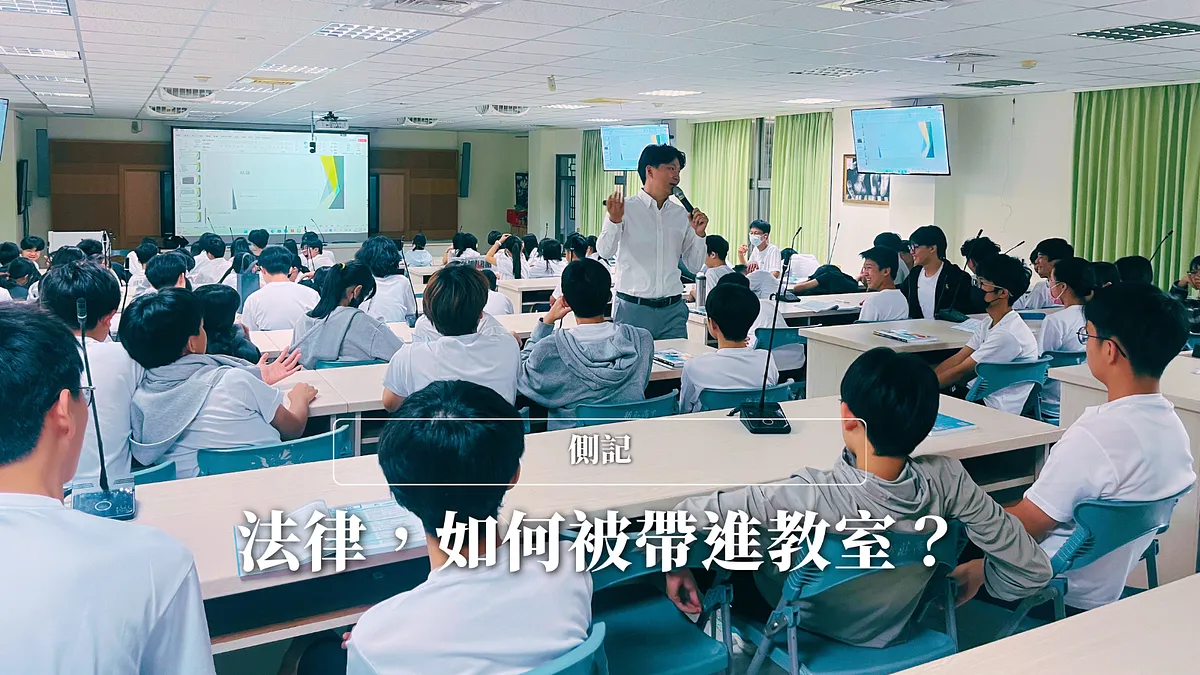
The room came alive as soon as lawyer Chiu Chi-hung asked the question. Some students turned to their classmates to share stories of courthouse visits. The school had arranged the talk as part of its integrated activities curriculum, with JRF inviting a lawyer to introduce first-year senior high school students to Taiwan’s citizen judge system.
Displaying images of the robes worn by different legal professionals, Chiu explained the work of judges, prosecutors and defence counsel. He then invited students to try on a lawyer’s robe and briefly take on the roles of prosecutor and defendant.
Once the roles changed, the questions became concrete. If you were a prosecutor, what kind of citizen judge would you want to select? How might your thinking change if you were the defendant or defence counsel? These exchanges introduced students to the distinctive features of the citizen judge system, including “challenges for cause” during the selection process.
Chiu then walked the students through the trial process, beginning with the examination of evidence: witness testimony, documentary evidence and physical evidence. This stage is crucial to determining whether the evidence establishes that the defendant committed an offence.
Turning to oral argument, he devoted particular attention to arguments on sentencing. Using specific examples, he also explained why a trial must look beyond disturbing images in the case file that could sway professional or citizen judges, and why the connection between those images and the outcome of the alleged offence must be carefully examined.
The discussion naturally led to a familiar question: “Why do lawyers defend people accused of murder?”
Lawyers, Chiu explained, serve as a bridge between the parties and the judge. A party may need to submit written pleadings. A lawyer’s expertise lies in preparing those submissions on a sound legal basis, organising the facts, researching relevant precedents and analysing the evidence.
Lawyers also help safeguard defendants’ procedural rights. Procedural justice matters. Why? Consider the wrongful conviction of Chiang Kuo-ching: gravely inadequate procedures led to a swift conviction and execution.
Even when an alleged crime provokes anger or seems impossible to accept, the justice system must follow proper procedures, scrutinise the evidence and decide the case according to law. These safeguards ensure a fair trial.
Preventing Fraud: Understanding Legal Risks and Protecting Yourself
At another senior high school, lawyer Liu Ching-lun used the issue of mule accounts—bank accounts used to receive or move criminal proceeds—to discuss fraud with students.
Part-time work, earning pocket money and making new friends online are familiar parts of young people’s lives and ways of finding their place in the wider world. Fraud rings, however, may exploit those same opportunities to approach students, disguising traps as friendly and appealing invitations.
Liu outlined three common fraud risks and introduced an important legal question: how does the law assess someone’s responsibility if they are unsure whether they are helping to commit a crime—or believe they are simply doing someone a favour?
This raises the criminal law concept of dolus eventualis, or indirect intent. Legal responsibility depends on more than what a person says afterwards. It requires an assessment of what they understood and how they acted at the time, in light of the particular circumstances and evidence.
Through discussion of criminal liability in the examples, Liu showed students how to recognise risks and protect sensitive personal information when faced with suspicious job offers, requests involving bank accounts or financial transactions.
Do not hand over your account or access credentials. Do not give out sensitive information. Do not take unfamiliar requests on trust. A little more checking can mean a little less risk.
From preventing fraud to experiencing courtroom roles and procedures firsthand, JRF’s partnerships with schools seek to make the law more than a collection of terms in a textbook. The aim is to turn it into knowledge people can understand and use in everyday life.
Translated from the Chinese original, published by the Judicial Reform Foundation. This English translation is an adaptation made available under the same Creative Commons Attribution–ShareAlike 4.0 International licence.
This article is an AI-generated translation of the original Chinese text. In the event of any discrepancy, the Chinese version shall prevail.
Education