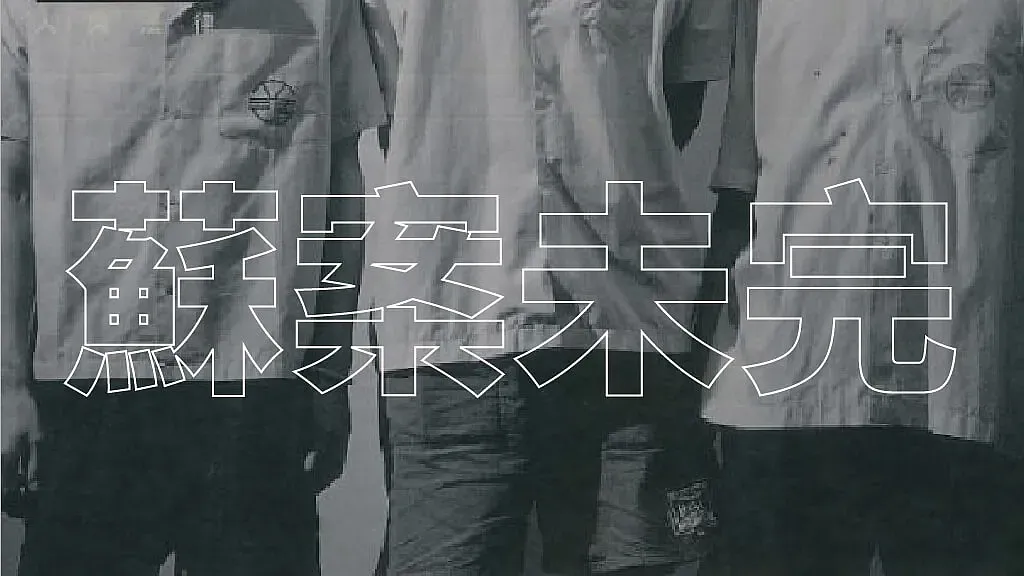
Su Chien-ho Case (Hsichih Trio)
On March 24, 1991, a murder case involving the Wu couple occurred in Hsichih Township, Taipei County. The Hsichih Precinct in charge of the investigation stated, "There are signs of a struggle at the scene, suggesting more than one perpetrator... The police task force has collected several suspicious fingerprints at the scene and is sending them to the Criminal Investigation Bureau for identification." (China Times, March 25) After five months of fingerprint comparison, the police arrested active-duty serviceman Wang Wen-hsiao on August 14. The task force emphasized that they were still pursuing accomplices, highlighting that "among the four different fingerprints collected by the police at the scene, one set belongs precisely to Wang." Two days later, the Hsichih Precinct broke Wang Wen-hsiao's psychological defense, tracked down and arrested three murder accomplices and one lookout accomplice, and announced the case solved. In October, the prosecutor indicted Su Chien-ho, Liu Bing-lang, and Chuang Lin-xun based on the scenario of a four-person crime. However, apart from the defendants' confessions extracted through police torture, the indictment contained no supporting evidence, and even the fingerprint identification upon which the police allegedly solved the case had vanished without a trace.
Su Chien-ho and the other two had their death sentences finalized on February 9, 1995. Because the trial and judgment of this case suffered from severe flaws in evidence collection, factual determination, and application of law, then-Prosecutor-General Chen Han successively filed extraordinary appeals three times, listing 24 major doubts pointing out that the original final judgment violated the law; all were dismissed by the Supreme Court. At this point, the path of the law had reached a dead end, prompting civil society to launch a large-scale rescue campaign to promote comprehensive judicial reform. Responding to the societal call for a retrial of the Su case, the Taiwan High Court ruled to initiate a retrial on May 18, 2000. On May 19, 2010, the ``Criminal Speedy Trial Act`` was promulgated, stipulating that if a defendant is acquitted three times after a case is remanded for retrial, the prosecutors may not appeal to the Supreme Court. On August 31, 2012, following the third retrial after remand, they were once again acquitted, and the case was finally concluded. From the High Court's ruling to initiate a retrial until the final conclusion of the case, the three defendants went through a long and arduous 12-year retrial process (acquittal in retrial → remanded for retrial → death sentence in the first retrial after remand → remanded for retrial → acquittal in the second retrial after remand → remanded for retrial → acquittal in the third retrial after remand), and if calculated from the very moment the three defendants were accused of the crime until the final acquittal, the period spans as long as approximately 21 years.
Chronology of the Criminal Case
| Date | Event |
|---|---|
| March 24, 1991 | The murder of couple Wu Ming-han and Yeh Ying-lan occurred in Hsichih Township, with 79 stab wounds found on their bodies. |
| August 13, 1991 | Wang Wen-hsiao was arrested in the military and claimed he committed the crime entirely alone. |
| August 15, 1991 | Wang Wen-chung was arrested and, during his escort, implicated Su Chien-ho and the other two. On the same day, Su Chien-ho, Chuang Lin-xun, and Liu Bing-lang were arrested. |
| August 1991 | Shortly after the arrest of the three in the Su case, defense attorney Su Yu-chen immediately took on Su Chien-ho's defense, and Su Chien-ho's father began traveling everywhere for the case, subsequently petitioning various organizations. |
| January 11, 1992 | Wang Wen-hsiao was executed by firing squad, never having had the opportunity to confront the three defendants in the Su case before his death. |
| January 12, 1992 | The first instance trial of the Su case commenced. |
| February 18, 1992 | First instance judgment of the Su case: Su Chien-ho, Liu Bing-lang, and Chuang Lin-xun were each sentenced to two death sentences and declared deprived of civil rights for life. |
| January 14, 1993 | Second instance judgment upheld the original ruling. |
| March 16, 1994 | Judgment of the first retrial after remand upheld the original ruling. |
| October 26, 1994 | Judgment of the second retrial after remand upheld the original ruling. |
| February 9, 1995 | The judgment of the Su case was finalized, with all three sentenced to two death sentences and deprived of civil rights for life. |
| March 11, 1995 | The Control Yuan launched an investigation into the Su case. |
| April 20, 1995 | The three defendants in the Su case, through their defense attorney, accused the police officers of the Hsichih Precinct of suspected illegal detention and torture. |
| June 14, 1995 | Control Yuan members submitted the investigation report on this case, concluding that the High Court, the Shihlin District Court, and the Hsichih Precinct were involved in multiple derelictions of duty during the trial and investigation. |
| May 25, 1996 | The "Death Row Vindicated Brigade" was established. |
| June 29, 1996 | The "Vindicate Death Row Prisoners, Let the Innocent Children Return Home Early" mega-march was held. |
| April 15, 2000 | TAA, JRF, and HEF held the "Walking Toward Dawn, Fixed-Point Circling" event at Chinan Church, which continued for 214 days. |
| October 29, 2000 | Su Chien-ho's father passed away. |
| November 16, 2000 | Retrial proceedings for the Su case commenced. |
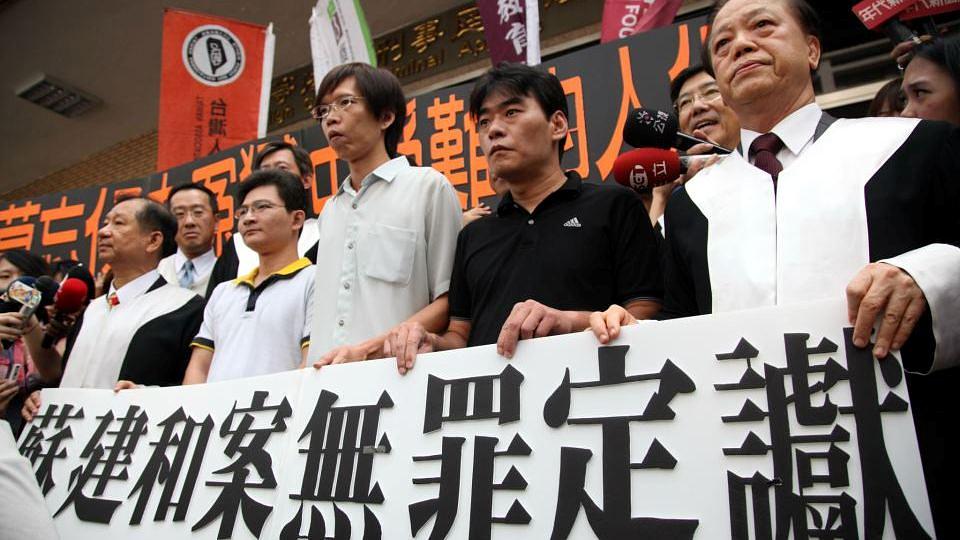
| January 13, 2003 | Retrial judgment: The High Court acquitted the three defendants and ordered their release in court. |
| August 8, 2003 | The Supreme Court remanded the case for retrial. |
| October 27, 2003 | First hearing of the first retrial after remand. |
| July 21, 2004 | Publication of *Untainted Youth*. |
| May 4, 2007 | Dr. Henry Lee appeared in court for the Su case, presenting 18 new pieces of evidence derived from crime scene data. |
| June 27, 2007 | [Goodbye Su Case, Su Case Goodbye] Group solidarity silent walk event. |
| June 29, 2007 | First retrial after remand judgment: The three were still sentenced to death; the Su case defense team actively entrusted Dr. Henry Lee to conduct a crime scene reconstruction for the Su case |
| November 1, 2007 | The Supreme Court once again remanded the case for retrial. |
| December 10, 2007 | First hearing of the second retrial after remand. |
| June 20, 2008 | Dr. Henry Lee conducted crime scene reconstruction upon the court's commission. |
| August 13, 2010 | Dr. Henry Lee testified in court as an expert witness. |
| November 12, 2010 | Acquittal pronounced in the second retrial after remand. |
| April 21, 2011 | The Supreme Court remanded the Su case. |
| June 15, 2011 | First hearing of the third retrial after remand. |
| August 31, 2012 | Third retrial after remand judgment pronounced; the case was finally concluded with an acquittal. |
Civil Litigation: Wandering in Court for 35 Years, the Su Case Is Still Not Over
The civil damages action attached to the criminal prosecution filed by the victims' family in 1992 (80th Year Fu-Min-Tzu No. 398) was transferred to the civil court for trial after the criminal case was finalized. Both the first and second instances ruled that Su Chien-ho and the other two bore no liability for damages. However, what many people do not know is that on August 26, 2020, the Supreme Court vacated part of the civil judgment in this case, remanding it to the Taiwan High Court for the first time. After nearly five years of proceedings in the retrial after remand, leading to a favorable judgment at the end of 2024, the Supreme Court remanded the litigation for the second time in August 2025 (Case Number: Supreme Court Civil Judgment 114th Year Tai-Shang-Tzu No. 488). This means that even though 35 years have passed since the incident and nearly 13 years since their criminal acquittal was finalized, the three defendants—Su Chien-ho, Liu Bing-lang, and Chuang Lin-xun—must still continue to fight for their innocence within the judicial system.
In the 1990s, when the Code of Criminal Procedure was still backward, the Su Chien-ho case brought about severe and crucial reflections, propelling the progress of Taiwan's criminal judicial procedures. For example, Article 100-1 of the Code of Criminal Procedure was amended in 1997 to stipulate that the interrogation of a defendant must be continuously audio-recorded throughout, and video-recorded continuously when necessary. The 2001 amendment to the Code of Criminal Procedure further advanced reforms including: explicitly establishing the presumption of innocence and the exclusionary rule for illegally obtained evidence, prohibiting defendants' confessions obtained through exhausting interrogations from being used as evidence, and also requiring that "if a confession is submitted by the prosecutor, the court shall order the prosecutor to point out the method of proof that the confession was made out of free will," thereby improving trial practices that often conversely required defendants to prove they had suffered torture.
Chronology of the Civil Case
| Date | Event |
|---|---|
| February 18, 1992 | The "civil action attached to criminal proceedings claiming damages" filed by the victims in the criminal division under 80th Year Chung-Su-Tzu No. 23 (case concerning the Statute for Punishment of Bandits, etc.) was ruled and transferred to the civil division. |
| June 14, 2001 | The court ruled to suspend the civil proceedings in this case until the conclusion of the "Taiwan High Court 89th Year Zai-Tzu No. 4 criminal proceedings." |
| August 31, 2012 | Following the pronouncement of the criminal third retrial after remand and the final conclusion of the case with an acquittal, proceedings resumed in 2013. |
| July 11, 2014 | Taiwan Shihlin District Court Civil Judgment 81st Year Chung-Su-Tzu No. 101 dismissed the plaintiffs' claim for damages arising from torts (defendants Su Chien-ho et al. won). |
| February 16, 2019 | Taiwan High Court Civil Judgment 103rd Year Chung-Shang-Tzu No. 719 dismissed the appeal (defendants won again). |
| August 26, 2020 | Supreme Court Civil Judgment 108th Year Tai-Shang-Tzu No. 1437 vacated the judgment, resulting in the first remand unfavorable to the defendants. |
| October 31, 2024 | Taiwan High Court Civil Judgment 109th Year Chung-Shang-Keng-Yi-Tzu No. 154 dismissed the appeal (defendants won). |
| August 21, 2025 | Supreme Court Civil Judgment 114th Year Tai-Shang-Tzu No. 488 vacated the judgment for the second time, resulting in an unfavorable remand, and the case remains pending in the civil division of the High Court. |
In short, in 2014 and 2019, when the victims' family sued the three individuals in the Su case for damages arising from torts, the courts ruled that no compensation was owed. However, in 2020 and 2024, the Civil Division of the Supreme Court twice unfavorably vacated and remanded the decisions, and the litigation continues...
Today, younger generations of students in civics textbooks, within the chapter on the "presumption of innocence," formally use the Su Chien-ho case to practice critical thinking on whether police torture and confessions obtained without legal counsel comply with due process of law and whether they constitute evidence that should be adopted in a lawful trial, thereby learning the literacy and knowledge of a civic legal society from the Su case. It can be said that from the very moment Su Chien-ho and the other two were accused of the crime, from ages 18 to 39, they spent as long as 21 years of their lives proving their innocence. Following their acquittal and exoneration, they continue to play an important role in civil society's promotion of legal education, continually contributing to Taiwanese society. We even frequently hear young and mid-career lawyers, judges, and prosecutors mention that they were inspired to embark on a legal career by the Su Chien-ho case.
Su Chien-ho and the other two have already used their lives in exchange for the reform of Taiwan's criminal justice system; now, the civil justice system should also conduct rigorous reflection. Through this case, the rescue brigade continues its actions hoping to raise awareness of how civil procedural evidence law should exclude illegally obtained evidence and allocate the burden of proof, and also wishes to remind everyone once again that Taiwan's mechanisms for the prevention of and accountability for torture remain incomplete. Parties are unable to rely on the *Enforcement Act of the Convention against Torture* to persuade courts to more actively exclude illegally obtained evidence, and the state as a whole has yet to take responsibility for preventing the occurrence of torture and repairing the damages caused by torture.
All volunteers who care about Taiwan's judicial miscarriage of justice, torture, and civil litigation reform are welcome to join the volunteer team!