
JRF Newsletter
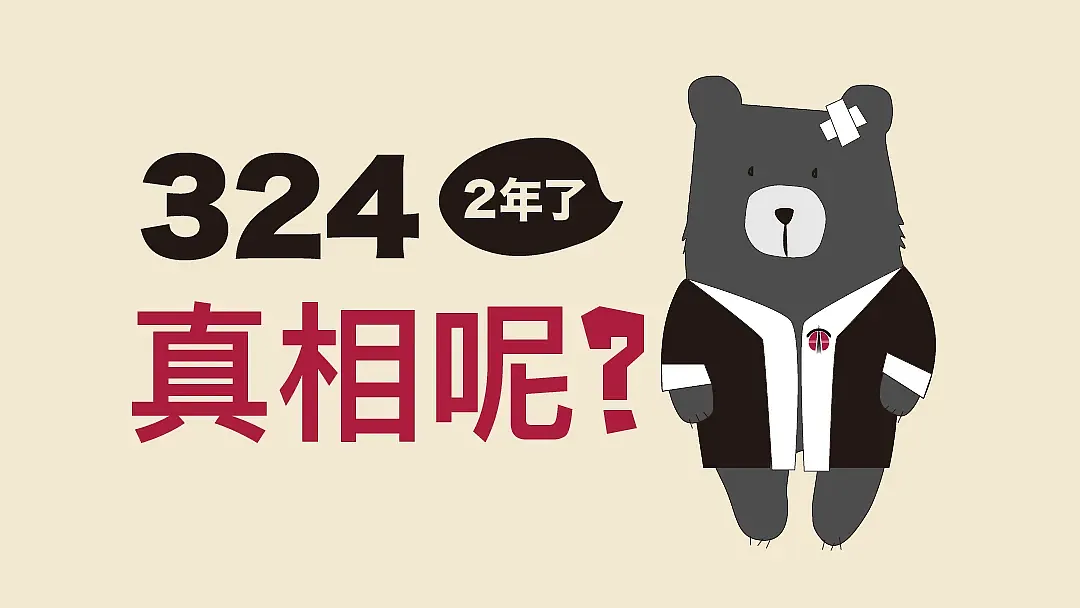
March 24: Two Years On, Where is the Truth?
Last edited: 2026-07-27
Two years ago, following five days of the March 18 movement opposing the cross-strait trade agreement, President Ma Ying-jeou finally held a press conference on March 23 without giving a positive response to the protesters' demands. Disappointed and outraged, protesters scaled the barricades to enter the Executive Yuan on the night of March 23, and the surrounding plazas were occupied by thousands of people.
Then-Premier Chiang Yi-huah, upon learning that citizens had occupied the Executive Yuan, instructed the police to clear the Executive Yuan before morning business hours. To accomplish this mission, the police launched several waves of forced evictions starting in the early hours of March 24. Riot police attacked the sit-in protesters with shields, batons, fists, and feet, and even sprayed high-pressure water cannons at the areas where protesters were sitting, eventually dispersing all the crowds occupying the inside and outside of the Executive Yuan by early morning. Their brutal methods resulted in numerous injuries.
As the March 24 Executive Yuan violent eviction incident reaches its second anniversary, who should be held accountable?
Following the incident, the JRF established a pro bono lawyer platform to help citizens who suffered from state violence file private prosecutions and state compensation claims. Currently, a total of 48 plaintiffs have filed private prosecutions against 5 defendants—Chiang Yi-huah, Wang Cho-chun, Huang Sheng-yung, Fang Yang-ning, and the police officers who launched the assaults—spanning 10 cases. In addition, 31 individuals have filed state compensation lawsuits against the Taipei City Government and the Taipei City Police Department.
The status of the cases is explained below:
-
Accusations against: Chiang Yi-huah, Wang Cho-chun, Fang Yang-ning
The first person to file a lawsuit regarding the March 24 Executive Yuan violent eviction incident was elderly Mr. Chou Jung-tsung, who accused Ma Ying-jeou, Chiang Yi-huah, Wang Cho-chun, Fang Yang-ning, and others. For subsequent plaintiffs filing private prosecutions who also accused Chiang Yi-huah, Wang Cho-chun, and Fang Yang-ning, the courts ruled that these cases involved the "same defendants" and all targeted the eviction operation on the night of March 24. Consequently, they were deemed the same case as Chou Jung-tsung's, and the private prosecutions were dismissed under the principle of identity. Pro bono lawyers are currently attempting to petition to merge other plaintiffs' cases into Mr. Chou's case for trial.
-
Accusations against: Huang Sheng-yung
The first to accuse Huang Sheng-yung was Legislator Chou Ni-an. Citing the same-case rationale, the court similarly dismissed private prosecution cases filed against Huang Sheng-yung by other plaintiffs. Pro bono lawyers attempted to petition for merging other plaintiffs into Legislator Chou Ni-an's case for joint trial, but the court dismissed the petition on 2016/02/18.
Plaintiffs who were at the Executive Yuan that day sustained injuries in different areas, and the police officers who assaulted them were also different.They should not be classified as the same case.
-
Accusations against: The police officers who carried out the assaults
None of the on-duty police officers wore identification armbands or serial numbers during the eviction. Therefore, plaintiffs were unable to provide police badge numbers or name information to the court to identify specific defendants.
To track down the assaulting police officers, the JRF began calling for video and audio materials of that night from the public and recruited a large number of volunteers to help filter and screenshot violent footage. Fortunate plaintiffs happened to have records of their assault process and were able to screenshot images of the assaulting officers. Plaintiffs who were not captured on camera could only tell the judge the area where they were beaten on that day and requested the judge to retrieve data from police agencies to identify the assaulting police officers and hold them accountable.
However, judges' attitudes varied: some were more willing to actively assist in retrieving data, while others directly dismissed the cases, stating that "the court is not an investigative agency; assisting in evidence collection and investigation before the trial stage would compromise the fair trial nature of the court and the position of an objective arbiter."
The injured plaintiffs were bounced back and forth in the courts like rubber balls.
Did the judges who actively investigated find the police officers who committed the assaults? No.
Official letters sent by the court to the National Police Agency, the Taipei City Police Department, and various precinct offices in Taipei either stated that no such person could be found, claimed that identification was impossible, or simply left the messages unread and unresponded to.
Is the Legislative Yuan Also Powerless?
A few days after the incident, the Legislative Yuan immediately questioned the Premier, the Minister of the Interior, and the Director-General of the National Police Agency. On 2014/03/27, it even swiftly established the "Special Investigation Project Group on the Truth of the Executive Yuan's Suppression of the Anti-Trade Agreement Student Movement" to review relevant materials and clarify the truth of the incident. However, relevant agencies such as the Executive Yuan, the Ministry of the Interior, and the National Police Agency refused to provide materials on grounds such as "classified information," "non-disclosure of investigations," and "no relevant information found." In the end, the Internal Administration Committee could only freeze part of their budget as a result.
Some legislators' offices also issued official requests to police agencies for internal investigation reports or disciplinary data, only to receive the following responses:
…Previous investigations into this case have failed to confirm the cause or the specific individuals responsible for the legislator's injuries. Furthermore, after reviewing relevant surveillance footage and interview records of personnel present, no new evidence has been found. Additionally, as the legislator has filed a private prosecution with the Taiwan Taipei District Court regarding this case, which is still pending before the court, the relevant evidence collection materials have been submitted to the Taipei City District Court…
…During the process where police evicted citizens who intruded into the Executive Yuan, injuries were sustained due to assaults by police officers. Based on relevant news footage, police officers from the Special Operations Squadron of the Taipei City Police Department are suspected of striking a citizen surnamed Lin with a baton. Additionally, a citizen surnamed Wang is suspected of being injured during the eviction and crowding process by Special Operations Squadron police officers; however, it has not been possible to confirm which specific police officers caused the injuries to the two individuals…
Under the current system, neither the courts nor the Legislative Yuan are able to uncover the truth covered up by the executive branch!
Amnesty International specifically pointed out in its global "Human Rights Report 2015/16":
Regarding the police's excessive use of force to evict protesters at the Executive Yuan and its surrounding areas on March 23 and 24, 2014, or the government's overall actions during the "Sunflower Student Movement," no thorough, independent, and impartial investigation had been seen by the end of 2015.
In contrast, the "National Human Rights Report on the ICCPR and ICESCR" drafted by the executive branch earlier this year completely omitted any mention of the police's violation of the principle of proportionality during the "Executive Yuan violent eviction incident."
What is the Status of State Compensation?
Teacher Lin Ming-hui, an injured victim, was the first to file a state compensation lawsuit and, with the assistance of pro bono lawyers, won a favorable court judgment on 2015/8/4. The ruling ordered the Taipei City Government to pay NT$300,000 in mental distress compensation. As the Taipei City Government waived its right to appeal, the judgment is final. This is currently the only successful case.
Encouraged by Teacher Lin Ming-hui's victory, 30 other injured individuals (including the late elder Mr. Chou Jung-tsung) filed settlement claims for state compensation with the Taipei City Government. However, the Taipei City Government and the Taipei City Police Department refused to accept them. Pro bono lawyers will file state compensation lawsuits in court on 2016/3/23.
We Hope That...
- The Legislative Yuan establishes a special committee to investigate the truth of March 24.
- An investigative report on the truth of March 24 is written and published.
- The executive branch faces its mistakes and assumes liability for compensation.
Continue to Follow
- Please come and attend the gathering on March 23 at the Taipei Artist Village to share your memories of March 24 with us.
- Please join in writing postcards to the National Police Agency, the DPP caucus, and the Taipei City Government to demand an investigation into the truth of the March 24 suppression and accountability for state violence.
- Please come and observe court sessions, conduct courtroom observation, and offer support to the plaintiffs.
March 23 Returns to Peiping East Road: Starting from Silent Self-Narratives

Today marks the second full anniversary of the March 18 Sunflower Movement. Two years ago, on March 23, many people witnessed state violence firsthand at the Executive Yuan.
In the blink of an eye, two years have passed. Over these past two years, although the physical wounds of many survivors have healed, the psychological trauma has never truly left them. At the same time, another group of injured victims has attempted to seek justice through litigation, only to find themselves counter-sued by the state.
This March 23, the "March 23 Executive Yuan Incident Truth Investigation Group" is organizing the event "March 23 Returns to Peiping East Road: Starting from Silent Self-Narratives." The event invites injured victims and activists who stood in various positions during the incident to make an appearance, using environmental theater to slowly recount how everyone has healed and faced judicial litigation over the past two years. Finally, the event will return to the plaza of the artist village to foster broader public reflection.
This article is an AI-generated translation of the original Chinese text. In the event of any discrepancy, the Chinese version shall prevail.