
JRF Newsletter
The Courage to Speak the Truth: A Discussion on Lin Wen-wei's Prison Notes
Last edited: 2026-07-27
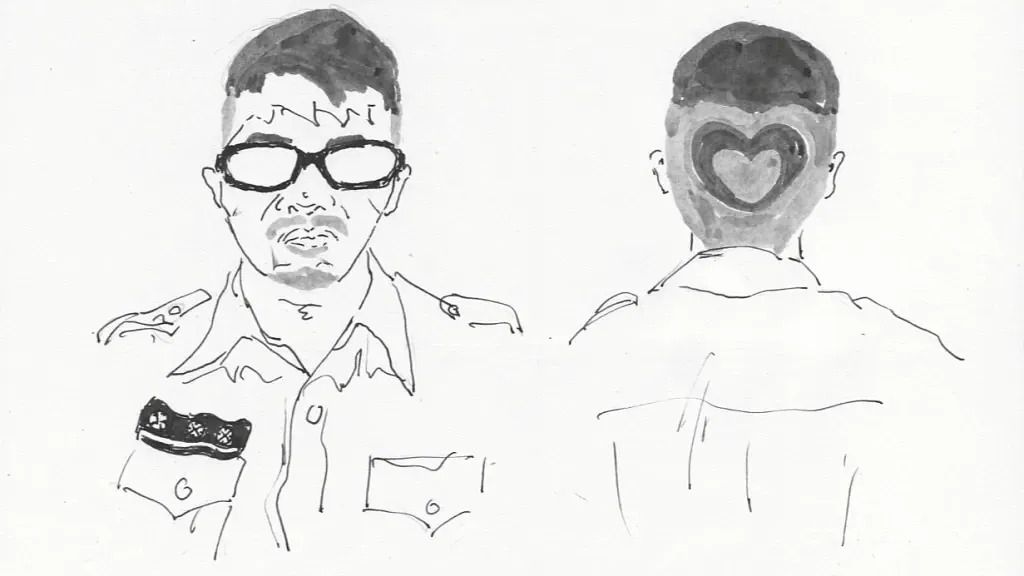
On December 31, 2015, prison guard Lin Wen-wei was given two reprimands for writing and illustrating an article titled "Repentance," which detailed the unlawful use of stun guns by prison personnel. Learning of the incident, the Judicial Reform Foundation (JRF) proactively offered assistance, reasoning that if such speech were to be penalized, many internal issues within correctional facilities would go unspoken in the future, ultimately creating a chilling effect highly detrimental to oversight and reform.
We continued to assist Lin Wen-wei by forming a legal team and holding a forum on the issues involved in this case, hoping to garner greater public attention. On September 7, 2016, the prison finally agreed to rescind Lin Wen-wei's two reprimands. However, our true goal was not merely to have the reprimands rescinded, but to see genuine changes within the prison system and to ensure that institutional whistleblowers are protected in order to prevent institutional decay.
Author / Lin Wei-ting, Executive Secretary of the Judicial Reform Foundation
"Speaking the truth is never merely speaking the truth; it is a social action, and it is also an ethical and moral action intimately connected to the self."
In contemporary times, when you say something is "true," it means that your words correspond to the object you are describing. However, according to the research of French philosopher Michel Foucault, "speaking the truth" in the Greek period was related less to the object than to the subject of speech—that is, the speaker sincerely articulating what "they know" to be true. How, then, does one judge whether a person is "speaking the truth"? One way to confirm this is by looking at their "courage." This refers to the fact that "speaking the truth" brings danger or risk to the speaker, yet they speak frankly despite knowing this. I will not delve further into Foucault's subsequent complex analysis of "truth-telling," but simply wish to borrow this shift in perspective to discuss the disciplinary action taken against prison guard Lin Wen-wei for writing and illustrating prison conditions, as well as the forum on freedom of speech held in response to this incident.
Lin Wen-wei wrote and illustrated the unlawful use of stun guns in prison, for which the prison authorities issued him two reprimands on the grounds that Lin could not prove the allegations. However, viewed from the perspective of the subject, what we actually need to understand is the state of mind with which Lin Wen-wei wrote and illustrated these accounts. In correctional facilities, obeying orders unquestioningly and staying out of trouble is the path to promotion and self-preservation. Yet Lin Wen-wei did not do this; he chose a difficult path: to continuously write and illustrate the reality of prison conditions as he saw them, drawing public attention to prisons and to reform. This choice also exposed him to various perils and pressures, the most obvious of which was the disciplinary action he suffered for his writings and illustrations. From this perspective, it is fair to say that Lin Wen-wei is a person willing to face danger while sincerely speaking the truth.
Such courage empowers everyone, encouraging more people to step forward and strive for reform. On June 19, 2016, a group of experts, scholars, and individuals concerned about this case gathered to discuss the issues involved in the Lin Wen-wei case. At that forum, our discussion primarily centered on the "freedom of speech" of civil servants under contemporary law. In legal terms, freedom of speech is a "right." The general public might think that a "right" means "I can do whatever I please," but from the discussions at the forum, one could feel that the right to freedom of speech cannot be simply understood as the expression of individual desires; it has a strong ethical dimension. It attempts to give subjects who are relatively disadvantaged in power relations the possibility of making ethical choices—that is, to speak sincerely and frankly with a clear conscience in the face of danger.
On September 7, 2016, during the re-appeal process before the Civil Service Protection and Training Commission (CSPTC), the matter was temporarily brought to a close thanks to the active mediation of the CSPTC commissioners. The two reprimands issued to Lin Wen-wei were rescinded and replaced with a single written warning. A written warning falls somewhere between a penalty and no penalty, having no substantial impact on Lin Wen-wei; it can be said to be an acceptable compromise reached through mutual concessions between Lin and the prison administration. We hope this marks the beginning of a positive interaction between Lin Wen-wei and the prison where he works, because we are well aware that Lin's ethical choice was based on the public interest rather than personal gain. If prison officials can understand and recognize that correctional facilities need to improve, the relationship between both sides can change. We also hope that the general public will continue to follow Lin Wen-wei's Prison Illustrations, because this lies at the heart of a truth-teller's ethical concern: the hope that prisons will truly change—nothing more!
 Photo / Chia-ying and Wen-wei
Chia-ying, the Pro Bono Lawyer Connected with Wen-wei
Author / Hsieh Chia-ying, Pro Bono Lawyer for the Lin Wen-wei Case
In 2013, as a good-for-nothing graduate student, I came to know this artist disguised as a civil servant because Lin Wen-wei's works were exhibited at the Tsai Lecture Hall (Lin-tze Hall). I then learned that his ideal was to allow the outside world a glimpse into the mysterious prison landscape through pen and paper, thereby achieving the goal of reforming the prison environment. I thought, "Ah, he must be a JRF undercover agent planted in the prison; time to tear off your mask, haha!"
Two years later, at the end of 2015, this flamboyant individual received a disciplinary notice. Picking up where our connection left off, and through the introduction of the JRF, I met him in person, along with his lovely wife and little treasure. Assisting him over the past eight months has flown by in the blink of an eye. During this time, we hung out at the CSPTC twice—truly a rare and precious experience. I believe the CSPTC commissioners and the Agency of Corrections have also greatly enhanced their case experience through this. After all, Lin Wen-wei is such a rare character with an off-the-charts cost-performance ratio, making him far too difficult to tame.
Although it wasn't the expected outcome, if this can initiate a "virtuous cycle," it can also be considered a win-win situation. Still believing in diplomatic pleasantries, I trust not in how fair the judiciary is, but in the original intention of treating one another with sincerity between human beings, and in the belief that even the most untrustworthy correctional institution has the potential to shed the legacy of an authoritarian state and slowly transform. Of course, the JRF undercover role remains vital, haha! So, you at the guard post, keep drawing! And if there is a next time, I will still accompany you (truly, no deception).
※ This article is adapted from Lawyer Hsieh Chia-ying's Facebook page

Let the Silent Walls Fall
Author / Liu Kuan-lin, NYU School of Law
Translators / Shih Liang-yun, Liao Ho-an
In the United States, the "code of silence" is an unwritten rule implicitly observed by all correctional staff. The "code of silence" ensures that "dirty laundry is not aired in public." Even when severe violations occur, many correctional officers strictly adhere to this rule, choosing silence. This is because the consequences of breaking the "code of silence" typically mean covert, retaliatory punishments and private peer bullying. Quite a few whistleblowers have chosen suicide because they could not bear such pressure.
A case that occurred in California illustrates the problems brought by the "code of silence." After exposing issues within the prison, Scott Jones committed suicide because he could not bear the pressure of peer bullying. Scott Jones's widow, Janelle Jones, grieving deeply, filed a lawsuit against the California Department of Corrections and Rehabilitation. She accused the correctional institution of severely violating Scott Jones's freedom of speech protected under the First Amendment. Evaluating the case through a balancing test, the court weighed "the freedom of speech of correctional officers" against "the operations of correctional institutions" and ruled that Scott Jones was entitled to assert freedom of speech in this case. The proceedings remain ongoing.
Similar cases have occurred elsewhere in the United States. In 2008, a correctional officer gouged out the right eyeball of an inmate suffering from schizophrenia. During the course of the investigation, the correctional officers involved all claimed they did not witness the incident and knew nothing about the injuries suffered by the inmate. Such a situation fully demonstrates the heavy pressure exerted by the "code of silence" within correctional institutions. In this case, all relevant physical evidence, such as the gloves used to gouge out the eyeball, was destroyed. Only one correctional officer, named John Pisciotta, was willing to state during the investigation that he was actually present and provided an account of the facts. Once his colleagues within the institution learned of this, they subjected Pisciotta to a series of harassments and bullying, such as painting the word "coward" on his front door. They even fabricated false accusations of inmate abuse against Pisciotta, which ultimately led to his dismissal. The attitude of the correctional institution in handling this matter was also highly questionable; of the nine correctional officers present, only one was ultimately fired, while the others were subsequently reinstated. In 2011, Pisciotta filed a complaint against the state Department of Corrections regarding this matter under the Florida Whistleblower's Act, and the Department of Corrections ultimately settled for $135,000 USD.
Many state legislatures have recognized the importance of protecting whistleblowers from threats and bullying. When passing the California Whistleblower Protection Act, the California State Legislature affirmed: "Civil servants should have the right to freely report 'improper governmental activities, fraud, violations of law, waste of public resources, and threats to public health' within government agencies." This is because "when handling matters concerning the people, civil servants have the right to act impartially, free from any form of restraint."
To achieve the objective of protecting whistleblowers, New York State's whistleblower laws protect civil servants' right to report "upon a reasonable belief that the reported conduct constitutes a fact, and a reasonable belief that the agency's action constitutes illegality." In addition, federal laws and statutes in most states do not require civil servants to present substantive evidence proving government abuse of power; reporting is permissible as long as there is reasonable suspicion.
The New York State Legislature even no longer requires civil servants to notify their superiors before reporting, as this rule failed to take into account that supervisors or superior agencies might also be implicated in the unethical conduct. Furthermore, over the past few years, civil servants fearful of retaliation and job loss have requested to report anonymously and have even refused to cooperate with investigations. Even where the laws of certain states require notification of superiors prior to reporting, courts frequently rule such regulations inapplicable upon recognizing that once superiors learn of a subordinate's potential to report, they are highly likely to abuse their authority to pressure subordinates and cover up wrongdoing.
In Taiwan, the legal system for whistleblower protection remains incomplete; whistleblowers within correctional institutions may still face disciplinary action even when reporting based on a "reasonable suspicion." This situation must change; otherwise, when the culture of silence thoroughly permeates, it builds high walls of silence, and people outside the organization will no longer be able to see the problems within. Therefore, promoting regulations for organizational transparency to ensure the safety of whistleblowers is an urgent task!
This article is an AI-generated translation of the original Chinese text. In the event of any discrepancy, the Chinese version shall prevail.