
Norms and Practice of Evidence Disclosure in Japan (Part I): Institutional Introduction - Attorney Yamamoto Yoshinobu
Last edited: 2026-07-27
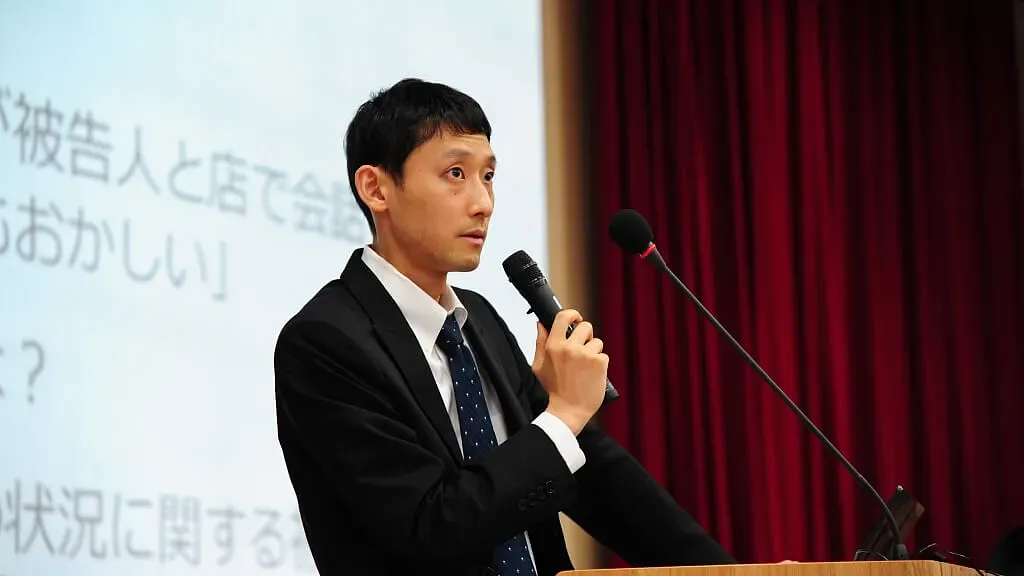
Editor's Note: This year (2018), the JRF organized the "International Symposium on Lay Participation in Trials—Evidence Disclosure." One of the keynote speakers was Attorney Yamamoto Yoshinobu of Japan, who is one of the drafters of the Japan Federation of Bar Associations' "Guidelines for Retrial Evidence Disclosure." This article summarizes Attorney Yamamoto's presentation at the symposium, divided into two parts: institutional introduction and practical responses, to help everyone understand the norms and practice of Japan's evidence disclosure system.
Hello everyone, I am Yamamoto Yoshinobu from Osaka. Taiwan's Code of Criminal Procedure is actually much more progressive than Japan's. I am personally very interested in Taiwan's Code of Criminal Procedure. Thank you very much for this precious opportunity to be here today. I look forward to your guidance.
Brief Introduction to Japan's Criminal System
First, let me introduce Japan's criminal system. Japan adopts the principle of a single bill of indictment, meaning all case files are not submitted to the court—in other words, there is no forwarding of dossiers. Procedurally, investigation comes first, followed by trial. Prosecutors can appeal against an acquittal. In practice, most cases involve the suspect being arrested by the police, transferred to the prosecutor, and then the prosecutor applies for detention. By this point, about 72 hours of detention have elapsed, followed by 20 days of custody before indictment. For details, please refer to the diagram of post-arrest procedures published on the National Police Agency website.
Regarding interrogations, "detention facilities" (similar to Taiwan's detention centers) are set up inside police stations, where most arrested individuals are held. During the 20 days of custody, suspects are interrogated by the police almost every day, while prosecutors conduct about two to three interrogations, producing five to ten statements. Among investigative techniques, "plea bargaining"—the consensual bargaining system—has been in effect since June 2018. There is also a wiretapping system, but due to numerous statutory requirements, it is rarely used currently. Regarding wiretapping, after amendments to the Code of Criminal Procedure (to be implemented no later than June 2019), the requirements will be fewer and it will become easier to use, so its application may expand in the future. The above is a general overview of the investigative process.
Next, I will explain the trial portion. First, the bill of indictment is submitted. During the first trial hearing, a motion for evidence investigation is made, and opinions on the evidence are also expressed. The hearsay rule applies, and the court decides which evidence to adopt; the adopted evidence will then be investigated. Due to the introduction of the Lay Judge System in 2005, a new pretrial arrangement procedure was initiated. A lot of time is spent on the pretrial arrangement procedure before the first trial hearing. The prosecutor first submits the "scheduled facts to be proven" and then applies for evidence investigation. The evidence disclosure procedure takes place during this process. Once these procedures are completed, decisions on whether to adopt or reject evidence are made. This usually takes six months to a year, and longer cases can take over two years.
History of Japan's Evidence Disclosure System
Below is an introduction to the history of evidence disclosure in Japan. The Code of Criminal Procedure of 1922 before the war is generally called the "Taisho Code of Criminal Procedure." The "Taisho Code of Criminal Procedure" is a criminal procedure code very similar to Taiwan's Code of Criminal Procedure. After indictment, the prosecutor would send all case files to the court, and defense counsel could go to the court to review all case files submitted by the prosecutor.
After the war, the current Code of Criminal Procedure was enacted in 1948, introducing the "principle of a single bill of indictment." The provisions regarding disclosure in this Code of Criminal Procedure consisted of only a single article (Article 299 of the Code of Criminal Procedure), which only stipulated that evidence for which the prosecutor applies for investigation during the trial would be disclosed. Therefore, a problem arose: What should happen to other evidence for which evidence investigation is not conducted during the trial period? Will it be disclosed? When this Code of Criminal Procedure was first implemented, it was said that there was a custom where lawyers could go to the prosecutor's office to review all case files—showing almost the entire scope of evidence to lawyers—but as times progressed, prosecutors began to refuse to provide files for review.
In 1959, before the reading of the bill of indictment, a lawyer requested the court to order the prosecutor to disclose all evidence for review, stating that if he could not see all the case files, he would refuse to read the bill of indictment, thereby paralyzing the proceedings. Upon receiving this request from defense counsel, the court issued an order to the prosecutor "to disclose all records for the lawyer's review." Upon receiving this order, the prosecutor filed a special appeal, and the Supreme Court subsequently rendered a ruling. The Supreme Court revoked the lower court's order for "review of all records." In the reasoning for revoking the order, the Supreme Court stated that "the Code of Criminal Procedure does not explicitly stipulate that the court can issue an order to the prosecutor to disclose all evidence." Furthermore, the ruling stated that "the current Code of Criminal Procedure does not mandate an evidence disclosure process." Although not explicitly written, the ruling contained similar wording. Following this Supreme Court ruling, evidence disclosure became even more difficult, and lawyers could only see evidence within the scope of that applied for investigation by the prosecutor.
In 1969, there was another Supreme Court ruling. The origin of this ruling was that a certain court issued an evidence disclosure order to the prosecutor, ordering that "after the direct examination, the prosecutor shall disclose the parts of the witness deposition related to the gist of proof." The ruling required the prosecutor to disclose based on the timing of "after direct examination" and the scope of "related to the gist of proof." Viewed from our current environment, this ruling set a very late timing and a very small scope. After the prosecutor filed a special appeal, the Supreme Court once again revoked this ruling, denying the lawyer review. The Supreme Court's reason for revoking the lower court's ruling was that "the timing has not yet reached after direct examination, and the necessity of providing review cannot be judged." Because the timing at which the lower court issued its ruling was before direct examination, the Supreme Court deemed that the lower court issued the ruling too early.
Moreover, the Supreme Court's reasoning for revocation also mentioned that the reasons for applying for review must be concretely explained. The content requested for review by this lawyer was a certain witness's deposition—which was actually evidence applied for investigation by the prosecutor—and was restricted to being related to the gist of proof. Even though the request was made within such a clear scope, the Supreme Court still revoked the ruling. From the Supreme Court's ruling, it can be understood that evidence disclosure was interpreted extremely narrowly, and the Supreme Court did not readily grant evidence disclosure to lawyers.
Subsequently, until the Code of Criminal Procedure was amended again in 2004, practice proceeded in accordance with these rulings rendered by the Supreme Court. The timing of evidence disclosure had to be after direct examination, and the court would then judge whether the witness's deposition could be disclosed, or judge whether the physical evidence could be made available for review based on the needs of the case. Practice operated roughly under such standards, and courts rarely issued orders, limiting themselves to giving admonitions to the prosecutor. Such a practice lasted for 35 years, which perhaps also generated many miscarriages of justice as a result.
It was not until 2004, when the lay judge system was launched, that the Code of Criminal Procedure was amended. It is very similar to the provisions in Taiwan's current draft bill for "Citizen Participation in Criminal Trials." Evidence was divided into "categorical evidence" and "claim-related evidence." In 2016, the Code of Criminal Procedure was amended once again, codifying the scope of evidence disclosure and introducing the "evidence list" system, while expanding certain categorical evidence.
※ Editor's Note: Japan's current evidence disclosure is divided into three stages: the first stage is "disclosure of evidence applied for investigation by the prosecutor and delivery of the evidence list"; the second stage is "the lawyer requests the prosecutor to disclose evidence other than that applied for investigation by the prosecutor, based on the evidence list"; the third stage is "the lawyer puts forward defense claims and requests the prosecutor to disclose evidence related to the facts intended to be claimed by the defendant and lawyer." For further reading, please refer to Li Yi-hsiu, "The Conflict Between the Evidence Disclosure System in the Draft Act on Citizen Participation in Criminal Trials and the Protection of the Right to Review Files."
Pretrial Arrangement Procedure
How is Japan's pretrial arrangement procedure conducted? For details, please refer to the linked file, which is content from a Japanese reference book. First, the disclosure of "categorical evidence" is conducted. Upon completion, the defense expresses its opinion on the prosecutor's evidence and puts forward the defense's claims. Following this, the defense requests the disclosure of "claim-related evidence." What is the difference between "categorical evidence" and "claim-related evidence"? I will explain shortly.
Currently, the provisions on evidence disclosure in Japan's Code of Criminal Procedure are strictly limited to the pretrial arrangement procedure (preparation procedure); there is no evidence disclosure during investigation. Furthermore, once the pretrial arrangement procedure concludes, there are no provisions for evidence disclosure during the trial, nor do relevant disclosure provisions apply to appeals to the second instance, third instance, or retrials. Additionally, cases that do not undergo the pretrial arrangement procedure naturally have no provisions for evidence disclosure either. In practice, the following phenomenon often occurs: during the first instance, prosecutors use discretionary disclosure to determine whether evidence is "categorical evidence" or "claim-related evidence." However, because this is ultimately not the prosecutor's obligation nor a legal requirement, it is very distressing for lawyers.
Table 1: Actual Case
- 2012
- 6/12
- Arrested
- 7/3
- Indicted
- 8/17
- Scheduled proof / Motion for evidence
- 8/24
- 1st pretrial session
- 9/7
- Motion for categorical evidence disclosure
+ Motion for evidence list
→ Prosecutor replies × n
Let's use an actual case to explain how the pretrial arrangement procedure is conducted (see Table 1): This is an injury case in which the defense claimed innocence. The defendant was arrested on June 12, 2012, and indicted on July 3 of the same year. One month after the indictment, the prosecutor submitted the scheduled facts to be proven (the facts determined by the prosecution). After receiving the prosecutor's scheduled facts to be proven, the lawyer applied for the disclosure of categorical evidence. A very large amount of evidence disclosure was requested in this case, and the prosecutor responded more than 5 times. From the initial request to the final completion of the prosecutor's replies, it took a total of about half a year.
Next, let's look at the actual "Motion for Categorical Evidence Disclosure." This case is different from the previous example and is also a case I handled. In the disclosure motion, the lawyer lists the specific evidence requested. Please look at the next page (p. 47), item 1 of the request, which is the medical record and treatment history from the police hospital, followed by specifying which legal category this evidence falls under, and then stating the reasons why disclosure is necessary. Evidence is requested item by item following this pattern and submitted to the prosecutor. Then, one waits for the prosecutor's reply, going back and forth several times in this manner. Depending on the complexity of the case, it takes about 3 months or half a year, and for very large cases, it may take a year. Next, let's look at the example of the prosecutor's reply. The lawyer will receive a form of the disclosure notice containing items such as "evidence title," "date of creation," and "creator." This table is handed over to defense counsel, explaining which evidence is disclosed to you. Only after the prosecutor decides which evidence to disclose can defense counsel see these pieces of evidence on hand with the prosecutor.
Regarding the inspection and transcription of evidence, procedures vary by location. Some prosecutors' offices have stationed private vendors to provide services. Lawyers can commission private vendors to photocopy the evidence within the disclosure scope. After paying fees to the prosecutor's office, the private vendor delivers the copied evidence to the lawyer's office by courier, or the lawyer goes to the prosecutor's office to copy them. All copied materials are paper-based; electronic files are not used. Therefore, for very large cases, there will be an enormous amount of paper materials. After inspecting the evidence, the next procedure is expressing opinions on the evidence, where the lawyer clearly states the defense's subsequent stance during the trial.
Table 2: Proceedings of the Example Case
- 8/24
- Before 1st trial
- 9/7
- Motion for categorical evidence disclosure
(Reply to evidence disclosure motion) - 2nd Year
- 1/25
- Scheduled claims / Opinions on evidence
- 4/12
- Scheduled claims 2
- 4/22
- Motion for claim-related evidence disclosure
(Motion for evidence or opinions on evidence, arrangement) - 7/5
- Designation of trial date
- 8/26
- Conclusion of evidence adoption / rejection
- 9/6
- 1st trial hearing
(approx. 1 year)
Referring to the proceedings of the example case in Table 2, after the motion for categorical evidence disclosure, the defense subsequently puts forward its claims and opinions on the evidence. Following that, an additional motion for the disclosure of "claim-related evidence" is made. "Claim-related evidence" refers to evidence related to the defense's claims after the defense puts forward its scheduled claims. The defense will submit the "Motion for Claim-Related Evidence Disclosure" to the prosecutor, explaining which evidence is requested and providing reasons for disclosing such evidence, along with its relevance to defense counsel's claims. The content primarily targets things that were not yet disclosed during the categorical evidence stage when applying for disclosure. Afterward, during the pretrial arrangement procedure, the claims of both sides are organized, evidence to be adopted is decided, and a trial schedule is formulated, scheduling the date of the first trial and when each witness will be summoned to testify. Once all of the above are completed, the pretrial arrangement procedure concludes. The law stipulates that after the pretrial arrangement procedure concludes, no further evidence disclosure may be conducted.
Taking the case in the Table 2 example, the first trial date was September 6, taking about a year from indictment to the first trial. For simpler cases, the pretrial procedure takes about half a year, and for more complex ones, a year. In a case I am currently handling, the pretrial arrangement procedure is likely the longest in Japanese history, taking about six years. Why did it take so long? The most important reason is that during the pretrial arrangement procedure, the prosecutor continuously made supplemental indictments. Another reason is that there is truly a massive amount of evidence; the total number of pieces of evidence ultimately disclosed by us was 15,000, and going back and forth with the prosecutor was extremely time-consuming.
Disclosure of Categorical Evidence
Next, let's explain the disclosure of "categorical evidence" in detail. First, legal provisions categorize certain evidentiary materials into "categories." The condition for "categorical evidence disclosure" is that it is important evidence for judging the probative value of specific evidence applied for by the prosecutor. Furthermore, the possibility of harm posed by such evidence is taken into consideration, and the prosecutor will disclose it only if deemed appropriate. In other words, "categorical evidence disclosure" is the disclosure of evidence related to the matters proven by the prosecutor. Procedurally, this means the disclosure of evidence used by the prosecutor to prove "scheduled facts" and evidence related to this scope.
Table 3: Categorical Evidence
- Documents concerning physical evidence and seizure procedures
- Inspection, crime scene recreation, and related documents
- Expert evaluation materials
- Depositions, audio recordings, and video recordings of prosecution witnesses and the defendant
- Documents recording interrogation status (stating date, time, etc.)
Here are a few items of categorical evidence briefly listed: physical evidence; procedural documents made at the time of seizing physical evidence; inspection, crime scene recreation, and related documents; expert evaluation materials; depositions and audio/video recordings of depositions of prosecution witnesses and the defendant; and documents recording the status of interrogation. These constitute categorical evidence. Conversely, evidence content that does not fall into these categories cannot be disclosed by the prosecution during the categorical evidence disclosure stage.
Under current legal provisions, due to differing interpretations, the scope of disclosure can be broad or narrow, potentially determined according to the 1969 ruling mentioned earlier. When the disclosure system was initially implemented, the scope of disclosure was interpreted narrowly. The condition for categorical evidence disclosure mentioned earlier—"important evidence for judging the probative value of specific evidence applied for by the prosecutor"—had a very narrow interpretation, holding that the requesting party (the defense) must concretely explain "importance." Fortunately, subsequent practice gradually expanded the scope of disclosure. In current practice, as long as the defense roughly points out relevance and expresses it clearly, it will not be given a hard time. For example, regarding a witness deposition applied for by the prosecutor, under a strict narrow interpretation, the lawyer would have to point out which part of the deposition is being impeached and explicitly explain the relationship between the grounds for impeachment and the testimony. In current practice, however, it is not so narrowly interpreted; taking a certain witness's deposition as an example, the lawyer can receive all content related to that witness without needing to specify in detail what depositions the witness made.
Next, regarding another condition for categorical evidence disclosure, "the possibility of harm," roughly two points become problematic in practice: The first is other cases currently under investigation; the second is personal information, such as addresses and phone numbers, which will be refused disclosure. In current practice, there is no strict dispute over "whether it counts as evidence" before it can be disclosed; there is considerable flexibility.
Additionally, Japanese practice has a custom of "prior discretionary disclosure." What is called discretionary disclosure is spontaneous disclosure by the prosecutor, which is not stipulated by law. When submitting the scheduled facts to be proven, although the prosecution has not yet received the lawyer's disclosure motion, the prosecutor makes spontaneous disclosure of parts that he or she considers to fall under categorical evidence and related matters. The scope of discretionary disclosure in Japan is becoming increasingly broad. Why does this phenomenon occur? I believe it is because the court hopes the proceedings will move along quickly and does not want to spend too much time on evidence disclosure. From the court's perspective, evidence disclosure is merely preparation, not the main subject. During evidence disclosure, the court has only received the prosecutor's scheduled statement of proof and complaint; if it remains stalled in disclosure, the case makes no progress at all. The court hopes to quickly conclude the evidence disclosure procedure to move on to the next stage. The court hopes that evidence qualifying for disclosure will be disclosed promptly since these materials will ultimately be disclosed anyway, so prosecutors respond to the court's expectations by disclosing all such evidence in advance. However, discretionary disclosure lacks any legal binding force, and relying on discretionary disclosure is extremely unreliable.
Problems with Categorical Evidence Disclosure
Table 4: Important Evidence Not Fitting "Categories"
- Reports documenting depositions
- Police notes (interrogation notes, etc.), expert evaluator notes
- Evidence related to reports made to the police
- Arrest procedure documents
- Transfer documents
- Litigation records of accomplices
- Account books (evidence storage room logbooks, etc.)
- Warrants, warrant applications
- Investigative inquiries and replies (some fall under Category Item 1)
Next, examining the problems of the system, the biggest problem is that important evidence does not fit the categorical conditions, as illustrated below. The first is "reports documenting depositions." Depositions bear the deponent's signature, whereas reports documenting depositions are records made by the police after listening to the deponent, which do not bear the deponent's signature. However, these reports contain the contents of questioning and investigation conducted by the police toward the witness, making them very important to defense counsel and the defendant. Nonetheless, "categorical" evidence consists entirely of written materials bearing signatures, and reports documenting depositions do not meet the requirements of categorical evidence.
The second is "police notes." Because Japanese interrogations are not audio or video recorded, if there is a dispute over the circumstances during police or prosecutor interrogations, police notes become a very important basis. In Japan, defense counsel have requested the use of these notes as points of contention, but such evidence does not belong to categorical evidence either. The third is "evidence related to reports made to the police." This evidence helps us understand how the case first began to be investigated and is the very first thing seen during the investigation, yet it does not fit the categorical evidence we can request. Furthermore, "arrest procedure documents" and "transfer documents" also cannot become categorical evidence. Next are "warrants" and "warrant applications." When the police conduct searches and seizures, there should be police search and seizure application forms as well as search and seizure warrants, but these warrants and application forms also fail to meet categorical evidence. Many fundamental written materials in the investigative process do not fit the categorical evidence that can be requested.
If we want to grasp the full picture of the case and properly formulate a defense strategy, merely obtaining evidence that the prosecutor is willing to disclose and that fits categorical conditions is actually quite insufficient.
The aforementioned "Motion for Categorical Evidence Disclosure" requires writing down what kind of evidence is requested in the motion, which is called an "identification item," and this is also a problem. Under Taiwan's current system, lawyers can see all dossier records, whereas in contrast, what Japanese lawyers can see is evidence applied for by the prosecutor, accounting for roughly one-tenth of all evidence. Japanese lawyers have only this meager amount of clues and cannot know what evidence prosecutors are holding on hand, yet they must write out identification items. One can imagine how difficult this is. The problem with this system: We must explicitly specify in writing in order to request evidence that we do not know about, and we are also unable to know whether we can apply sufficiently.
Next, let's discuss the issue of "prior discretionary disclosure." Discretionary disclosure certainly accelerates the progress of proceedings, but as mentioned earlier, discretionary disclosure has no legal basis, and lawyers have no way of knowing the scope of evidence disclosed by the prosecutor. Even if the prosecutor fails to disclose evidence meeting the categories, it is not illegal, relying entirely on the prosecutor's discretion. On the other hand, some lawyers do not make disclosure motions at all because their knowledge in this area is insufficient, mistakenly thinking that the evidence they have obtained is already adequate. Many lawyers take evidence disclosed discretionarily by the prosecutor and assume that the disclosure procedure has concluded, making no disclosure motions of their own and allowing the case to proceed to trial.
Evidence List

Figure 1: Evidence Disclosure List
Regarding the "Evidence List," please look at the format of the evidence disclosure list in Figure 1 above. This format is made based on the internal rule interpretations of the Supreme Public Prosecutors Office. On the far left is the evidence number, the second column is the evidence title, followed by the date of creation, and then the name of the deponent or creator. How is the evidence title written? It is directly copied and pasted from the title of the document. Everyone might think that with an evidence list, evidence disclosure can be perfected, but in reality, that is far from the case.
 Figure 2: Actual Case 1 of Evidence Disclosure List
Please look at the actual case in Figure 2 (blue text is Chinese translation). The blackened parts are blacked out to conceal the names of creators or deponents. The first item is "Preliminary Investigation Report on Hit-and-Run." Looking at this title, we can roughly tell what kind of document it is; writing it this way is generally understandable.
 Figure 3: Actual Case 2 of Evidence Disclosure List
Next, please look at the actual case in Figure 3. Regarding items mentioned therein like "deposition," "crime scene inspection record," and "inspection record," for depositions, the column for "deponent or creator" states who the deponent is (blacked out in Figure 3), which is helpful. However, for crime scene inspection records, where the crime scene actually is and what the inspection location is cannot be known at all. Inspection records and search-and-seizure records present the same problem. This recording method only lets one know what kind of record it is, but makes it impossible to understand the specific content.
I introduced categorical evidence disclosure earlier; the condition is that it must be related to the evidence applied for by the prosecutor. However, looking at the title "crime scene inspection record" in the list in Figure 3, it is impossible to understand whether this item is related to the evidence applied for by the prosecutor. Similarly, when a lawyer wishes to make a "motion for claim-related evidence disclosure," the lawyer must present how the claim is related to the requested evidence. Just by looking at the titles written on the evidence list, the lawyer has no way of knowing whether this item is actually related to my claim, or whether this evidence fits categories or claims. It is difficult to judge from the titles alone.
 Figure 4: Actual Case 3 of Evidence Disclosure List
Next, look at Figure 4, another actual case. All titles are written as investigation reports. The list is written this way simply because the filenames of these records are investigation reports, and they were copied over. As you can see, it is fundamentally impossible to understand what the content of these evidence items actually is. In some cases, five or six consecutive pages of the list are like this, making it impossible to serve as a clue for lawyers to apply for evidence disclosure.
To briefly conclude regarding the "Evidence List": on the positive side, lawyers can use the list to try to find some useful things. Although you do not know what the content actually looks like, you can make rough guesses from the list; repeating this repeatedly gives you a chance to find evidence that can be disclosed from within. The disadvantages are as stated earlier: some listed titles make it impossible to determine the content. Moreover, the list is provided to lawyers in paper form. Taking the aforementioned case as an example, I received a 300-page list from the prosecutor and had to check it page by page using paper. If I want to confirm whether Witness A's deposition has already been disclosed, the list does not classify and organize by witness; Witness A's deposition might be on the first page or the 300th page of this 300-page list. Finding a specific piece of content from paper materials is extremely difficult. Lawyers must re-type the evidence list into electronic files in order to search it, but the pretrial arrangement procedure is a very rushed procedure that must proceed quickly, so doing this manual labor is extremely difficult.
Problems with Claim-Related Evidence Disclosure
Referring to Table 2, in Japanese proceedings, lawyers must first put forward defense claims before they can request the disclosure of claim-related evidence, but this is problematic. The reasonable situation should be that lawyers must first see the evidence and understand what evidence exists before they can formulate a proper defense strategy. However, under this system, we are required to first put forward claims before evidence related to those claims can be disclosed, and the content of the claims must be sufficiently specific for the trial to begin.
In addition, in order to obtain these "important but non-categorical" pieces of evidence, lawyers must deliberately make claims within this procedure. Although these pieces of evidence are clearly related to the facts proven by the prosecutor, because they do not fit categorical evidence, they cannot be disclosed during the categorical evidence stage and can only be requested through the claim-related evidence procedure. Evidence that originally had nothing to do with the lawyer's claims and was related to the prosecutor's proof should logically be disclosed by the prosecutor prior to the lawyer's claims. Furthermore, these non-categorical pieces of evidence tend to be internal documents of the prosecutor's office or peripheral minor evidence, so prosecutors are unwilling to disclose them, and lawyers are frequently refused.
Summary
To conclude the problems of pretrial evidence disclosure:
-
Lawyers cannot see the overall appearance of the evidence, yet they must make specific disclosure motions. Being able to completely apply for all necessary evidence is extremely difficult.
-
It is difficult to discover evidence that prosecutors inadvertently failed to disclose but should have disclosed. In practice, evidence left undisclosed by prosecutors due to negligence is very common. Because prosecutors have too much evidence on hand, specifically finding evidence meeting application conditions from all the evidence is time-consuming and laborious work, and such omissions actually occur frequently.
-
It relies heavily on the prosecutor's discretion, such as the "discretionary disclosure" introduced earlier. Even regarding categorical evidence, if prosecutors interpret it strictly, the scope becomes extremely narrow. Current practice has some breathing room only because prosecutors interpret it more flexibly, but if prosecutors change their policies later, the scope might shrink again.
-
Defense claims must be put forward first before evidence related to those claims can be disclosed—this sequence makes it difficult to formulate a proper defense strategy.
-
Before indictment, lawyers obtain no materials, while courts hope substantive trials will proceed quickly, causing pretrial arrangement procedures to be very rushed. Yet once the pretrial arrangement procedure concludes, the right to disclosure disappears.
-
How to apply for evidence whose appearance cannot be seen is a very specialized technique and definitely not a simple job, overly relying on the lawyer's capability. However, merely to get evidence disclosed, being required to possess such advanced techniques is a huge problem in itself.
To conclude the systemic problems of the evidence disclosure system as a whole:
-
Only the "pretrial" stage has explicit legal provisions for evidence disclosure; cases lacking pretrial arrangement procedures do not apply the evidence disclosure system. In practice, such cases rely on discretionary disclosure by prosecutors, which is completely devoid of legal constraints.
-
There are no explicit legal provisions in the first instance, leaving it to prosecutorial discretion or court evidence disclosure orders. Meanwhile, courts rely on the 1969 ruling; if current practice continues to use this ruling, it is extremely inconsistent with modern trends, naturally generating unreasonable conditions.
-
There are no provisions regarding evidence disclosure in the second instance. Disclosure in the second instance is entirely based on discretion and relies heavily on the prosecutor's personality. Some prosecutors make relatively broad disclosures, while others disclose nothing at all.
-
There are also no provisions regarding evidence disclosure in the third instance and retrials. Evidence disclosure in the third instance is even scarcer than in the second instance in practice. As for retrials, cases reaching retrial are highly likely to be miscarriages of justice; however, because there are no explicit provisions, evidence disclosure relies entirely on prosecutorial discretion, yet virtually all prosecutors refuse disclosure. Furthermore, this raises the question of whether the court will order the prosecutor to disclose. Some courts make no active response at all, leaving these retrial cases without evidence disclosure.
In addition, there is the issue of evidence custody. Evidence custody is a prerequisite for evidence disclosure, but Japan has no legal provisions regarding evidence custody, relying solely on internal rule interpretations of the prosecutors' offices for evidence custody. I recently saw an internal interpretation urging prosecutors' offices to accelerate the destruction or return of evidence to owners because storage spaces are running out. Furthermore, there is the problem of police failing to hand over evidence to prosecutors. In Japan, the police have no obligation to hand over all evidence to prosecutors. Evidence kept in police custody is not listed on the evidence list, and prosecutors naturally cannot grasp and disclose such evidence.
Japan has long operated disclosure practice without explicit statutory provisions, introducing this evidence disclosure system only a little over a decade ago—yet it is a system with very heavy restrictions. Although practice has gradually become flexible, allowing capable lawyers to disclose more evidence, many lawyers are unable to do so. Evidence disclosure should inherently be simple and fundamental, making it quite abnormal that it has been made this complex. Although it has evolved from having no provisions to having a system and achieving improvements, the current system remains very incomplete, leaving much room for improvement.
Under Japan's current evidence disclosure system, how do Japanese lawyers apply for evidence disclosure without knowing what evidence exists? How do they respond in practice? Attorney Yamamoto Yoshinobu shares the "evidence disclosure methodology" he researched and established. Please refer to "Norms and Practice of Evidence Disclosure in Japan (Part II): Practical Response - Attorney Yamamoto Yoshinobu."
Attachments
Lecture Slides: "Current Status of Evidence Disclosure in Japan" by Yamamoto Yoshinobu
This article is an AI-generated translation of the original Chinese text. In the event of any discrepancy, the Chinese version shall prevail.