
JRF Newsletter
Lecture Sidelights | Seeing Unhoused People in Dummy-Account Fraud Cases ft. Do You A Flavor × Homeless Taiwan Association
Last edited: 2026-08-30
After the JRF held a forum on dummy-account fraud at the end of August, we received a great deal of feedback. The most important reminder was this: The persistence of dummy-account fraud is not only a problem of the justice system. To understand people who are deceived into handing over bank accounts-and low-level money mules who become involved in fraud-we also have to understand the complex social conditions in which they live.
Dummy-account cases can involve many different groups. People experiencing homelessness are one group that repeatedly encounters these problems in the justice system. We invited Ho Chia-Hsiang, a social worker with Homeless Taiwan Association, and Wu Yen-Te, a co-founder of Do You A Flavor, to share what they have observed about people experiencing homelessness before they enter the justice system and the circumstances they face once they become entangled in these cases.
This article summarizes the forum and includes reflections from two social-work practitioners who attended (forum video link).
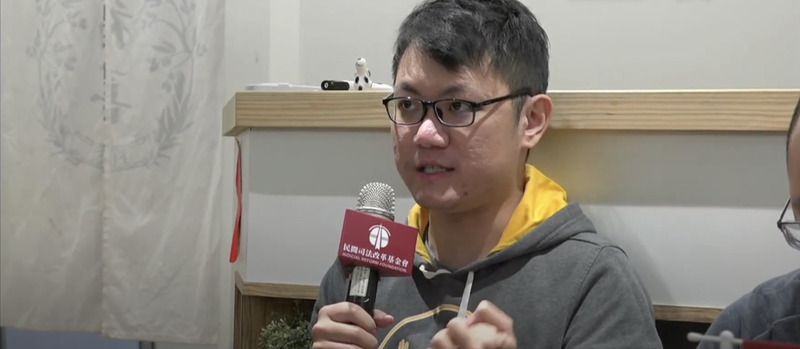
Social Worker Ho Chia-Hsiang: Becoming a Criminal Without Understanding What Happened
Drawing on his work experience, Ho described what he sees in dummy-account cases involving unhoused people in three stages: before, during, and after the criminal process.
-
Before: Handing Over an Account
I have seen several situations. One involved a young man we had previously worked with through Do You A Flavor. His health was very poor at the time. Someone approached him at a train station and asked whether he would do this. He knew it probably was not right, but he still lent out the account. Often it is not a fraud ring approaching someone directly. Another unhoused person makes the introduction, and the chain continues upward. I cannot always trace the ultimate source, but many of the intermediaries are themselves unhoused. From their perspective, lending something to another person may not seem like a major act because resource-sharing is already part of street life; the fewer resources people have, the more they tend to share them.
-
During: Investigation and Trial
This is the stage where I become more involved. Once an investigation starts, many people who have previously been incarcerated react to a court summons or police notice by running. Their prior experience tells them that showing up means being locked up, so they avoid the situation instead.
An even more basic problem is mail. Police send notices to an address they believe the person can receive them at-but where is an unhoused person supposed to receive mail? Many people first learn that they are wanted only when they are arrested because they never saw the notice requiring them to appear. They are then taken to a District Prosecutors Office without really understanding why, and they may not know that they should ask a lawyer to help explain or defend their position.
Some eventually plead guilty because they think they must have done something wrong. Others insist they are not guilty because, in their minds, all they did was lend out an account and they have no idea what happened afterward. They lent it because they needed money and never imagined what the account would later be used for. What you see throughout the process is that they often do not clearly understand what is happening to them.
In some cases, the person genuinely has very limited understanding of the situation. One client may be intoxicated for two thirds of the year. As far as I know, he was also drinking when he signed the documents to open the account. Whether he had the capacity to understand what the act could lead to is a serious question, but once he enters the justice system he is disadvantaged because he has no easy way to prove the cognitive or mental-health limitations affecting him.
-
After: The Consequences
A conviction and compensation liability affect many parts of life. Compensation can create debt. Many unhoused people are already accustomed to compulsory enforcement, but debt still affects whether someone can obtain stable employment and participate normally in labor insurance. Some people may otherwise qualify for welfare benefits, but if they have been made the nominal responsible person of a company, the company's registered capital may be counted against them when they apply. A conviction can also lead to a bank account being designated as a warning account, making it difficult to take jobs that require payroll deposits. These consequences eliminate still more employment choices-consequences the person may never have understood when the account was first handed over.
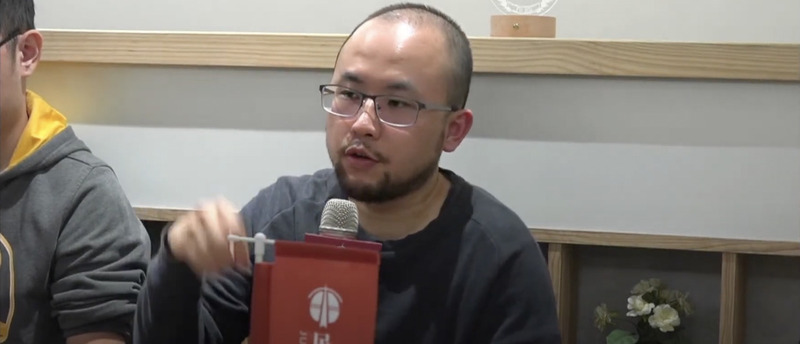
Wu Yen-Te: They Did Not Offend Because Punishment Was Too Light; They Lacked Choices-and the Justice System Does Not See "Poverty"
When we first discussed the issue with Yen-Te, one point immediately stood out to him:Legal professionals tend to draw a sharp conceptual line between people who act intentionally and people who are deceived. JRF staff kept clarifying, "We are talking about people who were deceived and may have been wrongfully accused."
But Yen-Te felt that this was not the only useful way to understand why people hand over accounts.
People at the very bottom of the urban economy are frequently exploited because society has largely forgotten them. If you are living on the street, you may have exhausted every ordinary source of credit-friends, family, and certainly banks. Yet emergencies still happen: illness, an accident, a traffic fine, some immediate need for cash. If someone then says, "Let me use your two IDs for two days and I'll give you NT$5,000," the offer becomes very different from how it looks to someone who is financially secure. Most of us do not fully understand everything that can happen after an account or identity document is misused either; the difference is that we have no need to take that risk. Under severe poverty, what looks like temptation can become a coercive form of inducement because there is no better option available.
Scarcity also narrows attention toward the immediate future. If you do not know how you will eat tomorrow, you will not sit here listening to a forum; you will think only about where tomorrow's money will come from. That is the "tunneling" effect. People in poverty may have difficulty imagining distant consequences not because they are incapable of doing so in the abstract, but because their circumstances give them no room to think that far ahead. That reality needs to be seen.
If that is the key problem, how should society prevent these cases?
The answer, in my view, is not simply more "education," heavier punishment, or higher fines. Those consequences lie in the future. The real question is whether the person has any better way to obtain cash now. If someone facing an emergency could go to a social-welfare office and obtain NT$10,000 in emergency assistance, why would they need to hand over an account? People in poverty often choose an option that looks unwise from the outside because, among the options actually available to them at that moment, it is the most rational one.
So you have to expand the person's choices. Do not merely tell people not to lend out their accounts; tell them where they can obtain money instead. Even NGOs can have trouble borrowing from banks. That tells us something about how the financial system excludes certain people. Lack of access to ordinary financial tools can materially affect whether someone ends up participating in conduct later treated as criminal.
Seeing Poverty from Other Professional Perspectives Is Someone Else's Job-What Can Legal Professionals Do?
Yen-Te also regarded this as an extremely difficult question. He began by describing what he believes the justice system can leave behind in people's lives:
Trauma can change a person. Accumulated injuries make someone angry at society, convinced that society has treated them unfairly. The more pain they experience, the less willing they become to cooperate with society-and the more society, in turn, rejects them.
In the process of prosecuting dummy-account cases, I keep wanting to ask: what is this judicial process actually accomplishing?
You have not caught the people running the fraud. The state collects a NT$120,000 fine, sends someone to prison, and the person comes out even more traumatized. What exactly has been achieved? Has the system prevented crime? I do not think so. For the person involved, police and judges are all simply "the government." After incarceration, he may become even angrier, drink more, and feel still more alienated.
The punishment does not prevent the conduct because he did not act because punishment was too lenient. He acted because he had no meaningful choice. If punishment leaves him with still fewer choices afterward, it may actually increase rather than reduce the risk of future offending. That does not achieve either prevention or justice.
The most serious problem may be that reintegration for people experiencing homelessness is a very long process. Someone may have spent five or ten years on the street after repeated family trauma and accumulated many injuries along the way. Even when they want to return to ordinary social life, those scars can make renting a home, trusting people, or building relationships feel dangerous.
For some people I know, renting is not the first choice. If rent costs NT$5,000 or NT$8,000 and monthly income is only NT$10,000, why take that gamble? What will you eat? You begin to rent a home, make friends, or care about how people see you only when you have some expectation of a future. If there is no one you care about and no future you can imagine, even the reason to keep going becomes harder to see.
On the road back into society, you do not need to be incarcerated for four months. One month can be enough to lose a job and a place to live and force you to start again from zero. One client kept asking us, "If I go to prison, will you still be here when I come out?"
It is not hard to imagine that some people leave prison and discover that their family relationships have disappeared-not necessarily because anyone intentionally abandoned them, but because the connections simply broke. The harm caused by punishment is real and should be recognized. The social cost of incarceration can be enormous. Many people who go to prison are poor and need assistance even when they have also caused harm.
Do You A Flavor, which works on urban poverty and stigma, has previously worked with the Judicial Yuan to bring judges into closer contact with the lives of people in poverty. That experience also helped Yen-Te see that judges are not necessarily unwilling to understand defendants' circumstances; often, the information simply never reaches them.
I once knew a judge whom we introduced to families living in poverty. It was the first time he realized how many criminal cases involved poor people. But he also said his room to act was limited: a judge must decide from the record, not from whatever the judge personally wishes were true. If prosecutors and lawyers do not provide information about the person's background, the judge sees the criminal facts but not whether the person is unhoused, a low-level courier, or living in poverty. Poverty can disappear from the file in the same way mental illness used to remain invisible before systems developed for psychiatric evaluation.
Courts also rarely hear directly from social workers in cases involving unhoused defendants. Social workers may worry that testifying could damage a relationship of trust with a client. Even so, I think finding a way to place this contextual information before the court is important.
That is why change cannot depend on judges alone. Imagine a dummy-account defendant who arrives in court and says, "I didn't do it." The immediate impression may be that he is lying or evading responsibility. But from our perspective, communication may simply have become too complicated. He does not understand why acknowledging one part of the story could be better than denying everything, so he chooses the only response he can manage: "I deny it all." He may not even have received the promised money in full. In court, that can make him look dishonest or insincere when the deeper problem is that he does not understand what is happening or cannot formulate a better response.
Does saying "they did not understand the consequences" or "their choices were limited" underestimate their agency and create another negative stereotype?
Ho has mixed feelings about that concern. At the same time, his experience leaves him puzzled by how the justice system sometimes evaluates a person's decision-making ability:
Do we really think they are so incapable that they know nothing? Some people may understand part of what is happening; I cannot make a blanket judgment.
What we are emphasizing is the context. Circumstances can push people toward a decision without making resistance literally impossible. Some people do resist. But the fact that one person found a way through does not mean another person who did not must simply be blamed. What we are trying to see is the struggle produced by the situation.
Prosecutors often say there has already been plenty of public education, or ask how an adult with ordinary capacity could possibly not know.
But how is that "ordinary capacity" being assessed? In one case, the person had a disability certificate reflecting an intellectual disability. Before the hearing, the prosecutor saw him using a smartphone and later said that because he could operate the phone fluently, he had ordinary judgment. My reaction was: of course he can use it-otherwise why call it a smartphone? The ability to operate a familiar device cannot simply be treated as proof that someone understands complex legal or financial consequences.
Can the Justice System Pursue Justice and Order While Also Pursuing Tolerance? Is Tolerance Part of Its Responsibility?
Near the end of the forum, the moderator noticed several words recurring throughout the discussion. One was "tolerance."We want a society tolerant enough to accommodate people at their most vulnerable. But is tolerance the responsibility of the justice system? Can a system pursuing justice and order also pursue tolerance?
Yen-Te's answer remained characteristically gentle:
I do not see tolerance and order as mutually exclusive. Both matter; neither has to yield to the other.
What I think is unreasonable in the cases we discussed is not that everyone should simply forgive conduct or that every unhoused person who provides an account should automatically be acquitted. The problem is that the process produces neither tolerance nor order. If someone has finally rebuilt a place in society and you send him back to prison, leaving him more unstable and worse off while repairing nothing, in what sense has order been restored? There is no necessary conflict here.
We often imagine that punishing someone who is outside the social order will cause that person to return to it. But that assumes the person has a realistic path back. The people in poverty whom I know are constantly trying to choose the least harmful option available: if I can do day labor, I will not need street vending; if I can sell things, I will not beg; if I can beg, I will not commit a crime; if I do commit a crime, I will choose something that seems less directly harmful; if I hurt someone, I will avoid children and older people. Within the choices they actually perceive, people often try to choose the better one.
I think many people genuinely want to choose what is good. The problem is that very few outsiders believe that because they rarely have a chance to see it.
Liu Wei-Chen: Public Understanding and Inclusion Can Give People in Poverty a Place to Stand on This Land
Huijsmans and colleagues (2019) note that when essential resources become scarce, scarcity can change attention and decision-making and can affect behavioral control and health (see also Spears, 2011). Earlier experiments likewise suggested that hunger heightens attention to food and that children from poor families may perceive coins as larger. These cognitive effects associated with scarcity are often described as a "scarcity mindset." In recent years, psychologists, neuroscientists, and economists have increasingly examined how scarcity affects judgment and decision-making.
The experiences shared by Ho and Wu showed how scarcity can operate in cities and on the street, especially among people already living with extreme vulnerability. Together with Attorney Li's introduction to the legal issues, their accounts made it easier to understand why someone with almost no resources may accept a small immediate payment despite risks that appear enormous from the outside.
Wu's discussion of tunneling is especially important. Scarcity focuses attention on the resource that is missing, making distant consequences harder to consider. For an unhoused person facing hunger, the next meal may matter far more than an unfamiliar justice system or an abstract risk that may occur weeks or months later. The observation also recalls Oscar Lewis's "culture of poverty" thesis, which described patterns of limited future planning and intense focus on the immediate environment. Whatever one thinks of that framework, the people discussed at the forum were living with a basic reality: they had to survive today before they could plan for tomorrow.
Even when Lewis described apparently individual patterns of behavior, his explanation was not purely individualistic. He treated those patterns as adaptations and responses developed at the margins of a highly stratified capitalist society. What appears to be individual behavior therefore remains closely connected to social structure and institutional conditions.
The discussion reminded me of a class debate about legalization of the sex industry. When a woman "chooses" sex work, to what extent is the choice genuinely voluntary and to what extent is it a choice made because other options have disappeared? Legal protection for consensual commercial sex may protect autonomy, while at the same time people at the bottom of the economic hierarchy may still face choices shaped by hunger, coercion, deception, or threat. The existence of a formal choice does not tell us how free that choice was.
We see similar patterns everywhere. People who are laid off or remain unemployed are described as incompetent; people who experience sexual harassment are blamed for how they dressed; even people harmed by natural disasters may be told that misfortune reflects some personal failing. It is easy to attribute tragedy to stupidity, greed, or laziness while overlooking forces outside an individual's control that may have played a much larger role.
If the person could return to the moment the account was handed over, now knowing more about the risk, would they refuse? Or would they make the same decision again?
The answer still depends on the situation confronting them at that moment. Perhaps they are starving; perhaps illness or injury creates an immediate need for money. More information and experience may reduce the risk of victimization, but it does not necessarily make it easy to reject the only immediate option for obtaining what they need.
This event was an important beginning for dialogue between law and social welfare. Cross-disciplinary conversation forces each profession to see things it normally misses. Social-welfare practitioners need to understand the legal responsibility that vulnerable clients may face; legal professionals, in turn, need to see the circumstances and constraints confronting people at the bottom of the social hierarchy. Both professions pursue "justice," but social work's concept of social justice places particular emphasis on whether people facing economic disadvantage, discrimination, or oppression receive the attention, resources, and empathy needed to participate on more equal terms.
That understanding should not be limited to law-enforcement professionals. The wider public also needs to see the structures and social frameworks shaping the lives of people at the bottom of the urban economy. Greater understanding does not erase responsibility, but it can produce greater inclusion and more humane responses. I am deeply grateful to the Judicial Reform Foundation for creating this conversation and hope our understandings of justice can continue to converge, so that people living in poverty can find a secure place to live on this land.
References
Huijsmans, I., Ma, I., Micheli, L., Civai, C., Stallen, M., & Sanfey, A. G. (2019). "A Scarcity Mindset Alters Neural Processing Underlying Consumer Decision Making." Proceedings of the National Academy of Sciences 116(24): 11699-11704.
Lewis, O. (1966). La Vida: A Puerto Rican Family in the Culture of Poverty-San Juan and New York.
Spears, D. (2011). "Economic Decision-Making in Poverty Depletes Behavioral Control." The B.E. Journal of Economic Analysis & Policy 11(1).
Yeh Wei: Cross-Disciplinary Dialogue and Harm Reduction Can Help Move a Tragedy Toward Something Better
The forum made clear that dummy-account cases involving unhoused people are not new; the JRF has been concerned with them since 2014. Ho and Wu used concrete cases to help participants enter the social context in which these cases arise and understand the stages an unhoused person may pass through. Whether we focus on the tunneling effect, constrained choice, or limits on comprehension, the underlying issue repeatedly returns to the effect of poverty and social structure on people living at the bottom of society.
If those conditions cannot be eliminated quickly and similar cases will continue, what should the professionals around them-police, prosecutors, attorneys, and social workers-actually do? That was the question we kept returning to.
The moderator noted that social workers are now routinely consulted in many juvenile cases, but JRF staff reminded us that creating that space took years. We tried to identify ways social workers might provide contextual information to courts in dummy-account cases so judges could see more than the bare criminal facts. Yet two difficulties remain. First, how can that information reach the judge in an appropriate form? Second, unhoused people may have no stable address, may not know they have become wanted in a dummy-account case, or may avoid the process because they do not understand it. Even social workers close to a client's daily life often learn about the case too late to intervene.
That reminded me of earlier practice experience. Because clients' daily spaces overlapped, they frequently exchanged information with one another. On several occasions, someone came to ask how to obtain a referral to Legal Aid because another client had told them about it. Peer networks like that do not solve every problem, but they increase the number of ways people know how to seek help. Could similar resource networks be built among unhoused people around dummy-account cases? At what point should help become available-when someone first becomes suspicious after handing over an account, or only after the legal process has begun? Social workers often learn about a problem only after an incident occurs, making prevention and early intervention difficult.
Someone at the forum described the situation as a "pure tragedy." The phrase felt painfully accurate. We can see the unjust social structures, the fraud rings exploiting poverty, and a judicial process that has difficulty seeing context. Yet recognizing the sources of harm does not mean we already know how to change them.
What can still be done? I continue to believe that even small forms of cross-professional intervention matter-accompanying someone to pay a fine, helping a client reach Legal Aid, placing contextual information before a court, or simply creating sustained dialogue among social workers and legal professionals. Until we can create enough space to prevent these cases entirely, harm-reduction measures are worth trying. More dialogue, understanding, and concrete action can still move this issue in a better direction.
This article is an AI-generated translation of the original Chinese text. In the event of any discrepancy, the Chinese version shall prevail.