

Seminar Records | [4th Anniversary of the Judges Act Amendments: Pluralistic Judicial Accountability] Series Seminar 1
Last edited: 2026-11-04
The Judicial Reform Foundation has long been concerned with the monitoring of incompetent judicial officers. To foster dialogue on shared expectations and improvement goals for judicial professional ethics across subjects, objects, and methodologies, we co-hosted the [4th Anniversary of the Judges Act Amendments: Pluralistic Judicial Accountability] seminar series with the Judicial Reform Committee of the Taiwan Bar Association, exploring "mechanisms for monitoring incompetent judicial officers" and "self-regulation and external regulation of attorneys."
This seminar was the first in the series. The first half was moderated by Attorney Chiang Jung-hsiang, Chairperson of the Judicial Reform Committee of the Taiwan Bar Association. Li Hung-yi, Investigation Specialist at the Control Yuan, and Attorney Li Ming-ju, Deputy Executive Director of our Foundation, delivered reports on the Control Yuan's and civil society organizations' observations regarding the individual case evaluation system over the four years since the amendment of the Judges Act. Professor Chiang Shih-ming, Professor at the College of Law, National Chengchi University and former member of the Judges Evaluation Commission, along with Attorney Ch'ien Chien-jung, former judge of the Supreme Court, were invited as respondents.
The second half was moderated by Attorney Huang Hsu-tian, Chairperson of our Foundation, with invitations extended to the Judicial Reform Committees of the Taichung, Tainan, and Kaohsiung Bar Associations to share how bar associations, acting as entities requesting evaluations, participate in monitoring. Finally, Attorney Lin Yung-sung, Standing Board Director of our Foundation, responded with observations from civil society organizations.
Session 1 | First Half Pluralistic Judicial Accountability: Do Individual Case Evaluations Contribute to the Monitoring of Incompetent Judges and Prosecutors?
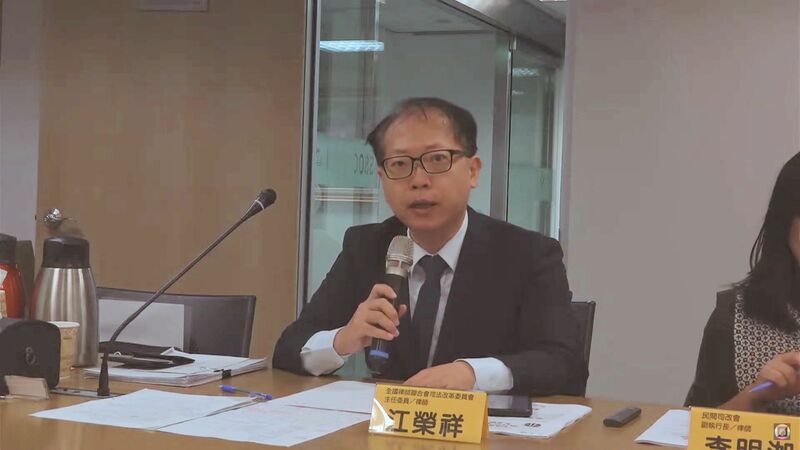
Moderator Attorney Chiang Jung-hsiang / Chairperson, Judicial Reform Committee of the Taiwan Bar Association
Regarding whether individual case evaluations contribute to the monitoring of incompetent judges, prosecutors, and the supervision of prosecutors, we hold expectations that judges can conduct trials fairly and independently in accordance with the law. However, fair and independence does not mean that judges should be entirely free from constraints inside or outside the courtroom; these constraints should stem from the judge's own judicial competence and self-discipline.
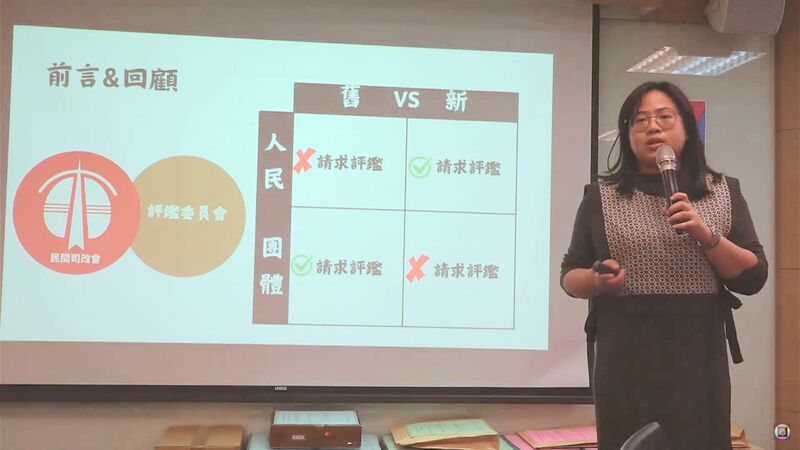
Reporter Attorney Li Ming-ju / Deputy Executive Director, Judicial Reform Foundation
The JRF published the "Civil Society Edition of the Annual Observation Report on the Four-Year Implementation of the New Judges Act" during the seminar, pointing out three recurring issues: public requests for case evaluations remain difficult to establish; grounds for "not initiating" evaluations are predominantly "requests for evaluation based on legal interpretations" and "manifestly groundless"; and most whistleblowers requesting evaluations are in the majority, while the anonymity mechanism for resolution documents exists in name only.
For the full content, please refer to the "Civil Society Edition of the Annual Observation Report on the Four-Year Implementation of the "Judges Act"".
Reporter Specialist Li Hung-yi / Investigation Specialist, Control Yuan
Returning to original intent, the purpose of evaluation and disciplinary action (cited from the legislative reasoning of the Judges Act) is not to evaluate or criticize a judge's individual wrongful acts one by one, but rather to comprehensively evaluate the personality manifested by all of a judge's wrongful acts in order to determine the responsibility the judge should bear; when it is known that a judge under evaluation has committed other matters subject to evaluation, these shall be investigated and deliberated concurrently, so as to achieve procedural economy and the effect of prompt evidence collection.
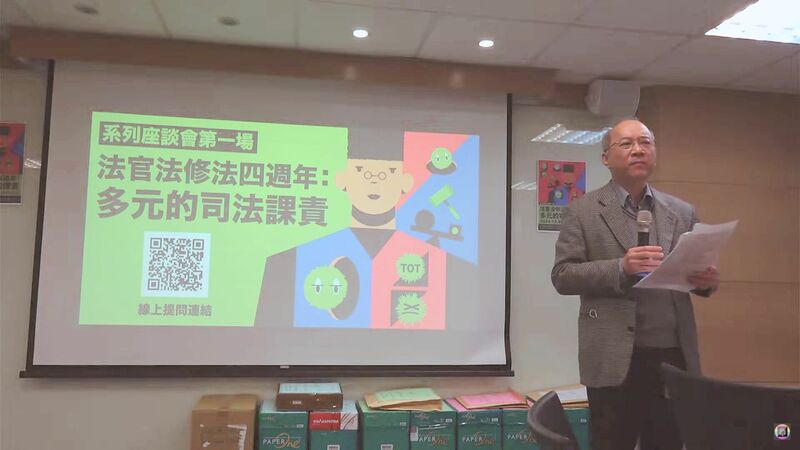
Respondent Professor Chiang Shih-ming / Professor, College of Law, National Chengchi University
Taking American standards as an example, if a California judge commits a legal error, it can be reviewed in exceptional cases, such as repetitive errors. Other examples include abuse of authority, contempt for fundamental rights, intentional malicious illegal intent, and any purpose other than the faithful fulfillment of judicial duties. Such behaviors must be uncovered and prevented.
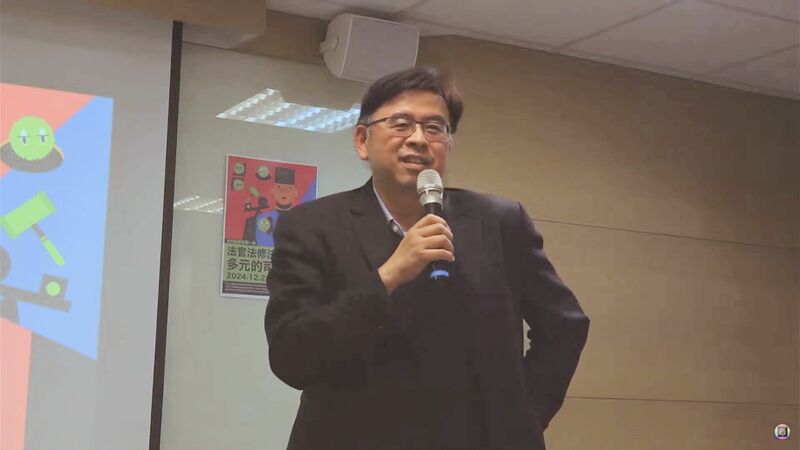
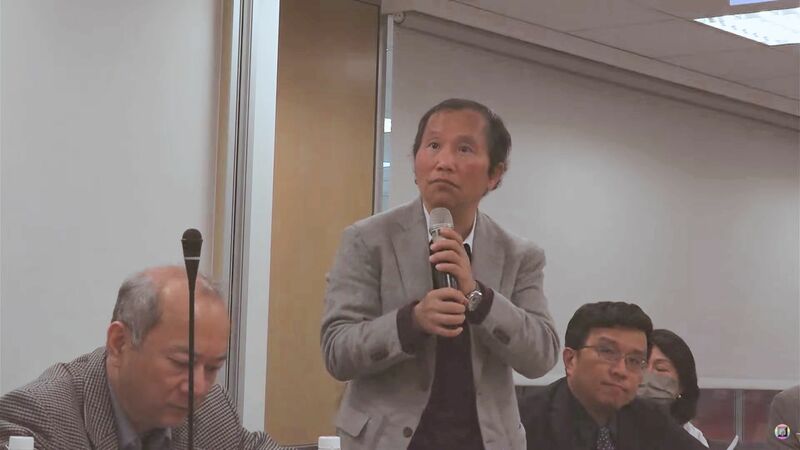
Respondent Attorney Ch'ien Chien-jung / Former Judge of the Supreme Court
Finding channels for evaluation is currently very unfriendly to the public, and the removal of civil society organizations, which understand the system best and have the most capability, from acting as applicants—sidestepping the JRF—shrinks the evaluation system to serve the objectives of high-ranking Judicial Yuan officials. We should move toward a dual-prosecution system. Currently, most cases are referred to the Evaluation Commission by the Judicial Yuan itself, but in reality, the Judicial Yuan could simply refer them directly to the Control Yuan or the Disciplinary Court. The Judicial Yuan itself dares not decide to submit cases to the Personnel Review Committee, making the Personnel Review Committee the most crucial initiating body; this matter of referring bodies needs to be reviewed.
Session 1 | Second Half Pluralistic Judicial Accountability: Towards Comprehensive Evaluation
Moderator Attorney Huang Hsu-tian / Chairperson, Judicial Reform Foundation
When the JRF initially proposed its draft, it hoped for a comprehensive evaluation system, but it did not gain official support. There was a brief period of performance reviews in between, but the results were also very poor. Before the amendment of the Judges Act, individual case evaluations and something akin to comprehensive evaluations existed, but comprehensive evaluations no longer officially exist today. The units where our invited speakers have served all had some form of comprehensive evaluation to review and understand judges, making their sharing and exchanges particularly valuable.
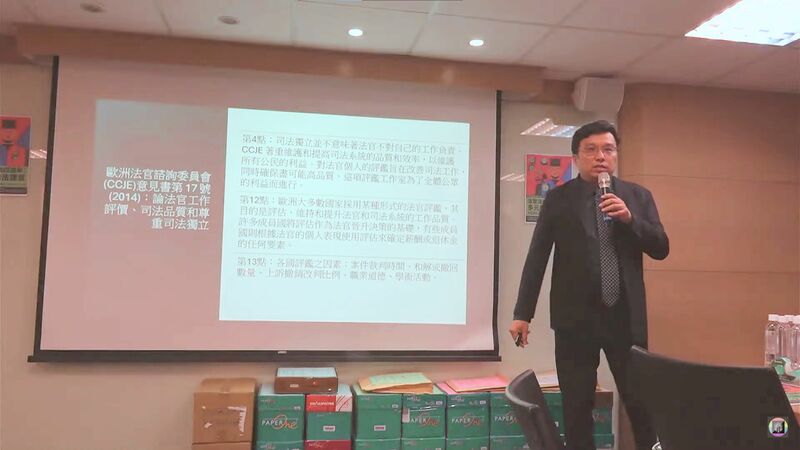
Reporter Attorney Huang Sheng-fen / Chairperson, Judicial Reform Committee of the Taichung Bar Association
The Taichung Bar Association only publishes the top five best-performing individuals in each agency. Those among the evaluated who received lower scores indeed had some issues with their performance, proving that poorly performing judges and prosecutors can be highlighted through evaluation methods, especially when the sample size is sufficient. It is worth noting that some of those who received lower scores also held positions as chief judges or presiding judges, indicating that the courts' selection of chief judges or presiding judges is disconnected from evaluations.
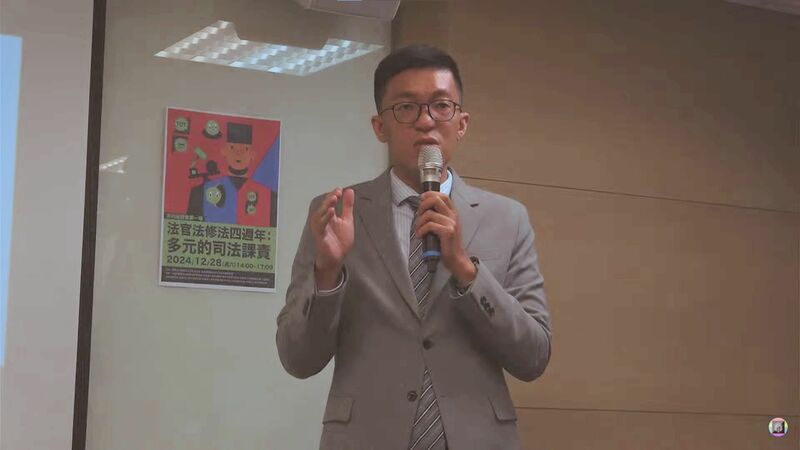
Reporter Attorney Liang Chih-wei / Guest, Judicial Reform Committee of the Kaohsiung Bar Association
The Kaohsiung Bar Association conducted evaluations in 2017, and the results came out in 2019, followed by the amendment of the Judges Act. Currently, we want to promote a transition and have launched an app which is in the testing stage. We hope the Taiwan Bar Association can take the lead in promoting digital evaluations.
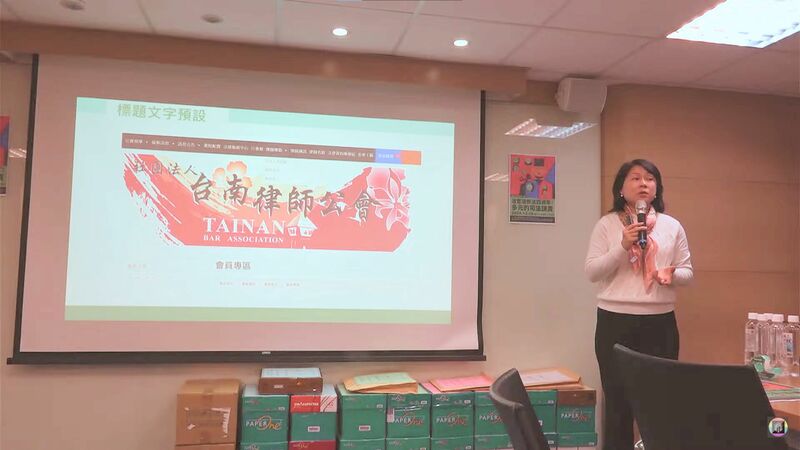
Reporter Attorney Cheng Chia-hui / Chairperson, Judicial Reform Committee of the Tainan Bar Association
To encourage lawyers to participate more, the incentive bonus, originally distributed once a year, was changed to be distributed twice a year—in the first and second halves. However, we found that those participating are still the same group of people, which is the current dilemma we face. Evaluation results are not published comprehensively; only the top-performing individuals are announced on the website, while those with lower scores are not published, though we do bring the evaluation reports to visit the courts and prosecutors' offices.
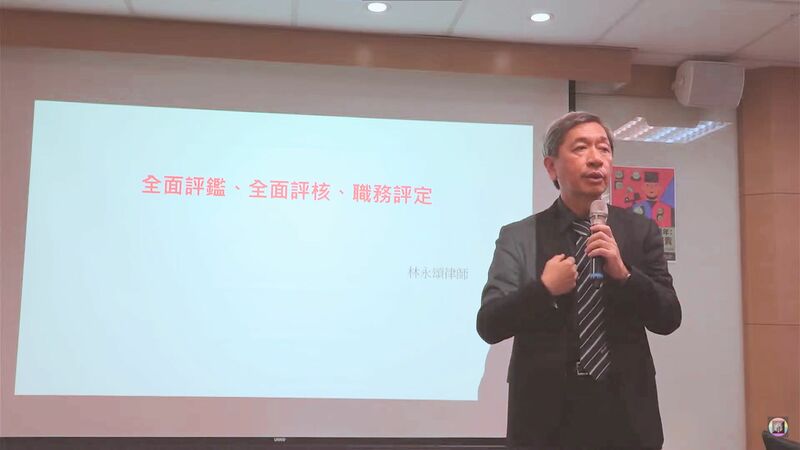
Respondent Attorney Lin Yung-sung / Standing Board Director, Judicial Reform Foundation
Public trust in the judiciary in Taiwan remains low. Although citizens directly request individual case evaluations, not a single case has been referred to the Judicial Court. Performance evaluations lack objective and fair assessments, the disparity in the quality of judicial service performance is too large, and the current reality lacks a removal mechanism for incompetent judges. Taiwan truly needs a comprehensive evaluation or assessment system for judges.
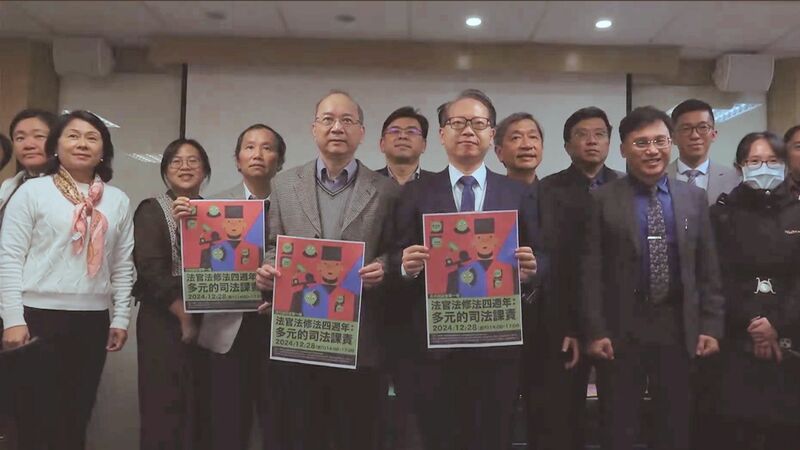
FAQ Development and Impact of Evaluation Mechanisms
- Regarding the portion where non-lawyers can participate in evaluations, Japan has a prosecution review commission system that allows citizens to independently exercise their official powers. Is this system feasible, and how should non-lawyer participation be implemented?
- Based on a former judge's past experience as a judge, what impact would non-lawyer participation in evaluations have on current judges and prosecutors?
- Regarding crime victims, they can request evaluations under the Judges Act. Based on cases and related statistical data, are there relevant statistics concerning crime victims?
- Now that bar associations can serve as requesting entities, can legal aid foundations, crime victim protection associations, or other related units also assist in requesting evaluations?
Further Reading
This article is an AI-generated translation of the original Chinese text. In the event of any discrepancy, the Chinese version shall prevail.