
JRF Newsletter
October E-Paper | Let's Liberate Ourselves Together from Gender-Based Body Intervention .ᐟ.ᐟ.ᐟ
Last edited: 2026-07-27
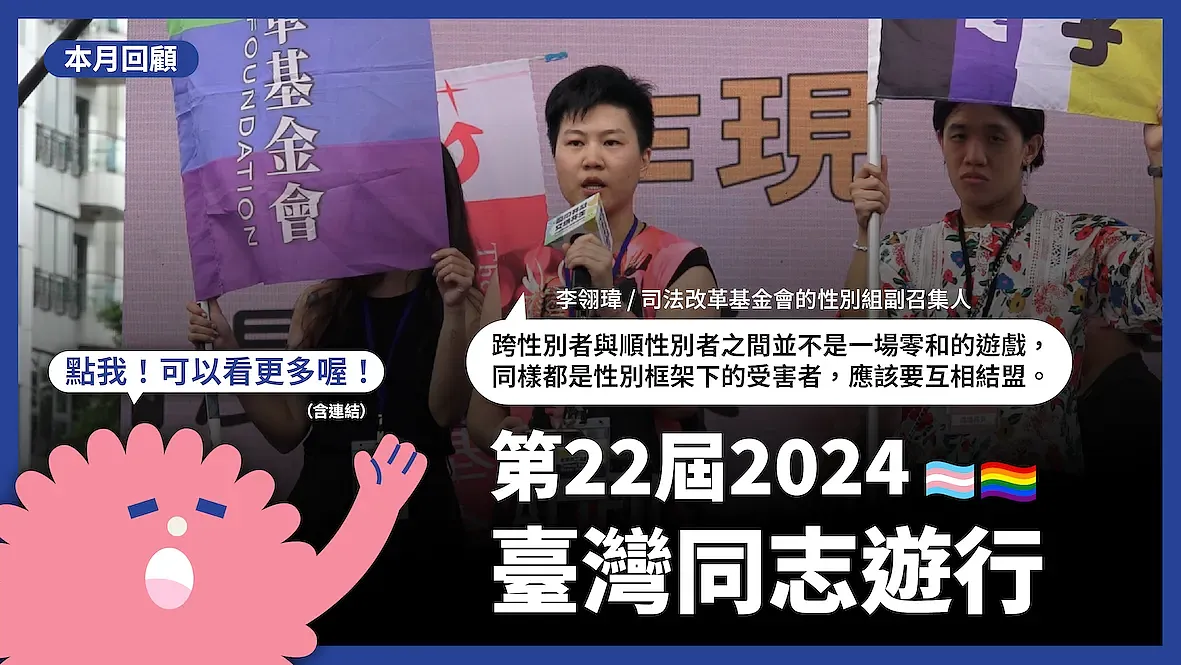
Here, we want to especially emphasize our support for "legal gender recognition without surgery."
This is an issue concerning the fundamental human rights of every transgender person. Current laws require transgender individuals to undergo compulsory sexual organ removal surgery before they can legally change their gender marker. However, this requirement not only violates personal bodily autonomy but also ignores the psychological and physical dilemmas faced by many transgender individuals. This is not a simple choice, but a surgery they should not be forced to accept.
Policies concerning the body have always been a major focus of state governance. Often, one of the greatest threats a state can impose on its people is intervening in and managing their bodies—such as dictating how healthy you must be to be considered a citizen, or, in ancient times, mandating specific hairstyles on pain of being labeled barbarians. In a modern democratic society, we should collectively abandon this concept of intervening in the body and respect everyone's fundamental right to bodily autonomy, which is also an important constitutional right.
The issue of legal gender recognition without surgery affects not only transgender individuals but is equally significant for non-binary people. We face similar dilemmas, finding it extremely difficult to obtain identification documents that genuinely reflect our gender identity. We believe that everyone should have the right to freely change their legal gender without being restricted by whether they have undergone compulsory bodily modifications, and a third gender marker should also be made available.
What I want to say is that what a person of a certain gender should look like is an issue that goes far beyond transgender individuals. In the past, we felt that women should have large breasts and be very thin, or that a short height meant a failed man. These are all gender-based interventions on the body, and our efforts are dedicated to liberating everyone together from such gender-based body interventions!

On the Path of Legal Education: JRF Partners with Campuses to Promote Practical Learning
P'an Pei-chen / Legal Education Manager, Judicial Reform Foundation
Regarding the high school students we collaborate with, some are from the same class, while others come from different classes. Sometimes students may be reluctant to express themselves under the gaze of the whole class. The lawyers respond quickly by choosing a strategy of action: they walk over to the small groups, encourage students to speak on behalf of the group, move a bit closer, soften and slow down their tone to probe and encourage the students. Yes, sometimes it calls for warmer encouragement, earnest invitations, accepting awkwardness as a matter of course, and a willingness to wait. We have just entered the classroom not long ago, and getting to know each other takes time; we shouldn't eagerly try to see and get whatever we want or assume we should. This is a mindset we must remember to reset every single time.
Students recently gave feedback saying: "I don't care at all how many questions I was asked; I only care whether I answered clearly or not. This activity is only fun when played this way! Adding a bit of randomness keeps the mock trial from being too rigid."
 |
 |
 |
 |
 |
 |
This article is an AI-generated translation of the original Chinese text. In the event of any discrepancy, the Chinese version shall prevail.