Center for Legal Ethics
Origins of the Legal Ethics Center
Following the 2004 presidential election, seeing Taiwanese society unsettled and turbulent due to election disputes—with related litigation even incurring massive financial burdens resulting from ballot recount procedures—Mr. David Sun (孫大衛) of Kingston Technology pledged to donate NT$100 million to the Judicial Reform Foundation, out of a desire for Taiwanese society to uphold the ideals of "ethnic integration" and "loving Taiwan" and to rationally resolve related disputes through judicial procedures. The Judicial Reform Foundation publicly signed an agreement with Kingston Technology on April 16, 2004, establishing the "Love Taiwan Ethnic Integration Special Account."
According to the aforementioned agreement, any remaining donation funds must be used to promote ethnic integration, human rights education, rule of law education, and judicial reform. To this end, aside from allocating 50% of the remaining funds to apply for the establishment of the "Public Trust Ethnic Harmony Fund," the Judicial Reform Foundation additionally allocated NT$21,439,972 for human rights and rule of law education and promotion, and NT$21,439,971 to promote research on legal ethics, with the aspiration of guiding Taiwan toward a society that values human rights, public justice, democracy, and rational deliberation.
Mission of the Legal Ethics Center
While legal ethics education is a crucial curriculum in advanced rule-of-law nations, legal education in Taiwan has long neglected it, also lacking foundational and comprehensive research and discourse. The Legal Ethics Center aspires to play the role of a "sower."
Regarding the professional ethics and proper moral standards expected of legal practitioners, commonalities persist across different nations. Therefore, foundational research on legal ethics in Taiwan should begin with the experience of "other stones to polish jade" (learning from external examples). The Center collects and translates major treatises on legal ethics from advanced rule-of-law nations to lay the groundwork for indigenous research on legal ethics.
Current Achievements and Future Plans
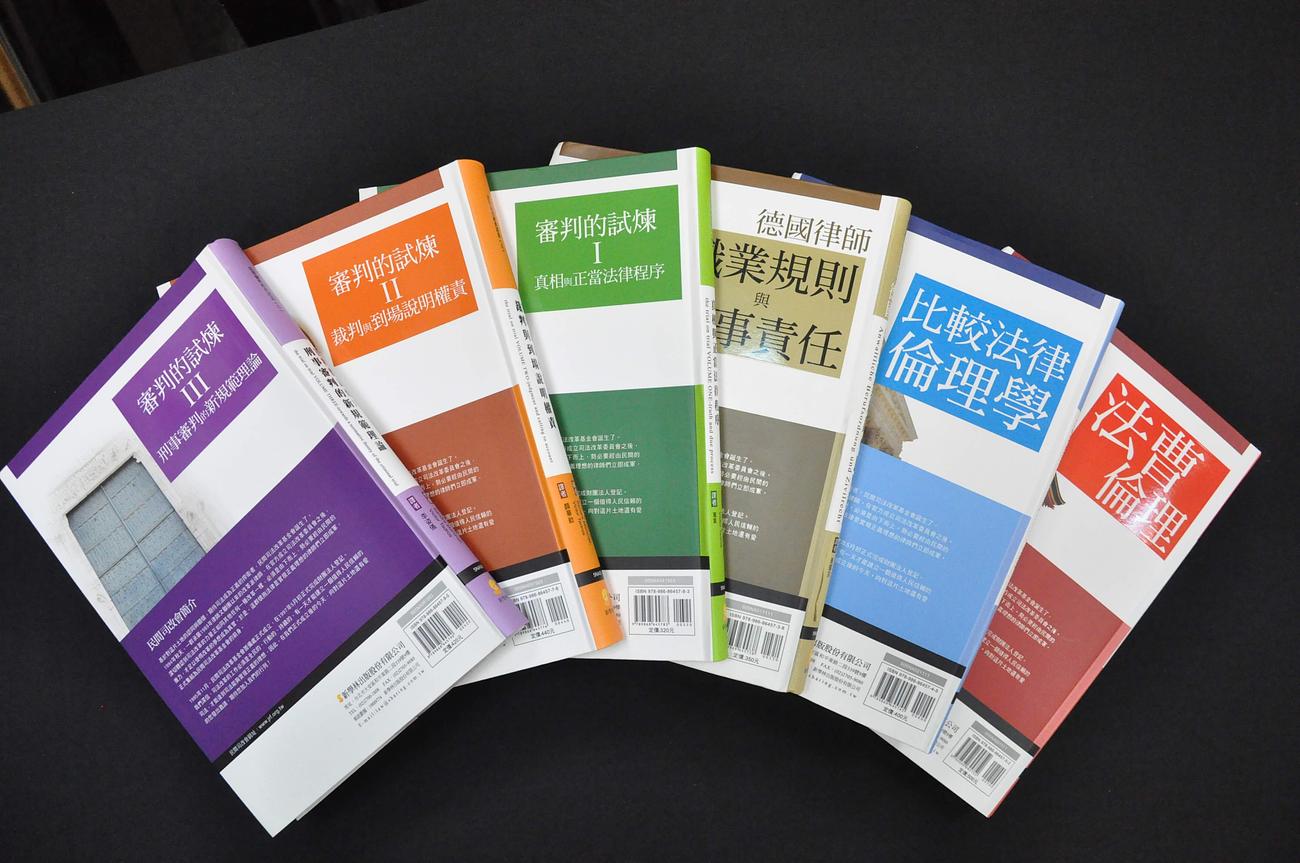
To date, the Legal Ethics Center has completed the translation of several foreign legal ethics books, spanning English, German, and Japanese. Upon completion of these books, book launch events have been held to enrich domestic legal ethics teaching materials and promote legal ethics education.
Looking ahead, in addition to continuing to translate books related to legal ethics, the Center also plans to translate other foreign language works that contribute to judicial reform or the establishment of the rule of law. By introducing prominent and up-to-date foreign publications, we aim to foster critical reflection on our nation's judicial and legal culture and drive reform.