
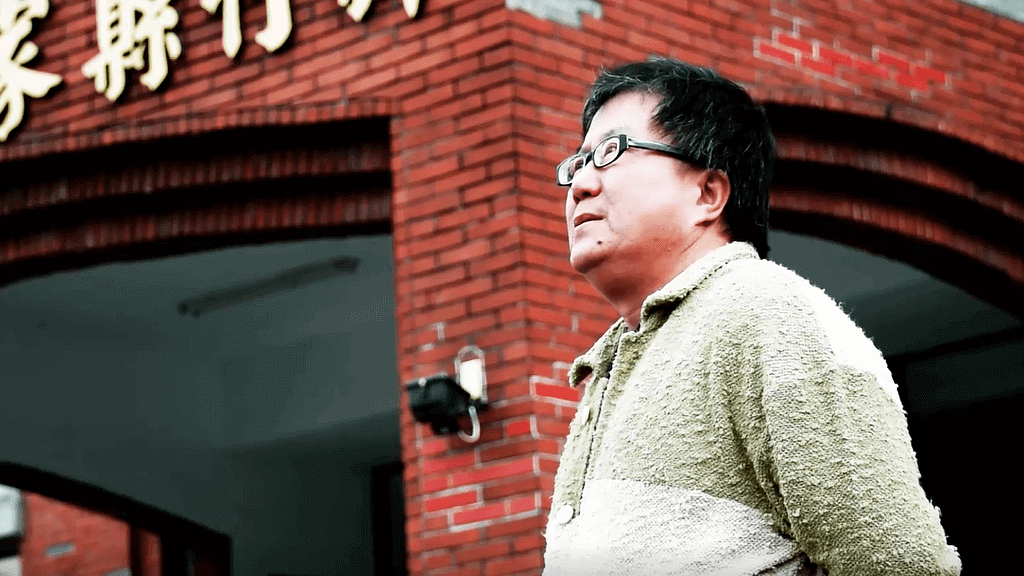
Tai Li-shen Case
Between 2005 and 2016, Tai Li-shen worked at the Hsinchu County Animal Disease Control Center. Like most civil servants who study diligently to pass the civil service examinations, he believed his life would finally be stable. However, when he discovered that his superiors repeatedly pressured him to falsify accounts and use public funds for private purposes, his inner sense of guilt began to weigh heavily on him. Driven by his conscience, he reported himself to the Agency Against Corruption of the Ministry of Justice through the Department of Civil Service Ethics (政風室) and provided compelling evidence to assist prosecutors and police in their investigation, allowing the corrupt complicit network to be exposed and subjected to judicial prosecution.
The judge presiding over Tai Li-shen's corruption case, recognizing that he had bravely reported the offense without succumbing to pressure, exempted him from personal criminal liability. However, after the judgment became final, Tai Li-shen was dismissed from his position in 2016 by the Hsinchu County Government—with a ban on "never being re-employed"—solely because of this "judgment of exemption from punishment." Having exhausted all judicial remedies, Tai Li-shen ultimately could not alter this single order of dismissal with a permanent ban on re-employment.......
To foster the sound institutional development of the state and build a more honest and efficient government, the state has an obligation to provide necessary protection to civil servants who bravely report corrupt acts. Only through whistleblowing by civil servants within the system can inside information be exposed, illegal acts prevented from continuing, and unsuitable or untrustworthy civil servants be weeded out.
Suggested Amendments to the Draft Whistleblower Protection Act
|
JRF Proposed Provisions |
Executive Yuan Draft | Explanation |
|
Article 13: Where a whistleblower is a principal offender or accomplice in the crimes involved in the whistleblowing content and satisfies the requirements of Article 3 and Article 14, Paragraph 1 of the Witness Protection Act, their punishment may be mitigated or exempted pursuant to Article 14, Paragraph 1 of the same Act, notwithstanding the restrictions on offenses listed in Article 2 of said Act. |
Article 13: Where a whistleblower is a principal offender or accomplice in the crimes involved in the whistleblowing content and satisfies the requirements of Article 3 and Article 14, Paragraph 1 of the Witness Protection Act, their punishment may be mitigated or exempted pursuant to Article 14, Paragraph 1 of the same Act, notwithstanding the restrictions on offenses listed in Article 2 of said Act. |
1. If a whistleblower appears to testify and complies with the provisions of Article 14, Paragraph 1 of the Witness Protection Act, the offenses involved shall not be restricted by the offenses listed in Article 2 of the Witness Protection Act, and they may also enjoy the lenient treatment of criminal punishment mitigation or exemption. In consideration of Article 11 of the Act for Prevention and Suppression of Sexual Exploitation of Children and Youths and Article 23 of the Human Trafficking Prevention Act, Paragraph 1 is hereby enacted. Furthermore, if a whistleblower is convicted by a judgment for acts as a principal offender or accomplice, it shall not affect their right to enjoy the protection under Articles 7 to 10. |
|
Article 19: This Act shall take effect one year after promulgation. |
Article 19: This Act shall take effect one year after promulgation. |
1. It is explicitly stipulated that this Act shall take effect one year after promulgation, hence Paragraph 1 is enacted. |
Passage of the Whistleblower Protection Act at Third Reading in 2024
On December 27, 2024, the Legislative Yuan passed the Whistleblower Protection Act at its third reading, establishing the nation's first dedicated whistleblower protection legislation. In addition to government agencies, public-owned enterprises, and state-run enterprises, the scope of application of the newly passed law also extends to government-endowed foundations, invested enterprises, or business institutions announced by the Directorate-General of Personnel Administration (as of September 24, 2024, there were 351 foundations and 285 business groups).
Under the new law, aside from stipulating that punitive actions against whistleblowers are prohibited and that disclosing a whistleblower's identity is subject to criminal penalty, the provision stating that "whistleblowers are exempt from the restriction under the Civil Service Employment Act that 'persons with a final guilty corruption judgment cannot be appointed as civil servants'" has been dubbed the "Tai Li-shen Clause." However, because the new law is not retroactive, "the Tai Li-shen Clause does not apply to Tai Li-shen."
Related Reports
- PTS P# News Lab |Bravely Blew the Whistle Yet Dismissed: What Happened Afterwards? The Advance of Civil Servant Tai Li-shen
- United Daily News "Blowing the Whistle Loses Meal Ticket... A Whistleblower's Life Reduced to Nothing, Lamenting Where Justice Lies", "Whistleblower Tai Li-shen Loses Meal Ticket and Laments Where Justice Lies? JRF Receives Another Plea for Help Today"