
JRF Newsletter
Entering the Bathhouse: Behind the Minor-Offense Parole Revocation Project
Last edited: 2026-08-29
Anyone who has seen Spirited Away probably remembers the scene. A filthy, foul-smelling "Stink Spirit" arrives at the bathhouse, and everyone recoils in disgust and panic. With Yubaba directing, Chihiro tying on the rope, and the entire bathhouse staff pulling together, they finally remove the mass of debris lodged inside him. Only then do they discover that the rot was not his true nature, but something accumulated on the surface. That scene makes me think of JRF's Minor-Offense Parole Revocation Project. Many people in prison-especially those once sentenced to life imprisonment-are treated much like that Stink Spirit: as people everyone would rather avoid.
This article does not begin by explaining why JRF launched the Minor-Offense Parole Revocation Project. For that background, see this page. My purpose here is instead to record the work of the pro bono attorneys and volunteers who made the project possible, and to thank everyone who helped.
Most participants were not long-time specialists in prison or human-rights work, although several more experienced people served as leaders and anchors. The fact that we could divide the work and complete the project together says something about what an advocacy-oriented legal organization can build that individual practitioners working alone cannot. I also want to use this article to open up some of the methods we tried-the things that worked, the things that did not-and leave a record future workers may find useful.
-
The Full Picture: Three Phases of the Minor-Offense Parole Revocation Project
JRF assisted 73 people through the project. Most had originally received life sentences and later committed offenses carrying six months' imprisonment or less. When their parole was revoked, they were required to return to prison to serve the remaining 25 years of the life sentence. A smaller group had not originally received life sentences, but the team concluded that their cases also raised serious concerns about punishment grossly disproportionate to the later minor offense and agreed to assist them as well.
We began by retrieving decades-old records, identifying the correct court in which to challenge execution, and helping each person exhaust available remedies. The process took almost a full year and produced cases across Taiwan. One case reached a judge at the Taiwan High Court Kaohsiung Branch Court early enough for the court to stay proceedings and seek constitutional interpretation (Hsiao-Yeh's Story). Two other cases reached the Supreme Court and drew the attention of its criminal divisions. After the Supreme Court and the Administrative Litigation Division of the Tainan District Court separately sought constitutional interpretation, Judicial Yuan Interpretation No. 796 followed.
There was one unexpected detour. Rather than immediately staying one case and petitioning for constitutional interpretation, the Supreme Court's First Criminal Division referred to the Grand Chamber the question whether the first part of Article 78, Paragraph 1 of the Criminal Code could be interpreted in a constitutionally conforming manner. On November 4, the Supreme Court held oral argument before the Grand Chamber, with Professors Lu Ying-Chieh and Li Chien-Liang presenting sharply contrasting views.
Grand Chamber Referral Ruling, 2020 Tai-Kang-Ta No. 724: https://reurl.cc/k0jz6d
Video of Oral Argument in 2020 Tai-Kang-Ta No. 724: https://reurl.cc/e8ZgrQ
No one expected that just two days later, on November 6, the Grand Justices would issue Judicial Yuan Interpretation No. 796. The Interpretation held that Article 78's mandatory revocation of parole for an offense committed during parole violated the proportionality principle in Article 23 of the Constitution and was inconsistent with Article 8's protection of personal liberty. It also expressly directed the relevant authorities to determine, case by case and in light of the Interpretation, whether parole should actually be revoked.
Once Interpretation No. 796 was issued, people who had not yet managed to petition for constitutional interpretation were also released after courts and the Ministry of Justice reviewed their cases individually under the new constitutional standard. The project therefore moved suddenly toward its final stage, and most of the people we assisted were released one after another.
Strictly speaking, the project passed through three phases. Each depended on key people who helped at crucial moments. The table below gives an overview and records our thanks.
-
Legislative-Amendment Phase
Category
Timeline
Progress
Collaborating Personnel
Amendment
October 2016
Our foundation's first case, Ma Kuo-Chan: Wei-ting assisted the client in petitioning
Lin Wei-Ting
Amendment
November 2018
Attempted to promote the amendment of Article 78 of the Criminal Code, completed the briefing paper, but the Department of Prosecutorial Affairs of the Ministry of Justice opposed the retroactive clause, and subsequently expired due to the principle of discontinuity, resulting in unsuccessful amendment
Lin Wei-Ting, Attorney Chen Yu-Ting
-
Correctional Administration Survey and Mass Case-Relief Phase
Category
Timeline
Progress
Collaborating Personnel
July 2019
TAHR referred client Lo Min-Yao
Director Yen Szu-yü of TAHR
August 2019
The Secretariat reviewed six letters JRF had previously received concerning parole revocation for minor offenses and discussed possible next steps with Lo Shih-Hsiang, convener of the Correctional Institutions Group.
Lo Shih-Hsiang, Lee Ming-Ju, Lin Wei-Ting, Chen Yu-Ting, Tsai Shang-yü
Constitutional Interpretation
September 2019
Joint meeting of the Correctional Institutions Group & Constitutional Interpretation Group, resolved to open cases.
The Agency of Corrections surveyed and referred all people in Taiwan whose parole had been revoked because of a later offense punishable by six months' imprisonment or less and who were willing to receive assistance from a civil-society organization-760 people in total. The team decided first to assist those whose earlier sentence had been life imprisonment (59 people at that stage, with more added later), because those cases presented the most severe disproportionality. The immediate goal was to exhaust available remedies so that constitutional review could later be pursued.
Correctional Institutions Group Parole Revocation Lawyer Team
Attorney Lee Ming-Ju (6 cases)
Attorney Chiao Cheng-Hsiang (12 cases)
Attorney Tsai Hung-sheng (8 cases)
Attorney Chang Wen-Chi (7 cases)
Attorney Chou Chia-Ling (7 cases)
Attorney Liu Chia-Cheng (16 cases)
Attorney Kao Yang-Hui (2 cases)
Attorney Chou Yu-Hsiu (1 case)
Attorney Freddy Lim (2 cases)
Other clients had already exhausted remedies themselves.
Constitutional Interpretation
November 2019
Division of labor in researching and drafting the constitutional interpretation petition
Constitutional Interpretation Group Lawyers
Attorney Chou Yu-Hsiu, Attorney Kao Yang-Hui, Attorney Lin Yü-t'eng, Attorney Li I-Chuan, Attorney Huang Ying-Chia, Attorney Chang Kai-Ting, Attorney Kao Pei-Heng, Attorney Hsiao I-Hua, Attorney Cheng Yü-t'ing, Attorney Chen Li-Ting, Attorney Lee Ming-Ju;
Attorney Chiu Ching-han assisted in reviewing records referencing the Kaohsiung High Court judge's constitutional interpretation petition
Constitutional Interpretation
December 2019
Took stock of those requiring assistance whose "prior crime was not life imprisonment," filtered out 7 cases to open and assist.
Chou Yü-ling, volunteer Kao Pei-Chiung organized, resolved by the Correctional Institutions Group. Subsequently, Chou Yü-ling replied to letters from non-life-imprisonment cases.
Constitutional Interpretation
September 2019 ~ July 2020
Supreme Court Criminal Precedent 79-Tai-Sheng-19 interpreted "the court that pronounced the judgment" narrowly to mean the court whose judgment actually stated the principal and accessory punishments in the dispositive portion.
The cases were decades old. Communication with clients in prison was difficult, some district prosecutors offices refused to retrieve records, and in some cases we could not identify the court that had pronounced the sentence. Several cases were repeatedly dismissed on procedural grounds.
Correctional Institutions Group Parole Revocation Lawyer Team
Advocacy
March 2020
A news report discussed a drunk-driving case in which the court exempted the defendant from punishment. The Secretariat drafted a short post and shared it, which triggered controversy (Link). We later concluded that this kind of brief social-media framing was ill-suited to prison issues and decided to launch a project telling individual stories in greater depth.
Lee Ming-Ju, Lin Wei-Ting, Chen Mei-Hui, Chou Yü-ling
Advocacy
April 2020
Interview project commenced
Writers Group
Huang Ming-Chang, Attorney Tsai Hung-sheng, Chou Yü-ling, Yang Tzu-Ting of TAHR, Lin Yen-Chu of the former Wrongful Conviction Association; judicial reform interns Pai Ho-Jui, Liu Yü-hsüan, Chen Hsing-Wei, Kuo En-Chi, Lai Yü-hsüan
Administrative Assistance
Lee Ming-Ju, Ma Chien-Ya, Hsü Tzu-chiang
※ Chou Yü-ling resigned, replaced by Ma Chien-Ya for replying to letters from non-life-imprisonment cases
Advocacy
May 2020
Individual case stories completed, reviewed by all parties
The Association for the Abolition of the Death Penalty arranged for Hsieh Meng-Ying, a reporter from The Storm Media, to assist in reviewing individual case stories and providing suggestions
Amendment
May 2020
Provided individual case stories and briefing papers to Chiu Hsien-Chih's office, Chiu's office officially proposed a retroactive version
Lo Shih-Hsiang, Kao Yang-Hui, Lee Ming-Ju, Ma Chien-Ya, Chiu Hsien-Chih's Office
Constitutional Interpretation
July 2020
Submitted all cases right before the new Prison Act came into effect (after it takes effect, the relief procedure changes from statement of objection under Article 484 of the Code of Criminal Procedure to administrative litigation). (After the new law passed, cases still continued to come in, switching to administrative remedies)
Correctional Institutions Group Parole Revocation Lawyer Team
-
Supreme Court Noticed This Topic, Court Offensive and Defensive Period Commenced
Category
Timeline
Progress
Collaborating Personnel
Constitutional Interpretation
July ~ August 2020
The Supreme Court's Third and Fourth Criminal Divisions stayed proceedings and petitioned the Grand Justices for constitutional interpretation.
Lo Min-Yao Case: Attorney Lee Ming-Ju, Attorney Chou Yu-Hsiu, Attorney Kao Yang-Hui (Statistics on drunk-driving exemptions in slide materials: Attorney Chen Yu-Ting, Attorney Lin Chün-ju) Chiang Chin-hui Case: Attorney Tsai Hung-sheng
The Taiwan Association for Prisoners' Rights also began following the issue; Chairperson Chen Hui-Min published an op-ed and organized a lecture.
Advocacy
October 2020
Individual case stories released
Mido, Chen Mei-Hui, Writers Group, ETtoday reposted
Grand Chamber
October ~ November 2020
The 1st Criminal Division of the Supreme Court proposed to the Grand Chamber: Is there room for constitutional interpretation of Article 78 of the Criminal Code?
Chien Ho-Ping Case: Attorney Chiao Cheng-Hsiang, Attorney Chou Yu-Hsiu, Attorney Kao Yang-Hui, Attorney Lee Ming-Ju, Attorney Tsai Hung-sheng
Constitutional Interpretation
October 2020
Constitutional interpretation petition revised multiple times, incorporating useful data obtained from previous litigation, finally finalized. (Too late to submit before the Interpretation was promulgated)
Constitutional Interpretation Group Lawyers
On November 6, 2020, Judicial Yuan Interpretation No. 796 was promulgated, holding that the provisions of Paragraph 1 of Article 78 of the Criminal Code violate the proportionality principle of Article 23 of the Constitution, and contravene the intent of Article 8 of the Constitution to protect personal freedom.
-
After Interpretation 796: Successive Releases from Prison, Period of Referring Reintegration Resources
Category
Timeline
Progress
Collaborating Personnel
Post-Interpretation Follow-up
November 6, 2020 to present
- Cases already pending before a court were handled by the court; cases not pending were reviewed individually by the Ministry of Justice. The Ministry held intensive meetings. Some people were released after courts revoked the relevant orders for execution (and, in some cases, the parole-revocation disposition as well); others were released after the Ministry of Justice itself revoked the parole-revocation disposition.
- For people whose parole revocation the Ministry of Justice decided to maintain even after applying Interpretation No. 796, the team separately assessed what further assistance might be possible.
Correctional Institutions Group Parole Revocation Lawyer Team
Reentry Case Management
November 6, 2020 to present
- Interviewing conditions of various correctional institutions
- Follow-up after release and referral to reentry resources: most clients had served long prison terms and faced multiple needs when returning to society. Those needs had to be assessed individually and matched with appropriate resources.
- Interview portion: Lin Wei-Ting
- Case management: the Taiwan Association for Prisoners' Rights accepted referrals and assisted with reentry and related needs.
Social workers Wu Fu-Tung and Chang Cheng-Hsueh; social-work interns Chang Che-Chih, Chen I-Hung, and Peng Li-Chiao; Taiwan Prison Fellowship; and correctional volunteer Chen Chi-Hsien provided consultation and advice.
-
Legislative-Amendment Phase
-
Room 1: Choices and Costs
JRF is a civil-society organization that does not accept government funding, and there is a limit to the number of individual cases we can handle. Every issue matters, but finding cases suitable for strategic litigation often depends partly on circumstance, so we are constantly forced to make choices.
However, Why, then, did we deliberately avoid selecting only a few cases this time and instead expand the number of people we assisted? The reason was the remedial framework created by Judicial Yuan Interpretations Nos. 177 and 185. At the time, only the person who had petitioned for constitutional interpretation could use the resulting interpretation to pursue extraordinary relief. If we did not help everyone with a comparable case exhaust remedies and file their own petition, even a declaration that Criminal Code Article 78 was unconstitutional might leave many people in prison until old age. That would make the disparity even worse. We therefore tried to get as many people as possible onto the "constitutional interpretation train."
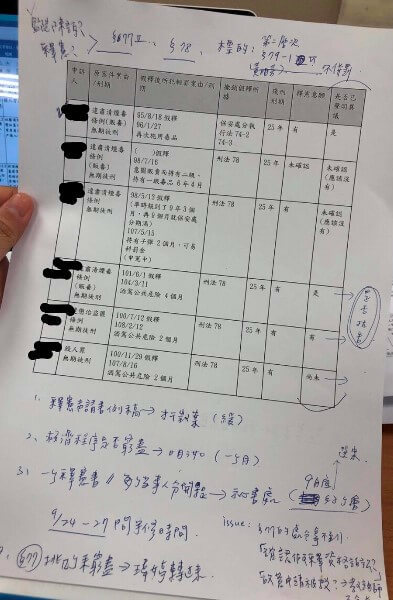 Photo / List of review cases for parole revocation complaints from the first meeting (click image to enlarge)
Before the project began, JRF had received about six complaint letters concerning parole revocation for minor offenses. We had no idea how many more cases might exist. With a somewhat reckless "we'll handle whatever comes" attitude, we contacted the Agency of Corrections and asked whether it could publicize the availability of civil-society legal assistance.
The cooperation went far more smoothly than we expected. The Agency of Corrections proactively surveyed prisons nationwide to identify people whose parole had been revoked because of a later offense punishable by six months or less and who wanted assistance. Once we had the list, we could write directly to them. The Agency maintained that cooperative attitude even after Interpretation No. 796 was issued, and we remain deeply grateful for it.
We first mailed letters explaining what JRF could help with, together with the consent forms and powers of attorney we needed signed. Within two weeks-this is not an exaggeration-responses arrived like snow. Not only did the people we expected to assist write back; word spread inside prisons, and people whose earlier sentence had not been life imprisonment, or whose parole had been revoked under provisions other than Article 78, contacted us too. Many of those who met our criteria had limited rights to send letters to non-family members, yet they continued writing to ask questions or simply check in. The number of cases eventually reached 73. During the first few months we received around 100 letters a month; over a year and a half, the total probably exceeded 1,000.
Looking back, once we chose a comprehensive strategy, the administrative cost far exceeded anything we had anticipated. Anyone launching a similar project needs to account not only for the volunteer and pro bono attorney capacity required for litigation, but also for the Secretariat staff needed to sustain the work.
To be candid, I had been at JRF for only half a year when we made that decision and did not truly understand the cost. In hindsight, I can see that the work produced results. At the time, however, no amount of overtime was enough to finish the letters, and we never knew when-or whether-the project would succeed. Those were real costs. Perhaps only someone inexperienced enough to begin so recklessly could have had the foolish courage to carry it through. If I had to decide again after two years at JRF, I would hesitate much more. I have come to admire people whose work does not become steadily more conservative with experience. In any event, this project remains a permanent reminder: some things still have to be done.
-
Room 2: A Toolkit for Legal Relief
(1) How Do Nine Attorneys Handle 73 Cases Across Taiwan?
The parole-revocation attorney team had about nine members. The distribution was not exactly even; everyone divided cases by region in an effort to reduce cross-jurisdiction travel costs, though we still paid plenty of them. One case even involved a military court, forcing a team member to register separately for access.
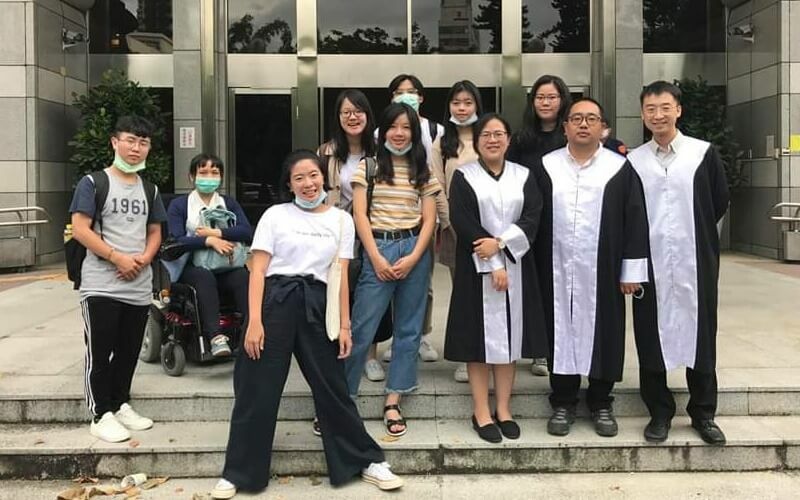
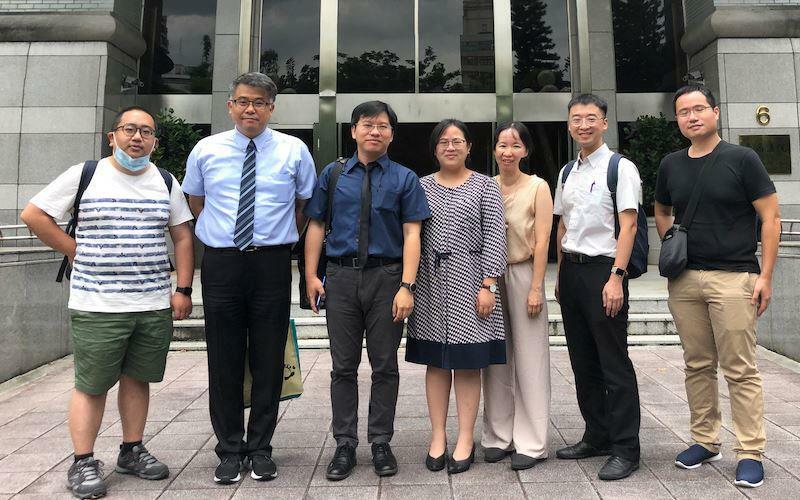
Photo / Correctional Institutions Group Parole Revocation Lawyer Team
We began with six pilot cases and used them to develop a workable process before rolling the remaining cases out. During those first cases, team members uploaded the necessary filing documents for each procedural stage to a LINE group as they went. That gradually became a shared database. Later cases could use template drafts, substantially reducing-though certainly not eliminating-the burden on pro bono counsel.
(2) Document Templates
Before the new Prison Act took effect in July 2020, a person challenging parole revocation filed an objection in the criminal court under Article 484 of the Code of Criminal Procedure. After the new Act took effect, challenges proceeded through administrative litigation under Article 153 of the Prison Act.
The first issue we encountered when filing objections was jurisdiction. Supreme Court Criminal Precedent No. 19 (1990) Tai-Sheng provides:
That a convicted person, their statutory agent, or spouse may file a statement of objection with the court that pronounced the judgment if they deem the prosecutor's execution command improper is explicitly stipulated in Article 484 of the Code of Criminal Procedure. However, the "court that pronounced the judgment" referred to in this article means the judgment against the defendant that actually proclaims the principal punishment and accessory punishment in the main text. If the main text of the judgment does not pronounce the principal and accessory punishments, but rather results from the defendant being dissatisfied with the judgment, appealing to a higher court, and the higher court holding that the original judgment contains no errors and the appeal is groundless, thereby upholding the original judgment and pronouncing "appeal dismissed," even though it is a final conviction, because the principal and accessory punishments of the original judgment were not altered and no principal or accessory punishments were proclaimed therein, it naturally does not constitute the "court that pronounced the judgment" referred to in this article.
Most clients had long ago lost hope and retained few litigation documents. Their original cases generally dated to around 1991, and roughly one-third involved the former Act for the Control and Punishment of Banditry. The first challenge in identifying "the court that pronounced the judgment" was therefore simply finding the records. Some were missing. Some district prosecutors offices refused to reissue documents because "the client had already signed for the judgment," a rationale I still do not understand. In other cases, courts were asked to retrieve execution files and could not locate their own orders for execution. Fortunately, each problem was eventually resolved.
The following are basic document templates that generally had to be sent before more records could be located. They may be useful in similar cases:
- Request for Reissuance of Ministry of Justice Parole-Revocation Disposition
- Request for Reissuance of Judgment
- Criminal Objection to Execution
- Criminal Appeal from Ruling
- Motion to Stay Proceedings and Petition for Constitutional Interpretation
- Petition for Constitutional Interpretation
- Administrative Complaint
-
Room 3: Talking with Society
The individual-story series grew out of a mistake. In an early social-media post, we explained the issue too briefly and too self-righteously. Even judges and prosecutors who already had doubts about Criminal Code Article 78 were alienated by the framing. One prosecutor called JRF a "pig teammate." We sat down for a serious review, and a more senior colleague reminded us: "If someone calls us a 'pig teammate,' that still means they think we're on the same team. We simply failed to help the issue." I had originally taken a fairly passive view of public advocacy on prison issues. Part of me still thought that quietly fighting the legal cases should be enough. My colleague's comment unexpectedly encouraged me. If we are on the same side, how can we be better teammates? As an advocacy organization, how can we give society enough context that people are willing to listen for a few more seconds?
We therefore recruited volunteers to write individual case stories. Because I had little interviewing or editing experience, I first worked with writers who had stronger experience in those areas-including Huang Ming-Chang, who wrote Hsiao-Ma's Storyand Lin Yen-Chu, who wrote Hsiao-Yeh's Story-to develop interview outlines and templates. We then recruited additional volunteers to conduct interviews and write the later pieces.
Recruiting a large group of volunteers is not simply a matter of finding people and assigning tasks. Training takes time and energy too. By participating closely in the first several cases, we gradually learned how to support the volunteers who came later. Even after a first draft was complete, we were uncertain about many choices, so we used group training sessions to solicit revision suggestions and regularly asked new interns unfamiliar with the project to read the pieces with fresh eyes. Every story went through repeated rounds of revision.
We published the stories the following October together with an announcement about observing the Grand Chamber oral argument. Traffic was fairly strong, and ETtoday republished them. Later, however, we realized how limited the reach had been. After Interpretation No. 796 was issued, the hostile comments on the Judicial Yuan's Facebook page were voices we had never encountered. The fact that our stories had drawn almost no criticism was not necessarily a sign of success; it showed that we had largely failed to break out of our own echo chamber.
-
Secret Attic: Our Constitutional Moment
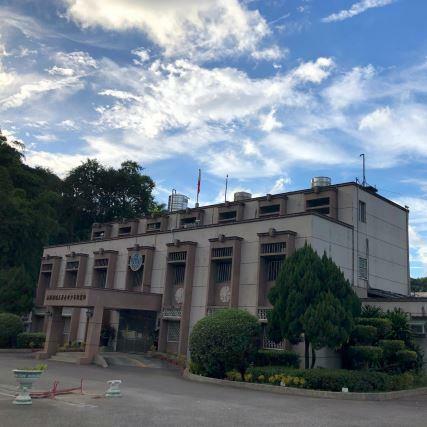 Photo / The sky when Judicial Yuan Interpretation No. 796 was issued
This is the sky as it looked when Interpretation No. 796 was issued. I had just finished a remote video session at the Taipei Juvenile Detention House. It was 4:00 p.m. on a Friday-the time when the Grand Justices traditionally announced Interpretations. Three days earlier, I had mailed the constitutional petitions finalized at the end of October to the first group of clients who had exhausted their remedies, asking them to confirm the content, sign, and return them for filing with the Judicial Yuan. Of course, those petitions could not reach the Judicial Yuan before the Interpretation appeared. My immediate reaction was that these people had missed the "constitutional interpretation train" and would still be unable to seek extraordinary relief. We had so many cases, had spent so much time, and I had barely rested for a year, yet the doors seemed to close in front of us. I was genuinely angry and heartbroken. That day felt terrible. The next day did too. In truth, I felt terrible until the first person who had never filed a constitutional petition was released.
Even while feeling that way, we kept moving. Chiao Cheng-Hsiang came to the office that same evening, stayed while we cried, and talked through what else could still be done. People comforted us in different ways: perhaps we could still pursue retroactive legislation; wrongful-conviction cases often take ten or twenty years, so achieving this much in one year was already extraordinary; no one could have predicted that the Supreme Court's petition from August would produce an interpretation only days after the Grand Chamber hearing. What finally steadied me, though, was simply working through the weekend: writing letters so as many clients as possible would know what was happening, calling legislators' offices about retroactive amendments, preparing revocation requests for the Ministry of Justice, and supplementing the constitutional petitions for the Judicial Yuan.*
* In the end, none of those steps turned out to be decisive. When the first person who had not filed a constitutional petition was released, my emotions swung back like a roller coaster. In cases pending before the Supreme Court, courts generally revoked the orders for execution (related post compiling the rulings), and people were released once it was confirmed that the later offense had already been converted to a fine. For cases not pending in court, the Ministry of Justice also held intensive meetings before Lunar New Year, partly to stabilize prison conditions and avoid unequal treatment. Applying Interpretation No. 796, it ultimately released 109 people. Before everything had fully settled, I remember sitting down one evening after a busy day to draft legal documents and receiving call after call from people telling us they had made it home safely-some calling from home, others from public payphones. Suddenly it felt as though all those tears had been wasted. After living through this project, I have more reason to believe something people often remind us in advocacy work: if you want to last, you cannot tie everything to the result.
This was our Constitutional Moment. It was far more painful than I had imagined.
But it also led to many moments of real tenderness.
When the project suddenly had to prepare for a Grand Chamber hearing the previous October, JRF Executive Director Chou Yu-Hsiu and attorney Kao Yang-Hui gave us tremendous guidance and support. With experienced people acting as anchors, a group of rookies like us dared to step into the hearing. Chou took on the central legal-research work with us. Everyone was constantly talking about the "Chien Ho-Ping case," yet before the Interpretation was issued we never had a chance to go to Tainan and meet Chien Ho-Ping himself.
After the Interpretation, some courts still held hearings in pending cases. I went to Tainan for one and arranged to meet another client who had already been released. To my surprise, he brought Chien Ho-Ping with him-they had been cellmates. Even more unexpectedly, Chou Yu-Hsiu happened to have a hearing at the Tainan District Court that same day. Just before rushing back to Taipei, he finally met the almost legendary Mr. Chien Ho-Ping in person. Being able to shake his hand properly and wish him well outside prison was a magical moment for all of us.




This last paragraph may not be especially public-minded, but it is the part of my personal review of the year-long project I remember most vividly. If it needs a little public purpose, perhaps it can serve as a note to other new NGO workers. I do not know whether everyone remembers Chihiro in the first 20 minutes of Spirited Away. I have watched the film many times. If I had to make the comparison, I was probably even more timid than she was when this project began. Now I believe that once you have been through the bathhouse, you come out different. It is all right for the work to hurt. You do not have to be afraid.
This article is an AI-generated translation of the original Chinese text. In the event of any discrepancy, the Chinese version shall prevail.