
JRF Newsletter
March Newsletter | What Kind of President of the Judicial Yuan Do the People Need? Seven Pending Issues
Last edited: 2026-07-27
The Presidential Office announced yesterday the nominees for the President and Vice President of the Judicial Yuan, as well as Grand Justices. Among them, the nominee for President, Ch'en Ch'iu-ming, comes from the prosecution system, sparking public attention. The President of the Judicial Yuan shoulders the heavy responsibility of judicial reform. How to advance major issues such as reducing the judicial burden, strengthening technological investigation, and reforming the lay judge system remains the focus of concern across all sectors of society.
For a long time, the progress of judicial reform has been slow, and public trust in the judiciary remains low. The head of the judiciary not only presides over the Constitutional Court but also manages court administration and supervises judicial organs, influencing the direction of judicial policies. We call on the Legislative Yuan to strictly review the nominees to ensure they possess a firm will for reform, and to allow a free vote to prevent the candidates from being hijacked by party intent.
In addition, nominees should clearly articulate to the public their specific arguments and action plans for judicial reform. The President and Vice President of the Judicial Yuan are not merely administrative positions, but critical figures influencing the development of the judicial system. We expect the nominees to publicly respond to the following seven questions:
- Regarding the public's low level of trust in the judiciary, what do you think are the causes, and what specific improvement measures do you propose?
- How will you promote dialogue and exchange among the public, judges, civil society organizations, the Ministry of Justice, and other agencies to resolve internal disagreements within the judicial system?
- Is the current government's resource allocation for judicial trials sufficient? What are your views and specific practices regarding the planning or increase of the judicial budget?
- When the Judicial Yuan proposes major legislative amendment drafts in the future, do you commit to simultaneously conducting "policy and human rights impact assessments" so that all sectors of society can fully understand the impact of the reforms?
- Under the premise of safeguarding people's rights and interests, how can the judicial burden be reasonably alleviated? What concrete solutions do you have for the phenomena of overworked judges and excessive caseloads?
- What are your views on the current implementation status of the "Lay Judge System"? Do you support further promoting reforms to the criminal litigation system, such as the system of non-transfer of dossiers and evidence?
- What are your views on the "reform of the military trial system"? Are there any specific directions for reform?
Taiwan's judicial reform is still ongoing, and we will continue to monitor it to ensure the judicial system truly responds to the needs of the people.
✦ Statement |JRF's Seven Questions for the Nominees for President and Vice President of the Judicial Yuan
✦ Statement |Taiwan Alliance for Civilian Supervision of Judicial Yuan Grand Justice Nominees' Fifteen Questions for Grand Justice Nominees
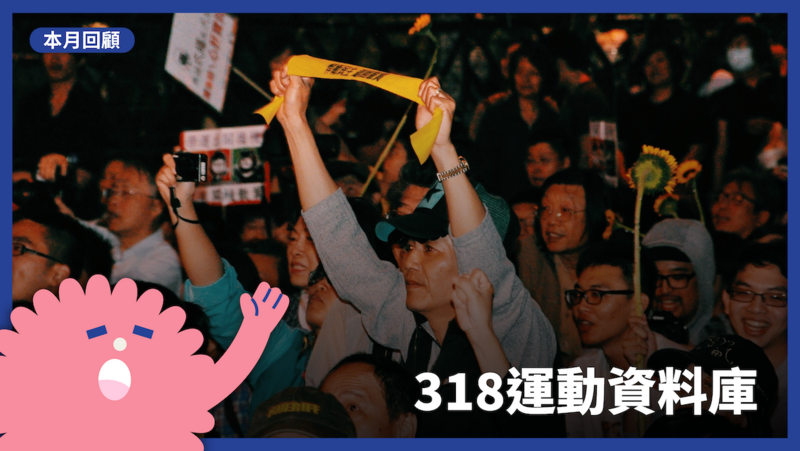
On March 17, 2014, the convener of the Internal Administration Committee of the Legislative Yuan forcibly announced the completion of the review of the Cross-Strait Service Trade Agreement, violating inter-party consultation procedures and prompting students and civil society groups to launch protests. In the early hours of the following day, citizens rushed into the Legislative Yuan and occupied the legislative chamber, officially launching the Sunflower Student Movement. Amidst escalating confrontation at the protest site, police might have made massive arrests of participants. To safeguard citizens' rights, on March 19, the JRF assisted in establishing a volunteer lawyer group to provide legal consultation, accompany individuals during interrogations, and assist with subsequent litigation.
This movement not only changed Taiwan's political ecosystem but also left behind many traces of legal and democratic development. Over the past decade, through private prosecutions, state compensation claims, defense representations, and other cases, the JRF has continuously promoted the process of democracy and the rule of law. We have also held seminars, symposiums, and the 7th-anniversary special exhibition for the March 24 incident, preserving written and visual records of every event while publishing special newsletters.
Eleven years after the 318 Movement, we have compiled the records of various scales from the past ten years into a database. We invite you to look back together at the changes brought by the 318 Movement, and to reflect on the challenges and unfinished business of democracy and the rule of law.
➤ Volunteer Lawyer Platform for Anti-Black Box Service Trade Agreement | Comprehensive Data Collection
✹ Chronicle of the Volunteer Lawyer Group
✹"No Such Person" | 7th Anniversary Memorial Website for the March 24 Executive Yuan Violent Eviction Incident
✹ Litigation Database of the Volunteer Lawyer Platform for Anti-Black Box Service Trade Agreement
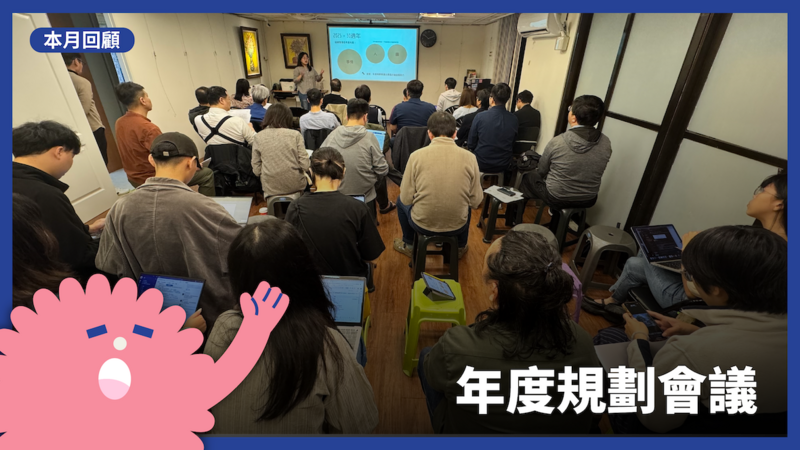
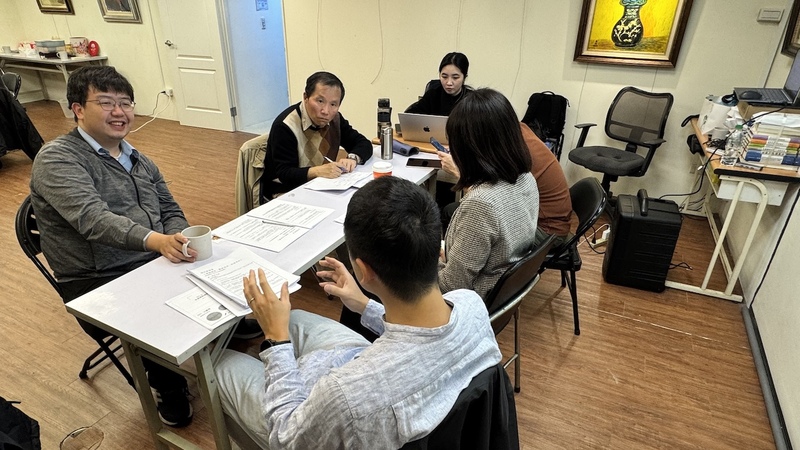
Marking the 30th anniversary of the establishment of the JRF, the Secretariat held its annual planning meeting on March 15. Following the relocation to the new office on Minsheng West Road at the end of last year, directors, supervisors, standing executive committee members, and volunteer lawyers of the legal specialty group were specially invited to attend and get acquainted with the new home of the JRF Taipei Office.
The day brought together senior lawyers, mid-generation lawyers, and newly joined lawyer partners to focus on a new generation of the "Judicial Reform Blueprint." Divided into groups according to themes—covering the attorney system, gender-sensitive judicial reform, digital rule of law, judge system, judicial organization, police-prosecution system, alternative dispute resolution, criminal litigation, administrative litigation, civil litigation, correctional institution reform, and wrongful conviction relief—partners took turns switching groups to exchange opinions and brainstorm, successfully forming a preliminary consensus. With the planning completed, the next step is to discuss the content in greater detail and progressively implement the blueprint.
At the end of the meeting, Chairperson Huang Hsu-t'ien joked, "The JRF has worked hard for 30 years, and today's meeting has created the goals for the next 30 years of hard work!". We also plan to officially release the "Third-Generation Judicial Reform Blueprint" to the public this August as the future guiding policy of the JRF.
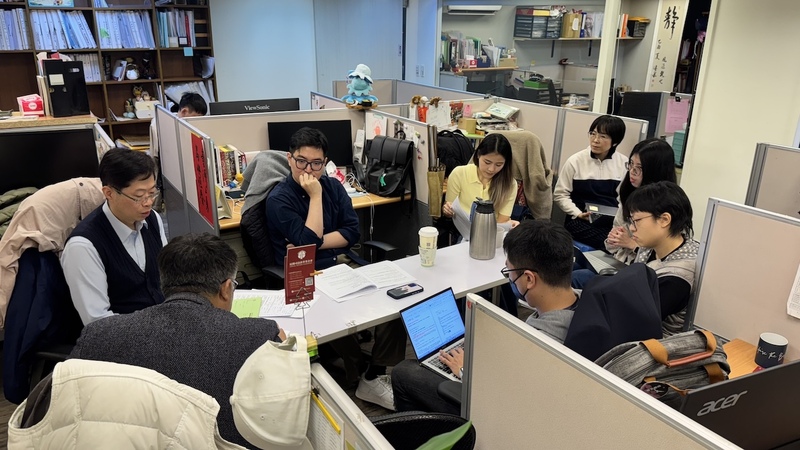
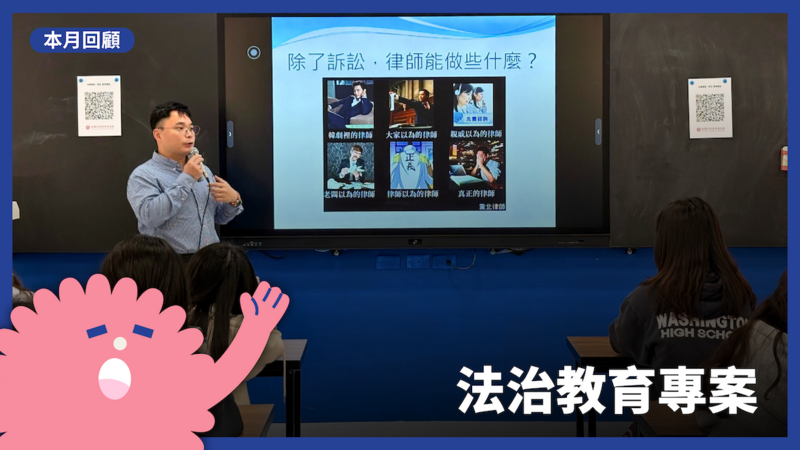
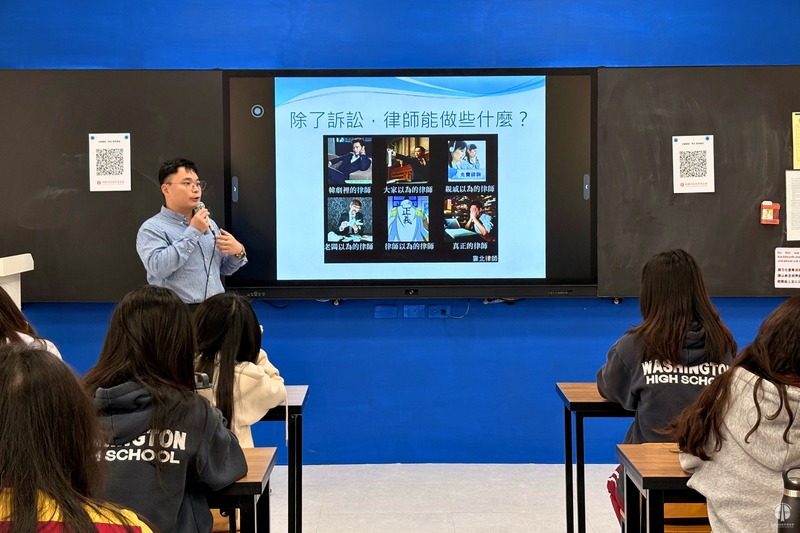
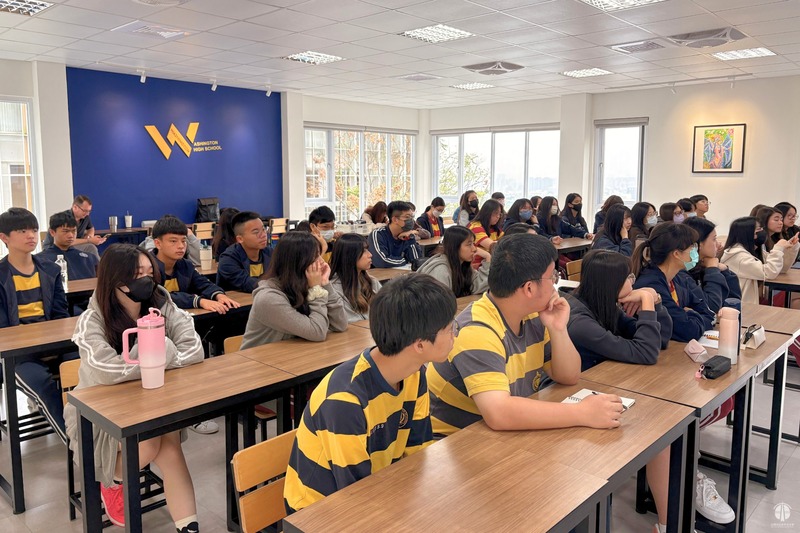
The JRF's rule of law education activities operate year-round, striving to bring legal knowledge closer to everyone's daily life. This month, we went into campuses and communities, bringing two rule of law education lectures in different fields—at Washington High School, we discussed with students how lawyers exert social influence through their profession; in Miaoli's Shuanghu Community, we exchanged practical knowledge on real estate and property planning with the elderly. Through lawyers' translation, we hope legal concepts become not just cold statutory provisions, but practical life tools that individuals can use to protect their rights when needed, while deepening their understanding of the value of law through on-site interaction.
How Do Lawyers Change Society? Sharing Public Interest Lawyer Career Experiences @ Washington High School
Thank you to Washington High School for the invitation, arranging Lawyer Wang Ch'en-han to share diverse career development paths for lawyers with sophomore students from the social science bilingual experimental class! The lawyer mentioned that he did not set his sights on the legal path from the very beginning, but slowly found the person he wanted to become through participating in various activities.
Many people's impression of lawyers comes from courtroom battles in film and television dramas, but in reality, a legal career has many different dimensions, such as community legal consultations, various types of lectures, and all kinds of popular legal science promotion directly communicating with the public, all of which are important applications of legal expertise.
The lawyer also shared cases that left a deep impression on him, discussing how to build trust with clients, how to adjust his mindset when facing questioning from victims' families, and how deeply he realized the importance of legal work when stepping into crowds of social movements. We hope that through this sharing, students will have more imagination for their future and look forward to seeing everyone shine brightly in the legal world.
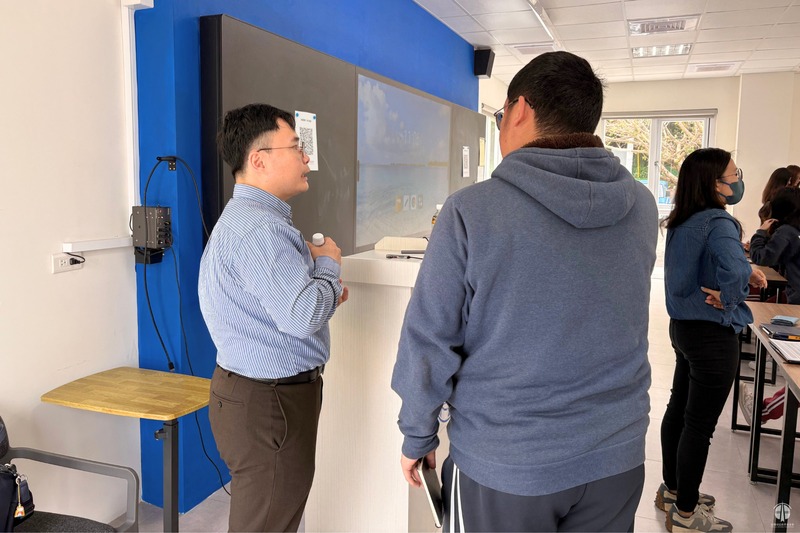
Learning Practical Legal Knowledge from Small Stories: Real Estate, Property Planning, and Wills @ Miaoli Shuanghu Community Development Association
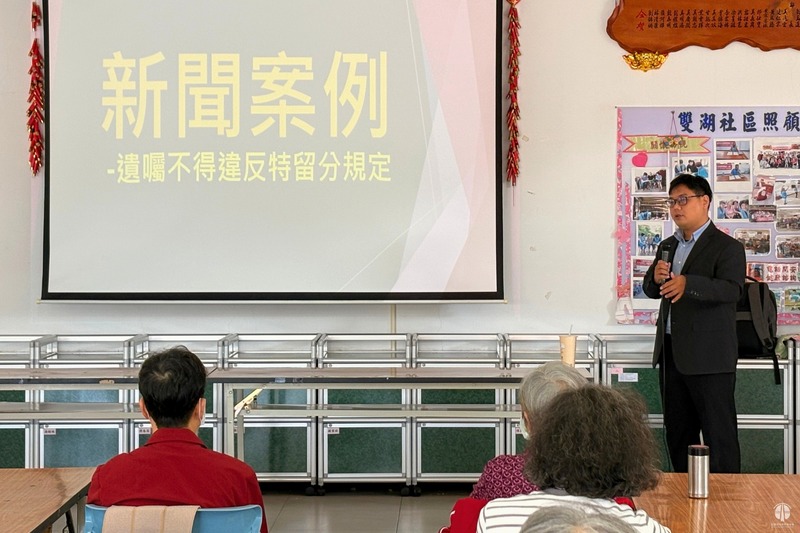
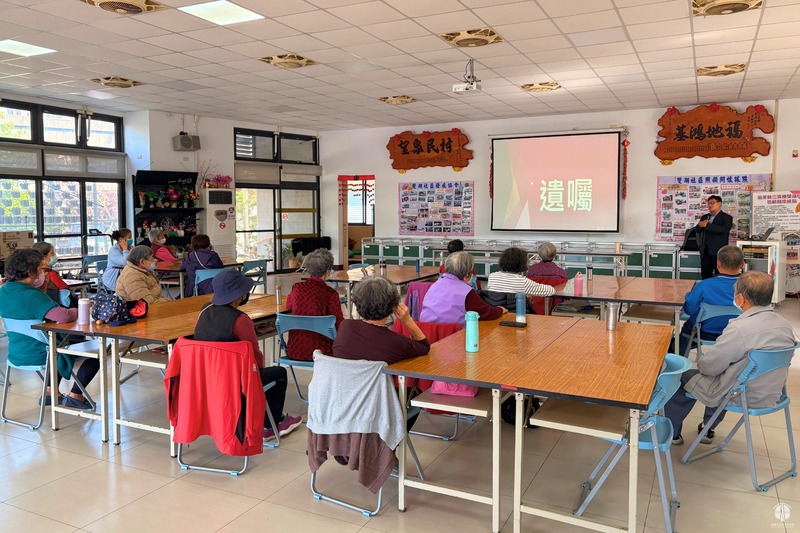
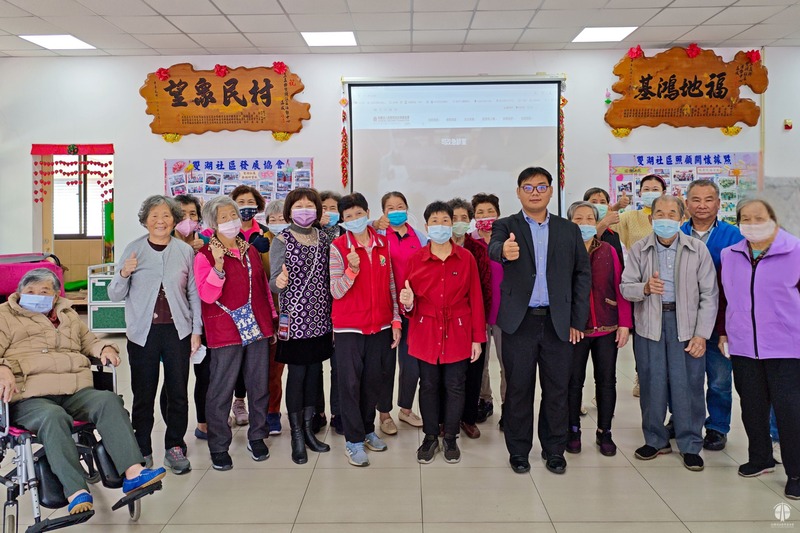
At the invitation of the Miaoli Shuanghu Community Development Association, the JRF arranged for Lawyer Li Jui-jen to visit the community and converse with the elderly on practical issues such as real estate, property planning, and wills. Starting from news cases and combining the lecturer's practical experience, the lecture explained the importance of wills and property planning in a simple and easy-to-understand manner.
Through interactive Q&A, the lecturer used a conversational approach to address the issues older adults truly care about—can you still live in a house after transferring its title, what to do if your children are unfilial, and how to make arrangements that truly protect oneself. In addition, the lecture introduced the legal forms of various wills and reminded everyone to pay attention to the protection of statutory reserved portions to avoid affecting property distribution arrangements due to overlooking this regulation.
We hope that through this exchange, we can help the elderly gain a clearer understanding of legal protections and feel confident in making appropriate property plans!
If you are interested, you are welcome to collaborate with us!
We offer cooperation opportunities for schools, associations, and institutions regarding "Campus Mock Trials" and "Campus Special Lectures," and applications for "Space Rental" at our Taichung Office are also open, as we continue working together for rule of law education!
Mock Trial Lecture Cooperation Space Rental
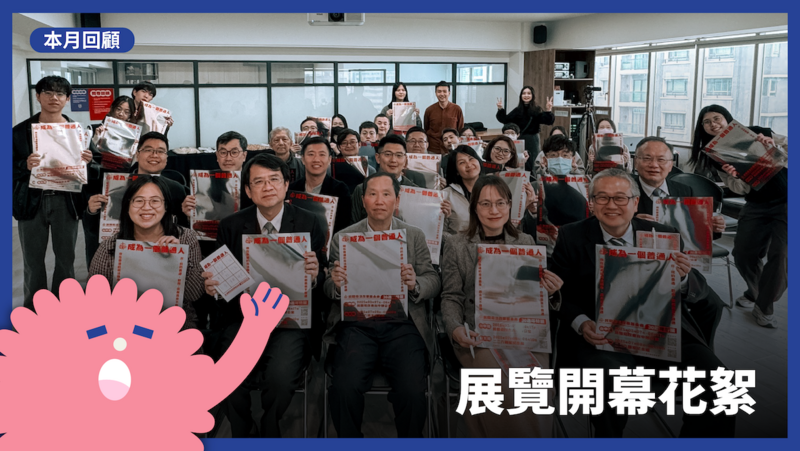
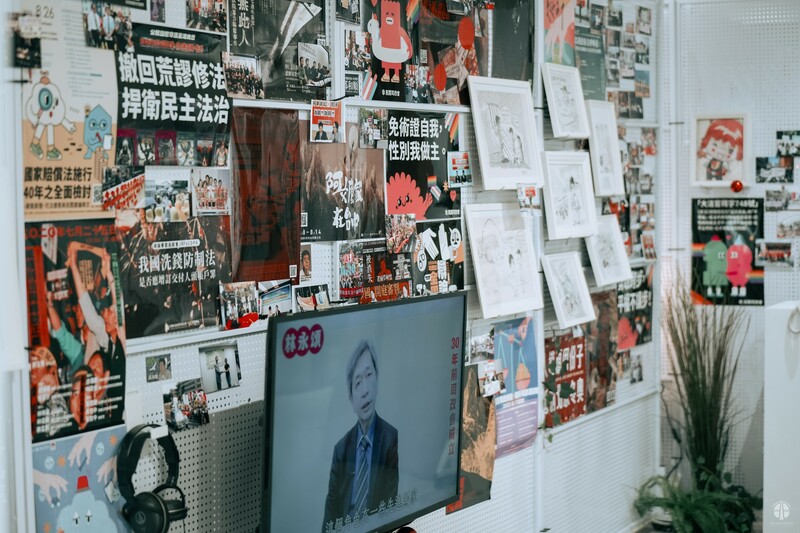
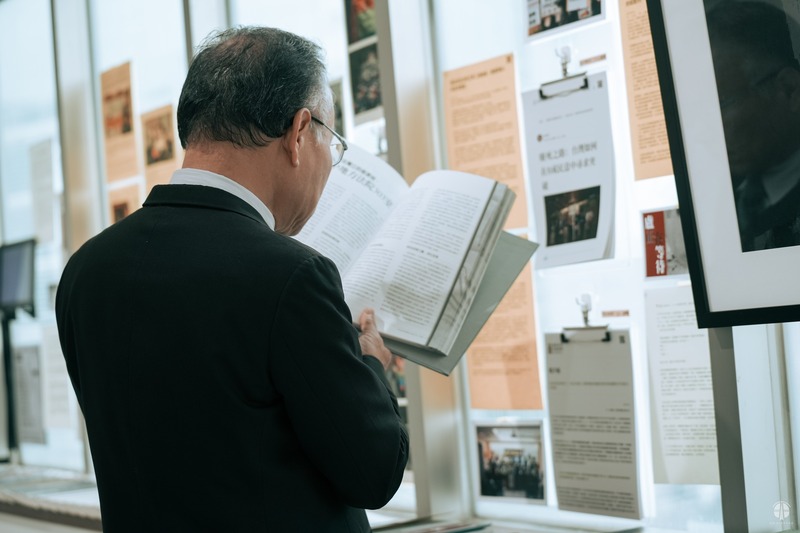
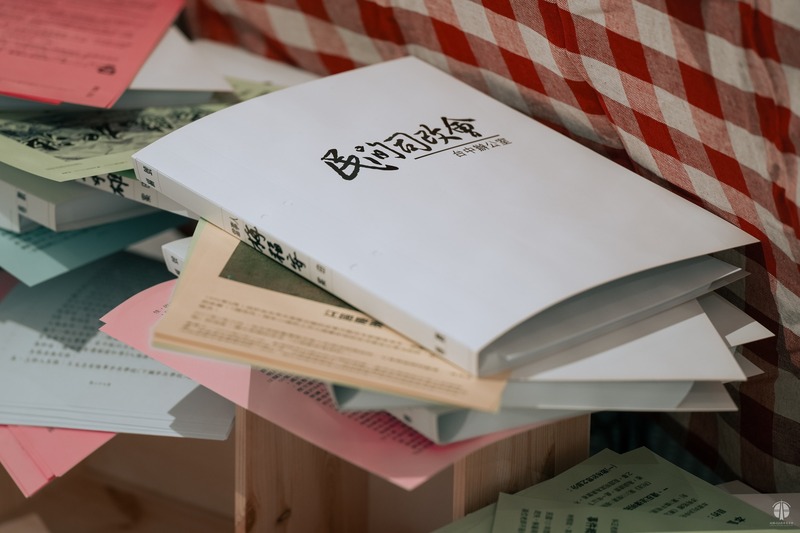
On March 7, the Taichung exhibition of "To Be an Ordinary Person: The 30th Anniversary Special Exhibition of the Judicial Reform Foundation" was successfully launched! Special thanks to JRF Chairperson Huang Hsu-t'ien, Taichung Bar Association Chairperson Wu Shao-kuei, Changhua Bar Association Chairperson Hsu Fu-hsiung, and Nantou Bar Association Chairperson Hung Chu-wen for personally attending and delivering opening remarks for the exhibition, sharing their insights and expectations for judicial reform. At the same time, we sincerely thank Director Li Shan-chih of the Taichung Legal Affairs Bureau, as well as JRF standing executive committee members and volunteer lawyers, for showing their support on-site to jointly witness this special exhibition that reviews the past and looks toward the future.
Speech by Chairperson Huang Hsu-t'ien:
Ten years ago, with the support of legal community friends in central Taiwan, the Taichung Office was established, becoming an extension of our judicial reform work. Last year, by chance, the office relocated to its current site near Taichung Station and Taichung Park, a location symbolizing our close connection with society. We hope to use this base to launch deeper dialogues on judicial reform. Therefore, today's exhibition, "To Be an Ordinary Person," is our first major action in Taichung.
I have always believed that Taiwan's development cannot rely solely on TSMC, nor is it enough for only Taipei to do well. Judicial reform cannot be promoted solely in Taipei either; instead, citizens across Taiwan should be allowed to participate in discussions. In Taichung, we may not see the Judicial Yuan or the Ministry of Justice every day, but we encounter people in need of justice every single day. Therefore, we hope to build this place into a central Taiwanese knowledge hub for social science, democracy, the rule of law, and human rights, allowing more people to understand judicial reform and participate in dialogue.
Looking back over the past 30 years, we have continuously reflected: if we want a better future, we must understand what happened in the past and examine the current reality. At the same time, judicial reform is not only a historical subject, but an ongoing process. Today, we can freely express our opinions, but there are still people suffering from injustices who cannot make their voices heard. Therefore, this is not only a historical process in time, but also a parallel reality among different social groups—we should cherish everything we currently have, but we cannot be satisfied with the status quo, because many people still cannot "become an ordinary person."
This exhibition is not just a retrospective, but an invitation for everyone to jointly participate in reform. We need more support. Of course, promoting reform cannot simply be about fundraising from the public, but about helping society understand what we are doing so that they are willing to invest themselves. We hope everyone will invite friends and family to visit and give us feedback, making this exhibition an important starting point for judicial reform in Taichung.

This article is an AI-generated translation of the original Chinese text. In the event of any discrepancy, the Chinese version shall prevail.