
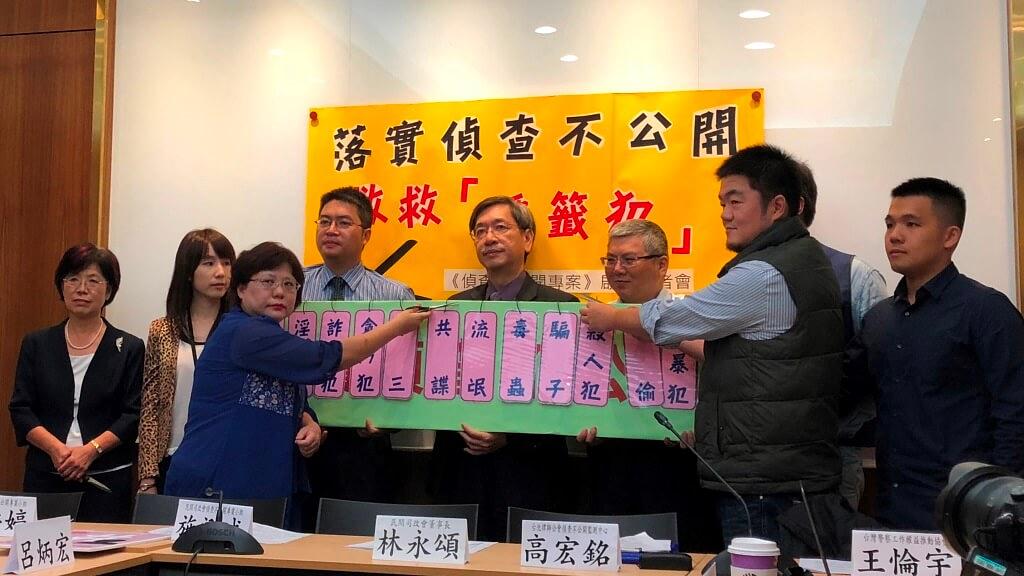
Police Misconduct & Breach of Investigation Confidentiality
"Non-disclosure of investigative details" is a legal principle familiar to all citizens in Taiwan. Paragraph 1 of Article 245 of the Code of Criminal Procedure stipulates: "Investigations shall not be public." This explicitly binds investigative agencies such as the police, prosecutors, and investigation bureaus, prohibiting the public disclosure of investigative materials obtained during the handling of criminal cases prior to trial.
However, due to various unclear factors (such as seeking performance metrics or media exposure), information regarding criminal investigations is frequently exposed to the public eye on television, in newspapers, and across the internet. The result of this "complete disclosure of investigations" sacrifices the privacy and reputation of the parties involved, impacting their entire lives. The cases they are forced into become a "label" that can never be torn off for the rest of their lives. They have not committed crimes, yet they become "labeled offenders" who actually face punishment.
Although official mechanisms currently exist to monitor the non-disclosure of investigations—for example, the National Police Agency reviews daily electronic and print media reports based on citizen complaints or monitoring by the Command and Control Center and the Criminal Investigation Bureau, taking disciplinary action accordingly—this seemingly successful facade is, in reality, completely ineffective. Because solving major cases brings commendations while rule violations only result in warnings, some police officers may simply not take the non-disclosure of investigations seriously at all. As for prosecutors and investigators disciplined for violating the principle of non-disclosure of investigations, they are extremely rare. Furthermore, some prosecutors have privately revealed that certain district prosecutors' offices even allow media outlets to freely enter and exit prosecutors' offices.
The purpose of the "non-disclosure of investigations" principle is to protect the privacy of the parties involved and implement the presumption of innocence. A distorted principle of non-disclosure turns innocent victims into news protagonists, forcing them to endure public trials by public opinion, while also burdening judicial trial authorities with immense public pressure. When the issue of "non-disclosure of investigations" rises to become an important issue of contemporary judicial reform, the "Non-Disclosure of Investigations Project" must be launched immediately.
Cases of Concern
Love and Iron Blood Series
The police "citizen media" that forces people to star in it—you and I could become the next victims.
In an era where anyone can be a director, internet celebrities and YouTubers all use videos to market themselves. But have you ever thought that one day, you might unknowingly become the main character of a popular short video?
"Love and Iron Blood" is a series of short films launched by the Kaohsiung City Police Department. The content is mostly edited from footage captured by body-worn cameras ("bodycams") worn by police officers. Their view counts have repeatedly broken the million mark, shaping a brave and fearless positive image for frontline police officers, and precinct divisions everywhere have rushed to follow suit. However, we cannot help but question whether such use is truly without problems.
First, the police have previously stated in interviews [1] that the main purposes of police using body-worn cameras should be to "gather evidence," "allow police officers to protect themselves," and "review whether there are any negligence in the law enforcement process." Moreover, according to the relevant Guidelines for the Preservation and Management of Audio and Video Materials issued by the Ministry of Interior [2], such footage cannot actually be arbitrarily disclosed, let alone edited, post-produced, and uploaded online for the general public to watch, let alone coupled with teasing text to mock the parties in the video.
Second, the "reward system" associated with the release of related videos and posts is also one of the reasons causing police officers to disregard relevant management guidelines and the principle of non-disclosure of investigations. As long as the reward system does not disappear, and police commanders' mindset of using videos to enhance the image of police agencies does not change, it will be difficult to eradicate the leakage of investigative videos in violation of non-disclosure.
Furthermore, videos captured by body-worn cameras are usually edited, and what the public receives may only be fragmented information rather than the full picture of the event, easily leading to stigmatization and prejudgment. Moreover, crimes have many backgrounds and causes, and the law also has special protective provisions for special offenders such as juveniles and persons with physical and mental disabilities, none of which can be seen in the videos.
We demand that the police immediately cease such actions that violate the non-disclosure of investigations, and stop treating people as promotional goods to enhance their image. Even if people commit crimes, there is no need for them to be subjected to such media public trials. We also appeal here that if any citizens suffer damage caused by the police, prosecutors, or investigators violating the non-disclosure of investigations, they can file a complaint with the JRF.
Mama Mouth Case — Lü Ping-hung
In the "Mama Mouth case" that occurred in 2013, Lü Ping-hung was falsely accused by a defendant as an accomplice during the investigation. On March 6, 2013, the prosecutors heavily raided the Mama Mouth Café he operated, which was extensively reported by the media. Although it was later ascertained that the crime was committed by the defendant alone and Lü Ping-hung received a final disposition of non-prosecution, Lü's physical health broke down due to frequent running back and forth through judicial procedures and psychological pressure.
After the incident, because police and prosecutors leaked investigative secrets, falsely accusing Lü Ping-hung of being a murderer and even calling his café the "Dragon Gate Inn," the café's Facebook fan page was flooded with 20,000 netizen comments. The café's operations ran into trouble, and to this day he is still labeled a "murderer." A photo of him handcuffed is still circulating on the internet, causing a serious insult to his personality. Years later, walking on the street, passersby still point at him and question him to his face: "Isn't that Lü Ping-hung from Mama Mouth? Wasn't he locked up for murder, why is he released?" This has caused Lü to still not dare walk side by side with his family on the street to this day. Finding the public pointing unbearable, his family still asks Lü to wear a hat and sunglasses in disguise when going out to avoid being recognized, greatly disrupting his life.
Bungled Spy Case — Kuo Mei-lan
On February 10, 2014, Kuo Mei-lan, a former reporter at the Cross-Strait News Center of the Central News Agency, was preparing to go to Fo Guang University in Jiaoxi, Yilan, to collect her master's degree certificate from the Department of Communication. However, that morning, Investigation Bureau and local police personnel appeared at the entrance of her residence demanding a search. When Kuo asked to make a phone call to ask her advisor for leave, she was repeatedly instructed by the Investigation Bureau to abide by the non-disclosure of investigations and not mention the fact that she was under investigation to her professor. After the search, the Investigation Bureau detained Kuo to her case.
However, what is puzzling is that while Investigation Bureau personnel repeatedly emphasized to Kuo Mei-lan that investigative intelligence could not be leaked, this search began to be extensively reported by major news media outlets starting at noon that very day. The reports even pointed out that prosecutors had grasped solid criminal evidence and that Kuo had committed a crime punishable by imprisonment of five years or more, making prison time unavoidable. Even while Kuo, as the party involved, was undergoing isolated interrogation, unable to contact the outside world, and still unclear about the exact crime she was allegedly involved in, the reports labeled Kuo a "communist spy," "violating the National Security Act," "luring investigators with money," "coopting investigators," and "gathering intelligence for the Chinese Communists." The next day, media outlets even ran front-page reports on her involvement and published Kuo's frontal photo. If the prosecution and investigation agencies had not leaked the information, it would have been impossible for the media to know.
Although this case was later proven to be a blunder under the prosecutor's investigation and resulted in a final disposition of non-prosecution by the prosecutor on December 9, 2014, under the influence of extensive media coverage, Kuo Mei-lan subsequently faced repeated obstacles in job hunting due to her identity in the "bungled spy case." No newspaper agency was willing to hire her after the incident, and she was even forced to change her name to "Kuo Hsiao-lan" to find work. Forced to endure immense psychological pressure and unable to find a full-time job because she frequently had to appear in court after the incident, her finances fell into crisis, and she relied on financial relief from her mother to get by. The crude investigation process and intentionally leaked investigative secrets in this case caused severe damage to Kuo Mei-lan's reputation, right to work, and mental health.
Why "Non-Disclosure of Investigations"?
In the "Mama Mouth case" and the "bungled spy case," both parties suffered deeply from extensive media coverage. The media reported in painstaking detail unverified news leaked by the police, prosecutors, and investigators, portraying the parties as "murderers" and "communist spies" before they were convicted or even before the trial proceedings had begun, causing a devastating impact on their reputations.
Lü Ping-hung, the party involved in the "Mama Mouth case," was even questioned by a passerby after being granted non-prosecution: "Weren't you a murderer? Why weren't you locked up?" Meanwhile, in the "bungled spy case," although party Kuo Mei-lan also received a non-prosecution disposition, the sensitive nature of the media reports made it impossible for her to find a job and forced her to seek employment anonymously. This caused a severe shock to her daily life, making her a victim of yet another judicial case. It can be seen that the leakage of case intelligence by police, prosecutors, and investigators has a profound and far-reaching impact on the lives of those involved.
In other socially prominent cases, the leakage of intelligence by police, prosecutors, and investigators, coupled with excessive media coverage, makes it very easy for criminal suspects or defendants to be labeled "guilty" before they are convicted. Furthermore, the pressure of public opinion may influence the judgment of the judicial system, indirectly eroding the presumption of innocence.
The Innocence Project in the United States is a non-profit organization that rescues wrongful convictions through DNA evidence, having successfully rescued 356 cases to date. The organization has studied the first 325 cases exonerated through DNA evidence and found that as many as 72% of wrongful conviction cases involved "eyewitness misidentification" [3]. This shows that memory is not like a VCR that can replay the same clip; memory can be tampered with during the construction process. If incorrect information is received during the construction process, it can lead to false memories [4].
In the "Bali Double Murder Case," the police improperly disclosed investigative secrets that the defendant had purchased joss paper [5]. Combined with extensive media coverage of Lü Ping-hung's appearance and unverified modus operandi, this caused the joss paper store owner to mistakenly identify Lü as the person who accompanied the defendant to buy joss paper. Had further investigation not ruled out Lü Ping-hung ever visiting the joss paper store scene to make purchases, yet another miscarriage of justice caused by misidentification might have been added.
A case of a toddler being abused to death recently occurred in Changhua. The police and prosecutors exposed the identity of the criminal suspect during the investigation [6]. Upon hearing false news that "the suspect was released on bail," a crowd led mobs to smash up the criminal suspect's home and scatter joss paper [7], attempting to carry out so-called "lynching."
However, the "Directions for Operation of Non-Disclosure of Investigations" stipulate that cases where "the plot of the crime concerns the privacy and reputation of the defendant, criminal suspect, or their relatives and spouses" fall under the scope of what must not be disclosed. In the cases mentioned earlier, the improper disclosure of details regarding the crime allegedly committed by the criminal suspect led unrelated citizens to harass and attack the unrelated family members of the suspect. This has truly infringed upon the privacy of the suspect's family members and even caused threats to their personal safety, completely deviating from the purpose of the non-disclosure of investigations regulations.
In current police and prosecutorial practice, when major cases are solved, so-called "case-solved press conferences" are often held. Seized physical evidence such as firearms, bullets, and drugs are displayed one by one on tables, and criminal suspects who have not yet accepted indictment or trial are even brought before the cameras for reporters to photograph. Because of the grand scale, these are also nicknamed "grand worship ceremonies."
Although case-solved press conferences can demonstrate the hard work of police law enforcement, they may also forfeit potential investigative advantages. Taking drug cases as an example, if seized drugs are directly disclosed for reporters to photograph, the criminal syndicate behind them might recognize the syndicate's unique packaging, or even recognize details such as body shape and clothing when the criminal suspect is brought out for photos. At this point, there is a risk of colluding on testimonies and destroying evidence.
Take the internet trend "dumbfounded cat" that caused a buzz a while ago as an example. The origin of this catchphrase was precisely a cat pattern and the words "dumbfounded" printed on drug packaging seized by the police. It spread wildly across the internet for a time, but at this point, people belonging to the same criminal syndicate as the seized criminal suspect might start destroying packaging bags printed with the "dumbfounded cat," causing the police to miss the opportunity to take down the entire criminal syndicate in one net.
Our Actions
-
Continue to accept public "complaints" regarding individual cases of police, prosecutors, and investigators violating non-disclosure
If you wish to file a complaint against police, prosecutors, or investigators for violating non-disclosure of investigations, you are welcome to schedule an in-person consultation at the Judicial Reform ER.
-
Launch "Watch TV News to Monitor Investigative Agencies" to collect facts of illegal actions by investigative agencies
Although the National Police Agency monitors the news daily, the effectiveness of investigations and penalties is poor. Civil society organizations will form a working group to watch TV news daily, compile situations where "investigative agencies" are suspected of violating non-disclosure of investigations, and periodically report to official authorities.
-
Closely monitor official periodic publication of "review reports" and "investigation and disciplinary outcomes"
According to the new law, the "Review Panel for Non-Disclosure of Investigations" formed by investigative agencies should publicly release review reports and investigation and disciplinary outcomes every quarter. Civil groups will closely monitor the review reports and oversee official accountability.
Related Laws
- "Directions for Operation of Non-Disclosure of Investigations"
- "Key Points for News Handling in Criminal Cases Investigated by Prosecutorial, Police, Investigative, and Anti-Corruption Agencies"
- "Guidelines for the Preservation and Management of Body-Worn Cameras and Audio-Visual Materials Used by Police Agencies in the Performance of Duties"
-
"Guidelines for the Preservation and Management of Dashcams and Audio-Visual Materials Used in Police Vehicles"
2026
Court Observation Recruitment | "Taiwan's Cambodia" State Compensation Case
2026
Court Observation Recruitment | State Compensation Case Regarding the "Taiwanese Version of Cambodia Scams"
In 2022, the Kaohsiung District Prosecutors Office established a special task force to investigate a transnational…
2025
Action Call | "Taiwanese Version of Cambodia" State Compensation Case | Verdict Press Conference
Did you know? Our country requires prosecutors and police to observe the principle of non-disclosure of-investigation.…
2025
Court Observation Recruitment | "Taiwanese Cambodia-style" State Compensation Case | Third Preparatory Hearing
In recent years, Taiwan was rocked by the nationwide "Taiwanese Cambodia-style" scam, in which Taiwanese citizens…
2025
Court Observation Recruitment | State Compensation Case regarding the "Taiwanese Version of Cambodia" Scam
In recent years, Taiwan was rocked by the nationwide "Taiwanese Version of Cambodia" scam, in which Taiwanese citizens…
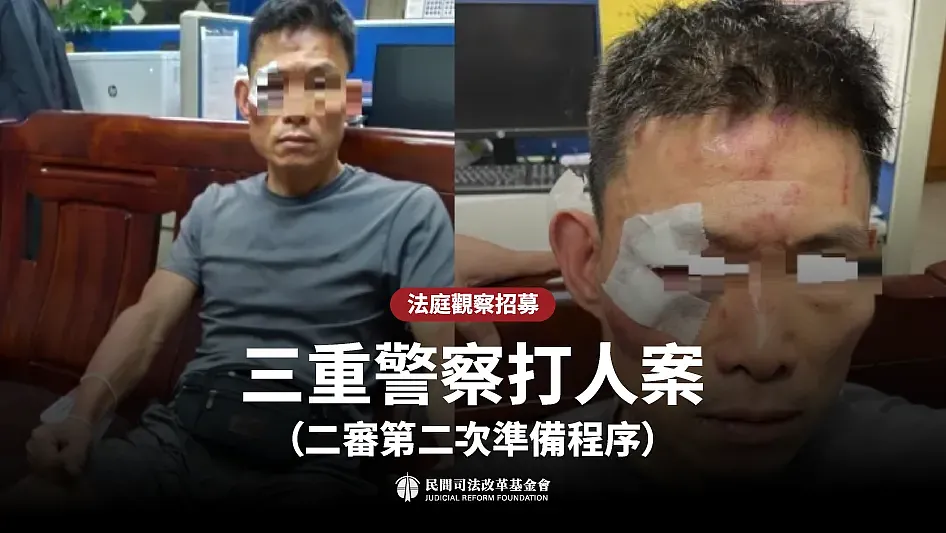
2025
Court Observation Recruitment | Sanchong Police Assault Case (Second Instance, Second Preparatory Proceedings)
The Judicial Reform Foundation continues to dispatch observers for court observation actions and invites the public who…
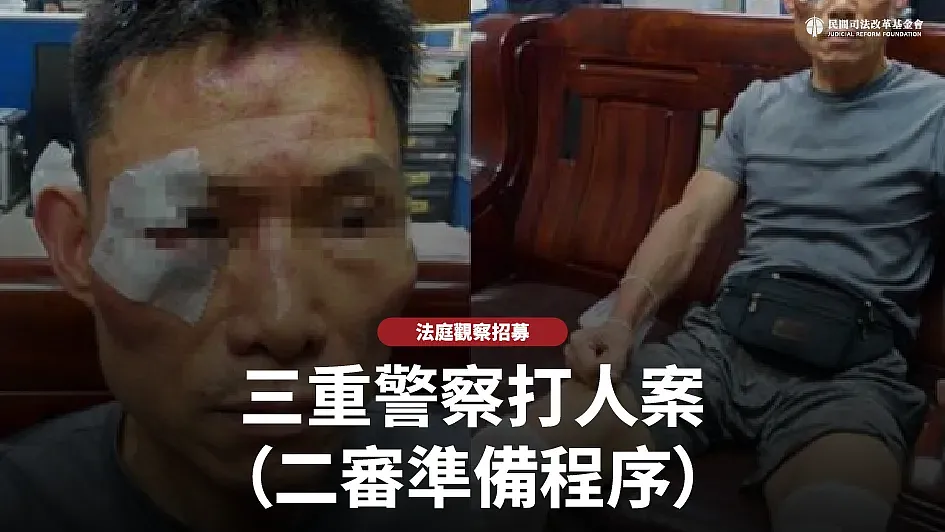
2025
Court Observation Recruitment | Sanchung Police Assault Case (Second Instance Preparatory Proceedings)
The Taiwan High Court will hold preparatory proceedings on January 8, 2025. In response, the Judicial Reform Foundation…

2021
Forum | Online Symposium Marking the Second Anniversary of the Amendment to the Regulations Governing Non-Disclosure of Investigations
June 15 of this year marked the second anniversary of the 2019 amendments to the Regulations Governing Non-Disclosure…
2019
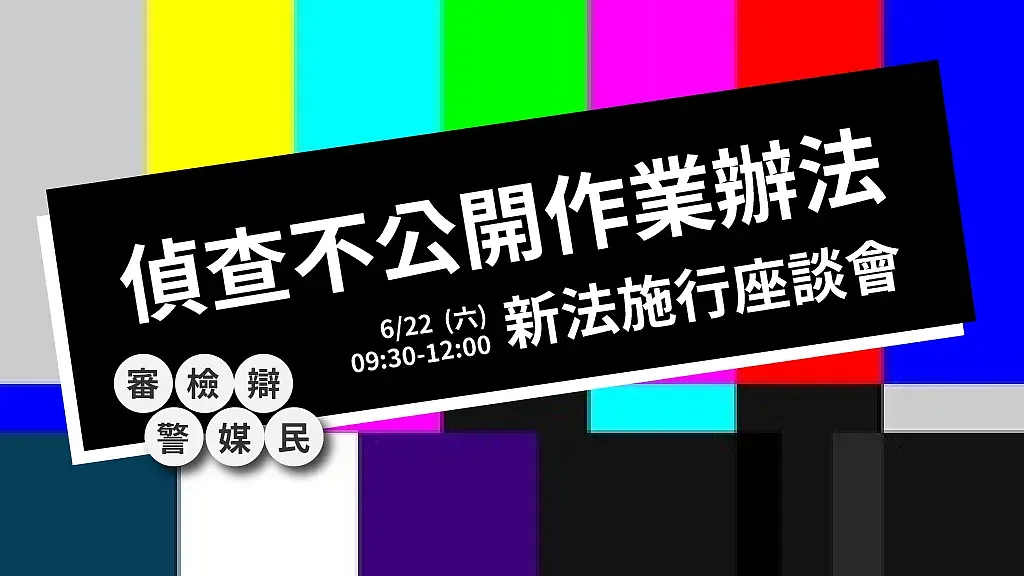
Forum | Operational Directions on Non-Disclosure of Investigation | Forum on the Implementation of the New Regulations
The newly amended Operational Directions on Non-Disclosure of Investigation officially takes effect on June 15 of this…

2018
Judicial Reform Charging Station: JUDICIAL PRO X Oh My God, I'm on TV
Frontline police officers are caught in a distorted performance-rating competition, repeatedly violating the principle…

2017
Judicial Reform @ Human Rights Wednesday: How to Obtain the "Directions for Not-Publicizing Criminal Investigations"?
In contemporary times, the media is frequently a convenient channel for transmitting information. While the pursuit of…