Lai Ting-fu Case
Social Dialogue on Wrongful Convictions | The Documentary "Letters Home from Chun-Pu"
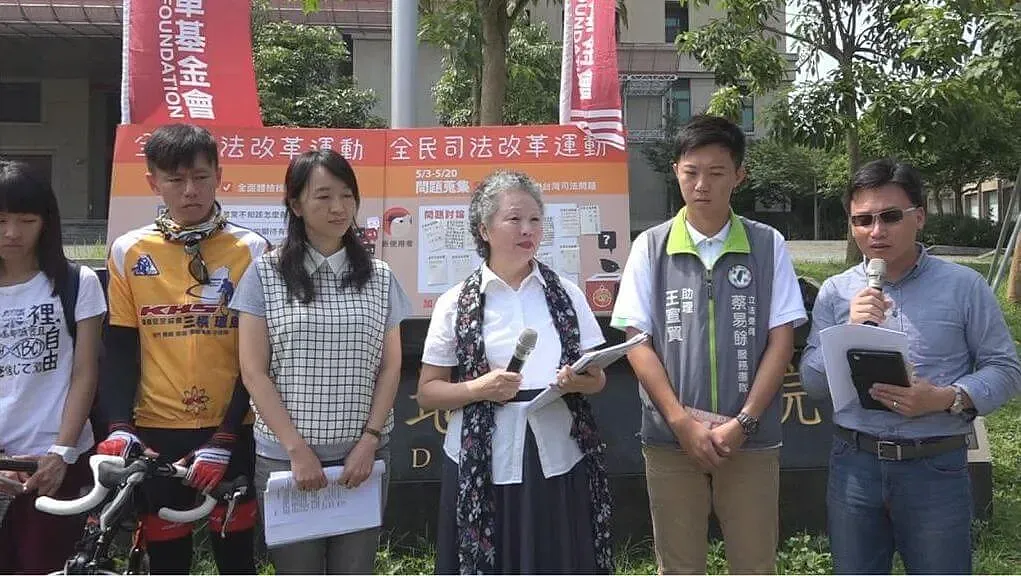
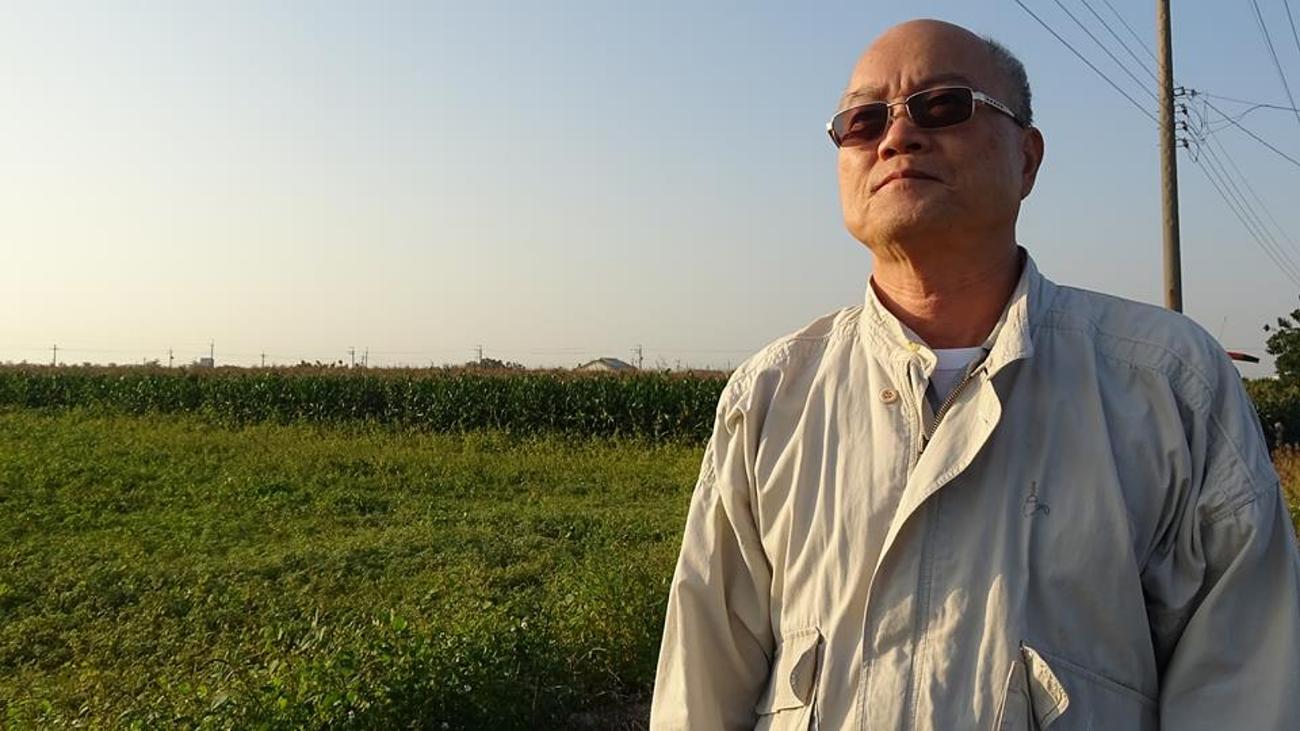
Former Director-General Lai Ting-fu of the Fifth River Basin Management Office, Water Resources Agency, Ministry of Economic Affairs, served in water conservancy agencies for 32 years, dedicating himself to the regulation of Taiwan's rivers, coasts, and waterways with outstanding achievements. Known for his incorruptibility, Director-General Lai was falsely accused of accepting a NT$100,000 bribe from a gravel contractor during his tenure as Director-General of the Eighth River Basin Management Office in Taitung—actions he took to establish a temporary river access road to prevent gravel trucks from passing through communities and endangering residents. In 2010, he was sentenced to 7 years in prison by the judiciary. The Control Yuan published an investigation report in 2011 vindicating Lai Ting-fu, and the Prosecutor-General filed extraordinary appeals on his behalf in 2012 and 2013, both of which were summarily dismissed by the Supreme Court. In response, JRF filed two individual judge evaluations against the Supreme Court, demanding the sanctioning of incompetent judges, and continued to assist in vindicating the wrongful conviction. Lai was paroled from prison in 2014. Owing to his exquisite water conservancy expertise and deeply trusted character, various levels of government agencies continued to invite him to serve as a water management consultant. Currently, Lai Ting-fu and his family are actively engaged in social dialogue, encouraging victims of judicial injustices to tell their stories in hopes of raising public awareness of judicial reform.
Investigation Report
The Control Yuan published Control Yuan Investigation Report 100-Ssu-Tiao-0045, conducting a comprehensive analysis and evaluation of the Lai Ting-fu case, covering the prosecution process, court trials, and a detailed review of relevant evidence. The investigation report pointed out that the Hualien District Court held 1 preparatory proceeding and 7 oral argument proceedings. In addition to questioning the defendant and relevant witnesses, the judge personally went to the scene to conduct a criminal site inspection on June 15, 2009. From accepting the case on March 19, 2007, to concluding it on August 28, 2009, the trial spanned 1 year and 5 months, resulting in a first-instance verdict of acquittal for Lai Ting-fu. However, the Hualien High Court "went through the motions" by holding only one preparatory proceeding and one oral argument proceeding. Under the exact same evidentiary pattern, the second instance promptly changed the verdict to convict the defendant. This undoubtedly shows that the original trial was based on a mindset of the "presumption of guilt," infringing upon the defendant's substantive and procedural interests, depriving the defendant of the ability to reasonably foresee the trial proceedings and stripping them of their right to defense, in violation of the principle of due process of law. The conclusions of the investigation report are as follows:
"This case arose because civil servants in the Eighth River Basin Management Office had no prior experience in handling dredging projects and earth-rock bidding operations, leading to ignorance and misunderstanding of relevant laws and regulations. Lai Ting-fu, in accordance with the law and administrative procedures, consented to Luyuan Gravel Yard's use of public river land and the construction of a temporary road. His administrative actions complied with the provisions of Item 1, Subparagraph (2), Paragraph 2 of the Guidelines for Reviewing Applications for the Establishment of Transportation Roads, Temporary Bridges, and Levee-Crossing Roads within River Areas, and based on the specific facts of this case, passing through public river land was indeed necessary. However, the original final judgment failed to examine this, mistaking the transport route questioned by the contractor during the bidding period—raised by the case handler Kuo O-fang—for the route stipulated in the contract, and further attributed the aforementioned dispute to Lai's direct supervision and instruction, concluding that Lai 'ignored the legislative intent of the regulations and the suggestions of Kuo O-fang and Kao O-jen.' Moreover, it relied solely on flawed accounting books devoid of evidentiary value, ignoring the lack of positive evidence regarding the defendant's receipt of bribes, and hastily rendered a conviction. All of these violated the rules of evidence, empirical rules, and logical rules, involving violations of Article 379, Subparagraphs 10 and 14 of the Code of Criminal Procedure regarding failure to investigate evidence that should have been investigated during the trial period and contradictions in the grounds for the judgment. Furthermore, at the time of the finalization of this case, Lai's employing agency was filled with indignation and sighs, counter-arguing 'where is his crime?' Because this dealt a heavy blow to the morale of the civil servants in the Water Resources Agency, many expressed unwillingness to serve as supervisors or chose to retire. Fearing the immense repercussions, the Director-General of the Agency also submitted a petition to Prosecutor-General Huang Shih-ming on November 8, 2010, and stated in the Ministry of Economic Affairs' 'Civil Servant Referral to the Control Yuan Review Document' dated April 13, 2011, that 'Former Director-General Lai Ting-fu worked conscientiously while in office, strongly asserting that he absolutely never accepted bribes, and has already applied for a retrial against the judgment results; it is requested that this be taken into consideration,' which sufficiently demonstrates Lai's ordinary work performance and his utter lack of motive to accept bribes, a point also highlighted herewith." (Investigation Report, pp. 90–91)
Rescue Actions
After discovering the wrongful conviction of Director-General Lai Ting-fu, the Control Yuan forwarded the investigation report to the Ministry of Justice for transmission to the Prosecutor-General. On April 18, 2012, the Prosecutor-General filed an extraordinary appeal to vindicate Director-General Lai Ting-fu, but it was dismissed by the Supreme Court via Supreme Court Judgment 101-Tai-Fei-165. On June 18, 2013, the Prosecutor-General filed a second extraordinary appeal, which was once again dismissed by the Supreme Court via Supreme Court Judgment 102-Tai-Fei-279. After carefully reviewing the two Supreme Court judgments, JRF discovered that while the Control Yuan and Prosecutor-General had conducted serious investigations and meticulous research in raising the grounds for extraordinary appeals, the Supreme Court had dismissed them casually and perfunctorily. Consequently, JRF filed two individual judge evaluation requests against the two judges in charge, namely 103-Ping-9 and 103-Ping-14. The gist of the evaluation requests is as follows:
"An extraordinary appeal is originally established to remedy judgments of the original court that violate laws and regulations. If third-instance judges in charge simply plagiarize the reasoning of previous Supreme Court judgments to gloss things over, and even mistakenly flip through case records yet still cite them as the basis for their judgment, the institutional design of extraordinary appeals will be hollowed out due to human factors. Furthermore, since the Prosecutor-General of the Supreme Prosecutors Office filed the extraordinary appeal, it implies that the case is worthy of careful deliberation and study (especially since the Prosecutor-General thoroughly reviewed and analyzed the Control Yuan's investigation report and affirmed that the second-instance judgment indeed violated laws and regulations) to ensure the defendant's right to legal remedies. Unexpectedly, the judge in charge in this case committed the absurd mistake of treating the 'contents of the 2002 classified ledger' as the 'contents of the 2004 classified ledger,' clearly failing to perform their duties with diligence and prudence. Even more egregiously, a considerable portion of this flawed judgment almost word-for-word plagiarized and cited the reasoning of a Supreme Court judgment rendered a year and a half prior, ignoring the numerous errors of contradictory judgments and insufficient reasoning listed in the extraordinary appeal. This further highlights the judge's casual, perfunctory, subjectively arbitrary, and shirked attitude toward adjudication. Such conduct not only exhibits obvious and gross errors in the judgment that severely infringed upon people's rights and disregarded the demands of the presumption of innocence, but also severely undermines public trust in Supreme Court judgments. The judge in charge cannot shirk responsibility; their actions impair the dignity of the office of Supreme Court judges and trust in their duties, violating the aforementioned Judges Act, Judicial Ethics Norms, Judges Code, Civil Servantswork Act, and other provisions, making evaluation and disciplinary action necessary to deter such widespread plagiarism and perfunctory dereliction of duty, elevate the quality of judicial adjudication, prevent people's rights from being innocently infringed upon, prevent the presumption of innocence from being slighted, and prevent the criminal law spirit of prudent adjudication from being hollowed out by human factors." (Request for Judge Evaluation 103-Ping-9, p. 12)
Regarding the two individual judge evaluation requests filed by JRF, the Judge Evaluation Committee (JEC) all issued resolutions of "request unfounded," leaving no room for further remedy. The two motions for retrial filed by Lai Ting-fu with the Hualien High Court were also ruled dismissed, failing to initiate retrial proceedings. (See Chronology) Currently, Lai Ting-fu has stated that he has "forgiven Taiwan's judiciary" and temporarily stopped expending his energy on vindicating his case. Instead, he intends to focus on accompanying his family, actively engaging in social dialogue, and encouraging judicial victims like himself to tell their stories to arouse public attention toward judicial reform.
Learn More
Chronology
| Date | Event |
|
2005/3/3 |
The Mayor of Luye Township, Taitung, led villagers to protest at the earth-rock extraction site, demanding that gravel trucks not pass through Luye Township streets and Heping Community. |
|
2005/3/9 |
Director-General Lai Ting-fu of the Eighth River Basin Management Office accepted public petitions and agreed to establish a temporary river access road, altering the gravel transport route to bypass street communities and protect residents' safety. |
|
2008/3/6 |
The Taitung District Prosecutors Office instituted a prosecution against Director-General Lai Ting-fu for allegedly accepting NT$100,000 in bribes from Luyuan Gravel Yard in exchange for agreeing to alter the gravel transport route, in violation of the Anti-Corruption Act. |
|
2009/8/28 |
The Taitung District Court sentenced Lai Ting-fu to acquittal. (Taiwan Taitung District Court 97-Su-75 Criminal Judgment, Defendant Shen O-O) |
|
2010/8/28 |
Taiwan High Court Hualien Branch Court sentenced Lai Ting-fu to 7 years in prison. (Taiwan High Court Hualien Branch Court 98-Shang-Su-281 Criminal Judgment, Defendant Hsin O-O) |
|
2010/10/21 |
The Supreme Court dismissed Lai Ting-fu's appeal, finalizing the judgment. (Supreme Court 99-Tai-Shang-6503 Criminal Judgment, Defendant Chi O-O) |
|
2010/11/23 |
The Judicial Reform Foundation accompanied Lai Ting-fu to the Control Yuan to petition and submitted a statement. |
|
2011/9/14 |
The Control Yuan issued an investigation report, specifically pointing out numerous errors in the judgments of the Hualien High Court and the Supreme Court. (100-Ssu-Tiao-0045) |
|
2011/12/30 |
The Hualien High Court dismissed Lai Ting-fu's first motion for retrial. (Taiwan High Court Hualien Branch Court 99-Sheng-Tsai-32 Criminal Ruling) |
|
2012/6/7 |
The Supreme Court dismissed the Prosecutor-General's first extraordinary appeal. (Supreme Court 101-Tai-Fei-165 Criminal Judgment) |
|
2013/7/31 |
The Supreme Court dismissed the Prosecutor-General's second extraordinary appeal. (Supreme Court 102-Tai-Fei-279 Criminal Judgment) |
|
2014/6/4 |
The Judicial Reform Foundation requested an evaluation of Supreme Court Judge Hui Kuang-hsia. (Judge Individual Evaluation Request 103-Ping-9) |
|
2014/12/11 |
The Judicial Reform Foundation requested an evaluation of Supreme Court Judge Lin Li-hua. (Judge Individual Evaluation Request 103-Ping-14) |
|
2014/12/25 |
The Judge Evaluation Committee resolved that the individual judge evaluation request against Judge Hui Kuang-hsia was unfounded. (Judge Evaluation Committee Resolution 103-Ping-9) |
|
2015/6/25 |
The Judge Evaluation Committee resolved that the individual judge evaluation request against Judge Lin Li-hua was unfounded. (Judge Evaluation Committee Resolution 103-Ping-9) |
|
2015/9/8 |
The Hualien High Court dismissed Lai Ting-fu's second motion for retrial. (Taiwan High Court Hualien Branch Court 103-Sheng-Tsai-8 Criminal Ruling) |