
Mock Trial
Last Modified: May 2, 2026
"Can evidence obtained unlawfully, yet capable of proving the truth, be admissible in court?"
"Between tolerating judicial error and letting the guilty go free, what is your choice?"
"Can we find the truth in the courtroom?"
About Campus Mock Trials
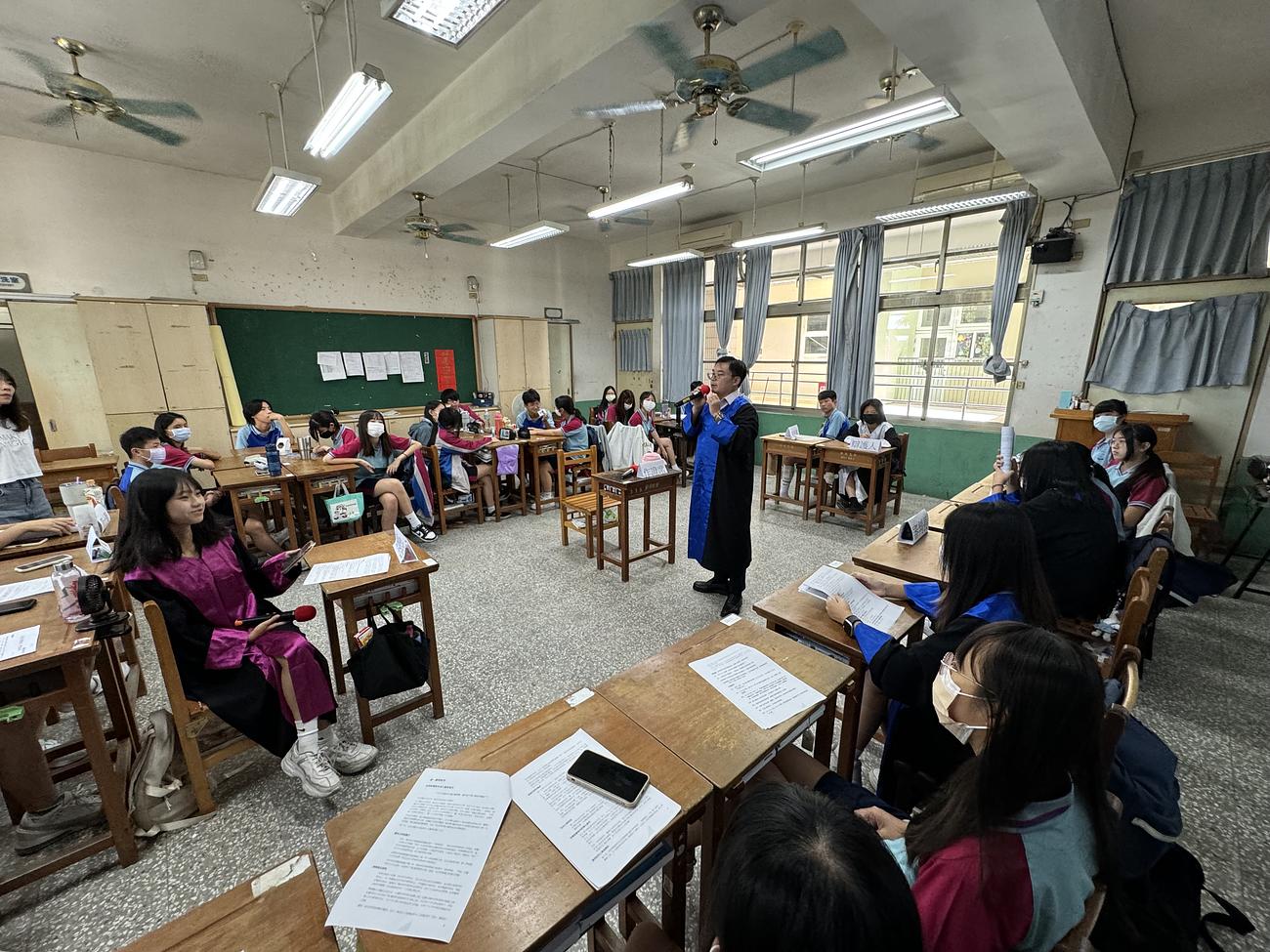
JRF's mock trials are scripted using common criminal offense cases. Through a simple courtroom setup where students play the roles of case characters, trials are conducted under two types of systems: (1) the jury system and (2) the citizen judge system.
During the trial proceedings, witnesses undergo cross-examination by prosecutors and defense attorneys in court, while judges direct the litigation. After the trial concludes, jurors or citizen judges deliberate. In the process of discussing and persuading one another, students not only challenge themselves to uphold the presumption of innocence, but also deeply experience how procedural fairness and neutrality are implemented through institutional design, while reflecting on the long-accustomed "Judge Pao" judicial imagery.
Introduction to the Two Modes
Jury System Mock Trial
- Conducted according to the script; teachers can operate independently without requiring JRF personnel to be present.
- Please submit your application 2 months prior to the scheduled event date to facilitate speaker scheduling.
- For teaching materials and resources, refer to the Campus Mock Jury Trial Website; teaching material packs can be downloaded directly for use.
- Suitable for classes with basic preparatory time who wish to fully experience the jury deliberation process.
Citizen Judge System Mock Trial
- The Citizen Judges Act has been officially implemented since 2023, and the curriculum includes more citizen judge questioning segments.
- Please submit your application 2 months prior to the scheduled event date to facilitate speaker scheduling.
- Requires advance preparation, or on-site assistance from lawyers and staff.
- To learn more, please refer to the Citizen Judge Issues Section.
Pre-Application Notice—Event Condition Assessment
Schedule Arrangement
At least 2 class periods (100 minutes) are required. The curriculum flow is as follows:
- System introduction and explanation (5 mins)
- Pre-trial briefing (5 mins)
- Trial proceedings (50 mins)
- Deliberation (10–15 mins)
- Pronouncement of judgment (10 mins)
- Supplementary explanation and experience sharing (10 mins)
Venue and Equipment
The venue must be arranged in advance, providing a space suitable for group discussion and deliberation. Additionally, due to the requirements of the courtroom play, please help prepare:
- Projection equipment (including a computer capable of playing PPTs)
- At least 4 microphones
- The teaching venue should minimize surrounding disturbances to achieve an immersive simulation experience
Role Assignment
Teachers should divide participants into groups in advance and select several students to act as cast members based on the chosen case script:
- Presiding Judge: Played by a student, 1 person
- Commissioned Judge, Associated Judge: Not required for jury trials; 1 person each for citizen judge trials
- Prosecutors: 1–3 people
- Defense Attorneys: 1–3 people
- Defendants, Witnesses: Several persons
All students other than the aforementioned cast members can serve as citizen judges (or jurors).
Student Proficiency
Students' prior learning experience with legal concepts may affect the teacher's selection of an appropriate case script. It is recommended to contact and discuss with JRF in advance.
Fee Description
If a lecturer visits the classroom, fees must be covered. Lecturer hourly rates should follow the Executive Yuan's Guidelines on Lecturer Hourly Rates for Lectures. Material printing and venue fees shall be borne by the applicant.
To ensure the independence of its judicial reform oversight, JRF does not accept government donations, and all required personnel and operational expenses rely on donations from all walks of life. Limited by our resources, the number of pro bono sessions we can accept is extremely restricted. Review criteria for pro bono campus cooperation sessions include (but are not limited to) remote schools recognized by the Ministry of Education. If you have any questions, please call or email us for inquiries, or refer to the Pro Bono Session Acceptance Criteria Explanation Page.
Application Contact Window
Frequently Asked Questions
Teachers should divide participants into groups in advance and select several students to act as cast members to perform the courtroom play based on the chosen case script. Roles include:
- Presiding Judge (played by a student): 1 person
- Commissioned Judge, Associated Judge (1 person each for citizen judge trials; not required for jury trials)
- Prosecutors: 1–3 people
- Defense Attorneys: 1–3 people
- Defendants, Witnesses: Several persons
All students other than the aforementioned cast members can serve as citizen judges (or jurors).
Currently, JRF's mock trials offer three modes to choose from: Seed Lawyer, Seed Teacher, and Pro Bono Sessions. For more detailed and complete content, please refer to: https://edu.jrf.org.tw.
If you choose the Seed Teacher Mode, you can directly download the publicly available teaching material pack and operate it independently as a teacher.
If you choose the Citizen Judge System, please fill out the application form, and our organization will review it and arrange to contact you regarding the session.
Evaluation can be made from the following three aspects:
- Time: At least 2 class periods (100 minutes) are required
- Venue and Equipment: The venue must be arranged in advance, providing a space suitable for group discussion and deliberation; projection equipment (including a computer) and 4 microphones are required; the teaching venue should minimize disturbances to achieve an immersive simulation experience
- Student Proficiency: Students' prior learning experience with legal concepts may affect the teacher's selection of case scripts
System introduction and explanation (5 mins) → Pre-trial briefing (5 mins) → Trial proceedings (50 mins) → Deliberation (10–15 mins) → Pronouncement of judgment (10 mins) → Supplementary explanation and experience sharing (10 mins)
If a lecturer visits the classroom, fees must be covered. Lecturer hourly rates should follow the Executive Yuan's Guidelines on Lecturer Hourly Rates for Lectures. Material printing and venue fees shall be borne by the applicant.
To ensure its independence, our organization does not accept government donations, and the number of pro bono sessions we can accept is extremely limited. Review criteria for pro bono campus cooperation sessions include (but are not limited to) remote schools recognized by the Ministry of Education. If you have any questions, you can check the Pro Bono Session Acceptance Criteria Explanation Page, or email and call us to inquire.
Apply for a Campus Mock Trial Now
Choose the mode that suits your class, fill out the online application form,
and JRF will contact you as soon as possible to arrange a session.

2018
Call for Submissions: Reflections on Practical Implementation of Rule of Law Education
We invite students who have participated in our events to submit reflections on their experience. Submissions must be…
2018
2018 Hands-On Rule of Law Education: Campus Mock Jury Trial Explanatory Meeting
This project adapts common criminal cases into short courtroom plays, having students divide into groups where one…

2017
JRF Newsletter: November 2017 | Field Implementation of Rule of Law Education - Online Simulated Jury Trial is in Session!
This newsletter uses one of the campus mock trial scripts, 'The Suspicion of Drug Trafficking at KTV,' to create a mock…
2015
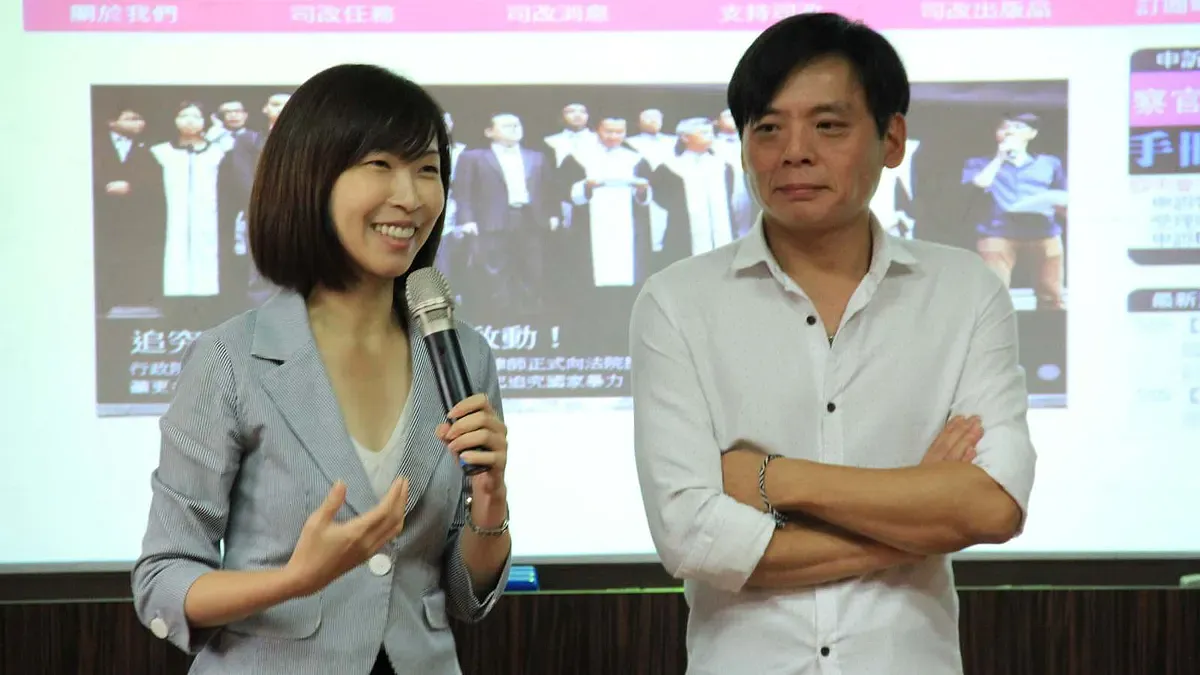
In 2015, We Brought the Courtroom into the Classroom!
In 2015, we launched our campus tour, visiting 9 counties and cities. Partnering with university departments, high…