
Legal Aid
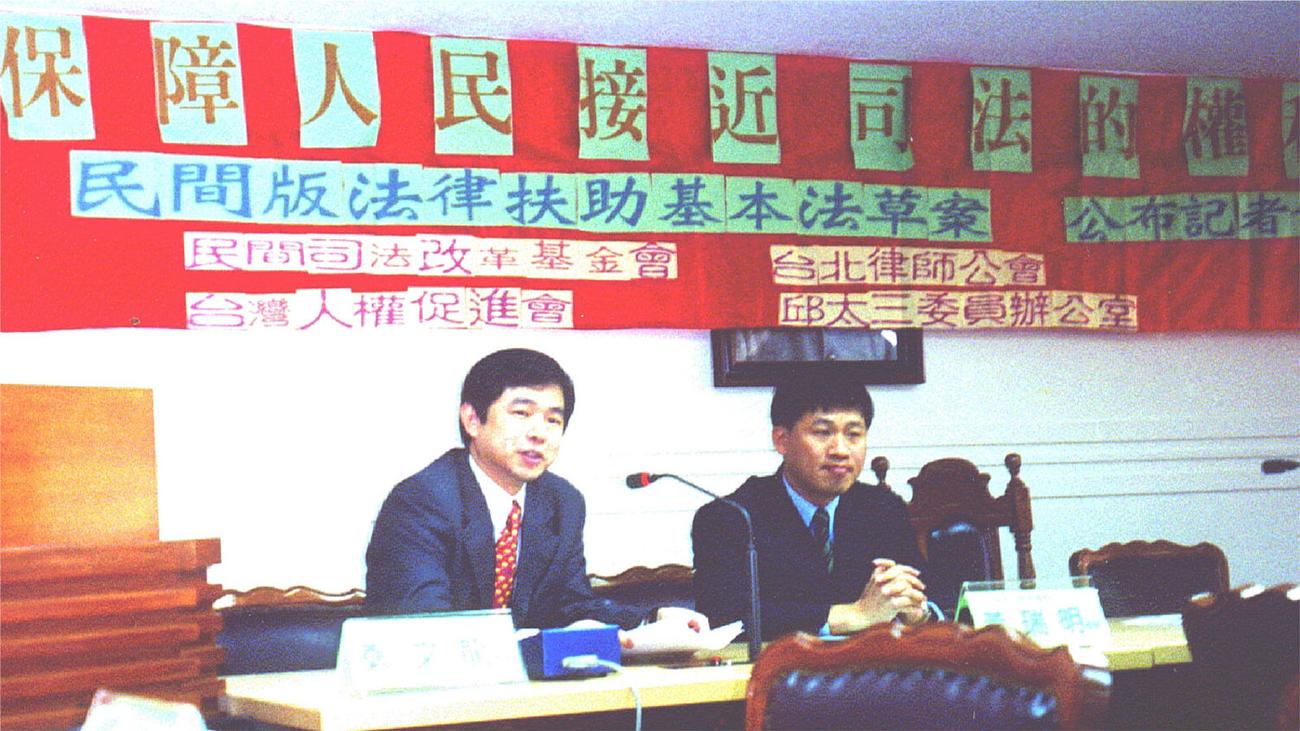
As early as 1998, three organizations—the Judicial Reform Foundation, the Taipei Bar Association, and the Taiwan Association for Human Rights—formed an alliance initiated by attorneys Lin Yung-sung (林永頌) and Huang Hsu-t'ien (黃旭田), establishing a promotion task force. Bringing together professionals including attorneys Chang Ping-huang (張炳煌), Cheng Wen-ling (鄭文玲), Ch'iu Huang-ch'üan (邱晃泉), Chu Jui-yang (朱瑞陽), Lin Chung-hung (林重宏), and Hsieh Cheng-ta (謝政達), scholar Professor Wu Chih-kuang (吳志光), National Policy Advisor Mr. Huang Wen-hsiung (黃文雄), and two successive JRF Executive Directors, Wang Shih-ssu (王時思) and Lin Ching-p'ing (林靜萍), the group held regular monthly meetings to study legal systems around the world.
The National Judicial Reform Conference held in July 1999 prior to this also included the enactment of the Legal Aid Act as a key agenda item. Although the JRF did not formally participate, it was even busier than the National Judicial Reform Conference itself!
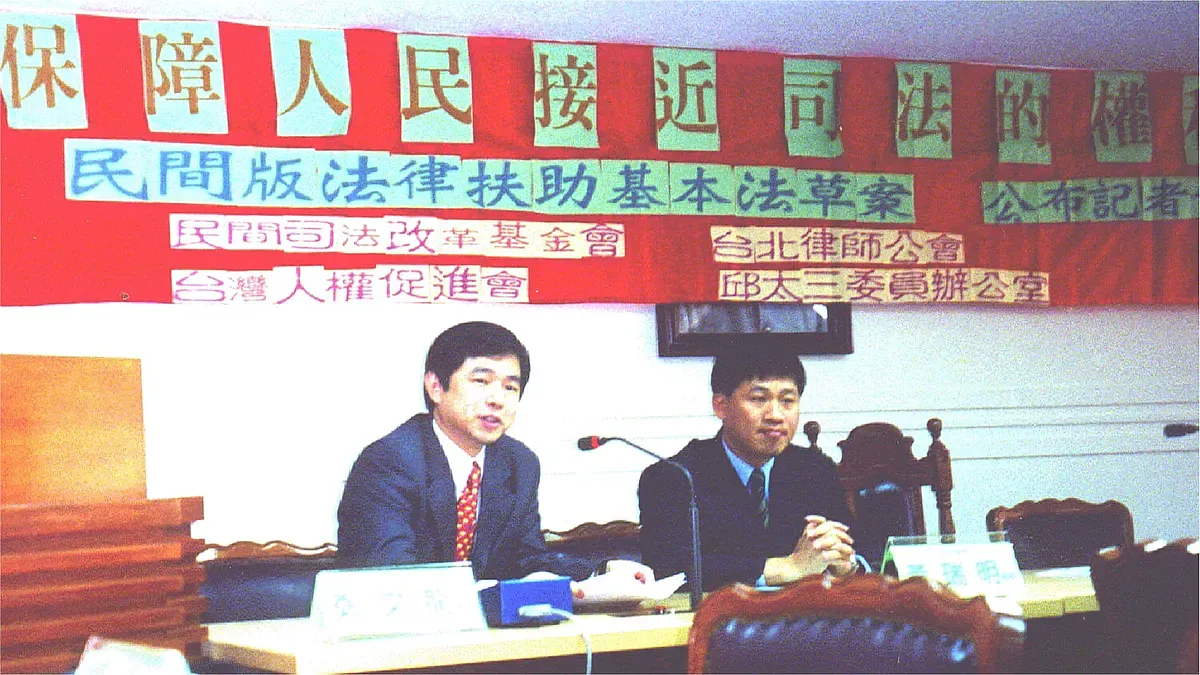
On March 22, 2000, the Judicial Reform Foundation, the Taipei Bar Association, and the Taiwan Association for Human Rights jointly proposed the "Draft Provisions of the Fundamental Act on Legal Aid (Non-Governmental Version)" and entrusted Legislator Ch'iu T'ai-san (邱太三) to submit the proposal in the Legislative Yuan. The Judicial Yuan also formed a study group on the draft Legal Aid Act on July 1, 2000, and submitted it to the legislature for review in October 2001.
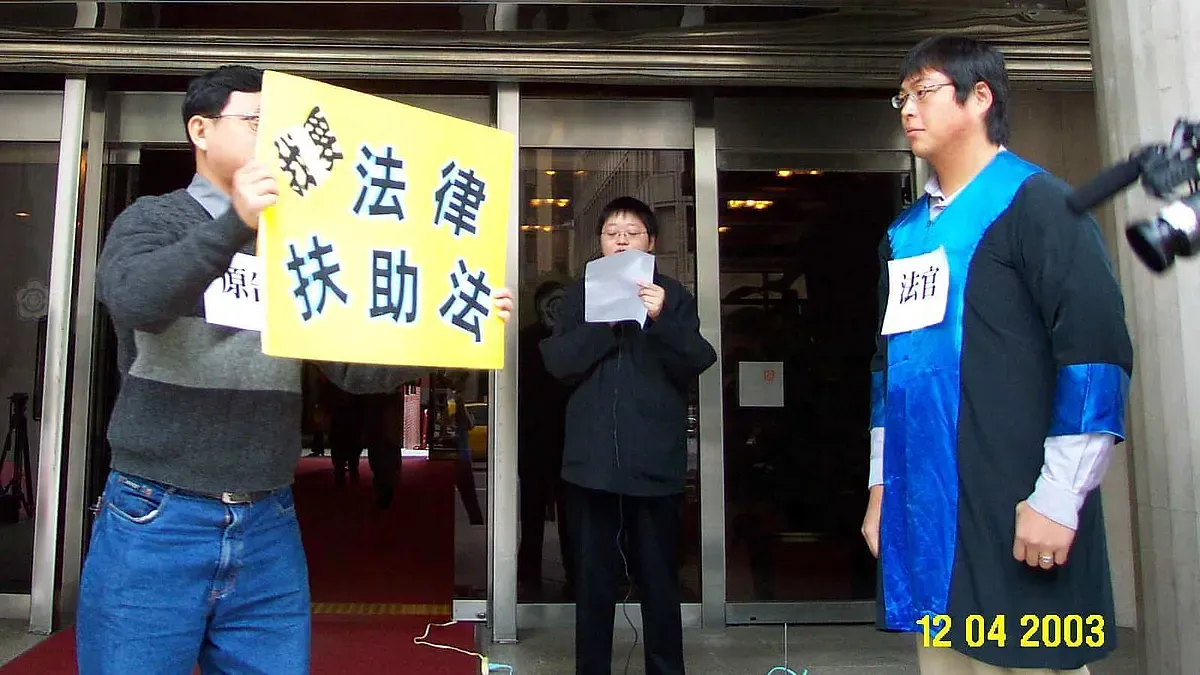
On December 23, 2003, the Legislative Yuan finally passed the "Legal Aid Act" in its third reading. This established the Legal Aid Foundation funded by the state to hire lawyers to assist those in need of aid with lawsuits, altering the unreasonable phenomenon where social inequality caused by class disparities led to inequality in litigation.
In 2010, the Judicial Yuan excessively interfered with the powers of the Board of Directors of the Legal Aid Foundation, restricted the development of the Legal Aid Foundation through budgeting, and intervened in the personnel appointments of the Board of Directors and the Secretary-General's Office of the Legal Aid Foundation. This threatened to cause the Legal Aid Foundation to lose its independence and fall into bureaucratization, posing a severe impact on civic associations and vulnerable groups. Consequently, over 20 civic groups formed the Alliance to Safeguard Legal Aid to continuously monitor the various operations of legal aid.
In 2015, the Alliance to Safeguard Legal Aid also assisted in promoting amendments to the Legal Aid Act and provided feedback on the draft amendments. In June of the same year, the Legislative Yuan passed the amendments to the Legal Aid Act in its third reading.

2013
Who Can the Legal Aid Foundation Help When It Can Hardly Help Itself?
According to reports, when the Judiciary and Organic Laws and Statutes Committee of the Legislative Yuan reviewed the…
2005
Prosecutors, Judges, and Attorneys Should Be Examined and Trained Together!
Regarding the appointment of judges, the bipartisan consensus is to encourage the transition of attorneys into judges.…
2004
The Legal Aid Foundation is Open for Business!
The Legal Aid Foundation, along with its five branch offices in Taipei, Taichung, Tainan, Kaohsiung, and Hualien,…
2003
A Christmas Gift for the Poor—The Legal Aid Act
The Legislative Yuan finally passed the third reading of the Legal Aid Act on the 23rd. This is fantastic news for…
2003
The Civil Society's Campaign for the Three Judicial Reform Acts—With a Critique of Legislative Yuan President Wang Chin-pyng's Response
Following the conclusion of the Citizens' Coalition for Monitoring Grand Justice Nominees, several legal and social…
2003
Justice and Its Cost
The new judicial system set to take effect on September 1st—adopting the adversarial system in criminal procedure—has…
2002
Court Services and the Legal Aid System
The Judicial Reform Foundation recently released a court observation report, noting that staff in several district…