
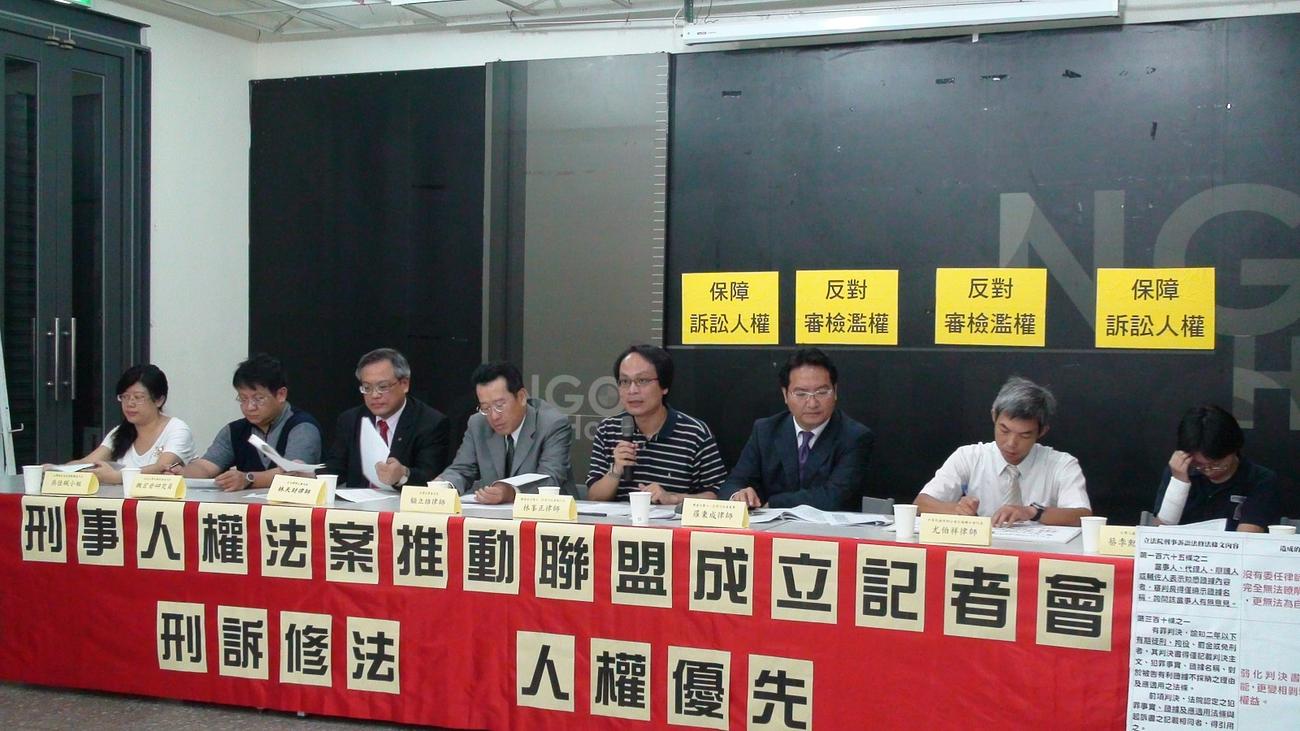
Criminal Procedure Reform
"The police took out a stun baton, swore at me, and said, 'We've prepared so many treats for you, and you still won't confess.' The baton was about a foot and a half long. When he pressed the button, the tip crackled with electricity, and he said, 'I'll ask you one more time: did you do it?' I said no... Then he swept the baton across both of my thighs. It hurt so much I kept screaming... One of the officers said, 'Shocking his thighs is no use; that won't make him confess. Shock his genitals...'"
At this point, Su Chien-ho finally broke down: "Your Honor, do you know? They... they shocked my genitals. My whole body... my whole body hurt from the shocks..." Besides Su Chien-ho, Liu Bin-lang and Chuang Lin-xun were also subjected to horrifying torture, including electric shocks, being made to sit on blocks of ice, having water forced down their throats, having their chins burned, and beatings.
The three men signed confessions that would nearly cost them their lives. They thought they could confess for now to escape further torture and then protest their innocence in court, where the judges would surely examine the evidence and uncover the truth. Reality turned out to be nothing like they imagined. Liu Bin-lang told the prosecutor that he had been tortured, but the prosecutor replied: "I know you were tortured, but that doesn't mean you didn't do it."
The Core Spirit of Criminal Procedure Reform
"Torture → confession → indictment → conviction" was once regarded as the standard procedure for delivering justice. This is the model of an inquisitorial system built on a presumption of guilt. For this model to pass as "justice," it had to assume that those working in the justice system were almost godlike: that they knew from the outset who was truly guilty and needed only to extract from the accused the truth they already knew.
Taiwan's modern criminal procedure reform began with confronting the suffering caused by wrongful convictions, and with challenging this model of an inquisitorial system built on a presumption of guilt.
In 1995, the death sentences of Su Chien-ho and his two co-defendants became final, and the Taiwan Association for Human Rights campaigned tirelessly to save them. In 1996, JRF invited scholars to evaluate the judgments in the case. Their evaluation found that the defendants' confessions had not been made voluntarily and contradicted the other objective evidence. The court had violated the presumption of innocence by examining only evidence unfavorable to the defendants. When the defendants claimed they had been tortured, the court required them to prove it rather than placing the burden on the prosecutor, and in investigating the torture claims it questioned only the police officers involved, without examining other evidence such as medical examination reports.
JRF's Basic Direction for Criminal Procedure Reform
In 1997, JRF proposed a civil society draft amendment to the Code of Criminal Procedure. Three of its key proposals were directly related to the Su Chien-ho case. The first concerned the role of confessions. At the time, solving cases depended mainly on obtaining confessions. JRF therefore proposed amending Article 156, Paragraph 1 of the Code of Criminal Procedure to read: "A conviction shall be based on necessary evidence other than the defendant's confession," making confessions merely corroborating evidence and pushing frontline police and investigators to adopt scientific investigative methods. Moreover, if a defendant claims that a confession was not made voluntarily—for example, that it was extracted through torture—the prosecutor should bear the burden of proving that it was voluntary.
The second was strengthening prosecutors' authority to direct the police. Out of concern that frontline police officers might gather evidence carelessly and refer cases hastily, the draft provided that judicial police officers must follow prosecutors' instructions, and that prosecutors could send a case back if they found the police investigation careless. If a judicial police officer refused to follow a prosecutor's instructions and the chief prosecutor found grounds for discipline, the chief prosecutor could refer the officer for disciplinary action.
The third was requiring prosecutors to appear in court and argue their cases. Although Taiwan's Code of Criminal Procedure already required prosecutors to appear in court, this was not observed in practice, so judges ended up acting as prosecutors while trying defendants—the hallmark of the traditional inquisitorial model built on a presumption of guilt. JRF maintained that judges should act as neutral adjudicators, while prosecutors must genuinely bear the burden of proving the defendant's guilt.
Another key proposal concerned pretrial detention. This was prompted mainly by J.Y. Interpretation No. 392, issued on December 22, 1995, which declared the detention provisions then in force unconstitutional. At the time, prosecutors could detain defendants whenever they considered it necessary, but the Grand Justices held that detention must be decided by a judge. Detention is a coercive measure that severely restricts human rights; in effect, it means locking up defendants before they have been convicted. The Grand Justices reasoned that prosecutors' role is to prosecute crimes using the power of the State, and those charged with prosecuting crimes should not hold such sweeping power over detention without review. The power to order detention must therefore be reserved to the courts: prosecutors may request detention, but the court, as an independent adjudicative body, must decide whether it is necessary. JRF further called for stricter and more careful limits on the grounds for detention.
JRF's 1997 proposals already contained the outline of its long-term agenda for criminal procedure reform. The first element concerns the rules of evidence. To prevent torture and the use of coerced confessions as evidence of guilt, JRF called for interrogations of defendants to be recorded in full on audio and video, and for prosecutors to prove that a confession was made of the defendant's own free will whenever the defendant claims improper interrogation. It also stressed that evidence used at trial to establish guilt must meet the requirements of "strict proof": evidence that is inadmissible, or that has not been examined in accordance with the law, may not serve as the basis for a judgment.
The second element concerns the roles of judges, prosecutors, and defense counsel. Prosecutors investigate crimes and, in court, act as the opposing party to the defendant, bearing the burden of proving guilt. Judges do not prosecute crimes; they act as neutral adjudicators and even as a check on prosecutorial power. To give defendants a real chance to defend themselves, they should have a lawyer whenever possible (through mandatory representation and legal aid), and the role of defense counsel should be strengthened. JRF's calls for prosecutors to actually appear in court and for criminal procedure to adopt an adversarial system, and its later advocacy of the "indictment-only" system, all aimed to strengthen the judge's role as a neutral adjudicator and prevent judges from prejudging defendants' guilt or slipping back into the role of prosecutor.
The third element concerns pretrial detention. Detention is a coercive measure that severely restricts human rights, in effect locking up defendants before they have been convicted, and it can even be abused as a way to "detain suspects to extract confessions." JRF therefore argued that the grounds for and length of detention should be strictly limited, and that defendants must have ample opportunity to defend themselves and the guarantee of legal counsel, to prevent excessive violations of human rights. See, for example, the proposals on detention in the civil society draft amendment to the Code of Criminal Procedure released in 2006 by the Criminal Procedure Amendment Working Group, jointly formed by JRF, the Criminal Law Research Center of the National Taiwan University College of Law, the Taiwan Bar Association, and the Taipei Bar Association.
Reform Developments after the 1999 National Conference on Judicial Reform
At the 1999 National Conference on Judicial Reform, JRF succeeded in placing a number of criminal procedure reforms on the official reform agenda, including examination and proof of the voluntariness of confessions, the rule of strict proof, prosecutors' attendance throughout trials, a stronger adversarial system, and stronger protection of defendants' rights to defend themselves and to counsel. Although many aspects of the resulting reform plans differed from JRF's civil society draft, they formed the basic framework for the 2003 transformation of criminal procedure from an "inquisitorial system" to a "modified adversarial system" (in which the parties take the lead in presenting evidence, and the court's own investigation plays a supplementary role).
After 2003, criminal procedure underwent no comparably sweeping changes, and JRF gradually shifted to a defensive posture. It worked hard to block draft amendments proposed by the Judicial Yuan that were presented as reforms of appellate review but were in fact driven by bureaucratic convenience or a desire to reduce workloads. Ever since the 1999 Conference set the goal of a pyramid-shaped court system, the Judicial Yuan has repeatedly sought to restrict appeals without putting in place the measures needed to build a robust first-instance trial. The danger is that the first-instance court fails to establish the facts properly, while appellate courts hastily dismiss people's appeals to reduce their caseloads. This concern is reflected in the founding statement of the Alliance against Depriving the People of the Right to Appeal, formed on December 27, 2005, by JRF together with dozens of groups including the Taipei Society, the Taiwan Association for Human Rights, and the Taiwan Peacetime Foundation; and in the criticism voiced in June 2008 by the Alliance for Criminal Justice Human Rights Legislation—formed by JRF, the Taiwan Alliance to Promote Constitutional Reform in the 21st Century, the Humanistic Education Foundation, and dozens of other groups—of proposals to simplify the presentation of evidence, simplify written convictions, and narrow the scope of appellate review.
In 2009, JRF also criticized the Judicial Yuan's draft of what became the Criminal Speedy Trial Act, in order to prevent rushed proceedings from producing careless wrongful convictions. Citing the case of Hsu Tzu-chiang, JRF argued that the Act's restrictions on third-instance appeals could leave wrongful convictions unappealable at a time when the quality of trials had not improved and courts still habitually presumed guilt. It also warned that courts might even rush to convict defendants to avoid exceeding the time limits on trials. In the well-known wrongful death sentence case of Chiou Ho-shun, he was convicted again after the case had been remanded for the eleventh time, and the Supreme Court dismissed his appeal in less than two months, making his death sentence final. JRF strongly questioned whether the appeal had been dismissed so quickly because the Act's limits on the length of detention during trial were due to take effect in May 2012, and the court feared that if Chiou had not been convicted by then, he would have to be released.
A New Direction for Major Reform: From the Indictment-Only System to Citizen Participation in Trials
JRF moved from defense back to proposing broad criminal procedure reforms, first by advocating the indictment-only system and then by calling for criminal trials to move toward citizen participation. In fact, JRF's Blueprint for Judicial Reform, published in 1999, had already advocated adopting the indictment-only system. But because Taiwan was not yet ready to embrace such a system all at once, JRF began by gradually pushing for the measures needed to support an adversarial system, which helped bring about the adoption of the "modified adversarial system" in 2003. Later, in response to the Judicial Yuan's aggressive push to reform appellate review without the necessary supporting measures, JRF began in 2010 to advocate the indictment-only system as a way to build a robust first-instance trial. Under the indictment-only system, the case file and evidence are not sent to the court along with the indictment, so judges have no access before trial to the evidence the prosecutor relies on to accuse the defendant, which prevents prejudgment. At trial, prosecutors must persuade the judge, acting as a neutral adjudicator, with evidence that meets the rule of strict proof. To persuade the judge, prosecutors must make every effort to prove their case, and they must gather evidence lawfully, or it cannot be presented in court.
While promoting the indictment-only system, JRF's longer-term goal was to introduce citizen participation in trials (initially called "lay participation"). This plan was shaped, on the one hand, by the international trend toward democratizing the judiciary—especially in Japan, which uses the indictment-only system and in 2009 introduced its saiban-in system, in which citizens and professional judges jointly try serious criminal cases, to strengthen public trust in and understanding of the judiciary. On the other hand, in 2010 Taiwan was rocked by a bribery scandal involving High Court judges Chen Jung-ho, Tsai Kuang-chih, and Li Chun-ti, as well as prosecutor Chiu Mao-jung, which severely damaged public trust in those working in the justice system. To win back that trust, Rai Hau-min, who became President of the Judicial Yuan in October 2010, proposed a system of citizen "observers," under which citizens would take part in first-instance trials and could give their opinions to judges but could not vote. In contrast to this half-hearted reform, which let citizens "watch" but not "judge," JRF maintained that citizen participation is meaningful only if citizens genuinely take part in reaching verdicts.
When JRF began planning its push for citizen participation in trials in 2010, it pursued two models in parallel: lay participation (in which citizens and professional judges decide cases together) and the jury system (in which a jury of citizens decides the facts and professional judges apply the law). Over time, however, JRF came to favor the jury system. This shift came about because JRF held a number of mock trials to simulate how a jury system might work in Taiwan, and found that, with the right institutional design, ordinary citizens are fully capable of reaching sound judgments. A jury system would also bring a wider range of perspectives into the courtroom through a more diverse bench and would require court proceedings to be conducted in ways ordinary people can understand.
Never Forget the Spirit of Criminal Procedure Reform
JRF's work on criminal procedure reform began by challenging the model of an inquisitorial system built on a presumption of guilt, and that spirit endures today. We reject the assumption that those who work in the justice system are almost godlike. Instead, we believe the criminal justice system must acknowledge human fallibility and guard carefully against it in order to protect human rights and prevent wrongful convictions. As Taiwan moves toward citizen participation in trials, this conviction remains unchanged. Citizens must not be treated as the new demigods either. We are all human, and the relevant institutions must therefore be carefully designed. However criminal procedure may change, this spirit of reform must never be forgotten.
2003
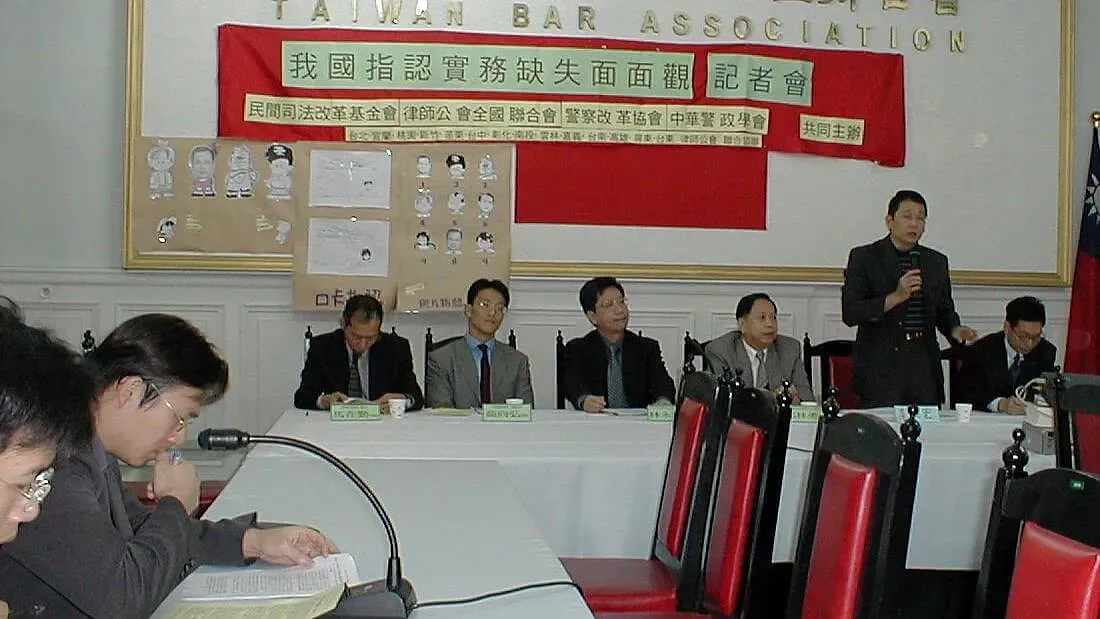
Press Conference on Flaws in Taiwan's Identification Practices
To thoroughly review the flaws in Taiwan's current identification practices and publicly call on prosecutors, police,…

2003
Do Foreign Female Sex Workers Have No Human Rights?
Recently, the Chungshan Precinct of the Taipei City Police Department cracked a prostitution ring that brought Russian…
2003
Press Conference on the JRF's Top 10 Judicial News Stories of 2002
As the bustling year of 2002 draws to a close, to reflect on the past year and look forward to the next, the Judicial…
2002
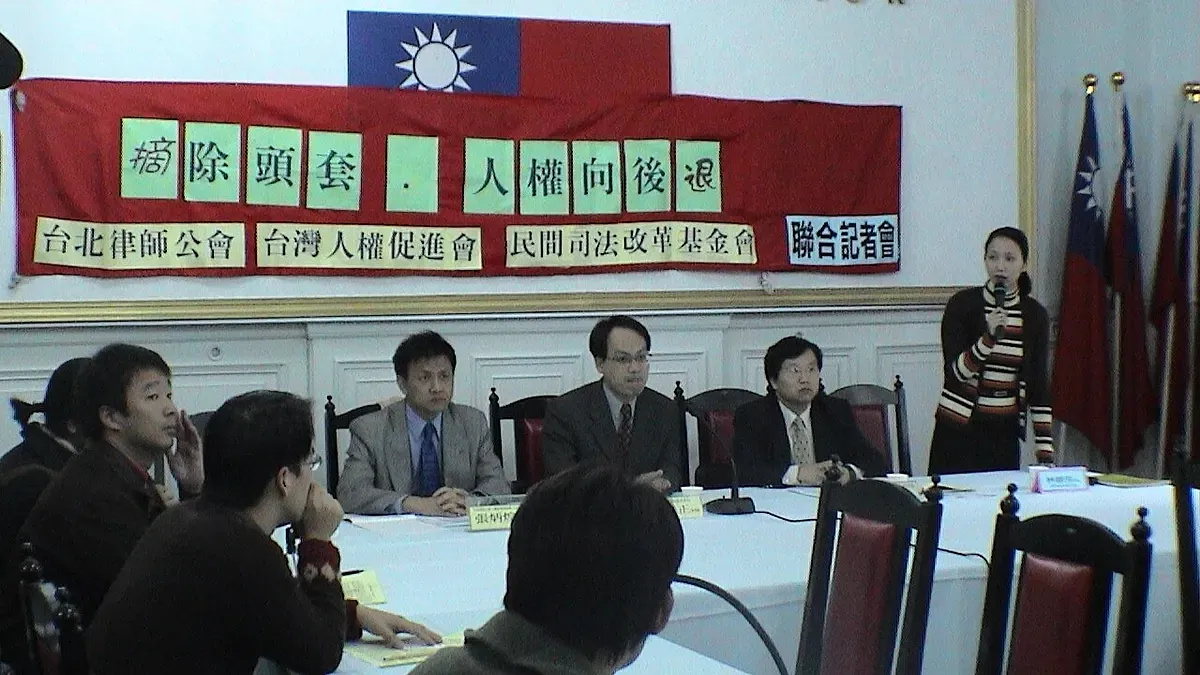
Public Safety Has Nothing to Do with Hoods Worn by Suspects
Recently, following a succession of major criminal cases involving the robbery, hostage-taking, and fatal shooting of…
2002
After 'Misidentification' and 'Admitting a Mistake'—On the Establishment and Implementation of the 'Identification System'
'Suggestion is closely linked to misidentification, because converting misleading things into false memories inevitably…
2002
Who Will Save the Police? Recognizing the Necessity and Urgency of Enacting the "Police Exercise of Powers Act"
Grand Justices' Interpretation No. 535 explicitly points out that the law "does not authorize police personnel to…
2001
Switching Tracks and Making Turns: Proceed with Caution
Although the Ministry of Justice expressed great dissatisfaction with the Judicial Yuan's legislative strategy of…
2001
Statement on the Draft Amendments to Articles 161 and 163 of the Code of Criminal Procedure
The presumption of innocence should not merely be an abstract concept in criminal procedure, but must be concretely…
2001
Make Judges Act Like Judges and Prosecutors Act Like Prosecutors! Statement on the Controversy Surrounding the Amendment to Articles 161 and 163 of the Code of Criminal Procedure
In recent days, the Judicial Yuan and the Ministry of Justice have been at odds over the draft amendments to Articles…
2001
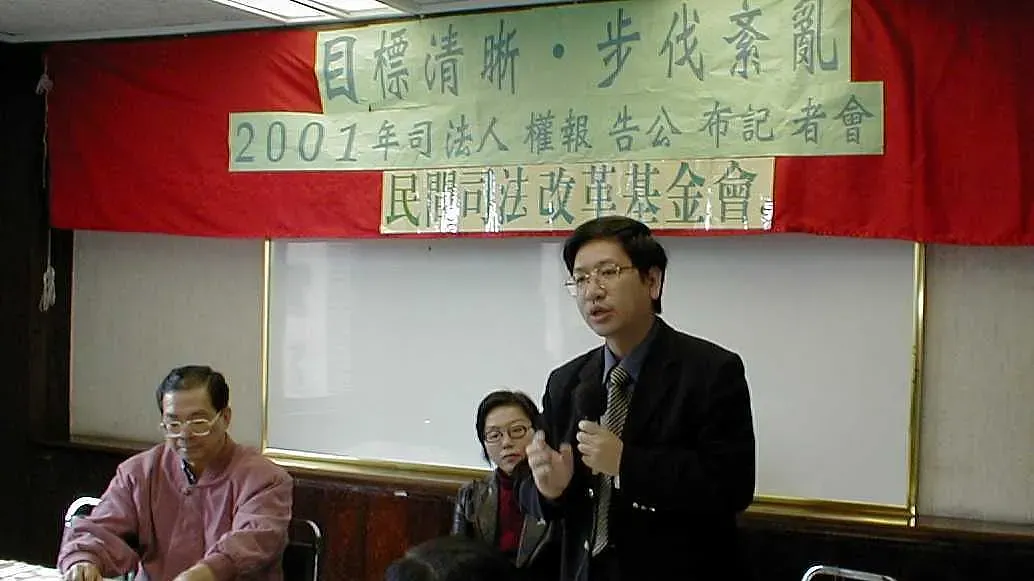
Clear Goal, Disordered Steps—Press Conference on the 2001 Judicial Human Rights Report
Since President Ch'en took office, human rights issues have finally been brought to the fore, marking a new milestone…

2001
Statement on the Search Incident at National Cheng Kung University
The recent incident where prosecutors and police entered the dormitories of National Cheng Kung University to conduct a…
2001
The Judicial Reform Foundation Visits Minister of Justice Ch'en Ting-nan
The Judicial Reform Foundation is scheduled to visit Minister of Justice Ch'en Ting-nan on Wednesday, February 21, from…