

JRF Newsletter
August E-Newsletter | What Does JRF Do Besides Rescue Wrongful Convictions?—Unboxing Our Legislative Advocacy Work
Last edited: 2026-11-03
Does JRF really find that many wrongful convictions? What do they do when they aren't rescuing wrongful convictions?
This issue of the JRF E-Newsletter unboxes our quiet yet dedicated legislative advocacy work!
The Beginning of a Legislative Workday
Upon arriving at the office, colleagues handling legislative advocacy begin by browsing today's judiciary-related news to check for major stories that require a response. However, because there are piles of literature to read and legal provisions to draft, they use pre-set search queries to filter information rapidly! First, they check print news, then television news, and finally check whether JRF has been flamed online.
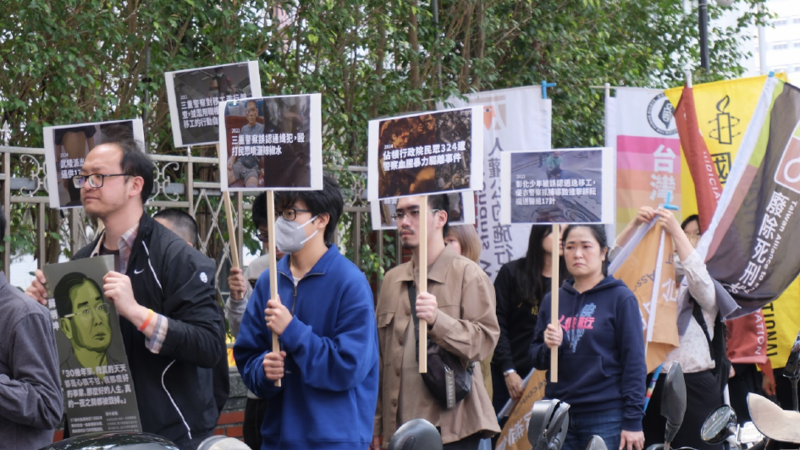
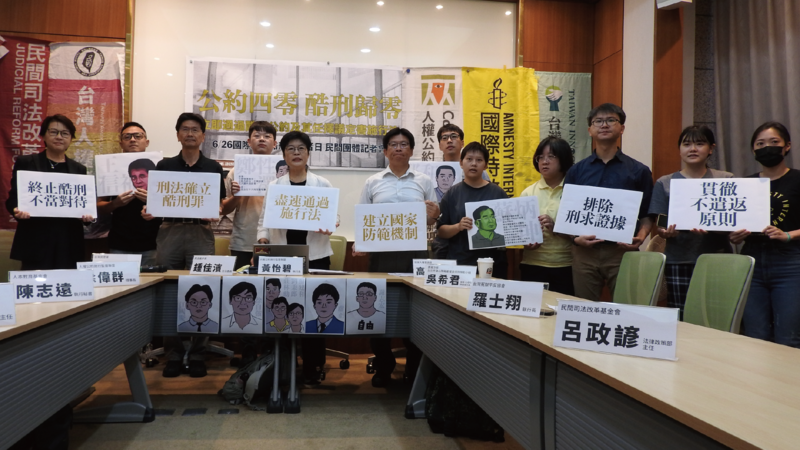
Since everyone is quite used to JRF getting flamed, the focus of our news response is to flame others instead. Issues such as draft amendments with unconstitutional concerns, chaos in the Legislative Yuan, international conventions still not ratified, police brutality, and prisoner abuse and torture all fall within our defensive and offensive scope!
 |
 |
 |
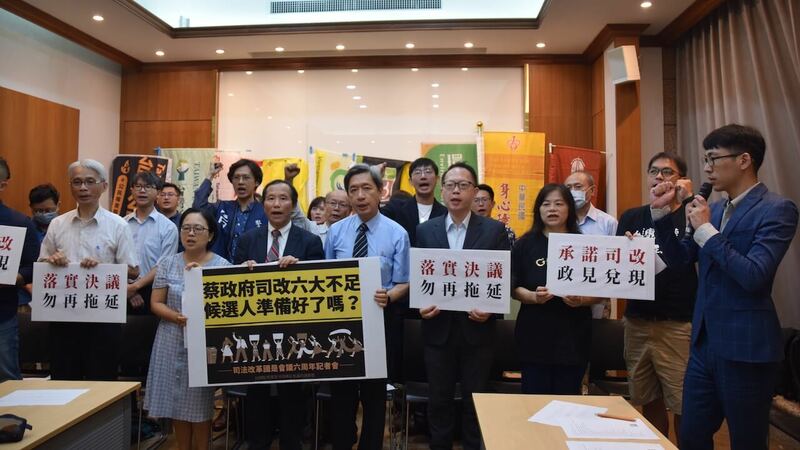 |
In addition to press conferences and statements, the Policy Department also expresses its views through op-eds and interviews. However, because JRF does not comment on ongoing individual cases, we must decline many interview requests from reporters (such as the Cheng Wen-tsan case). But if the case highlights a systemic issue, we can share JRF's perspective. For instance, regarding the social worker handcuffing case, we did not speculate or comment on the case's developments, guilt, or innocence, but we condemned the police for violating the principle of "non-publicity of investigation."
The examples above are relatively "down-to-earth" topics. Aside from reading the news daily, the websites of the Judicial Yuan and the Ministry of Justice are frequently updated with important information such as draft amendments, policies, and resolutions. During sessions of the Legislative Yuan, we also monitor the activities of the Judiciary and Organic Laws and Statutes Committee.
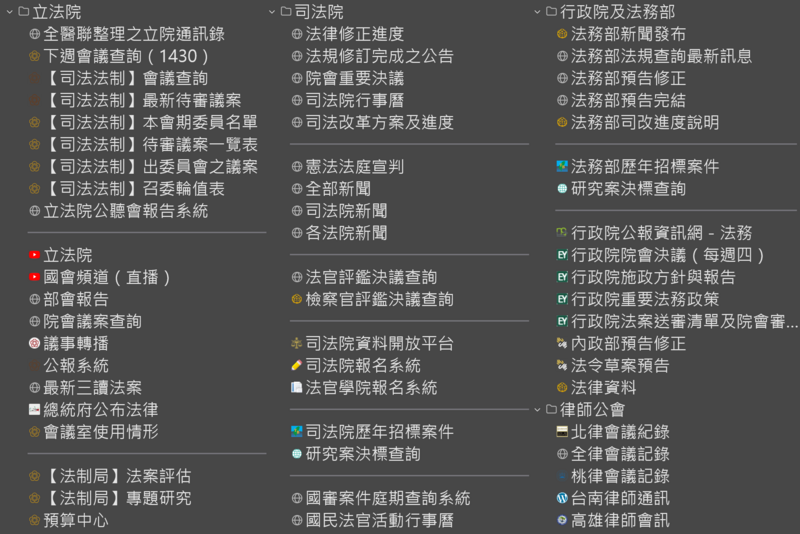
"Sites like the 'Judicial Yuan Calendar' are actually great; you can see what the Judicial Yuan has been up to recently and whether the Grand Justices are diligently deliberating. Then, by checking government tender and award information, you can find out what commissioned research projects have recently been awarded. Aside from serving as research references, this information can also be used to evaluate future policy directions," a colleague shared with delight regarding some useful (?) yet boring information.
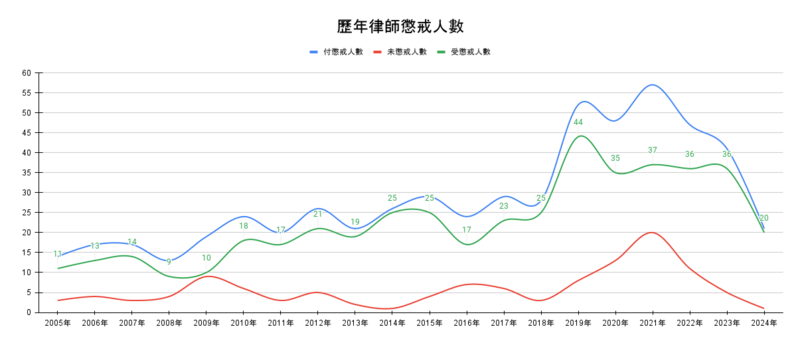
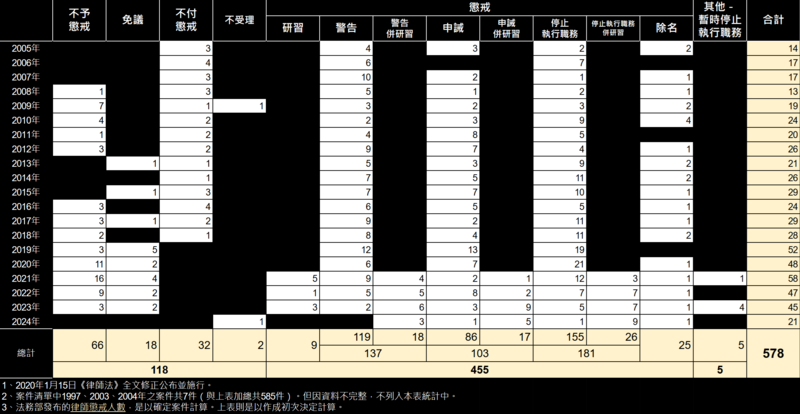
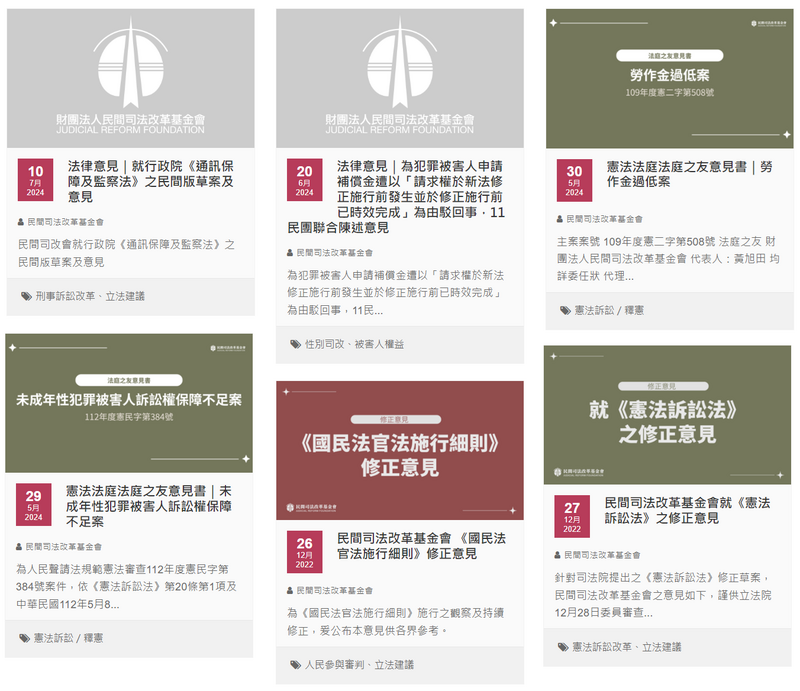
Beyond the news reported by the media, the Policy Department also writes long-form legal opinions on heavier topics, such as speaking up for underage victims of sexual offenses, how to best amend laws regarding defense attorneys' right to take notes, how to amend laws to alleviate judges being overworked to the point of illness, and demanding the ruling party give an account of its judicial reform policies. Furthermore, because official data is often insufficient, building various databases is considered standard procedure.
 |
 |
Meetings, Reading, Meetings!
To accumulate "ammunition for debate" (= supervisory discourse and policy propositions), outside of handling the news, the Policy Department spends almost all its time conducting legislative research, preparing agendas, and attending meetings. The topics are... numerous! The overall impression after listening is a continuous, information-overloaded, constructive series of complaints about government governance. It feels very much like radical (colleague: grassroots radical) social activism.
Recently, colleagues have been frustrated by the fact that the statute of limitations for criminal prosecution can be as long as 20 or 30 years, whereas the statute of limitations for crime victims' compensation is a mere 5 years. The reality is that a sexual assault victim may take a long time to finally gather the courage to report the perpetrator, and after investigation, the prosecutor confirms the criminal facts and files an indictment. Yet, the victim might be barred from receiving compensation simply because the 5-year statute of limitations has expired. Moreover, even if the victim applies early, compensation cannot actually be disbursed until the prosecutor files an indictment (confirming the victimization actually occurred). Therefore, the key to issuing compensation rests on whether the perpetrator is eventually indicted.
"Crime victims' compensation is currently disbursed by the prosecutors offices, and cases are investigated by prosecutors offices as well. On one hand, they indict the perpetrator; on the other hand, they tell the victim it is already too late to claim compensation. Why do this? Is this how the state protects victims? Does the Ministry of Justice really not see any problem here?"

Aside from independent research, the Policy Department frequently holds meetings with pro bono lawyers to shape JRF's overarching positions. Then we attend external meetings to present or publish our conclusions and research findings. JRF's stances on issues and policies are not confidential; essentially, whether through courtesy visits, official documents, or meetings, they can all be found on our official website. Because there is so much of everything..., many things are simply not posted specifically on Facebook or Instagram.
"However, much of what we talk about is not readily accepted by the authorities. But if you keep talking about it for long enough, change becomes possible. Although we just criticized the statute of limitations for crime victims' compensation, last year's amendments to the Crime Victim Protection Act did incorporate many suggestions from the grassroots version."
Legislative Promotion
Beyond the topics mentioned earlier, the Policy Department sometimes helps other civil society groups draft bills and opinions, or shares experiences in promoting legislation.
"When petitioning legislators, if your arguments make sense, the lawmaker might ask their legislative aides to research how to solve the issue. But most of the time, legislators and aides are very busy; they may not have time to research, or the matter might sit for so long that it fizzles out. In our experience, writing out the provisions or solutions directly is much more useful. Some topics aren't complicated to draft as legal provisions, though there are many details to watch out for. If we've had similar proposals or data in the past, we'll step in to help provide input."
In fact, looking at the legislation pushed by JRF, failures outnumber successes. However, when we propose amendments because official drafts are flawed, our success rate is relatively higher. For instance, past laws such as the Science and Technology Investigative Methods Act, the Act for Prevention and Control of Sexual Image Extortion, the Stalking and Harassment Prevention Act, the Administrative Litigation Act, and the Money Laundering Control Act have all partially adopted our recommendations.
Policy Department colleagues sometimes skip lunch, or eat lunch while watching broadcasts of legislative proceedings. Because a major axis of our work involves legislative promotion, institutional reform, and judicial oversight, we have maintained ongoing cooperation with legislative offices. In past sessions of the Legislative Yuan, we communicated our reform ideals and the judicial problems we observed to lawmakers across party lines.
I Know You Have Some Questions...
The Legislative and Policy Department actually has only 1 full-time attorney, 1 legal affairs specialist, and 2 part-time researchers!!
No, in fact, just paying the salaries of 1 full-time attorney, 1 legal affairs specialist, and 2 part-time researchers is already the absolute limit of what JRF can currently afford, representing one of the best-staffed workforces in our history.
In the past, before hiring full-time attorneys, JRF had built a long-standing culture where volunteer lawyers would meet in groups after work to discuss and formulate JRF's external positions, which were then advocated through visits to lawmakers and administrative agencies or by holding press conferences. Today, however, as government bills take shape, there are many more touchpoints involving internal communication with legislative aides, administrative staff, and seconded officials, as well as searching for compromises or workable solutions. JRF's staff unit has thus been "forced" to continuously evolve—providing more meticulous support to volunteer legislative groups and more systematically tracking legislative developments.

This article is an AI-generated translation of the original Chinese text. In the event of any discrepancy, the Chinese version shall prevail.