
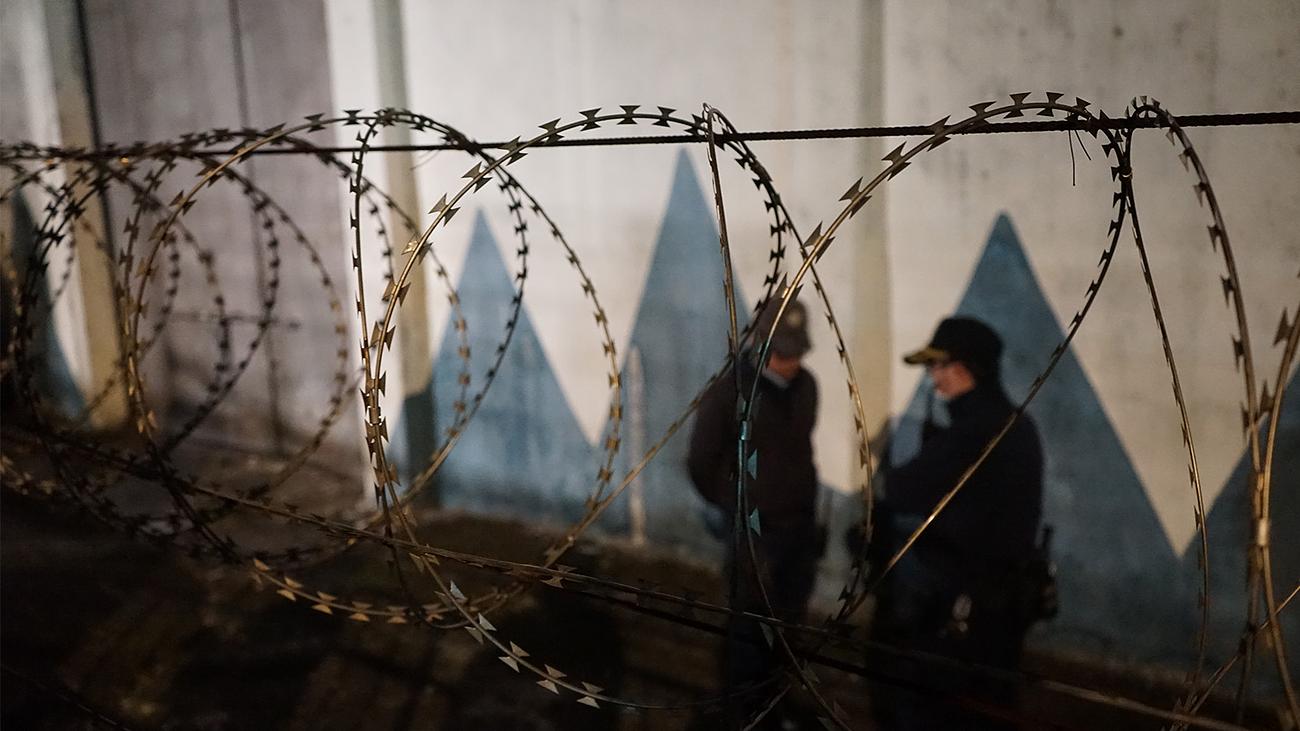
Prison Policy
"Now, with cumulative sentencing for each individual offense, some people have sentences of over 40 or 50 years... The three-strikes rule makes it impossible to even apply for parole..."
"Ch'en Shui-bian can get medical parole for a fake illness, yet inmates in worse conditions than him cannot get medical parole? Why? Because we are criminals who deserve to be locked up until we die."
"Since you are going to lock us up until we die, shouldn't you at least allow us the ability to be independent and self-sufficient? A month of work only yields two hundred NT dollars, which isn't even enough to buy a set of underwear, and we still have to rely on financial support from our families. We have lost all human dignity, and on top of that, we are dragging our families down. The only paths left to us are suicide or fighting to the bitter end."
On February 12, 2015, six inmates who seized the warden and the head of security of the Kaohsiung Prison left behind these demands before taking their own lives with firearms.
What happens behind the high walls of a prison is not disconnected fromliberty in the free society. In fact, prison human rights conditions are a crucial indicator for examining a country's fundamental human rights situation. This is because coexistence with the "Other" has become an unavoidable issue in contemporary pluralistic society, and the use and operation of prisons most conspicuously demonstrate how holders of mainstream power view and treat the Other. If today we feel that inmates can be dealt with through long-term isolation and out-of-sight, out-of-mind methods, will we not also feel that similar methods can be used to deal with psychiatric patients, HIV carriers, the homeless, or vagrants?
The "Blueprint for Judicial Reform" proposed by the JRF in 1999 did not address prison-related institutional reforms, and among the JRF's numerous issues, there is still much room for effort regarding prison issues. The JRF began more explicitly addressing prison human rights issues in 2011 when it proposed a draft amendment to partial provisions of the Detention Act. In 2008, Judicial Yuan Interpretation No. 653 was issued, in which the Grand Justices declared certain provisions of the Detention Act unconstitutional and required that, within two years from the date of the interpretation's announcement, the Detention Act and related regulations be reviewed and amended to establish appropriate norms for a judicial system providing timely and effective remedies for detained defendants. Furthermore, in 2009, Taiwan officially domesticated the two major covenants—namely, the International Covenant on Civil and Political Rights and the International Covenant on Economic, Social and Cultural Rights. Consequently, the government was obligated to re-examine existing legal regulations to ensure compliance with the norms of the two covenants. Under these circumstances, the Executive Yuan proposed a draft amendment to the Detention Act in 2010. To respond to this draft amendment, the JRF held discussions in 2011 and proposed 12 articles for a civil version based on the Executive Yuan's version.
In addition to proposing legislative amendments, the JRF also initiated its first litigation case concerning prison human rights in 2012, namely Chiou Ho-shun's right-to-correspondence case. Chiou Ho-shun, who was wrongfully convicted of murder and sentenced to death, wrote his memoirs in prison. However, because his letters mentioned that management personnel at the Taipei Detention Center were selling drugs inside the facility, his correspondence was prohibited from being mailed out. The JRF assisted with the administrative litigation and the petition for constitutional interpretation for this case, arguing that the current prison regulations concerning the right to correspondence violate privacy, the freedom of secret communication, and freedom of speech protected by the two covenants and the Constitution.
In 2014, the JRF also began participating in the co-organization of prison visit programs and essay solicitation activities for prison columns. Both of these actions were aimed at strengthening the connection between prisons and society. The prison visit program was originally an annual event promoted by the Taiwan Prison Reform Alliance (which was organized by the "Prison Watch" starting in 2015). Its purpose was to let prisons know through annual visits that their internal problems are receiving external attention and emphasis, while also using this activity to foster self-empowerment among participating members (including various practitioners and inmates' families concerned with prison issues). After the visits concluded, the co-organizing groups would hold prison forums to provide policy recommendations to the Agency of Corrections. The essay solicitation activity for the prison column was co-organized with Prison Watch, with the goal of giving incarcerated individuals the opportunity to reorganize themselves through the publication of their creative works, thereby creating an opportunity to reconnect with the outside world.
Looking back at the demands made by the six inmates in the Kaohsiung hostage-taking incident on February 12, 2015, we can see that what the JRF has done so far is still insufficient to respond to those cries of grief. Actively promoting relevant legislative amendments, exercising supervision through assisting individual cases, and facilitating the reconnection of prisons with society are things the JRF ought to do, and we invite more people to continue paying attention to and participating in this issue.
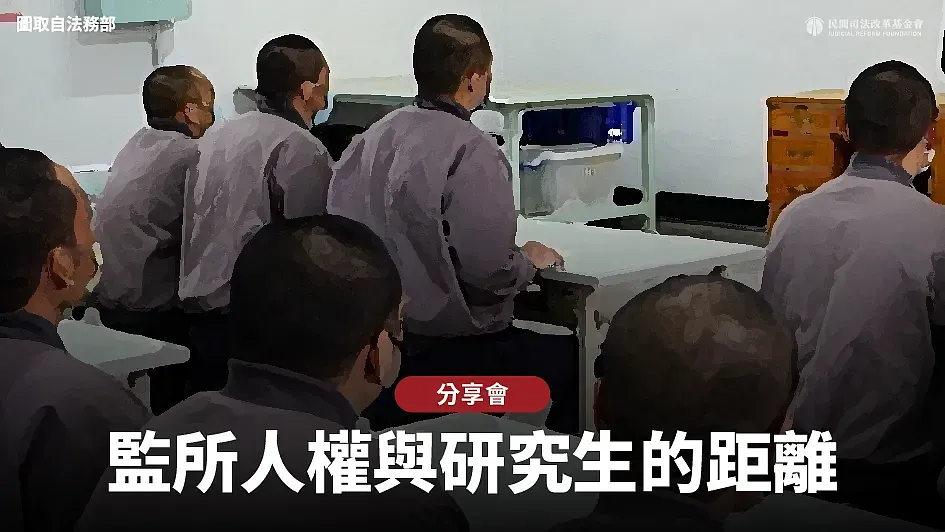
2024
Sharing Session | The Distance Between Prison Human Rights and Graduate Students
The Judicial Reform Foundation (hereinafter JRF) was established in 1995, and subsequently formed its Prison Committee…
2024
Lecture | What Makes Rebuilding Life After Release So Difficult? A Preliminary Examination of Taiwan's Aftercare Protection Mechanism
Taiwan enacted the Aftercare Act in 2010, the purpose of which, as stated in Article 1, is "to protect released…
2024
Forum | Human Dignity and Social Reintegration: Symposium on Prison Labor Remuneration
This year, the Constitutional Court will hold oral arguments on the prison labor remuneration case. At this critical…
2021
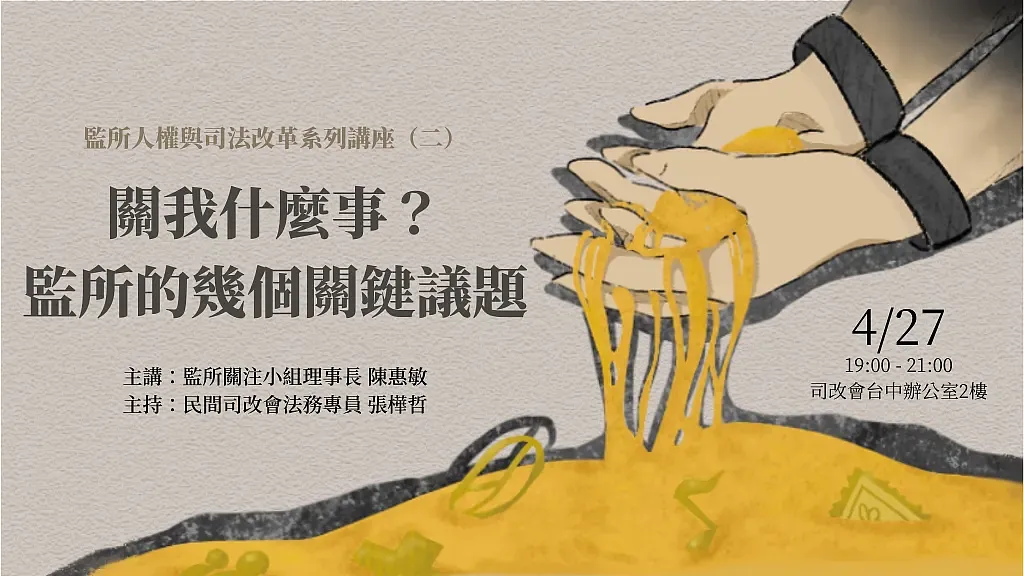
Correctional Human Rights Lecture | What Does It Have to Do with Me? Key Issues in Correctional Institutions
Taiwan Association for Prisoners' Rights Chairperson Chen Hui-Min discusses restrictions affecting inmates and their…
2021
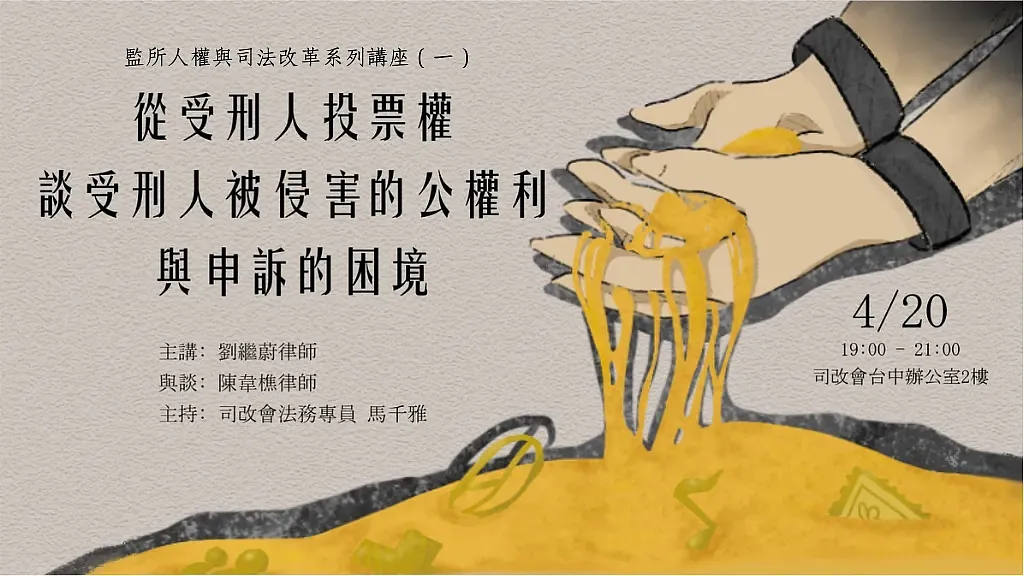
Correctional Human Rights Lecture | From Inmates' Voting Rights to Other Political Rights and the Difficulties of Filing Complaints
Although Taiwan removed a Criminal Code provision formally depriving inmates of voting and other political rights in…
2019
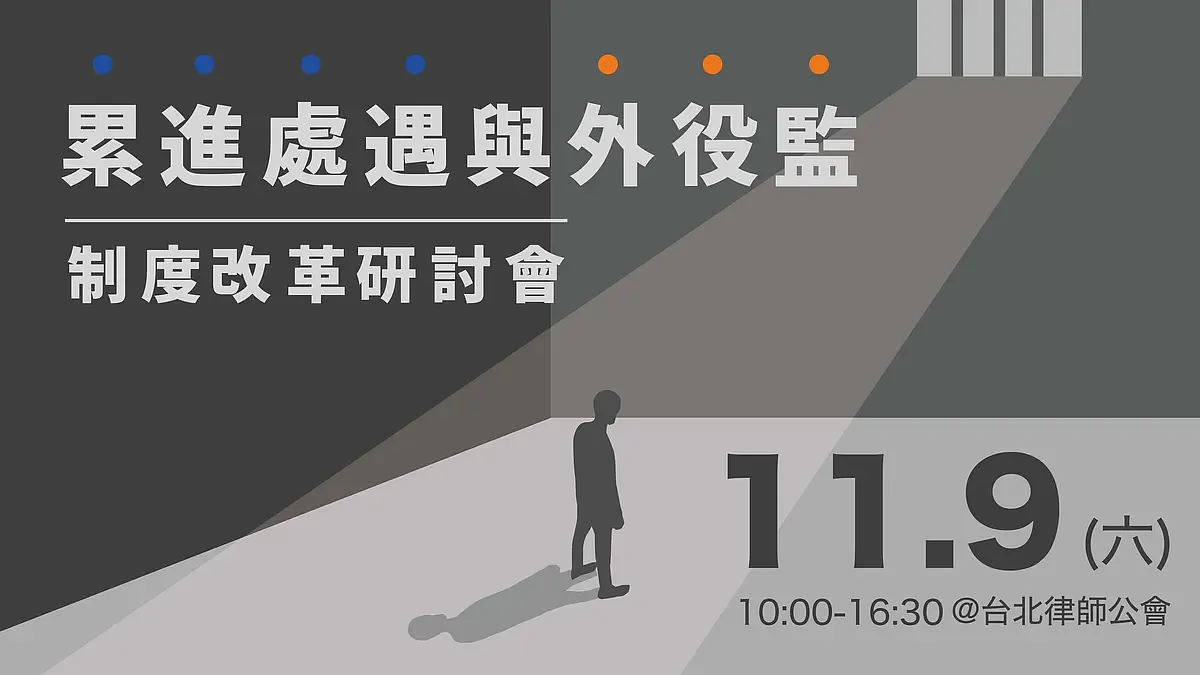
Seminar | Seminar on Progressive Execution and Reform of the Outlying Prison System
Constrained by existing prison hardware and facilities, correctional institutions in Taiwan have long faced the dilemma…
2018
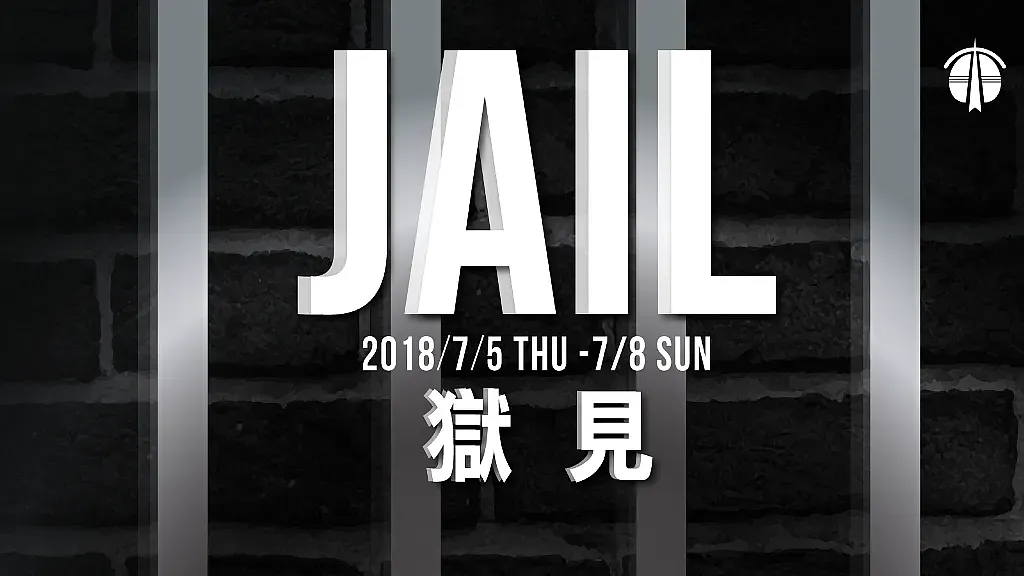
"Seeing Prison" - 2018 High School Summer Law Camp
To provide high school and vocational school students with a deeper understanding of Taiwan's judicial reform, judicial…
2017
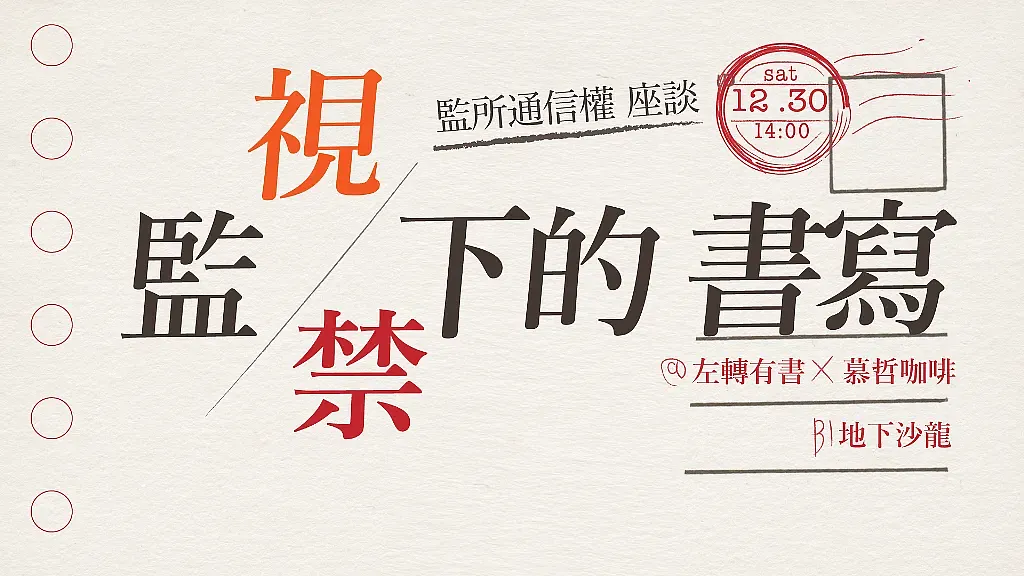
Forum | Writing under Surveillance/Prohibition—Forum on Prisoners' Right to Communication
In the past, all external correspondence and submissions for publication by prison inmates were inspected and read by…

2017
A Brief Discussion on Juvenile Justice: Current Status and Challenges of Placement and Reformatory Education
Recently, Taiwanese news reported on a collective sexual assault incident among residents within a placement and…
2016
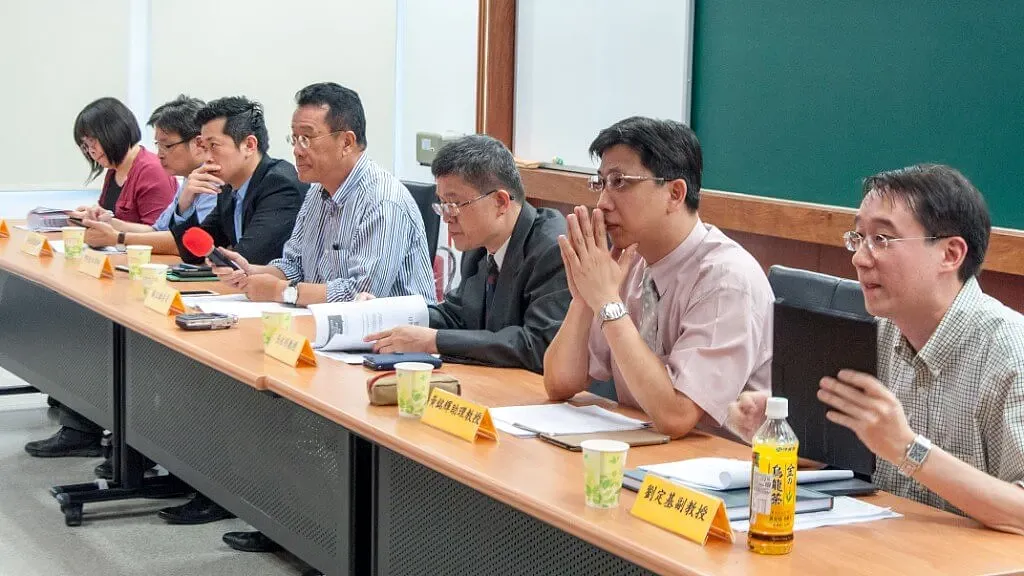
[Record] Judicial Review Standards for Civil Servant Disciplinary Punishments: Focusing on Civil Servants' Freedom of Speech—Starting from the Lin Wen-wei Case
In recent years, the issue of prison reform has gradually received increasing attention. Human rights groups and…

2016
The Spectrum of Protection Density for Civil Servants' Freedom of Speech
After listening to numerous presentations and panel discussions, and reviewing cases from Taiwan, Australia, and the…

2016
Are Prison Reforms Strictly Black and White?
The Lin Wen-wei case serves as an opportunity to understand the plight of frontline prison officers and break down the…