
JRF Newsletter
From the Courtroom to the Exhibition: A Generational Project of Memory | Reflections After the Taipei "No Such Person" Exhibition
Last edited: 2026-08-29
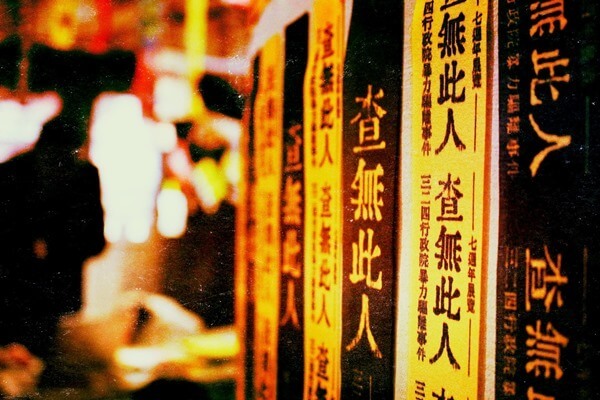
The Taipei edition of "No Such Person: Seventh-Anniversary Exhibition on the March 24 Executive Yuan Violent Eviction" ran from March 18 through March 24, 2021. The exhibition traced seven years of litigation by the March 18 Anti-Black-Box CSSTA Pro Bono Legal Team seeking accountability for state violence. With all of the private-prosecution cases having just concluded without the criminal justice system holding anyone responsible, the legal effort might appear futile. But our concern is how the historical record created in court can leave the courtroom-so that the work and pain invested in seeking accountability do not disappear with the cases.
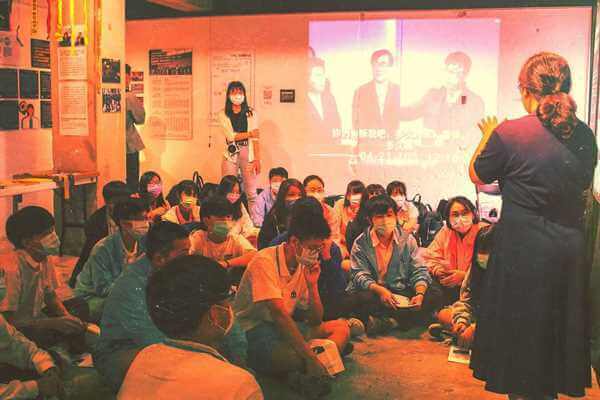
Around 1,200 people visited during the seven-day exhibition. Among those who completed feedback forms, more than 60% had not participated in the March 24 events and had been only junior-high or high-school students in 2014. A civics teacher brought high-school students, some of whom cried while watching the eviction footage because they could not believe the scenes had actually occurred in Taiwan. Parents brought children three or four years old and explained the exhibits to them one by one. After the lecture"Scars of March 24 - Seven Years Later,"a student who had been only in junior high school at the time raised a hand to thank the people who participated in the movement and the litigation for bearing their own pain so that the student's generation could live in a freer society.
Moments like these reminded us that although one exhibition section is called "The War Between Memory and Forgetting," this is not only a tug-of-war over whether people who participated will remember or forget. It is also a relay race of memory between those who were there and those who were not-or who are encountering the story for the first time:if history cannot be preserved, and if participants cannot tell their stories, memory will disappear into the current of time.
Seven Years On: What Lawyers and Litigants Want to Pass Forward
■ Yu Po-Hsiang / Attorney
"Even after decades of democratic transition, I remain pessimistic about whether courts will have the courage to convict police officers. But litigation still matters. Through evidentiary investigation in court, victims can place their experiences on the record. Police footage, news footage, and other evidence can be assembled into a judicial record. History has to be preserved in this way. Otherwise, twenty years from now people may have no idea what happened that night and simply accept the official narrative that everyone there was a rioter."
■ Hung Wei-Sheng / Attorney
"I see many young faces here. As Attorney Chang Ching-Ju said, it is difficult to imagine something like this happening in a democracy. Many people here never had the experience of taking to the streets under an undemocratic government while worrying about their own safety or their family's. I was fortunate-or unfortunate-in that my father was also an attorney and handled many opposition-movement cases, including defense work arising from the May 20 Farmers' Movement. Every time another street protest occurred, I would see him return home in the middle of the night, sometimes talking about losing a shoe after being thrown aside or about someone whose head had been beaten bloody. My uncle was a police officer, so there were even moments when my father and his own older brother stood on opposite sides of a protest line. People five or ten years younger than me may have no memory of that world. Then March 18 and March 24 happened, and suddenly it felt as though those childhood memories had returned. They were not nearly as far away as I had thought."
"Most people here today probably share similar views. Outside that circle, the case looks very different. Some people say: you lawyers had no evidence and still brought private prosecutions; you knew a private prosecutor could not simply expect the court to investigate everything for you; you lost, and now you are gathering among yourselves for comfort. But I still think we have to give this history depth and keep telling it. If this country cannot hold anyone accountable for something that happened only seven years ago, isn't it extravagant to talk about accountability for what happened seventy years ago?"
"One of our arguments happened to fall around the fortieth anniversary of the Formosa Incident. Forty years earlier, people who went into the streets became defendants before a military court. Forty years later, citizens have still not obtained a result in their effort to hold the state accountable-but at least today the citizens are the plaintiffs, asking the state to answer. Is that progress? Yes. Is it enough? No. We still have to keep going."
■ Hsiao Kai-Wen / Litigant
"A few days ago I forced myself to watch some old footage. I looked at my younger self and thought: my eyes were shining; I looked so certain. That sincere person from 2014 now feels strangely unfamiliar and even a little embarrassing. My daughter was in seventh grade then. While I was inside the Executive Yuan, she drew a picture of me and said I was defending the country. I told her I might go to jail. Now she is a university student studying sociology at National Chengchi University. Before this talk I asked how she sees the mother she knew then. She said she had been too young to understand the whole picture, but looking back now she believes the movement really did stop the CSSTA and deepen public discussion of state violence. She also sees every social movement-whether passionate or rational-as something built on accumulated efforts, not only the Sunflower Movement but the movements that came before it."
"Before sleeping last night I asked myself whether I regret the decision I made. People have asked me that for seven years, and 'regret or not' always feels like a true-or-false question. After hearing my daughter's answer, I think I do not regret it. We used our bodies as witnesses. When I was young, my father drove a taxi and participated in street movements, and that shaped me. I, in turn, shaped my daughter. The meaning is not mine alone. It is collective, and it belongs to an era."
- No Such Person | How Difficult Is It to Hold State Violence Accountable? Seven Years of Light and Shadow with the Pro Bono Legal Team Livestream Lecture Highlights
- No Such Person | Scars of March 24 - Seven Years Later Livestream Lecture Highlights
A Single Spark: Building a Generational Project of Memory
After seven years of litigation, lawyers and litigants could still see small forms of progress when they placed the disappointing legal results within a longer historical arc. But how would younger generations understand the same moment? At the opening press conference, two young NGO workers reflected:
■ Chiang Min-Yen / Economic Democracy Union
"Standing in front of the video wall filled with news footage still produces an intense physical reaction for me. Looking back, what remains is not only sadness. The anger toward those in power and the pursuit of justice became part of the life experience of an entire generation of young people, and that is one reason so many people in Taiwan have since devoted themselves to so many different causes. In Hong Kong in 2019 and Myanmar in 2021, we saw similarly shocking scenes. Taiwan's continuing efforts are not only for ourselves. They are also a small but meaningful contribution to humanity's struggle against repression by China and other authoritarian regimes."
■ Chang Yu-Meng / Chairperson, Taiwan Youth Association for Democracy
"For me, the most important lesson of March 18-beyond confronting the China factor-was that defeatism does not work in Taiwan. Young people can face our history together and look toward the country's future. But March 24 left many things we still have not been able to confront or uncover. Young people today may find it hard to imagine that people our age were once prosecuted by the state simply for participating, while the state violence used against them still has no identified chain of responsibility. There are two things we can do now: continue struggling against injustice both inside and outside the system, and undertake a serious project of memory. Our generation has to remember this together."
Passing the Baton
Young people today can open a phone and immediately see protest movements in Hong Kong, Myanmar, Thailand, and elsewhere. Taiwan's movement seven years ago may have been only one spark, but following a protest into the courtroom reveals questions of state compensation, different attempts to pursue criminal accountability for state violence, and the boundaries of freedom of assembly and expression. As material for teaching history, human rights, and the rule of law, these are powerful real-world cases.
We invite everyone to take the baton and keep running. "No Such Person" will be exhibited in Taichung during June and July. Junior-high, high-school, and university classes or student groups are welcome to reserve a guided tour by email at contact@jrf.org.tw.
"Having been born long after martial law ended and grown up enjoying freedom in a democratic society, I always treated democratic rights as something natural. Being able to say what we think and read the books that interest us seems ordinary to most of us. Yet the 'privilege' we enjoy was made possible by generations of young people who paid a price for their ideals."
"After we finished dismantling the exhibition on its last day, a friend asked what I had taken away from it. I think I will continue to remember what happened that night, the people who were later subjected to state violence, and the wider social meaning of the March 18 Student Movement. Even if those memories have already faded for much of the public, and even though the legal result remains 'No Such Person,' we need to remember that people once struggled this way for themselves and for all of us. That history needs to leave a trace, one that can point more clearly toward the road ahead for judicial reform."
"While staffing the exhibition, I looked at photographs and footage of the eviction and still found it difficult to accept-or even believe-that it happened. But because it did happen, we have to face it. Seven years may have passed, but I imagine the psychological wounds of the people involved can never fully disappear. I hope the exhibition helps people remember what happened on March 18 and March 24, 2014, or at least gives them a clearer understanding as it did for me. I am also grateful to those who stepped forward. Their actions made it possible for later generations like ours to live with greater security, and brought questions of civil disobedience, state violence, and police eviction into public view through real experience rather than only distant examples in books or from other countries."
"Many visitors had continued following social movements, and some had even been directly involved in 2014. They would patiently tell us what they remembered-how police officers had harmed people and how the government ignored their voices. Listening was shocking. The blood and tears I had known only through documents and exhibits suddenly crossed seven years of time and appeared before me as someone's lived experience. I had assumed that, as a guide, I was the one who would explain March 24 to visitors. In the end, they were the ones teaching me."
- Tsai Chia-Hsun / Department of Law, Soochow University; JRF Intern
"When an elderly woman saw the young interns in the exhibition space, she said how relieved she was that people so young still cared. I still remember one elderly visitor telling us: 'We are old now. We cannot keep protecting the future for you. From here on, you have to protect your own future.' Only then did I truly understand that the 'this has nothing to do with you' I had heard from adults seven years earlier was not true. The ordinary life I treasure was made possible by paths opened through the struggles of those who came before us."
This article is an AI-generated translation of the original Chinese text. In the event of any discrepancy, the Chinese version shall prevail.