
Human Rights in China

Human Rights in China

JRF / International Human Rights / China Human Rights

Human Rights in China
Solidarity with Oppressed Lawyers and Citizens

For years, the Judicial Reform Foundation has closely monitored the human rights and rule of law situation within China, actively standing in solidarity with persecuted Chinese human rights lawyers, continuously tracking Taiwanese citizens arbitrarily detained in China, and advocating for the international community to establish monitoring mechanisms against human rights violations by China.

2013
Continuous monitoring since
709
Crackdown (2015)
5+
Years Li Ming-che was detained in China
80+
Related articles and statements

Focus Areas

⚖️

Chinese Human Rights Lawyers

Standing in solidarity with rights-defending lawyers in China who have had their licenses revoked, been arrested, or been subjected to enforced disappearance, including T'ang Chi-t'an, Liu Wei, Wang Yü, Yü Wen-sheng, and others.

🕊️

The Li Ming-che Case

Taiwanese citizen Li Ming-che lost contact after traveling to China in March 2017 and was sentenced to 5 years in prison in November of that year. JRF has continued to monitor and advocate for him, and Li Ming-che returned to Taiwan upon completing his sentence in April 2022.

🌐

International Monitoring Mechanisms

Calling on the United Nations to establish an independent monitoring mechanism for human rights violations in China, and urging the international community to jointly respond to China's suppression of civil society.

🇹🇼

Taiwanese in China

Tracking Taiwanese citizens subjected to enforced disappearance or arbitrary detention in China, including cases such as Fu Cha (Li Meng-chü), and paying close attention to the gap in the protection of personal freedom across the Taiwan Strait.

What is the "709 Crackdown"?

In the early morning hours of July 9, 2015, Chinese police initiated a massive wave of arrests targeting human rights lawyers and activists, known as the "709 Crackdown." Within a matter of weeks, over 300 lawyers, legal assistants, and human rights defenders across China were summoned, detained, or subjected to enforced disappearance, including prominent figures such as Wang Yü, Chiang T'ien-yung, and Chai Yen-min.

This was the largest political purge targeting the legal profession in modern Chinese history. Those detained not only faced criminal prosecution, but some were also long denied the right to meet with lawyers while subjected to "residential surveillance at a designated location," with their families' visitation and communication strictly restricted.

Taiwan's Role: Due to the unique historical connection between Taiwan and China, Taiwanese civil society bears a high degree of responsibility and concern for human rights issues in China. JRF believes that defending the right to counsel for Chinese lawyers is also a crucial effort to safeguard the quality of cross-strait judicial exchanges and prevent Taiwanese citizens from facing similar treatment in China.

Key Milestones

2013
JRF begins monitoring the plight of human rights lawyers in China, introduces the work of the China Human Rights Lawyers Service Group, and continually publishes firsthand reports from the frontlines of rights defense in China.
2015
The 709 Crackdown erupts (July 9). JRF calls on Taiwanese civil society to stand in solidarity with the detained lawyers and issues a joint statement.
2016
On the first anniversary of the 709 Crackdown, lawyers from the China Human Rights Lawyers Service Group publish "Anniversary Memorial of the Shattered Rule of Law Dream," and JRF assists in promoting and continuing advocacy for the release of detained lawyers.
2017
Taiwanese citizen Li Ming-che is subjected to enforced disappearance after entering China in March and is formally arrested in May. JRF participates in the "Li Ming-che Rescue Team," sustaining press conferences, petitions, and international advocacy. In November of the same year, Li Ming-che is sentenced to 5 years in a closed trial.
2018
Publishes the statement "Lawyers Must Have Human Rights." JRF joins multiple Taiwanese human rights organizations in solidarity with Chinese rights-defending lawyers still under detention, calling on China to cease using criminal means to suppress defense lawyers.
2019
Calls on the 42nd session of the United Nations Human Rights Council to hold authorities accountable, criticizing China for persecuting human rights defenders of economic, social, and cultural rights.
2020
Promotes the Global Appeal: Establish an International Human Rights Monitoring Mechanism on China, stands in solidarity with citizen journalist Chang Chan, and commemorates the tenth anniversary of the revocation of lawyers T'ang Chi-t'an and Liu Wei's licenses.
2021
Hosts the "5th China Human Rights Lawyers Day and International Symposium on the 6th Anniversary of the 709 Incident," launches a joint press conference to boycott the Beijing Winter Olympics, stands in solidarity with the cases of Yü Wen-sheng and Hsü Yen, and calls for the release of citizen journalist Chang Chan.
2022
Li Ming-che completes his sentence and returns to Taiwan (April). JRF continues to monitor the arbitrary detention of other Taiwanese citizens in China and stands in solidarity regarding the case of Chinese human rights lawyer Lu Szu-wei, who was subjected to cross-border arrest by China in Laos.
2024
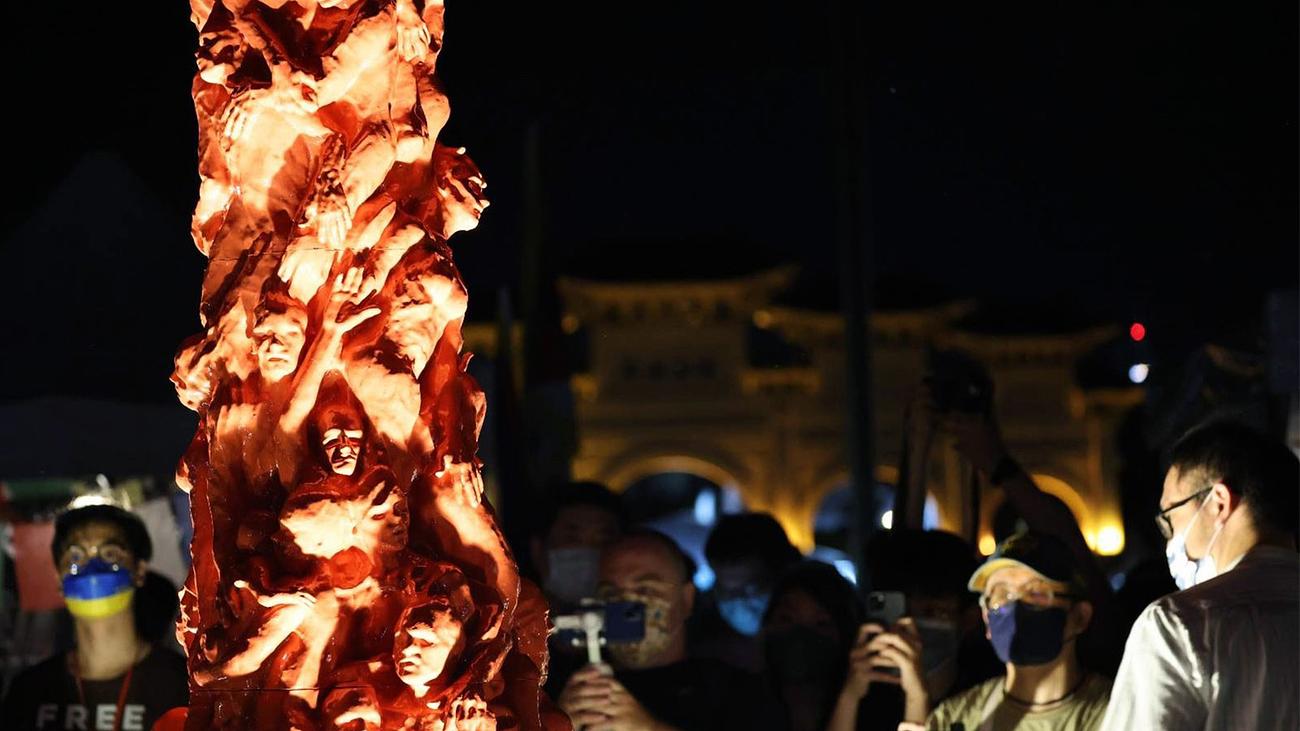
On the International Day of the Victims of Enforced Disappearances, calls on all sectors to pay attention to Taiwanese citizens subjected to enforced disappearances in China, including the case of Fu Cha; Li Ming-ju attends the Tiananmen Square Massacre 35th anniversary vigil to speak, continuing to pass on voices of solidarity.
2026
JRF participates in an international joint statement calling on Chinese authorities to immediately release human rights lawyer Yü Wen-sheng upon the completion of his sentence and ensure his full freedom (April). China's Promotion of Ethnic Unity and Progress Law comes into effect on July 1, and its extraterritorial jurisdiction provisions unilaterally impose the obligation of safeguarding national unification upon Taiwanese citizens, sparking widespread concern; the Legislative Yuan passes a censure motion advancing it to second reading on July 14. On July 15, JRF releases a statement calling on the government to establish a institutionalized refugee asylum system so that Taiwan can become a human rights sanctuary resisting authoritarian expansion.

Featured Articles and Statements

Below are key articles and action records for this project. Click to read the full text (opens in a new window).

Support JRF and Keep Human Rights Advocacy Heard

The Judicial Reform Foundation is a non-profit organization that relies on public support for its long-term operations. Your donations allow us to continuously monitor Chinese human rights lawyers, stand in solidarity regarding the personal freedom of Taiwanese citizens in China, and promote international monitoring mechanisms.

Support JRF →
Last Edited: July 21, 2026