
Citizen Participation in Trials
The Citizen Judges Act took effect on January 1, 2023. Are you ready?
Feedback Box
What do you think of the new citizen judge system? Share your thoughts with us and leave your email address, and we will send you information about court observation and other related events.
Before You Begin
New to the idea of citizen judges? The resources below will help you understand how the system works.
About the Citizen Judge System
Judicial Yuan on YouTube: A First Lesson for Citizen Judges
- The Judiciary and Forensic Science: How Forensic Toxicology Assists Judicial Autopsies (Director Weng Te-i)
- The Judiciary and Psychological Evaluation: Psychological Evaluation and the Assessment of Testimony in Court (Associate Professor Chao Yi-shan)
Related Laws and Regulations
How the Process Works
How does a citizen judge trial proceed, and what happens at each stage?
FAQ
What should I know to be a critical citizen judge?
Why are only serious crimes tried with citizen judges? Mainly because involving citizen judges is extremely expensive. The Judicial Yuan has estimated that adding citizen judges to a case may cost an extra NT$230,000, not counting the additional work of professional judges, prosecutors, and defense counsel or other intangible costs. To keep the number of cases down, the types of cases eligible for citizen judges were limited. (The Judicial Yuan estimated about 300 cases in the first year.)
But are serious crimes the only important cases? Does a homicide case with clear evidence and a confession really need citizen judges? What about controversial types of cases, such as people convicted of fraud for lending out their bank accounts (so-called "dummy accounts"), which lawyers and scholars have questioned? Should they be excluded simply because the penalties are lower? And where certain legal interpretations are out of touch with social reality, should the system one day let citizen judges take part in those trials as well?
In other countries, citizen participation in trials is usually reserved for serious crimes. Yet which cases truly need citizen judges has never been a question with an obvious answer.
Basically, the professional judges see exactly what you see, and they see it at the same time you do.
In a citizen judge court, the prosecutor may submit only the indictment when filing charges and may not send the evidence to the court along with it. As a rule, both the professional judges and the citizen judges therefore see the content of the evidence for the first time at trial.
Note, however, that during the preparatory proceedings, when the court decides which evidence may be presented at trial, the professional judges do see the names of the items of evidence. For example, an item may be listed as "the defendant's confession during the investigation," but the judges will not know what the confession says. If the defense shows at this stage that the confession was obtained through torture, it cannot be presented at trial, and neither the professional judges nor the citizen judges will ever learn its content. This keeps tainted evidence from influencing the judges.
In ordinary cases outside the citizen judge courts, Taiwan still uses a system in which the case file and evidence are sent to the court together with the indictment. This means the professional judges already have the evidence against the defendant before they hear the defendant's side of the story, which can easily lead them to presume guilt in advance (known as "prejudgment").
Seen this way, the approach taken in citizen judge courts is actually one of the long-standing goals of criminal procedure reform. If it works well, it may eventually be extended to ordinary cases.
As a rule, information obtained through illegal wiretapping cannot be used as evidence. In ordinary criminal cases, the professional judges do see such material, but once it is ruled inadmissible, they must act as though they never saw it.
Citizen judges, who lack the trial experience and legal training of professional judges, are more easily influenced by what they see. That is why the court decides whether evidence may be presented during the preparatory proceedings, before the citizen judges are chosen. So if illegally wiretapped material exists, you will not see it as a citizen judge.
If the wiretapped material is crucial, there is no guarantee that it will not slip out, intentionally or not, during cross-examination or the presentation of evidence at trial. If citizen judges do learn of it, the professional judge will instruct them in court that they may not rely on it in reaching their decision. But you cannot unlearn something. So what then? Even if you have seen it, you must act as though you have not.
Citizens are first chosen at random. The court then holds selection proceedings in which the prosecutor, defense counsel, and professional judges question the candidates and exclude some of them based on their answers. Because criminal trials must still follow the basic principles of criminal law, anyone who refuses to accept the presumption of innocence, the principle that doubt benefits the accused (in dubio pro reo), or the rules of evidence will be excluded at this stage.
Candidates may also be asked questions such as whether they support the death penalty or whether they have a steady job. Whether an answer leads to exclusion depends on the judgment of the professional judges, the prosecutor, and defense counsel in light of the circumstances. In short, people are not considered unsuitable simply because their values differ, but during selection the prosecution and defense will choose according to the circumstances of the case.
Selection proceedings are meant to find citizen judges who are fair, suitable, and relatively free of bias and prejudice. In an adversarial system, however, each side is often really asking, "How do I pick people who will favor my side?" For example, in a case in which a defendant killed an elderly father who had long been bedridden at home, defense counsel might ask candidates whether they have experience caring for an elderly relative over a long period, expecting such people to sympathize with the defendant. The prosecutor, in turn, might challenge those candidates, with or without stating a reason.
As a result, a process designed to prevent bias and prejudice can, in some cases, produce a different kind of bias. In Batson v. Kentucky, the U.S. Supreme Court considered a case in which the prosecutor used peremptory challenges to remove all four Black prospective jurors, and Batson was convicted by an all-white jury. The Court held that the prosecution had violated the defendant's constitutional rights.
In other words, there are limits to how far each side can go in picking favorable citizen judges. In principle, neither side may use peremptory challenges to exclude people for discriminatory reasons, such as race or gender. The selection process, like criminal trials as a whole, is imperfect, but this is the kind of justice that can be achieved with limited resources.
Under the Citizen Judges Act, lying or giving false answers on the questionnaire can result in a fine of up to NT$30,000. Candidates who are summoned and fail to appear without a valid reason may also be fined.
During selection, and throughout the trial, citizen judges whose fitness is in doubt may be challenged by defense counsel or the prosecutor. In the 2016 Peter Liang case in New York, for example, the defense questioned a juror's impartiality based on his Facebook posts and claimed he had lied about his father having been convicted of homicide (although in the end this did not change the verdict). In other words, whether citizen judges are honest and fit to serve is mainly tested by the prosecutor and defense counsel during the proceedings, above all during selection.
Knowing more is not always better.
During a trial, giving citizen judges too much information can sometimes interfere with their judgment. Professional judges therefore sometimes speak privately with the prosecutor and defense counsel at a sidebar. For example, if the prosecutor refers in argument to something the court ruled inadmissible during the preparatory proceedings, the judge may quietly remind the prosecutor of the ruling so as not to draw the citizen judges' attention to it.
Another reason is that hearing certain exchanges directly could affect the citizen judges' objectivity. Suppose defense counsel repeatedly breaks the rules of cross-examination and the prosecutor's objections are sustained again and again. If the judge feels the need to admonish counsel, doing so at a sidebar avoids leaving the citizen judges with the impression that "the judge is scolding the lawyer, so maybe the lawyer can't be trusted."
In short, these whispered exchanges happen because the judges believe that letting citizen judges hear them could affect their fairness and objectivity. You can carry on with the trial perfectly well without hearing them.
If you cannot ignore it, work out exactly how it is influencing you.
Why would a judge ask you to disregard something? The most common example is when the prosecutor presents illegally obtained evidence, which by law cannot be used. In that case, both the professional judges and the citizen judges must find the facts as if that evidence did not exist.
Of course, no one can simply forget what they have seen (professional judges cannot either). A more practical approach is to ask yourself at each step of fact-finding: "Without the illegal wiretap recording, would I still believe the defendant did this?" Rather than jumping to a conclusion about guilt or innocence, consider each relevant fact (for example: Did the defendant know A? Did the defendant intend to give drugs to A? Did the defendant intend to sell drugs to A?) and ask whether it could still be established without the recording.
When you cannot fully set the evidence aside, understanding how it affects your judgment is what allows you to filter out its influence.
You do not always have to follow the Supreme Court. You can try to persuade the professional judges.
Under the Citizen Judges Act, questions of legal interpretation are decided by the professional judges, though they may hear the citizen judges' views. In other words, on matters of legal interpretation, citizen judges must in principle defer to the professional judges.
For example, in the Tang Ching-hua arson case, the Supreme Court held that arson and murder are separate crimes: the fact that someone died does not by itself show an intent to kill when the defendant used a newspaper to set fire to a motorcycle parked in an arcade. If the professional judge cites this view and explains to the citizen judges that arson and homicide must be distinguished, then, absent other evidence, you as a citizen judge cannot conclude that the defendant intended to kill simply because they set the motorcycle on fire.
That said, the professional judges in a given case are not strictly bound by the Supreme Court's view. If you truly disagree, you can still try to persuade them, although this may increase the chance that the case will be sent back by the Supreme Court on appeal.
This goes to the question of whether interpreting the law is purely a matter of legal expertise or whether it must also draw on ordinary life experience. Take drug cases as an example (although drug cases will not be tried by citizen judges). If someone buys a small amount of cocaine (a Category 1 drug) online from abroad for personal use, does that constitute the offense of transporting, possessing, or using drugs? Under well-established case law, bringing drugs into the country from abroad counts as "transporting drugs," which, like selling drugs, is punishable by death or life imprisonment. If you were the judge, how would you rule? How would you interpret the law? And what kind of life experience do you think interpreting the law requires?
The professional judges may provide sentencing information for reference.
Under the Citizen Judges Act, citizen judges decide not only the facts and the application of the law but also the sentence. Since most people have no sense of what an appropriate sentence is, in practice the professional judges will likely use a sentencing information system to show the citizen judges the possible range of sentences before leaving the decision to them.
That is the problem. Fact-finding can draw on ordinary life experience, but can sentencing? And since no one other than the professional judges has any sentencing experience, won't the citizen judges end up relying on the judges' experience or on the sentencing system anyway?
Moreover, a sentencing information system can only show how sentences have been distributed in the past; it cannot tell us whether those sentences were reasonable. If current sentences are too lenient or too harsh, relying on the system will simply repeat past mistakes. In any case, citizen judges will take part in sentencing, and the Judicial Yuan also plans to introduce an Act on Appropriate Sentencing in Criminal Cases, which is expected to affect citizen judge trials. Whether citizen judges are well suited to sentencing remains to be seen.
In a criminal trial, the court may find facts only on the basis of evidence. Admissibility refers to whether a piece of evidence is eligible to be used at all. For example, if evidence obtained through torture or illegal wiretapping is ruled inadmissible, you must disregard it.
Only once the court finds a piece of evidence admissible does it go on to consider its probative value. Put simply, probative value is how credible the evidence is and how far it goes toward proving a fact. It is assessed as a whole, using ordinary objective experience and sound logical reasoning (the principle of free evaluation of evidence). For example, a witness's sworn testimony in court is admissible, but its probative value may differ depending on whether the witness is a relative of the defendant or a disinterested third party. In many cases, even admissible witness testimony may be rejected entirely by the court, provided it gives careful reasons.
Neither the prosecutor's indictment and arguments nor the responses of the defendant and defense counsel are evidence. They are simply each side's positions and opinions. Because the same body of evidence can be interpreted in different ways, the arguments of the prosecution and defense are just their own readings of the evidence, offered for your consideration.
Likewise, the questions that judges, prosecutors, and lawyers put to witnesses are not evidence; only the witnesses' answers are. Nothing the judge says, including explanations and instructions, is evidence either, and none of it should be taken as a hint about how the judge views the facts, the witnesses, or the outcome of the case.
All physical, documentary, and electronic evidence is handed over to the court once it has been presented, so citizen judges may consult it at any time during deliberations, although the pace of deliberations may not always leave time to review it on your own. If you have questions or need help, ask the judge or the court clerk. If you want to check what was said in court, you can refer to the trial transcript or, if necessary, ask the judge to retrieve the video recording.
Different people may interpret the same evidence differently, so the presiding judge may, when needed, have everyone review the evidence together to build consensus. Because the Enforcement Rules call for communication between judges and citizen judges on an equal footing (Article 242), you may also ask the presiding judge to do this.
In fact, compared with an open courtroom, the deliberation room should be a more comfortable place for citizen judges to speak. Raise any questions or doubts you have, so that you do not regret a decision once it has been made.
What Else You Can Do
1. I am a citizen and want to join the court observers!
Public interest and participation are the foundation of the Citizen Judges Act's success. We therefore invite everyone who cares about citizen participation in trials to join our observation team and attend hearings at courts around Taiwan. You can use the JRF's Court Observation Questionnaire to record your observations and send it back to us.
For important cases, we also invite members of the public to attend hearings together, and we hold briefings and events before and after them. To receive news about these events, fill out the feedback box and leave your email address.
2. I am a citizen judge and have something to say!
If you have been selected by a court to serve, whether as a citizen judge, an alternate citizen judge, or a citizen judge candidate, we would like to hear from you! If you have something to share, or would even be willing to take part in a discussion event, please contact us by email (contact@jrf.org.tw) or by phone, and we will get in touch with you. If convenient, you can also fill out one of the forms below.
References
2020
Trial by Jury and Lay Participation Do Not Need a Showdown and Can Coexist Peacefully
Since late April, the debate over whether to only trial lay participation or to simultaneously trial both jury and lay…
2020
The Judicial Yuan's Straw Man
One of the Judicial Yuan's primary reasons for rejecting the jury system is that it would be severely unconstitutional…
2020
Political Wisdom in Judicial Reform: Evaluating the Viability of a Dual-Track Jury and Lay Judge System
Judge Chen Szu-fan recently published an article titled "Litigation Rights Must Not Be Subjected to Judicial 'In Vivo…

2020
Hsu Yu-hsiu's Special Article: The Only Solution Consistent with Justice—Simultaneous Trial of Lay Participation and Jury Systems
Last Thursday (April 23, 2020), I was invited to attend a public hearing convened by legislator Li Kuei-min, the…
2020
The Judicial Yuan's Ten Reasons for Rejecting the Jury System Are All Wrong!
In order to pass the draft Organic Act on the Participation of Citizens in Criminal Trials submitted to the Legislative…
2020
President of the Judicial Yuan, You Have Held Seven Dual-Track Consultations: Have You Forgotten, or Are You Afraid to Remember?
The issue that resonates most with the public regarding judicial reform is lay participation in trials. The bill…
2019
The Civic Responsibility of Judicial Reform
Both official and grassroots experiences show that to resolve Taiwanese society's longstanding distrust of the…
2018
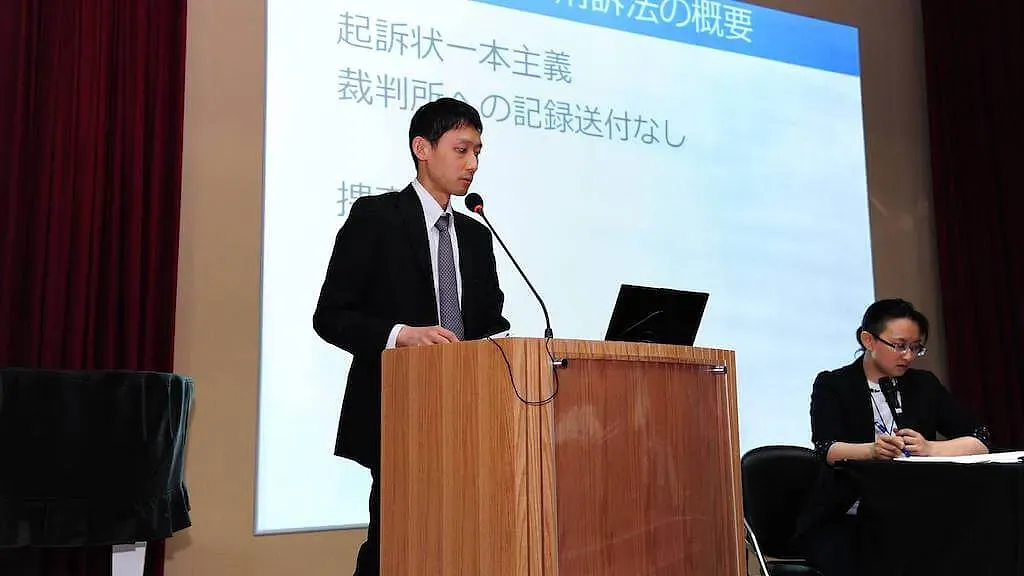
Norms and Practice of Evidence Disclosure in Japan (Part I): Institutional Introduction - Attorney Yamamoto Yoshinobu
Japan has long operated evidence disclosure without explicit statutory provisions, introducing an evidence disclosure…
2018
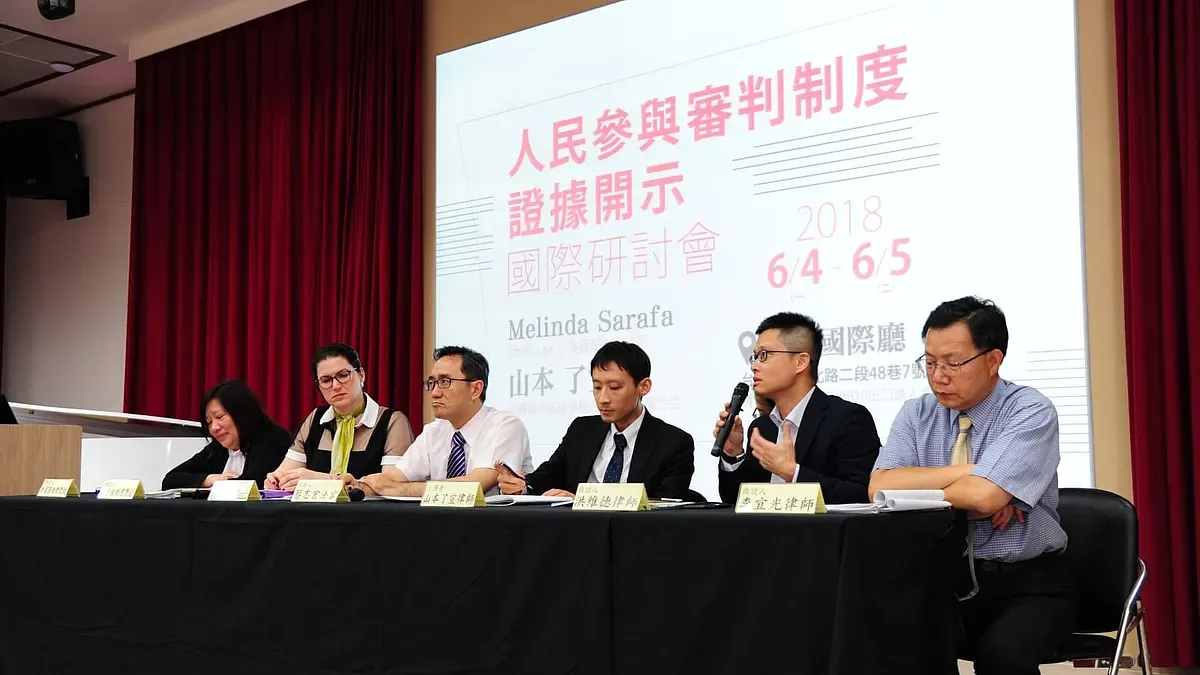
The Rules and Practice of Evidence Disclosure in Japan (Part 2) Practical Responses — Attorney Yamamoto Takanobu
This article explains how Japanese defense attorneys navigate the current, imperfect system. It discusses how attorneys…
2018
"We Want Case-File Review, Not Discovery": Joint Statement by Civil Society Organizations Opposing the Introduction of Discovery
Articles 53 to 61 of the Draft Act on Employing Lay Assessors in Criminal Trials, announced by the Judicial Yuan at the…
2018
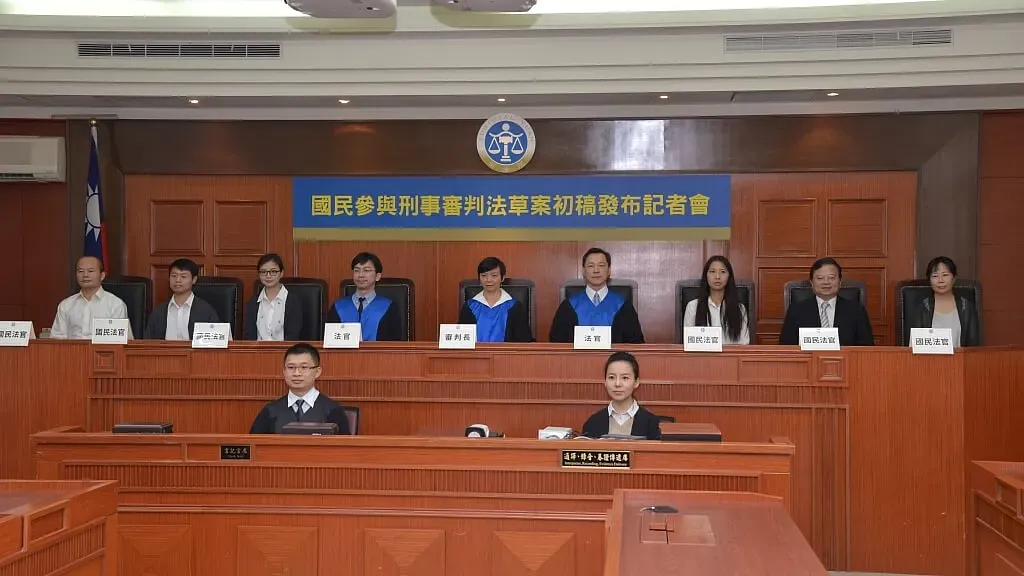
JRF's Comments on the Judicial Yuan's Draft "Lay Participation in Criminal Trials Act"
The Judicial Reform Foundation's comments regarding various provisions in the Judicial Yuan's Draft "Lay Participation…
2018
The Conflict Between the Discovery System and the Protection of the Right to Review Case Files in the Draft Lay Judge Criminal Trial Act
The system of separate submission of dossiers and indictments—namely, the Japanese principle of single-charge…