
JRF Newsletter
September E-Newsletter | Have You Watched the Top 3 Trending Shows?
Last edited: 2026-07-27
《無罪推定》
bô-tsuē thui-tīng
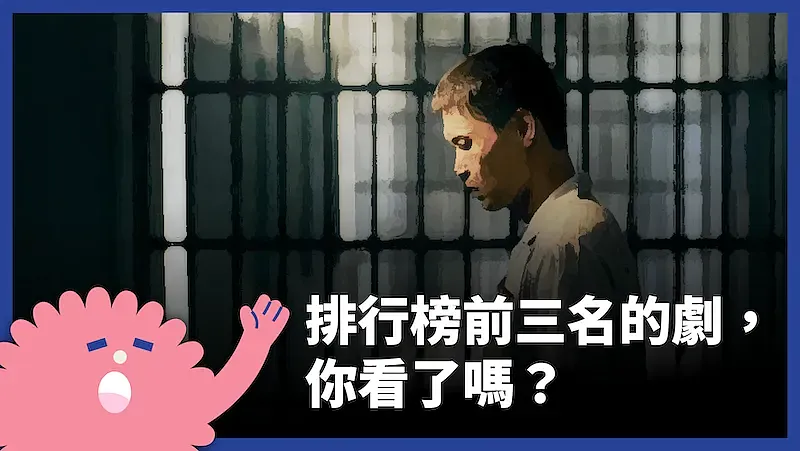
Taiwan's first all-Taiwanese legal drama, "Not Guilty," reached its gripping grand finale on September 22. Immediately following its broadcast, it launched on major streaming platforms and rapidly climbed into the top three trending charts, becoming a major topic of discussion among viewers!
During the broadcast of the series, to deeply explore the issues behind wrongful convictions, we specially hosted the "A Lifetime's Practice Problems" lecture series. We invited the two screenwriters of "Not Guilty," the Hsl TZU-chiang exoneration team, and Hsu Tzu-chiang himself—the defendant in the case—to share their inner journeys and reflections from the exoneration process back then. The lectures emphasized that the impact of a wrongful conviction is not limited to the vindication of the case; for the individual involved, it is an endless "practice problem" that takes a lifetime to write. Through the combination of drama and lectures, we hope the public can once again pay attention to and gain a deeper understanding of the present, past, and future of the Hsu case.
"Not Guilty" presents the true feelings of a wrongful conviction in the form of a drama, allowing viewers not only to empathize but also to appreciate the profound impact of judicial errors on individuals and society. If you haven't watched it yet, you can now stream this work on Netflix, LINE TV, and Hami Video. We also sincerely invite you to share your thoughts after watching. Remember to tag JRF on social media so we can exchange ideas and discuss together, and we hope everyone will continue to pay attention to and support JRF's wrongful conviction rescue work!
Reviews

Review | "Not Guilty" Episode 3
Attorney Lü Shao-wei/JRF Executive Director
This episode begins with Yang Ming-te (a character alluding to Hsu Tzu-chiang) writing a suicide note, having completely given up on clearing his name, alongside Yang's mother—who runs around fighting for her son's innocence, takes care of her grandson, and also has to wait on her alcoholic husband. The director focuses the lens on Yang Ming-te's family, bringing a different perspective to the audience.
Based on the author's practical experience, this is largely true. When serving a prison sentence or undergoing detention, the ones who suffer are often not just the people locked away; their families outside, though enjoying physical freedom, find their souls deeply imprisoned.
General family members of inmates must face such immense physical and mental torment, let alone the wronged Yang Ming-te in this drama.

Review | "Not Guilty" Episode 4
Attorney Ch'en Wei-ch'iao/JRF Executive Committee Member
From the perspective of a legal professional, the plot of the sixth retrial should focus on how Judicial Yuan Interpretation No. 582 was actually utilized by Yang Ming-te's defense counsel during the sixth retrial, and how the judges of the sixth retrial faced the new perspective of Judicial Yuan Interpretation No. 582.
However, unfortunately, viewers could not understand through the plot development what the actual content and impact of Judicial Yuan Interpretation No. 582 were, or whether the defendant Yang Ming-te's right to confrontation was safeguarded during the sixth retrial proceedings. We can only gather that Judicial Yuan Interpretation No. 582 seemingly deemed Yang Ming-te innocent, and so on. But conversely, the assertion that Judicial Yuan Interpretation No. 582 declared Yang Ming-te innocent is actually a major misunderstanding.

Review | "Not Guilty" Episode 5
Liao Szu-min/JRF Volunteer
Although I was a law student who had only witnessed a few court sessions back then, in my limited courtroom experience, public prosecutors usually state during their closing arguments that the case is as stated in the indictment, and prosecutors who say a little more usually just summarize the contents of the indictment. Having a prosecutor in a Taiwanese courtroom perform like this—tearing up paper and scattering the fragments toward the public gallery—is truly unheard of.
After all, the citizen judge system had not been implemented back then, and the only person the prosecutor had to convince was a judge who had already reviewed the case files. Back-and-forth sparring and relatively passionate expressions usually only occurred during the witness cross-examination stage, and this has become one of my most deeply ingrained segments of the trial in the Hsu case.

Review | "Not Guilty" All Eight Episodes
Attorney Ch'en Wei-ch'iao/JRF Executive Committee Member
"Not Guilty" is Taiwan's first Taiwanese-language legal drama. It takes as its prototype the miscarriage of justice story—where someone narrowly escaped death nine times out of ten—of real-life figure Hsu Tzu-chiang, who was implicated in the September 1, 1995 kidnapping and ransom of real estate broker Huang Chun-shu, who was later cruelly murdered. At the time, this fell under Article 348, Paragraph 1 of the Criminal Code, which mandated the death penalty as the sole punishment for robbery-homicide.
Why is it said he "narrowly escaped death nine times out of ten"? Because following the crime on September 1, 1995, Hsu Tzu-chiang went on the run out of fear of "judicial injustice." He later voluntarily faced justice and was detained on June 24, 1996. He was subsequently sentenced to death in the Shilin District Court's first instance, the Taiwan High Court's second instance, and through remands by the Supreme Court for the first, second, third, fourth, and fifth retrials. The Supreme Court's 89-Tai-Shang-2196 Judgment ultimately dismissed the appeal on April 27, 2000, finalizing the sentence.
A Lifetime's Practice Problems|Lecture Series

A Lifetime's Practice Problems|Lecture Series 1
The Inner Journey of the Screenwriters of the Series "Not Guilty": Discussing How to Bring Wrongful Conviction Issues into Film and Television

A Lifetime's Practice Problems|Lecture Series 2
Those Years of Rescue: The Transformation from Age 28 to 49

A Lifetime's Practice Problems|Lecture Series 3
From Death Penalty to Exoneration: How to Reintegrate into Society
This article is an AI-generated translation of the original Chinese text. In the event of any discrepancy, the Chinese version shall prevail.