
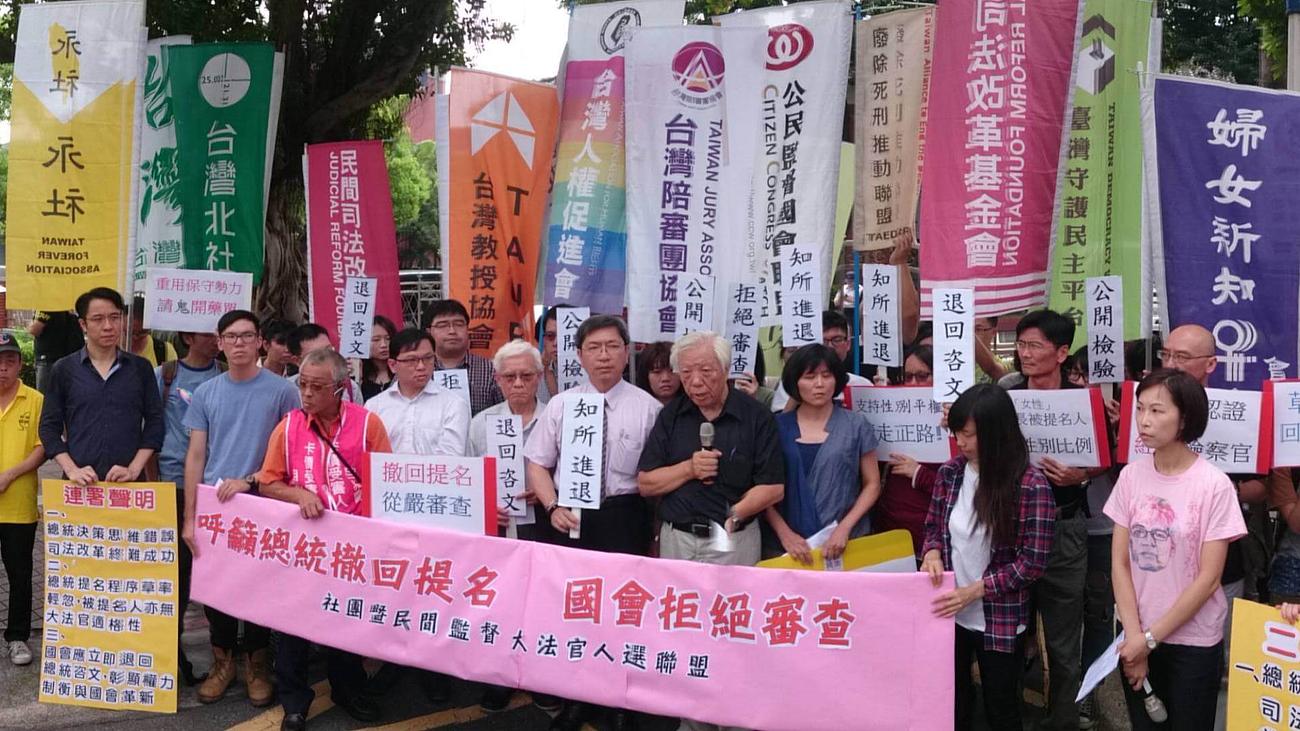
Oversight of the Judicial Yuan President, Vice President and Grand Justice Nominees
Last Edited: June 27, 2026
Origins of the Alliance
The core purpose of drafting a constitution in a modern liberal democratic nation is to "limit government power and protect the fundamental rights of the people." Grand Justices are the ultimate interpreters of the Constitution, bearing the responsibility of constitutional review and the protection of fundamental human rights as the final remedy for citizens' rights—their interpretations not only bind all state agencies but also serve as guiding precedents for subsequent court judgments. A Grand Justice's own philosophy of human rights, along with their open-mindedness and familiarity with human rights issues across various fields, directly impacts whether Taiwan's society can realize the ideal of a "nation founded on human rights."
However, the current nomination process for Grand Justices is extremely opaque, and the review process has become a mere formality and overly hasty, reducing candidates who should naturally enjoy the public's trust into mere casual conversation topics for a select few.
In January 2003, six civic organizations—the Awakening Foundation (Note: refers to the publisher or intellectual group, translating '澄社' as Citizens' Congress Watch or Cheng She / The Regulatory Reform Committee / etc., keeping Cheng She as Cheng She), the Taiwan Law Association, the Taiwan Association for Human Rights, the bar association federation, the Taipei Bar Association, and the Judicial Reform Foundation—jointly initiated the "Alliance for Monitoring Judicial Yuan Grand Justice (including the President and Vice President) Candidates" (referred to as the "Grand Justice Candidate Monitoring Alliance"). On April 4 of the same year, the Alliance held its first press conference, demanding that Grand Justice nominations be free from political considerations and incorporate extensive public input.
The Alliance has convened evaluation meetings during successive Grand Justice nominations in 2003, 2007, 2008, 2010, 2015, and 2023. In 2015, civic organizations such as the Taiwan Democracy Watch, the Citizens' Constitutional Movement, and the Taiwan Association for Innocence joined the Alliance.
Mission of the Alliance
The Alliance was established with three core missions: 1. Monitor the President's process for nominating Grand Justices and the President and Vice President of the Judicial Yuan; 2. Issue the Alliance's positions regarding unsuited nominees; and 3. Monitor the Legislative Yuan's exercise of its consent power. Specific methods are divided into "procedural monitoring" and "substantive monitoring."
Procedural Monitoring
- Require the President to broadly consult various sectors, announce the candidate list early with accompanying justifications, and submit to public evaluation
- Oppose nominating or consulting candidates through party recommendations
- Require the Legislative Yuan to form a "Consent Power Exercise Committee" and hold public hearings to gather broad public opinion
- Call upon legislators not to invoke party discipline for irrational boycotts when exercising the consent power
- Oppose raising the consent threshold from a simple majority to two-thirds
- Urge that nominations must not use partisan affiliation as the sole consideration
Substantive Monitoring
- Positive qualifications: Demonstrate a clear commitment to human rights principles, democratic literacy, and professional competence
- Negative qualifications: Must not possess stains on personal integrity or engage in conduct inconsistent with the reputation of a Grand Justice
- Evaluations should not be primarily based on provincial origin, region, background, or ideology
- To promote gender equality, demand an increase in female Grand Justice nominees
- The Alliance may conduct substantive reviews of specific candidates and issue opinions on those deemed unsuited
- Strongly demand that candidates remain non-partisan, withdraw from political parties during their term, and refrain from participating in political activities
Without proactively recommending specific candidates, the Alliance deems it necessary to extensively gather opinions from the public and various sectors of society to serve as a reference for the President's nominations and the Legislative Yuan's exercise of its consent power.
Past Evaluation Reports
- 2003 Report on the Unsuitability Evaluation of Vice President Nominee Ch'eng Chung-mo (2003-08-17)
- 2007 Overall Evaluation Opinions of the Grand Justice Candidate Monitoring Alliance (2007-09-17)
- 2008 Overall Evaluation Opinions (2008-09-30)
- 2010 Evaluation Report on Grand Justice, President, and Vice President Candidates (2010-10-04)
- 2016 Evaluation Report on Grand Justice, President, and Vice President Candidates (2016-10-12)
- 2023 2023 Evaluation Conclusions
Specific Recommendations for Exercising the Consent Power
In recent years, the Alliance has revised its evaluation methods to pose public questions to nominees, allowing member organizations to voice their commentary based on issues of concern (responses from the first wave of nominees can be found via this link; responses from the second wave of nominees can be found via this link).
Regarding the exercise of the consent power for Grand Justice appointments, the Alliance puts forward the following specific recommendations:
- Upon receiving nominee materials, legislative caucuses across all parties should form committees to gather opinions, initially submitting written questions or requests for supplemental materials to the nominees.
- All caucuses should promptly schedule the review and the exercise of the consent power to avoid undue delays.
- Prior to convening review sessions by the "Committee of the Whole House," a "public hearing" should be held to gather broad public input, and at least one week should elapse between the public hearing and the review sessions to ensure opinions are fully consolidated.
- The "Committee of the Whole House" should hold at least two review sessions; committee member reviews should focus on clarifying nominees' philosophies and viewpoints rather than engaging in meaningless spot-checks on specific legal provisions or interpretation numbers.
- During the plenary vote in the Legislative Yuan, political parties should allow legislators to freely exercise their voting rights without party discipline or other constraints, so as to achieve the goal of selecting talented individuals for the nation.
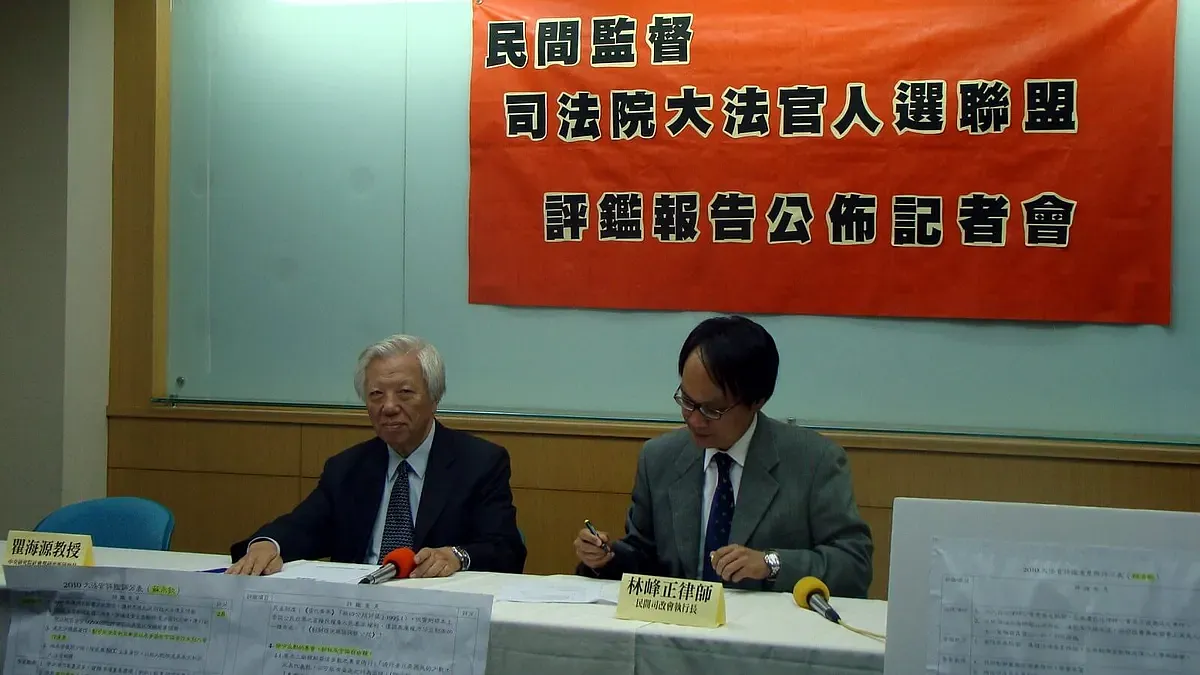
2010
Statement on the Legislative Yuan's Confirmation of the Nominees for Grand Justices and the President and Vice President of the Judicial Yuan
Today (October 8, 2010), the Legislative Yuan voted to confirm the appointment of Attorney Lai Hao-min as Grand Justice…
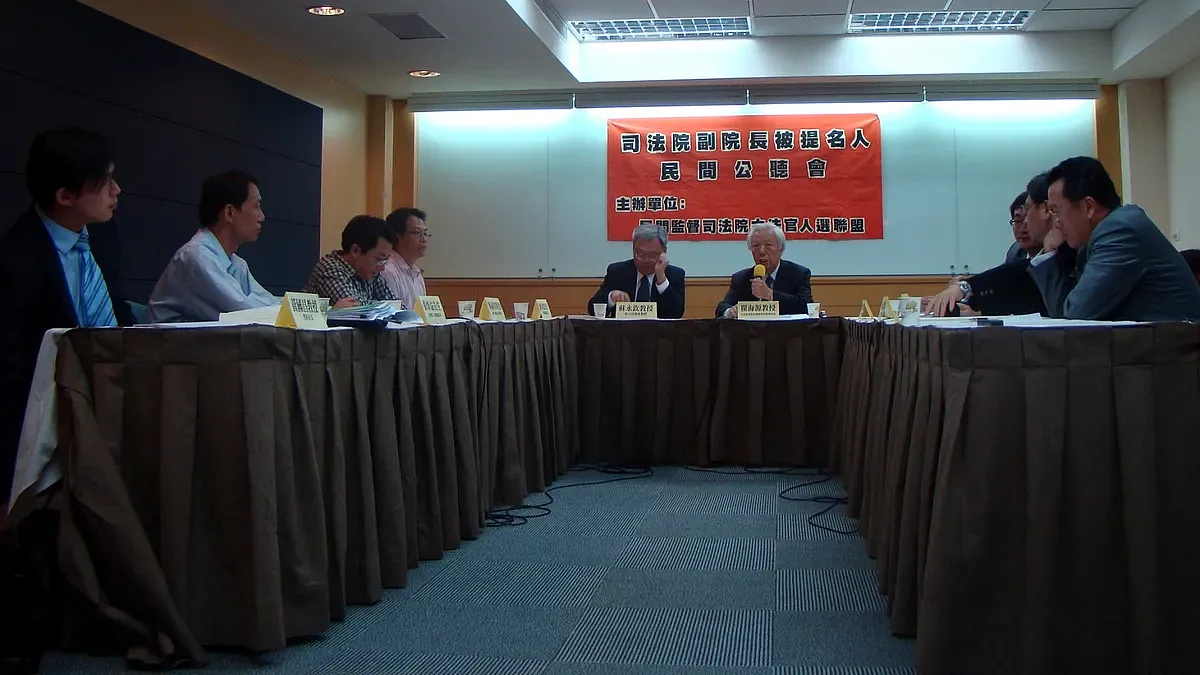
2010
Press Conference on the Release of the Evaluation Report for Judicial Yuan Grand Justice Nominees
Summary of the 2010 Evaluation Report on Nominees for Grand Justices and the President and Vice President of the…
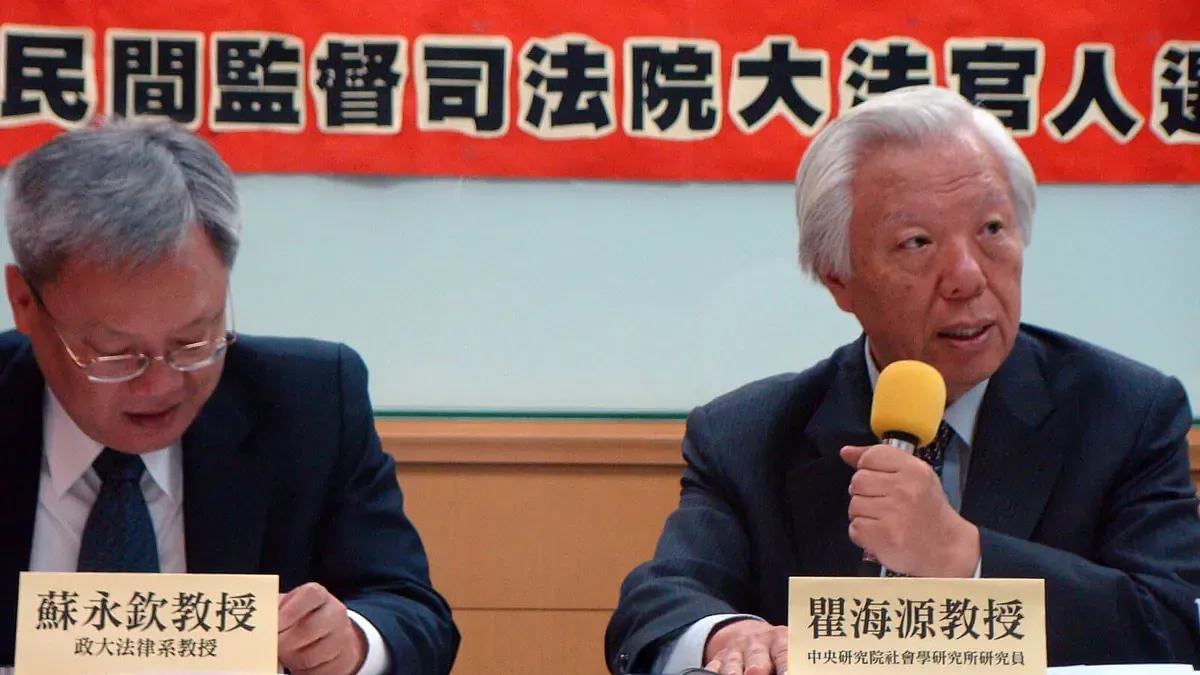
2010
Civil Society Public Hearing on the Vice-Presidential Nominee for the Judicial Yuan - Su Yung-chin
On August 24, President Ma Ying-jeou officially nominated Central Election Commission Chairman Lai Hao-min as President…
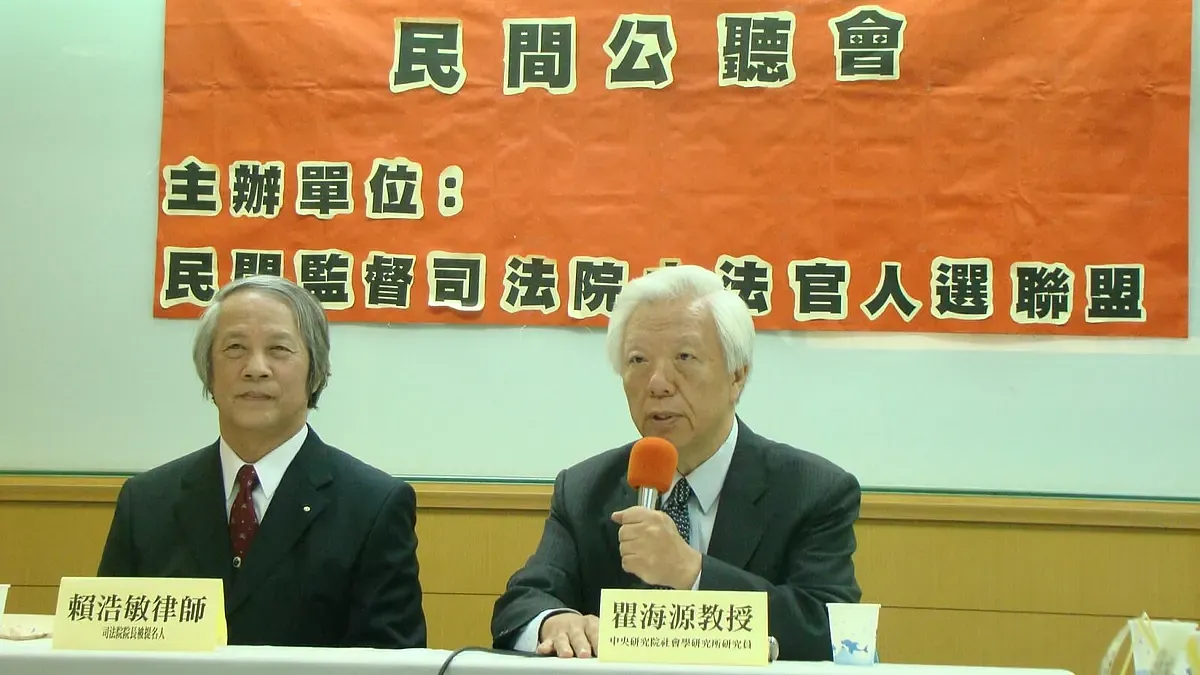
2010
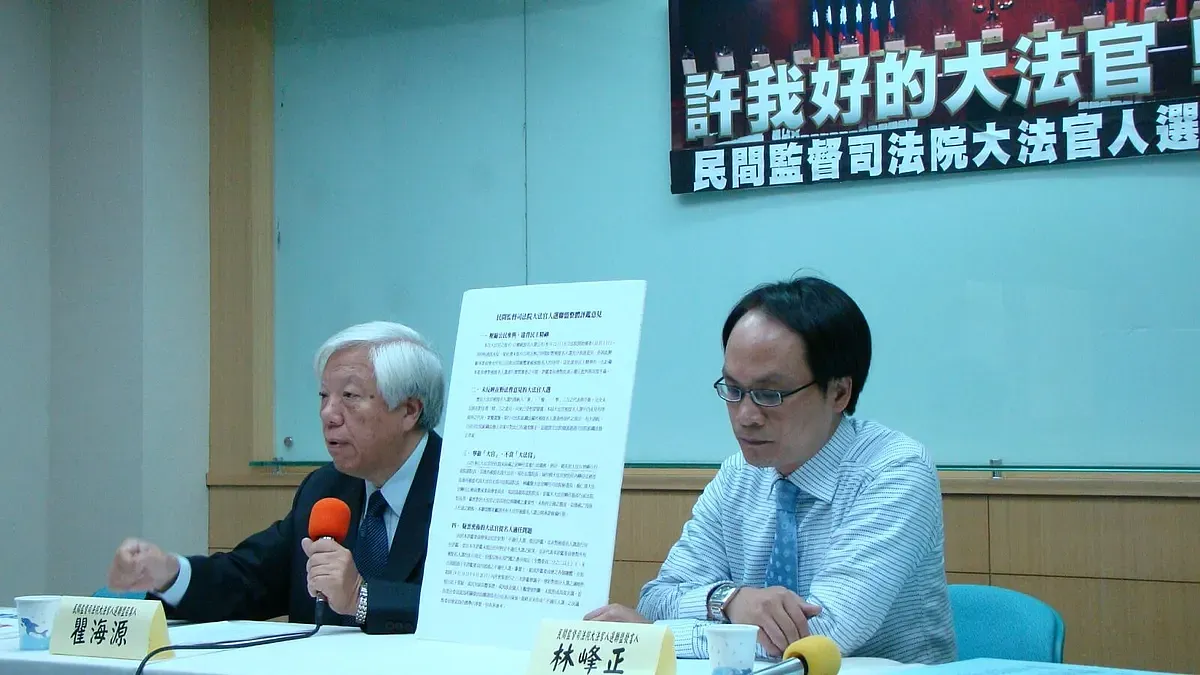
Civil Society Public Hearing on the Nominees for President and Vice President of the Judicial Yuan—賴浩敏 (Rai Hau-min)
On August 24, President Ma Ying-jeou officially nominated Central Election Commission Chairperson Rai Hau-min as…
2008
Legislative Observation Group Observation Comments - Statement by the Alliance for Citizen Monitoring of Judicial Yuan Grand Justice Nominees
Following the release of its evaluation report on the Grand Justice nominees on September 30, the "Alliance for Citizen…
2008
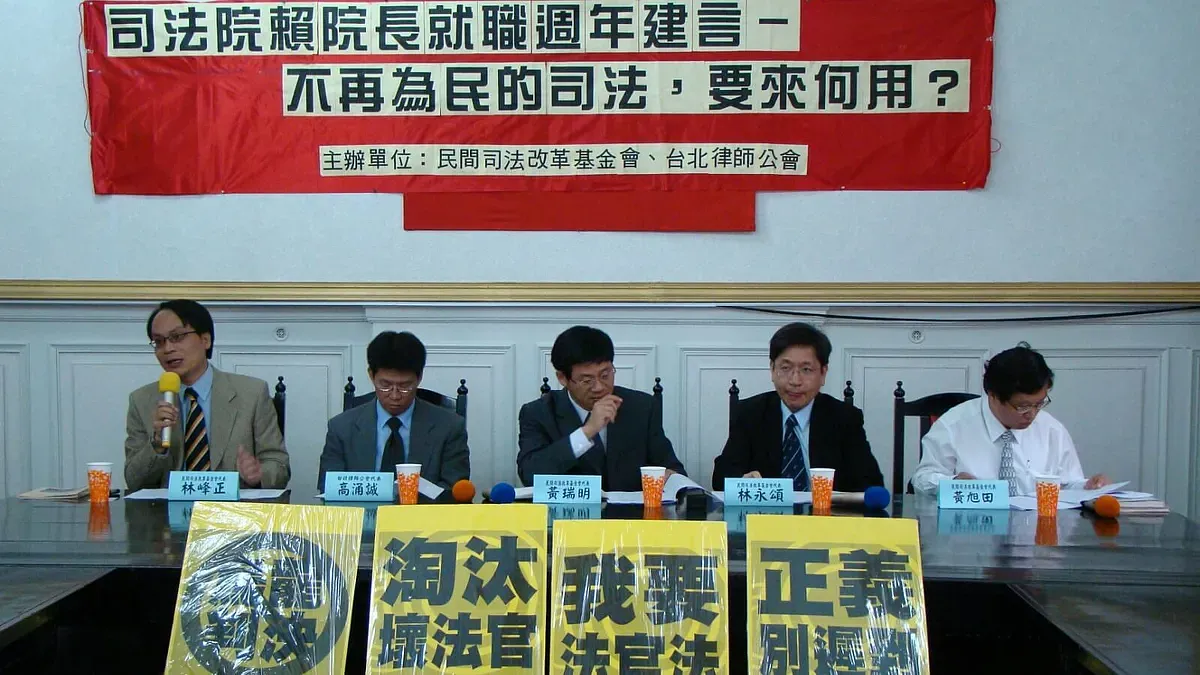
What is the Use of a Judiciary That No Longer Serves the People? Recommendations on the First Anniversary of Judicial Yuan President Lai In-jaw's Taking Office
On August 31, 2007, former President Chen Shui-bian nominated Grand Justice Lai In-jaw to serve as President of the…
2008
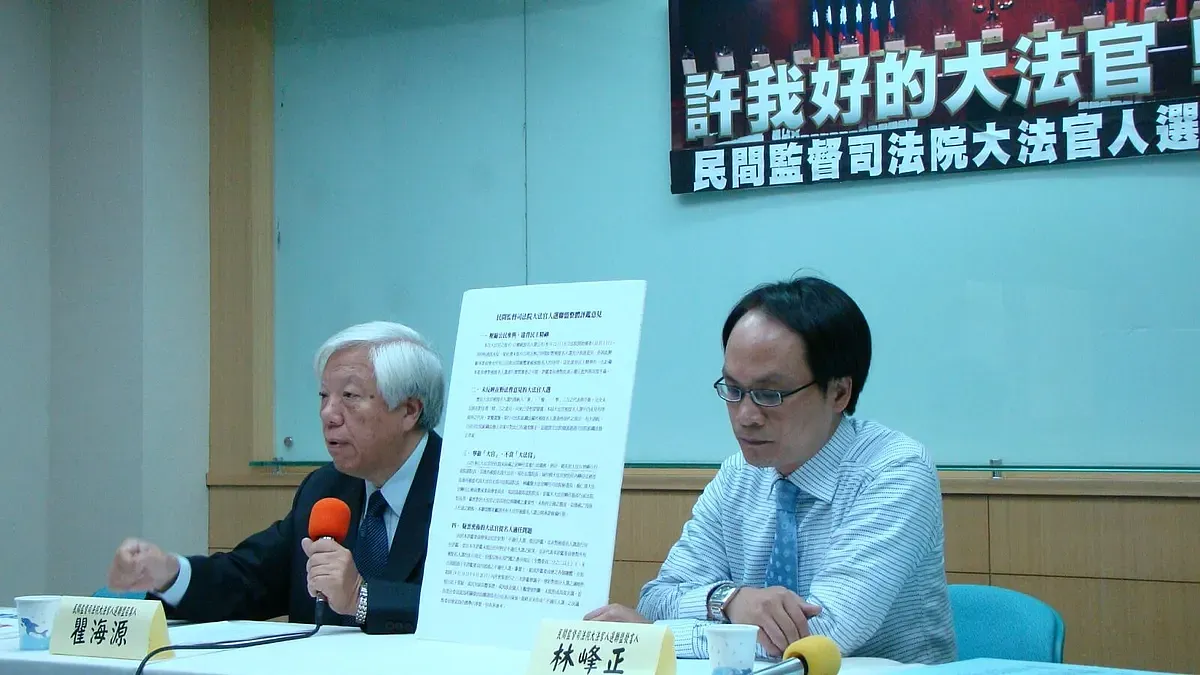
Civil Society Coalition for the Monitoring of Judicial Yuan Grand Justice Nominees Releases Evaluation Report
The Civil Society Coalition for the Monitoring of Judicial Yuan Grand Justice Nominees—comprising six civic groups…
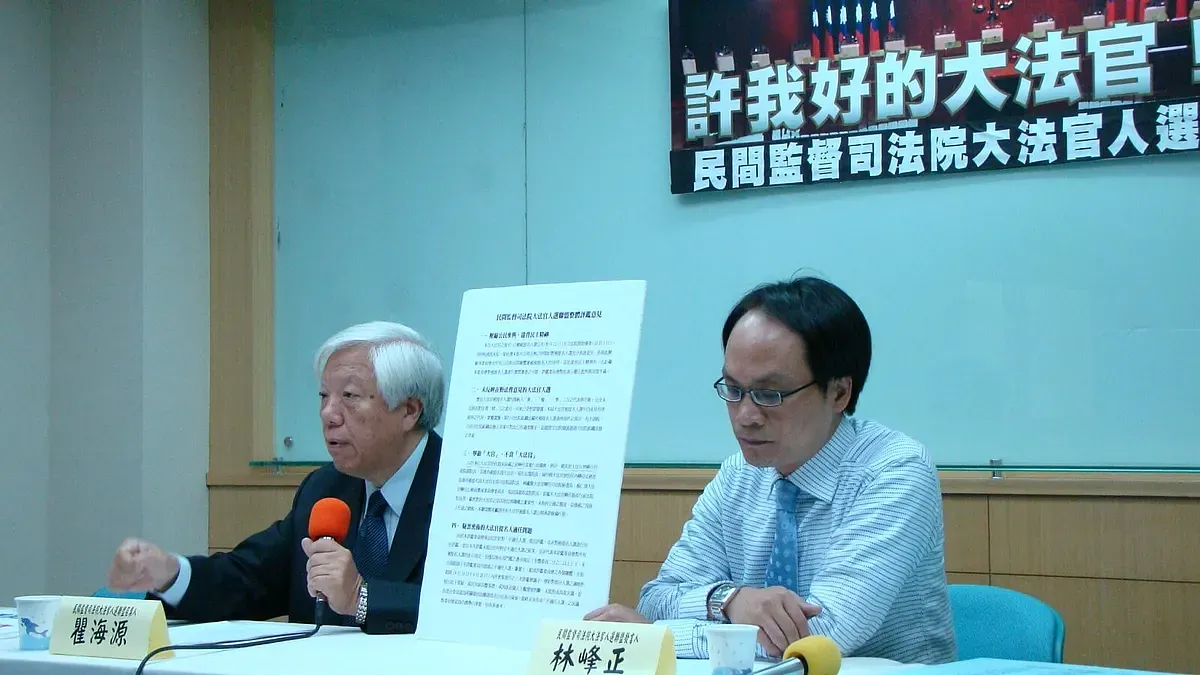
2008
Give Us Good Grand Justices ~ Citizens' Coalition for the Monitoring of Judicial Yuan Grand Justice Nominees
Established in 2003 by the Taiwan Law Society, Taiwan Association for Human Rights, Taiwan Association for University…
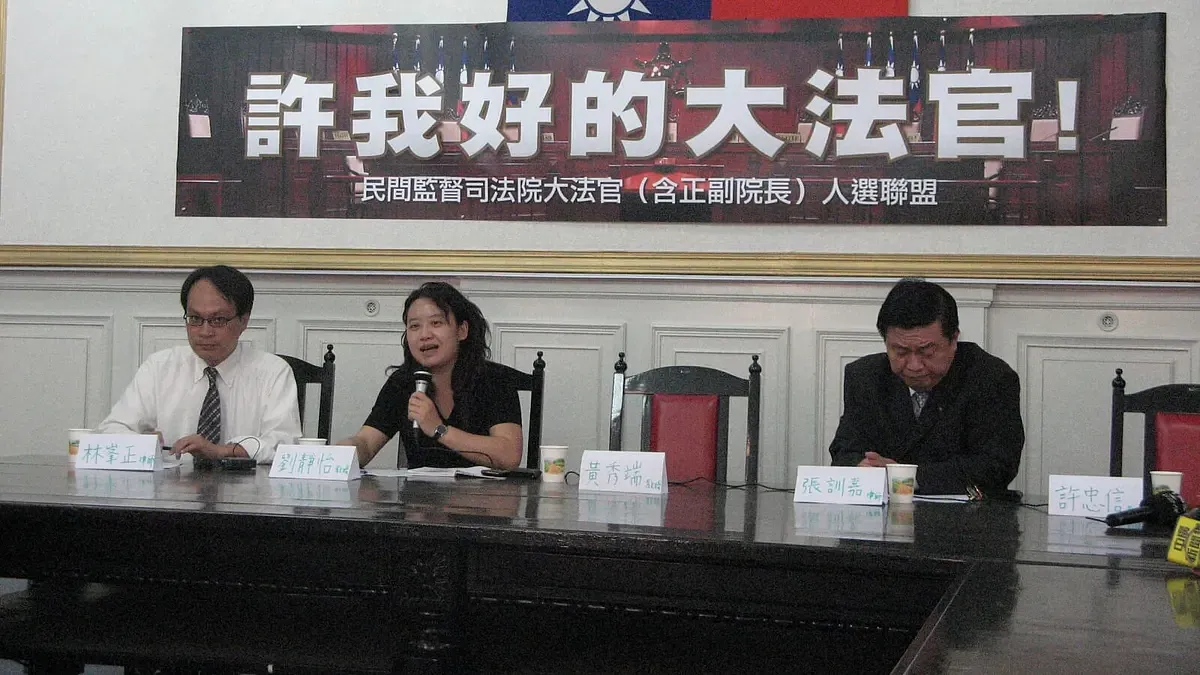
2007
Statement by the Alliance for Civilian Oversight of Candidates for Grand Justices of the Judicial Yuan (including the President and Vice President)
Because the Legislative Yuan continued to follow the old system for reviewing Grand Justice consent, using a Committee…
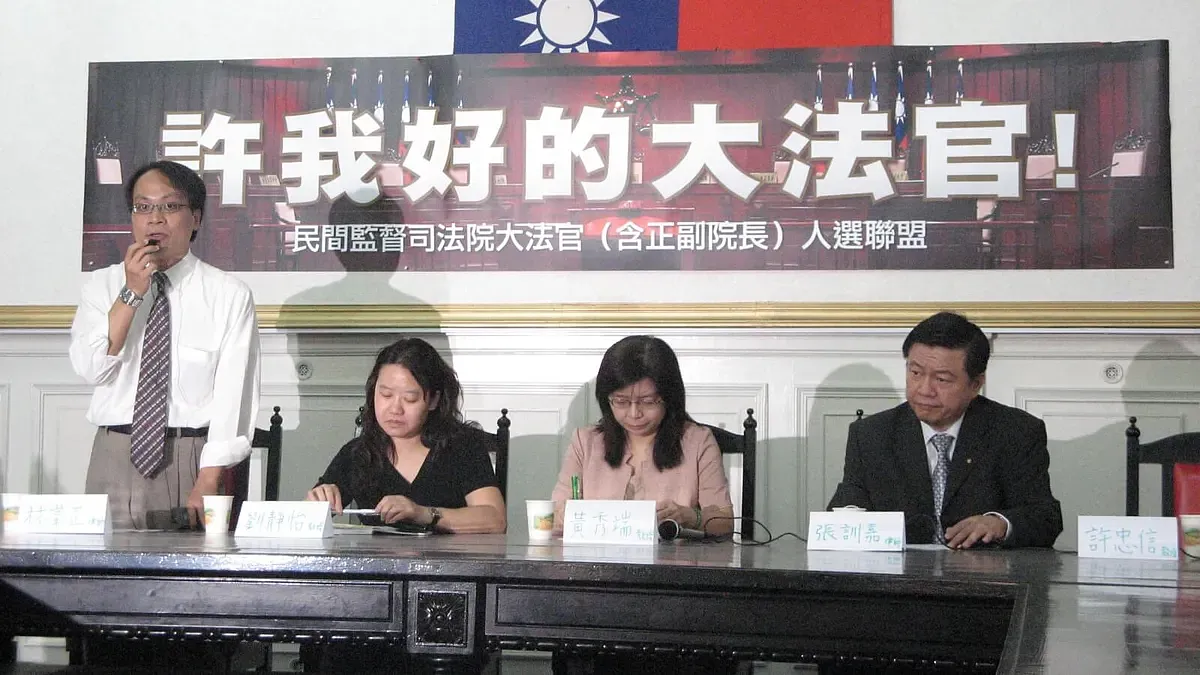
2007
Grand Justices, Give Us an Answer! 42 Questions for the President and Vice-President of the Judicial Yuan and Grand Justice Nominees
On August 31, 2007, President Chen Shui-bian nominated Lai In-jaw as President of the Judicial Yuan. In addition to…

2006
Statement by the Judicial Reform Foundation Regarding Grand Justices Involved in a Influence-Peddling Case
According to news reports, the Judicial Yuan applied double standards in handling the judicial influence-peddling cases…
2006
Statement by the Judicial Reform Foundation Regarding the Incident Involving Grand Justice Ch'eng Chung-mo
Regarding Grand Justice Cheng Chung-mo, we issue several statements and expectations strictly from the perspective of a…