
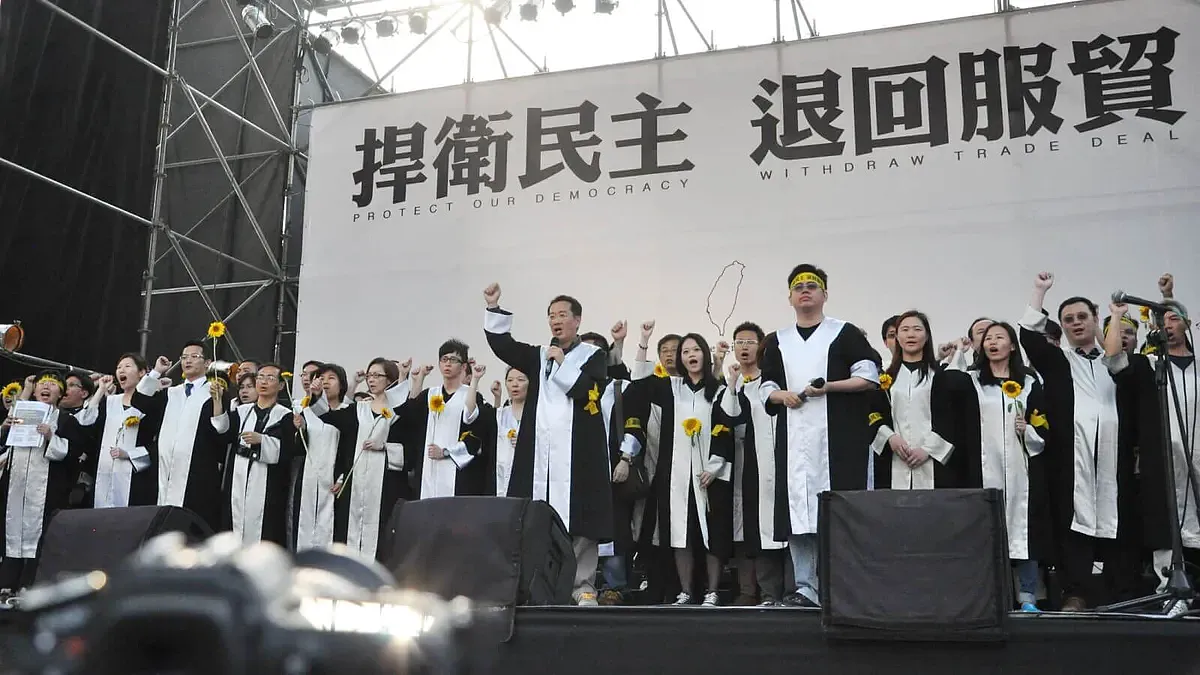
318 Anti-Black Box Cross-Strait Service Trade Agreement ("CSSTA") Volunteer Lawyers’ Platform | Litigation Database
Last edited: 2026-11-03
➤ The Content of the Database
The Categories of the Cases:
The cases handled by the 318 Anti-Black Box CSSTA Volunteer Lawyers’ Platform include those involving the 318 Incident and those related to the 324 Executive Yuan Expulsion Incident. Specifically, the latter cases are further divided into three categories:
- One of the categories consists of cases requiring legal defense due to charges arising from the occupation of the Legislative Yuan or the Executive Yuan. These charges include crimes such as unlawful entry, incitement to commit a crime, and destruction of property under government control.
- The second category consists of national compensation lawsuits filed due to violent expulsion by public authorities.
- The third category, known as “self-initiated litigation”, is the most complex in terms of case classification and data organization. This category is further divided into two subcategories based on citizens’ self-initiated accountability efforts from different perspectives and the court’s procedural handling, including consideration of case similarity or other procedural factors. These two subcategories target, respectively, frontline police officers who directly engaged in violence and senior police officers at various levels in the chain of command.
Noted: After the 318 Incident in 2014, subsequent events such as the 428 violent expulsion during the Zhongxiao West Road anti-nuclear power plant protest and the 626 Wulai road-blocking incident occurred. At that time, the volunteer lawyer team evolved into a broadly defined platform for supporting social movements. Consequently, cases related to these incidents were also handled by the same platform. However, due to the extensive amount of information, this database does not specifically process these cases. In particular, cases under the third category, “self-initiated litigation”, often involve unidentified police officers, making it difficult to pinpoint specific defendants. As a result, the available information is limited, consisting primarily of non-acceptance rulings or a small number of official documents.
The Types of Information:
- Due to the numerous cases and individuals involved, and the fact that different cases might pertain to the same legal issues, the information has been categorized simply by case number.
- Each “case number” folder contains various amounts of case materials, including court records, transcripts, hearing notices, etc.
- For the same case, the first trial and appellate proceedings are indicated by adding sequential numbers after a dash (e.g., 7-1, 7-2, 7-3).
- List of folders (arranged by case number): click the link.
➤ User Manual of the Database
Source of Information:
Over the past decade, the volunteer lawyers’ platform has been supported administratively by generations of volunteers and full-time staff. While some lawyers left the platform due to career planning or other reasons, new generations of lawyers continually joined to take up the work. As a result, until all cases were concluded, the data accumulated by the Judicial Reform Foundation (“JRF”) originated from various volunteer lawyers and individuals involved. The methods of archiving and scanning varied, and some materials were absent from this database because they were not returned.
Consent of Individuals:
Although the existing information in the JRF was provided by individuals and lawyers during the litigation process, the initial goal of this platform was not to establish an academic database but to address litigation needs in a timely manner. Therefore, no written authorization was obtained from the individuals to include this information in a database.
To address ethical concerns regarding future research, the JRF has attempted to obtain consent from individuals using existing contact information. Currently, only about half of the individuals can be reached. As such, the database cannot be fully disclosed on the website. Researchers interested in accessing the database may contact us through the following method. The JRF will get in touch with you after receiving your form.
- Name
- Affiliation
- Research content and expected scope of involved cases
- Email and phone
- Confidentiality Agreement and Consent (I understand that the database contains information partially authorized by individuals for public use, while the remaining content is for internal reference only. I hereby agree to participate in an interview with the JRF and sign the relevant confidentiality agreement and consent form before accessing and utilizing the database.)
Authorization-related matters: If you believe the information in the database pertains to your case and wish to provide authorization or request to stop access, please contact us through the following method.
Key points overview:
Since the information is organized by case number, and the litigation data collected over the past ten years is extensive, the limited resources available (such as the inability to integrate AI-powered search functions into the database) make searching challenging. If you wish to locate relevant information using specific topics as keywords, we recommend identifying potential case numbers through important judgments or news summaries.
This article is an AI-generated translation of the original Chinese text. In the event of any discrepancy, the Chinese version shall prevail.