
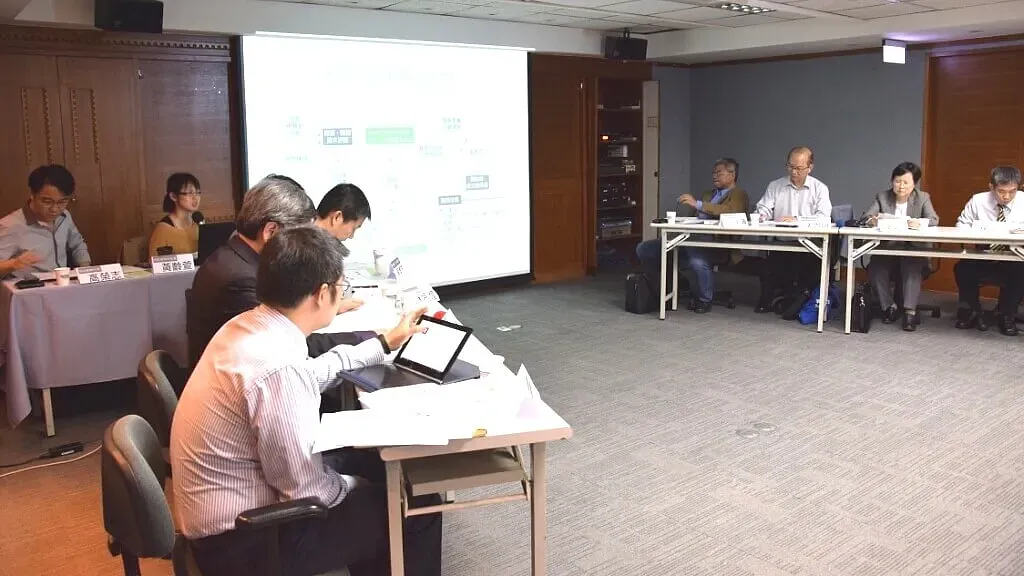
Event Record | 5th Anniversary Symposium on the Judges Act Individual Case Evaluation System
Last edited: 2026-07-27
Preface
Article 80 of the Constitution stipulates that judges shall lawfully conduct trials independently and without any interference. This endows judges with an independent and transcendent status, with the purpose of preventing judges from becoming tools for specific groups or individuals to pursue their own interests, thereby further enabling participants in litigation proceedings to trust and accept the court's judgment.
During the authoritarian era where party and state were indistinguishable, it was common for political departments to directly interfere with trial outcomes through judicial administration. Today, as political intervention in trials has significantly decreased, judges are questioned for hiding behind "judicial independence," abusing free conviction to make hasty rulings, thereby leading to miscarriages of justice or producing judgment outcomes that seriously deviate from everyday life experiences. This has caused the public to distrust the judiciary even more, shifting the focus of judicial reform from protecting judges from interference to eliminating incompetent judges.
The individual case evaluation system under the Judges Act was passed and implemented in such an atmosphere of the times, shouldering the vital responsibility of weeding out incompetent judges from beneath the umbrella of judicial independence, and attempting to align with the later-started prosecutorial system reforms, hoping to boost public trust in the judiciary and reverse the public's negative perceptions of it.
In the blink of an eye, the individual case evaluation system is about to enter its 6th year. It has been 18 years since the civil society version of the draft Judges Act first entered the Legislative Yuan. Many cases have clearly shown that the numerous struggles and compromises during the legislative process of the Judges Act are solidly reflected in the many restrictions faced during the implementation of the individual case evaluation system.
JRF has long focused on the reform of the judicial and prosecutorial systems, hoping to share our observations on the individual case evaluation system from a supervisory perspective and looking forward to fostering a more sophisticated design for the individual case evaluation system.

Report Seven Myths of the Individual Case Evaluation System
Kao Jung-chih, CEO, Judicial Reform Foundation
When the public begins to hope that the judiciary will swing from "independence" to "accountability," the passage of the evaluation system and the Judges Act actually emerged under the structural context behind this great era...

Report 5th Anniversary Observation Report on the Individual Case Evaluation System under the Judges Act
Huang Ling-hsuan, Executive Secretary, Judicial Reform Foundation
Today, as the individual case evaluation system marks its fifth anniversary of implementation, the JRF, as a petitioner for individual case evaluations and a reform group that has long focused on the supervision of judges and prosecutors, intends to summarize our participatory experience and observations thus far, outline the implementation profile of the individual case evaluation system, and analyze the factors shaping such a profile, serving as a modest contribution to provoke further discussion as a starting point for the future reform directions of the individual case evaluation system.

Panelist Taiwan's Judiciary Should Be Subject to Democratic Political Supervision
Wang Chin-shou, Professor, Department of Political Science, National Cheng Kung University
I am very glad to have this opportunity today to share my views and opinions on this matter. Today's panel discussion is divided into three parts: first, views on this report; second, the role of the Judicial Reform Foundation; and finally, the overall Taiwanese society's views on the evaluation of judges and prosecutors.

Panelist Unclear Legal Status Between the Prosecutorial Personnel Review Committee and the Prosecutor Review Commission
Wu Tsui-fang, Chief Prosecutor, Taiwan High Court Taichung Branch Prosecutors Office
The Prosecutor Review Commission is established pursuant to the Judges Act with the purpose of making resolutions on the suitability of prosecutors referred for evaluation. If it is deemed necessary to impose disciplinary action, the matter is submitted to the Prosecutorial Personnel Review Committee for processing. After participating in the decision-making of prosecutor reviews in practice, I believe that one of the biggest problems under the current system is the unclear legal status between the Review Commission and the Personnel Review Committee.

Panelist The Public, as Users of the Judiciary, Naturally Care About "Attitude"
Shih Hung-cheng, Attorney, Representative of the Taipei Bar Association
Many commentaries suggest that the JRF seems to be nitpicking judges' courtroom attitudes. However, as the primary users of the judiciary, the public naturally cares about the judges' attitudes and whether they will be respected by judges when exercising their rights.

Panelist An Independent Evaluation Institution Should Be Established
Lin Chen-huang, Chairman, Chinese Association for Human Rights
There should be an independent evaluation institution domestically, capable of designing more appropriate questionnaires and public opinion polls. Furthermore, when flawed behavior occurs in individual judges, past cases handled by those judges can be retroactively investigated...

Panelist Judicial Evaluation Should Have a Three-Strikes Provision
Chiang Shih-ming, Distinguished Professor, Department of Law, National Chengchi University
When evaluating judges, attention should be paid to the "principle of proportionality" in evaluations. Especially when a single act occurs once, it should not directly lead to the impeachment of a judge. I believe that judicial evaluation should have a three-strikes provision; that is, a judge's improper adjudication must occur three times or more before there is a necessity for disbarment/removal.

Panelist The Evaluation System in Relation to the Judicial System
Tsai Po-fang, Assistant Professor, Graduate Institute of Medical Humanities, Taipei Medical University
If the judicial system is to introduce an evaluation system from elsewhere, it must consider what kind of evaluation method is suitable for the judicial system.

Panelist The Current System Can Achieve Supervisory Effects If Implemented Properly
Lin San-yuan, Deputy Director, Department of Judicial Administration, Judicial Yuan
If the current system is operated well, it is sufficient to achieve the purpose of supervision, but why can it not be done well under the existing system? This may instead be the reason we need to review. Properly reviewing this reason may allow the judge and prosecutor evaluation system to move toward a more positive direction.
This article is an AI-generated translation of the original Chinese text. In the event of any discrepancy, the Chinese version shall prevail.