
Talk Collaboration
📋 Notes Prior to Application
- JRF is a non-governmental organization (NGO) and non-profit organization (NPO). All required funds are self-raised, and we do not apply for government funding. Due to limited resources and manpower, partnership sessions are subject to the availability of internal resources and scheduling. Thank you for your understanding.
- Please submit your application "2 months prior" to the scheduled event date to facilitate speaker scheduling.
- In principle, the inviting party shall bear the speaker's travel expenses and lecture fee. For the fee standards, please refer to the Executive Yuan's "Directions on Remuneration for Lecturers".
- As JRF advocates for judicial reform, we do not provide legal consultation services, nor do we introduce attorneys to the public.
- Lectures are divided into three categories: cases, issues, and everyday law. Speakers will include exonerees, attorneys, or JRF members. For certain lecture topics, please provide a full block of time of at least 2 hours (or 2 class periods).
- Lecture partnerships are not limited to campuses (lectures, club classes, activities). We are willing to visit community colleges, local associations, organizations, institutions, and more. You are welcome to fill out the form to partner with us.
- In addition to single-session partnerships, we are also happy to discuss with teachers to provide serialized modular courses.
Lecture Topics and Course Introductions
Case Introduction: On March 24, 1991, the "Wu Couple Murder Case" occurred in Hsichih. The prosecutor indicted Ch'en Chien-hao (蘇建和), Liu Bing-lang (劉秉郎), and Chuang Lin-xun (莊林勳) based solely on the defendants' confessions without attaching any evidence. The confessions obtained through torture and the fingerprint identifications used to solve the case also vanished... On February 4, 1995, the death penalty was finalized. On May 18, 2000, the Taiwan High Court ruled to initiate a retrial. On August 31, 2012, they were acquitted in the third retrial. From detention to a finalized acquittal, the three individuals endured a long journey of approximately 21 years.
Course Objectives: The Ch'en Chien-hao case is the first case in Taiwan's judicial history where a finalized death penalty was overturned and changed to an acquittal. Through this topic, students can gain an initial glimpse into the landscape of criminal justice, understand the severe human rights violations in past criminal investigations, and develop a deeper understanding of due process, the presumption of innocence, criminal justice procedures, and the plight of wrongful conviction victims.
※ Depending on circumstances, Ch'en Chien-hao himself may be arranged to give a lecture.
(Click here to learn more about the Ch'en Chien-hao case)
Case Introduction: In 1995, Hsu Tzu-chiang (徐自強) was wrongfully implicated in a kidnapping and murder case. There was no direct evidence in this case, only confessions from two other defendants. Hsu Tzu-chiang was even able to provide an alibi for that day, yet he was still sentenced to death. Afterward, he endured 7 death sentences, 2 life imprisonments, 1 Judicial Yuan Interpretation, and 5 extraordinary appeals. On September 1, 2015, the Taiwan High Court delivered a verdict of acquittal. On October 13, 2016, the Supreme Court dismissed the prosecutor's appeal, finalizing his acquittal and clearing his name after 21 years of injustice.
During the rescue process of this case, the pro bono defense counsel successfully petitioned the Grand Justices for a constitutional interpretation. The resulting Interpretation No. 582 in 2004 marked a crucial turning point for Taiwan's judiciary in bidding farewell to the era of conviction based solely on co-defendants' confessions.
Course Objectives: Explore judicial injustice and the causes of wrongful convictions through the rebirth journey of a survivor from death row, understand key reforms in Taiwan's judicial human rights, critically examine the presumption of innocence, and advance to discuss topics such as Interpretation No. 582 and the Criminal Speedy Trial Act.
※ Depending on circumstances, Hsu Tzu-chiang himself may be arranged to give a personal lecture.
(Click here to learn more about the Hsu Tzu-chiang case)
Case Introduction: In 1988, Chiou Ho-shun (邱和順) and 12 other defendants were accused of jointly committing the 1987 "Miao-li Female Insurance Agent Ko Hung Yu-lan Dismemberment Case" and the "Hsinchu Schoolchild Lu Cheng Kidnapping Case." After undergoing 11 retrials, the Chiou Ho-shun case resulted in a finalized death sentence in 2011. However, both major criminal cases lacked physical evidence, relying solely on 288 self-contradictory confession records and a flawed voiceprint analysis report for the final verdict. Chiou Ho-shun has been detained since 1988 for over 36 years and is currently still waiting in prison.
Course Objectives: Chiou Ho-shun is the death row inmate who has been detained the longest in Taiwan's judicial history without yet being vindicated. Through this topic, students can gain an initial glimpse into the dilemmas of wrongful conviction rescue, understand the gap between "legal provisions" and "actual implementation," and develop a deeper understanding of due process and the presumption of innocence.
(Click here to learn more about the Chiou Ho-shun case)
Case Introduction: Lo Ming-ts'un (羅明村), serving as the chief of the criminal investigation division at a police precinct in 1997, was accused of accepting a bribe of 500,000 NTD from gangsters to shield the real culprit of a shooting case. The case lacked physical evidence and relied mainly on testimony obtained through improper interrogation to secure a conviction. Regarding the time the court determined Lo Ming-ts'un met with the briber, he had an alibi; the lie detector report used as corroborating evidence for the conviction was also flawed. After multiple trials, he was sentenced to 13 years in prison with finality in 2009.
Upon reviewing the interrogation and lie detector recordings from the investigation station during the first retrial, the court faced the flaws in the interrogation and lie detector test, reversing the decision to an acquittal. However, the prosecutor appealed beyond the statutory period, and the Supreme Court still revoked and remanded the case, ultimately finalizing a guilty verdict.
Course Objectives: Through the introduction of wrongful and erroneous cases, enable students to identify the primary factors leading to wrongful convictions, understand judicial procedures and discuss the concept of procedural justice, and cultivate civic awareness in paying attention to wrongful convictions and participating in judicial reform.
(Click here to learn more about the Lo Ming-ts'un case)
Case Introduction: While serving as a civil servant, Tai Li-shen (戴立紳) discovered that his superior instructed him to keep false accounts and misappropriate public funds for private use. Driven by his conscience, he confessed through the ethics office to the Agency Against Corruption and provided strong evidence to assist the investigation. The court deemed that he was courageous in reporting without fear of pressure and issued a "sentence exemption judgment." However, in 2016, because of this judgment, he was dismissed from his position by the Hsinchu County Government and barred from re-employment for life, a status that could not be changed even after exhausting judicial remedies.
Course Objectives: This case reveals the inadequacies of our country's "whistleblower protection system." It encourages learners to think about the role of citizens in upholding social justice and develops civic action capacity to promote human rights protection and institutional reform.
(Click here to learn more about the Tai Li-shen case)
Case Introduction: Wang Lung-ch'ang (王隆昌) was temporarily added as one of the 17 review committee members for the Nangang Exhibition Center engineering project in 2003, participating in only one selection process. In 2008, the Special Investigation Division investigated and determined that the winning company had bribed him. The case had no accounting books, no wiretapping transcripts, no objective contact records, and his account showed no abnormal financial flows. The court convicted Wang Lung-ch'ang of accepting bribes and sentenced him to 7 years and 8 months in prison based solely on the self-contradictory testimony of an accomplice witness. In 2013, the Control Yuan investigated and found numerous doubts; in 2015, an extraordinary appeal was dismissed, and he still eagerly looks forward to the judiciary returning his innocence.
Course Objectives: Discuss evidence collection and application, investigative procedural justice, and trial bias, and prompt learners to think about how to prevent wrongful convictions through a sound legal system, cultivating actionable knowledge and capability to pay attention to wrongful convictions and participate in judicial reform.
(Click here to learn more about the Wang Lung-ch'ang case)
Related article: When Social Workers Encounter Criminal Cases
Target Audience: College and university social work students, internal training for social work organizations, those concerned with children and youth rights
| Topic | Introduction |
|---|---|
B01
What is Judicial Reform All About?: JRF and Taiwan's Judicial Human Rights |
Established in 1995, JRF is Taiwan's most senior non-governmental judicial reform organization. What contributions has the 30-year judicial reform movement made to judicial human rights? Do you know what problems currently plague the judiciary? This lecture will introduce the origins and operations of JRF, as well as the role of NGOs and NPOs in civil society. Target Audience: Students at all educational stages, members of the public |
B02
Taking the Bench, Laypersons Please Be Seated: The Citizen Participation in Trials System |
Starting in 2023, Taiwan officially implemented the "Citizen Judge System." Citizens aged 23 and above have the opportunity to be selected to try major criminal cases. Why introduce citizen judges? Will public participation in trials enhance public trust? What are its distinctive features compared to foreign systems? This lecture introduces trial procedures and basic criminal trial principles, discusses substantive and procedural justice, and fosters independent thinking skills. It can also be combined with the [Citizen Judge Mock Trial] as a series of activities; please refer to Campus Mock Trials and Introduction to the Citizen Judge System. Target Audience: Students in junior high school and above, members of the public |
B03
Guardians of Justice: How to Remove Unfit Judges and Prosecutors |
While upholding judicial independence, how can judicial accountability be effectively practiced? Having actively promoted the legislation and amendment of the Judges Act for years, our core concerns are threefold: "Where do good judges come from?," "How to protect judges' tenure?," and "How to weed out unfit judges?" Starting from cases, this lecture introduces institutional changes in supervising judges and prosecutors, and analyzes issues such as heavy workloads and litigation system reforms from the perspective of "enhancing judicial quality." Target Audience: University students and above (law-related majors preferred) Learn more: Judge and Prosecutor Evaluation / Judicial System Reform / Prosecutorial System Reform |
B04
Social Action for Wrongful Conviction Vindication |
How to determine a "wrongful conviction"? How should wrongful convictions be vindicated? How to grasp case information, analyze dossier evidence, judge the causes of wrongful convictions, and plan and execute vindication actions? In addition to introducing systems and actions such as retrials, extraordinary appeals, Control Yuan petitions, and constitutional interpretations, this lecture can also share our rescue journey of accompanying the innocent in seeking innocence. Advanced content may cover "systemic dilemmas of unvindicated cases." Target Audience: Students at all educational stages, members of the public |
B06
The #MeToo Movement: Tearing Down the High Walls of Gender Inequality |
In May 2023, Taiwan's #MeToo movement expanded to fields such as media, campuses, sports, arts, and culture. This lecture focuses on the human rights concepts of gender and diverse gender equality, inspires equality awareness from daily experiences, and introduces legal systems such as the "Three Gender Equity Acts," "Digital Sexual Violence Prevention," the "Stalking and Harassment Prevention Act," and the "Crime Victim Rights Protection Act," along with gender equality awareness and responses within the judicial system. Target Audience: Students at all educational stages, members of the public (Learn more about gender judicial reform) |
B07
How Can Attorneys Change Society?: Pro Bono Attorney Career Experience Sharing |
Protecting human rights, realizing social justice, and promoting democratic rule of law are the missions of attorneys. Frequently called "members of the unofficial bar," how can attorneys exert influence and change society? Beyond court hearings and drafting legal briefs, what other forms do attorneys' jobs take? This lecture invites attorneys to personally share their experiences and mental journeys in practicing pro bono work. Target Audience: Students at all educational stages, members of the public |
B09
The Entanglement Between Traffic Codes and the Principle of Non-Disclosure of Investigation |
Media reports often feature patterns such as "public trial by media, judgement before trial, public trials by public opinion, and vigilante justice," compromising the privacy of suspects and victims and casting doubt on the independence and impartiality of the judiciary. Even though the Directions on Non-Disclosure of Investigation were revised again in 2019, instances of "widespread disclosure of investigations" still exist in practice. Starting from the interaction between media and the judiciary, this lecture fosters critical thinking and media literacy. Target Audience: Students in junior high school and above (university and above preferred), members of the public |
B10
"This... Is Poisoned?": Mystery Legal Dramas in Session |
Getting into trouble from "seeing a rainbow" or "drinking coffee"? Buying drugs online may violate severe crimes equivalent to trafficking? Through judgments and case studies, this lecture explains that seemingly "nothing much" actions after contacting drugs actually carry heavy costs. At the same time, from the perspective of "criminal policy," it criticizes and offers suggestions regarding our country's "punitive escalation" policy on drug prevention, guiding trainees to think about the social problems of drugs from the perspective of policymakers. Target Audience: Students at all educational stages, members of the public |
B11
When Social Workers Encounter Criminal Cases, What Should They Do? |
|
B12
Our Distance from State Violence |
In recent years, there have been many cases of police using excessive force, ranging from the "Chungho Police Precinct Head-Kicking Incident," the "Pingtung County Police Precinct Officer Allegedly Beating a Suspect to Death Incident," to the "March 24 Executive Yuan Eviction Incident"—on the night of March 24, 2014, police assaulted citizens who took to the streets to express their freedom of speech and assembly, and no assaulting police officer has been held responsible to this day. This lecture guides trainees to understand state violence, and through the subsequent 10-year lawsuit, envisions prospects for ending state violence. Target Audience: Students in junior high school and above, members of the public |
B14
How to Prevent Fraud and Avoid Becoming a Wrongful Conviction Victim of "Dummy Accounts" |
Fraud schemes take myriad forms, and "dummy accounts" are a tactic commonly used by fraud syndicates. Account holders who are deceived are very likely to be found guilty by the court as "accomplices to fraud." This lecture helps the public identify risks, increases legal knowledge for risk avoidance, and introduces the derivative issues of the newly added offense of "unjustifiably handing over accounts" under the Money Laundering Control Act. Target Audience: ・Students at all educational stages (focusing on cases of online dating, online games, and job application fraud) ・Members of the public (focusing on cases of transaction, job application, and forged official document fraud) (What should I do if my account might be used as a dummy account by a fraud syndicate?) |
B15
Drug Safety Education and Juvenile Delinquency Handling |
Facing rampant drug use on campuses, what should frontline teachers do? This lecture covers "campus drug abuse prevention" and "juvenile regulations and counseling practice," using legal knowledge and practical expertise to serve as the backing for school teachers. Through case studies, it dispels myths about "drug users" and helps teachers understand the plight and needs of drug-using students. Target Audience: Junior and senior high school teachers |
| Topic | Introduction |
|---|---|
C01
Just Playing Around?: Prevention of Bullying and Unlawful Infringement |
What is defamation? What constitutes public insult? What legal liabilities might cyberbullying, online harassment, and other behaviors involve? And how should the boundary with freedom of speech be understood? Sometimes, what you think is a "joke" or "prank" actually constitutes "discrimination" or "bullying." This lecture introduces the legal systems and issues of discrimination, microaggressions, and bullying, leading trainees to learn relevant legal knowledge. Target Audience: ・Students at all educational stages (focusing on campus-type bullying, introducing the rule of law spirit of the Campus Bullying Prevention Guidelines) ・Members of the public (focusing on workplace-type bullying, introducing "self-defense and self-rescue techniques" and labor rights issues) ・Junior and senior high school teachers (introducing regulatory requirements and case handling) |
C03
Digital Rule of Law: Digital Information Security and Personal Data Security and Protection |
In an era of rapid digital development, our country is actively promoting discussions on the framework of a "Digital Basic Act" to comprehensively address digital challenges. JRF has participated in the digital ID card litigation and the National Health Insurance Database constitutional litigation, and has conducted in-depth research on the revision of the Science and Technology Investigative Methods Act, the Communication Security and Surveillance Act, and the draft Digital Intermediary Services Act. This lecture discusses the personal data and privacy risks faced by the public in the digital world, sharing internet policies and data protection mechanisms in a simple and easy-to-understand manner. Target Audience: Students at all educational stages, members of the public |
C06
Practical Legal Knowledge: Real Estate, Asset Planning, and Wills |
When facing inheritance issues, the considerations of the public are usually tax burdens related to asset transfer and gifting. Attorneys explain various taxation risks through practical examples. This lecture also touches upon issues related to judicial reform: for instance, the risks and responses when elderly family members gradually develop dementia and may be defrauded, leading to massive property losses. Learn practical legal knowledge through small stories. Target Audience: Members of the public |
C07
Happy Community Life: Handling of Common Condominium Disputes and New Regulatory Insights |
Can community management committee regulations restrict the feeding of stray animals? When enduring noisy neighbors, how can the management committee help me? The practical operation of condominium legal regulations is like a community "civics class." Let attorneys analyze for you the rule of law literacy required for the democratic governance of community norms. Target Audience: Members of the public |
Partnership Application
Please fill out the form below, and we will contact you to confirm upon receiving your application.
Contact Us
Regions in Charge
Keelung, New Taipei, Taipei, Yilan, Taitung, Hualien, Yunlin,
Chiayi, Tainan, Kaohsiung, Pingtung, Penghu, Kinmen, Matsu
- Legal Education Manager Pan Pei-chen (潘蓓臻)
- Phone: (02) 2523-1178 #16
- pbz@jrf.org.tw
Regions in Charge
Taoyuan, Hsinchu, Miaoli, Nantou,台中, Changhua
- Legal Education Specialist Ch'en Li-ling (陳俐伶)
- Phone: (04) 2329-2372 #13
- chnllng@jrf.org.tw
If You Agree That "Rule of Law" is an Essential Life Course
Schools, organizations, and companies are welcome to fill out the application form to initiate lecture cooperation with us.
Fill Out Application Form Apply for Mock Trial Partnership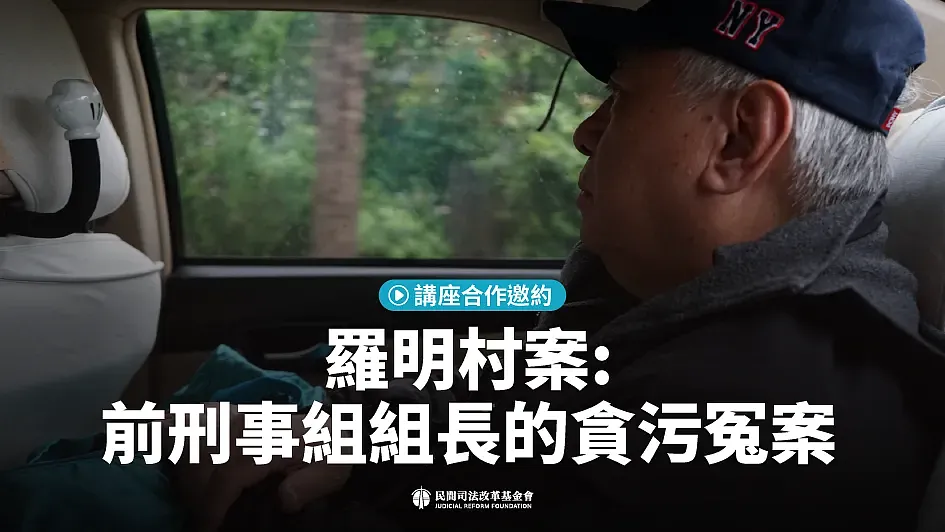
2024
Invitation for Lecture Collaboration on the Lo Ming-ts'un Case | A Wrongful Corruption Conviction of a Former Criminal Investigation Unit Chief
Amidst the sweltering summer heat, while we enjoy our moments of freedom, Lo Ming-ts'un is locked away in a dreary…
2024
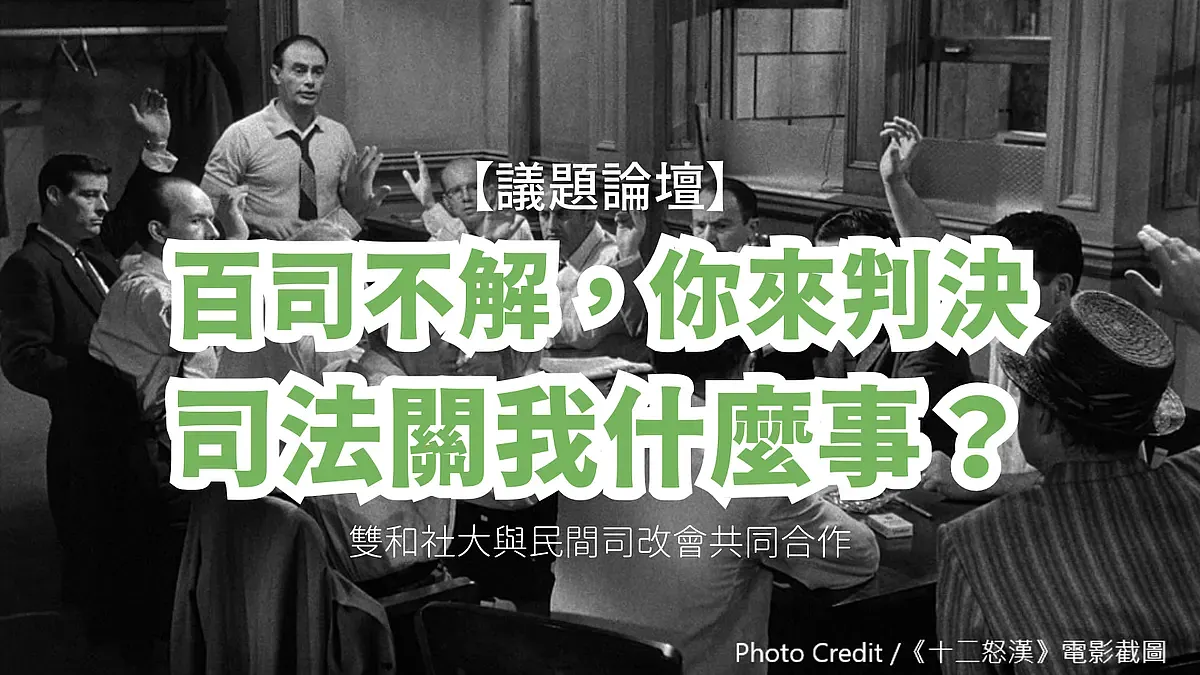
Issue Forum | A Hundred Puzzles, You Be the Judge—What Does the Judiciary Have to Do with Me?
Yunghe Community University and New Chungho Community University are rooted in the founding ideal of "shaping a civil…
2024
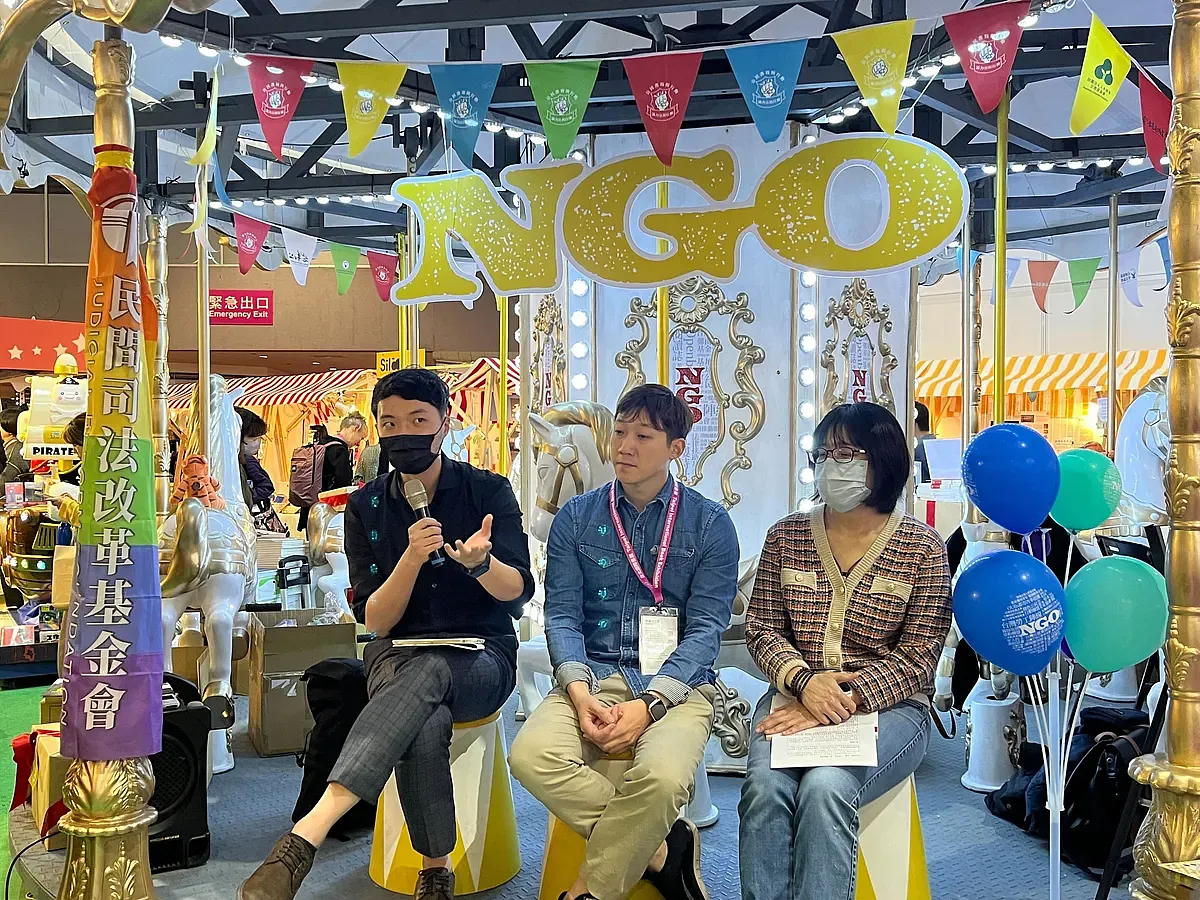
"Coexistence & Symbiosis: Do You Understand Kids' Affairs?" – Author Sharing Event for "The Drug-Using Teenager: Campus Regulations and Counseling Practice for Teachers"
2024 Citizen Book Fair Speech Record | Time | February 23, 2024, 19:00~20:00 | Venue | 2024 Taipei International Book…
2024
Juvenile Justice and Interaction with Schools—Records of the Taipei Bar Association's Rule of Law Education Event (1)
(1) Experiences in Campus Anti-Drug Education (2) Interaction Between Juvenile Justice and Schools
2024
Campus Substance Use Issues and Intervention — Taipei Bar Association Rule-of-Law Education Activity Records (3)
1. Campus Substance Use Issues and Intervention (1) Case Counseling (2) Resource Connection 2. General Questions and…
2024
Child and Youth Protection Reporting Practice - Taipei Bar Association Rule of Law Education Event Records (2)
(1) Encountering Juveniles (2) Treatment Services (3) Ethical Dilemmas (4) Becoming Better Adults
2023
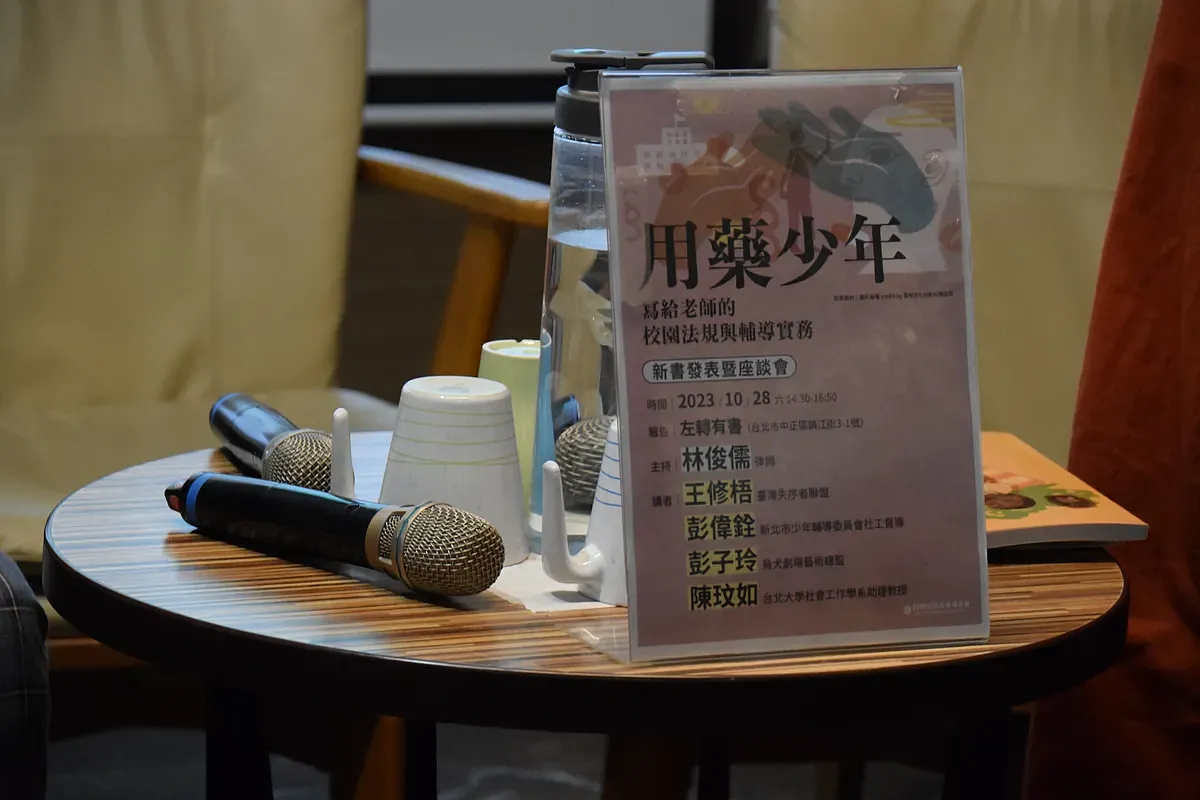
Sidelights | Book Launch: "Youth and Drug Use: Campus Regulations and Counseling Practices for Teachers"
The authors of "Youth and Drug Use: Campus Regulations and Counseling Practices for Teachers" share their thoughts and…
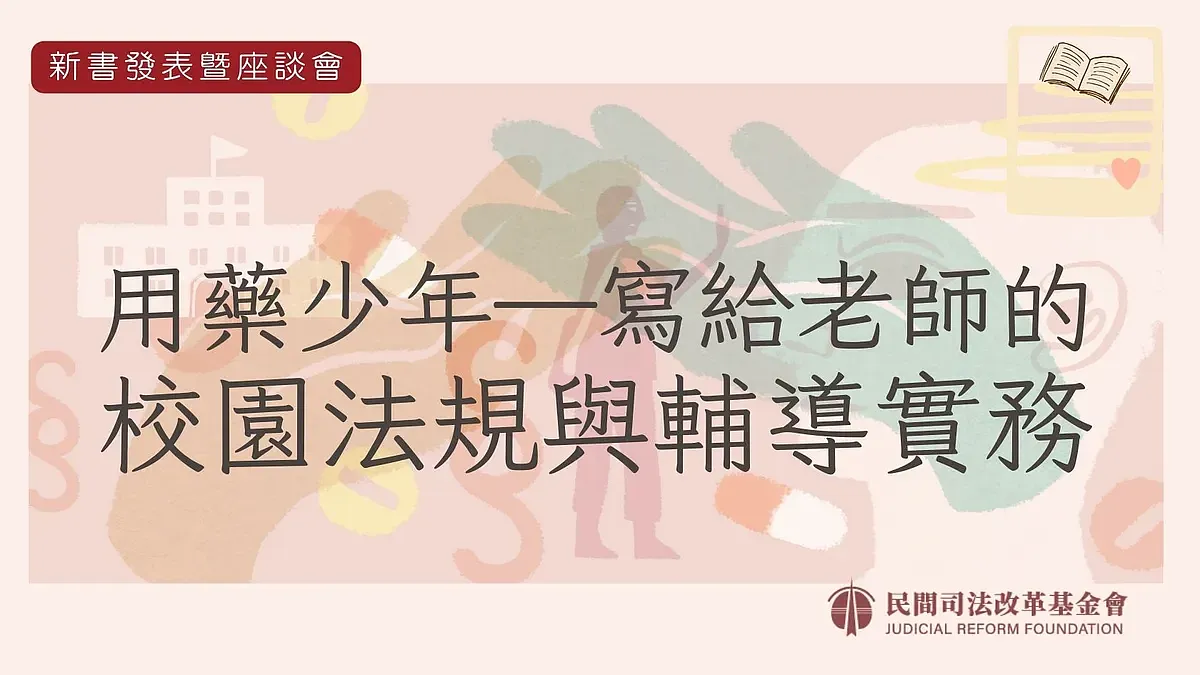
2023
Book Launch & Forum | "Substance-Using Youth: School Regulations and Counseling Practices for Teachers"
In the face of legal and paradigm shifts, this book brings together partners who have long worked in youth…
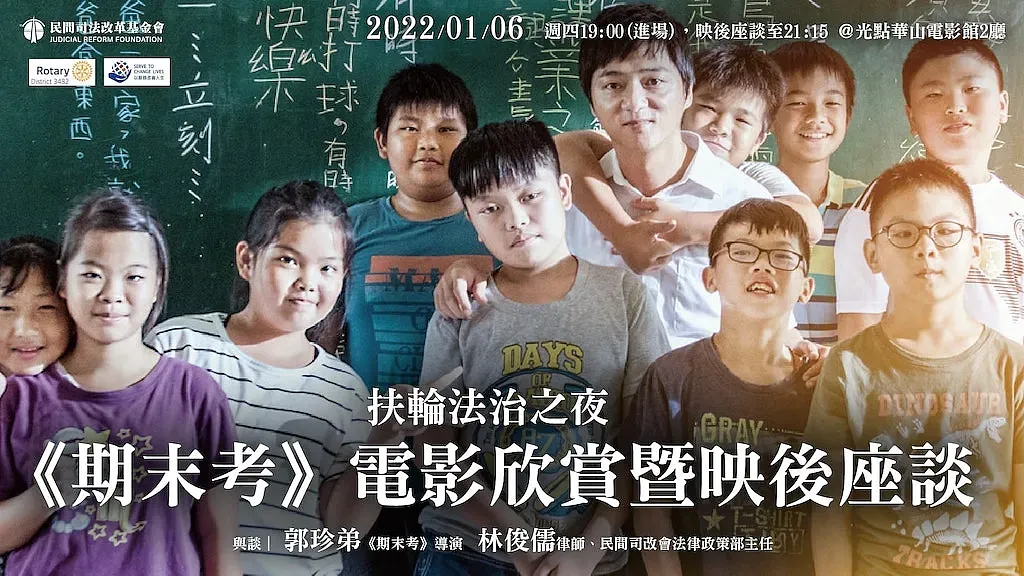
2022
Rotary Rule-of-Law Night | Final Exam Film Screening and Post-Screening Discussion
Rotary International District 3482 and the JRF organized a January 6, 2022 screening of director Kuo Chen-Ti's Final…
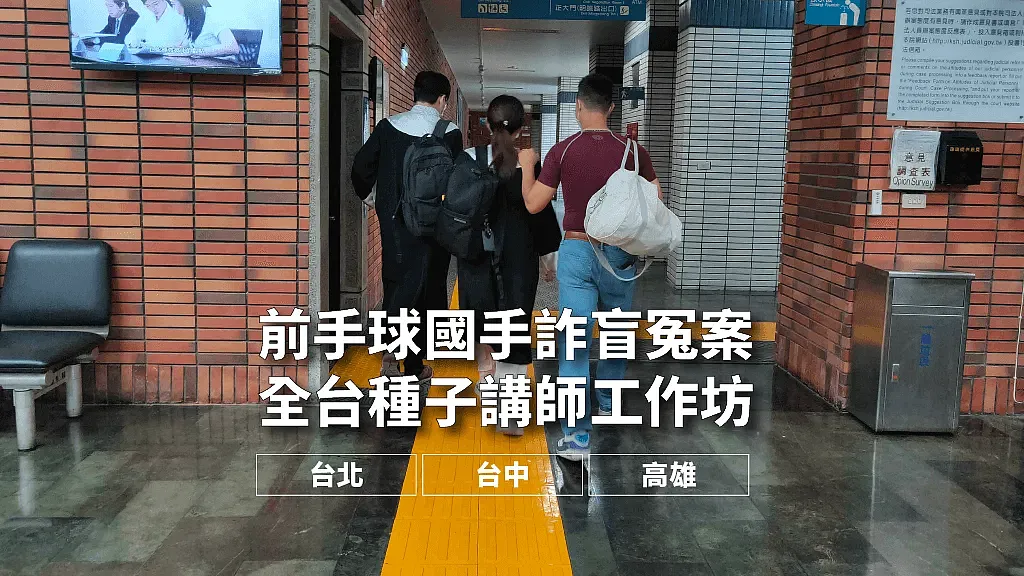
2020
Former National Handball Player Wrongfully Convicted of Faking Blindness - Nationwide Train-the-Trainer Workshop
To help more attorneys understand the Chen Ching-Kai case from the perspectives of law, medicine, vision science, and…