
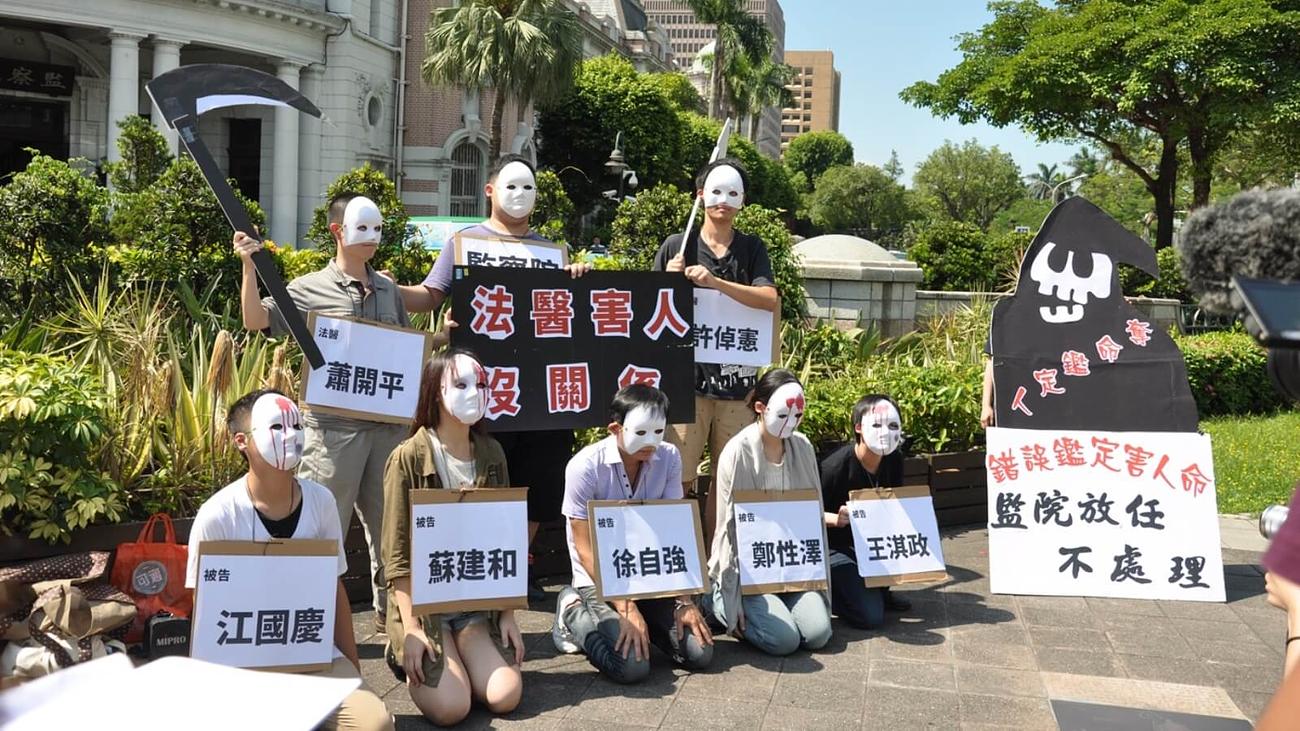
Forensic Systems and Forensic Science
Expert forensic knowledge is often something judges and prosecutors need in order to reach their decisions but do not themselves possess. Yet the opinions experts provide have a major influence on the outcome of trials, and flawed expert opinions can even lead to wrongful convictions. That is why forensic expertise matters so much in today's justice system.
JRF began working on reform of the forensic expert system early on. In 2002, it began focusing on reform of the forensic medicine and crime scene investigation systems, and the following year it held a forum on guidelines for the initial handling of crime scenes. That year's Judicial Reform Forum also took "Expert Evidence and Adjudication" as its theme. In 2004, JRF launched efforts to reform expert review in medical malpractice and traffic accident cases. In 2008, as part of the Alliance for Criminal Justice Human Rights Legislation, JRF helped draft a civil society amendment to the Code of Criminal Procedure that called, among other things, for the introduction of an expert witness system.
To prevent wrongful convictions caused by flawed forensic evidence, JRF has also worked with experts in various fields to help exonerate the wrongfully convicted. The best-known example is its collaboration with forensic scientist Dr. Henry Lee in the case of Su Chien-ho. In 2011, the Taiwan Association for Innocence was founded with the primary goal of exonerating people wrongfully convicted on the basis of flawed scientific evidence, and the two organizations have worked closely together ever since.
In 2014, JRF formed a Forensic Expert System Reform Working Group. On the one hand, the group files complaints with the Control Yuan about individual cases involving flawed forensic opinions, using the shortcomings in those cases to highlight weaknesses in the system. On the other hand, it seeks legislative amendments that would require each scientific field involved in the justice system to establish standard operating procedures (SOPs) for forensic examinations.
From its early work to the present, JRF's main demands for reform of the forensic expert system are as follows:
-
Establish standard operating procedures for forensic examinations in every scientific field
To ensure that expert opinions are of high quality and open to scrutiny, the most basic requirement is that each scientific field establish SOPs for forensic examinations. Unfortunately, Taiwan has long lacked such SOPs. For example, there are no clear SOPs for evidence collection in forensic autopsies and cause-of-death determinations. As a result, when a death is initially judged to be a suicide, evidence collection and the preservation of trace evidence may be skipped entirely. When family members or others later question whether the death was really a suicide, the chance to collect evidence at the outset has often been lost, the truth can never be recovered, and disputes drag on endlessly.
Similarly, forensic psychiatric evaluations are often conducted differently by different doctors or experts, reaching different conclusions with no standard against which to test them. Polygraph examinations are another example: the Investigation Bureau and the Criminal Investigation Bureau not only use different polygraph methods but also lack SOPs for individual examinations, and there has been no thorough review of the scientific basis, reliability, and validity of these procedures, or of whether a uniform approach should be adopted.
-
The quality of expert opinions must be tested in court
The quality of expert opinions must be substantively tested in court so that the court has enough information to decide whether an opinion can serve as the basis for a judgment. In Taiwan, many experts seem to regard being questioned in court as an insult to and a sign of distrust in their expertise, and are therefore unwilling to appear for cross-examination. Because the Code of Criminal Procedure allows expert opinions to be issued in the name of an agency—a collective body rather than an individual—no one need appear in court for cross-examination. And because some judges simply want to decide cases according to the expert opinion, without dealing with the problems or errors it may contain, many expert opinions are presented in court as a single written document stating only a conclusion. Under these circumstances, the process and basis by which an expert reached a conclusion, which cannot be seen on paper, are very hard to examine. A court's reliance on a particular expert opinion can thus easily become blind faith in expert authority rather than a conclusion reached through rational deliberation.
For these reasons, JRF advocates introducing an expert witness system. First, each party to a case should be able to appoint its own experts to give professional opinions. Second, these experts must appear in court for examination, so that it can be tested whether their opinions are truly sound and reliable (even if opinions issued in an agency's name are retained, the person mainly responsible for the opinion should appear in court for examination). Finally, so that expert opinions and examination results can be reviewed by other experts in the same field, another expert should be allowed to review existing opinions or results.
-
Train and ensure qualified forensic experts
The quality of an expert report depends on the expertise of the person who prepares it. How to train qualified professionals and ensure that experts are truly competent is therefore a key concern for JRF. Taiwan has long suffered from a shortage of forensic pathologists and from inadequate expertise. Some argue that forensic pathologists should continue to be required to be licensed physicians, and that doctors should be attracted to the field through higher pay, better working conditions, and subsidies for further training. Others argue that, accepting the reality that doctors are unwilling to become forensic pathologists, Taiwan should adopt a post-baccalaureate forensic medicine program and actively train graduates of medical-related programs who are not physicians to serve as forensic pathologists. Whatever the final choice, the goal is to ensure the quality of forensic work.
JRF has also recently begun advocating mechanisms to hold experts accountable for erroneous opinions as a way of ensuring their competence. Obtaining the status of an expert does not mean that one's opinions are always correct. JRF calls for all past opinions of a so-called "expert" to be re-examined when that expert's work is found to be inconsistent with the current state of scientific knowledge in their field. Where necessary, an expert who has violated professional ethics should be disciplined, and one whose expertise is inadequate should undergo retraining and be certified as competent before being allowed to continue forensic work.
-
Establish independent and impartial forensic organizations or institutions
Without organizations or institutions that guarantee their independence and impartiality, even well-qualified forensic experts will find it difficult to give opinions based solely on their expertise. In Taiwan, the Ministry of Justice's Institute of Forensic Medicine has appeared at times to tailor its reports to the courts' need to convict or to prosecutors' (including former military prosecutors') need to prosecute. In several well-known wrongful conviction cases—the analysis of knife wounds in the Su Chien-ho case, the analysis of the type of object used to sexually assault the young victim in the Chiang Kuo-ching case, and the analysis of whether the victim had been doused with sulfuric acid in the Hsu Tzu-chiang case—there is reason to suspect that the Institute produced opinions to fit the need for a conviction.
Views differ on how independent and impartial forensic organizations or institutions should be established: some call for forensic examinations to be conducted in university laboratories, while others call for a national forensic science center. The consistent demand, however, is that there must be forensic organizations or institutions independent of the authorities responsible for prosecuting crime (including the Ministry of Justice, prosecutors offices, and the Criminal Investigation Bureau), serving as a check on those authorities and preventing them from monopolizing forensic work, so as to prevent wrongful convictions.
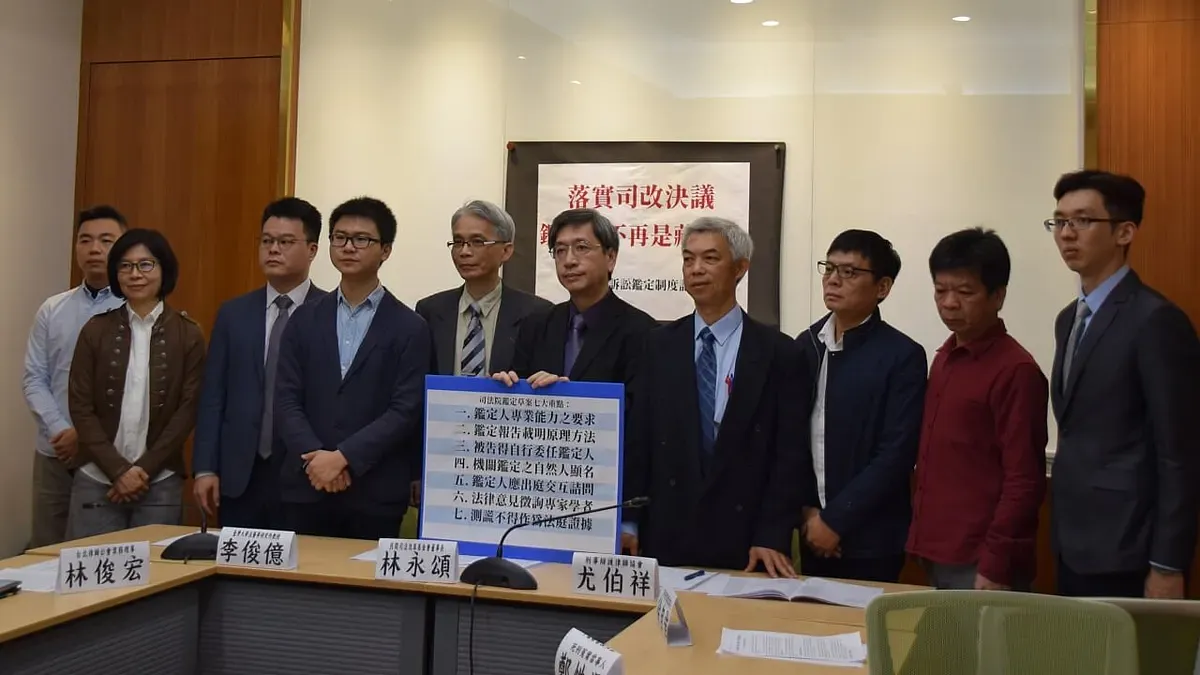
2019
Joint Statement Regarding the Judicial Yuan's Public Hearing on Expert Testimony Held on February 20
Regarding the public hearing held by the Judicial Yuan on February 20 regarding the "Draft Amendment to Certain…
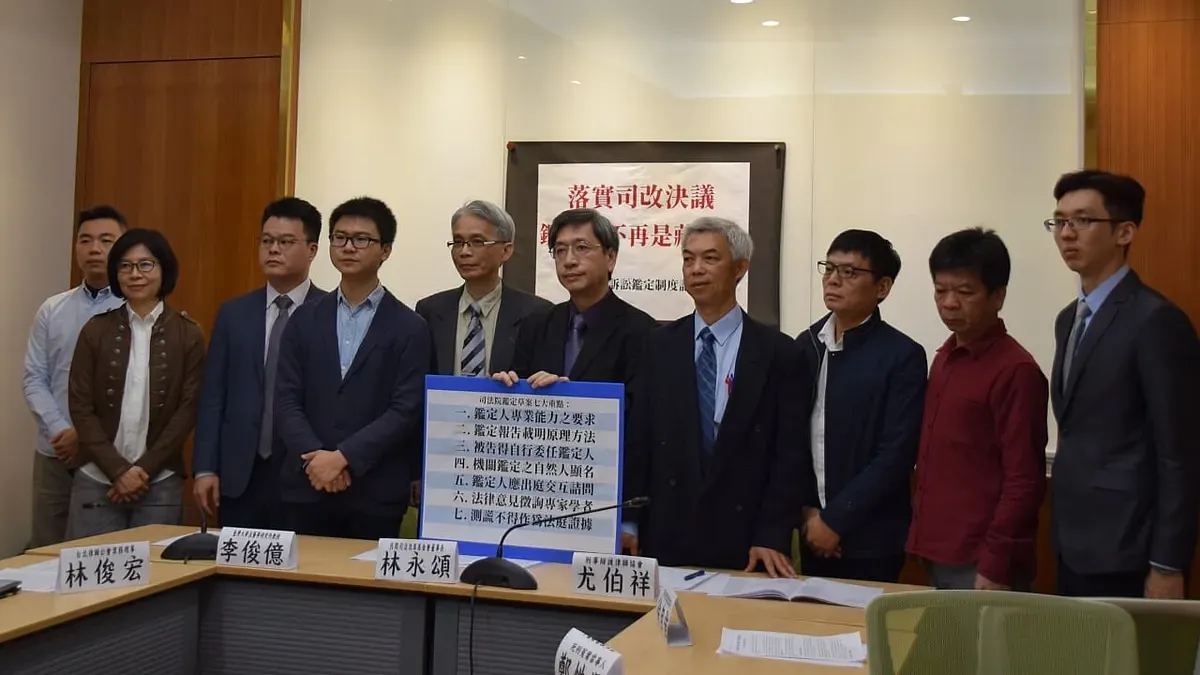
2019
Implementing Judicial Reform Resolutions, Forensic Experts No Longer Behind the Scenes: Press Conference on Reforming the Criminal Procedure Forensic Expert System
The White Paper on Judicial Reform resolutions required "studying, formulating, and improving the expert witness…
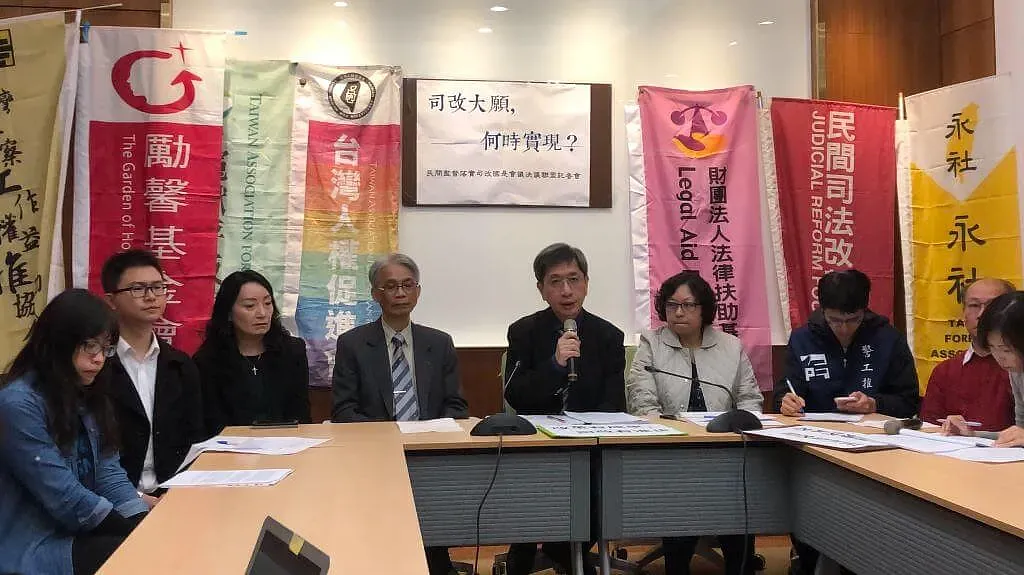
2019
When Will the Grand Vision for Judicial Reform Be Realized? Press Conference of the Alliance for Civil Monitoring and Implementation of the National Congress on Judicial Reform Resolutions
The National Congress on Judicial Reform concluded in August 2017, and President Tsai Ing-wen promised to release…
2018
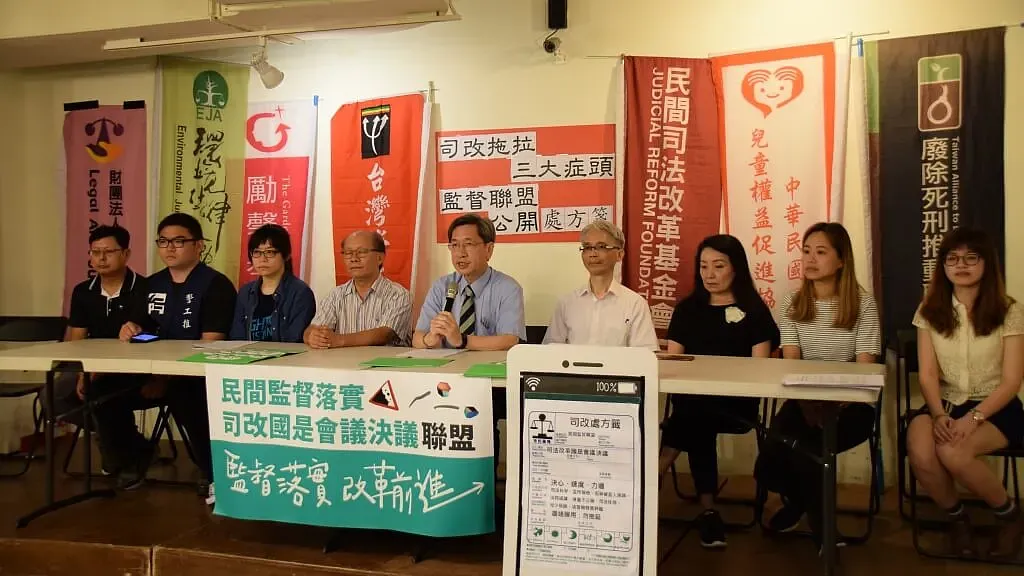
Three Major Issues Dragging Down Judicial Reform, Monitoring Alliance Releases Public Prescription—Press Conference of the Alliance for Civilian Monitoring and Implementation of the Judicial Reform National Consultative Conference Resolutions
The Alliance highlighted ten resolutions that can be implemented immediately, covering areas such as forensic science,…
2018
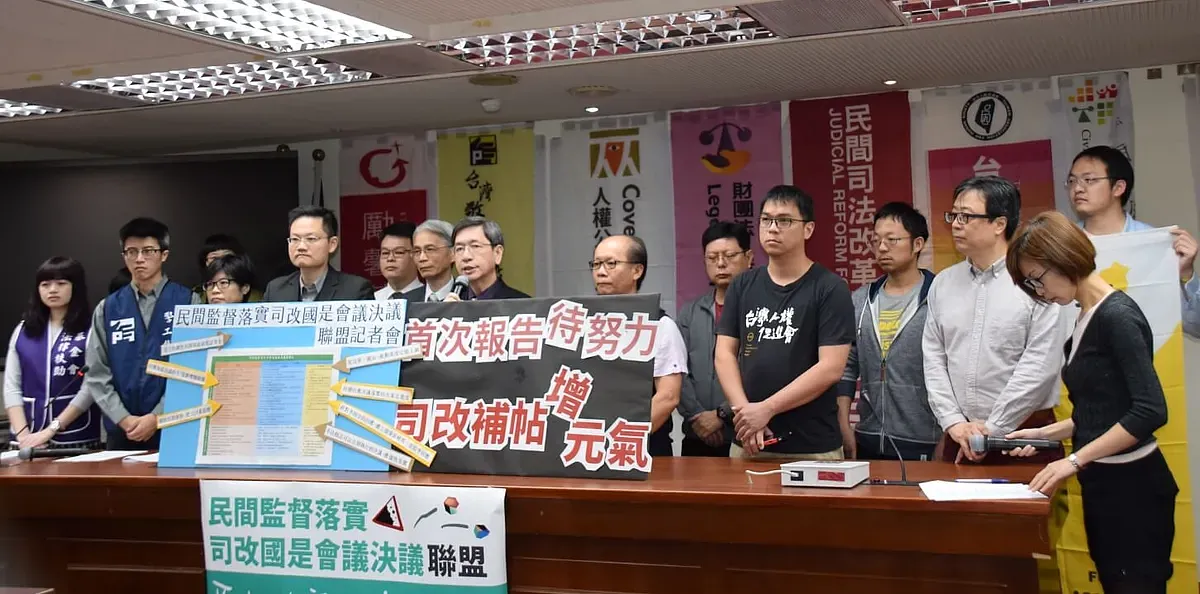
"First Report Needs Improvement, Judicial Reform Booster Shot Revives Energy" ~ Alliance for Civilian Monitoring the Implementation of Judicial Reform National Consultative Conference Resolutions Press Conference
Six months after the conclusion of the National Consultative Conference on Judicial Reform, the Tsai Ing-wen…
2017
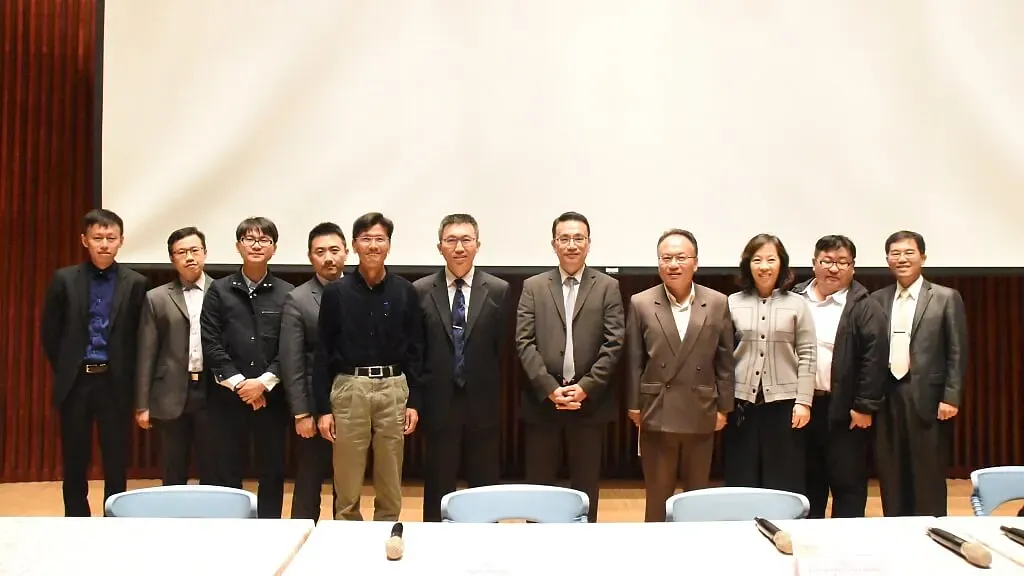
Seminar | Symposium on Forensic Science, Criminal Evidence, and Wrongful Conviction Relief | 70th Anniversary of the Taichung Bar Association
The Innocent Relief Project originated in 2014, co-initiated by the Taichung Bar Association, the JRF Taichung Office,…
2017
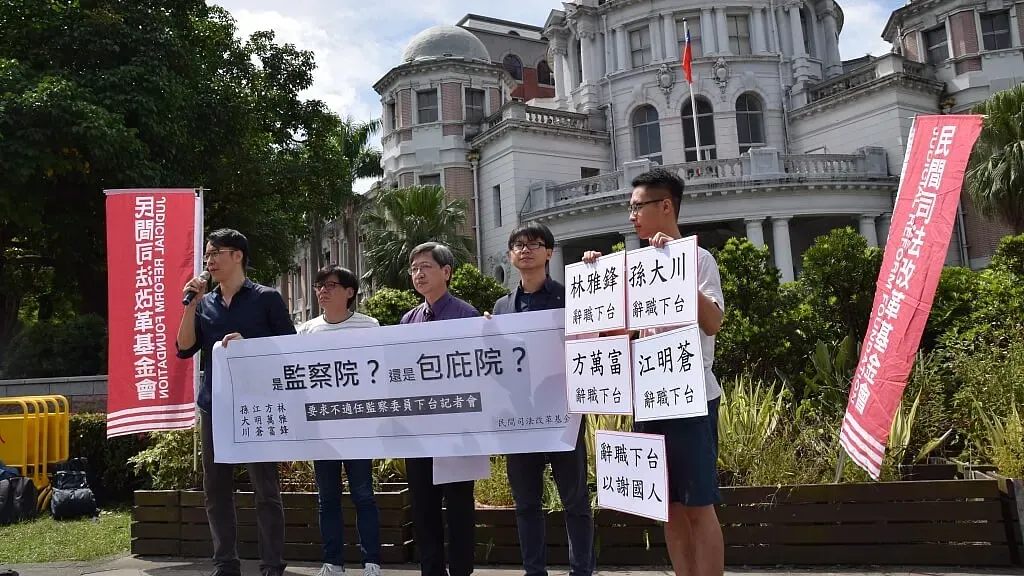
Control Yuan or Cover-up Yuan? ~ Press Conference Demanding the Resignation of Unfit Control Yuan Members
On October 9, 2014, the Judicial Reform Foundation and the Taiwan Association for Innocence jointly petitioned the…
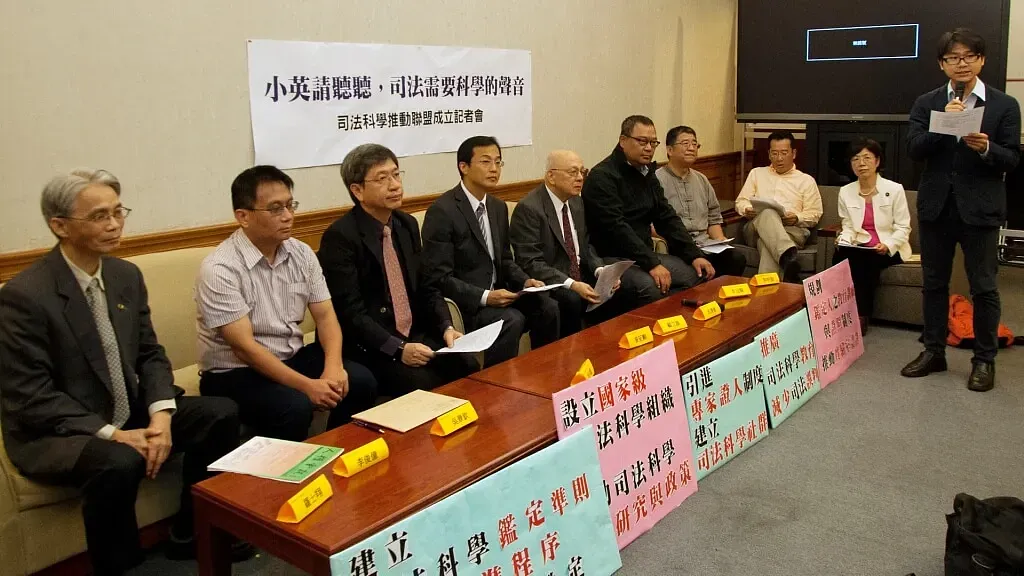
2016
President-elect Tsai, Please Listen: The Judiciary Needs the Voice of Science ~ Press Conference on the Establishment of the Judicial Science Promotion Alliance
President-elect Tsai Ing-wen's judicial reform proposals during her campaign included: "Enhance investigative equipment…
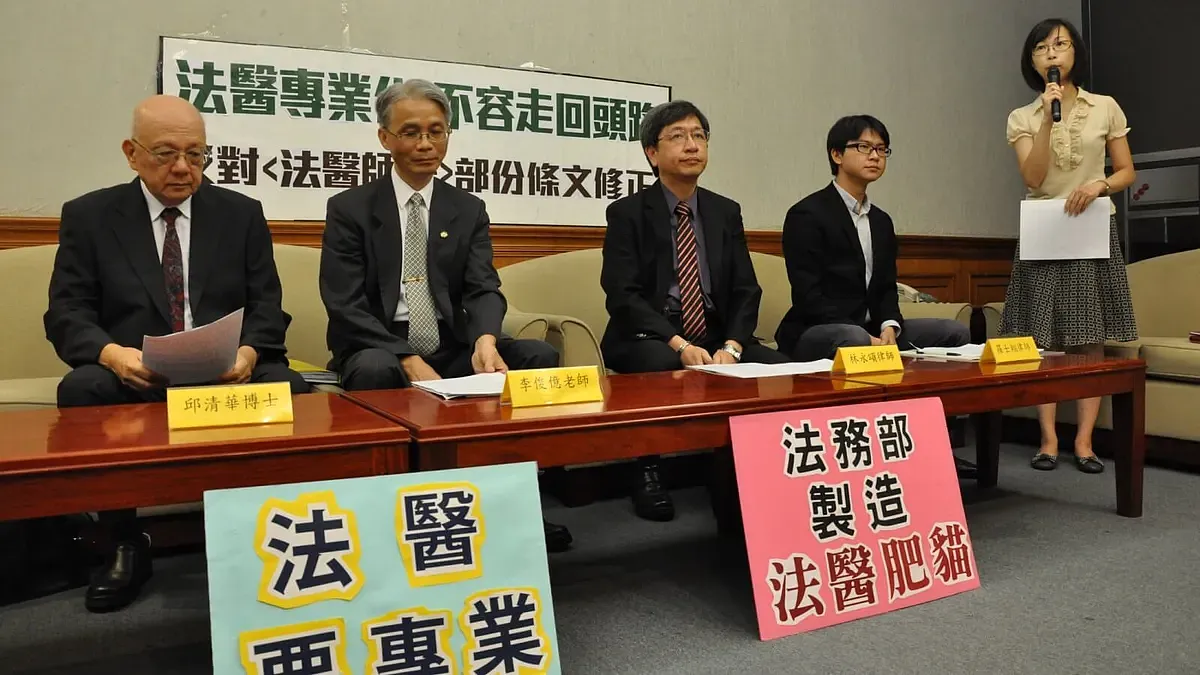
2015
Defending Forensic Professionalism: No Turning Back on Reform — Press Conference Opposing Partial Amendments to the Forensic Pathologist Act
This press conference opposes the Ministry of Justice's proposed amendments to the Forensic Pathologist Act, which…
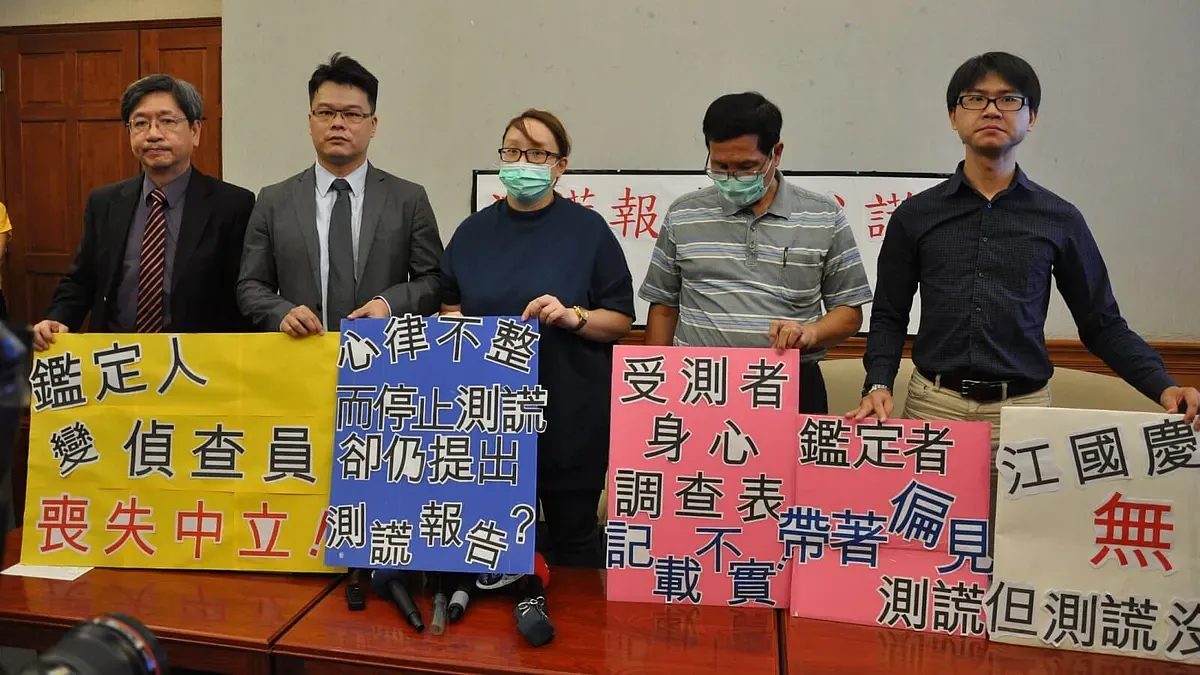
2015
"Lie Detector Reports Can Lie?!" Press Conference
"Polygraph testing" is often resorted to by judicial practitioners as a form of "divination" when they cannot find…
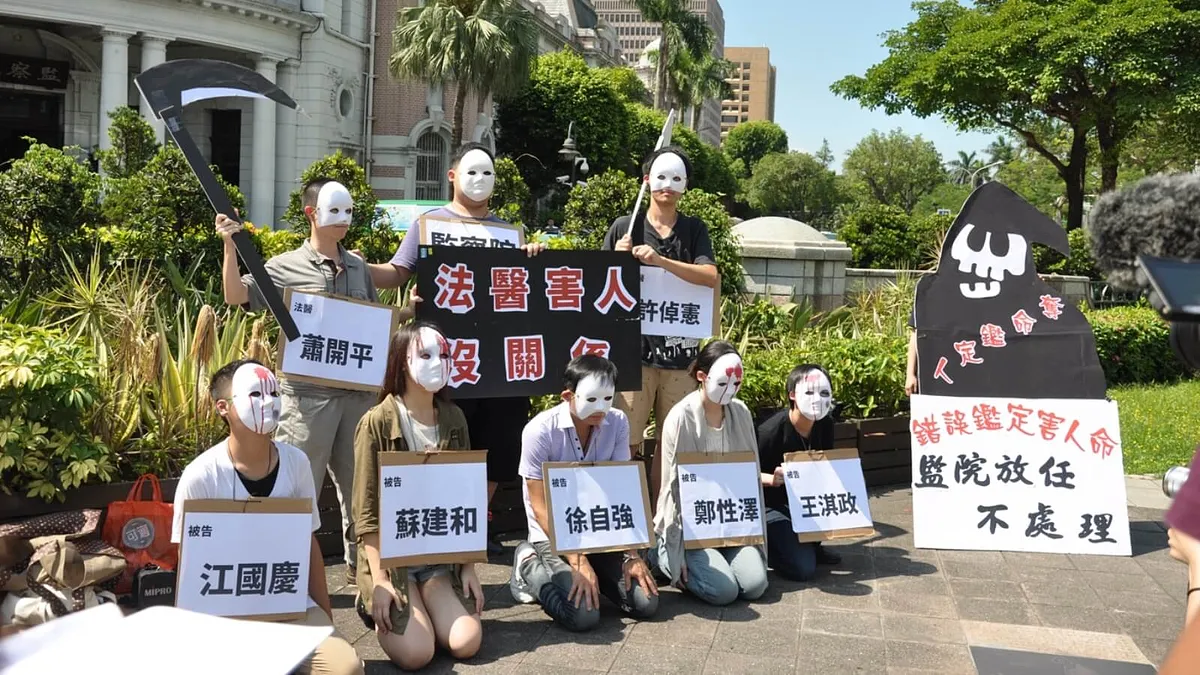
2015
Press Conference protesting "Faulty Forensic Appraisals Cost Lives, Control Yuan Fails to Act"
In September 2014, the Judicial Reform Foundation and the Taiwan Alliance to End Wrongful Convictions jointly requested…
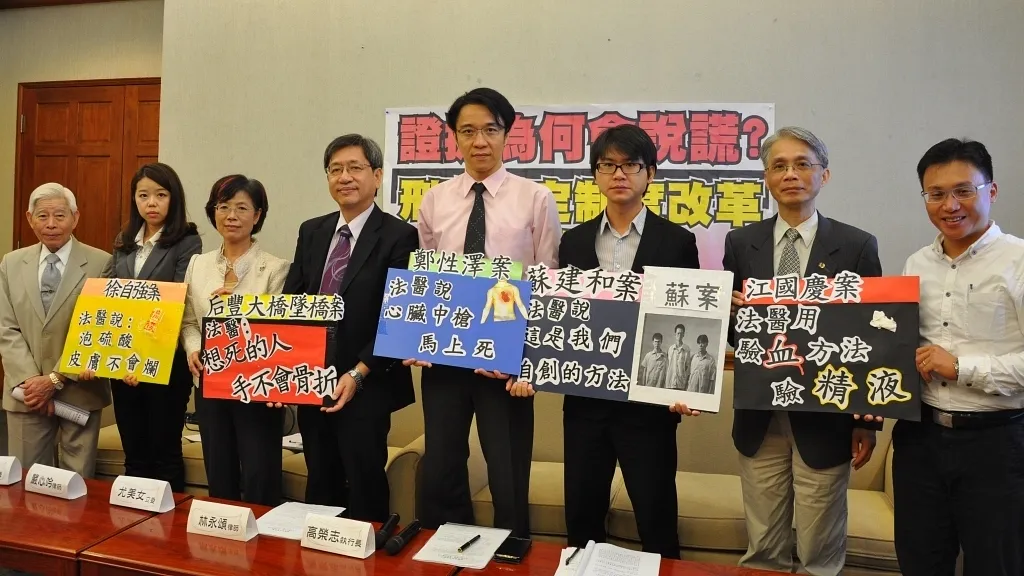
2014
Why Do Evidences Lie? Reforming Forensic Appraisal Systems and Holding Negligent Personnel Accountable — Press Conference on Criminal Forensic System Reform
In 2004, an erroneous fingerprint identification by the U.S. Federal Bureau of Investigation (FBI) in the Madrid…