
2017 Judicial Reform Resolutions: Oversight & Implementation
Monitoring the Implementation of Resolutions from the 2017 National Judicial Reform Conference
In November 2016, President Tsai Ing-wen personally convened the Office of the President National Judicial Reform Conference, bringing together representatives from the judiciary, prosecution, and defense, as well as cross-disciplinary civil society actors. Following nearly a year of intensive discussions, a comprehensive set of judicial reform resolutions was adopted in August 2017. JRF continues to track the implementation of these resolutions to ensure that reform commitments do not remain empty promises.
Origins of the National Judicial Reform Conference
In 2016, public expectations for judicial reform reached a peak. Making "judicial reform" a major political platform, President Tsai Ing-wen promptly announced the convening of the Office of the President National Judicial Reform Conference upon taking office. She personally served as the convener, delegating representatives from various sectors to formulate reform proposals addressing core issues in the existing judicial system through subcommittee meetings.
The conference was divided into five working groups covering five major dimensions: victim protection, judicial quality, authority and responsibility systems, public participation, and social safety. A total of over 40 subcommittee and additional meetings were held, culminating in the concluding meeting on August 12, 2017, where reform resolutions were formally adopted.
Key directions of the concluding meeting resolutions include:
Establishing the citizen judge system, introducing public participation in prosecutorial screening, strengthening assistance measures for vulnerable groups, promoting open courtroom audio and video, enhancing transparency of attorney information, digitizing judicial hardware equipment, reforming the prosecutorial personnel system, building a pyramid-shaped adversarial trial procedure (mandatory defense and attorney representation), promoting restorative justice, and enhancing continuing education and training for judges, among others.
Eight Key Areas of Reform
Materials from the Five Subcommittee Meetings
Click on each subcommittee to access complete meeting recordings, official materials, and JRF commentary:
Resolution Implementation Tracking Records
JRF continuously records the progress of resolution implementation, evaluates reform outcomes annually, and reports publicly to society:
Official Materials and Original Documents
Office of the President National Judicial Reform Conference
Official website, including five subcommittee pages, all meeting materials, and proceedings records.
justice.president.gov.twSubcommittee Meeting Records Overview
All subcommittees on the official website, where meeting agendas, member lists, and complete meeting materials can be viewed.
View Subcommittee PagesJudicial Reform Conference YouTube Channel
Complete playlists of all subcommittee meeting recordings, viewable by subcommittee and session.
Go to YouTube ChannelJudicial Reform Cannot Stop, Monitoring Must Continue
The adoption of resolutions is merely the starting point; true reform requires continuous attention and pressure from civil society. Support JRF's work to keep the voice of monitoring effective.

2017
Speech Word Count Statistics for Division 2 of the National Chio-Kuo Conference on Judicial Reform
Based on the official verbatim transcripts of the meeting, this analysis calculates the word count of each committee…
2017
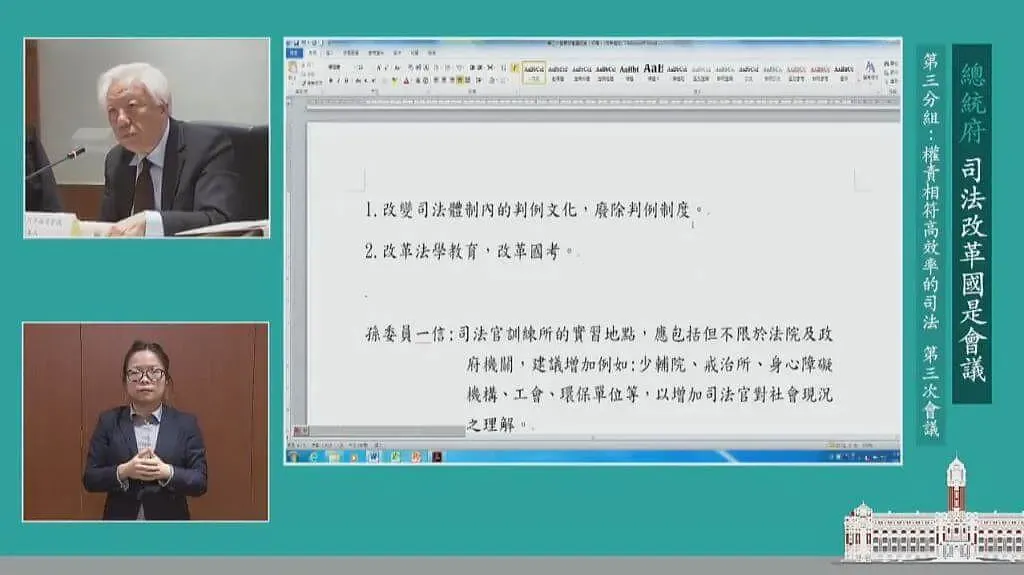
Brief Notes: Third Meeting of Group 3 of the Presidential Office's Judicial Reform National Consultation Conference
Article 5 of the current Judges Act already provides for the diversified recruitment of scholars and attorneys, but…

2017
Medical Records Provided by Imprisonment—Medical Care for Inmates
We know too little about inmates, yet judge them too soon. A person enters prison only after committing a crime and…
2017
Taiwan's Recidivism Rates and Prison Rehabilitation Efficacy: A Preliminary Inquiry
Changes in the rates of recidivism and habitual offending among prison inmates can be attributed to various potential…
2017
Judicial Review of Court Decisions, Here It Comes!
Recently, the National Congress on Judicial Reform has been in full swing. Beyond becoming a primary battleground for…
2017
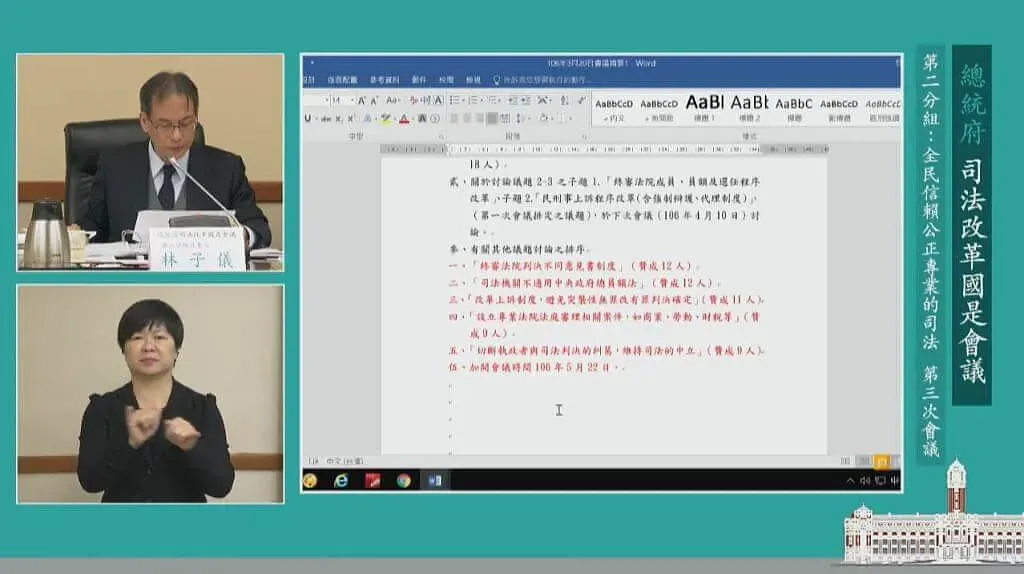
Review and Notes: The Third Meeting of the Second Division of the Presidential Office's National Judicial Reform Conference
The third meeting of Division 2 of the National Judicial Reform Conference was held on March 20 to primarily discuss…
2017
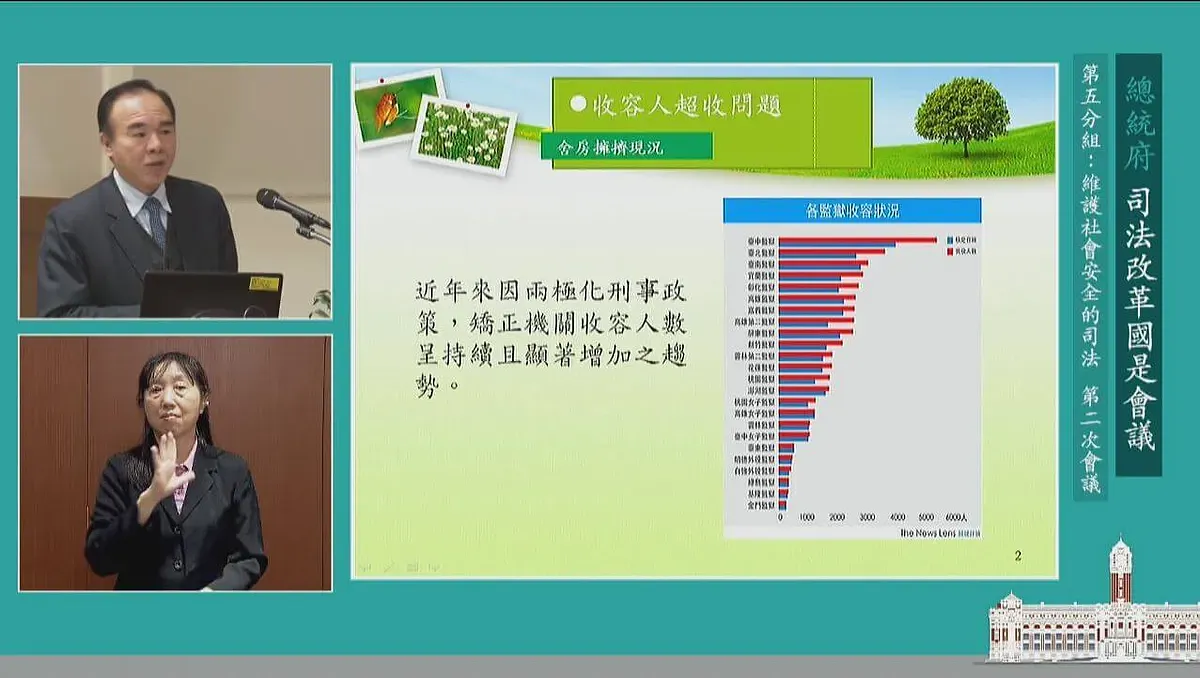
Review: The Second Meeting of the Fifth Division of the "Presidential Office's National Judicial Reform Conference"
Prison administration reform cannot be separated from "education"; only with successful education can reform be…
2017
Observations on the Individual Evaluation System under the Judges Act: A Report for the National司改 Conference
On June 14, 2011, the Legislative Yuan passed the Judges Act on its third reading. The institutionalization of the…
2017
Unity of Prosecutors, Circling the Wagons in Self-Defense?!
"Unity of prosecutors" refers to the internal administrative hierarchy within the prosecutorial system, where superiors…

2017
Word Count Statistics for Speeches in Group 3 of the National Youth Conference on Judicial Reform
Based on the official meeting transcripts released, this analysis calculates the word count of each member's speeches.…

2017
Op-Ed | Budget-Friendly Judicial Reform: Follow Germany's Lead!
The widespread phenomenon of "frivolous lawsuits" not only frustrates defendants but also overburdens prosecutors,…
2017
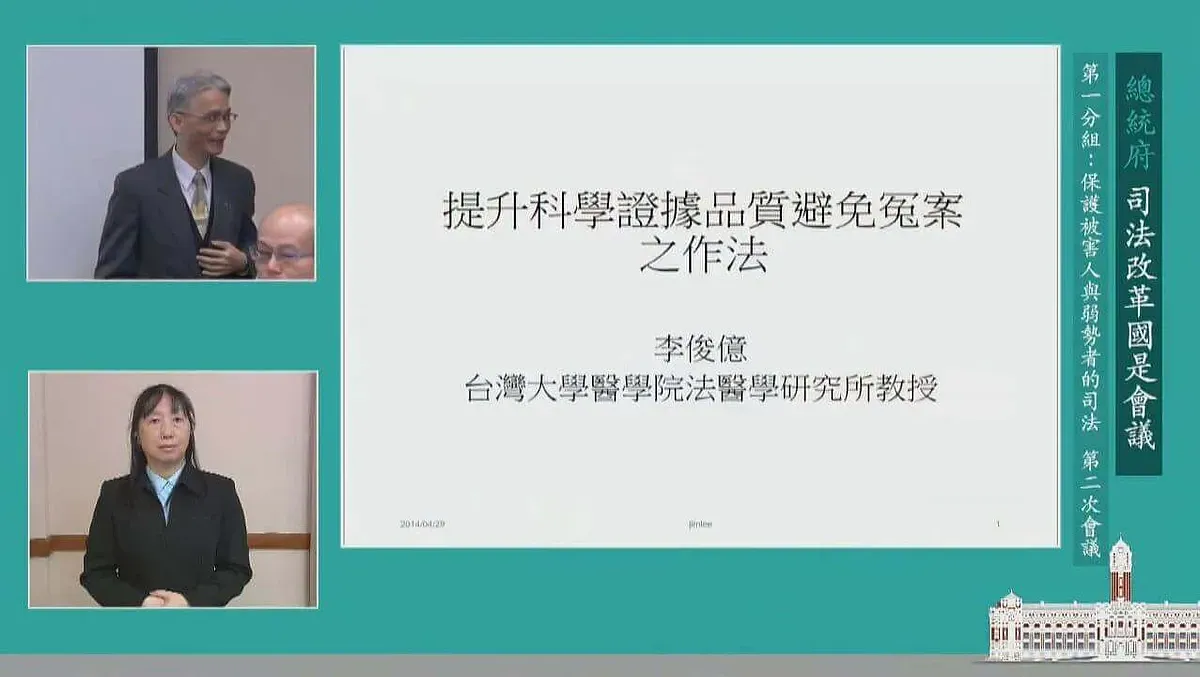
Brief Notes: Second Meeting of the First Working Group of the Presidential Office's National Judicial Reform Conference
This meeting lasted for three and a half hours, focusing on the discussion of "whether to establish a national-level…