
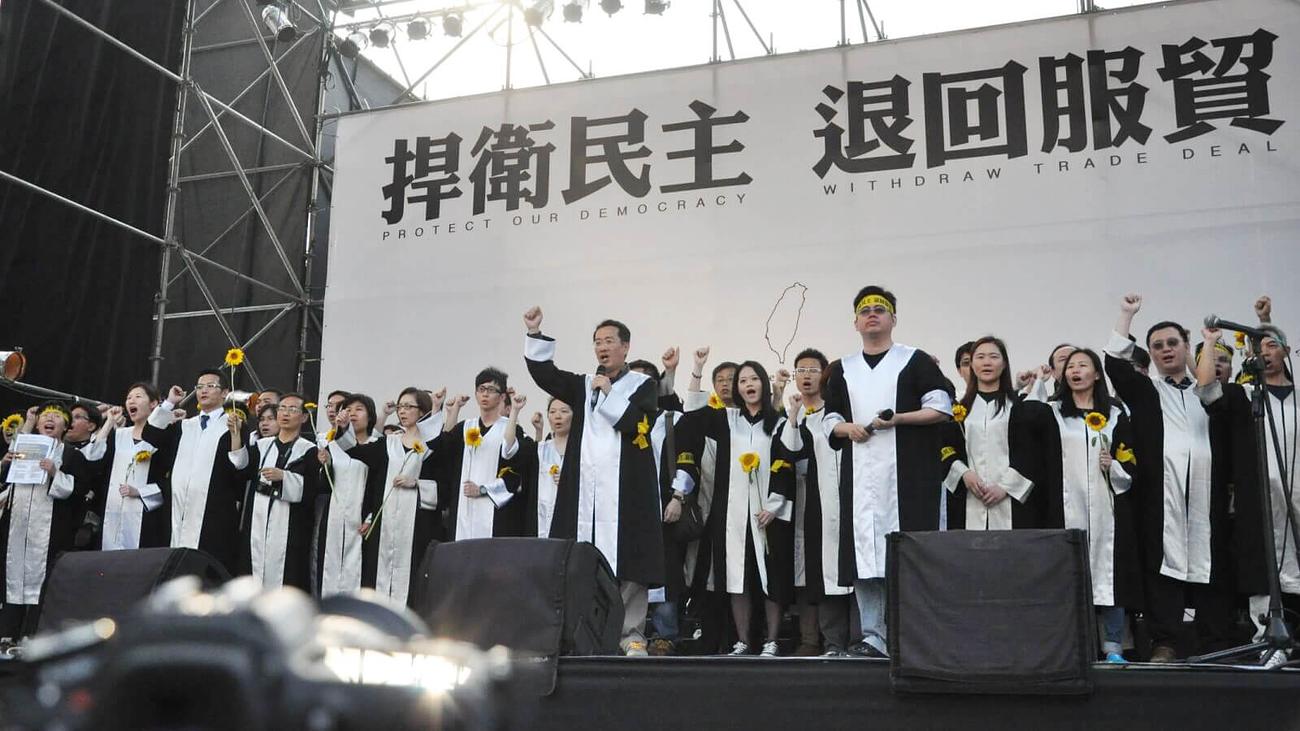
Anti-Black-Box Services Trade Pro Bono Lawyers Platform | Archive
Table of Contents
1. Platform Introduction
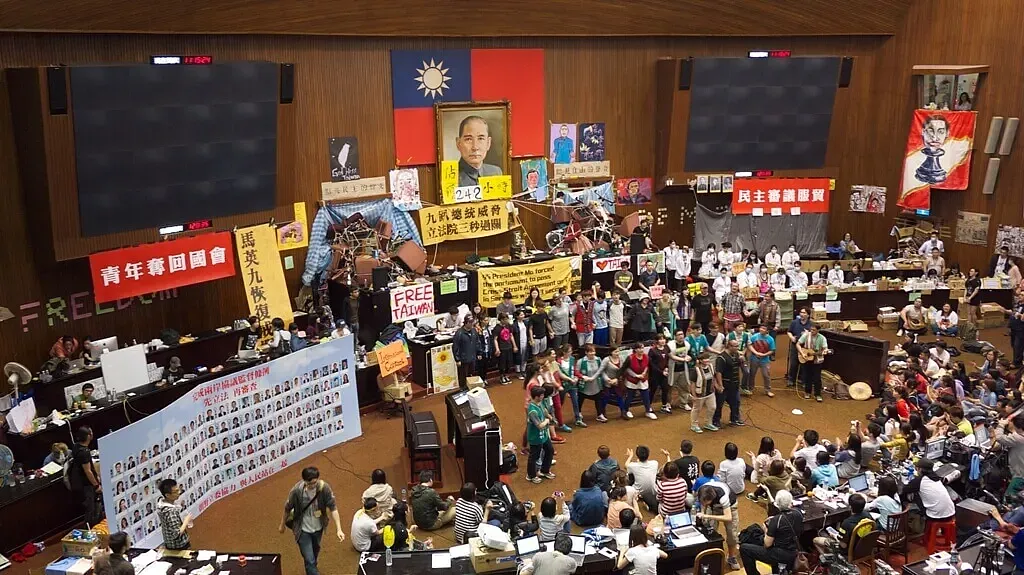
On March 17, 2014, Chang Ch'ing-chung, the convenor of the Internal Administration Committee of the Legislative Yuan, violated the cross-party consultation resolution for article-by-article review. In less than 30 seconds, he unilaterally declared that the Cross-Strait Service Trade Agreement had exceeded the three-month review period, sent the agreement out of committee, and forwarded it to the plenary session for recordation. Students and civil groups launched a sit-in protest outside the Legislative Yuan. In the early hours of the following morning, citizens broke into the Legislative Yuan and occupied the chamber, demanding the return of the trade agreement. Thus, the 318 Movement unfurled.
On March 19 of the same year, Attorney Ku Li-hsiung, co-convenor of the pro bono lawyer team, invited several lawyers to the Judicial Reform Foundation to discuss the possibility of constitutional interpretation. Concerned that intensifying police-civilian confrontations might lead to large-scale police arrests of citizens, creating a demand for lawyers to accompany clients during interrogations, it was decided to organize a pro bono lawyer team. Serving as the coordinating organization and communication platform for lawyers, the Judicial Reform Foundation handled client interrogation accompaniment, provided legal consultations, and assisted with subsequent litigation during the movement.
Subsequently, the Judicial Reform Foundation assisted in the operation of the 318 Anti-Black Box Service Trade Agreement Pro Bono Lawyer Platform for over a decade. Through private prosecutions, state compensation cases, the efforts of defense clients, and the pro bono lawyer team, an important chapter in Taiwan's democratic rule of law has been preserved. In addition to legal assistance, the Judicial Reform Foundation also organized related seminars, a seventh-anniversary special exhibition, and published newsletters to document civil society's reflection and dialogue on democracy and the rule of law following major social movements.
This page compiles relevant resources from the past ten years, listed below. Special thanks to all the past volunteers and full-time staff who participated.
2. Timeline and Latest Materials
Control Yuan Releases Investigation Report 112 Nei-Diao 0015
- The Control Yuan's investigation revealed that the number of injured citizens was nearly four times the police statistics, meaning civilian injury figures were severely underestimated.
- The National Police Agency has yet to penalize derelict personnel. After verifying the injury locations of 15 citizens who won state compensation, the on-site commanders bear inescapable responsibility.
- Judicial authorities determined that the police clearance operations exceeded the principle of proportionality.
- High-ranking police officials improperly deployed and dispatched forces, leading officers to use violent dispersal methods.
- Failure to properly conduct pre-duty education for officers resulted in improper duty performance by some personnel.
- Improper handling of evidence collection footage made it impossible to clarify the process by which police beat citizens and to hold violent law enforcement officers accountable.
- Some officers exhibited brutal behavior, excessive law enforcement, and harbored animosity toward citizens.
The Reporter Special: "Looking Back at 10 Years: From Sunflower Protesters to the 'Post-318 Generation'"
- 10 Years After the Sunflower Movement—10 Keywords Worth Remembering.
- Occupation, Sit-in, Bloodshed, Cries: Returning to That Night at the Executive Yuan 10 Years Ago. Entering the Historical Site Through Sound and Imagery.
- The Long Road of Trauma for Sunflower Crowds: Those Entangled in Litigation with the State Due to the March 24 Executive Yuan Clearance Incident.
- From Formosa to the Sunflower Movement, the Conviction of the Pro Bono Lawyer Team: Through Litigation and Testimony, History Will Leave Its Judgment.
- When Young People No longer Remember the Sunflowers: How Public Participation and Social Movement Energy Have Changed in the Post-318 Generation.
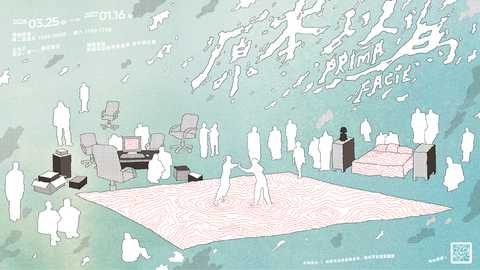
3. "Person Unknown" 7th Anniversary Exhibition of the March 24 Executive Yuan Violent Clearance Incident
The First Meaning of "Person Unknown": "This person" refers to the masked police officers who concealed their identities on the night of March 23, as well as the commanders, police superiors, and executive officials in the chain of command for that night's clearance operation. Seven years later, litigation results declared that these individuals hidden behind historical truth are unknown—person unknown. There are victims, but no perpetrators can be found. A ghost story reminiscent of the authoritarian era is playing out in a social movement so close to us.
The Second Meaning of "Person Unknown": We hope to show how victims of state violence lingered in judicial cases for seven years, using their own lives in an attempt to probe and pursue the truth of that night. In Taiwan, these people may not be made to disappear, but historically, these nameless protesters without remembered names or faces supported the movement and even paid a legal price, yet are often forgotten. In history, person unknown.
By the seventh anniversary (2021), both the private prosecution and state compensation cases pursued by the accusation team had concluded (defense cases had not yet fully ended at that time). "Person unknown" is the reality of unidentifiable accountability, but it is also the outcome everyone hoped to prevent through memory when facing the seventh anniversary in 2021.
3-1 Online Exhibition of Exhibits
The materials for this exhibition were transformed from data accumulated by the pro bono lawyer team over the past seven years. Written materials we referenced include: public court transcripts of witness examinations or evidence viewings of footage from that night, lawyer briefs, official court dispatches, and court judgments. Video materials include footage solicited from the public by the JRF back then, news broadcasts from various outlets, and police body-worn camera footage (obtained by the lawyer team through state compensation litigation evidence-preservation procedures).
3-2 Lecture Video and Text Records
3-3 Reflections from Participating Exhibition Volunteers
3-4 7th Anniversary Commemorative Website and Video Records
During the 7th-anniversary exhibition, Chen Mei-hui, one of the main curators at the time, launched a 7th-anniversary commemorative website featuring some footage of police violence from that night.
3-5 Other Audiovisual Records
4. Newsletter Records
Sisi E-Paper | Figures of the Defendants in the March 23 Executive Yuan Occupation Case
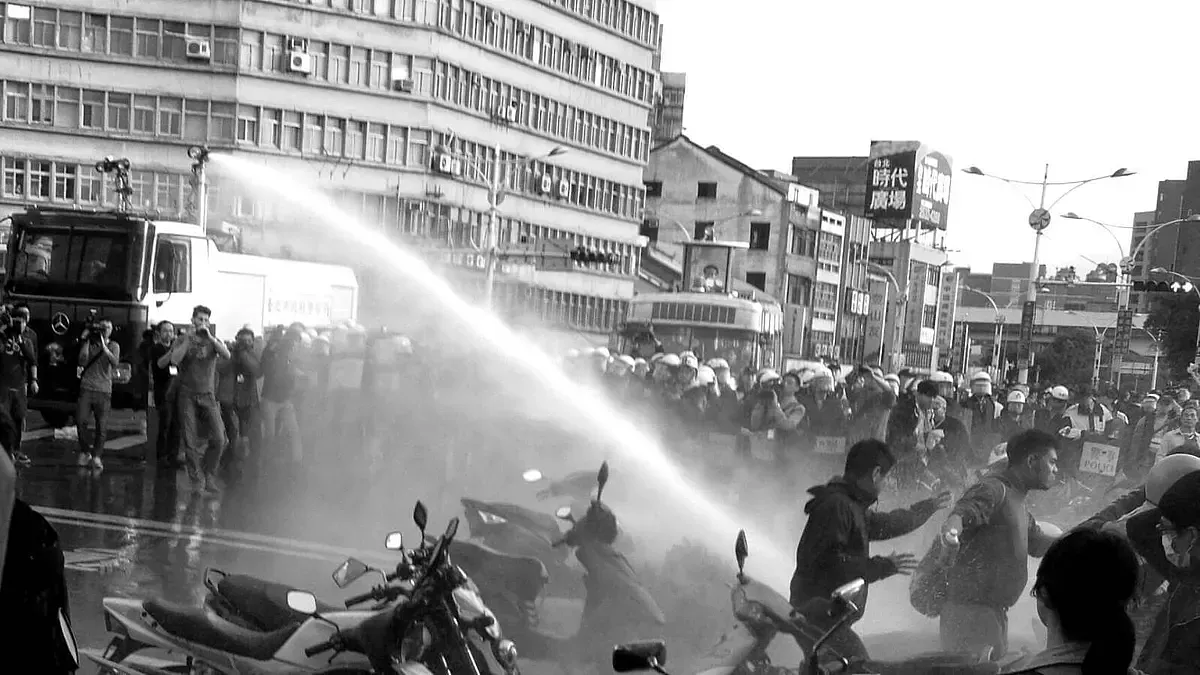
From the evening of March 23 to the early morning of March 24, 2014, citizens occupied the Executive Yuan, and police used illegal violence to clear the protesters. To date, no violent police officers have faced administrative or criminal punishment, and no police or executive superiors have been held responsible; however, citizens could not escape state prosecution. This issue of the newsletter interviewed three defendants in the March 23 Executive Yuan occupation case, showcasing their journey of walking six and a half years of litigation alongside the pro bono lawyer team.
Sisi E-Paper | Saying Goodbye to Authoritarianism: From the Streets to the Courtroom, From the Courtroom to the Exhibition Hall
Can only state power under the authoritarian era enter discussions of transitional justice? Or do our government and judiciary still harbor authoritarian legacies awaiting transformation? The 318 and 324 movements are among the largest social movements experienced by today's 20-to-30-year-old generation. From the streets to the courtroom, from the courtroom to civil society, and from Taiwan's civil society to all of East Asia, this issue of the newsletter selects three recent event records within this context.
5. Seminar Records
318 Judgment Review Symposium | Seven Elements of Civil Disobedience?
On March 31, 2017, the Taipei District Court acquitted 22 defendants in the 318 Legislative Yuan case, adopting "civil disobedience" for the first time as the rationale for acquittal and establishing the seven major elements of "civil disobedience"—this judgment should be considered a major breakthrough in Taiwan's judiciary. The Taipei District Prosecutors Office filed an appeal on April 28, 2017.
Moderator: Lin Chun-hung / Standing Director, Taipei Bar Association
Presenter: Liu Chi-wei / Pro Bono Lawyer for the 318 Defense Case
Discussants: Lin Chia-ho (NCCU), Hsu Wei-hsuan (Chung Yuan Christian University), Chang Chia-yin (Shih Hsin University)
Authoritarian Criminal Law and Transitional Justice: Starting from the Crime of Instigation and the Crime of Insulting a Public Office
The second-instance judgment of the March 23 Executive Yuan occupation case sentenced activists to 2 to 4 months in prison for violating Article 153 of the Criminal Code (Crime of Instigation). So-called "authoritarian criminal law" not only includes the crime of instigation but also Article 140 (Crime of Insulting a Public Office) and Article 160 (Insulting the National Flag), among others. In recent years, activists expressing symbolic speech have frequently been prosecuted under these criminal provisions.
Opening Remarks: Yu Po-hsiang (Convenor, 318 Pro Bono Lawyer Team)
Crime of Instigation: Moderator / Hsu Yu-hsiu; Presenters / Hu Po-yen, Chou Yang-yi; Discussants / Lin Ying-tzu, Lin Chia-ho, Hsieh Meng-chao
Crime of Insulting a Public Office: Moderator / Hsu Yu-hsiu; Presenters / Hsu Wei-hsuan, Lin Cheng-yu; Discussants / Huang Chih-chung, Su Hui-chieh, Huang Yu-chung
Occupation Movements and Freedom of Speech: Centered on Civil Disobedience and the Right of Resistance
The Supreme Court Criminal Judgment 109-Tai-Shang-3695 held that civil disobedience—defined as intentionally violating legal norms openly, non-violently, and out of conscientious decision—may analogously apply provisions on necessity or excess of necessity to exclude illegality or mitigate/exempt criminal liability. The Supreme Court also recognized for the first time that although the Constitution does not explicitly stipulate the right of resistance, it should still be acknowledged under the constitutional principle of popular sovereignty.
Opening Remarks: Yu Po-hsiang / Moderator: Hsu Yu-hsiu / Introductory Speaker: Lai Ping-hsiang
Discussants: Wei Pei-hsuan (NCUE), Weng Yen-ching (NCCU), Hsu Wei-hsuan (Chung Yuan Christian University), Hsu Jen-shuo (Hokkaido University)
Civil Society Under Authoritarian Rule — Actions, Dialogue, and Strategies: Experiences of Hong Kong and Taiwan
Civil society faces severe dilemmas when authoritarianism experiences a strong resurgence, particularly in the Asian region. Furthermore, the impact and reflections triggered by the ruthless blows dealt by communist China to Hong Kong as an autonomous city are profound. This seminar explores the experiences and outlets for civil society under authoritarian rule, while also examining the impact of the "China factor" on other countries within the region.
6. Award Records
Whether through the efforts of litigants, lawyers, or the Judicial Reform Foundation, the outcomes not only left history for Taiwan but also demonstrated regionally influential actions amid a global era threatened by authoritarian expansion and democratic regression, thereby winning major domestic and international awards.
Taipei Bar Association Outstanding Pro Bono Lawyer Award (Group Category)
The 318 Anti-Black Box Service Trade Agreement Pro Bono Lawyer Team persevered for ten years and was awarded the Taipei Bar Association Outstanding Pro Bono Lawyer Award in the group category in 2022 (its eighth year). Reasons for the award include:
- Persisting for eight years, accompanying litigants pro bono to the very end.
- Preserving a large volume of state violence litigation documents, images, transcripts, and other evidentiary materials through public hearings, demonstrating to the general public the state's improper clearance actions at the time.
- Private Prosecution Cases: Challenging the Code of Criminal Procedure's interpretation of "same case," assisting victims in appearing in court to testify about their experiences of state violence, and prompting the court to recognize the facts of improper clearance.
- Defense Cases: Prompting our nation's judiciary to confront concepts such as "civil disobedience," "right of resistance," and the "crime of instigating others to commit crimes," thereby deepening the rule of law and democracy.
- State Compensation Cases: Confirming the state's liability for compensation regarding violent clearance, securing compensation for citizens, and warning that future police clearance methods must adhere to the principle of proportionality.
World Justice Challenge (WJC)
The World Justice Challenge is a major international project competition hosted by the World Justice Project. The theme that year was "The Rule of Law: Foundation of Democracy," attracting entries from 109 countries and 424 civil society organizations. The Judicial Reform Foundation illustrated Taiwan civil society's efforts in safeguarding the rule of law through the performance of the 318 Anti-Black Box Service Trade Agreement Pro Bono Lawyer Team, successfully winning the grand prize and allowing the world to witness the impact of Taiwan's civil society once again.
7. 318 Anti-Black Box Service Trade Agreement Pro Bono Lawyer Platform Litigation Database
The Judicial Reform Foundation has internally accumulated administrative and case files from the 318 Anti-Black Box Service Trade Agreement Pro Bono Lawyer Platform over the past ten years. Some content has already been organized and made public through exhibitions in ways that exclude litigants' personal information; for the remaining portion, the Judicial Reform Foundation began attempting to build a digital archival database in 2024, hoping to unleash the research value of this batch of important historical materials for relevant researchers in the future.
Follow the JRF and Pro Bono Lawyer Platform
Ten years have passed since the 318 Anti-Black Box Service Trade Agreement Movement, but legal issues stemming from social movements continue to arise. The Judicial Reform Foundation will continue to monitor state violence, deepen rule-of-law dialogues within civil society, and protect those who take to the streets in future movements.
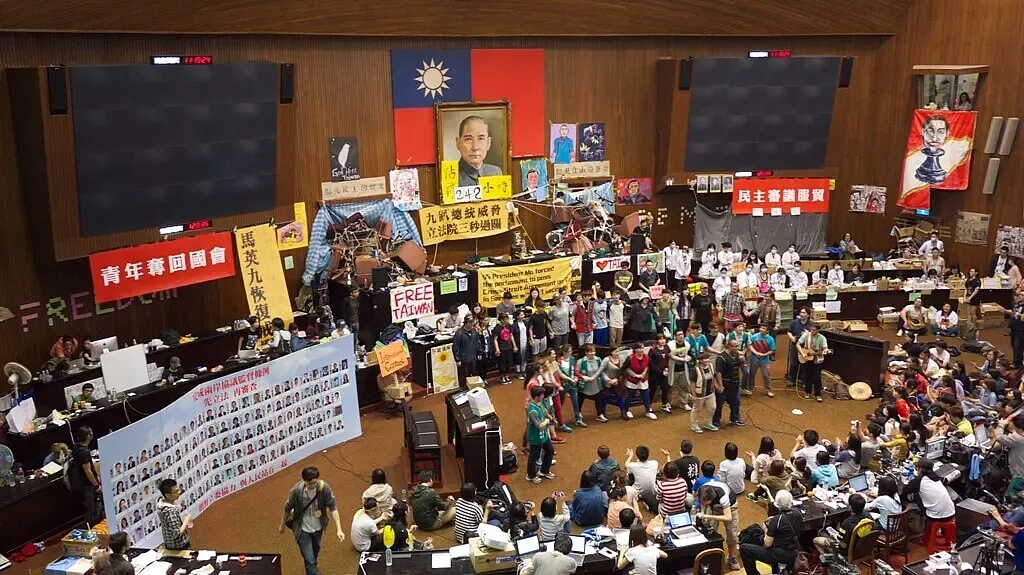
2014
Legal Opinions on the Interaction Between Medical Personnel and Police
Medical personnel present at the scene raised three questions: First, since medical personnel were also attacked by…
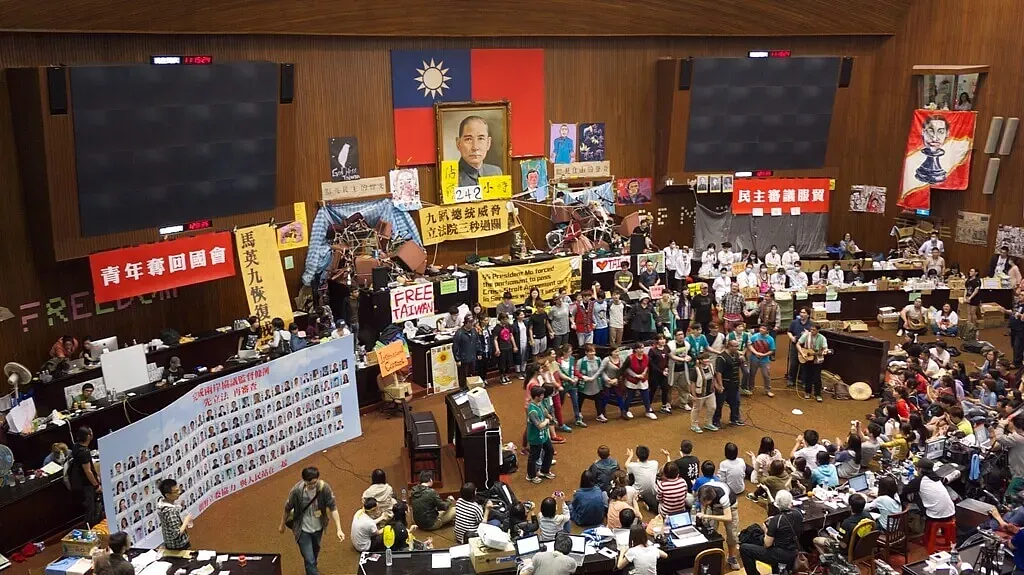
2014
The Maxim of Due Process: The More Urgent, the More It Must Be Respected
The maxim of due process of law: The more urgent and critical the situation, the more one must abide by due process,…
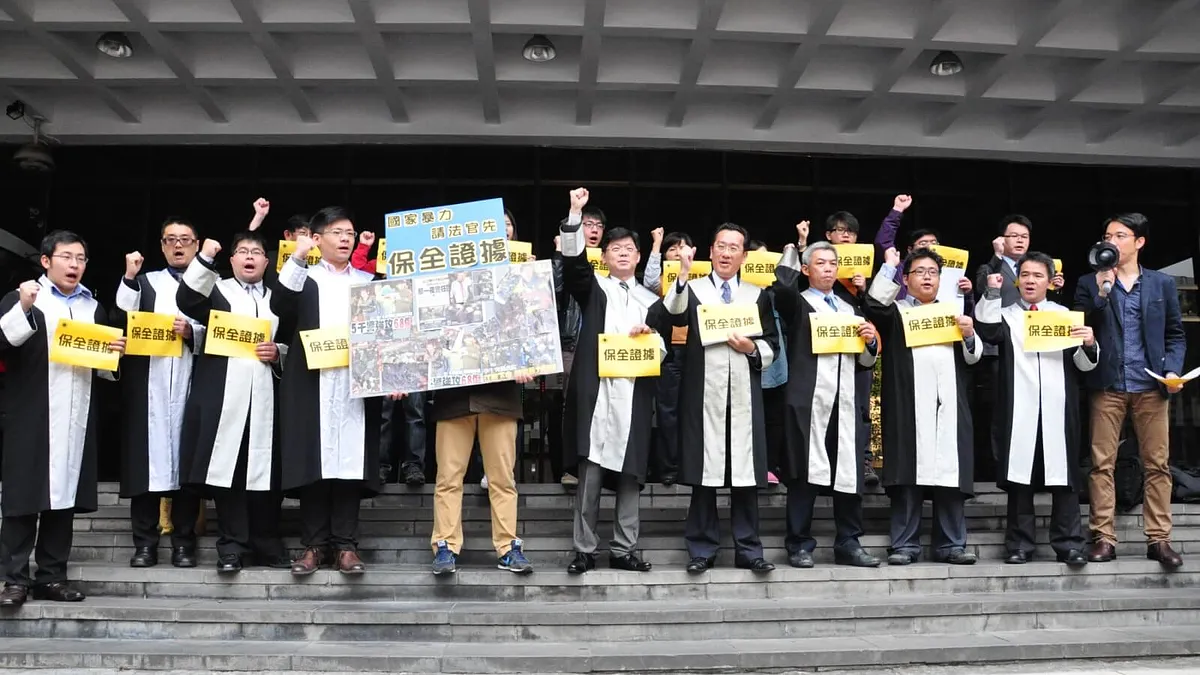
2014
Please Stand with the People, Judges! ~ Press Conference on "State Violence: Judges, Please Preserve the Evidence First"
In the early hours of March 24, citizens and students inside and outside the Executive Yuan were forcibly dispersed by…
2014
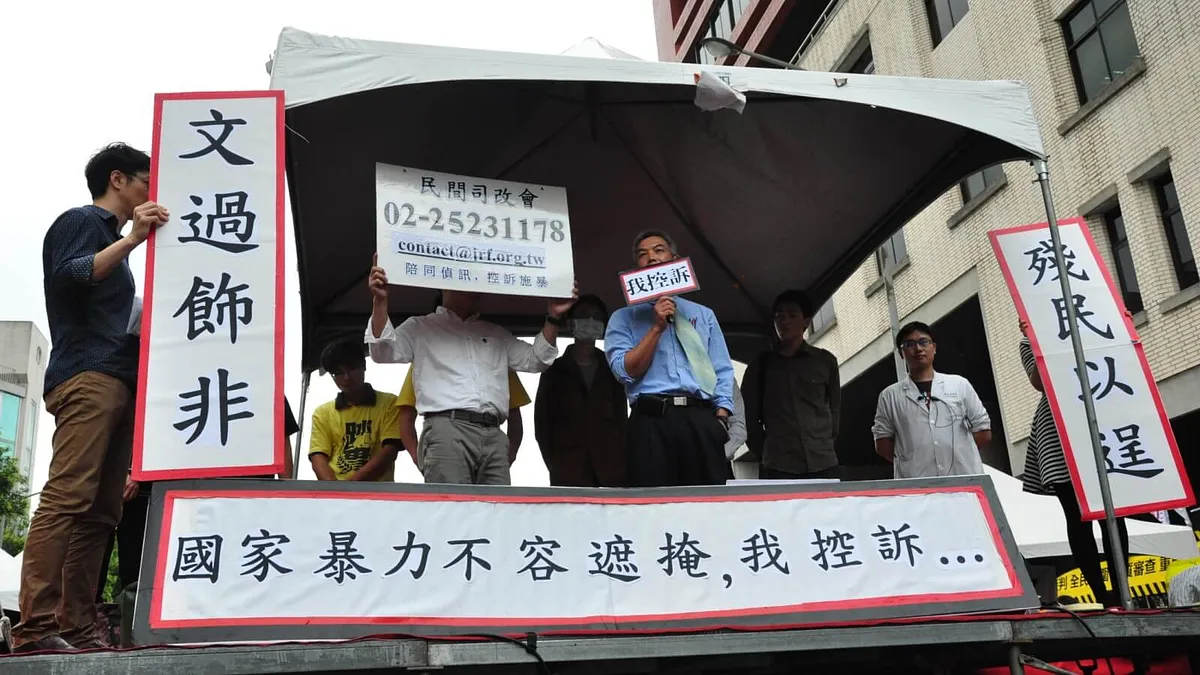
Oppressing the People for Triumphalism and Covering Up Faults! State Violence Cannot Be Concealed, I Accuse... Press Conference
On the evening of March 23, citizens and students inside and outside the Executive Yuan were forcibly dispersed by the…
2014
Legal Opinion on Whether International Students Participating in Student Movements Risk Deportation
The current government interprets these regulations through an ideology extremely fearful of social movements. Under…
2014
An Account of the Executive Yuan's Dark Suppression on the Night Of
This is in front of the Executive Yuan in the early morning hours, at the end of the crackdown. The sky is bright, but…
2014
President Ma Is Leading the Destruction of the Democracy and Rule of Law He Claims to Care About Most
President Ma's press conference this morning offered nothing new beyond mere "governmental advocacy," and completely…
2014
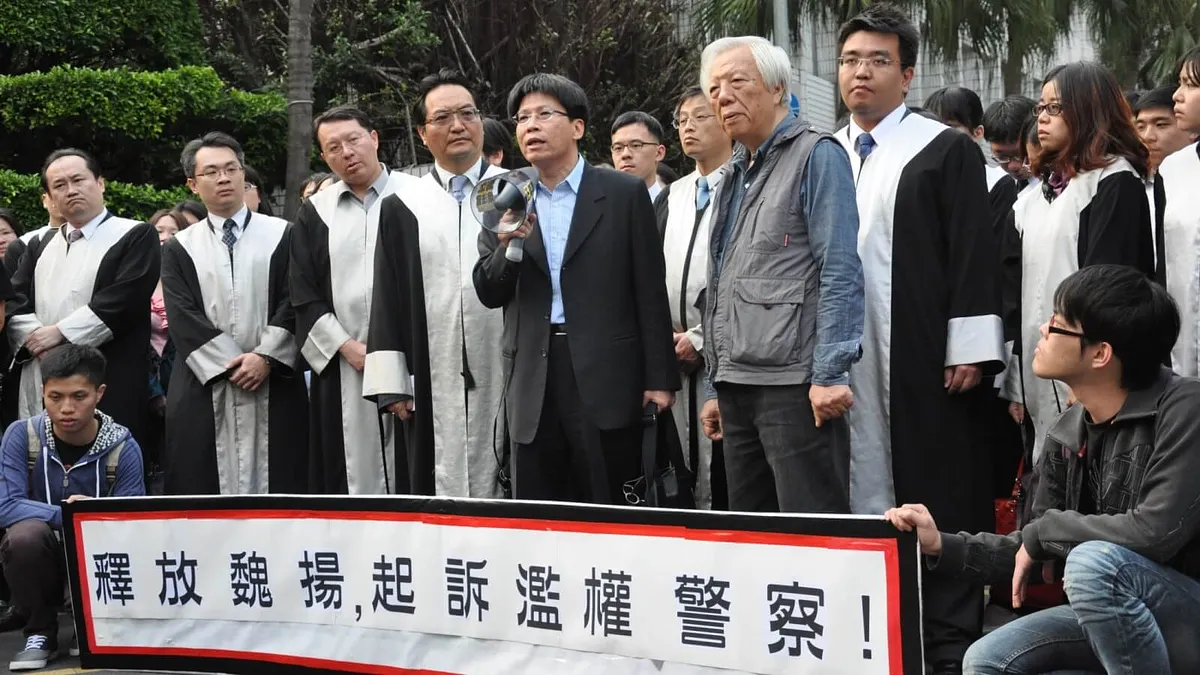
Release Wei Yang and Prosecute Police Abuse of Power!
In response to the order given last night (March 23) by the President, the Premier, and the Director-General of the…