
2017 Judicial Reform Resolutions: Oversight & Implementation
Monitoring the Implementation of Resolutions from the 2017 National Judicial Reform Conference
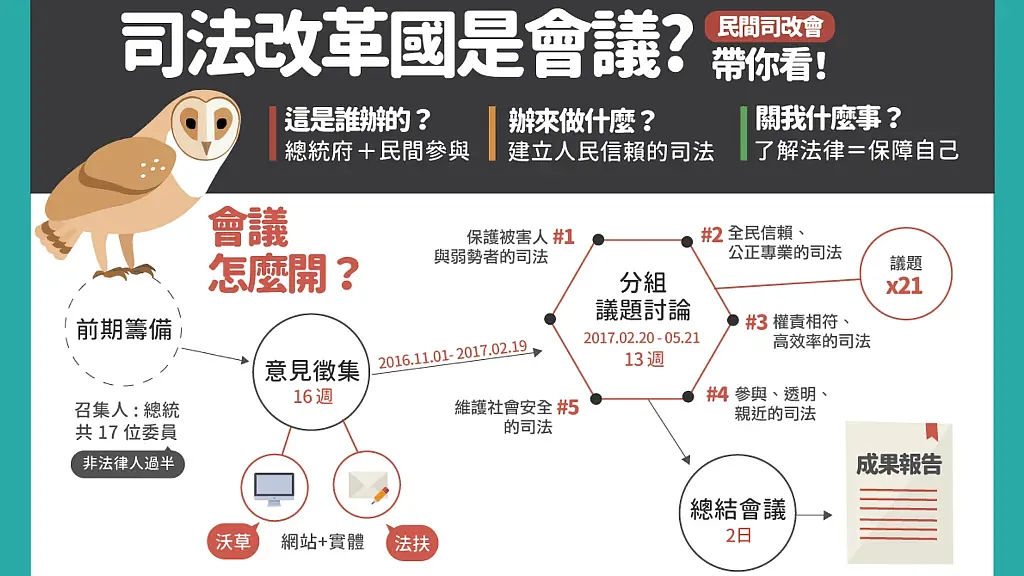
In November 2016, President Tsai Ing-wen personally convened the Office of the President National Judicial Reform Conference, bringing together representatives from the judiciary, prosecution, and defense, as well as cross-disciplinary civil society actors. Following nearly a year of intensive discussions, a comprehensive set of judicial reform resolutions was adopted in August 2017. JRF continues to track the implementation of these resolutions to ensure that reform commitments do not remain empty promises.
Origins of the National Judicial Reform Conference
In 2016, public expectations for judicial reform reached a peak. Making "judicial reform" a major political platform, President Tsai Ing-wen promptly announced the convening of the Office of the President National Judicial Reform Conference upon taking office. She personally served as the convener, delegating representatives from various sectors to formulate reform proposals addressing core issues in the existing judicial system through subcommittee meetings.
The conference was divided into five working groups covering five major dimensions: victim protection, judicial quality, authority and responsibility systems, public participation, and social safety. A total of over 40 subcommittee and additional meetings were held, culminating in the concluding meeting on August 12, 2017, where reform resolutions were formally adopted.
Key directions of the concluding meeting resolutions include:
Establishing the citizen judge system, introducing public participation in prosecutorial screening, strengthening assistance measures for vulnerable groups, promoting open courtroom audio and video, enhancing transparency of attorney information, digitizing judicial hardware equipment, reforming the prosecutorial personnel system, building a pyramid-shaped adversarial trial procedure (mandatory defense and attorney representation), promoting restorative justice, and enhancing continuing education and training for judges, among others.
Eight Key Areas of Reform
Materials from the Five Subcommittee Meetings
Click on each subcommittee to access complete meeting recordings, official materials, and JRF commentary:
Resolution Implementation Tracking Records
JRF continuously records the progress of resolution implementation, evaluates reform outcomes annually, and reports publicly to society:
Official Materials and Original Documents
Office of the President National Judicial Reform Conference
Official website, including five subcommittee pages, all meeting materials, and proceedings records.
justice.president.gov.twSubcommittee Meeting Records Overview
All subcommittees on the official website, where meeting agendas, member lists, and complete meeting materials can be viewed.
View Subcommittee PagesJudicial Reform Conference YouTube Channel
Complete playlists of all subcommittee meeting recordings, viewable by subcommittee and session.
Go to YouTube ChannelJudicial Reform Cannot Stop, Monitoring Must Continue
The adoption of resolutions is merely the starting point; true reform requires continuous attention and pressure from civil society. Support JRF's work to keep the voice of monitoring effective.
2018
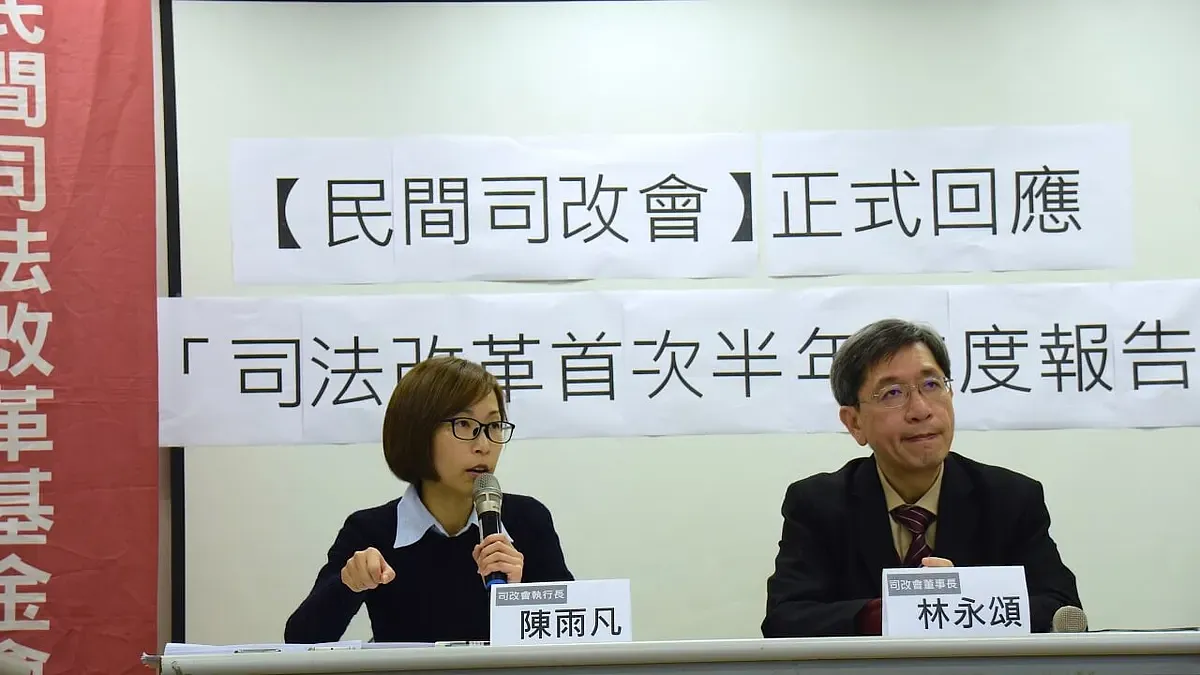
"Imperceptible Judicial Reform" ~ Failing Grade on Midterm, Looking Forward to High Score on Makeup Exam Press Conference
This morning, Judicial Yuan President Hsu Tsung-li, Minister of Justice Chiu Tai-san, and Executive Yuan Minister…
2017
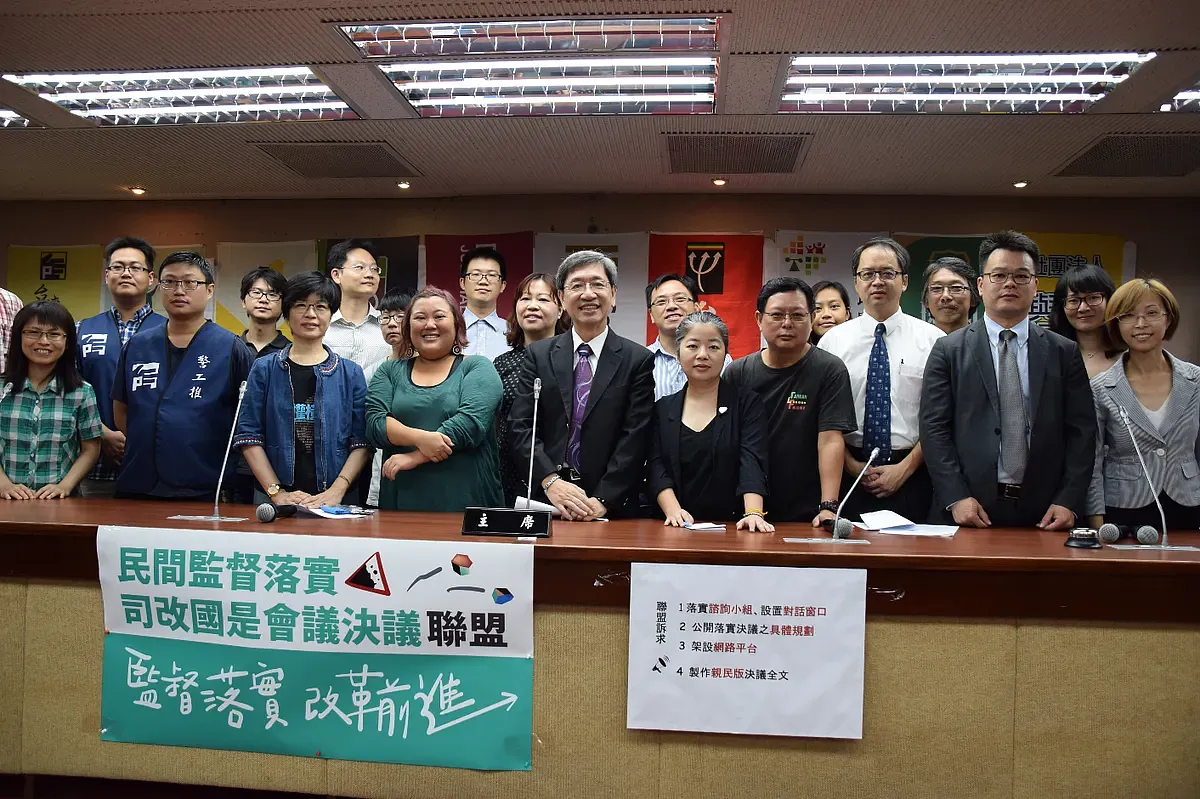
Monitoring Implementation and Advancing Reform ~ Press Conference on the Establishment of the "Alliance for Civilian Monitoring and Implementation of the National Szu-Kai Conference Resolutions"
After running for over 10 months, the Presidential Office's National Conference on Judicial Reform concluded following…

2017
Op-Ed | The Long and Arduous Road Home for Youths Under Reformatory Education
Some time ago, while visiting a juvenile correctional institution, a dedicated guidance counselor mentioned the family…
2017
Op-Ed: Ministry of Justice, yet to take the steps toward correctional reform?
The National Customs Conference on Judicial Reform held its concluding meeting on August 12. Despite various…
2017
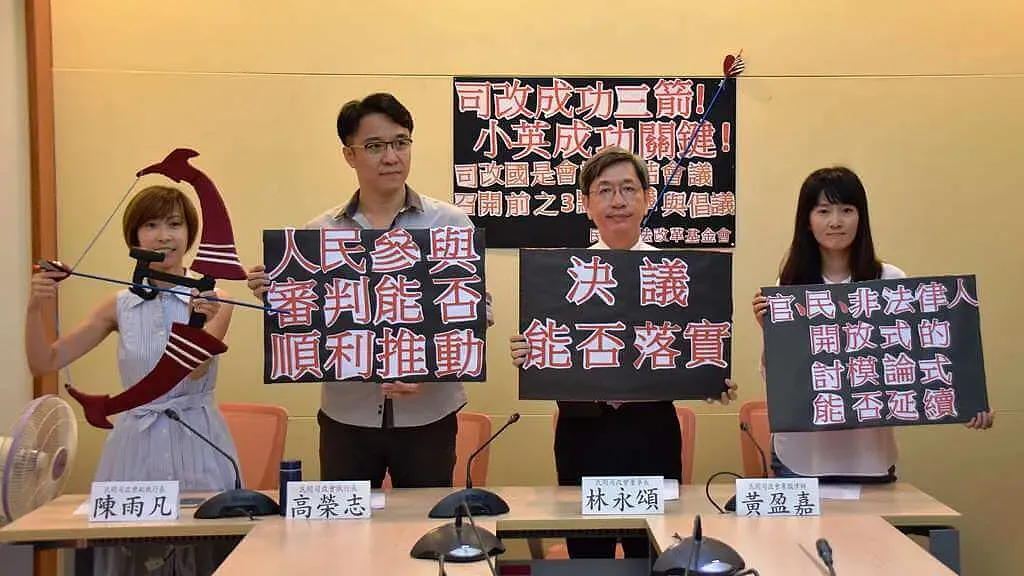
Three Arrows for Judicial Reform Success! President Tsai's Key to Success! ~ 3 Recommendations and Advocacy Prior to the National <div>Judicial Reform Conference Concluding Session</div>
After spanning 10 months, the Concluding Session of the National Conference on Judicial Reform will be held tomorrow.…
2017
Commentary | Post-Judicial Reform: The Disappearing Issues Concerning Children and Juveniles
As the countdown to the plenary session begins, can the missing resolutions be restored and properly planned before the…
2017
The Metrics of Success and Failure for the National White Paper on Judicial Reform: A Comparative Analysis with the JRF's '2016 National Judicial Reform Movement'
The "prototype" of the National Judicial Reform Movement can be described as an attempt by the JRF to "build on the…
2017
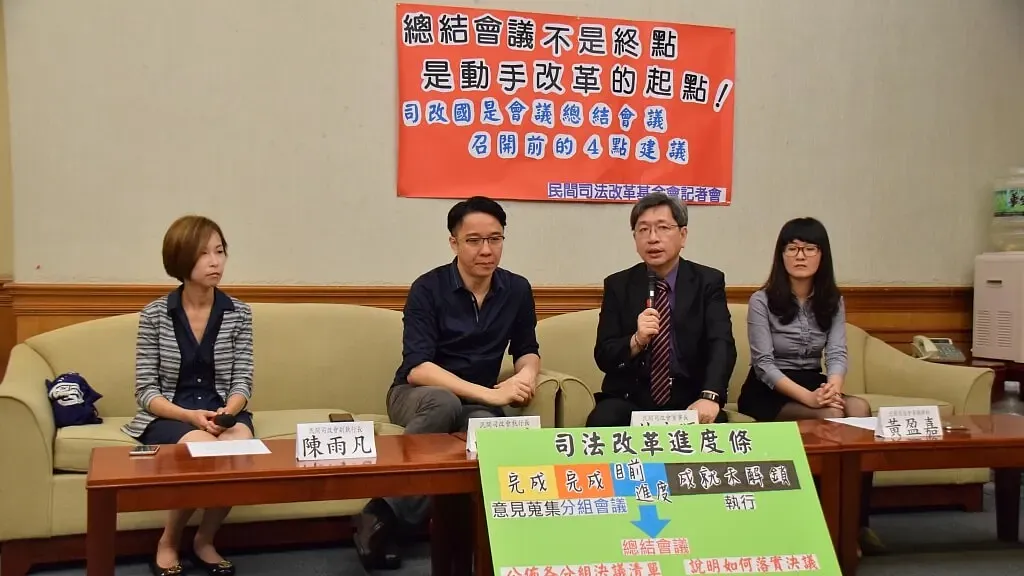
The Concluding Conference Is Not the Destination, But the Starting Point for Hands-On Reform! ~ 4 Recommendations Prior to the Concluding Conference of the National People's Congress on Judicial Reform
The preparatory group meetings of the National Conference on Judicial Reform concluded last week, and the concluding…
2017
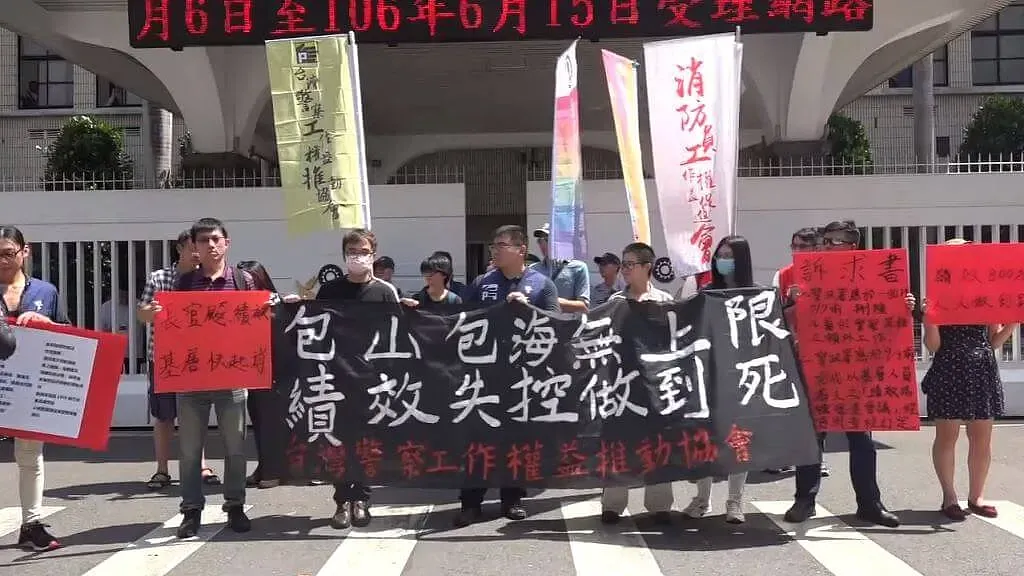
Press Release | Police Labor Union: "Endless Tasks and Out-of-Control Performance Metrics Drive Rank-and-File Officers to Their Deaths" Press Conference
Ahead of Police Day on June 15, the Taiwan Police Trade Union once again gathered in front of the National Police…
2017
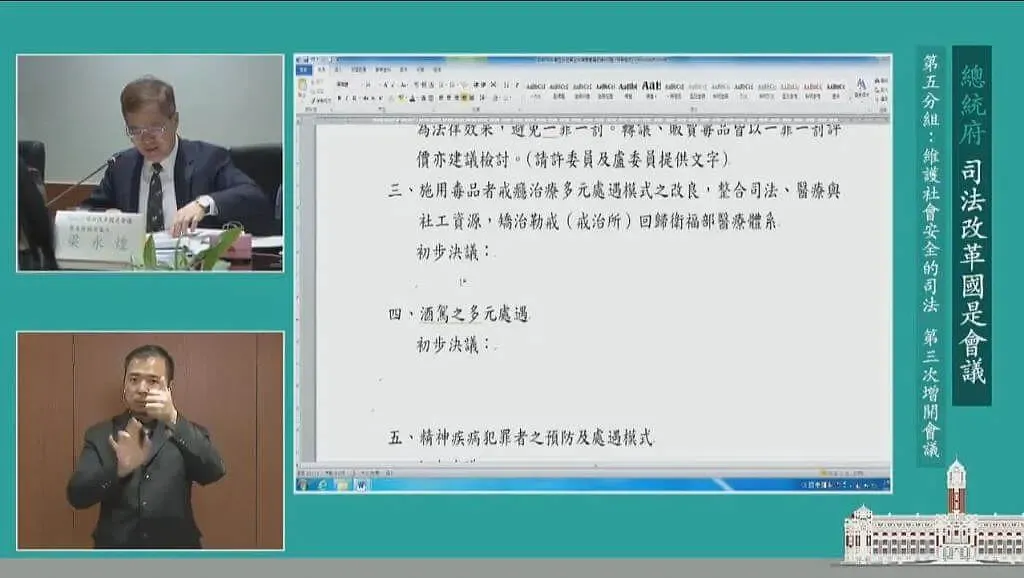
Review: Third Extraordinary Meeting of Group 5 of the Presidential Office's National Consultative Conference on Judicial Reform
This meeting lasted approximately six and a half hours and was the final meeting of Group 5. It adopted 22 resolutions…
2017
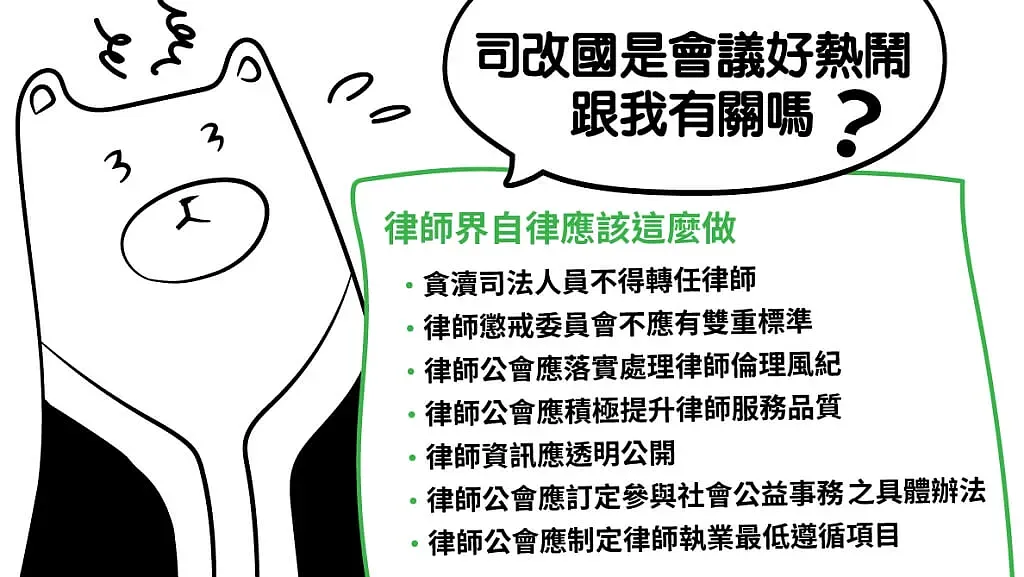
Op-Ed | Reforming the Taiwan National Bar Association: The First Step to Strengthen Attorney Ethics
During the National Conference on Judicial Reform, the Third Working Group adopted two resolutions concerning attorney…
2017
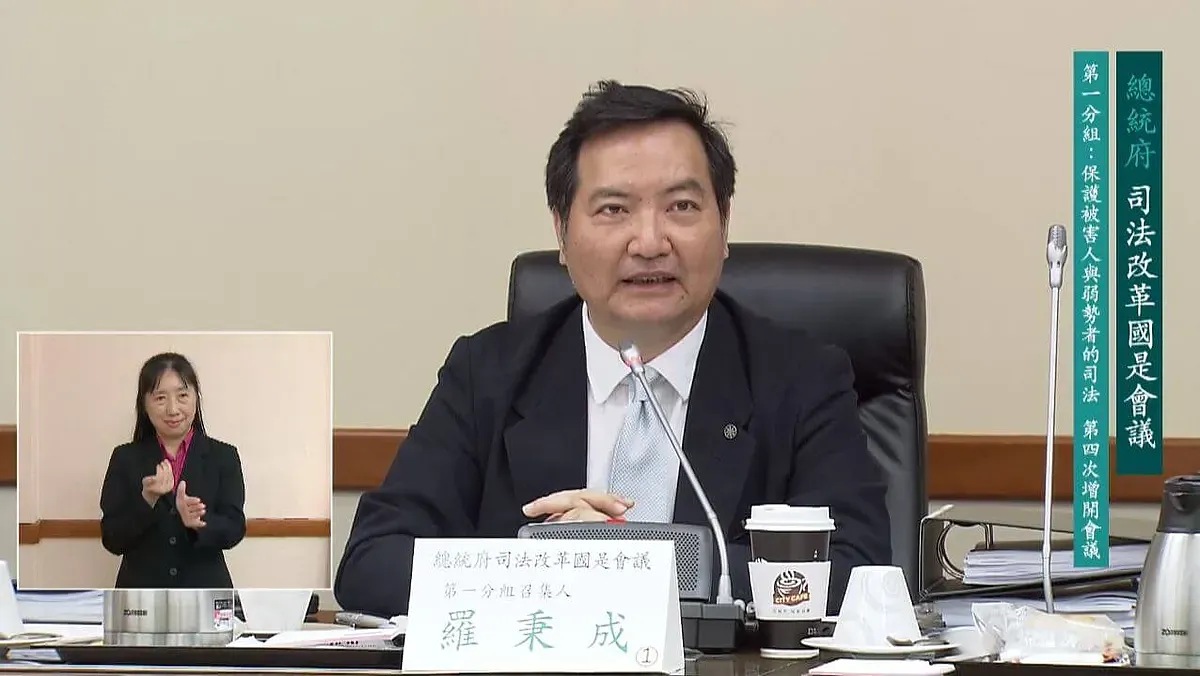
Brief Notes: 4th Extraordinary Meeting of the 1st Division of the Presidential Office's National Congress on Judicial Reform
Lasting approximately eight hours, this tenth meeting of the 1st Division discussed proposals including "improving the…