

Gender and Judicial Reform
Gender Judicial Reform
Safeguarding a Diverse and Equal Judiciary
The Judicial Reform Foundation believes that a fair judiciary must maintain high sensitivity toward gender. From gender bias in the courtroom to gender blind spots in legal texts; from the judicial tracking of #MeToo to the identity rights of transgender individuals—we join hands with numerous civil society partners to promote a gender-friendly judicial environment.
Gender-Friendly
Judicial System
Monitoring workplace sexual harassment among judges and prosecutors; implementing CEDAW
Sexual Violence Prevention
and #MeToo
Amendments to laws on stalking, harassment, and sexual assault; protection of victims' rights
Digital Sexual Violence
Prevention
Amendments concerning sexual privacy images; judicial monitoring of the RISU case
LGBTQ+
Rights and Diversity
Marriage equality; gender marker change without surgery; anti-discrimination advocacy
Child and Youth Sexual Assault
Protection
Amendments to extend the statute of limitations; assistance network improvement
Marital Family Systems
and Historical Human Rights
Divorce system reform; historical justice for comfort women
International Review of the Fifth CEDAW National Report (2026)
The Convention on the Elimination of All Forms of Discrimination against Women (CEDAW) serves as our core basis for promoting gender judicial reform. In July 2026, the concluding observations of the international review of the fifth national report were released. JRF, together with 22 civil society organizations in the fields of women's rights, gender, human rights, disability, and law, held a joint press conference calling to "Deliver CEDAW conclusions, take action for reform, and reform in a timely manner." The JRF Gender Judicial Reform Working Group specifically pointed out the protective loopholes in the "sex- or gender-related" elements of the Stalking and Harassment Prevention Act, and demanded that the Judicial Yuan comprehensively review and deepen judicial personnel training on the application of CEDAW, ensuring that conventions are no longer merely cited as a formality.
Gender-Friendly Judicial System
Key Case: Disciplinary Court Workplace Sexual Harassment (Ms. Y Case)
A Disciplinary Court judge sexually harassed a female subordinate employee, yet the Disciplinary Court did not impose dismissal. JRF submitted an amicus curiae brief and a legal opinion, and issued a statement after the second-instance judgment, demanding the establishment of a gender-friendly judicial workplace.
Sexual Violence Prevention and #MeToo
Digital Sexual Violence Prevention
Key Case: "Four-Law Joint Defense" Civil Society Legislative Amendment Advocacy
The government promoted amendments to four laws: the Criminal Code, the Crime Victim Rights Protection Act, the Sexual Assault Crime Prevention Act, and the Sexual Exploitation Prevention Act for Children and Youths; JRF proposed a civil society draft to patch the loopholes in the Executive Yuan's version, demanding the addition of the "offense of threatening dissemination" and the expansion of the protection order system.
Key Case: RISU Sexual Privacy Image Defamation Lawsuit Case
Exposing that victims in the RISU sexual privacy image groups were counter-sued for defamation, JRF continued to recruit court observers to document how the judiciary handles such cases, calling for attention to the plight of victims facing secondary victimization through lawsuits.
LGBTQ+ Rights and Diversity
Key Case: Kaohsiung Hsiao-Na Gender Marker Change Without Surgery Case (Won)
The Ministry of the Interior required transgender individuals to surgically remove their sex organs before they could change their household registration gender. JRF considered this mandatory surgery requirement to violate bodily autonomy and fail to meet CEDAW standards. We provided court observation, a legal opinion by Professor Chen Yi-chien (Ch'en I-ch'ien), and joined civil groups in demanding an investigation by the Control Yuan. In 2024, the Hsiao-Na case was won, marking an important milestone for transgender rights in Taiwan.
Child and Youth Sexual Assault Protection
Marital Family Systems Reform and Historical Human Rights
Special Project | "PRIMA FACIE" Special Exhibition (2026)
📋 Core Reference Laws and Resources
- Convention on the Elimination of All Forms of Discrimination against Women (CEDAW)—Core international standards for gender judicial reform
- Stalking and Harassment Prevention Act—Enacted in 2022, with ongoing advocacy for legislative improvements
- Crime Victim Rights Protection Act—Legal basis for protection orders for digital sexual violence victims
- Chapter on Offenses Against Sexual Privacy and Non-Consensual Sexual Images of the Criminal Code—Amended and passed in 2023, the fruit of civil society advocacy
- Article 80 of the Criminal Code on the Statute of Limitations—Amended in 2026, changing the calculation for child and youth sexual assault to start from age 20
- Enforcement Act of Judicial Yuan Interpretation No. 748—Protecting same-sex marriage, passed in 2019, the first in Asia
Join Us in Promoting a Gender-Friendly Judiciary
Judicial reform requires the participation of every citizen. Welcome to subscribe to our newsletter to stay updated on the latest developments, or donate to support our ongoing gender judicial reform advocacy work.
Subscribe to Newsletter Support JRF
2026
Case Summaries|Discussions on Amendments to the Stalking and Harassment Prevention Act
Illustrating through three cases the regulatory gap regarding the 'sex or gender' requirement under the current…
2026
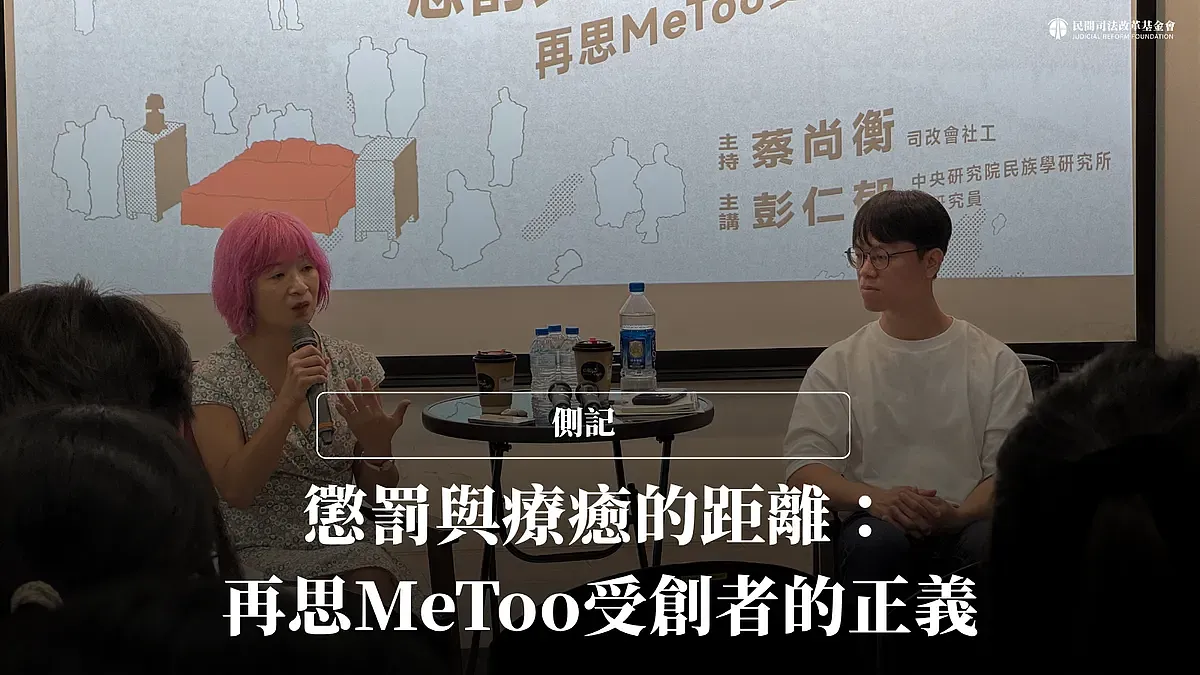
Sidelights | The Distance Between Punishment and Healing: Rethinking Justice for MeToo Survivors
"Can the judiciary truly offer victims an opportunity to breathe and heal?" In recent years, the MeToo movement has…

2026
JRF Gender Working Group Highlights | Controversy Surrounding the Draft Act on Gestational Surrogacy
In January 2026, the issue of gestational surrogacy sparked renewed debate in Taiwan. Opponents argue that commercial…
2026
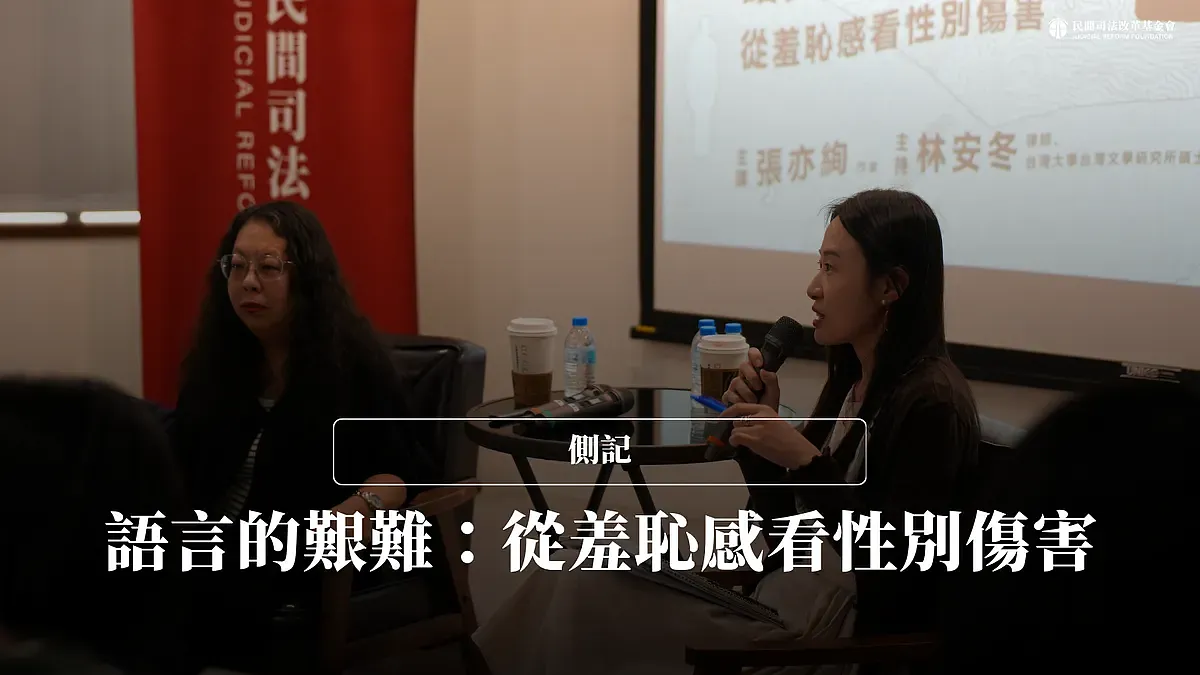
Sidelights | The Difficulty of Language: Looking at Gender-Based Harm through the Lens of Shame
Beyond the "perfect story" demanded by the judiciary and public opinion, can we build a public language that genuinely…
2026
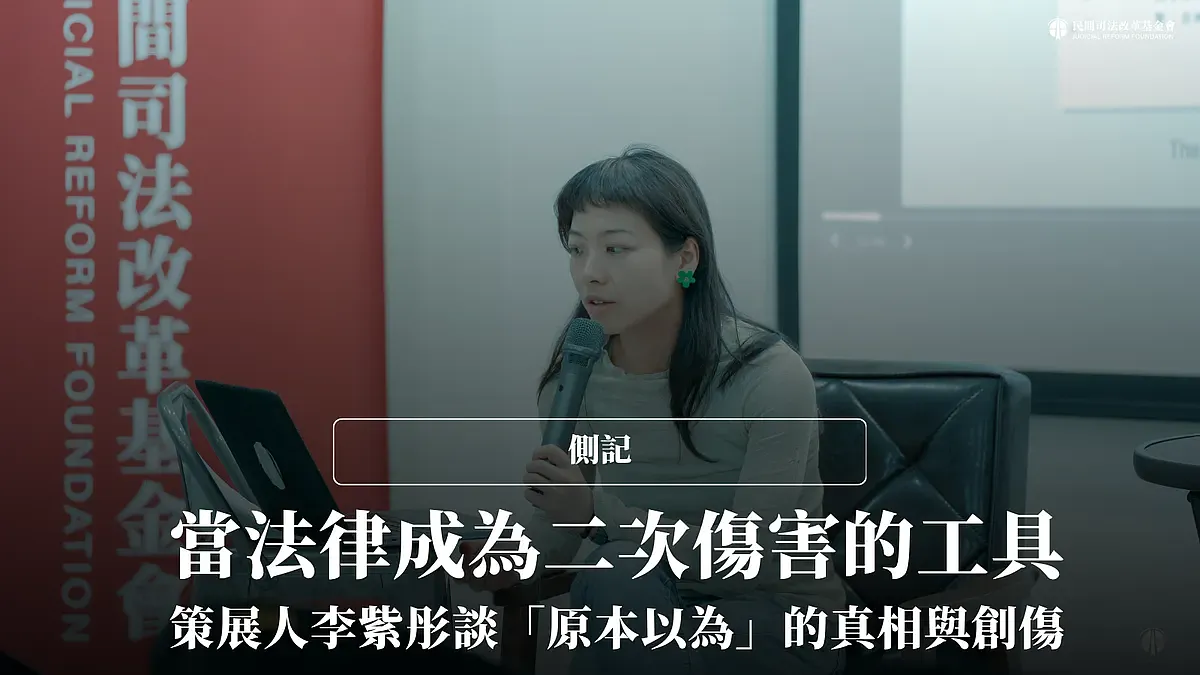
Sidelights | When the Law Becomes a Tool for Secondary Victimization: Curator Li Tzu-tung Discusses the Truth and Trauma of "What We Thought We Knew"
The special exhibition "What We Thought We Knew" is not only an art exhibition, but also a profound reflection on…

2026
Op-Ed | From Status to Contract: Why Pensions Must Be Included in the Distribution of Surplus Property When Liberalizing Divorce Laws
On March 24, 2023, the Constitutional Court issued Judgment No. 4 of the Constitutional Court of 2023 (112 Con. C. Jud.…
2025
Opinion | When Regulations Still Bear the Name of "Eugenics": Reflecting on Taiwan's Reproductive Policy Through the Retrogression of Abortion Rights in the United States
In August 2025, a citizen initiated a proposal on the Public Policy Network Participation Platform to "delete the…

2025
Op-Ed | The Statute of Limitations for Child Sexual Offenses is Set to Be Extended! To Truly Value Victims' Rights, 3 More Details Require Consideration
Thanks to the courageous advocacy and voices of victims, the Ministry of Justice has finally announced the draft…

2025
Op-Ed | One-Third Is Not a Ceiling, "It Is a Floor": The Gender Reality of Taiwan's Cabinet
In August 2025, the Premier promoted a Cabinet reshuffle in which only 2 out of the 16 new cabinet members were women.…

2025
Opinion: Do Not Let Those Who Harm Children Hide Behind Time—Criminal Law Reform on the Statute of Limitations Aims to "Shift the Shame"
Taiwan's #MeToo movement kicked off in May 2023 with a political worker speaking out, spreading from politics to media,…

2025
Op-Ed | Where Are the Supporting Measures for the 2,500 Judicial Divorce Cases Each Year? How to Protect Economically Vulnerable Spouses?
In March 2023, the Constitutional Court rendered Interpretation No. 4 of 2023 (the "Irretrievable Breakdown Divorce…

2025
Does the Law Stand on the Side of the Egg? Domestic and International Observations and Reflections on Strategic Lawsuits Against Public Participation (SLAPPs)
"SLAPPs" refer to Strategic Lawsuits Against Public Participation. According to definitions in the literature by…